The short answer
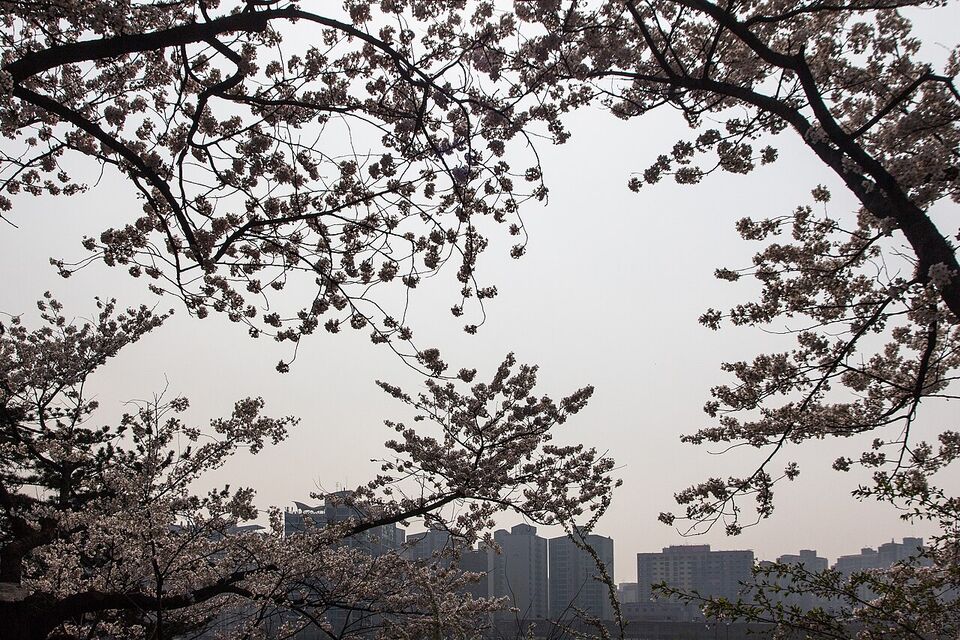
For most Americans, the best times to visit South Korea are April to early June and late September to early November. Both seasons have mild weather, comfortable walking temperatures and the scenery that Korea is known for: cherry blossoms in spring and red and gold leaves in fall. If you want one month, October is the safest choice, with warm days and cool evenings.
The other seasons are good if you know what to expect. Summer is hot, humid and wet, with a rainy season and a typhoon risk, but it has fewer foreign tourists in some places and lively beach and festival life. Winter is cold and dry, with clear skies in Seoul, deep snow in the mountains and some of the best skiing in the region. Our guides to November, December, January, February and March cover the cold months in detail, and seasons goes deeper on what each season is like.
Korea has four distinct seasons, and they move from year to year. Blossom, color and rainy-season dates in this page are typical ranges, not promises. We say where to check the current forecast. And whichever season you choose, look at the holiday calendar below, because two holidays can change a trip more than the weather.
Seasons compared
| Season | Weather | Crowds | Cost |
|---|---|---|---|
| Spring (March to May) | Cool in March, warm by May; blossoms late March to April; some dust days | High in blossom weeks and on long weekends | Higher in April and early May |
| Summer (June to August) | Hot and humid; rainy season from late June; typhoon risk from July | Moderate; beaches and festivals busy on weekends and in school vacation | Mixed; domestic beach areas costly in peak weeks |
| Fall (September to November) | Mild, dry and clear; colors from late September in the mountains to mid-November in lowlands | High in the second half of October and on weekends at popular mountains | Higher in October |
| Winter (December to February) | Cold and dry in Seoul; snow in Gangwon; milder on the south coast and Jeju | Lower, except at ski resorts and around Seollal | Often lowest for hotels, except holidays |
The crowd and cost columns are general patterns, not price data. We have no verified hotel rates for 2026. Visitor numbers reached a record in 2026, so book early in any season, and check the exact price for your dates.
Spring: blossoms, mild days and some dust
March is still cold, with Seoul's average daytime high at about 52°F (11°C) and nights near freezing. April is the turning point: about 64°F (18°C) in the day. May is warm, about 75°F (24°C), and the best month for hiking and outdoor markets before summer humidity arrives.
Cherry blossoms usually bloom in Seoul in late March to early April and move north as the weather warms. The best-known festival is Jinhae Gunhangje in the city of Changwon, held on fixed dates, April 1 to 10, since 2011. The 2027 blossom forecast was not published when we checked, and the Korea Meteorological Administration (KMA) usually issues one in late winter. If blossom is the main reason you are going, book flexibly and plan to arrive in the first week of April, and expect crowds at popular spots on weekends.
Spring also brings fine dust and yellow dust on some days. Yellow dust (Asian dust) blows in from the deserts to the west and mostly occurs in spring, especially April, while fine dust can also be bad in winter. See the section on air quality below.
Insider tip
Blossom peaks last about a week and vary by place, so build slack into your plan. A trip that lands a week early or late can miss the peak, but the early-bloom and falling-petal weeks are still pretty and much less crowded.
Summer: heat, humidity and the rainy season
Summer in Seoul is hot and humid. July and August average daytime highs of 84°F to 86°F (29°C to 30°C) and nights around 72°F to 73°F (22°C to 23°C). Busan and the coast are similar, with sea breezes. In Seoul, July averages about 16 inches (414 mm) of rain and August about 14 inches (348 mm), compared with about 0.7 inches (17 mm) in January.
The rainy season is called jangma. It typically comes from late June through July, with days of steady rain and heavy downpours. One reference notes that the traditional pattern has become less regular in recent years, so do not count on exact dates. About two-thirds of the country's annual rain falls from June to September.
The hottest days of summer are called boknal, and Koreans traditionally eat samgyetang (ginseng chicken soup) to beat the heat. Air-conditioned indoor options are plentiful: museums, shopping malls, subway stations and cafes. Plan outdoor sightseeing for early morning, and carry a small umbrella that you can use for sun or rain.
Typhoon season
Korea usually sees one to three typhoons a year, mostly July to September, and August is the peak. Typhoons are felt most on Jeju and the south coast. Typhoons can cancel flights, ferries and cable cars, and trails close. Some summers see no direct hit, but you cannot know in advance.
- Buy travel insurance that covers weather disruption, and book flexible tickets for Jeju and island trips in August and September.
- Check the KMA forecast (kma.go.kr) and your airline's alerts the day before.
- Leave a buffer day before an international flight if you are going to Jeju or the south coast.
Fall: the color season
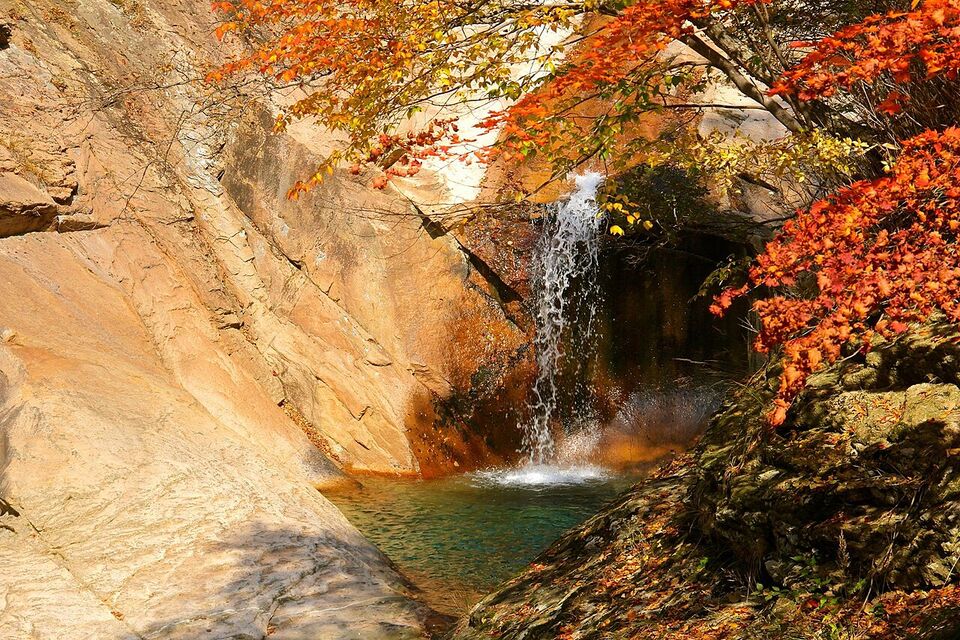
Fall, from late September to November, is the most popular season for Korean travelers, and it is easy to see why. Days are dry and clear. Seoul's daytime highs fall from about 79°F (26°C) in September to 68°F (20°C) in October and 53°F (12°C) in November.
Colors move from the mountains to the lowlands. Typical timing is first color at Seoraksan in late September to early October with a peak around mid to late October, then Seoul and other lowland areas from late October to mid-November, and Hallasan on Jeju from late October to early November. These are typical ranges, not forecasts. Check the Korea Tourism Organization (english.visitkorea.or.kr) and KMA for the current year's reports.
Weekends at Seoraksan and other popular mountains are crowded, with long lines for cable cars and parking. Weekdays are far better. Our Sokcho and Seoraksan guide and hiking guide have the practical detail. Seoul's palaces and temples look their best in late October and early November, and November is a quieter month with comfortable days.
Winter: cold, dry and well heated
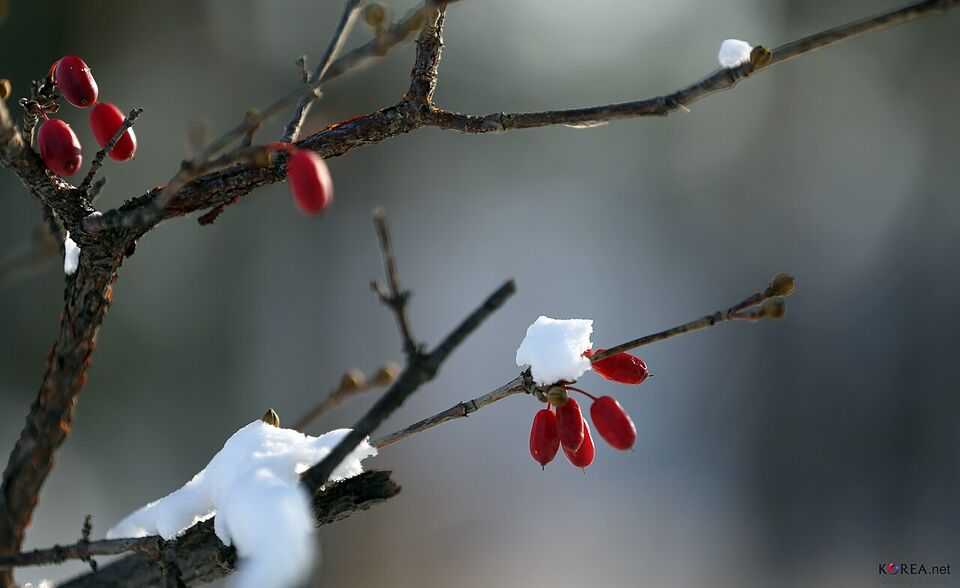
Winter runs December to February. Seoul's average daytime highs are about 40°F (4°C) in December, 36°F (2°C) in January and 41°F (5°C) in February, and nights average 22°F to 26°F (-6°C to -3°C). The air is dry and skies are often clear. Snow in Seoul is modest, while the Gangwon mountains get heavy snow. The coast is milder: Busan averages 47°F (8°C) by day in January and Jeju City 48°F (9°C), and Jeju has about 12 rain days in January.
Korean winters are comfortable indoors. Many homes, guesthouses and traditional rooms use ondol, heated floors, so the floor is the warmest place in the room, and subways, malls and restaurants are well heated. Layers are the key: a warm coat, a hat and gloves, and thermal underwear outdoors, and a light layer inside.
Winter has its own pleasures: hot-spring and bathhouse visits (jjimjilbang, a public bathhouse and sauna), street snacks and ski resorts. Most resorts open between late November and mid-December, depending on snow. See skiing. Winter festival dates, such as the Hwacheon ice festival and the Seoul Lantern Festival, are announced late in the year, so check them. The lantern festival ran from mid-December to early January in 2025-26.
Different from home
Winter air in Korea is dry rather than damp, so cold feels sharper in wind but less raw than a damp US winter. Bring lip balm and moisturizer. Indoors can feel warm, so wear layers you can remove.
Month by month in Seoul
These are average daytime highs and nightly lows from the Korea Meteorological Administration's 1991-2020 normals for Seoul. Individual days can run well above or below them.
| Month | High | Low | What to expect |
|---|---|---|---|
| January | 36°F (2°C) | 22°F (-6°C) | Cold, dry; skiing and festivals |
| February | 41°F (5°C) | 26°F (-3°C) | Cold; Seollal in some years |
| March | 52°F (11°C) | 35°F (2°C) | Thaw; early blossoms in the south; dust days begin |
| April | 64°F (18°C) | 46°F (8°C) | Blossom, mild days, some yellow dust |
| May | 75°F (24°C) | 56°F (14°C) | Warm and green; holiday weekends |
| June | 82°F (28°C) | 66°F (19°C) | Hot; rainy season may start late in the month |
| July | 84°F (29°C) | 72°F (22°C) | Hot, humid and rainy: about 16 in (414 mm) |
| August | 86°F (30°C) | 73°F (23°C) | Hottest; typhoon peak |
| September | 79°F (26°C) | 64°F (18°C) | Cooling; Chuseok in some years; typhoon risk early |
| October | 68°F (20°C) | 51°F (11°C) | Clear and dry; fall color |
| November | 53°F (12°C) | 38°F (4°C) | Cool; late color in lowlands |
| December | 40°F (4°C) | 26°F (-3°C) | Cold; lights, markets and early skiing |
For other places, the coast and the island are different. In November Busan averages 62°F (17°C) by day, and Jeju City 62°F (16°C). Sokcho, the gateway to Seoraksan, averages 56°F (13°C) by day in November at sea level, and the mountain summit, at 5,604 ft (1,708 m), is much colder. Check the Busan, Jeju and Seoraksan guides for local conditions.
Best months by kind of trip
| If you want | Aim for | Why, and the catch |
|---|---|---|
| Cherry blossoms | Late March to mid-April | Seoul peaks in a short window that moves with the weather; Jinhae's festival runs April 1 to 10 |
| Fall color | Mid-October to early November | Seoraksan earlier, lowland Seoul later; weekends at popular mountains are crowded |
| Hiking | May, June and late September to October | Comfortable temperatures; high trails may be closed in spring and in bad weather |
| Beaches and festivals | Late June to August | Heat, humidity and the rainy season; typhoon risk on Jeju and the south coast |
| Skiing | Mid-December to February | Most resorts open between late November and mid-December, depending on snow |
| Fewer crowds and lower hotel prices | Early December to early February, outside Seollal | Cold, but museums, food and bathhouses are at their best |
| City sightseeing with mild weather | Late April to May, or October | The most popular months, so book early |
Shoulder months worth considering
March can be cold and dusty, but it is quiet, and the south coast is warming. Early June is often warm and dry before the rainy season arrives, with long daylight hours and thinner crowds than in May. Late November is cool, with lowland color fading. Each is less famous than the peak months, and each can be a good value if you accept some weather risk.
How the regions differ
Seoul and the north have the widest swings between hot summers and cold winters. The southeast coast, including Busan and Gyeongju, is milder in winter. Jeju is the mildest and the wettest, and it is the most exposed to typhoons in late summer. The east coast near Sokcho and Gangneung has heavy snow in the mountains and cooler summers by the sea. If your trip spans several regions, pack for the coldest place you will visit. See regions for the layout of the country.
Holidays and crunch periods
Two holidays reshape travel: Seollal, the Lunar New Year, and Chuseok, the harvest holiday. Millions of Koreans travel home, trains and flights sell out, expressways jam, and many shops and restaurants close for a few days. For a visitor, the effect is mixed. Big hotels, palaces and tourist sites are mostly open (check ahead), but local restaurants, small shops and markets may be closed, and you may not find a train seat.
| Date | Holiday | Effect on a trip |
|---|---|---|
| December 25, 2026 (Friday) | Christmas Day | Day off; a three-day weekend with busy shopping and attractions |
| January 1, 2027 (Friday) | New Year's Day | Day off; three-day weekend |
| February 6-8, 2027 (Saturday to Monday) | Seollal (Lunar New Year is Sunday, February 7) | Biggest winter rush; a substitute day on Tuesday, February 9 is possible, so expect crowds February 6 to 9 |
| March 1, 2027 (Monday) | Independence Movement Day | Three-day weekend |
| May 5, 2027 (Wednesday) | Children's Day | Parks and family attractions are busy |
| May 13, 2027 (Thursday) | Buddha's Birthday | Temples busy and decorated with lanterns |
| September 14-16, 2027 (Tuesday to Thursday) | Chuseok (Wednesday, September 15) | Biggest rush of the year; many closures |
Other fixed holidays are June 6 (Memorial Day), August 15, October 3 and October 9, and Labor Day on May 1 became a public holiday in 2026. In 2027, several of these fall on weekends, and substitute days may apply, but we could not confirm which, so check the Korean government's holiday calendar. Chuseok in 2026 ran September 24 to 26, and Seollal 2026 was Tuesday, February 17.
Watch out
Do not plan a train-heavy trip over Seollal or Chuseok without tickets in hand. Book KTX seats on the official site, letskorail.com, as soon as the window opens, and have a plan if a restaurant is closed. See plan your trip for the booking order.
Weekends and school vacations also matter. Beaches and mountain trails crowd on summer weekends, and popular fall-color sites fill on October weekends. A weekday visit is always calmer. Palaces and many museums close on one weekday (Gyeongbokgung usually on Tuesday and Changdeokgung on Monday), so check royal.khs.go.kr.
Fine dust and yellow dust
Air quality in Korea varies day to day. Yellow dust from the deserts mostly arrives in spring, especially April, and fine dust (PM2.5) can also be high on some days in winter and spring. On bad days, the sky looks hazy, and people with asthma or heart conditions should avoid long outdoor walks.
- Check airkorea.or.kr or a weather app for the day's reading.
- Pack a few N95 or KF94-style masks if you are sensitive. They are sold in pharmacies and convenience stores.
- Move outdoor plans to museums or covered markets on bad days.
Most days in the best seasons have good air. Do not let dust plans decide your trip, but do not ignore them if you have a lung condition. Ask your doctor, and see health.
What to pack by season
- Spring: layers, a light jacket, a scarf, a compact umbrella, comfortable walking shoes and masks for dust days.
- Summer: breathable clothes, a rain jacket or umbrella, sunscreen, a hat, sandals that can get wet and a small towel.
- Fall: layers, a light coat, walking shoes with grip for mountain trails and a camera battery pack.
- Winter: a warm coat, thermal layers, gloves, a hat, lip balm and slip-resistant boots. Bring clothes that are easy to peel off indoors.
All year, bring a plug adapter (Korea uses 220 V and Type C and F sockets), shoes that are easy to take off, because you remove them at many homes, guesthouses and some restaurants, and a day bag. Our packing list has the full list.
How conditions shift from year to year
Blossom, color and the rainy season move with the weather. A warm winter can pull blossoms earlier by a week or more, and a cool, wet summer can push typhoons later. Treat the dates here as typical ranges and check the current forecast two to three weeks before you go. The Korea Meteorological Administration, at kma.go.kr, gives weather and warnings, and the Korea Tourism Organization posts blossom and foliage updates in season.
Note, too, that Korea uses Korea Standard Time all year. When the US changes its clocks, the gap changes: Korea is 14 hours ahead of New York in US winter and 13 hours ahead in US summer. Seasonal events, such as ski season and festivals, change dates each year, and we give them as typical ranges. For more help choosing, see the planning page and the festivals guide.
Add it to a route in the trip builder, or ask us to plan the hotels, trains and guides for you.