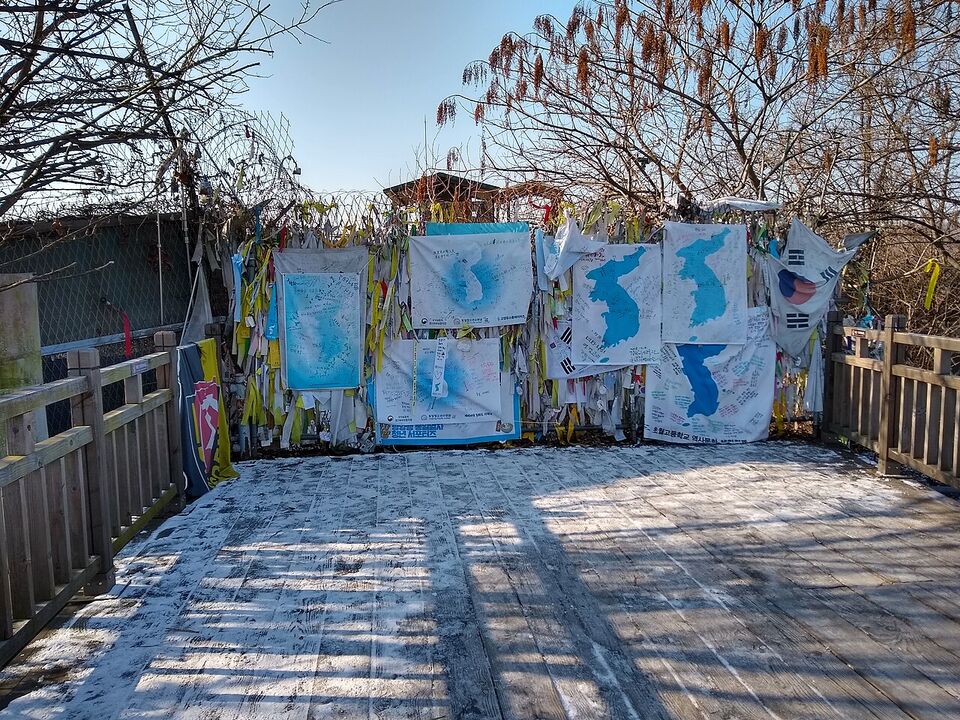
Overview: what the DMZ is and what a visit looks like
The Demilitarized Zone, or DMZ, is a strip of land that runs across the Korean Peninsula, roughly 148 miles (238 km) long and about 2.5 miles (4 km) wide. It was set up by the armistice of July 27, 1953, which ended the fighting of the Korean War, and it separates South Korea from North Korea. The zone itself is closed to ordinary traffic and is lined with fences, guard posts and checkpoints on both sides. Because almost nobody has lived there for decades, parts of it have also become a quiet nature reserve.
For a visitor, "DMZ tour" means a guided day trip from Seoul to the southern edge of that zone, mostly in the city of Paju, about an hour from central Seoul. You ride a bus with a guide, pass military checkpoints, look across the border from an observatory, walk down into a tunnel, and stand in a railway station that was built for trains that do not run north. It is a calm, structured outing, closer to a museum visit than an adventure, and most people take half a day or a full day.
This page covers the kinds of visit, how to book, what to bring and wear, and the one thing most older blog posts get wrong: the Joint Security Area (JSA) at Panmunjom, where the famous blue huts stand, is not currently open to ordinary tourists. If you are still building your trip, our Seoul guide and the day trips from Seoul page show how a DMZ day fits with the rest of a week in the capital.
What you can see on a DMZ tour
Different operators combine the same handful of sites in different ways. Which ones are included on a given day depends on the operator's license, on military schedules and on what is open, so treat the list below as a menu rather than a promise. Ask the operator exactly which stops are included for your date.
Imjingak Peace Park
A memorial park beside the Imjin River, close to the border and the usual first or last stop. It has monuments, a railway engine left from the war and a view toward the river. This is the part of the DMZ area that anyone can reach without a tour.
Dora Observatory
On the top of Mount Dora, this viewing platform has binoculars for looking across the zone toward North Korean territory, including the city of Kaesong on a clear day. Haze, fog and fine dust can hide the view, and photography is limited to marked areas.
The Third Tunnel
One of the tunnels found under the zone in the 1970s, discovered in October 1978. It is about 1,600 m (about 1 mile) long and about 240 ft (73 m) underground, and visitors go down a sloped access shaft. The slope is steep on the way back up, and hard hats are commonly provided (confirm with the operator).
Dorasan Station
The northernmost station on the South Korean side, opened in 2002 on the Gyeongui Line. It is a modern, nearly empty station built for through trains to the north. Tours stop here for a look around; ask the operator whether it is included, since it is not a place you can ride to on a normal ticket.
Unification Village and viewpoints
Some full-day tours add a village near the zone or a second viewpoint, and some add a museum or a souvenir stop. Ask for the list in writing so that you are not surprised by a shopping stop.
Other tunnels and sections
Other tunnels and viewpoints sit in different parts of the zone, such as east of Seoul toward the old Punchbowl battlefield, and a few specialist tours go there. They take most of a day, and they are not part of the usual Seoul tour.
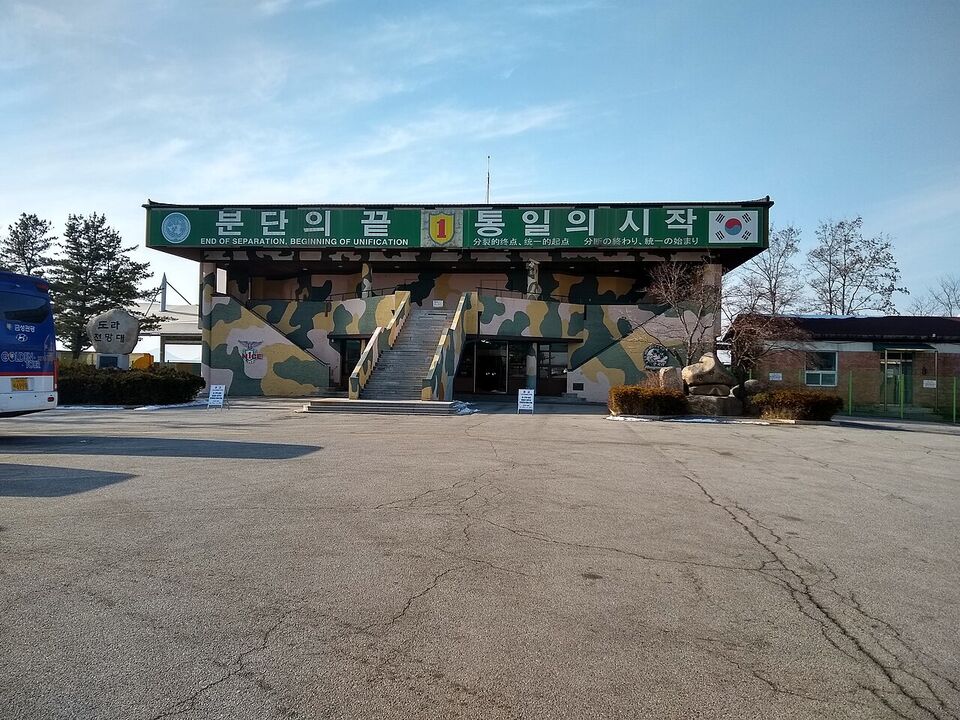
The Joint Security Area at Panmunjom
The JSA is the small meeting area in the village of Panmunjom, where the blue conference huts straddle the line and soldiers from both sides stand face to face. It is the image most people have in mind when they search for a "DMZ tour", and for years it was a special tour sold by approved operators with strict rules on nationality, age and dress.
As of November 2026, that tour is not available to ordinary travelers. According to a report by the Kyunghyang Shinmun on October 22, 2026, all JSA tours stopped after a US soldier crossed the line in July 2023, and the United Nations Command has resumed only "special tours" since May 2025, mainly for senior officials, requested through the Ministry of Unification at least 14 days ahead. You cannot buy one as a tourist.
Watch out
Some older blog posts and a few booking pages still describe JSA tours with prices and start times. Treat any listing that promises Panmunjom to an ordinary tourist as out of date or wrong. Check with licensed operators and the Korea Tourism Organization (english.visitkorea.or.kr) first, and never pay a deposit on the strength of a JSA promise.
If a JSA visit reopens, expect strict rules: advance booking with passport details, a nationality and age check, a formal dress code and no flexibility on the day. We will not guess at dates. A good Seoul DMZ tour that includes the Third Tunnel, the Dora Observatory and Dorasan Station gives you a real sense of the border region without the JSA.
Compare the tour types
Most visitors choose between a half-day and a full-day tour. The table gives typical shapes, not guaranteed itineraries. The price reported for half-day tours comes from a travel blog in spring 2026 and is only a rough guide; full-day prices and private-tour prices were not available to us, so ask the operator.
| Tour type | Typical length | What it covers | Price guide | Best for |
|---|---|---|---|---|
| Half-day group tour | About 5 hours | Usually the Third Tunnel and Dora Observatory, sometimes Dorasan Station | Roughly ₩50,000-70,000 (about $38-$53), as reported in spring 2026 | First-timers who want the main sights and an afternoon free |
| Full-day group tour | 8 to 10 hours | Tunnel, observatory, station, Imjingak and often a lunch or village stop | Higher than half-day; check the operator | Travelers who want the whole border region in one day |
| Private tour | Flexible | Same sites with your own guide, vehicle and pace | Quoted per group by the operator | Families, mobility needs, small groups |
| Tour with a nearby add-on | Full day | DMZ stops plus Paju's art village or a hanok-style stop | Varies | People who want a lighter day |
| Independent visit to Imjingak | 2 to 4 hours | The public park and its monuments only | Local train or bus fare only | People who cannot book a tour |
| JSA / Panmunjom | Not offered | Ordinary tourist tours have not run since 2023 | Not applicable | Nobody, for now |
Two practical points. First, check whether lunch, the entrance to the tunnel and a guide who speaks English are included, since some budget tours add these on the day. Second, think about the season: the observatory has an open-air deck, so winter tours are cold and windy, and summer tours can be wet in July and August (see our seasons guide).
How to book a DMZ tour step by step
A DMZ tour needs advance booking because the operator must submit your details to the military in advance. You cannot just turn up at a checkpoint.
- Choose a licensed operator. Look for a company that is registered as a travel agency in Korea and is listed or recommended by the Korea Tourism Organization (english.visitkorea.or.kr) or by the Seoul tourism information desks. The Ministry of Unification runs a DMZ information portal at dmz.go.kr, where official programs and notices appear. Avoid street-corner sellers who offer a "cheap DMZ" with no company name.
- Pick the date and the type. Half-day or full-day, group or private. Tours rarely run every day of the week, and some do not run on Mondays or public holidays, so check the calendar rather than assuming. The spring and fall seasons fill first.
- Book directly or through a reputable seller. You will give your full name exactly as in your passport, your passport number, date of birth and nationality. Use the same spelling as the passport. A mismatch can mean you are turned away at the checkpoint.
- Read the cancellation terms. Operators can cancel or reroute a tour at short notice for military or security reasons or for bad weather. Ask what the refund or rebooking policy is, and whether a deposit is returned. Book a refundable option where you can, and keep the rest of your day flexible.
- Confirm the meeting point and time. Meeting points are commonly in central Seoul, but some tours leave from hotels or a subway station. Plan to be there early, since the bus will not wait for latecomers.
- Re-check the day before. Look at the operator's message or app, and check the weather forecast at weather.go.kr.
Insider tip
Message the operator a day or two ahead to ask which stops will actually be open. If the Third Tunnel or the observatory is closed for repairs or drills, you want to know before you pay, not at the gate.
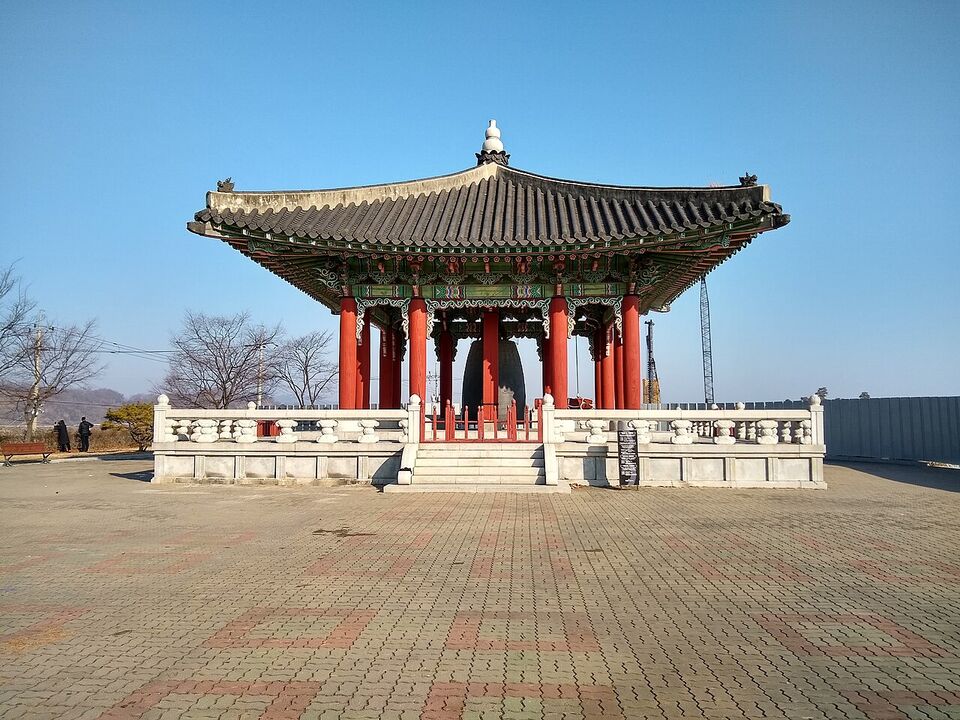
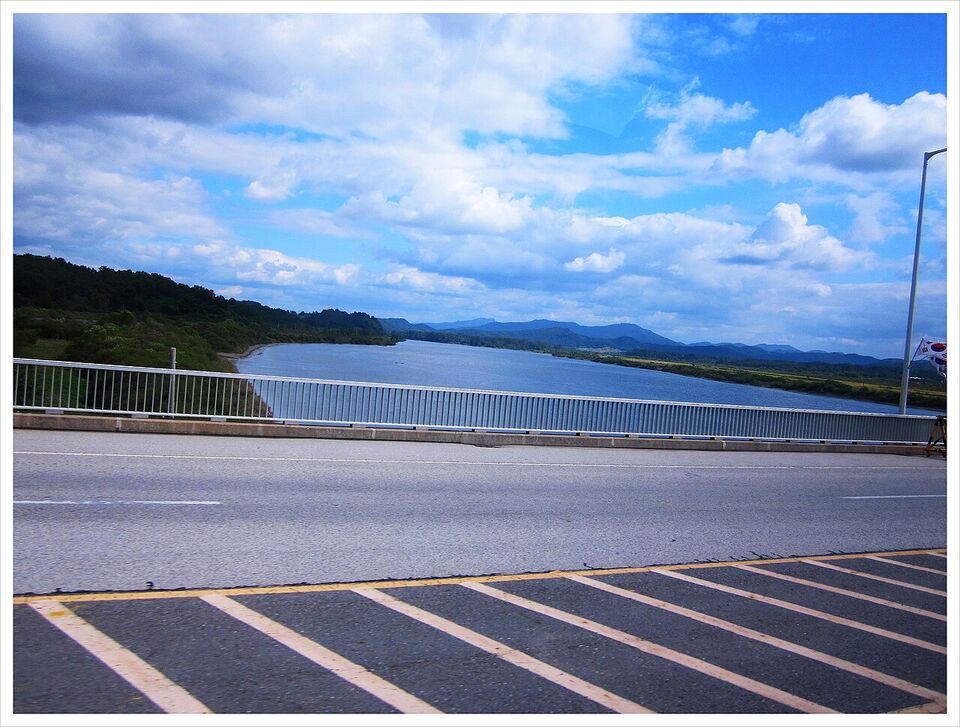
What to bring and what to wear
Your passport is the one non-negotiable item. Soldiers or officials may board the bus at a checkpoint and look at it, and a laminated copy or a phone photo is not accepted on most tours. Carry the original in a bag or pocket where you can reach it quickly, and keep it with you rather than leaving it on the bus.
- Original passport (the same one you gave at booking)
- Comfortable walking shoes: the tunnel slope is steep and the floor can be wet
- Layers and a light rain jacket: the observatory deck is exposed, and fall and winter days feel colder in Paju than in central Seoul
- Water and a small snack; check whether lunch is included
- Some cash and a card: food courts and shops near the sites vary in what they accept, and some small stalls take only cash
- A phone with the operator's contact number and the meeting point saved
On dress code, tours that go near military areas generally ask for neat, modest clothing. Avoid clothing that is torn, very short or carries slogans, and be careful with anything that could be read as military or political. Sandals and flip-flops are a poor idea in the tunnel. The rules vary by operator, so read your confirmation email; if a dress code is stated there, follow it.
Photography is allowed in some places and banned in others. The guide will tell you where the yellow line or sign is, and the rule is firm: do not photograph military posts or point a camera past the line where you are told not to. Do not fly a drone anywhere near the zone. Large bags are often not allowed in the tunnel, so ask the operator what to leave on the bus.
Who this tour suits, and who may want to skip it
Most healthy adults and teenagers can do a standard DMZ tour. It involves a lot of sitting on a bus, some waiting at checkpoints, and a few short walks. The one physically demanding part is the tunnel: you walk down a sloped passage to the tunnel floor and back up again, where the ceiling is low, so tall visitors will duck, and hard hats are commonly provided. Plan for roughly 30 to 40 minutes at the tunnel itself, though the operator sets the schedule.
- Families with older children. Good, because the story is easy to follow and the visit is short. Many tours are best for children old enough to sit through a guide's talk.
- Small children. Some tours and some sites set a minimum age or discourage young children, and a stroller does not work in the tunnel. Ask the operator for the age limit when you book; we could not confirm a single rule for all operators.
- Visitors with mobility problems. The tunnel slope and the many steps make it hard. Ask whether a private tour can skip the tunnel and keep to the observatory and station.
- Anyone who dislikes crowds. Weekends and holidays are busy at Imjingak and at the observatory, and Chuseok and Seollal are crowded in the Paju region as families visit memorials.
- History readers. Take a short briefing first. The DMZ guide here gives the practical picture; the war itself is a long story, and a museum visit in Seoul (see Seoul sights) pairs well with a DMZ day.
Different from home
Americans may be used to national-park and historic-site tours where you can stroll and photograph freely. Here the border is an active military area, so the schedule, the route and the photo rules are set by the soldiers and the guide, not by you. Follow instructions the first time you hear them, and do not argue at a checkpoint.
Safety, tours that change, and the tone of the visit
The US State Department lists South Korea at Level 1, "Exercise Normal Precautions" (as of November 2026), and notes that tensions on the peninsula remain high and large demonstrations may occur with little notice. Check travel.state.gov before you fly, and see our safety guide. DMZ tours have a long record of running quietly, but they are organized around a live border, so they can be rescheduled or canceled at short notice. Keep the day after the tour flexible, and avoid putting a flight or a nonrefundable train ticket right after a DMZ day.
It helps to remember that the zone has deep personal meaning to many Koreans, especially those from families that were divided in 1953. Some monuments are memorials, and families still leave offerings at Imjingak. Keep voices low at memorials, avoid joking about the border and do not treat the observatory as a photo-shoot backdrop. The guides are usually frank and informative, and they appreciate good questions.
The zone also holds the remains of the war: unexploded mines remain in many areas. Never leave the path or walk on grass beside a fence, even for a photograph.
Getting there without a tour, and a nearby day
You can visit the public part of the Paju area on your own. Paju is linked to central Seoul by the Gyeongui-Jungang Line and by express buses, and travel times to central Seoul are typically under an hour for the city itself, with the DMZ-side sites farther out. Imjingak is the most practical independent stop. From there, you can read the monuments and see the park, but the observatory, the Third Tunnel and Dorasan Station are usually reached only on an organized tour or with an official visit program, so confirm this before you plan a do-it-yourself day.
Paju also has a lighter side. Heyri Art Valley is a village of galleries and cafes, Paju Book City is a district of publishers and bookshops, and two outlet malls draw shoppers. A DMZ half-day combined with an afternoon at Heyri works well for a second day, and the afternoon is much easier on children. Our day trips from Seoul page lists other options if you have a second free day, and the getting around guide explains trains, buses and the T-money card for the independent part of the trip.
Save money
The cheapest tours are rarely the best value if they spend half the time at shops. A mid-priced tour from a licensed operator that includes the tunnel entrance and an English-speaking guide usually costs less than adding a separate entry fee and a taxi. Compare what is included, not only the headline price.
A sample DMZ day, and a calm second day
- Half-day
Morning DMZ, afternoon in Seoul
Take an early half-day tour that returns to Seoul around noon or early afternoon. Eat lunch in the city, then spend the afternoon at one of the palaces or a museum. Because tours can run late, do not schedule a train or timed ticket within two hours of the planned return.
- Full day
The whole border region
Leave at about 8 or 9 a.m. on a full-day tour with the tunnel, observatory, station and Imjingak. Eat a simple lunch on the tour. Return in the late afternoon and keep the evening easy, since the day involves a lot of waiting and walking.
- Second day
Paju at your own pace
Take the train to Paju and spend the day at Heyri Art Valley and Paju Book City, with a stop at Imjingak if you did not go on a tour. This pairs well with a day of rain or a late spring afternoon, and it keeps the schedule gentle.
Mistakes to avoid
- Booking a JSA tour. Ordinary JSA tours have not run since 2023. Skip any listing that promises Panmunjom.
- Booking from an unlicensed seller. Use a registered agency, read the cancellation terms and keep the confirmation email.
- Leaving the passport at the hotel. Without the original, you cannot go through the checkpoint, and there is usually no refund.
- Booking the day before a flight. Tours run late and can be canceled; leave a buffer.
- Wearing flip-flops, ripped jeans or political slogans. Dress neatly and comfortably.
- Ignoring photo rules. Follow the guide's instructions and the signs.
- Expecting a view in any weather. Fog and fine dust can hide the far side; a second chance is often impossible, so pick a clear forecast day if your dates are flexible (see when to go).
- Assuming the entry rules are unchanged. US citizens are exempt from K-ETA through December 31, 2026. For travel from January 1, 2027, check k-eta.go.kr before you book (see entry requirements).
Plan your visit and where to check
For a visit in 2027, start by checking the official DMZ portal (dmz.go.kr) and the Korea Tourism Organization's page. Both can announce changes, closures and new programs. Then choose an operator, read the terms, and keep your passport details ready. Emergency numbers are 112 for police and 119 for fire and ambulance, and the 1330 Korea Travel Helpline answers questions in English at any hour.
If the DMZ does not suit your trip, other day trips can fill the same slot: a fortress city, a palace day, or a coastal escape such as Gangneung. And if you are comparing history-focused outings, the regions overview shows where else in Korea to go beyond Seoul.
Add it to a route in the trip builder, or ask us to plan the hotels, trains and guides for you.