Overview: skiing in South Korea in a few lines
South Korea has more than a dozen ski resorts, most of them in the mountains of Gangwon Province and in the hills close to Seoul. The season is short and cold, roughly from late November or December into March, and the slopes are smaller than in the Rockies or the Alps. What you get instead is easy access, long night-skiing hours, heated lodges and an energetic après-ski scene built on food, hot baths and convenience stores.
If you expect powder days and steep terrain, adjust your hopes. If you want a well-run weekend of groomed slopes and Korean winter culture, it is a good fit. Pair this page with South Korea in January and South Korea in December for what else the season offers.
The resorts that matter
Resorts cluster in three areas: Pyeongchang (the 2018 Winter Olympic area, in Gangwon Province), the inland Gangwon mountains, and the Gyeonggi hills just outside Seoul. The 2018 Olympics left good infrastructure behind, including a high-speed rail line, which is why Pyeongchang is the easiest place for a visitor without a car.
Yongpyong
Often listed as Korea's largest ski and snowboard resort, with 31 slopes, 15 lifts including a 3.7 km (2.3 mile) gondola, and a base around 2,525 ft (770 m). It hosted the 2018 Olympic technical alpine events, and the Dragon Plaza ski house and a water park are on site. Some scenes of the drama Winter Sonata were filmed here; see K-pop and K-drama for more on drama locations.
Alpensia
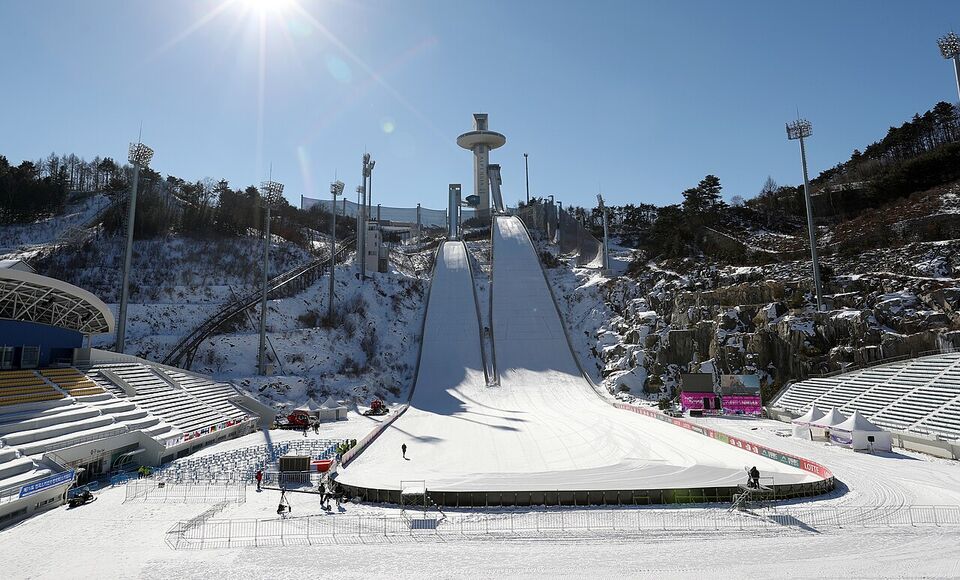
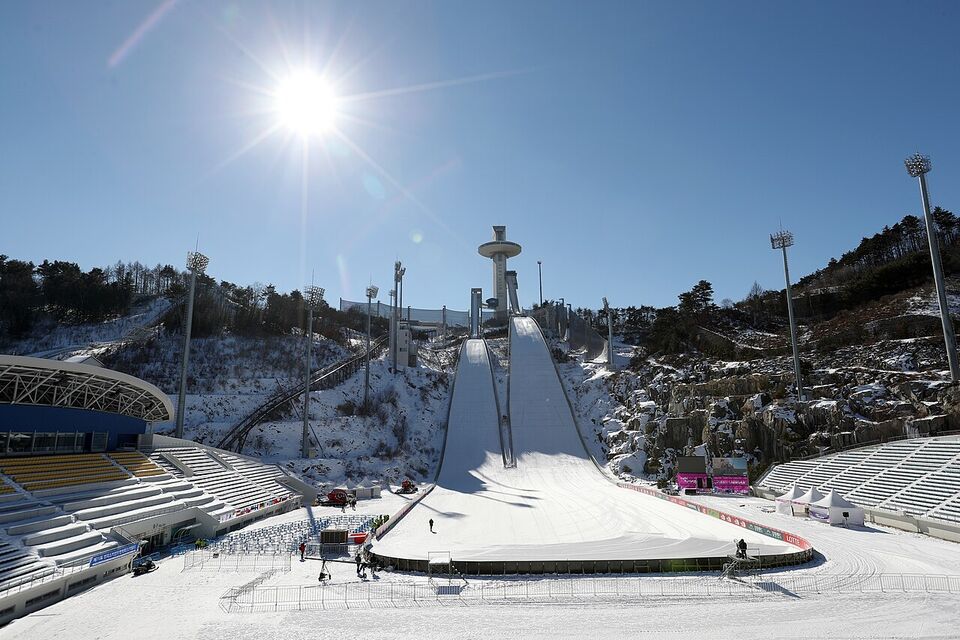
Six slopes, up to about 0.9 miles (1.4 km) long, with beginner runs named Alpha and Bravo and the rest for intermediates. It has a village of hotels, an indoor water park and the Olympic ski jumping stadium on site. It is a 5 to 10 minute drive from Yongpyong, and many visitors use the two together.
High1
A big mountain resort at about 4,500 ft (1,376 m) at its highest point, with 18 trails and gondolas. It opened in December 2006 and was built to bring visitors to old mining towns. It is reportedly farther from Seoul than Pyeongchang, so it works best as part of a longer Gangwon trip.
Phoenix Snow Park
The Olympic snowboard and freestyle venue, in the same county as Yongpyong. Check the resort's site for which slopes are open, because terrain parks and race venues are not always open to the public.
Resorts near Seoul
Resorts such as Jisan Forest, Elysian Gangchon, Vivaldi Park and Welli Hilli are closer to the capital and sell ski bus and rental packages. Their slopes are shorter, and they are best for a first lesson, a short day or a night session after work. Confirm each resort's current name, opening date and bus service on its own site.
Resort names and owners change, so look up the current English site of any resort before you buy a package.
Season, snow and the artificial snow reality
Korean winters are cold and dry, with Seoul averaging about 36°F (2°C) for a January high and 22°F (-6°C) for the low. Gangwon's mountains are colder than that and get real snowfall, especially on the east side, but snowfall varies a lot from year to year. Resorts therefore depend on snow machines. That is routine, not a warning sign: the base is built on cold nights in early winter and topped up through the season.
What this means for you:
- Opening dates move. Most resorts open between late November and mid-December, depending on how cold it is, and they publish an opening date only a short time ahead. Do not book nonrefundable lodging for early December on the assumption that every slope will be open.
- January and February are the most reliable months, and also the busiest and the most expensive.
- Machine-made snow is firmer and faster than natural powder. Expect good grooming, some ice in the afternoon and long lines on weekends, with lighter crowds on weekdays.
- March is warmer and has softer snow, and some lifts close earlier. Yongpyong lists an end of season in early April, but the upper slopes can close sooner in a warm year.
Different from home
Do not expect powder or backcountry terrain, and do not expect the lift ticket to include everything. Rentals, lessons and ski-wear hire are often sold separately, and many resorts sell packages that bundle a lift pass, rental and sometimes a bus ride. Also expect weekday and weekend prices to differ, and night sessions to be priced on their own.
Night skiing and the day's rhythm
Night skiing is one of the best parts of skiing in Korea, because the slopes are lit and the air is cold and clear. Alpensia has listed night skiing from 6:30 p.m. to 10 p.m., with the slopes closed for grooming from about 4:30 p.m. to 6:30 p.m. Other resorts run similar split sessions: a day session, a break for grooming, and then an evening session, sometimes with a midnight session on weekends. Hours change by resort and by day, so confirm on the resort's own site.
A practical way to plan it is to ski a half day, warm up and eat in the afternoon break, then ski the evening session, when slopes are often less crowded and the lights make for good photos. Pack a neck gaiter, because the evening wind is sharp. South Korea Packing List has a winter list.
Rentals and lessons
Every resort rents skis, snowboards, boots, helmets and clothing, usually from several shops at the base. Rental shops are used to beginners, and size charts are in metric, so know your boot size in millimeters (a US men's 9 is about 27 cm) or ask for a fitting. If you are tall or have large feet, bring your own boots, since stocks of big sizes can run low.
- Lessons. Most resorts offer group and private lessons, and some have English-speaking instructors. Do not assume that an English lesson is available on the day you arrive: book it ahead through the resort or your hotel, and confirm the language.
- Children. Many resorts have ski schools for children, with a separate beginner area. Minimum ages differ by resort, so check before you go. Families has more on traveling with kids.
- Helmets and insurance. Wear a helmet and check that your travel insurance covers skiing. Read Health and Medical Care for how to find care and what to expect.
- Lift prices. We could not confirm 2026-27 lift ticket prices, so check the resort's site for the current price, and watch for discounts for weekdays, late-afternoon sessions and online booking.
Getting there from Seoul
You have three realistic options: a high-speed train plus a shuttle, a ski bus, or your own car. Journey times below are typical and depend on traffic, which is heavy on winter Friday evenings and Sunday evenings.
KTX train to Pyeongchang
The Gyeonggang high-speed line was built for the 2018 Olympics. KTX trains on the Gangneung route stop at Pyeongchang and Jinbu stations, and a train from the Seoul area takes well under two hours (the line was built for a journey of about 80 minutes). From the station, a shuttle, local bus or taxi takes you to the resorts, and the ride is short but not walkable. Book KTX seats early for winter weekends at letskorail.com and read KTX, Buses and Subways for how the booking works. Fares and timetables change, so we give none here.
Ski buses and shuttles
In winter, resorts and travel agencies run ski buses from Seoul, usually leaving early in the morning from central meeting points and returning in the evening. An older Alpensia listing mentions a purple ski shuttle running three or four times a day from the rail stations; confirm that it still runs. Schedules and prices change every season and are often published only shortly before opening, so check the resort's own site or ask your hotel to help you book one. Use a Korean travel agency or hotel concierge if you are not comfortable booking in Korean.
By car
The Yeongdong Expressway takes you from the Seoul area into Pyeongchang in roughly two to two and a half hours without traffic. Driving in snow needs winter tires or chains and experience on mountain roads, so for most visitors the train is easier and safer. If you do rent a car, read Driving in South Korea first, and confirm the license and permit rules with the rental company.
Watch out
Do not plan a same-day return from the mountains on the last night of a long weekend, when roads and trains are full. Seollal falls on February 7, 2027, and travel is heavy from February 6 to 8, with the roads likely to be crowded for a few days around it. Book transport and lodging early for that stretch.
Resorts compared
This table gives rough distances and our own judgment of each resort. Distances, times and the beginner and atmosphere ratings are approximate and not from an official page, so treat them as a guide and check a map and the resort's site when you book.
| Resort | Distance from Seoul (approx.) | Beginner friendliness | Village atmosphere |
|---|---|---|---|
| Jisan Forest (Gyeonggi) | About 30 miles (50 km), around 1 hour | Good for a first lesson | Day-trip hill, little lodging |
| Elysian Gangchon | About 45 miles (70 km), 1 to 1.5 hours | Good, short slopes | Resort with lodging, easy for a night |
| Vivaldi Park | About 55 miles (90 km), 1.5 hours | Good, with a water park for non-skiers | Large resort complex |
| Welli Hilli | About 75 miles (120 km), 1.5 to 2 hours | Good, mixed terrain | Resort and golf hotel |
| Alpensia | About 110 miles (180 km), about 2 hours by KTX plus shuttle | Best of the group for beginners | Compact resort village, Olympic venues |
| Yongpyong | About 110 miles (180 km), about 2 hours by KTX plus shuttle | Good, with a range of runs | Large resort, ski house, water park |
| Phoenix Snow Park | About 110 miles (180 km), about 2 hours | Fair, more for snowboarders | Mountain resort, lodging on site |
| High1 (Jeongseon) | About 130 miles (210 km), 3 hours or more | Moderate | Mountain resort, quiet outside weekends |
If you are not sure, pick Alpensia and Yongpyong, which share a valley, a rail connection and a good choice of lodging, and add a night in Gangneung and the East Coast on the coast.
The Olympic legacy and what you can visit
The 2018 Winter Olympics put Pyeongchang on the map. Yongpyong hosted the technical alpine events, and Alpensia hosted ski jumping, biathlon, cross-country and sliding events. The Jeongseon Alpine Centre, used for speed events, was planned to be restored to forest after the Games. The Gangwon region also hosted the 2024 Winter Youth Olympics, which reused existing venues.
How much of this you can see depends on the year. Some venues are used as training or event sites, some are open to visitors with a ticket, and some are closed. We could not confirm what is open in the 2026-27 winter, so check the websites of Alpensia and Yongpyong, and the Pyeongchang tourism office, before building a day around an Olympic venue.
Other winter activities
You do not have to ski to enjoy a Korean winter, and a mixed group can split up for the day and meet for dinner. These are the best ideas, from the mountains to the city.
Ice fishing and winter festivals
The Hwacheon Sancheoneo Ice Festival, in Gangwon Province, is built around fishing for mountain trout through holes in the ice of a frozen river. The 2026 edition ended in January, and Hwacheon County has begun marketing the 2027 festival, but we could not confirm the 2027 dates, so check the county or Korea Tourism Organization site (visitkorea.or.kr) before you plan. The KTO also lists other winter festivals for 2026-27. Dress for deep cold.
Snow hikes
Seoraksan National Park near Sokcho is stunning after a snowfall, and lower trails are open for walking when conditions allow. Higher trails can be icy or closed, so wear crampons or microspikes, carry hot drinks and check the Korea National Park Service site (knps.or.kr) the day before. Sokcho and Seoraksan has the details, and Hiking in South Korea covers winter hiking safety. In Seoul, Namsan and the Bukhansan foothills are good for easy snow walks.
Hot springs and bathhouses
After a cold day, a hot bath is the Korean answer. Large jjimjilbang (public bathhouse and sauna) are found in every city, and resorts in Gangwon have indoor water parks and spa pools, including the water parks at Yongpyong and Alpensia. Natural hot spring resorts exist near Sokcho and in other parts of Gangwon, but we could not confirm current prices or hours, so check before you go. See Korean Etiquette.
Ice skating and city winter fun
Lotte World in Seoul has an indoor ice rink on the third basement level of its Adventure park, and Seoul usually sets up outdoor rinks and light displays in winter (check the city's announcements). The Seoul Lantern Festival ran from December 12, 2025 to January 4, 2026 last year, and the 2026-27 dates have not been confirmed, so check the city's announcement. See Seoul for more.
Insider tip
Book a Sunday-to-Wednesday stay if you can. Lift lines, lodging prices and the road home are all easier.
Where to stay and how long to allow
Two nights is the minimum that makes the trip worthwhile from Seoul, and three nights gives you two full ski days plus travel. Alpensia has a village of hotels, and Yongpyong has its own lodging. For a general look at room types, including Korean-style rooms with heated floors, see Where to Stay in South Korea. Nonskiers can base in Gangneung and the East Coast on the coast, which is about a short drive from the Pyeongchang slopes, and enjoy beaches, cafés and seafood.
In ski season, hotels in the resort villages fill up on Friday and Saturday nights and in the holiday weeks around the new year and Seollal. Reserve as soon as your dates are firm, and check cancellation rules.
Mistakes to avoid
- Booking early December with no flexibility. Slopes may be partly open, and not all lifts will run.
- Assuming English lessons are guaranteed. Book ahead and confirm.
- Forgetting the holidays. Seollal and school break weeks are the most crowded and most expensive weeks of the year.
Before you fly, check the entry rules: US citizens are exempt from K-ETA through December 31, 2026. For travel from January 1, 2027, check k-eta.go.kr before you book. The details are on Entry Rules for Americans (K-ETA). For general timing of a winter trip, see When to Go to South Korea.
Add it to a route in the trip builder, or ask us to plan the hotels, trains and guides for you.