Overview: why go to Seoraksan and Sokcho
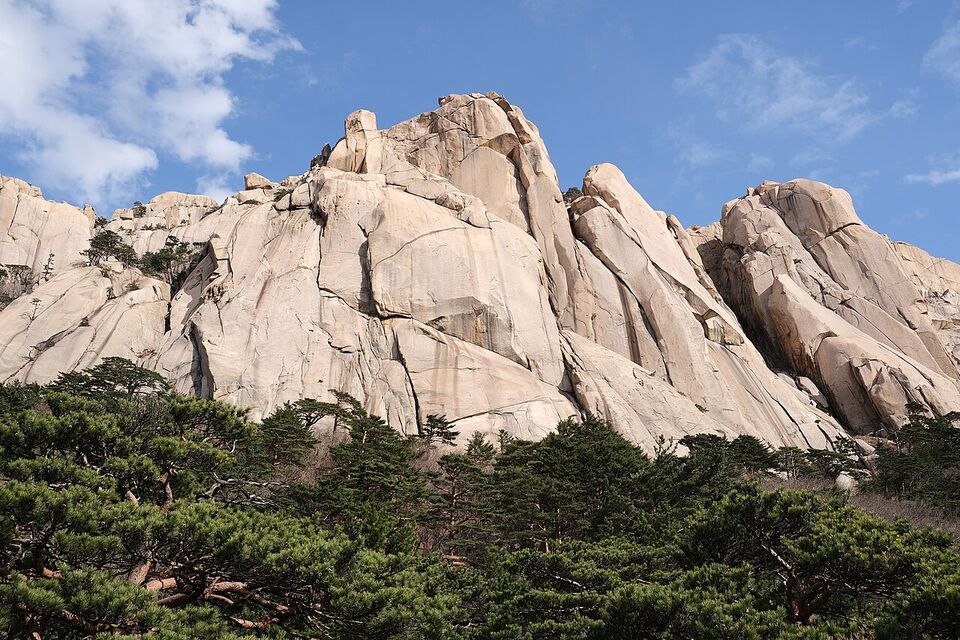
Seoraksan is a mountain range and national park on the northeast coast, a few miles from the port town of Sokcho. It is known for its jagged granite peaks, deep valleys, waterfalls and temples, and it is one of the three mountains most often named as Korea's finest, along with Hallasan on Jeju and Jirisan in the south. Daecheongbong, its highest peak, rises to 5,604 ft (1,708 m), the third-highest summit in South Korea. The park is also a UNESCO biosphere reserve.
Sokcho is the town at the foot of the park. It has a beach, a harbor, a fish market and a good choice of restaurants and hotels, so most visitors use it as a base. A trip here is easy to build: a bus ride from Seoul, a night in town, a day on the trails, and a seafood dinner. Many people add a few days on the coast around Gangneung and the east coast first.
This page gives you the main trails and how hard they are, the cable car, fall color timing, the Sokcho fish market and the Abai village, how to get here, where to stay and the mistakes that spoil a day. If hiking is your main interest, our hiking in South Korea page covers gear, safety and other mountains. Trail status, closures and prices change, so confirm them on the Korea National Park Service (knps.or.kr) before you go.
The park at a glance: Outer, Inner and South Seorak
Seoraksan is divided into three areas. Oeseorak (Outer Seorak) is on the eastern side facing Sokcho and has the easiest access and most of the day-hike trails. Naeseorak (Inner Seorak) is in the northwest, in Inje County, and is wilder and harder to reach. Namseorak (South Seorak) lies to the south, near the Osaek area and its hot springs, and gives access to one of the standard routes up Daecheongbong.
For a first visit, Outer Seorak is the place. The entrance area near Sorak-dong has a large car park, bus stops, a temple, a cable car station and the start of several trails, so you can choose a walk of one hour or a hike of a full day without going anywhere else. The valley that runs inland is called the Valley of a Thousand Buddhas, named for the rock formations that line its sides. Biseondae, a rock platform beside a stream, lies near its start, and a hard-to-reach cave above it offers views of the rocks.
The park has a long fire-prevention closure in spring, when high-altitude trails close for roughly two to three months. News reports from May 2026 described large crowds of hikers when trails reopened after the closure. Dates change every year, so look at the Korea National Park Service notices for the year you travel.
Trails and which suit a day hike
The table gives rough difficulty and time. Times are for an average walker, round trip, and are guides rather than official figures; verify them on knps.or.kr or at the park's visitor center. The Biryong Falls walk, the Dinosaur Ridge length and the Ulsanbawi step count come from public references; the other times are typical estimates.
| Trail | Difficulty | Typical time (round trip) | What to expect |
|---|---|---|---|
| Biryong Falls and Yukdam Falls | Easy to moderate | About 2 hours | Valley path, about 40 minutes from the main car park, ending at waterfalls |
| Cable car to Gwongeumseong | Easy ride, then a moderate climb | 2 to 3 hours with the ride | Short cable car, then a climb on stairs to a rocky viewpoint; check the schedule |
| Biseondae | Easy to moderate | About 2 to 3 hours | Walk up the valley to a rock platform by a stream |
| Ulsanbawi | Moderate to hard | About 3.5 to 4 hours | Over 800 steps (locals say 888) to a huge rock with views to the sea |
| Valley of a Thousand Buddhas to Daecheongbong | Hard | Long day or overnight | Valley, then a steep climb to the summit; check status and shelters |
| Osaek route to Daecheongbong | Hard | About 8 to 10 hours | Steep, long climb from the south side; early start required |
| Dinosaur Ridge (Gongnyong Neungseon) | Very hard | 5 hours on signs; 10 hours or more as a full traverse | A 3.2-mile (5.1 km) ridge of spiked rocks; for experienced hikers only |
For most visitors, one of the first three, plus Ulsanbawi if you are fit, makes a full and satisfying day. The ridge and the summit are different undertakings and need an early start, good weather and gear.
Ulsanbawi, Biryong Falls and the cable car
Ulsanbawi
A huge freestanding rock with a steep staircase to the top. The path passes two temples and Heundeulbawi, a boulder about 16 ft (5 m) high that can be rocked a little by hand but never pushed off. The final section is steep metal stairs that can be crowded in fall; the view on a clear day takes in the sea and Sokcho.
Biryong Falls
A pleasant valley walk of about 40 minutes from the main car park, passing Yukdam Falls before reaching Biryong Falls. It suits families, older walkers and anyone with a limited day.
Gwongeumseong cable car
The cable car carries you up to the Gwongeumseong area, from which a stair climb leads to a viewpoint over the peaks. It is the easiest way to see the rocks above the valley. Lines are long in fall, so go early.
Sinheungsa temple
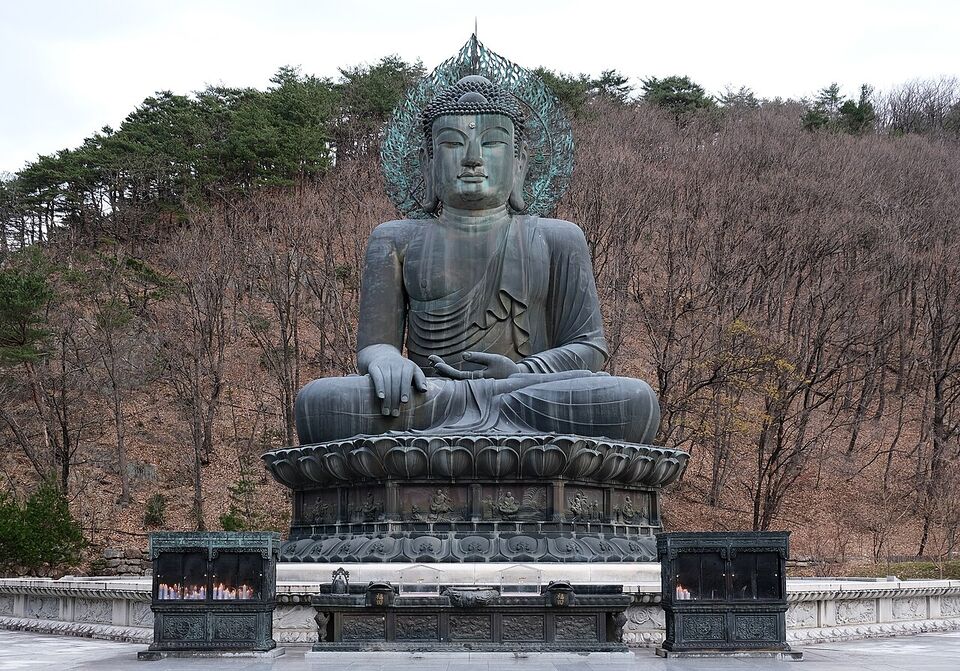
A temple near the park entrance, with a large bronze Buddha statue. It is a gentle walk and a good option when the weather is poor.
The cable car runs from a station near the entrance and goes up to the Gwongeumseong area. Operating hours, the last ride and prices vary by season, and winds, snow and maintenance can close it for days. We could not confirm the 2026-27 schedule or fare, so check the cable car's own site or the Korea National Park Service before planning around it. Arrive early, because on busy days the last rides sell out, and a closed cable car can leave you with no way to reach the viewpoint (see the mistakes below).
Insider tip
Do the Ulsanbawi stairs on a weekday morning, and save the easy walks and temple for the afternoon. In fall, expect a slow queue on the stairs at busy times.
Daecheongbong and the long routes
Daecheongbong is the summit of Seoraksan. The routes are long and steep, with stairs and rock steps, and the weather at the top is much colder than in Sokcho (the town averages a November high of 55.6°F (13.1°C), and no official summit figure was available to us). The mountain's weather changes quickly, and fog, wind and early snow are possible from late fall.
Most visitors treat the summit as an overnight plan or a very early, fit day, because the ascent and descent together take many hours. A common approach is to stay in Sokcho or the Osaek area the night before, start at first light and be off the mountain before dark. Mountain shelters exist on the high routes, and they require advance booking on the Korea National Park Service system at knps.or.kr; availability and rules vary by season. We could not confirm 2026-27 shelter or reservation rules, so check before you commit.
Dinosaur Ridge, between Madeungnyeong and Sinseonam, is for experienced hikers. Signs list about 5 hours for the 5.1 km section, but the access climbs and the descent can turn it into more than 10 hours from the eastern entrance. It is one of the most strenuous walks in the park, and many hikers use a guide or a group. If you are not sure, skip it.
Watch out
High-altitude trails close each spring for fire prevention, for roughly two to three months, and other sections close for rockfall repairs, snow, ice or storms. Do not go onto a closed trail: signs are posted, rangers patrol, and penalties can apply. Check the official park notices for the dates of your trip.
Fall color: timing and crowds
Seoraksan is one of the first places in South Korea where fall color appears and one of the most crowded. The usual pattern, which varies from year to year, is that color begins on the high peaks in late September or early October, reaches the mid slopes in mid-October and the lower valleys and Sokcho in late October and early November. The window for peak color at any one elevation is only a week or two, and a warm, wet or windy fall can shorten it. Check the Korea Meteorological Administration and the Korea Tourism Organization for forecasts in the weeks before you go.
The crowds at peak color are large, and weekends are far busier than weekdays. Car parks fill early, buses and the cable car have long lines, and rooms in Sokcho book out weeks ahead. If you can, go on a weekday, start at sunrise, and hike the less popular side trails. As of mid-November 2026, the best color on the high peaks has passed, so a trip this season is about quiet trails and cold air, not leaves. For a 2027 trip, plan for the first three weeks of October and book early. Our seasons guide and when to go page place this in the wider year.
Other seasons are worth a look. Spring brings new green and some azaleas on the lower slopes, but the high trails may still be closed for fire season. Summer is green but hot and wet; waterfalls are at their fullest after rain, but storms and slippery rock raise the risk. Winter is cold and quiet, with snow on the peaks from about late fall, and some trails need crampons and have limits on the hours you can start.
Sokcho: the beach, the harbor and the fish market
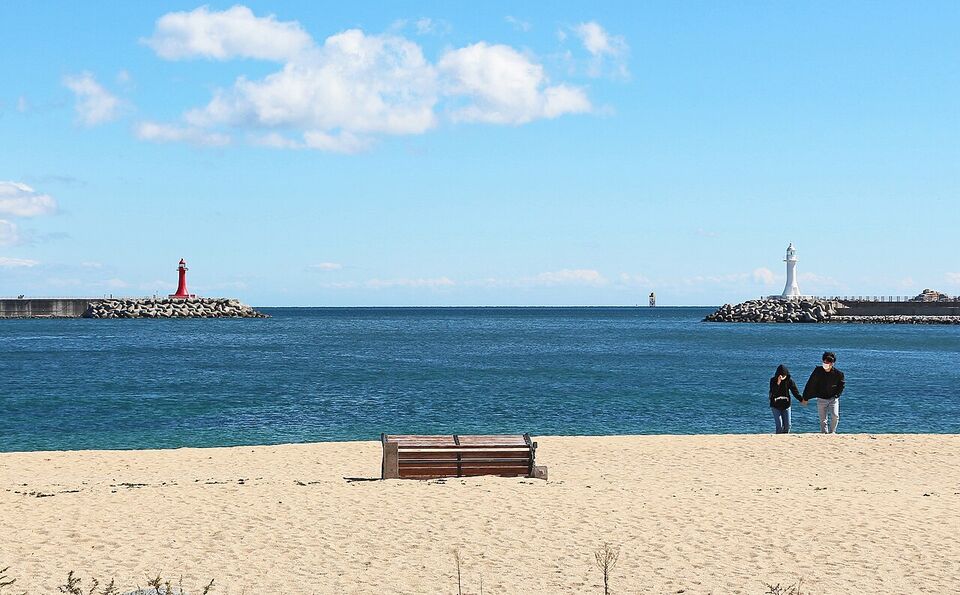
Sokcho is a working port. Its beach has fine sand and is lively in July and August, and the harbor area at Daepo has a sea fountain and a beach cable car. Two lakes, Yeongnang Lake and Cheongchoho, lie near the town, and a walk around one makes a quiet end to a hiking day. The Sokcho fish market is the main dining draw, with stalls selling fresh fish, crab, squid and shellfish by weight, and restaurants that will cook what you buy. Hours and prices vary, so ask the price before you order, and look at the scale.
The Abai village is a neighborhood that grew from refugees from the north who settled in Sokcho during the Korean War. It is known for Abai sundae, a squid stuffed with rice, vegetables and seasoning, steamed and sliced. You can reach it by a small, hand-pulled cable ferry called a gaetbae, which crosses a short channel; check whether it is running on your day, as it can close in bad weather. The village has several restaurants, and squid sundae is the dish to order.
Seafood is a good reason to visit Sokcho in fall and winter. Squid, crab and fish are central to the menu, and restaurants near the port serve set meals with side dishes. Prices vary by season and weight, and a platter for two can cost a lot, so ask for the total before you order. Vegetarians should ask about broth and sauces; see our food guide for how to order. Cards are accepted in most restaurants, though market stalls and small shops may prefer cash.
Different from home
Fish markets in Korea often work on a "choose the fish, then eat upstairs" system. You buy by weight at one stall, then take the fish to a restaurant that charges a table fee and cooks it. This is normal, not a scam, but always agree on the price first.
Getting there: express bus from Seoul and from Gangneung
The standard way to reach Sokcho is the express bus. Buses run from Seoul's main bus terminals and take roughly two and a half hours without traffic; on holiday weekends and in fall they can take much longer. Buses from Gangneung to Sokcho take about 1.5 to 2 hours, depending on the route. Times and fares change, and we could not confirm current fares from an official page, so check kobus.co.kr and the terminal pages for the current timetable and book a seat early for weekends and October.
In Sokcho, local city buses run from the terminal to the Seoraksan entrance area, and the ride takes about 20 to 30 minutes, depending on the route and traffic. Taxis are an alternative if you have luggage or arrive late. In peak fall season, road traffic into the park is heavy, and buses may be faster than cars. If you drive, see our driving guide, and be ready for parking fees and a full car park in October.
By train, the KTX reaches Gangneung from Seoul in about two hours, and you can continue by bus (see our Gangneung and east coast page). We found no direct train to Sokcho, so check korail.com if a new line has opened since November 2026. For the rest of the transport picture, read getting around South Korea.
Where to stay
You have three basic choices. In Sokcho town, near the beach and terminal, you get the most restaurants and the widest range of hotels, from budget guesthouses to larger beach hotels. Near the park entrance at Sorak-dong, you get a shorter walk to the trailheads and the cable car, with a smaller choice of places to eat. In the Osaek area, a hot-spring district on the south side, rooms are quieter, and the area is a base for the Daecheongbong route.
Price tiers: guesthouses and simple motels are $, comfortable hotels and condos with a sea or mountain view are $$, and top beach resorts are $$$ in peak season. Visitor numbers in Korea are at record highs in 2026, and October weekends sell out, so book several weeks early. Our where to stay page gives general advice.
- Short stay, on foot: Sokcho town, for restaurants and the bus terminal.
- Early trail starts: near Sorak-dong, so you can reach the trailhead before the buses.
- Soak after hiking: Osaek, for hot springs and quiet.
A two-day plan
- Day 1
Arrive, harbor and market
Take a morning express bus from Seoul or Gangneung. Check in, walk the beach and harbor, and eat at the fish market. Choose a restaurant that shows prices on the menu or on a board, and have an early night.
- Day 2
Seoraksan
Take an early bus to the park. Ride the cable car first if it is open, then walk to Biryong Falls or climb Ulsanbawi, depending on your energy. Visit Sinheungsa on the way back and finish with squid sundae at Abai village before the evening bus or an overnight stay.
With three days, add a full hike such as the valley walk to Biseondae and a second night. For climbers, add the summit or ridge on a separate day. If you plan to continue to other mountains, the hiking guide compares the major parks.
Mistakes to avoid
- Arriving late for the cable car. Lines grow through the morning, and the last ride is earlier than people expect. Go first thing, and check the day's operating status.
- Going on closed trails. Sections are closed for fire prevention, rockfall repair, ice and storms. Check knps.or.kr, read the signs, and follow the rangers.
- Underestimating Ulsanbawi. Over 800 steps is a long climb on tired legs. Bring water and take it slowly.
- Starting the summit late. A long route started at midday can end after dark. Use a headlamp, start at first light and set a turnaround time.
- Trusting Sokcho weather for the mountain. The coast can be mild and the summit freezing, windy and foggy.
- Booking fall weekends late. Rooms and buses go early; book as soon as your dates are firm.
- Trying to do Gangneung and Seoraksan in one day. They are far apart by bus; stay a night in each.
- Ignoring the safety numbers. Know that 119 is fire, rescue and ambulance and 112 is police, and save the 1330 Korea Travel Helpline. See our safety guide for more.
Save money
Eat your main meal at lunch, when many seafood restaurants have set menus, and carry water and snacks from a convenience store instead of buying at the park. Weekday trips are also cheaper for rooms.
Add it to a route in the trip builder, or ask us to plan the hotels, trains and guides for you.