How eating in Seoul works
You can eat very well in Seoul without speaking Korean, spending much, or booking anything. The city runs on small, specialized restaurants that cook one thing, markets with rows of stalls, and convenience stores that serve real meals. This page explains the main kinds of places, what to order, how to order and behave, and how to choose a restaurant that is good rather than just close. For the dishes themselves, see our guide to Korean food, and for what to drink with them, see soju, makgeolli and cafes.
Three habits explain most of the differences from home. Meals are shared, with rice, soup and side dishes (banchan) in the middle of the table. Water and refills of side dishes are free. And you usually pay at a counter on your way out, not at the table, and you do not tip.
We do not give menu prices on this page. We could not confirm 2026 prices for meals from official sources, and Seoul restaurant prices move with rent, ingredients and wages. Instead we describe price levels (a snack, a quick one-dish meal, a barbecue dinner, a hotel or tasting-menu meal) and tell you how to read a menu before you sit down. For a daily budget, see our money guide.
Different from home
Nobody expects a tip, the check is not brought to the table, and nobody rushes you. Free water and refillable side dishes are standard. You walk up to the counter with the bill slip when you are ready, and a staff member rings it up.
The main kinds of places to eat
Korean barbecue
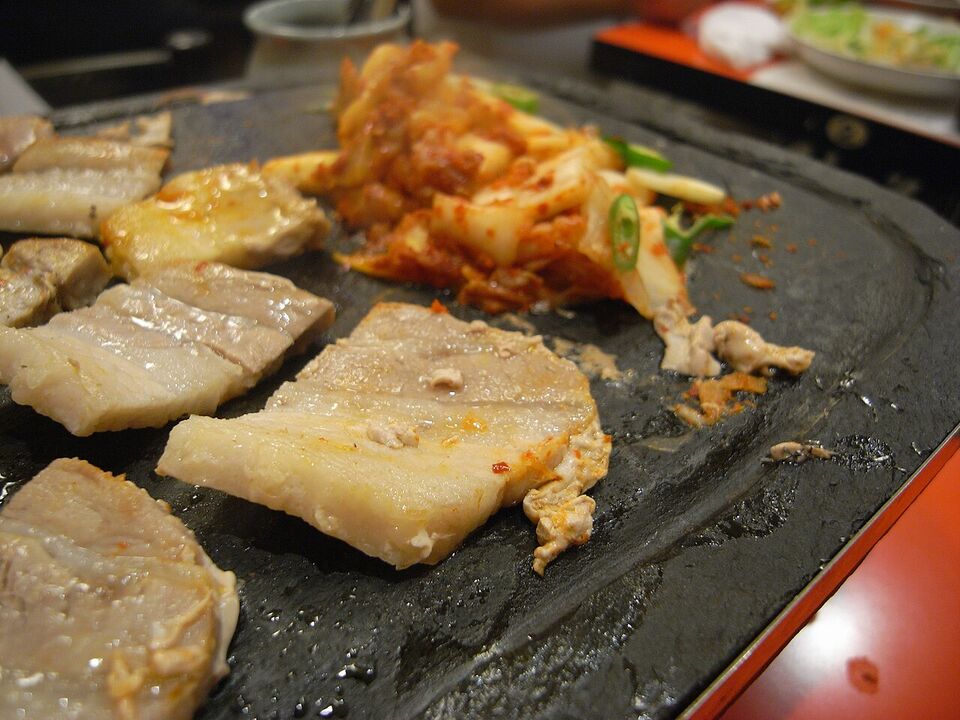
You cook meat on a grill built into the table, then wrap it in lettuce or perilla leaves with garlic, a dab of paste (ssamjang) and rice. Pork belly (samgyeopsal) and marinated beef ribs (galbi) are the standard first orders. Staff often cut the meat with scissors or flip it for you.
One-dish specialists
A restaurant that makes one dish and does it all day: ginseng chicken soup, cold noodles, bone broth, kimchi stew, handmade noodle soup, raw crab marinated in soy. The menu is short, so it is easy to order, and a single diner is welcome.
Markets
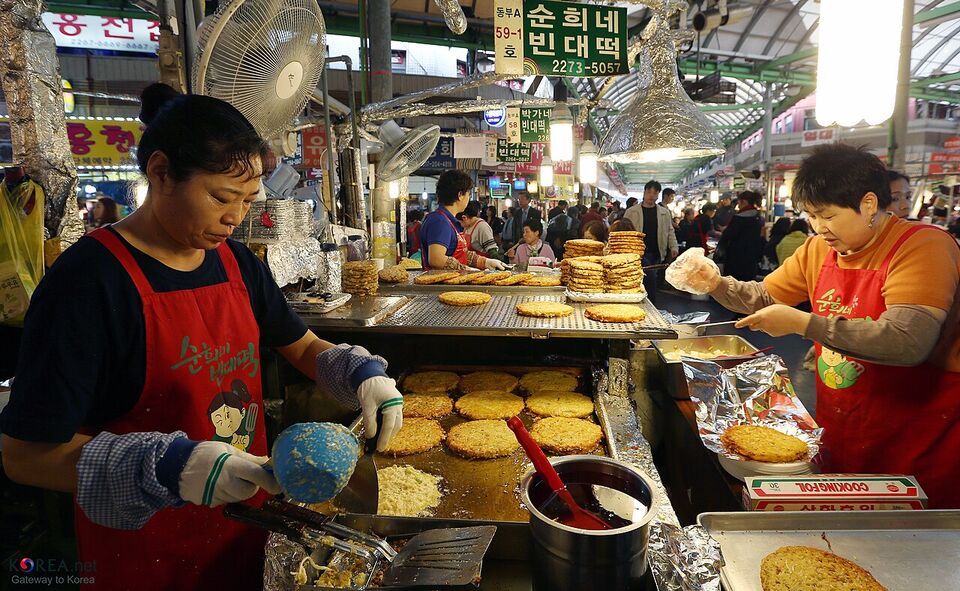
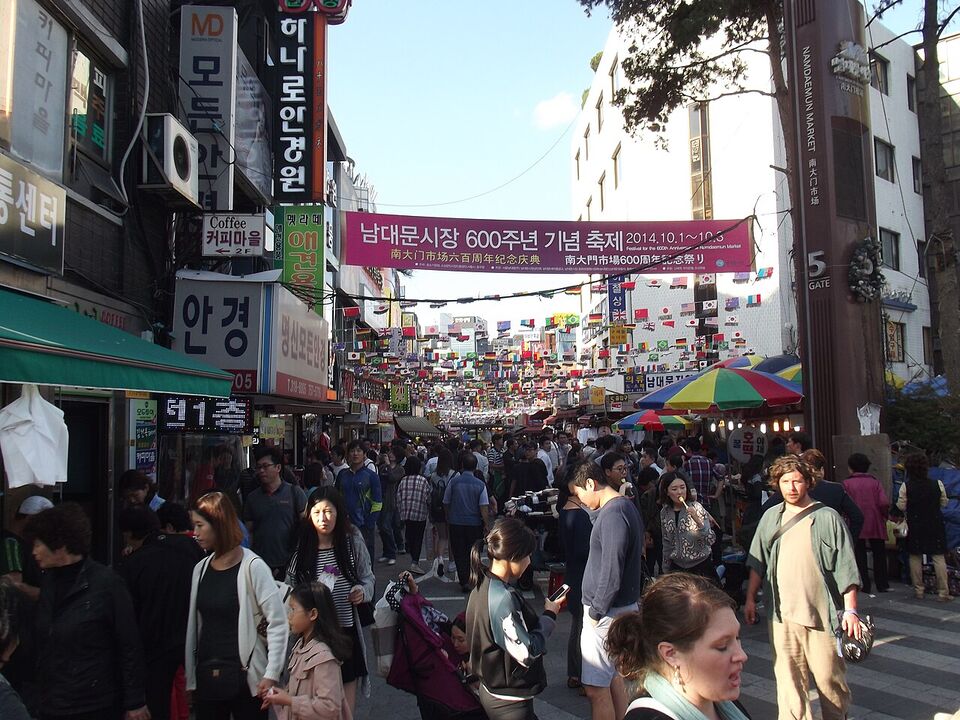
Gwangjang Market, Mangwon Market and Namdaemun Market have dense rows of food stalls selling pancakes, noodles, rice rolls and stews at counters. Prices are usually posted. Some stalls prefer cash, so carry some.
Pojangmacha
Orange or clear plastic tents that sell soup, fish cakes, stir-fried dishes and soju. Some are now fixed restaurants that keep the tent look. They are best for a late snack with a drink, not a first meal.
Convenience stores
CU, GS25, 7-Eleven and emart24 sell instant ramen you cook in the store, triangle rice balls, gimbap, boiled eggs and coffee. They are a real option for breakfast or a late meal, not a last resort.
Cafes and bakeries
Seoul has a cafe on nearly every block. Many bakeries sell sweet and savory breads that make an easy breakfast. See our drinks guide for cafe seating habits.
What to order on a first trip
If you are staying a few days, aim for one example from each of these groups and you will have eaten a reasonable cross-section of Korean food.
- Something grilled. Pork belly (samgyeopsal), marinated beef short ribs (galbi) or thin marinated beef (bulgogi), which is often cooked in a pan instead.
- A rice dish. Bibimbap (rice bowl with seasoned vegetables, egg and chili paste) or a rice-and-soup combination (gukbap).
- A stew. Kimchi jjigae (kimchi stew) or sundubu jjigae (soft tofu stew), usually arriving bubbling and very hot.
- Noodles. Kalguksu (knife-cut noodle soup) in cold weather or naengmyeon (cold buckwheat noodles) in summer. Ask whether the broth is meat-based if you avoid meat.
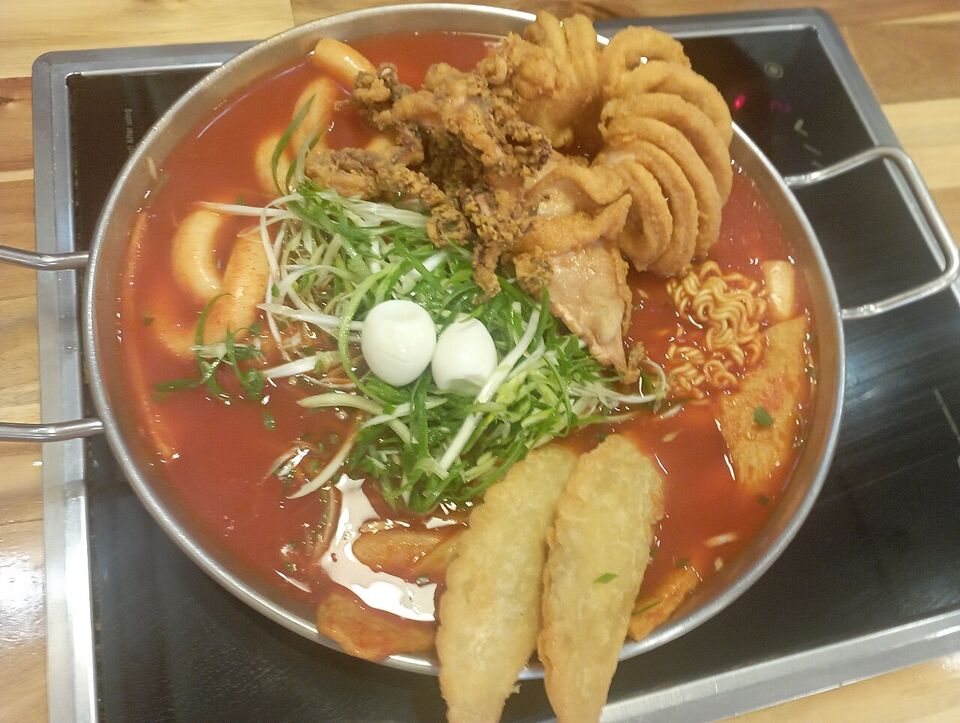
- A market snack. Bindaetteok (mung bean pancake), tteokbokki (rice cakes in spicy sauce) or gimbap (rice and filling rolled in seaweed).
- Fried chicken with beer. Chimaek, the combination of chikin (fried chicken) and maekju (beer), is a night-out ritual in Korea.
If a menu is only in Korean, point at a neighbor's table, ask for the recommended dish with "chucheon" (see our Korean phrases page), or use a translation app. Photo menus are common and make ordering easy.
How ordering and paying works
Call buttons, kiosks and QR codes
Many restaurants put a small call button on each table. Press it, and a server comes. Do not wave or shout across the room, although "yogiyo" ("excuse me, over here") is normal when there is no button. Some places, especially fast-casual chains, cafes and noodle shops, use a kiosk at the entrance. Many kiosks have an English mode, and some let you pay by card as you order, after which you get a number or a printed ticket.
QR codes on the table open a digital menu in some restaurants, often in English as well. In small family places, you order by speaking or pointing.
Paying
Take the slip from the table and pay at the front counter. Cards, including contactless, are widely accepted. Carry some cash for market stalls, street food and small neighborhood places, in case a vendor's card reader is not working. Tipping is not customary and we do not suggest a percentage. Splitting the bill is routine in a group but sometimes takes some patience at a small counter, so a single payer who is repaid by transfer is often easiest.
The free items
Water, side dishes and often lettuce and dipping sauces for barbecue are free. You can ask for refills of banchan by saying "deo juseyo" ("more, please"). Do not be embarrassed to ask. The kitchen expects it.
Barbecue etiquette and the two-portion problem
Many grill restaurants set a minimum of two portions per table, usually two portions of meat. A solo traveler or a couple who wants to share one dish can be refused at the door or asked to order more. We could not find an official rule behind this, so treat it as a custom that varies by restaurant. The simplest fixes are to go with a friend, to look for restaurants that advertise solo or "1-person" grilling (some have counter-style seating), or to choose a one-dish restaurant instead.
At the table, staff often cook for you, and you wait for the meat to be ready before eating. Younger people usually do the grilling and pouring when an older person is at the table. Wrap meat in a leaf with a little rice, a slice of raw garlic and sauce, and eat the whole bundle in one bite.
Barbecue smells stay in clothes. Some restaurants offer a bag to put your coat in and a deodorizing spray. It is worth accepting it if you have somewhere to be afterward.
Watch out
Do not order at a grill restaurant and then leave half the meat uncooked or unpaid. Meat is usually priced per portion by weight, and the portion size is printed on the menu. Check whether the price shown is for 150 grams, 200 grams or a larger amount before you order two.
Neighborhood by neighborhood
Gwangjang Market
One of Seoul's best known food markets, with rows of stalls serving mung bean pancakes, rice rolls, spicy rice cakes and raw beef (yukhoe). Sit at a shared counter, point at what you want and share a few dishes. We could not confirm current hours or prices, so check before you go.
Myeongdong street food
In the evening the main lanes fill with carts selling skewers, grilled seafood, egg bread and fried snacks. It is convenient and fun, but prices are aimed at tourists, so compare a few stalls and check the posted prices before you order. See Seoul neighborhoods for the area.
Mangwon
Mangwon Market is a neighborhood market with a local feel, a short walk from Hongdae. It is a good place to try snacks and fried foods with fewer tour groups than the central markets.
Euljiro
A district of printing shops and hardware stores whose back alleys have become known for retro bars and old-style restaurants. Look for dried-pollack snacks with beer in the evening and long-established noodle and stew restaurants at lunch. Many places keep short hours and close on Sundays, so check Naver Map first.
Itaewon
The best neighborhood for non-Korean cuisines, and for halal restaurants near the Seoul Central Mosque. It is also a busy nightlife area. After the crowd crush of October 2022, Seoul uses overhead electronic displays to manage crowds, so follow staff directions on busy nights.
Hongdae and Seongsu
Hongdae (near Hongik University) has cheap late-night food and student-friendly restaurants. Seongsu has a dense cluster of cafes and bakeries in former factory buildings. Both are good for a casual evening.
Street food and pojangmacha
Street food in Seoul is eaten quickly, standing, and usually from a paper cup or on a stick. You pay the vendor directly, often in cash, though many stalls now take cards or mobile payments. Look for the stalls with locals queuing, and make sure the food is cooked in front of you or kept hot.
Typical street items include tteokbokki, odeng (fish cake skewers in broth), hotteok (sweet filled pancakes), twigim (fried vegetables and seafood), gyeranppang (egg bread) and bungeoppang (fish-shaped pastry filled with red bean paste, a winter snack). Eating while walking is acceptable at street stalls, but locals tend to finish their snack near the stall and then move on.
Pojangmacha are covered tents or tent-style bars, open in the evening and late at night. They serve warm dishes such as spicy chicken feet, stir-fried pork, noodle soup and grilled fish, plus soju and beer. They are noisy and fun, and the dishes are meant to be shared. Do not go in alone if you are not comfortable at a crowded table. For drinking habits, see our drinks guide.
Convenience store meals
Korean convenience stores are among the best in the world for travelers. They are open all day and night, nearly everywhere, and have hot water dispensers and seating areas.
- Instant noodles in cups or packets that you cook in the store with hot water from the machine.
- Triangle gimbap and rice balls (samgak gimbap), sandwiches, boiled eggs, bananas and yogurt.
- Hot items such as fried chicken, hot dogs, steamed buns and skewers in the warmer.
- Coffee, tea, soda and a wide range of hangover drinks. Alcohol is sold too, though ID rules apply (see our drinks guide).
Transit cards such as T-money work at many convenience stores. The staff will usually heat a rice dish or sandwich in the microwave if you ask, and they will not mind that you eat in the shop.
Insider tip
A convenience store breakfast of a rice ball, a boiled egg and a coffee is a good way to start a morning when your hotel does not serve breakfast. It also solves the problem of dinner when you have arrived late from the airport.
Cafes and bakeries
Seoul's cafes are a place to sit, work or meet friends, not only to get coffee. Cafes in Seoul often have attractive interiors and may sell cakes, bingsu (shaved ice dessert) and bread. Bakeries sell fresh pastries and savory breads. We cover cafe habits, seat rules and traditional tea houses in the drinks guide.
In a busy cafe, you usually order and pay at the counter before sitting down. Some cafes have a rule of one order per person, and seats at the most popular places may be hard to find on weekend afternoons.
Eating vegetarian, vegan or halal in Seoul
Seoul is not an easy city for strict vegetarians, but it is manageable with preparation. Many dishes that look vegetarian are made with fish sauce, anchovy or beef broth, including most kimchi, many stews, noodle soups and the broth for rice bowls. Staff may not understand "no meat" to include fish sauce or broth, so we suggest asking about the stock directly.
- Temple food is the most dependable vegetarian cuisine in Korea, and there are restaurants near some Seoul temples that serve it. See our temples guide.
- Dedicated vegetarian and vegan restaurants exist in Seoul, especially around Insadong and in neighborhoods popular with foreign residents. Search Naver Map or a vegan app before you go, and check that the place is still open.
- Convenience stores sell plain rice balls, fruit, nuts and some vegetable gimbap, though check the label for fish or meat ingredients.
- Bibimbap can be ordered without meat, but ask for no egg if you avoid it, and whether the chili paste contains seafood.
Halal and kosher options are limited compared with the US. Itaewon has several halal restaurants near the mosque, and some hotels have halal-certified kitchens. Because we could not verify specific restaurants for 2026, check the restaurant's own page or a halal app before you go, and confirm that it is open. Pork is very common in Korean cooking, and shared pans and grills are common, so the safest options are restaurants that state their certification.
Seafood and shellfish allergies need extra care. Shrimp paste, oyster and anchovy are used in many sauces and in kimchi. Carry an allergy card in Korean, and see our health guide for allergy basics.
How to avoid tourist-trap pricing
- Look for the price on the menu or wall. Honest places print prices for each item. If there is no price, ask before you order.
- Check the unit. Barbecue is priced per portion by weight, and seafood in markets may be priced by weight or by the plate. Ask "how much in total?" before you agree.
- Be careful with tourist-street restaurants. Places with English-only photo menus, touts at the door or a very central location (including the lanes of Myeongdong) tend to be more expensive than a restaurant one or two blocks away.
- Check where locals eat. A lunchtime queue of office workers is a good sign. A quiet restaurant with a large menu in several languages is usually not.
- Do not accept dishes you did not order. In some restaurants, extra dishes or a service dish can be added to the bill. Check the slip before you pay.
- Carry a little cash. It gives you more options at markets and small stalls.
Save money
Lunch menus and set meals (jeongsik or baekban) at a restaurant that serves them often cost less than the same food at dinner. Convenience store meals and market stalls are the cheapest ways to eat, and you pay no tip.
Using Naver Map to find a good restaurant
Naver Map and KakaoMap, both with English modes, are the map apps most people in South Korea use, and Naver is a common source for restaurant reviews. As of November 2026, Google Maps works for transit in Korea but gives little or no walking and driving directions, so check it before you rely on it. Download Naver Map or KakaoMap before you go and switch it to English. Our phones and apps guide covers mobile data and the other apps you may need.
- Read the review count and the recent reviews. A restaurant with hundreds of recent reviews is likely to be open and busy. Ignore a place with a few reviews, all praising it in similar words.
- Look at the photos. Photos of the menu, the table and the bill are more useful than staged shots. They show the real portion sizes and prices.
- Use the hours, break time and last order. Many restaurants close between lunch and dinner for a break, and the kitchen stops taking orders before closing. The app shows these times.
- Use the filters. You can search by cuisine, distance and whether the place accepts reservations, and in some cases book through the app (features vary, so check what your version offers).
- Translate the reviews. Use the translate button. Machine translation is rough but good enough to see whether people mention long waits or high prices.
We do not name individual restaurants or repeat awards or guide listings on this page, because we could not verify them for 2026 from official sources. A restaurant that a guide praised years ago may have moved, changed owners or closed. Use Naver Map for current status and our neighborhood notes above to choose an area.
What to do on arrival and a simple day of eating
- Morning
Convenience store or bakery
A rice ball and a coffee, or a pastry at a bakery. If your hotel serves a Korean breakfast, try it: rice, soup and side dishes.
- Lunch
One-dish restaurant or market
Order a stew, noodle soup or bibimbap. Lunch sets often cost less than dinner.
- Afternoon
Cafe or street snack
Bingsu in summer, hotteok or a roasted sweet potato in winter, or a tea house in Insadong.
- Dinner
Barbecue with a group, or a stew
If you are two or more, share the grill. If you are alone, choose a stew or a rice dish.
- Late night
Chicken and beer or a tent
Fried chicken delivered to a park or eaten at a pub, or a tent in a lively area. Go with at least one other person.
Mistakes to avoid
- Arriving at a barbecue restaurant alone and being turned away. Check beforehand or choose another dish.
- Leaving a tip. It is not expected and can cause confusion.
- Assuming vegetarian means no fish sauce or broth. Ask about the stock.
- Eating only at the famous tourist stalls. Walk a few blocks to compare prices.
- Ordering a large number of dishes at once. Korean meals are served together, but you can add more later, and many dishes are bigger than they look.
- Going to restaurants at 3 p.m. Many close for a break between lunch and dinner, so check the hours on Naver Map.
- Skipping the holidays plan. During Seollal and Chuseok, many small restaurants and markets close for several days. Our festivals guide has the dates.
Add it to a route in the trip builder, or ask us to plan the hotels, trains and guides for you.