Overview
Buddhism has been part of Korean life for about 1,700 years, and its temples are some of the most beautiful and peaceful places you can visit. Most Korean temples belong to one tradition, the Jogye Order, which is the largest Buddhist sect in the country. You do not need to be Buddhist to visit, and you do not need any background. Visitors are welcome at most temples, as long as they remember that these are places of worship and monastic life, not museums.
This page explains what a Korean temple is and how it is laid out, the etiquette that matters most, the key temples to visit, what a temple stay involves, how it differs from a short cultural program, how to book and which mistakes to avoid. It links to the other pages that cover individual temples, including Gyeongju for Bulguksa, Busan for Haedong Yonggungsa and Seoul sights for Jogyesa.
What a Korean Buddhist temple is
A Korean temple (sa, which is why so many names end in "-sa") is usually a group of wooden halls around courtyards, often set on a mountain slope. Many were founded more than a thousand years ago, though most wooden buildings were burned in wars and rebuilt, so the age of a hall often differs from the age of the temple. Typical elements include:
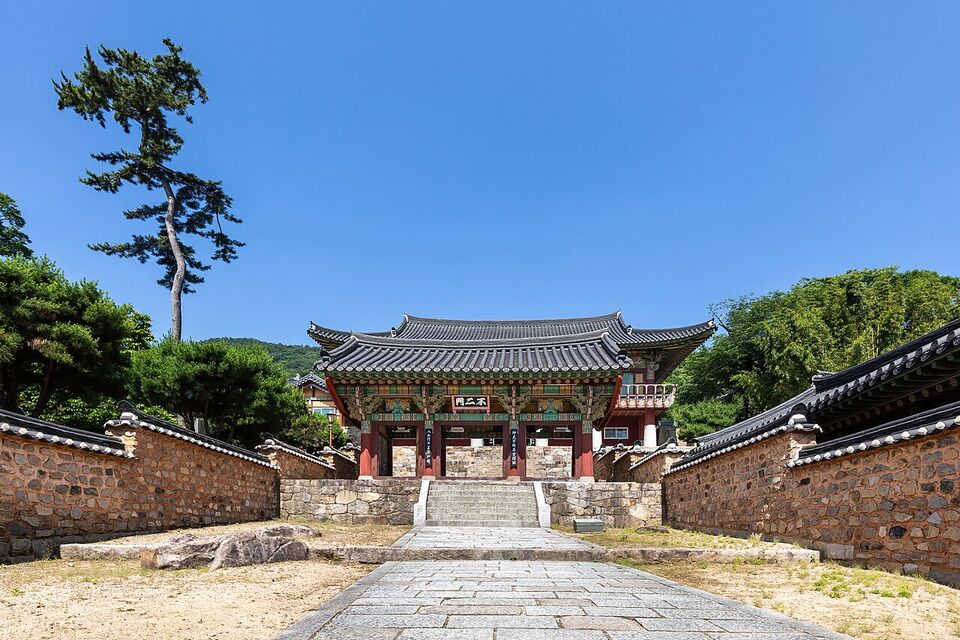
- The entrance gates. You pass through a series of gates, often with guardian figures. The "one-pillar gate" (iljumun) marks the border between the ordinary world and the temple.
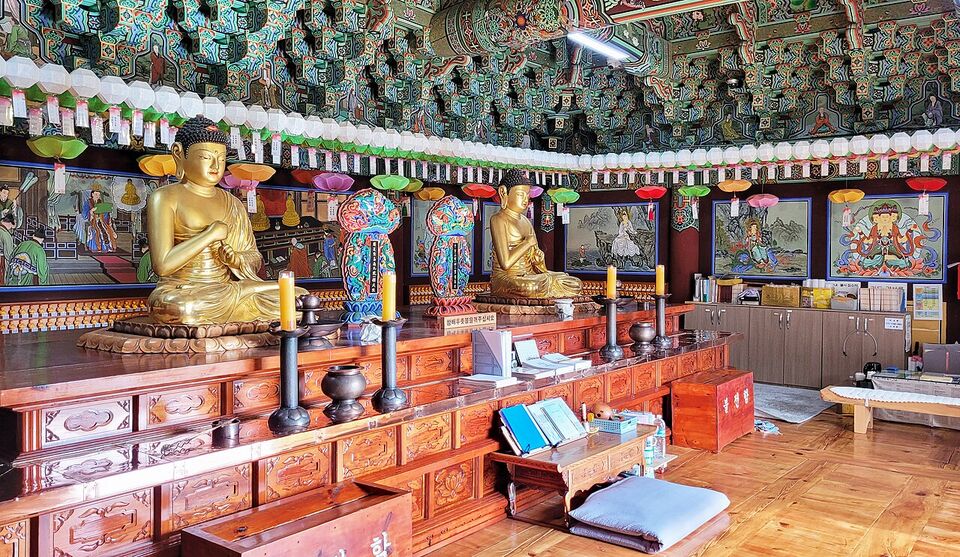
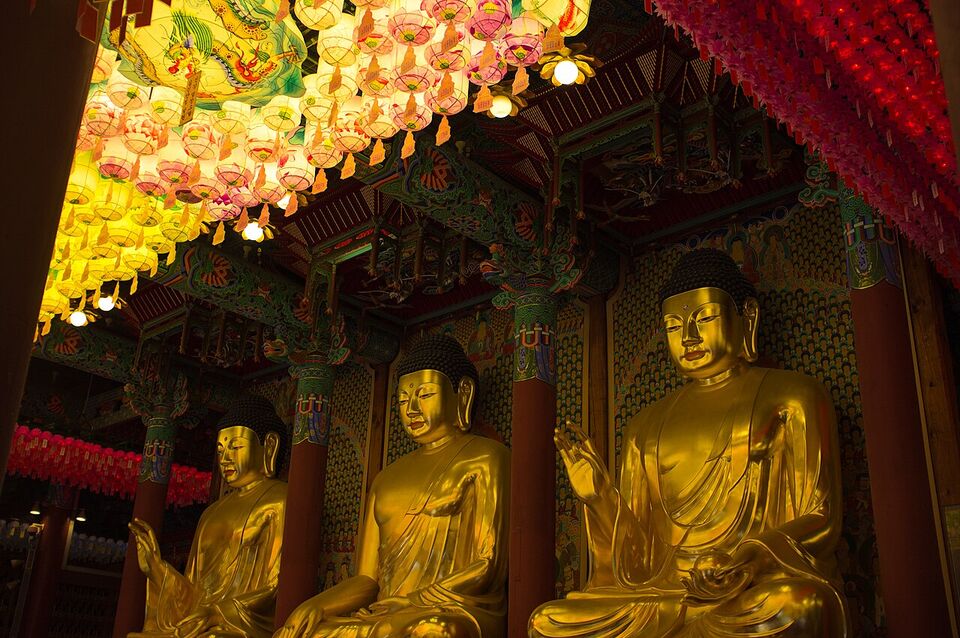
- The main hall (daeungjeon). The Hall of Great Enlightenment, which holds the Buddha image. It is the center of worship.
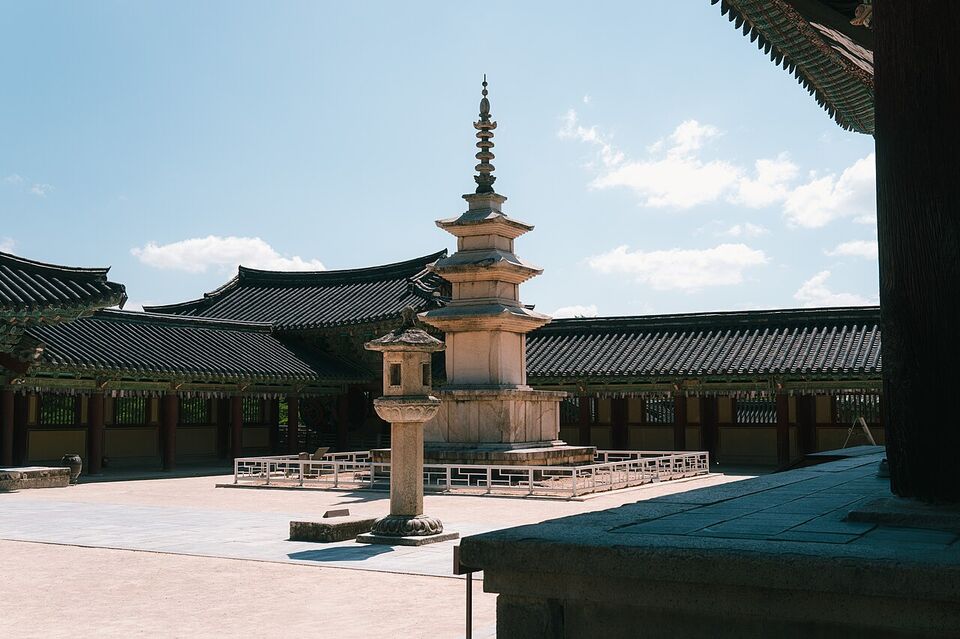
- Pagodas, lanterns and bells. Stone pagodas and lanterns, and a bell pavilion whose bell is rung at set times.
- Smaller halls and shrines. Halls for bodhisattvas and for mountain spirits are common, and reflect Korea's blend of Buddhism and folk belief.
- Monastics' quarters and a dining hall. Usually closed to visitors unless you are on a temple stay.
Some temples charge an entry fee for the grounds, and many smaller or remote temples are free. Fees, hours and closed days vary and change, so check the official page for the temple you plan to see, and note that temples may close areas for ceremonies or restoration.
Etiquette: shoes, halls, photography and quiet
These customs are widely followed; individual temples post their own rules, which always take priority. The page on Korean etiquette covers general manners.
- Shoes. Take them off before entering a hall where there is a shoe rack or a raised wooden floor. Socks are fine. Bring a pair that has no holes.
- Entering the main hall. Many Koreans use the side doors and leave the central door for monastics, and avoid stepping on the threshold. If you are not sure, follow what others do.
- Behavior inside. Be quiet, keep phones on silent and do not point your feet at the Buddha image. If you sit, sit to the side. You can stand at the back to watch a service. A small bow is a respectful gesture, and is not required of visitors.
- Photography. Photos of the courtyards and exteriors are usually fine. Many main halls and shrines ask that you do not photograph inside, or do not use a flash; look for signs. Do not photograph monks and worshippers closely without asking.
- Touching. Do not touch statues, pagodas or painted walls, and do not climb on stone work or bridges that are marked closed.
- Dress. Cover your shoulders and knees, avoid slogans, and take off hats inside the halls.
- Donations. Donation boxes take cash; giving is optional. Keep a few small bills.
Different from home
A Korean temple is not a church with fixed opening hours for visitors. Services, ceremonies and retreats can change what you may enter on any day. Treat signs and the monastics' instructions as the rule, even if a guidebook says otherwise.
The key temples to know
Jogyesa
In the middle of the city near Insadong and Gyeongbokgung, Jogyesa was founded in 1395 and has been the order's chief temple since 1936. The main hall dates from 1938 and was built with pine timber from Baekdu Mountain. A white pine in the courtyard is a protected natural monument. There is an information center for foreign visitors, and it offers temple stay programs. It is also where the Lotus Lantern Festival parade usually ends before Buddha's Birthday (May 13, 2027).
Bongeunsa
A temple founded in 794 across from the COEX mall in Gangnam, with a large Maitreya Buddha statue. It is a calm contrast to the business district around it.
Bulguksa
A head temple of the Jogye Order, completed in 774 in the Silla period, with two famous stone pagodas and a stairway of 34 steps. Its grotto, Seokguram, is on the same mountain. See the Gyeongju page for transport and tickets.
Haeinsa
Known for the Tripitaka Koreana woodblocks, a collection of Buddhist scriptures carved on wooden blocks and stored in halls that are on the UNESCO list. It is in the mountains and takes planning; it also takes part in the temple stay program.
Beomeosa
Busan's main temple, founded in 835 on the slope above the Dongnae area. It is quieter than the seaside temple and is a head temple of the Jogye Order.
Haedong Yonggungsa
A temple on the coast in Gijang County, popular for sunrise and for its lanterns at Buddha's Birthday. See Busan.
Other temples that are on the temple stay list or well known include Tongdosa near Busan, Naksansa on the east coast of Gangwon, Woljeongsa near Odaesan, Magoksa in South Chungcheong, Seonunsa in North Jeolla and Mihwangsa in the far southwest. Several mountain temples, including Tongdosa, Magoksa and Bongjeongsa near Andong, belong to UNESCO's "Sansa" listing of Korean mountain monasteries; Haeinsa and Bulguksa have their own listings.
What a temple stay involves
A temple stay is a program run by the Cultural Corps of Korean Buddhism, part of the Jogye Order. The Jogye Order made the program permanent in July 2002, around the World Cup, and it has since spread to many temples. The idea is to live for a day or so as the monastics do. The details differ from temple to temple, but most one-night programs follow a similar shape.
- Arrival and orientation. You change into loose temple clothes (provided) and receive a tour of the grounds, which also shows you where the dining hall and restrooms are.
- Meals. Monastic meals (baru gongyang) are vegetarian. Everyone eats from a set of nested bowls and finishes everything, even the rinse water, so take only what you can eat. Meals are eaten in silence in many temples.
- Ceremonies. The daily ceremony (yebul) happens before dawn, in mid-morning and in the evening. You may be invited to join the pre-dawn chanting, which means getting up at around 3 to 4 a.m. at many temples.
- Meditation. Seon (Zen) meditation sessions often run about 50 minutes, followed by about 10 minutes of walking meditation. Teachers explain the posture.
- Tea with a monk. A relaxed conversation over tea (chadam) in the afternoon or evening.
- Bows. Many programs include prostration bows, often described as 108 bows, done at your own pace. You can stop if you are not able.
- Sleeping. You sleep on a heated floor on a thin mat, often in a shared room, with lights out early (usually about 9 p.m.). Hot water and showers can be limited, and some temples have shared bathrooms.
The programs are in Korean, with English interpretation or notes at temples that host foreigners, and some temples run programs specifically in English. Check the details on the booking page. Phones are usually asked to be kept off or silent, and alcohol, meat and smoking are not allowed on the grounds.
Insider tip
If you want comfort and English guidance, choose a temple that lists programs for foreigners and is near a city, such as Jogyesa in Seoul. If you want mountain quiet and are willing to rough it, pick a remote temple and allow time for the bus connections.
One-night stay or short cultural program?
Temple stays come in two broad forms. A one-night (or longer) stay includes sleeping, meals and the full daily routine. A shorter cultural program, which may last a few hours, may include a tour, a tea ceremony, meditation or lantern making, and sends you home that evening. Many temples offer both. The official site lists programs by temple and by type, with dates and rules; use it to see what is available.
| Option | What you do | Time | Cost (typical) | Best for |
|---|---|---|---|---|
| Temple stay (one night) | Sleep at the temple, vegetarian meals, dawn ceremony, meditation, tea with a monk | About 24 hours | About ₩70,000 to ₩100,000 (about $53 to $75) a night per adult as of mid-2026 | Travelers who want to experience the daily routine |
| Short cultural program | A guided tour, tea or meditation, lantern or craft class | One to four hours | Varies by temple; check the site | Visitors short on time or unsure about sleeping on a floor |
| Ordinary visit | Walk the grounds, see the halls, take photos where allowed | One to three hours | Free at many temples; some charge an entry fee | First-time visitors and people on a tight schedule |
| Meal or tea only | Temple food at a restaurant or tea house near the temple | One hour | Varies | People who want the flavors without the schedule |
The Jogye Order ran a discount in September 2026 that offered foreigners a one-night stay at 19 temples for ₩30,000 (about $23), but it ended with the month, so do not rely on it. If a similar offer returns, it will be announced on the official site and in the Korean press.
A sample temple stay day
Schedules are set by each temple, so treat this as a rough shape rather than a timetable. Times are typical for many temples and vary; the booking page or the temple will give the real ones.
| Time | What happens |
|---|---|
| Afternoon | Arrival, change into temple clothes, orientation and a guided walk around the grounds |
| Early evening | Monastic dinner (vegetarian, eaten with the nested bowls), then the evening ceremony and bell ringing |
| Evening | Meditation session, an optional lantern or craft activity, tea with a monk, lights out around 9 p.m. |
| Before dawn | Wake-up call (often about 3 to 4 a.m.), dawn chanting and bows |
| Morning | Breakfast, a walk or a work task such as sweeping, then check-out around late morning |
If the early wake-up worries you, ask whether the dawn service is optional. At many temples it is encouraged but not enforced for guests, and you can watch from the back of the hall.
Temple food
Temple cuisine is plant-based, built on seasonal vegetables, wild greens, mushrooms, tofu, grains and fermented sauces, and traditionally avoids strong aromatics such as garlic and onion. It is meant to be simple and filling. Several restaurants in Seoul and near the big temples serve temple-style meals to the public, which is a way to try the flavors without an overnight stay; Korean food has more on vegetarian eating. Do not assume that ordinary restaurant kimchi is vegetarian, because it often contains fish sauce or shrimp; temple kimchi usually does not, but ask if it matters to you.
Choosing a temple: city, mountain or coast
Where you stay shapes the experience more than almost anything else.
- City temples (such as Jogyesa in Seoul) are the easiest. You can reach them by subway, they tend to have English support and you can combine them with sightseeing. They are less remote, so you hear more of the city.
- Mountain temples (such as Haeinsa, Tongdosa or Magoksa) give the strongest sense of retreat, with forest, long walks and quiet. They need more planning for transport, and the nights are cold in winter.
- Coastal temples (such as Naksansa on the east coast and Haedong Yonggungsa near Busan) are known for sea views and sunrise. Weather and wind can be a factor, and some may close areas for repairs or after storms.
Wherever you go, a temple stay is a cultural program, not a spa weekend. Go with curiosity and a flexible attitude, and you will get more from it. If you are traveling with children, check the minimum age on the booking page, because some programs are for adults or have age limits.
How to book
The official booking site is eng.templestay.com, which has an English version of the site. Choose a temple and a date, read the program details and booking rules, and reserve. The site has an English version for foreign visitors; you may need an email address, and each temple sets its own cancellation policy. Popular temples near cities and in blossom or fall season fill up first, so book as early as you can. Some temples take bookings by phone or email; the booking page says which. Confirm arrival time and what to bring (usually toiletries, a towel and a flashlight or phone light).
The official site is the safest place to book. Be careful with other booking websites that resell or list stays; stick to the official site or the temple's own page. For general planning around dates and holidays, see when to go and festivals and holidays; temples are very crowded around Buddha's Birthday (May 13, 2027).
Mistakes to avoid
- Arriving without reading the rules. Each temple has its own schedule and rules. Read the booking page and the arrival instructions, and be on time.
- Making noise. Talking loudly, using a phone in a hall or taking calls on the grounds is the most common complaint. Keep your voice low, especially at dawn and in the evening.
- Dressing for the beach. Shorts, tank tops and tight clothing are not appropriate, especially inside the halls. Bring a light cover-up in summer.
- Expecting a hotel. You sleep on the floor, share rooms and may have limited hot water. Bring a small towel and slippers if you want them.
- Treating it as a photo stop. Respect no-photo signs and do not stage photos in front of worshippers.
- Not planning the transport. Many temples are up mountain roads with infrequent buses. Check the last bus and arrange a taxi in advance.
- Forgetting the temple closes areas. Restoration work, ceremonies and weather can close halls or trails. Check the temple's official page before you travel.
Watch out
Do not eat meat, drink alcohol or smoke on temple grounds, and do not bring food that contains them into the dining hall. If you have an allergy, tell the temple when you book. Temple food is vegetarian, but sauces and kimchi can differ from temple to temple, so ask if you avoid particular ingredients.
Add it to a route in the trip builder, or ask us to plan the hotels, trains and guides for you.