Overview
South Korea is one of the easiest countries in Asia to cross without a car. Fast trains link Seoul with Busan, Daegu, Daejeon, Gwangju, Gangneung and many smaller cities, frequent buses fill in the rest, and every large city has a subway or bus network that works with one card. For most first trips, public transport is simpler and cheaper than renting a car (see Driving in South Korea for the exceptions, mainly Jeju and the coasts).
This page covers the main options: KTX and SRT high-speed trains, slower train classes, express and intercity buses, city subways, taxis, domestic flights, transit cards and rail passes. It also gives a table of typical trips from Seoul, plain steps for booking as a foreigner, and the mistakes that cost visitors the most time. Plan the bigger picture on Plan Your Trip to South Korea and the regions on South Korea's Destinations.
A word on numbers. Fares, timetables and pass prices change, and we could not confirm 2026 figures for most of them. Where we give a time, treat it as a typical or rounded figure, and check the operator's site on the day you book. Prices that we could confirm are written in won, with dollars at about ₩1,330 to US$1 (the rate moves daily).
High-speed trains: KTX and SRT
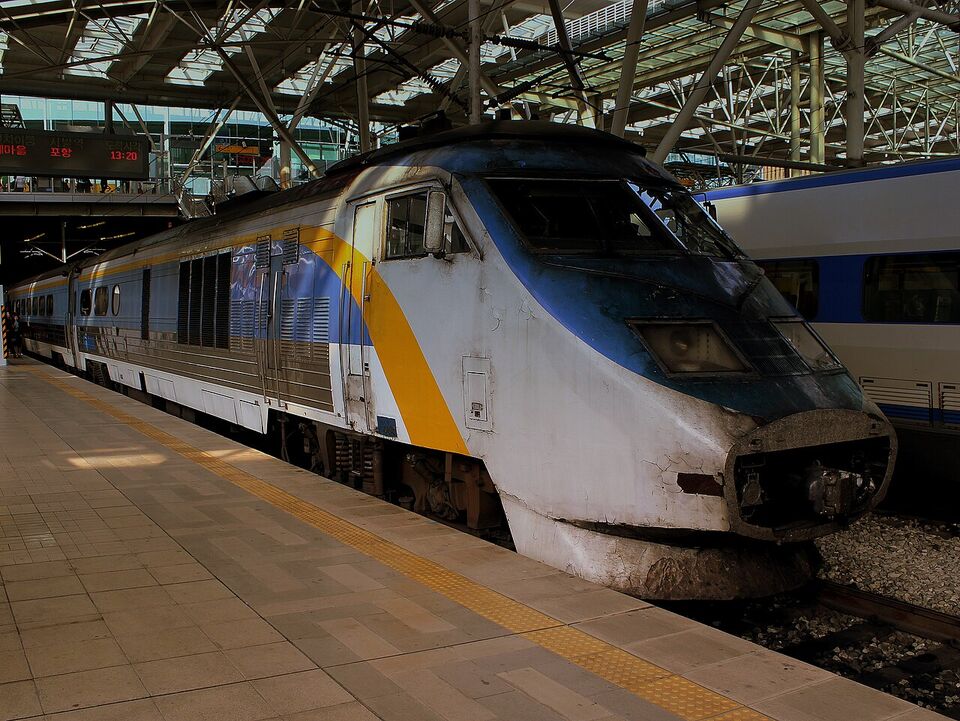
The KTX (Korea Train eXpress) is Korea's high-speed rail, run by the national railway, Korail. Trains reach a top service speed of 305 km/h (190 mph). The main lines run from Seoul to Busan (the Gyeongbu line) and from Seoul to Mokpo and Yeosu (the Honam and Jeolla lines), with branches to Gangneung on the east coast, where KTX-Eum trains have run since August 1, 2021. Seoul to Busan takes about 2.5 hours on the faster trains, and is much quicker than going by road.
Why there are two operators
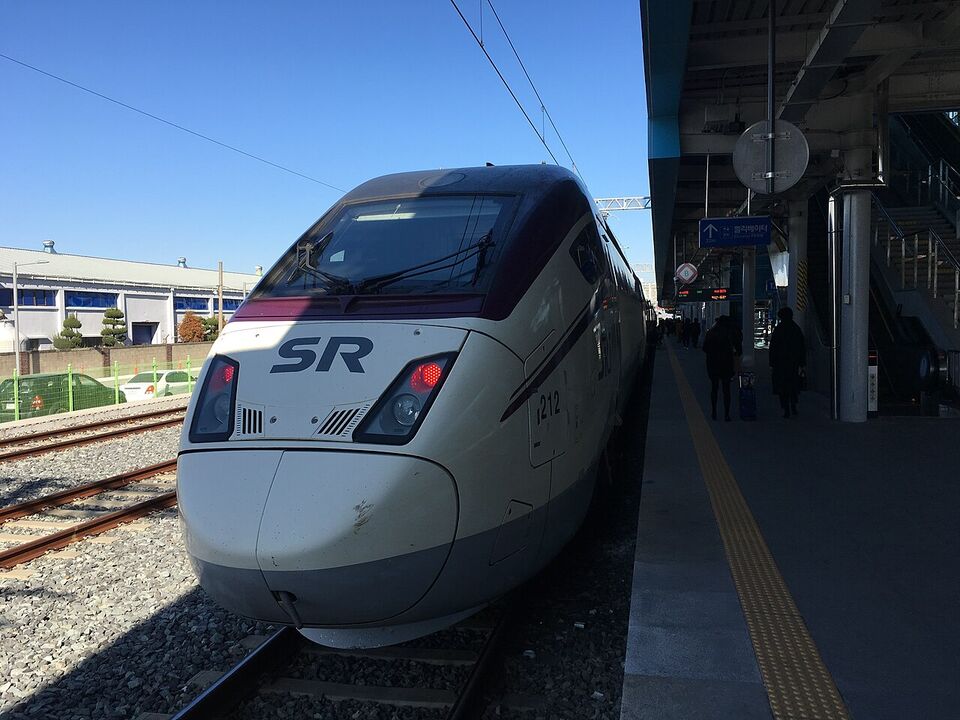
Korea has a second high-speed operator, the SRT (Super Rapid Train), run by a separate company called SR. It was set up to add competition on the busiest routes. SRT trains use much of the same high-speed track and the same kind of fast service, but start from Suseo Station in the Gangnam area of southern Seoul instead of Seoul Station. SRT stops at a more limited set of stations than KTX, and the two operators sell tickets through their own apps and websites.
For a traveler, the choice is usually practical. Pick the train that leaves from the station nearest to your hotel, at a time that suits you, and book whichever has seats. If you are staying in Gangnam or near Suseo, SRT may be easier. If you are staying near Seoul Station, Myeongdong or Namdaemun, KTX from Seoul Station usually is. A Korail Pass does not cover SRT.
Seat types and what to expect
Both operators sell standard and first-class seats, and most tickets are assigned seats. A standing or "free" ticket is sometimes sold when seats are gone, and those do not give you a seat. Trains are clean, quiet and punctual, with luggage space at the ends of each car. Eating is allowed, and station shops sell drinks and snacks (see Korean Food for what to try).
ITX, Mugunghwa and other trains
Below the high-speed level, Korail runs slower trains that are cheaper and sometimes the only rail option. ITX (Intercity Train eXpress) trains, such as ITX-Saemaeul and ITX-Maum, stop at more stations than KTX and suit mid-range distances. Mugunghwa-ho is the slowest and cheapest regional train, stopping at many small stations. These classes are good for places that the KTX does not reach, such as some towns in the interior, and for travelers who care more about price than speed.
Korail also runs sightseeing trains, such as the Sea Train and DMZ Train, on a few scenic routes. A Korail Pass does not cover them. These are booked separately and often sell out in peak season, so check korail.com for current schedules.
Express and intercity buses
Korea has a dense bus network. Express buses connect nearly every city through large terminals, and intercity buses reach smaller towns. They run often, are comfortable, and many have wide reclining seats. For some trips, buses are faster or cheaper than trains: for example, from Seoul to Sokcho and the Seoraksan area (see Sokcho and Seoraksan) or to many mountain and coastal towns that have no fast rail.
- Seoul terminals: Seoul has several bus terminals, and your bus leaves from a specific one. Check the terminal name, not just the city, before you go. Seoul Express Bus Terminal in the Gangnam area handles many long-distance routes.
- Booking: Express bus tickets can be booked on Kobus (kobus.co.kr) and other bus company sites and apps. Some sites accept only Korean phone numbers or Korean cards, so allow time to sort this out before the trip. A ticket counter at the terminal also works, usually with a card or cash and sometimes with a passport.
- Seats: Premium and "deluxe" buses have fewer, wider seats at a higher fare. Seat prices and times vary by route and day of the week, and we could not confirm 2026 figures, so check the fare when you book.
- Rest stops: Long routes stop at highway service areas for about 10 to 15 minutes. Be back at the bus on time: drivers do not wait for stragglers, and the bus will not leave your bag behind in the way a station worker would.
Within cities and towns, local buses take T-money and most other transit cards. Routes and stops are usually shown in Korean and English on signs and in map apps, but the driver may not speak English, so know your stop name or number.
Subways and city transit
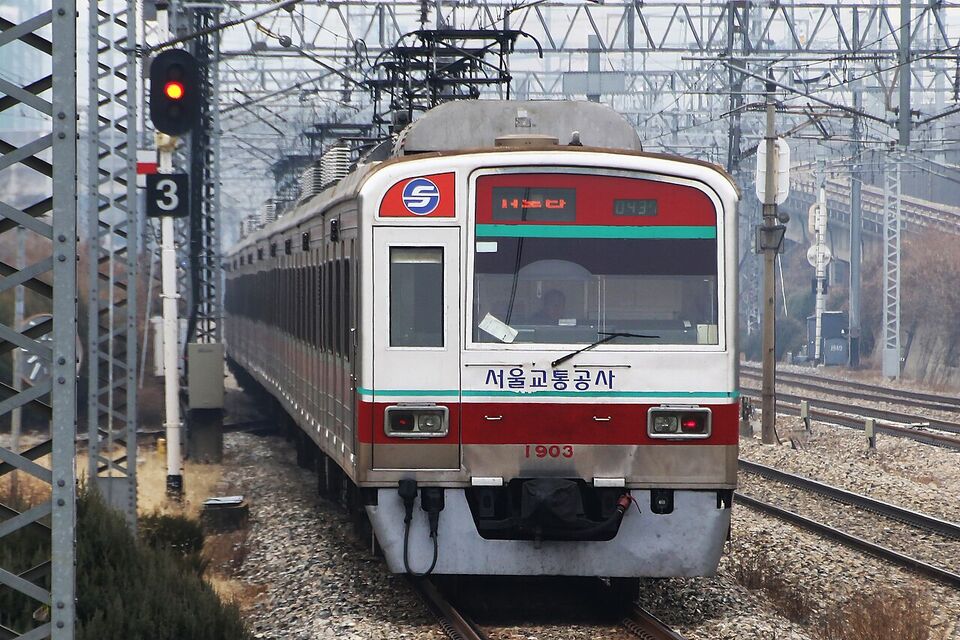
Seoul has one of the largest subway systems in the world, with numbered lines and signs in English, Chinese and Japanese. Busan, Daegu, Daejeon, Gwangju and Incheon also have their own subways or metro lines, and the same T-money card works on most of them. Lines are color-coded, station names are announced in Korean and English, and stations show exit numbers that match addresses on map apps (so "Exit 4" matters). Detailed city guidance is on Seoul and Busan.
The standard adult fare in Seoul was about ₩1,550 (about $1.20) for trips up to 10 km (6 miles) as of June 2025, with small extra charges for longer distances. We could not confirm a 2026 fare, so check the station sign or machine. A single-use ticket adds a refundable ₩500 (about $0.50) deposit; get it back at a deposit-refund machine at your exit station.
Different from home
You tap in and tap out. Fares depend on the distance traveled, and the system charges you when you exit. If the gate does not open on exit, you have probably not paid the full fare or have a card problem. Go to the help window or office near the gates and they will fix it.
Rush hour and manners
Weekday rush hours, roughly 7:30 to 9:30 a.m. and 6 to 8 p.m., are packed. Priority seats are marked, and the pink seats on some lines are for pregnant women. Keep your voice low on the train, stand on the right on escalators in many stations, and let people exit before you board. More on this in Korean Etiquette.
T-money, the Climate Companion Card and other transit cards
A T-money card is a rechargeable transit card. It works on subways in the Seoul area, Busan, Daegu and Daejeon, on city buses in many parts of the country, and in many convenience stores and some other shops. It also works at Seoul's four main palaces (not Gyeonghuigung) and at Lotte World. A card costs about ₩3,000 to ₩5,000 (about $2.50 to $4) and can hold up to ₩500,000 (about $375). Treat these as older figures and check at the store.
Buy or reload a T-money at convenience stores (GS25, CU, 7-Eleven and others), subway ticket machines and some kiosks. Cash is accepted at convenience stores, and many do not take foreign cards for reloading, so keep a few bills. Unused balance can often be refunded at a convenience store or machine for a small fee, which is easy to check at the time. You can also use a credit card with a contactless symbol on some buses and subway gates, but check that your card is accepted before you rely on it, since foreign cards often are not.
Seoul's tourist card
For tourists, Seoul sells the Climate Companion Card, which comes in short-term passes of 1, 2, 3, 5 and 7 days as well as stored-value options. Since March 17, 2026, machines at 273 stations on Lines 1 to 8 accept foreign-issued Visa and Mastercard credit or debit cards and apps such as KakaoPay and Naver Pay. An average service fee of 3.7% applies on overseas cards. A 30-day pass was not yet included. We could not confirm the pass prices, so check the machine, then compare the total with plain T-money fares for your plan. If you will ride the subway only a few times a day, stored value on a T-money card is often enough.
Save money
Before you buy a multi-day pass, count your rides. A pass pays off only if you make many trips a day. Many visitors take two to four rides a day, and T-money with a few thousand won loaded can be cheaper. Do the math with the current price on the machine.
Taxis, KakaoT and ride apps
Taxis are common, safe and, in cities, usually cheaper than in the US. Regular taxis can be hailed on the street, found at stands, or called through an app. Kakao T is the main taxi app in Korea. It shows nearby cars, an estimated fare and the route. It was built for Korean phone numbers and cards, though, and foreign cards or phone numbers sometimes cause registration or payment problems. If the app will not take your card, you can still use it to call a taxi and pay the driver by card or cash, or ask your hotel to call one.
- Language: Show your destination as a pin on Naver Map or KakaoMap, or have it written in Korean. Many drivers do not speak English.
- Payment: Cards are common in cities, but outside cities some taxis want cash. Tipping is not customary.
- Late night: Subway service stops around midnight to 1 a.m. Late-night taxis can be in short supply near entertainment districts at that hour, and some add a night surcharge. We could not confirm the current rates, so ask or watch the meter.
- Airport rides: For Incheon transfers, see Incheon Airport Transfers. A train is usually the cheapest and most predictable option.
Domestic flights
Flying makes sense for Jeju and sometimes for very long trips. Jeju is a short flight from Seoul's Gimpo Airport, and the Gimpo to Jeju route is one of the busiest in the world, with more than 13.7 million passengers in 2023. Flights also run from Busan's Gimhae Airport and other cities to Jeju. Several budget carriers compete with the larger airlines, which pushes fares down but also means flights fill up in peak seasons. See Jeju Island for the island itself.
Book early for holidays, summer and the fall season. Airlines and fares change, so check the airline sites. One change to know: Asiana Airlines flights become Korean Air flights from December 17, 2026, so a booking made on one name may show up under the other. Muan International Airport in the southwest is closed to commercial flights and is not expected to reopen until late 2027, so do not plan a flight there.
Most domestic flights to and from Seoul use Gimpo, which is on the AREX airport rail line, while international flights use Incheon. If you are connecting between an international and a domestic flight, give yourself a long layover and check your terminal on the airline site and airport.kr. More in Flights to South Korea.
The Korail Pass and when it pays off
Korail sells a rail pass to foreign visitors, known as the KR Pass, which allows rides on most Korail trains including KTX within a set number of days. It does not cover subways or tourist trains, and it is not for foreigners who live in Korea for more than six months. We could not confirm the current prices, validity options or booking rules, and they have been revised over the years, so check korail.com for the latest version.
To decide whether it pays off, add up the one-way fares for the long rides you actually plan (for example Seoul to Busan, Busan to Gyeongju, Gyeongju back to Seoul), and compare the total with the pass price. A pass usually helps if you take several long rides within a short window. It is less useful if you will mostly use the subway, stay in one region, or ride buses. Some trips on a pass need a reserved seat, and popular trains can run out of seats for pass holders as well as ticket buyers, so reserve early.
Watch out
Rules for rail passes, foreign booking windows and apps have been changing, and we found conflicting reports about 2026 updates. Rely only on korail.com and the official Korail app for the current terms, and do not buy a pass from a site you do not recognize.
How to book as a foreigner
- Pick your train. Check times on the Korail site (letskorail.com) for KTX and slower trains, and the SRT site for SRT. Many readers also use Naver Map, which shows trains and buses side by side, then book on the operator's app.
- Install the app. The official Korail Talk app and the SRT app are the main routes. The English Korail booking site recommends Chrome, Samsung Internet or Safari, a wired or LTE/5G connection, and Android 12 or iOS 16 or newer. Mobile Wi-Fi on the move can drop and cancel a booking attempt.
- Pay with a foreign card. Foreign credit cards are accepted on some sites and rejected on others, depending on the card and the day. If a card fails, try another card, try a different browser, or buy at the station counter with your passport. Bringing a second card is wise.
- Pay on time. Some sites hold a reservation for a limited time before you must pay. If you miss it, the seat is released.
- Keep the proof. Use the app's mobile ticket, a printout or a ticket from the machine. Check the train number, date, car and seat number.
- Know the change rules. Cancellation and refund fees depend on how close to departure you change. Read the screen before you confirm.
When your plans are fixed, book as early as the system lets you, especially for Friday and Sunday trains and for holiday weeks. We could not confirm how many days ahead the system allows for foreigners in 2026, so read the booking page when you buy. For a broader checklist of apps and phone setup, see Phones, Wi-Fi and Apps.
Insider tip
If online booking fails, go to a station ticket window in person with your passport. At large stations such as Seoul Station there are staff who handle foreign visitors, and the process is usually quicker than fighting with an app. You pay with a card or cash and get a printed ticket.
Typical trips from Seoul
The table below lists typical options from Seoul to popular destinations. Times are rounded and vary by train type and bus traffic. Check them on the day you book.
| Destination | Best choice | Typical time | Notes |
|---|---|---|---|
| Busan | KTX or SRT | About 2.5 hours | Fastest and most frequent; Busan Station for KTX, SRT also serves Busan. See Busan |
| Gyeongju | KTX to Singyeongju, then bus or taxi | About 2 to 2.5 hours plus transfer | Singyeongju station is outside the old town; allow time for the bus. See Gyeongju |
| Jeonju | KTX or an intercity bus | Roughly 1.5 to 3 hours | Compare train and bus times for your date. See Jeonju |
| Gangneung | KTX-Eum | About 2 hours | East coast line; a bus is the alternative. See Gangneung and the East Coast |
| Sokcho and Seoraksan | Express bus | About 2.5 to 3 hours | No fast train to Sokcho; buses are frequent. See Sokcho and Seoraksan |
| Andong | Train or bus | Roughly 2.5 to 3.5 hours | Fewer departures; check the day's timetable. See Andong and Hahoe |
| Yeosu and Suncheon | KTX | About 3 hours | Fast trains to the south coast. See Yeosu, Suncheon and Tongyeong |
| Jeju | Flight from Gimpo | About 1 hour in the air | Book early in peak season. See Jeju Island |
The pattern is simple. Use the high-speed train for the big cities, an express bus for the east coast and mountains, and a plane for Jeju. For day trips from Seoul by subway or train, see Day Trips from Seoul.
Luggage
You can carry normal suitcases on KTX and SRT, and most trains have racks at the car ends and room above the seats. We could not confirm size or weight limits for 2026, so check the operator's baggage rules before bringing very large or oversized items. Keep valuables with you and do not block aisles or doors.
Express buses store bags in an under-floor hold, which you hand over at the door. Take small bags with you on board. Subways have no luggage rooms, and stairs can be long, so a lighter bag helps. Many stations have lockers, which take cash or cards and are sized for a carry-on or a small suitcase. If you are moving between cities with big bags, consider sending them ahead from your hotel by courier, a service many Korean hotels and guesthouses can arrange.
Mistakes to avoid
- Wrong station. Seoul has several rail stations (Seoul Station, Yongsan, Suseo and others), and a train from one will not stop at another. Read the departure station on your ticket the night before.
- SRT versus KTX. An SRT ticket will not get you onto a KTX train, and the reverse. If you booked one and need the other, you must change or buy a new ticket.
- Booking the wrong city name. Singyeongju (the KTX stop) is not in central Gyeongju. Check how far each station is from your hotel, and what the connecting bus is.
- Sold-out holidays. Seollal (the Lunar New Year) 2027 falls on Sunday, February 7, with a three-day holiday on February 6-8 and possibly a substitute day on February 9. Chuseok 2027 is September 14-16. Trains, buses and flights fill, and roads jam. Book as soon as your dates are fixed and avoid moving between cities on those days if you can.
- Missing a bus terminal. Buses leave from specific terminals. Confirm the terminal name and allow time to find the gate.
- Running low on card balance. Gates reject a card that is below the minimum fare. Keep a buffer on your T-money.
- Relying on one app. Install two map apps and keep a backup payment method. See Money in South Korea for cash and card advice.
- Arriving at the last minute. Gates close shortly before departure, and trains leave on time. Aim to arrive 15 to 20 minutes early, more at large stations.
Add it to a route in the trip builder, or ask us to plan the hotels, trains and guides for you.