Overview
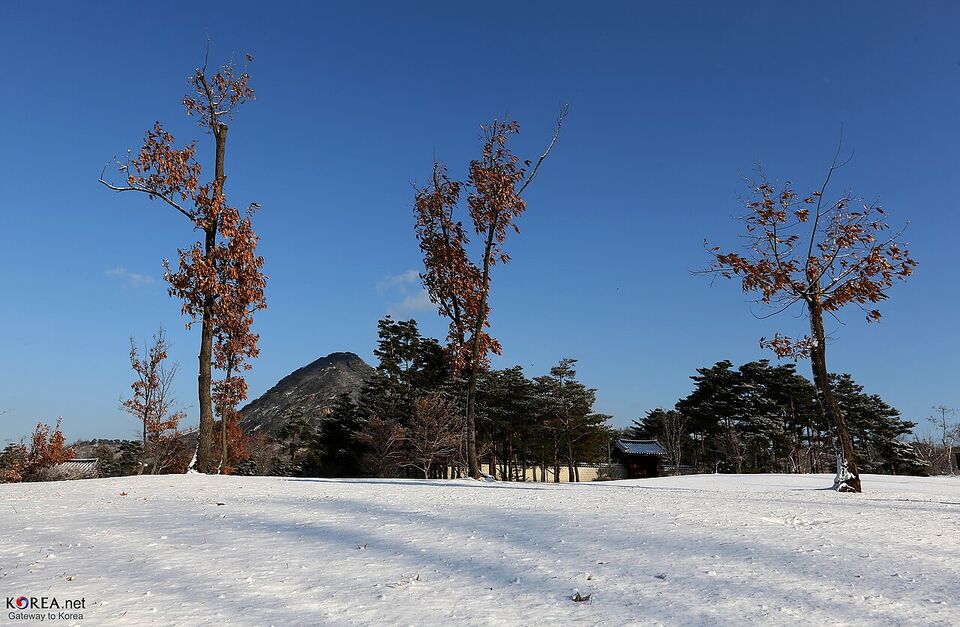
January is the coldest month in South Korea, and it rewards visitors who dress for it. Seoul is cold and dry, with bright skies and the occasional snowfall that makes palaces and temples look their best. Busan and Jeju are milder, which makes them an easier choice if you are not used to freezing temperatures.
It is also a low season for most sights, so crowds and many hotel prices are lower than in fall or spring. The exceptions are the ski resorts, ice festivals and the days around Seollal (Lunar New Year), when many Koreans travel. This guide covers the cold, snow and ice, skiing, bathhouses, the Lunar New Year, what to wear, a sample plan and the pros and cons of low season.
Read December for the weeks before and Festivals and Holidays for every holiday date. If you are choosing a month, when to go to south korea compares them all.
The cold: Seoul versus the south
These are long-term averages from the Korea Meteorological Administration. Actual weeks vary a lot, and wind makes it feel colder than the numbers.
| City | Average high | Average low | Notes |
|---|---|---|---|
| Seoul | 36°F (2°C) | 22°F (-6°C) | Very dry; about 7 snowy days; little rain |
| Gangneung | 42°F (5°C) | 27°F (-3°C) | East coast; snow falls often (about 6 days) |
| Busan | 47°F (8°C) | 32°F (0°C) | Milder; snow is rare |
| Jeju City | 48°F (9°C) | 39°F (4°C) | Damp and cloudy, with about 12 rain days |
Seoul's winter is dry rather than snowy, with only about 17 mm (0.7 in) of precipitation in January. That makes cold days bright, but static, chapped lips and dry throats are common. Mountains in Gangwon, such as Seoraksan, are far colder than the coast and can have heavy snow, so check conditions with the national park before you go (knps.or.kr).
Korea does not change its clocks. It is 14 hours ahead of New York in US winter, so leaving on a Monday usually means arriving on Tuesday.
What to wear
- An insulated or down coat that covers your hips, plus a windproof layer.
- Thermal base layers, warm socks and a sweater or fleece. You will take layers off indoors.
- Gloves, a hat and a scarf. A neck gaiter is useful on windy viewpoints.
- Boots or shoes with good grip. Sidewalks can ice over in the morning.
- Moisturizer, lip balm and hand cream.
- A plug adapter. Korea uses 220 V, 60 Hz with Type C and F (round two-pin) sockets. Check that chargers are dual-voltage (100-240 V).
See the South Korea Packing List page for the full list. Heated pads and heat packs are sold at convenience stores and drugstores.
Snow, ice and winter festivals
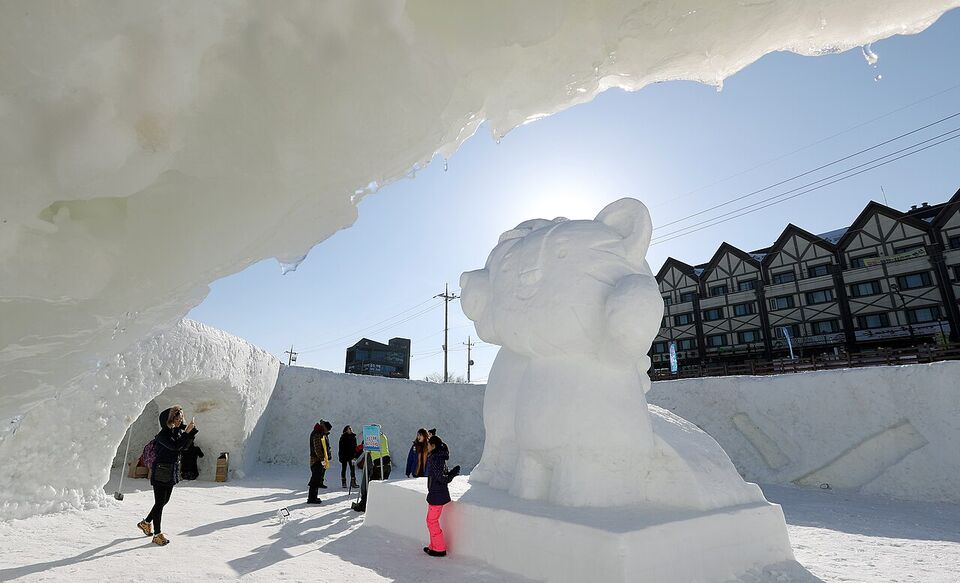
Winter festivals are most numerous in Gangwon Province, and the Korea Tourism Organization has featured a list of winter festivals for 2026-27 on its site. Dates change every year and are often announced late, so verify before you book.
Hwacheon Sancheoneo Ice Festival
The best-known ice festival is in Hwacheon, Gangwon, where visitors fish for mountain trout through holes in a frozen river and take part in snow and ice activities. The 2026 edition ended in January 2026, and a 2027 edition is being marketed abroad. A tour listing suggested January 9-31, 2027, but we could not confirm the dates with the organizers. Check the Hwacheon county site or the Korea Tourism Organization. Hwacheon is in northern Gangwon and is often visited by organized tour from Seoul; check the travel time when you book.
Other snow and ice events
Smaller ice, snow and sled festivals take place across Gangwon. We could not verify the 2027 dates of any other ice festival, including the Taebaeksan Snow Festival. If one is a reason for your trip, confirm it with the organizer and keep your bookings flexible, because warm spells can cancel events.
The Seoul Lantern Festival
The 2025 edition ran from December 12, 2025 to January 4, 2026. Whether the 2026-27 edition reaches into January is a question to verify with Seoul's tourism site.
Snow in the palaces
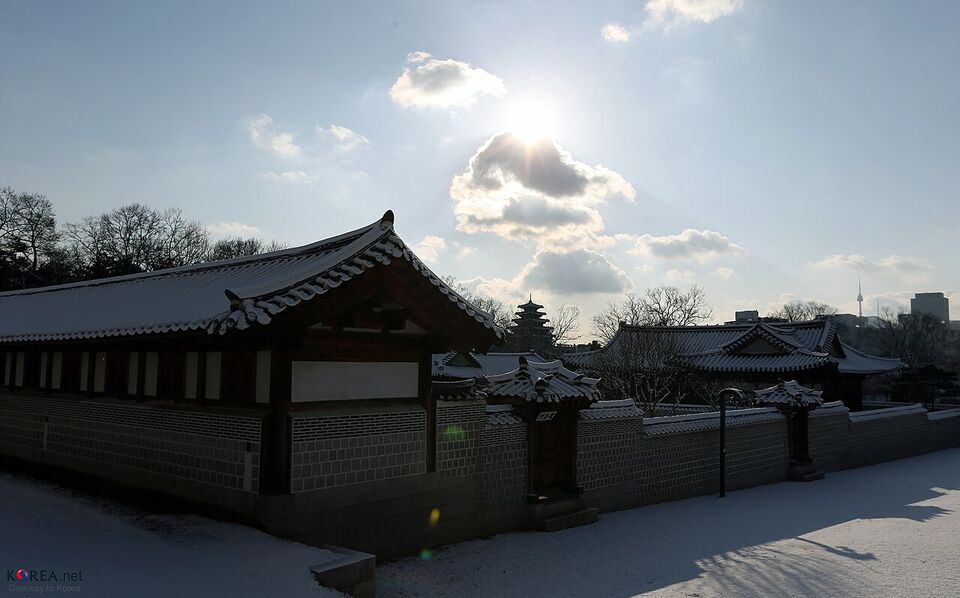
After a snowfall, Gyeongbokgung, Changdeokgung (and its Secret Garden, Huwon, by reservation only), Deoksugung and Jongmyo look their best. Seoul has about seven snowy days in January, but snow does not always settle, so go on the morning after a snowfall if you can. Palace admission is ₩3,000 (about $2.50) at Gyeongbokgung and Changdeokgung. Each palace has a weekly closed day (Gyeongbokgung usually Tuesday, Changdeokgung usually Monday; check royal.khs.go.kr). Dress warmly because courtyards are open and windy.
Skiing in January
January is peak ski season. Resorts in Gangwon, such as Yongpyong (season November to early April), Alpensia and High1, are in full operation, with snowmaking supplementing natural snow. Weekends and school holidays are crowded, so midweek is calmer. We could not confirm 2026-27 lift ticket prices, so check each resort's own website. The Skiing and Winter in South Korea page covers resorts, shuttles and gear.
Insider tip
Book rental gear and lodging early for weekends and around Seollal, and leave extra time for bus or train transfers to the mountains, because traffic can be heavy on Friday and Sunday.
Hot springs and jjimjilbang
The cold season is the best time to go to a jjimjilbang (public bathhouse and sauna; 찜질방 on signs). Typically you pay at the front desk, change into provided shorts and shirt for the shared hot rooms, and use the single-sex bathing area, where you wash first and then soak. Bathing areas are nude and separated by gender. The shared rooms are mixed. Many have sleeping rooms and snack bars, and some stay open 24 hours. Prices and hours vary, so check the venue.
Korea also has hot spring (oncheon) areas, and spa resorts near the ski areas. We could not confirm specific venues or prices, so check before you go.
Different from home
The bathing area is nude, and you rinse and wash before entering a tub. A swimsuit is not worn in the baths. If that is not for you, a mixed-gender sauna room is usually available in clothing. A bathhouse is a normal, relaxed place in Korea. See Korean Etiquette.
Indoor life and heated floors
Korean buildings are well heated. Many homes, guesthouses and hanok stays use ondol (heated floors), which are warm to sit and sleep on. In restaurants and shops the heating is strong, so coats come off. The big change is moving between very cold streets and very warm rooms, so layers you can remove are better than one thick coat. Underground shopping arcades connect many subway stations in Seoul, which helps on the coldest days. Hot snacks from carts and convenience-store food are everywhere. See Korean Food.
Lunar New Year (Seollal) and holiday closures
Seollal is one of the two biggest holidays in Korea, with Chuseok. In 2027 it falls on Sunday, February 7, which is in early February rather than January. The holiday normally covers the day before, the day, and the day after (Saturday, February 6 to Monday, February 8), and a substitute day on Tuesday, February 9 may apply because February 7 is a Sunday. We could not confirm the substitute day, so verify the official 2027 holiday calendar.
- The travel crunch: expect packed trains, buses and highways in the days before and after, and difficulty getting KTX seats. Book early and avoid long road trips on February 5 and 9.
- What shuts down: many family-run shops and restaurants close for the holiday, often from the day before to the day after. Big department stores, large museums and tourist sites may keep reduced hours. Palaces and some museums often stay open, but check each site.
- What is open: cultural programs at palaces and folk villages, and convenience stores and hotels.
- A quieter Seoul: Seoul can feel emptier than usual when residents leave for their hometowns.
January 1 (New Year's Day, a Friday in 2027) is also a public holiday. The full list of 2026-27 dates is on Festivals and Holidays.
Watch out
Seollal can be the hardest time to move around Korea. If your trip includes February 5-9, book transport and hotels as early as possible and confirm which restaurants are open.
A sample plan
- Day 1
Arrive in Seoul
AREX from Incheon to Seoul Station is about 43 minutes non-stop. Check into your hotel and have a warm meal. For airport options see Incheon Airport Transfers.
- Day 2
Palaces and a bathhouse
Gyeongbokgung and Bukchon in the morning (the Bukchon alleys are open to tourists from 10 a.m. to 5 p.m.), then a jjimjilbang in the evening.
- Day 3
Museums and markets
Indoor sights such as the National Museum of Korea (check hours and fees), plus Gwangjang Market. See Things to Do in Seoul.
- Day 4
Snow day in Gangwon
Skiing at a resort or an ice festival trip if one is running. Return in the evening or stay overnight.
- Day 5
Milder south, or stay in Seoul
Fly or take KTX to Busan (about 2.5 hours; check letskorail.com) for the sea and fish market, or continue in Seoul. Also see Busan and Jeju Island.
Low-season pros and cons
| Pros | Cons |
|---|---|
| Fewer crowds at palaces, temples and museums (except holiday periods) | Very cold, especially in Seoul and the mountains |
| Lower hotel prices at many places (we have no current rates; check) | Short days and little greenery |
| Snow, skiing and ice festivals | Ski resorts and ice festivals fill up on weekends; dates can change |
| Bathhouses, hot food and warm interiors | Some outdoor sights and island ferries can close in bad weather |
| Cherry-blossom and summer crowds are far away | The Seollal rush in early February |
Save money
Visit sights on weekdays, travel in January before the Seollal rush, and look for lodging deals outside ski areas. Do not count on a tourism sale: whether the Korea Grand Sale or similar promotions run this winter is not known to us, so check english.visitkorea.or.kr.
Entry for 2027 travel: US citizens are exempt from K-ETA through December 31, 2026. For travel from January 1, 2027, check k-eta.go.kr before you book. File the online e-Arrival Card before you land, using only the official site (e-arrivalcard.go.kr). More in Entry Rules for Americans (K-ETA).
Add it to a route in the trip builder, or ask us to plan the hotels, trains and guides for you.