The short answer: Seoul plus one or two bases
For a first trip to South Korea, we suggest one long stay in Seoul and one or two other bases reached by high-speed train or a short flight. Seoul alone can fill five or six days. Add Busan, Gyeongju or Jeju once you have a week or more. Adding a third region only makes sense past ten days, and a fourth almost never does.
The reasons are practical. South Korea is a small, well-connected country, but every change of base costs half a day: checking out, getting to the station, riding for two or three hours, and finding the new hotel. A trip with two bases keeps that cost low and leaves time for the things people come for, such as palaces, street food, night markets, temple grounds, hiking and cafes.
This page gives you the plan in the order you will need it: how to choose a shape for the trip, sample itineraries by length and by traveler type, the order of booking steps, what costs money and the mistakes first-timers make most. The detail for each place sits in its own guide, linked as we go. Everything here is checked as of November 2026, and we say plainly where a figure should be confirmed before you book.
Watch out
US citizens are exempt from K-ETA (the Korea Electronic Travel Authorization) through December 31, 2026. For travel from January 1, 2027, check k-eta.go.kr before you book. If your trip lands on or after that date, read the entry rules page before you buy flights.
How to choose: four trip shapes
Most first trips fall into one of four shapes. The table compares them; the sections after it explain each.
| Shape | Days | Best for | Trade-off |
|---|---|---|---|
| Seoul only, with day trips | 5 to 8 | Short trips, food and city lovers, families with young children | You skip the coast, the south and island scenery |
| Seoul and Busan | 7 to 10 | First-timers who want a second, very different city with beaches, seafood and hillside neighborhoods | One long train ride each way (about 2.5 hours; check letskorail.com for the current time and fare) |
| Seoul and Jeju | 7 to 10 | Nature, hiking, coastline, couples and honeymoons | Weather can cancel flights and ferries; a rental car is the easiest way around the island |
| Culture loop: Seoul, Andong, Gyeongju, Busan | 10 to 14 | History, temples, villages and traditional architecture | More moves; Andong and Gyeongju are smaller towns with fewer English-speaking services |
Seoul only
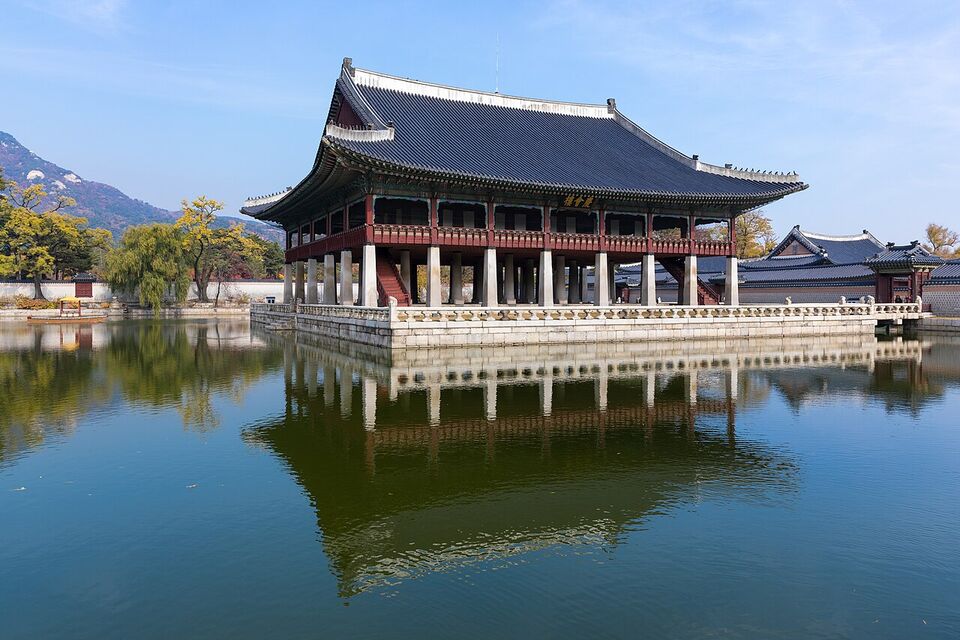
Seoul rewards a longer stay than most visitors expect. The palaces and the old neighborhoods around them take two days. Markets, food streets and the shopping districts take another two. Day trips fill the rest: a half-day DMZ tour, the fortress city of Suwon, or a walk in the hills on the city's edge. Our guides to Seoul, Seoul sights, Seoul neighborhoods and day trips from Seoul give the plan day by day.
Seoul and Busan
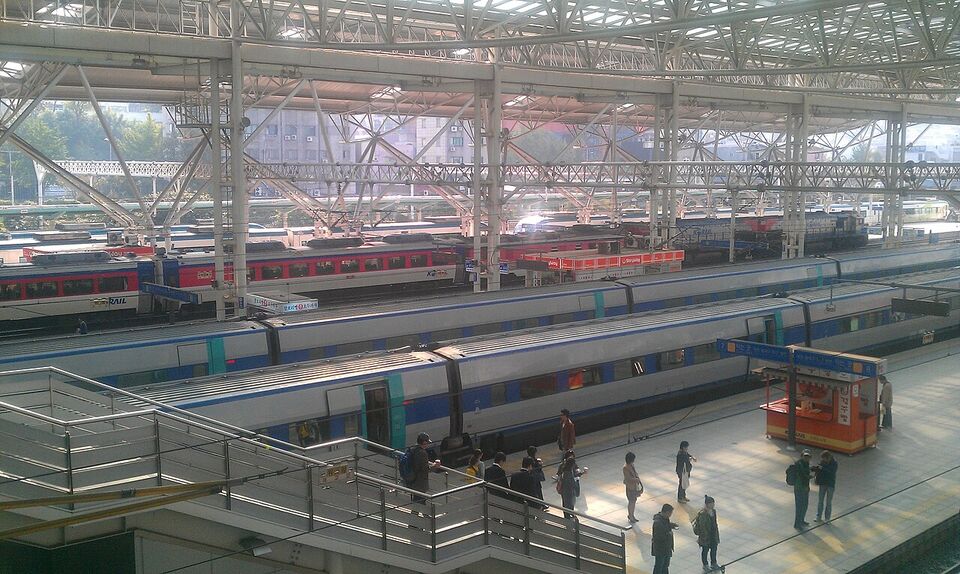
Busan is Korea's second city, on the southeast coast. It has long city beaches, a big fish market, a colorful hillside village and temples on the sea. It pairs with Seoul because the contrast is large and the KTX (the high-speed train) makes the link easy. A day or two in Gyeongju, the old Silla capital, fits naturally between them. See the guides to Busan and Gyeongju.
Seoul and Jeju
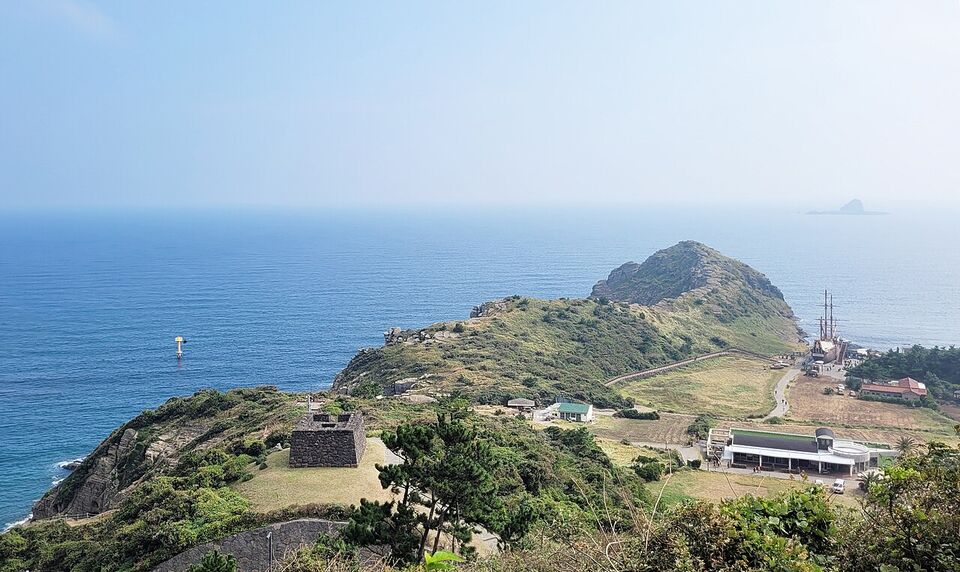
Jeju is a volcanic island south of the mainland, with a 6,388 ft (1,947 m) peak, Hallasan, lava tubes, cliffs and coastal walks. The flight between Seoul's Gimpo airport and Jeju is the busiest air route in the world by passengers, so flights are frequent, but they sell out on holidays and weekends. Plan three or four nights there, not a day trip. Read the Jeju guide before you decide.
The culture loop
If temples, villages and royal tombs matter more to you than beaches, build a loop: Seoul, then Andong (home of the Hahoe folk village), then Gyeongju, then Busan, and back to Seoul by KTX. It suits ten to fourteen days. Jeonju, known for its hanok (traditional Korean house) village and food, can replace Andong if you prefer a shorter hop from Seoul. The guides to Andong, Jeonju and Korea's regions help you choose.
Sample itineraries by trip length
These are skeletons, not schedules. Add or subtract a night in Seoul first, because it is the easiest place to fill extra time.
Five to six days: Seoul only
- Day 1
Arrive and settle
Take the AREX train from Incheon to central Seoul, drop your bags and walk a nearby neighborhood. Do not plan anything heavy after a flight that is 13 to 15 hours (check your airline) and that crosses the date line.
- Day 2
Palaces and old Seoul
Gyeongbokgung in the morning, then Bukchon and Insadong. Wear a hanbok (traditional dress) if you like: it gets you into Gyeongbokgung free.
- Day 3
Markets and food
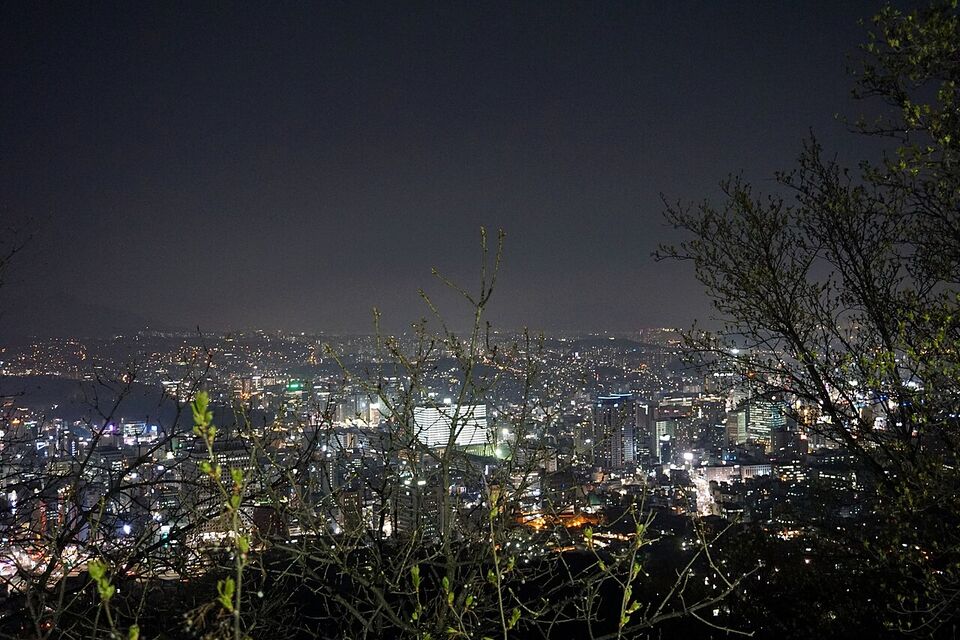
A market morning, a food street at lunch, Namsan or a Han River park in the evening.
- Day 4
Day trip
A half-day DMZ tour with a licensed operator, or a full day in Suwon.
- Day 5
Modern Seoul
Hongdae, Seongsu or Gangnam, depending on whether you want nightlife, cafes or shopping.
- Day 6
Last morning and departure
Leave at least four hours before an international flight, as at any large airport.
Seven to eight days: Seoul and Busan
Spend four nights in Seoul and three in Busan, riding the KTX between them in the middle of the trip. Leave Seoul after a morning of sightseeing so the train ride is not a lost day. In Busan, give one day to the beaches and temples on the sea, one to the old neighborhoods and Jagalchi fish market, and one to Gamcheon Culture Village and the harbor. With a ninth day, add a night in Gyeongju on the way up or down.
Ten days: Seoul, Gyeongju and Busan
- Nights 1 to 4
Seoul
As above, with one day trip. Book the train south before you leave home if it is a holiday week.
- Nights 5 and 6
Gyeongju
Ride the KTX to Singyeongju station (about 2 hours from Seoul; confirm on letskorail.com), then a local bus or taxi into town. See Bulguksa and Seokguram, the royal tombs at Daereungwon and the lit-up pond area in the evening.
- Nights 7 to 9
Busan
Beaches at Haeundae, markets, Gamcheon and a temple on the coast. A short train or bus ride from Gyeongju.
- Day 10
Back to Seoul or fly out
Take the KTX to Seoul for the airport, or fly from Gimhae, Busan's airport, to Incheon or Gimpo if your return flight leaves from Seoul.
Two weeks: a fuller loop
Add Jeju or Andong rather than more days everywhere. A good fourteen-day shape is five nights in Seoul, two in Andong or Jeonju, two in Gyeongju, three in Busan and a night near the airport. If you add Jeju, fly from Busan or Seoul and plan three nights, because weather can change flights. See getting around for how trains, buses and flights fit together.
Sample trips by traveler type
Food-first travelers
Build days around markets and meals. Seoul has the widest range, Jeonju is known for bibimbap (rice bowl with vegetables), and Busan for seafood. See the food guide.
Families with children
Keep moves to one train ride. Seoul has parks, museums and Lotte World, an amusement park open all year. See families.
Hikers and nature lovers
Seoraksan is on the east coast and Hallasan is on Jeju. Mountain trails have seasons and closures, so check before you commit. See hiking.
Culture and history
Palaces, UNESCO sites and temple stays. A temple stay is a good use of one night. See temples.
K-culture fans
Concerts, filming locations, shopping and cafes sit mostly in Seoul. Concert and event tickets sell out far ahead. See K-culture.
Winter sports
Ski resorts east of Seoul typically open between late November and mid-December, depending on snow. See skiing.
Flights and arrival
South Korea's main international airport is Incheon, about an hour from central Seoul. As of November 2026, nonstop service from the US includes United (Newark, San Francisco), Delta (Atlanta, Detroit, Minneapolis/St. Paul, Salt Lake City, Seattle/Tacoma), American (Dallas/Fort Worth), Alaska (Seattle/Tacoma), and Korean Air from cities such as Atlanta, Boston, Chicago, Dallas/Fort Worth, Honolulu, Las Vegas, Los Angeles, New York (JFK), San Francisco, Seattle and Washington (Dulles). Air Premia flies to Honolulu, Los Angeles, Newark, San Francisco and Washington (Dulles). Winter 2026-27 timetables change, so check your airline.
Flight time is roughly 13 to 14 hours from the US West Coast and 14 to 15 hours from the East Coast or Midwest, but confirm with your airline. Korea does not change its clocks and uses Korea Standard Time (UTC+9) all year. That is 14 hours ahead of New York in US winter and 13 hours ahead in US summer, and a flight east crosses the date line, so leaving Monday usually means arriving Tuesday.
Asiana flights become Korean Air flights from December 17, 2026, so a ticket for 2027 may show either name. Asiana, Korean Air and Delta use Terminal 2 at Incheon; check your terminal on airport.kr. See the flights guide and the Incheon airport guide.
The AREX Express train runs non-stop from Incheon to Seoul Station in about 43 minutes (to Terminal 1). The all-stops commuter train takes about 53 minutes. Fares were ₩9,500 (about $7) for the Express and ₩4,750 (about $3.50) for the commuter train as of 2022, and may have risen since, so check arex.or.kr.
The booking order that works
Do these in order. Each step depends on the one before it.
- Choose dates against the holiday calendar. Avoid Seollal (the Lunar New Year) and Chuseok unless you want to see them. Seollal 2027 is Sunday, February 7, with the holiday running February 6 to 8 (and possibly a substitute day on February 9). Chuseok 2027 is Wednesday, September 15, with the holiday September 14 to 16. See when to go.
- Book flights. Fares and seats vary by season. Look at nonstops first, since a connection on the way out can add many hours to a long trip.
- Sort out entry paperwork. Confirm your passport is valid for your whole stay (and check your airline's rule). For travel through December 31, 2026, no K-ETA is needed. For travel from January 1, 2027, check k-eta.go.kr. Plan to complete the online e-Arrival Card before you land, on the official site only. The entry rules page has the details.
- Book the Seoul hotel. Visitor numbers reached a record in 2026, so hotels fill early. Book a refundable room in the neighborhood that matches your plans. See where to stay.
- Book trains and domestic flights. KTX tickets can be bought on the official KORAIL site, letskorail.com, which recommends Chrome, Samsung Internet or Safari. We could not confirm how many weeks ahead foreign visitors can book in 2026, so check the site. Book the whole trip's trains as soon as the window opens if you travel on a holiday weekend.
- Book the things that sell out. The list is in the next section.
- Arrange phone and money. See below and the money guide.
Korea Tourism Organization (KTO) runs the 1330 Korea Travel Helpline, with an English line, and an English site at english.visitkorea.or.kr for current information. Use it as a second check on any hour or price.
What sells out or needs a reservation
- Hotels in Seoul and hanok stays in blossom and fall seasons and on holiday weekends.
- KTX seats on Friday evenings, Sundays and every holiday period.
- Changdeokgung's Secret Garden (Huwon). It is reservation only, and some pavilions are guided tour only. Check the palace's official site (royal.khs.go.kr) for the current booking rules.
- Hallasan's summit trail. The section of the Gwaneumsa trail from Samgakbong to the summit needs an advance online reservation. It reopened September 24, 2026 after repairs. The Seongpanak rule may differ, so check before you plan a summit day.
- Temple stays. Regular adult rates are about ₩70,000 to ₩100,000 (about $53 to $75) a night. Book at eng.templestay.com. A discounted September 2026 offer for foreigners has ended.
- DMZ half-day tours. Book through a licensed operator. Tours can be canceled at short notice, and regular tourist tours to the JSA (Panmunjom) have not run since 2023, so never plan a trip around one. See the DMZ guide.
- Concerts and K-pop events. Often sold out months ahead; use the official ticket sellers.
Save money
Palace admission is low. Gyeongbokgung and Changdeokgung are ₩3,000 (about $2.50) for adults, and Changgyeonggung, Deoksugung and Jongmyo are ₩1,000 (about $1) each. Reports say the government is weighing a first fee rise in about 20 years, so check royal.khs.go.kr. Some palaces and royal tombs have free Wednesdays; the site lists which.
Getting around and paying
Seoul's subway and buses cover the city, and a rechargeable T-money card works on public transit in Seoul, Busan, Daegu and Daejeon, at many convenience stores and at Seoul's palaces. Cards cost about ₩3,000 to ₩5,000 (about $2.50 to $4). A single subway ride was about ₩1,550 (about $1.20) in 2025; check the current fare. Since March 17, 2026, foreign Visa and Mastercard cards can buy and reload the Climate Companion Card (a tourist transit card, with 1, 2, 3, 5 and 7-day options) at station machines, with an average service fee of 3.7% on overseas cards. Check the price at the machine. See getting around.
Cards are widely accepted, including contactless and phone payment. Carry a little cash for markets, street food and small rural restaurants. Tipping is not customary. See money and etiquette.
What a trip costs
We cannot give a trustworthy nightly hotel price for 2026, because rates have been rising and we could not confirm figures from an official source. Use these fixed points instead, then build the rest from your own hotel search.
| Item | Cost | US$ |
|---|---|---|
| Gyeongbokgung, adult | ₩3,000 | about $2.50 |
| Changgyeonggung, Deoksugung or Jongmyo, adult | ₩1,000 | about $1 |
| Seoul subway ride up to 10 km (as of 2025) | about ₩1,550 | about $1.20 |
| AREX Express, Incheon to Seoul Station (as of 2022) | about ₩9,500 | about $7 |
| Temple stay, one night, regular adult rate | ₩70,000 to ₩100,000 | about $53 to $75 |
| Lotte World, one-day adult ticket (approximate) | about ₩62,000 | about $47 |
| K-ETA, if required (for travel from January 1, 2027) | ₩10,000 | about $7.50 |
The rate in this guide is US$1 = ₩1,330. The actual rate moves daily and was between 1,330 and 1,344 in mid-November 2026. Our budget page and trip builder let you total these up.
The biggest first-timer mistakes
Too many cities
The most common mistake is a route that touches five places in eight days. Each move eats a half day, and you see stations more than streets. Hold to two bases and one or two day trips.
Ignoring the holiday calendar
Seollal and Chuseok are the biggest travel rushes of the year. Trains fill, roads jam, and many shops and restaurants close for a few days. Single holidays, such as March 1 (a Monday in 2027), also create long weekends that crowd popular places. Check the dates in when to go.
No data plan
Many things run on a phone: maps, taxi and train booking and translation. Verizon's TravelPass is $12 a day in South Korea and is charged only on days you use the phone abroad (as of November 2026), and it is added automatically to Unlimited Plus and Unlimited Welcome plans; text TRAVEL to 4004 to add it. AT&T and T-Mobile rates and Korean SIM and eSIM prices we could not confirm, so compare before you fly. Naver Map and KakaoMap are the standard map apps. Papago is a translation app.
Arriving without entry paperwork
Fake e-Arrival and K-ETA sites exist. Use only k-eta.go.kr, the K-ETA app, and e-arrivalcard.go.kr.
Relying on cash or on a foreign card only
Cards work widely. Still, keep a small amount of won for markets and small restaurants, and tell your bank you are traveling.
Skipping a plug adapter
Korea uses 220 V, 60 Hz, with Type C and F (round two-pin) sockets, so US plugs do not fit. Bring a plug adapter. Most phone and laptop chargers are dual-voltage (100-240 V), but check the label.
Different from home
Seoul is a safe, orderly city for visitors, and the US State Department advisory is Level 1: Exercise Normal Precautions (as of November 2026). Check travel.state.gov before you go. Emergency numbers are 112 for police and 119 for fire and ambulance. See safety.
Where to go next in this guide
- Entry, customs and what to carry: Entry rules
- Weather and crowds by season: When to go and seasons
- Adding Japan or another stop: Japan and beyond
- Your first week in the capital: Seoul
- The wider country: regions, Busan, Jeju, Sokcho and Seoraksan
- Getting around: getting around and driving
- Sleeping and eating: where to stay and food
- Language: Korean phrases
- More tools: packing and FAQ
Add it to a route in the trip builder, or ask us to plan the hotels, trains and guides for you.