Overview
Korean etiquette is forgiving to visitors, and nobody expects an American to know every rule. The basics are easy to remember: be a little more modest and quiet than you would at home, show respect to older people, use two hands when you give or receive something, and take your shoes off whenever the floor looks raised, heated or carpeted. If you do those four things, you will make a good impression almost everywhere.
Much of the code comes from a long Confucian tradition that puts age and seniority first. You will see it in how people greet each other, who sits where and who starts eating. At the same time, modern Seoul is fast, direct and casual in many settings: cafes, convenience stores, subways and nightlife run on easy, practical manners that look a lot like what you know from home.
This page covers the situations visitors actually meet: greetings, shoes, meals, drinking, tipping, the subway, photos, temples, bathhouses, gifts and what to avoid saying. For food itself, see Korean Food and Soju, Makgeolli and Cafes. For useful words and phrases, see Korean Phrases. For temple-specific advice, see Temples and Temple Stays.
Greetings and bows
The traditional greeting is a bow, usually a small one from the waist or just a nod of the head. Between Koreans of different ages the bow gets deeper as the age gap grows, but visitors do not need to measure it. A slight bow with a friendly annyeonghaseyo (hello) works for a shop clerk, a hotel receptionist, a taxi driver or a new acquaintance.
Handshakes are common in business and with foreigners, especially between men. A respectful handshake is often given with the right hand while the left hand lightly supports the right forearm. Women often nod instead of shaking hands, so let the other person lead: if a hand is offered, take it; if not, bow slightly.
Koreans tend to keep physical distance with people they do not know. Hugs, back slaps and arm touches that are normal at home can feel too familiar, particularly with older people. When you leave, a small bow and annyeonghi gyeseyo (goodbye, said to the person staying) or annyeonghi gaseyo (said to the person leaving) completes the exchange. You will find more phrases on the Korean Phrases page.
Direct, prolonged eye contact with someone much older or in a senior position can come across as a challenge. In practice, normal friendly eye contact in a shop or restaurant is fine. Just do not stare.
Age, seniority and names
Age and rank shape Korean manners more than most Americans expect. Older people are served first, sit in the best seats, begin the meal and lead the conversation. Younger people pour drinks, pass dishes and listen. As a visitor you will see this at group meals, on the subway and in family settings, and it helps to follow it quietly.
Koreans often ask your age early in a conversation. This is not nosy: it tells them which level of politeness to use. If someone asks, answer lightly. You can ask in return without offense. Korea moved to the international age system for legal purposes in June 2023, and the legal drinking and smoking age is 19, but the older habit of working out who is the elder in a group is still very much alive.
Names are written family name first, so Kim Minjun is Mr. Kim. Koreans seldom use first names with people they do not know well. They use a title, a job or a relationship word instead, such as a teacher's title or "manager". Visitors can safely say "Mr. Kim" or "Ms. Kim", or add the polite suffix -ssi after a full name (Minjun-ssi). Avoid family terms like oppa or eonni (older brother or sister, used between friends) unless you have been invited to use them.
When you receive a business card, take it with two hands, look at it for a moment and keep it in a card case or on the table in front of you. Do not write on it or tuck it into a back pocket.
Using both hands
Passing things with two hands, or with the right hand supported by the left at the wrist or forearm, is a sign of respect. Do it when you hand over money, a card, a gift or a drink, and when you receive something from an older person or from someone offering a courtesy. At a shop counter, clerks often return your card and receipt with both hands, and you can do the same when you pay.
Using the left hand alone to hand over or receive an object is considered casual at best, so avoid it when the other person is older. In daily life at a convenience store or cafe this is relaxed, and no one will react. It matters more at meals, with gifts and in formal settings.
Shoes off indoors
Shoes come off in Korean homes, in guesthouses and hanok (traditional Korean house) stays, in temple halls, in some clinics, in a few traditional restaurants and at most places where you sit on the floor. The sign is usually obvious: a shoe rack, a step up, a raised wooden floor or a row of slippers. If in doubt, stop at the door and look at what others are doing.
Floor seating is common in older restaurants, where the dining area sits on a raised, heated floor (ondol, underfloor heating). Most places now offer tables and chairs for visitors who prefer them, and you can ask for one. Wear socks without holes, because you may be walking on a shared floor, and bring a pair of slip-on shoes if you will be doing a lot of temple and hanok visits.
Do not step on the doorway threshold of a temple or traditional building. Step over it. Inside a home, wait for your host to show you where to put your shoes and where to sit.
Different from home
In the US, taking off your shoes is a polite gesture that hosts often wave away. In Korea it is the default in homes and many traditional spaces, and your host will not wave it away. Slip-on shoes make the whole day easier.
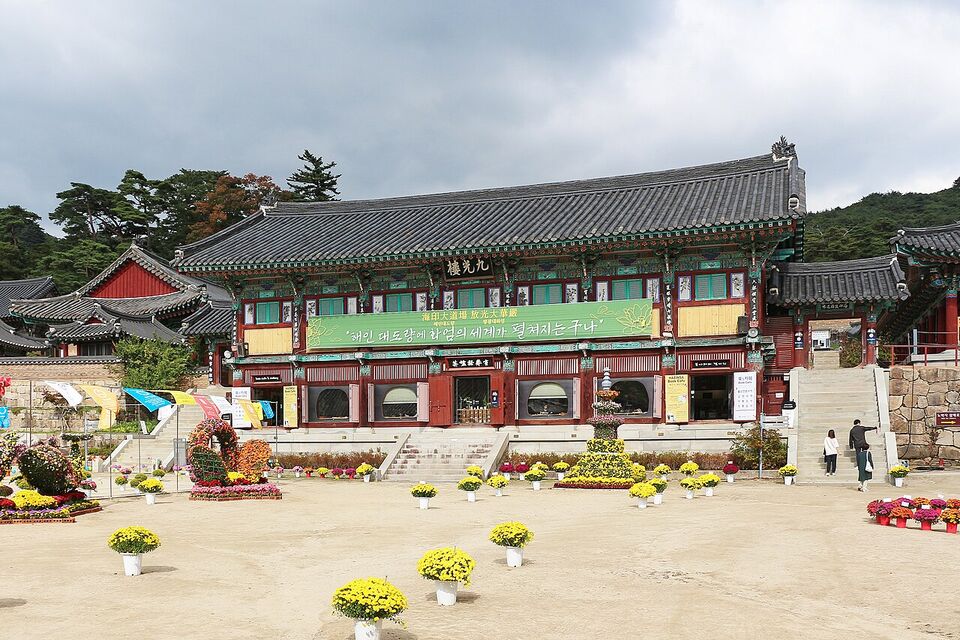
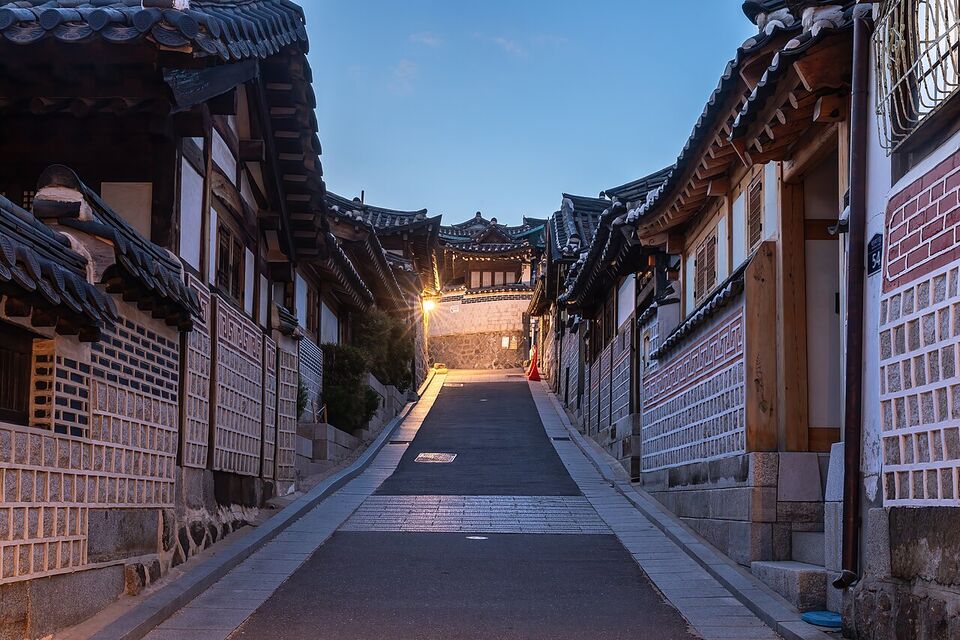
Table manners
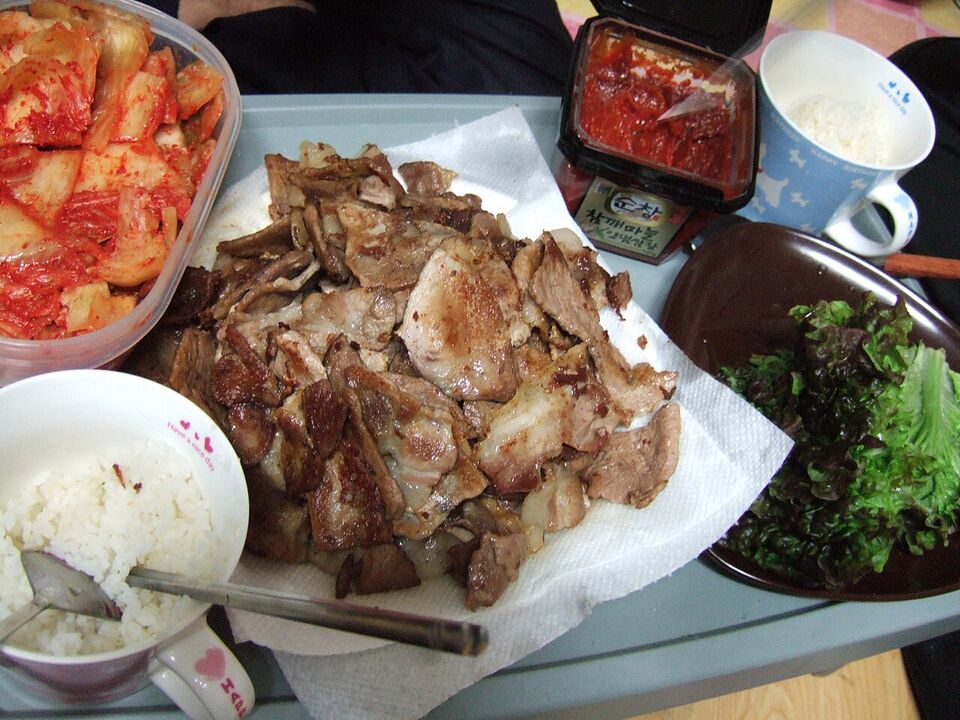
A Korean meal comes with a spoon and a pair of stainless steel chopsticks. The spoon is for rice and soup, the chopsticks for side dishes. Unlike in some other Asian countries, you leave the rice bowl on the table instead of lifting it to your mouth. Shared dishes sit in the middle, and you take what you want with your own chopsticks unless a serving spoon is provided.
Several rules matter more than others:
- Never stick chopsticks or a spoon upright in your rice. It looks like the incense offered at an ancestral memorial, and it is considered bad luck.
- Wait for the eldest person to pick up their spoon first when you eat with a group or a family.
- Do not pass food from chopstick to chopstick or point with your chopsticks. Put them down on the rest or on the table when you are talking.
- Keep noise down. Chopsticks and spoons should not clash on plates, and loud blowing of the nose at the table is mildly rude. Step away if you need to.
- Do not eat much faster or slower than the group, and avoid talking about unpleasant subjects while others are eating.
Side dishes (banchan) are usually refilled free. Ask and you will get more, but try not to leave a big pile of untouched food. At a Korean barbecue restaurant, the staff or the youngest person at the table often cooks and cuts the meat, and you can join in without worrying about rules. Soup and stew come in individual or shared pots; spooning from a shared pot into your own small bowl is normal.
Splitting a bill is more common among younger Koreans than it used to be, but it is still common for one person to pay for a group. If you are invited, offering to pay a second round of coffee or dessert is a polite gesture. Paying for everyone at the till before the others notice is a familiar move, so do not be surprised if a Korean friend does it.
Drinking etiquette
Pouring your own drink when others are at the table is bad form. Fill the glasses of the people near you, and they will fill yours. Receive a drink with two hands, or with your right hand supported by the left. If an older person pours for you, a younger drinker traditionally turns the head slightly away from the elder before drinking, especially with soju or beer.
It is polite to accept a first drink from a host. If you do not want to drink more, simply leave your glass full and nobody will refill it. You can say that you do not drink alcohol, and most people will respect it, particularly with a foreign guest. Do not make a show of refusing, and you can always ask for water or tea. The drinks pages have more on soju and makgeolli: see Soju, Makgeolli and Cafes.
Tipping and paying
Tipping is not customary in South Korea. You do not tip at restaurants, cafes, bars, taxis, hair salons or tour guides as a rule, and a tip can sometimes confuse staff or be handed back. Some upscale hotels and restaurants add a service charge to the bill, so check your receipt before adding anything. Do not apply a percentage rule from home.
Tour guides who work for private companies may appreciate a small gift or a kind word, but there is no expected amount. If you want to thank someone special, a small present from your home town (see gifts below) is more natural than cash.
Cards are widely accepted, including contactless and phone payment, and transit cards cover subways, buses and many convenience stores. Cash is still useful at markets, street food stalls, small restaurants in rural areas and temple donation boxes. For details, see Money in South Korea.
In shops and restaurants you often pay at a counter near the door instead of at the table. Wait to be seated at sit-down restaurants unless there is a sign inviting you to choose a table. At many casual places, there is a call button on the table for more service, and a staff member comes when you press it. Do not wave or shout across the room.
Insider tip
If you want to show thanks at a restaurant or small guesthouse, say gamsahamnida (thank you) with a small bow at the till. It is the Korean equivalent of leaving a tip, and it lands well.
On the subway and in public
Koreans keep public spaces quiet and orderly, especially on subways and buses. Phones are set to silent or vibrate, calls are brief and low, and music or video is played through headphones. Talking with a friend is fine at a normal volume, but loud conversations or speakerphone calls stand out.
- Priority seats at the ends of subway cars are reserved for older people, pregnant women, people with disabilities and those traveling with small children. Many carriages also mark a pink seat for pregnant women. Stay out of them even if the train is empty, in case someone who needs one comes in.
- Let people off first, then board, and stand on the side of the escalator that is not for walkers. Lines on the platform show where doors will open.
- Take backpacks off or hold them in front of you in crowded cars.
- Eating on the subway is not common, and strong-smelling food stays in your bag.
- Offer your seat to an older person who stands near you. It is not unusual for older Koreans to ask for a seat directly, and it is not meant as rudeness.
Older people in Korea may be more direct in crowded places than Americans expect. A push or a hand on your elbow while someone passes is rarely personal. Save your annoyance, and keep moving. For more on transit, see KTX, Buses and Subways.
Many public toilets still ask you to put used paper in a bin beside the toilet instead of flushing it, particularly in older buildings. Look for a sign. Smoking is banned in many public places, including restaurants, and there are designated smoking areas and booths; look for signs.
Taking photos of people
Photographing landmarks and street scenes is fine nearly everywhere. Photographing individuals is different: ask first before taking a close portrait, and do not photograph strangers on the subway, in a bathhouse, in a changing area or in a restroom. South Korea has strict laws on taking photos of people without consent, particularly in intimate situations, and it takes the issue seriously. Children are a special case, so never photograph them without a parent's permission.
At temples, photographing the exterior and grounds is usually welcome, but many prayer halls ask you not to photograph worshippers or the main Buddha statue, and a few ban flash. Look for a sign and follow it. At palaces, hanbok-clad visitors pose for photos all day, and a friendly smile often gets you an easy yes if you ask to include them. Remember that others are trying to take pictures too, so do not hold up a line at a famous photo spot.
If you are interested in K-pop and K-drama sites, there are more photo and privacy rules for fans, which are covered on K-pop and K-drama. Never follow or photograph celebrities without permission.
Temple manners
Active Buddhist temples are places of worship, so treat them like a church, not a park. Dress modestly with shoulders and knees covered, speak softly and keep your phone off. Take off your shoes before entering a main hall, put them on the rack or beside the door, and step over, not on, the threshold.
Inside a hall, sit or stand off to the side so that you do not block worshippers. Do not point your feet at a Buddha statue. If you want to join the prayer bows, you can simply put your hands together and bow your head. If you walk in a circle around a stupa or pagoda, follow the same direction as others, usually clockwise. Do not touch statues or offerings and do not step on prayer mats.
Donation boxes are a place for small cash gifts, and leaving some small notes is appreciated but not required. Temple stays (templestay) have their own rules about quiet hours and shared meals. The meals are vegetarian and you eat all that you take. See Temples and Temple Stays for more.
Bathhouse etiquette
A jjimjilbang (public bathhouse and sauna) is a fixture of Korean life, and many visitors want to try one. The rules are simple, and staff will point you the right way. You pay at the front, get a locker key (often on a wristband), a towel and sometimes a set of loose shirt and shorts for the shared lounge areas. Men's and women's areas are separate for the baths, and shared mixed lounges and saunas are where you wear the clothing provided.
In the bath area, you bathe naked, which is the part that surprises many Americans. Do not wear a swimsuit in the baths, and do not carry a phone into the bath area. Shower and wash thoroughly with soap before you enter any hot, warm or cold pool, and tie your hair back so it stays out of the water. Keep towels out of the pools. Many people sit on small stools at the wash stations, and some offer body scrubs as a paid service.
Keep noise down in the sleeping and lounge rooms, and respect people who are napping. Tattoos are tolerated at some places and restricted at others, so ask at the front desk when you book. Lockers are small, so use the key carefully and wear your wristband in the lounges to pay for snacks on exit. If you are uneasy about nudity, a private bath in a hotel or a smaller hot spring is a good alternative.
Watch out
Never photograph anyone in a bathhouse, a changing room or a locker area, and keep your phone in your locker. Photography in these spaces is treated very seriously in Korea.
Gifts and invitations
If you are invited to a Korean home, bring a small gift for the host: fruit, a box of good pastries, a nice tea or a small item from your own country or home town. Koreans generally open gifts later, not in front of the giver. Hand it over with two hands, and do not be surprised if your host first refuses politely. Offer again, and it will be accepted.
Gifts in sets of four are avoided because the number four sounds like the word for death, and some buildings skip the fourth floor in the elevator. This is a superstition that younger Koreans take lightly, but a set of three or five of something is an easy choice. Some people also avoid writing a person's name in red ink, which is traditionally linked with the dead.
Take shoes off at the entrance of the home, wait to be told where to sit and expect a lot of food to be offered. Eating a little of everything is polite, and you can say jal meogeosseumnida (I ate well) at the end. For weddings and funerals, Koreans give cash in an envelope. Visitors rarely attend these, but if you are invited, ask a local friend about the amount and the dress.
Tourist-friendly gifts from Korea itself are covered on Shopping and K-Beauty.
Directness, conversation and what to avoid saying
Koreans can be much more direct than Americans on personal topics. You may be asked your age, whether you are married, what you do, how much you earn or why you are not married yet. These are small-talk questions, not an attack. Answer lightly, deflect with a smile or turn the question back. Comments on appearance, weight and skin are also more common than at home, and they are usually well meant.
At the same time, Korean communication can be indirect on the things that matter. A flat "no" is softened, a refusal can sound like "that will be difficult", and silence may mean unease. Be patient and keep your own tone friendly and even.
There are subjects best left alone as a visitor:
- North Korea. The division of the peninsula is a real part of Korean families' lives, so avoid jokes, casual speculation and "when will it end" questions. If a local raises it, listen and let them lead.
- Comparisons with Japan or China. Do not say that Korea is "like Japan" or "like China" in food, language or culture. Koreans take pride in a separate identity. Questions about wartime history are best left to those who invite them.
- Politics and domestic disputes. Keep opinions on current politics, gender debates and recent news to yourself.
- Appearance and plastic surgery. Treat these as private subjects unless a friend raises them first.
Safe, warm topics are food, K-pop and K-drama, hiking, travel and your own home town. Compliments on Korean food are almost always welcome. Our Safety in South Korea page covers laws and the practical side of staying out of trouble.
Do and do not, at a glance
| Situation | Do | Do not |
|---|---|---|
| Greeting | Slight bow or nod, smile, say annyeonghaseyo | Hug or slap backs of people you do not know |
| Handing things over | Use two hands, or right hand with left support | Toss or hand over an item with the left hand alone to an elder |
| Homes and guesthouses | Take off shoes at the door, wear clean socks | Walk on the floor in outdoor shoes |
| Meals | Wait for the eldest, use the spoon for rice and soup | Stand chopsticks or a spoon upright in rice |
| Drinks | Fill others' glasses, receive with two hands | Pour only for yourself in a group |
| Tipping | Say thank you with a small bow | Leave a percentage tip |
| Subway | Keep phone on silent, offer your seat | Sit in a priority seat if someone needs it, or take loud calls |
| Photos | Ask before portraits, follow signs in halls | Photograph strangers, children or bathers |
| Temples | Cover shoulders and knees, speak softly | Step on the threshold or point feet at a Buddha |
| Conversation | Talk food, travel, K-culture, hiking | Joke about North Korea or compare Korea with Japan |
Short scripts for common situations
A few spoken lines go a long way. Romanizations here are approximate, and the Korean Phrases page has more help with pronunciation.
| Situation | Say | Meaning |
|---|---|---|
| Entering a shop or restaurant | Annyeonghaseyo | Hello (with a slight nod) |
| Asking for a table for two | Du myeong isseoyo | Two people, please |
| Asking for more side dishes | Banchan deo juseyo | More side dishes, please |
| Before eating, as a guest | Jal meokkesseumnida | I will eat well |
| After a meal | Jal meogeosseumnida | I ate well |
| Squeezing past someone on the subway | Jamsimanyo or Sillyehamnida | Excuse me |
| Declining a drink | Jeoneun sul an masyeoyo | I do not drink alcohol |
| Saying thanks and goodbye | Gamsahamnida, annyeonghi gyeseyo | Thank you, goodbye |
Common mistakes to avoid
- Wearing shoes onto a heated restaurant floor or into a guesthouse room.
- Pouring your own drink at a group table, or starting to eat before the eldest person.
- Leaving chopsticks sticking out of a bowl of rice.
- Adding a tip at a restaurant and then waiting for change when staff run after you to return it.
- Taking loud phone calls on the subway or sitting in a priority seat.
- Photographing strangers, kids, or anyone in a bathhouse or changing area.
- Joking about North Korea or equating Korea with Japan or China.
- Blowing your nose loudly at the table or leaving a big mess of food on the table.
- Wearing revealing clothes or shoes at a temple hall and stepping on the threshold.
Save money
Because there is no tipping, the price on the menu is almost always the price you pay at the counter. Water and side dishes are usually free at restaurants, so do not order extras you may not need.
Where to go next
Once you know the basics, the rest comes from watching people around you. If you are planning your first trip, start with trip planning and Entry Rules for Americans (K-ETA). For food manners in practice, see Korean Food. For the practical side of safety, see Safety in South Korea. And for a first look at traditional culture, Temples and Temple Stays and Festivals and Holidays show how many of these customs play out in real life.
Add it to a route in the trip builder, or ask us to plan the hotels, trains and guides for you.