Overview
Korea has four clear seasons, and two of them draw visitors with color: spring, when cherry blossoms open from the south coast to Seoul, and fall, when the leaves turn on the mountains and then in the cities. Both are popular, and both are hard to schedule, because the weather moves the dates by a week or more from year to year.
As a rule of thumb, cherry blossoms fall in the last week of March and the first half of April, and fall color runs from late September in the high mountains to mid-November in the south and in Seoul. We give typical ranges here, not promises. No page should tell you that a bloom will open on a specific date months ahead, and this one does not. Plan a window of a week or two, check the official forecasts as you get closer and keep a back-up plan.
For the full year, see When to Go to South Korea. If you are reading in late fall, South Korea in November and South Korea in December cover what the weather and festivals are usually like, and South Korea in January covers winter. For nature days, see Hiking in South Korea and Day Trips from Seoul.
Cherry blossoms: the timing
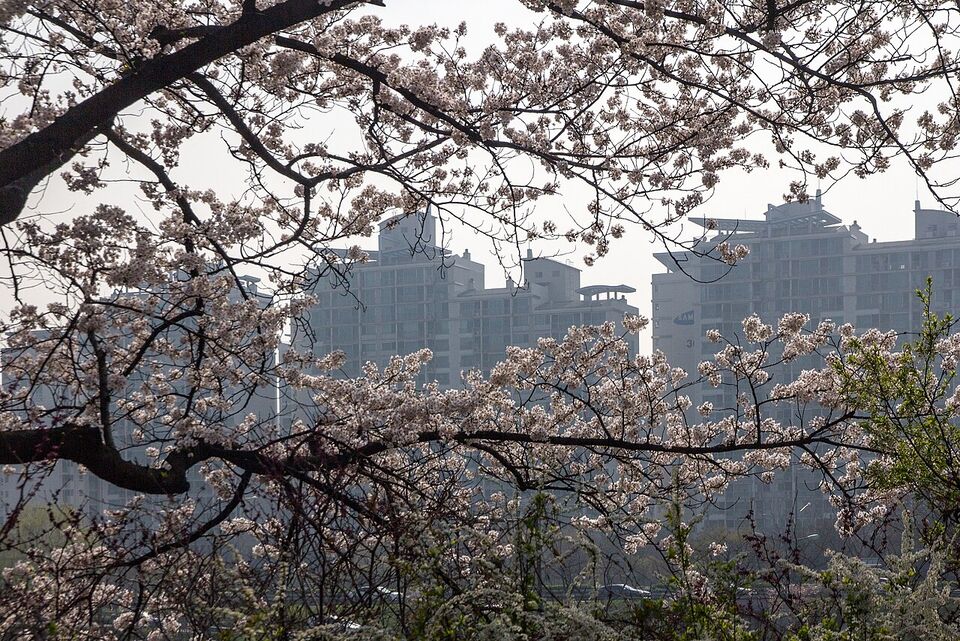
Blossoms move north with the warm weather. They usually open first on Jeju and the south coast in late March, reach Gyeongju, Busan and Jinhae around the end of March and the start of April, and bloom in Seoul in the first week or two of April. In the cooler east coast and mountain areas, they come later. These are patterns, not predictions. A warm March can bring everything forward by a week or more; a cold spell can delay it.
The weather in Seoul gives you the background: the average daily high is 52°F (11°C) in March and 64°F (18°C) in April, with average lows of 35°F (2°C) and 46°F (8°C). The first week of April is therefore often chilly in the morning and evening, so bring layers. Spring can also bring fine dust (yellow dust) on some days, which hazes the sky and is worth checking on airkorea.or.kr.
Two things are worth knowing about how blossoms behave:
- First bloom and full bloom are not the same day. The forecast usually gives both, and full bloom, when the trees look their best, comes a few days to about a week after the first flowers open.
- The show is short. Petals fall within days of full bloom, and a rainy or windy spell can shorten it. A few days of petals falling like snow is a sight in itself, but be ready for bare trees if you are late.
Where to see cherry blossoms
Yeouido and the Han River
Yeouido, an island in the Han River, is Seoul's best-known blossom area, with cherry trees lining the roads beside the National Assembly and the riverside park. It is very crowded at the peak, especially on weekends and evenings. Go on a weekday morning if you can, and use the subway, because roads and parking fill up.
Jinhae
The Jinhae Gunhangje (Naval Port Festival), also called the Jinhae Cherry Blossom Festival, has been held since 1963 in early April, for about 10 days from April 1. Changwon has fixed the dates at April 1 to 10 since 2011, but the trees do not always match the calendar. It is crowded and hotels fill up, so book early and with flexible cancellation.
Gyeongju
Gyeongju, the ancient Silla capital, mixes cherry trees with royal tombs, temples and lakes, which makes for photos that are very different from city parks. Bulguksa and the lakeside paths are popular. See Gyeongju for a plan.
Seoul parks and palaces
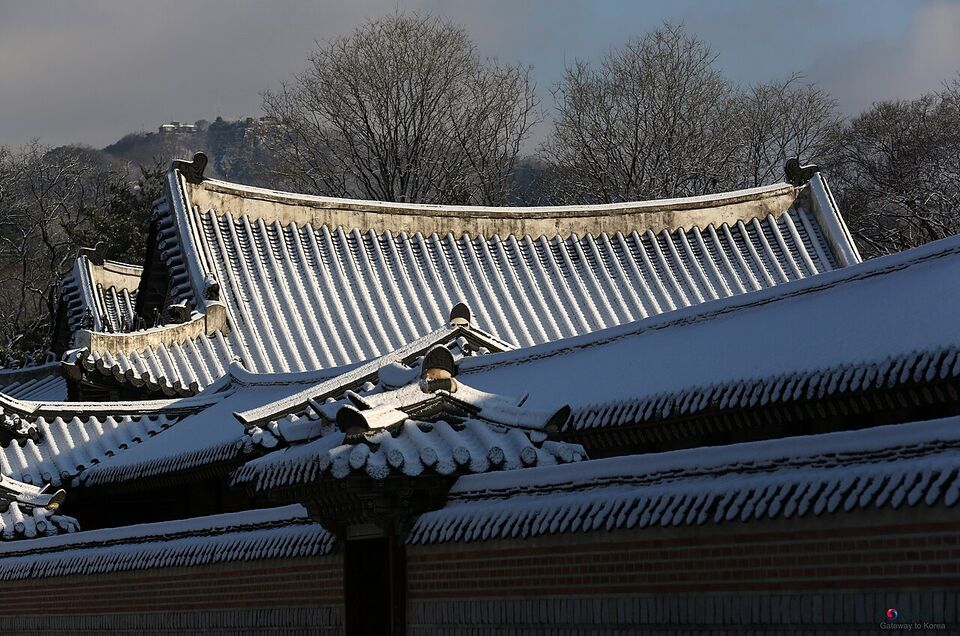
Seoul Forest, Namsan, Seokchon Lake and the palace grounds have their own blossoms and are often a calmer alternative to Yeouido. Palace blossoms mean palace fees, and some palaces have limited access to certain gardens, so check royal.khs.go.kr.
Jeju and the south coast
Jeju and the south coast bloom first, which makes them a good early-season choice if you arrive in late March. See Jeju Island and Busan. Hadong and other south coast towns are known for blossom roads, but you will need a car or a local tour.
Jeonju and Andong
Hanok towns look good with blossoms. Plan these as part of a longer trip: Jeonju and Andong and Hahoe.
Fall colors: the timing
Fall is the favorite season for many visitors, and for good reason: the air is dry, the skies are clear and the temperatures are mild. Color moves down the mountains and from north to south, so it appears first at high elevations in the northeast, then in Seoul and the central areas, and last on the south coast and Jeju's lowlands. As a typical pattern, first color at Seoraksan comes in late September to early October and peaks in mid to late October; Seoul and the lowlands peak from late October into mid-November; and Hallasan on Jeju is often at its best from late October into early November. These are typical ranges, not forecasts. Check the official foliage forecast for the real dates in any year.
In Seoul, the average daily high is 68°F (20°C) in October and 53°F (12°C) in November, with lows of 51°F (11°C) and 38°F (4°C). At Seoraksan's summit it will be much colder than at Sokcho on the coast, where the average high in November is 56°F (13°C) and the low is 41°F (5°C), so bring a warm layer and a rain shell for the mountains. See South Korea in November for what to expect late in the season.
Where to see fall colors
Seoraksan
Seoraksan is the country's best-known fall mountain. Its highest peak, Daecheongbong, is 5,604 ft (1,708 m) high. The cable car and the lower trails are the easy choices, and the high trails are a serious hike. Expect crowds on weekends in the peak weeks, and check knps.or.kr for trail status. See Sokcho and Seoraksan.
Naejangsan
Naejangsan in Jeolla is famous among Koreans for its maple colors. It is a long trip from Seoul, so we suggest combining it with Jeonju and an overnight stay. We have no confirmed transit times, so check local transport options before you go.
Palaces and old Seoul
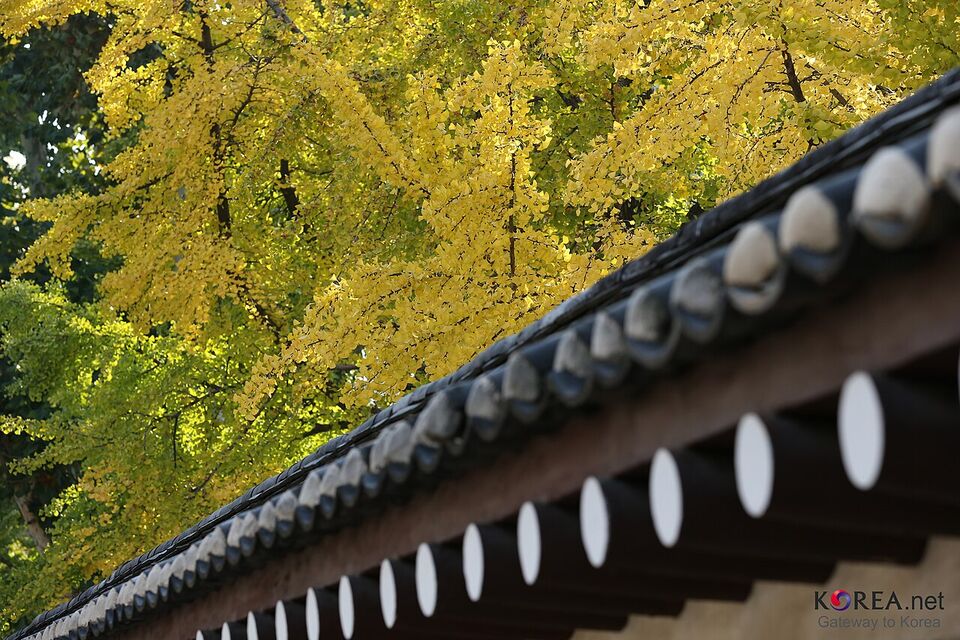
Gyeongbokgung, Changdeokgung and Deoksugung have colorful trees in the courtyards and along the walls. Changdeokgung's Secret Garden (Huwon) is reservation-only, and some pavilions are guided tours only. Gyeongbokgung admission is ₩3,000 (about $2.50), and entry is free in hanbok. Gyeongbokgung usually closes on Tuesdays and Changdeokgung on Mondays; check royal.khs.go.kr for hours and closed days.
Nami Island
Nami Island, reached from Gapyeong and part of Chuncheon, is known for its tree-lined paths and is a popular day trip from Seoul. It is busy on fall weekends, so go on a weekday and allow time for the ferry.
Hallasan and Jeju
Hallasan, at 6,388 ft (1,947 m), has fall color on its slopes, with the best views usually late October to early November. Summit hikes need a reservation on certain routes: see Hiking in South Korea and Jeju Island.
Jirisan and the south
Jirisan in the south offers big mountain views and later color than the north. It suits hikers with time for an overnight stay. Check the national park site for trail conditions.
Forecasts and official sources
Forecasts are the best tool you have, and they are published by official agencies. The Korea Meteorological Administration (KMA, kma.go.kr) tracks spring blossom timing and usually issues its forecast for the year in late winter or early spring, around February and March. The Korea Forest Service (forest.go.kr) publishes fall foliage forecasts and current progress by mountain. The Korea Tourism Organization (english.visitkorea.or.kr) gathers updates in English. For park trail closures, check the Korea National Park Service (knps.or.kr), and for air quality check airkorea.or.kr.
Forecasts for blossoms are more reliable a week or two ahead than a month ahead, and they shift with the weather. Treat anything that gives an exact date for next year as a rough guess. We do not have 2027 forecasts: they are not yet published, and our dates here are typical ranges for planning only.
Insider tip
Check the forecast when you book, again one week before you travel and again the day before you go to a mountain. If the blossoms are early or late, shift your Seoul days and keep the south coast or Jeju as a flexible add-on.
Places by season
| Place | Season | Typical timing | Notes |
|---|---|---|---|
| Jeju and south coast | Cherry blossoms | Late March | Earliest; combine with canola flowers on Jeju |
| Jinhae (Changwon) | Cherry blossoms | Festival April 1 to 10; trees vary | Very crowded; book hotels early with free cancellation |
| Gyeongju | Cherry blossoms | Late March to early April | Tombs, temples and lakes; see Gyeongju |
| Yeouido and the Han River | Cherry blossoms | Early April in a typical year | Go on a weekday morning; use the subway |
| Seoul parks and palaces | Cherry blossoms | Early April in a typical year | Seoul Forest, Namsan and palace grounds are calmer options |
| Seoraksan | Fall colors | Late September to October | Earliest; high trails are a real hike |
| Nami Island | Fall colors | Mid to late October in a typical year | Weekday visits are calmer |
| Seoul palaces | Fall colors | Late October to mid-November | Check closed days and Huwon reservations |
| Naejangsan | Fall colors | Late October to early November | Long trip; combine with Jeonju |
| Hallasan | Fall colors | Late October to early November | Check trail reservations and closures |
Planning a trip around the seasons
The safest plan is to pick a window, not a day. For cherry blossoms, a window from about March 28 to April 12 gives Seoul, Gyeongju and Jinhae a fair chance in a typical year, and starting on the south coast and moving north lets you follow the bloom. For fall color, a window from mid-October to early November catches Seoraksan late in its peak and Seoul and the palaces coming into color. A warm or cold year can move both windows by a week or more.
Book the parts you cannot change first, such as flights and the one hotel in a festival town, and choose rooms with free cancellation where you can. Keep other nights flexible, or book them close to the date once the forecast firms up. Because visitor numbers are at record highs (as of November 2026), hotels in Seoul and festival towns fill up early, so do not wait too long. For tours that depend on weather, ask about the refund and rescheduling policy before you pay.
Build in a rain plan. Museums, palaces under cover, markets and cafes make easy back-ups: see Things to Do in Seoul and Shopping and K-Beauty. If a trail is closed or the mist is thick, a temple visit or a hot spring can save the day. Bring a light rain jacket in spring and fall, because showers are common, and wear shoes that cope with wet leaves and petals.
Photography also depends on timing. Early morning gives soft light and fewer people at Yeouido, palaces and Nami Island. Keep your phone charged and your battery spare in cool weather, and avoid blocking paths when you stop for a photo, because everyone is doing the same.
Other flower seasons
Cherry blossoms are the headline, but they are not the only color on the calendar:
- Plum blossoms (maehwa). These open in March in the south, before the cherry trees, and are often found in villages and temple grounds. They are small and delicate, and good for a quieter trip.
- Canola flowers on Jeju. Bright yellow fields appear in spring, usually between late March and April, near the coast. Ask at the local tourism office for the current best fields.
- Azaleas and royal azaleas. April and May bring pink and purple flowers to mountains and parks across the country, and Jeju's Hallasan area is known for them. The timing depends on elevation.
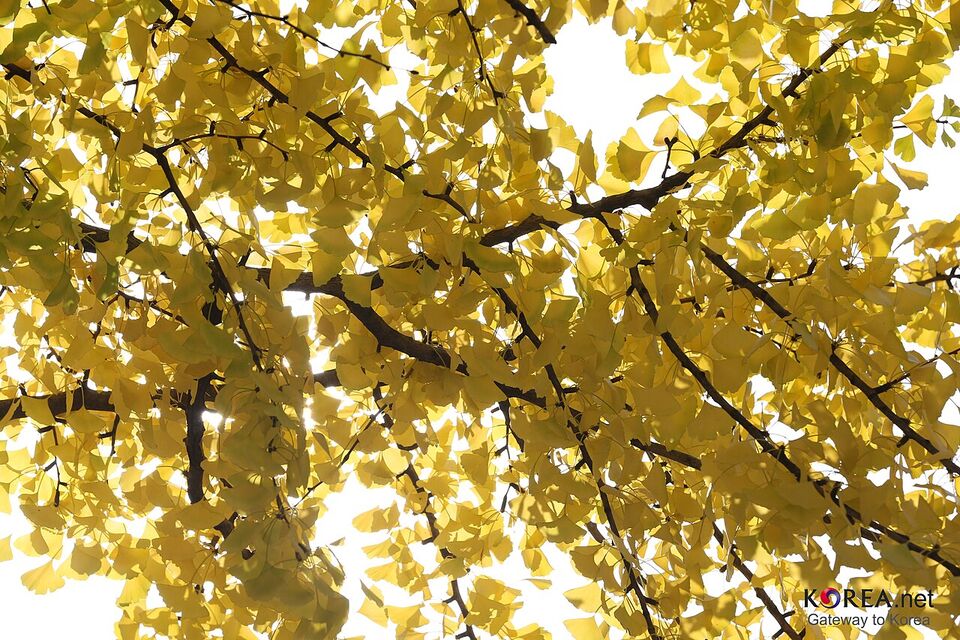
- Fall extras. Silver grass fields, ginkgo trees with yellow leaves and ginkgo-lined streets in Seoul are popular in October and November.
Each has its own timing, and the same rule applies: use a range and check a current source. For events tied to the seasons, see Festivals and Holidays.
Crowds, day trips and routes
Weekends in blossom and fall season are very busy, and holidays add a rush of domestic travel. As a rule, plan the most famous spots for a weekday, go early in the morning and leave the late afternoon for places with a view or a long evening. Use subways and trains instead of driving where you can, because roads fill and parking is limited near the famous spots. Hotels near blossom areas can sell out, and rates may be higher, so see Where to Stay in South Korea.
Some practical routes from Seoul:
- Spring
Seoul base, two to three days
Spend one morning at Yeouido, a day at the palaces and Seoul Forest, and keep a spare day for a day trip. Check the forecast and shift days to match the peak. See Seoul for the city plan.
- Spring
Gyeongju and Jinhae, three to four days
Combine Gyeongju with Busan and a day in Jinhae during the festival. This route needs train and bus planning, with hotels booked early and flexible. See Busan and Gyeongju.
- Fall
Seoraksan and the east coast, three days
Take a bus or train to Sokcho, give a full day to Seoraksan on a weekday, and end in Gangneung. Book in advance for peak weeks. See Sokcho and Seoraksan and Gangneung and the East Coast.
- Fall
Seoul with Nami Island, two to three days
Spend a day on Nami Island and a day in the palaces, with a spare day for the weather. Combine with Day Trips from Seoul.
Different from home
Americans often compare Korea's blossom and color seasons to a single "peak week," but they are really a moving wave across the country. Seoul's peak and Seoraksan's peak can be weeks apart, so choose where you will be and then check that place's forecast.
Mistakes to avoid
- Booking a nonrefundable flight, tour or hotel for a precise bloom date months in advance.
- Assuming the Jinhae festival dates match the blossoms in every year. The festival dates are fixed and the trees are not.
- Visiting the most famous spots on a weekend at the peak, without a plan to arrive early.
- Expecting Seoraksan's summit to feel like Sokcho. It is colder, and trails can close for weather or fire prevention. Check knps.or.kr.
- Skipping layers: spring mornings and fall evenings can be cold.
- Counting on one sunny day. Rain or wind can end a bloom or a color peak quickly, so keep a back-up indoor plan.
- Relying on a social media post for dates, instead of the forecast from the KMA or the Korea Forest Service.
- Forgetting the Chuseok holiday in fall, which brings travel rushes and closures: in 2027 it is September 14 to 16.
Watch out
Seoraksan has had spring closures of high trails for fire prevention, and trail status can change with weather in any season. Check knps.or.kr before you plan a long hike, and have a lower-altitude plan if a route is closed.
Where to go next
Pick your window with When to Go to South Korea, then check the month pages South Korea in November, South Korea in December and South Korea in January for the weather. Build your days with Things to Do in Seoul, Hiking in South Korea and Trip Builder, and check South Korea Packing List for layers.
Add it to a route in the trip builder, or ask us to plan the hotels, trains and guides for you.