Overview: what to do and how to do it safely
Costa Rica sells itself on adventure, and the choice is large: ziplines through the canopy, hanging bridges above the forest floor, white-water rafting, canyoning down waterfalls, ATV and horseback rides, kayaking and night walks. The difficulty is not finding something to book. It is deciding what is worth your time and money, and choosing an operator that treats safety as seriously as marketing.
This page covers the main activities, where they cluster, what to ask before you pay, and the fine print that catches Americans out. We do not rank companies, and we do not print prices: tour prices change by season and by operator, and we could not confirm current figures from the operators' own sites. Use the checklists below to compare current quotes yourself.
Adventure tours are different from home in one important way. Safety rules and enforcement vary by activity and operator, and there is no single mark you can look for. The best protection is to ask questions, look at the equipment and trust your instincts if something feels rushed. For the country-wide picture on risk, see our safety guide and Is Costa Rica safe?
The main activities
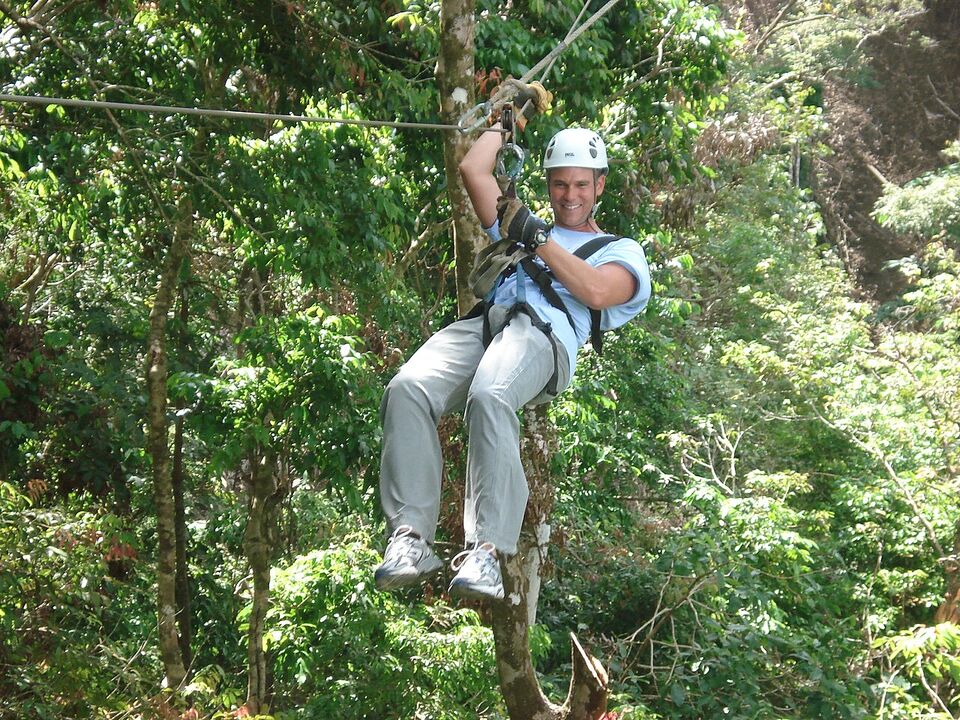
Ziplines and canopy tours
You clip into a harness and glide along cables strung between platforms in the forest. Courses range from a handful of short cables to long ones across canyons. Choose by how much you want to ride versus how much you want to see.
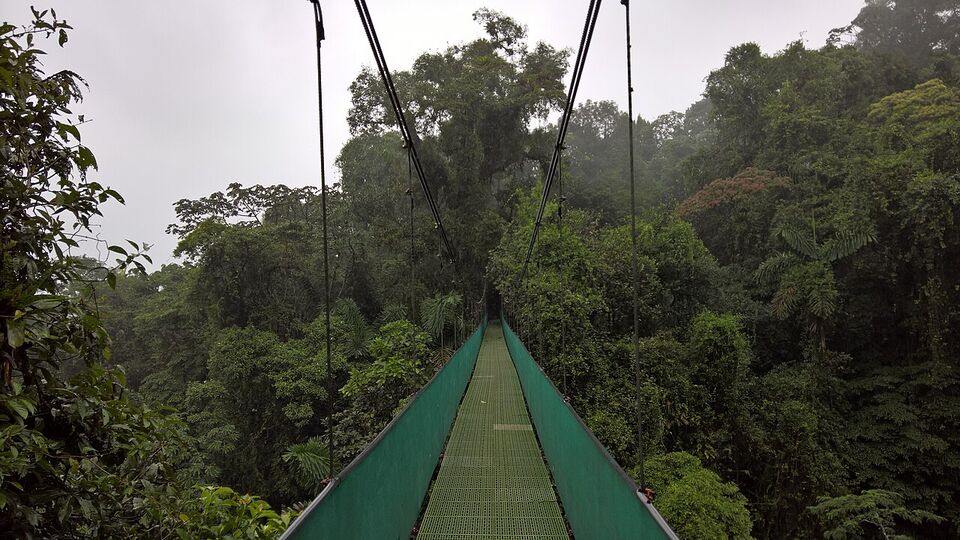
Hanging bridges
Walkways across the canopy. The Tourism Board lists hanging-bridge walks in Sarapiquí and La Fortuna. They are the gentlest option and suit older kids and slow walkers. Guided walks show far more wildlife than going alone.
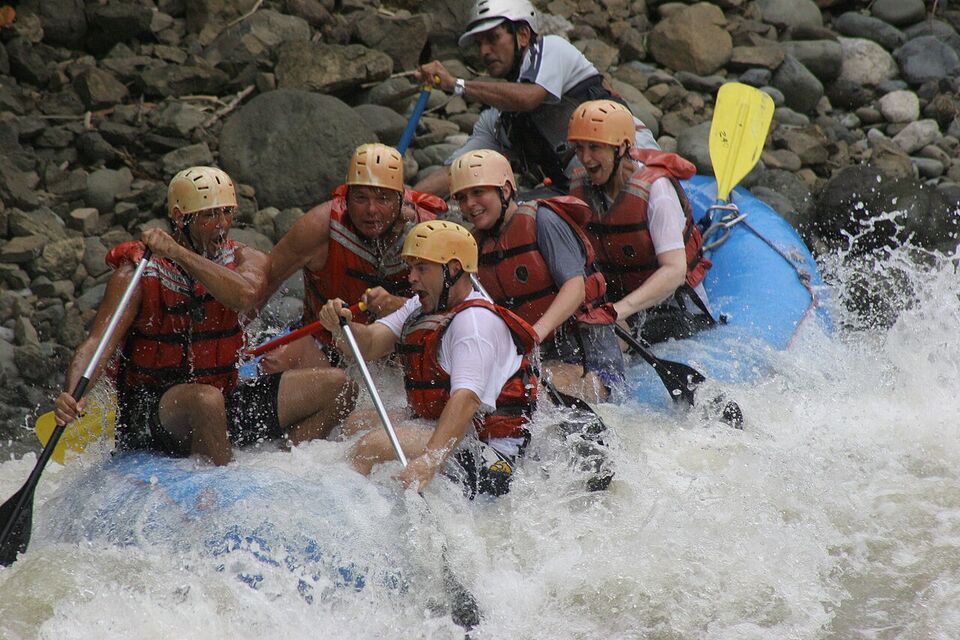
White-water rafting
Guided inflatable-raft trips on rivers of different difficulty. This is the activity where guide quality and river level matter most. We explain the class system below.
Canyoning
Rappelling down waterfalls and swimming through pools. It needs a good guide, helmets and a harness, and is not for anyone uneasy with heights or moving water.
ATV and horseback rides
The Tourism Board lists ATV tours around Arenal in the dry season. Horses and quads are easy to book, but quality varies: look at the animals and machines.
Kayaking and night tours
Calmer ways to see wildlife. Night walks and kayak tours are best with a licensed naturalist guide, and are covered in our wildlife guide.
Where you go determines what is on offer. The northern lowlands around La Fortuna and the Arenal volcano are the busiest adventure zone; see our Arenal guide. Monteverde is known for canopy and hanging bridges in the cloud forest; see our Monteverde guide. The Pacific beaches have zipline and horseback options, and the Caribbean slope has the big rafting rivers.
White-water rafting: rivers, classes and seasons
Rafting river difficulty is graded from Class I (easy) to Class VI (extreme) on the international scale. Most commercial trips for first-timers run on Class II-III water, and the harder trips on Class III-IV. Grades are not fixed: rain can raise a river by a class or more, and an operator can change or cancel a trip if conditions turn unsafe. The grade printed on a brochure is a guide, not a promise.
Four rivers dominate the booking sites. The Costa Rica Tourism Board lists them among the top green-season (May to November) activities:
- Pacuare River (Caribbean slope): the best known, with a remote jungle gorge section. Trips often run as full days with a transfer from San José and a lunch, and some include a night at a lodge on the riverbank. Ask how your group is split by experience.
- Sarapiquí River (northern lowlands): often chosen for beginners and families because it is generally gentler than the Pacuare. Rafting here is listed for the green season, and the area has hanging bridges and wildlife as well.
- Savegre and Naranjo rivers (central Pacific): reached from Manuel Antonio and Quepos. The Tourism Board lists rafting on both in the green season.
We could not confirm which sections each operator runs, the exact class of each section, or the months that each river is closed or running at full flow. Ask the operator for the section name, class, trip length and the river level on your date. Water levels shift with rain, and some trips are not offered, or are changed, when levels are too high or too low. Our when to go guide explains the rainy seasons.
Watch out
Do not treat heavy rain as an automatic reason to go. High water can make a river more dangerous, and a good operator will cancel or switch rivers rather than run a trip that is beyond the group. Ask what the cancellation policy is when conditions are unsafe, and whether you get a refund or a rebooking.
How to choose a safe operator
There is no foolproof test, and a polished website proves little. Instead, ask specific questions before you pay, and look for clear, confident answers. These are the points we think matter most.
Questions to ask
- Is the company registered and insured? Ask whether it is licensed with the Costa Rica Tourism Board (ICT) and carries liability insurance, and ask to see proof. A legitimate business will answer without fuss. We could not verify the exact registration and insurance requirements for each activity on official sites, so treat the answer as a signal, not a guarantee.
- Who are the guides and how were they trained? For rafting, ask about river-guide training, swiftwater rescue and first-aid certification. Ask how long the guide has run this specific river. For ziplines and canyoning, ask about rope, rescue and equipment training.
- What is the group size and the guide-to-guest ratio? Smaller groups are easier to supervise. On a raft trip, ask whether there is a safety kayak or a second guide on the river.
- What equipment is used and how is it maintained? You should be given a properly fitted helmet and life jacket for rafting, a helmet and harness for ziplines and canyoning, and a briefing before you start. Ask how often cables, harnesses and ropes are inspected and replaced.
- What are the cancellation and weather rules? You want a refund or a rebooking if the operator cancels for safety, and a clear rule on lightning and heavy wind for canopy courses.
- What is the emergency plan? Ask where the nearest clinic is, how guests are evacuated from a remote section, and whether staff carry a radio or phone. Remember that the CDC warns trauma care is uncommon outside urban areas.
Signs of a well-run tour
- A real safety briefing, with a chance to ask questions, before any equipment is used.
- Gear that looks maintained, with no frayed webbing, cracked helmets or rusty fittings.
- Guides who check each guest's harness and buckles, not just the group.
- A willingness to say no: to turn away someone who is too light, too heavy, intoxicated or unwell.
- Transport by a licensed vehicle. A Tico Times headline of October 29, 2026 said the toll from a bus rollover in Sarapiquí had risen to three and that regulators said the bus was authorized only to carry students and lacked an excursion permit. Ask your operator whether the vehicle used for tours is authorized for tourist transport.
Warning signs
Walk away from operators who rush a briefing, will not tell you who your guide is, pressure you to sign a waiver without reading it, send you into water or onto a line with equipment that does not fit, or push you to sign up on the spot with a "today only" price. If something looks unsafe once you are there, you can say no and ask for a refund, though you should not count on getting one.
Age, weight and health limits
Almost every activity has minimum ages, weight limits (both minimum and maximum) and health restrictions, and they differ by operator, route and river. Typical conditions apply: ziplines have harness and cable limits, and rafting has minimum ages that rise with river difficulty. We could not confirm universal figures, and quoting a single number would be misleading. Treat any figure you read online as a starting point.
- Ask for the minimum and maximum age and weight in writing, and tell the operator about heart or back problems, pregnancy, recent surgery, seizures or mobility limits before you book.
- Be honest about your weight and swimming ability. A guide who cannot place you safely on a line or in a raft will say so.
- Children's rules are set by the operator. If you are traveling with kids, our families guide lists what to ask.
- Do not drink alcohol before an activity. Reputable operators will refuse guests who have.
Booking: direct or through your hotel
You can book adventure tours in three ways: directly with the operator, through your hotel's tour desk or a tour agency, or through an online marketplace. We suggest comparing at least two.
- Directly: you speak to the operator, see the cancellation rules and can ask the safety questions yourself. It often costs the same or less than a middleman.
- Hotel or agency desk: convenient, with pickup and bundled combo days. The desk may take a commission, and may favor operators who pay it. We could not verify how large any markup is, so ask the desk who actually runs the tour and compare against the operator's own price.
- Online marketplaces: useful for comparing, but check that you are dealing with the operator or a clearly named partner. Read the cancellation terms.
Prices for tourist services in Costa Rica are usually quoted in US dollars. Ask whether the 13% sales tax is included in the quote, and whether park or reserve entrance fees, lunch, photos and transfers are included. Tourist businesses accept cards, but small outfits may prefer cash. For a bigger budget picture, see our money guide.
Save money
You rarely need to buy every activity as a separate half-day. Some of the best value comes from a single well-chosen day rather than many small ones. Pick the one or two experiences you will actually remember, and spend the rest of your days free.
What can be overpriced
Without current price lists we cannot name a figure, but a few patterns are worth knowing. Combo packages that bundle a zipline, a hot spring, a waterfall and lunch can be good value, or they can pad a basic course with extras you did not want. Photo and video packages are often sold at the end at a high price. Hotel-desk bookings may cost more than the operator's own price. And a self-guided walk in a reserve can cost far less than a packaged tour: Santa Elena Cloud Forest Reserve lists a 2026 self-guided adult ticket at ₡10,000 (about US$22). Compare before you add extras.
Weather, seasons and the rainy-season effect
The dry season, roughly December to April on the Pacific side, is the busiest time for ziplines and horseback rides, and also when you need to book early. The green season runs from about May to November. Mornings are often clear and afternoons rainy on the Pacific. Rain by itself rarely stops a zipline, but lightning and strong wind do, and operators may close or delay courses.
For rafting, rain is the main variable. The Tourism Board lists rafting on the Pacuare, Sarapiquí, Savegre and Naranjo in the green season, when rivers carry more water. A heavy storm can turn an easy day into a hard one. Tours can be rebooked or cancelled at short notice, so build slack into your schedule, and do not book a rafting day on your last day before a flight home.
On the Caribbean side there is no true dry season, so rafting, hanging bridges and chocolate-farm tours go ahead in light rain; see our Caribbean coast guide. Forecasts for the 2026-27 El Niño suggest the north Pacific will be unusually dry and the Caribbean and north possibly wetter in some areas, so check conditions close to your date.
Travel insurance and the fine print
Adventure sports are where travel insurance most often disappoints. Read your policy before you go, not after you are injured.
- Exclusions: many standard policies exclude or limit "hazardous" activities. Rafting, canyoning, ziplining and ATV riding may be listed or implied. Look for the word "adventure" and read the definitions.
- Add-ons: if your policy excludes them, ask whether an adventure-sports rider is available and what it covers, such as the highest rapid class or whether guided tours are required.
- Medical evacuation: the CDC recommends medical evacuation insurance for Costa Rica, because trauma care is uncommon outside urban areas. Check that the policy pays for transport from remote areas.
- Waivers: an operator's waiver does not replace insurance. Read what you are signing and ask for a copy.
- Credit-card coverage: card benefits often exclude hazardous activities. Do not assume a card covers a zipline injury.
- Rental cars and ATVs: a car-rental policy is not an ATV policy, and a rental car driven through a river voids all coverage, including the mandatory liability policy.
In an emergency in Costa Rica, call 911. Keep your insurer's 24-hour number saved on your phone and carry a copy of the policy.
Rules, fines and tours you should avoid
Costa Rica toughened its rules on illegal park access in April 2026. Since April 30, entering a protected area through an unauthorized route or taking part in unauthorized activities there can bring a fine of three base salaries, which is ₡1,386,600 (about US$3,100). Operators who promote or sell tours to unauthorized sites face ₡3,235,400 (about US$7,300), and guides who take visitors into high-risk areas face ₡4,622,000 (about US$10,400) plus seizure of equipment. If an unauthorized entry leads to a rescue, a further per-person fine applies.
For travelers, the message is simple: stick to official entrances, marked trails and authorized tours. A secret waterfall or an unofficial route to a volcano viewpoint may be advertised on social media, but it is not worth the risk or the fine. Parks also require advance online tickets in many cases; see our national parks guide.
Wildlife rules apply on tours too: feeding wild animals is illegal, and you should never touch or hold animals for photos. A tour that offers to let you hold a sloth or a monkey is a sign to leave.
What to wear and bring
- Closed-toe shoes with grip for zipline platforms and trails, and secure water shoes or sport sandals for rafting and canyoning.
- Quick-dry clothes that you do not mind getting wet, plus a change of clothes for afterward.
- Sunscreen and insect repellent. Apply sunscreen before the tour, not on wet gear.
- A waterproof bag or phone pouch. Do not carry a phone loose on a zipline or in a raft.
- Secure glasses and hats with straps, and remove jewelry.
- Medication, a copy of your insurance information and your own water.
See our packing guide for more.
Planning your adventure days
Do not try to pack every activity into one trip. A few well-chosen days in the right regions is better than a rushed list. A reasonable set might be one canopy or hanging-bridge morning in Monteverde or Arenal, one river day (for example on the Sarapiquí for a gentler trip or the Pacuare for a bigger one), and one slower nature day such as a night walk or kayak. Leave a day free for weather. If you are traveling with kids or older relatives, pick the gentler options first and check limits.
Mix adventure with rest. Many people book three tours in a row, and then spend the last day too tired to enjoy it. Our by interest guide helps you pick regions that fit your interests.
Add it to a route in the trip builder, or ask us to plan the hotels, transfers and guides for you.