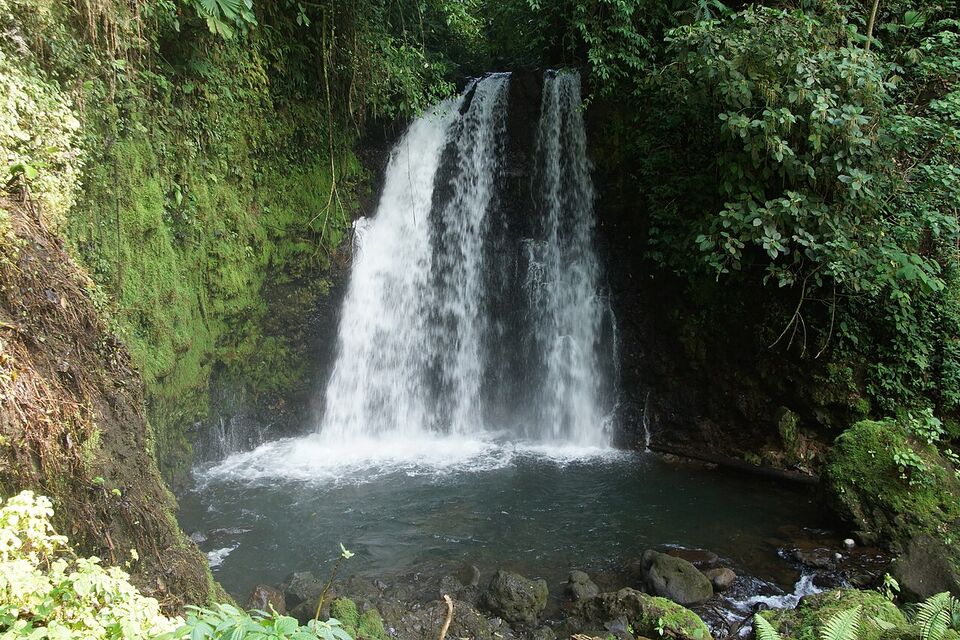
The blue river in Tenorio Volcano National Park
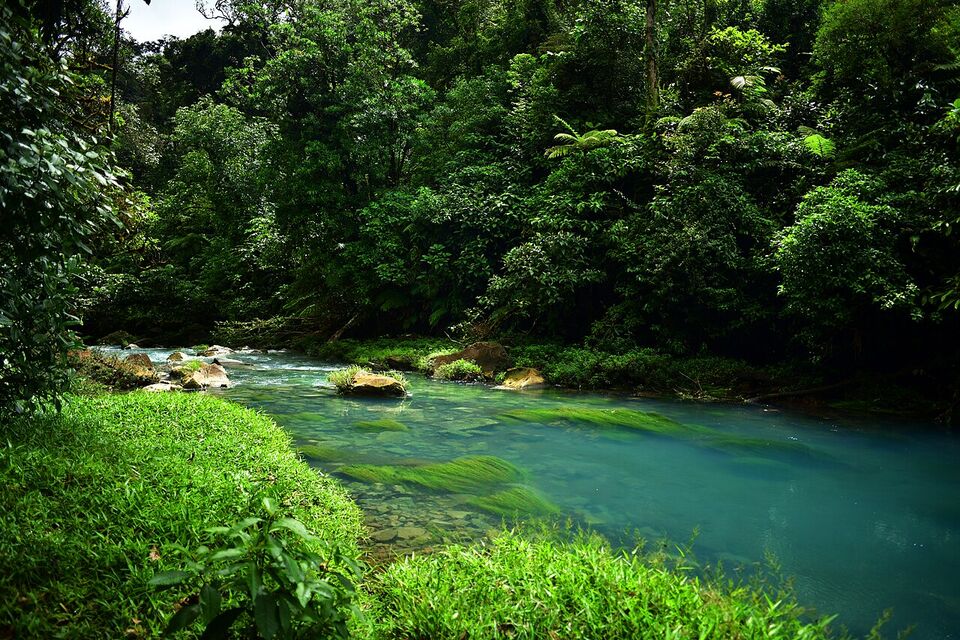
Río Celeste is a river whose water looks sky blue, set inside the forest of Tenorio Volcano National Park in northern Costa Rica. A trail from the park entrance takes you past a waterfall, a bright blue lagoon and a spot where the river seems to change color. In a national vote it was named one of the country's seven natural wonders. If you are moving between Arenal and Guanacaste, it is the most worthwhile stop on the way.
The short answer for planning: go in the morning, buy a timed ticket online in advance, wear shoes that grip mud, and be ready for the color to vary with the weather. This page covers why the water is blue, when it fades, tickets, the trail, rules, where to stay and a half-day or full-day plan. It is a short guide because the park is a single main trail, and we flag the details we could not verify so you can check them before you leave. For how this fits into a longer route, see Costa Rica's destinations.
Why the water is blue
The explanation is simpler than the legends. Upstream, two separate clear streams run down the volcano's slope. At a spot in the park known as the Teñidero ("the dyeing place"), they meet. The reaction creates extremely small particles that stay suspended in the water, and these scatter blue light much as the sky does. The commonly given explanation is that the blue is a trick of light on suspended particles, not a dye or an artificial treatment.
That is also why the color is not guaranteed. The effect depends on how clear and how concentrated the water is. Above the meeting point the streams are clear, and the color appears only below it. We have not verified the exact chemistry of the water, so treat this as a short, plain-language summary.
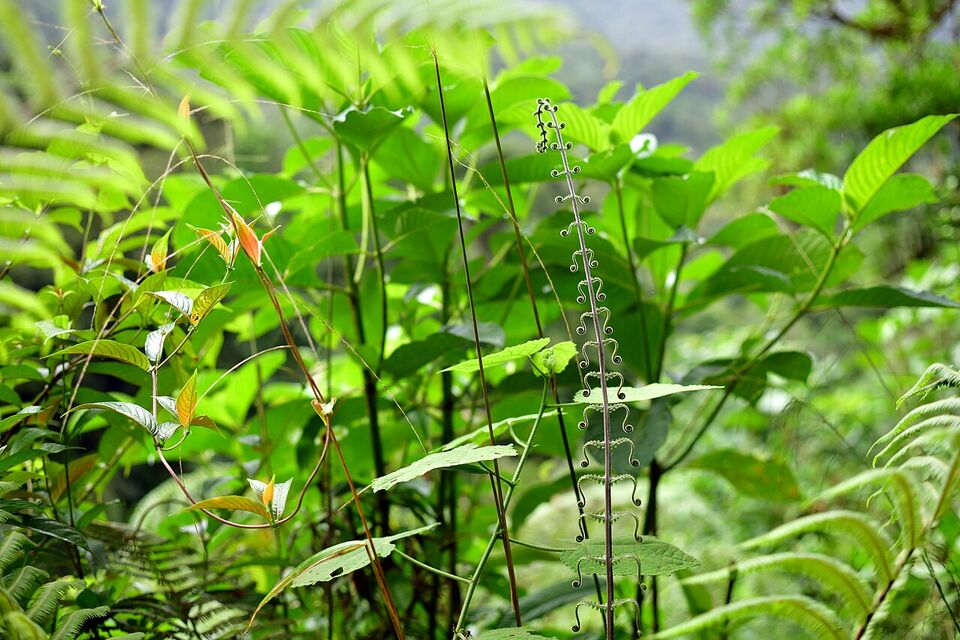
When the color fades
Heavy rain muddies the river. When runoff stirs up soil, the water turns cloudy, brownish or a pale green, and the postcard color can disappear for days. Rain can fall here in any month, so the effect is not tied to one season. The dry months, roughly December to April, are your best chance, and mornings are usually clearer than afternoons. Forecasts issued in June 2026 for this El Niño year said the north and the Caribbean could be wetter than usual, which makes it smarter to ask than to assume.
- Ask your hotel or tour operator for a photo of the river from the last day or two.
- If it has rained hard in the last day or two, expect less color. Smaller downpours may not matter.
- Go early. Rain in the afternoon is more common than in the morning, and fewer visitors means better photos.
Insider tip
If your schedule is flexible, plan Río Celeste for the first clear morning after a few dry days, not for a fixed date. If you only have one day, go anyway: the forest, the waterfall and the lagoon are worthwhile even when the color is faint.
Tickets and booking
Tenorio Volcano National Park is part of the SINAC online booking system. A guide that says there is no online system is out of date: the SINAC FAQ lists Tenorio among the parks sold online. Buy a timed ticket in advance on the official site at serviciosenlinea.sinac.go.cr. You need each visitor's full name, passport number and country, and a credit card.
| Item | What we found | Note |
|---|---|---|
| Foreign adult fee | About US$12 base, plus 13% tax at checkout | Official 2026 table not reachable; the checkout shows the final price |
| Costa Rican resident fee | ₡800 (about US$2) | Residents only |
| Children | Free under 12 in one source; about US$5 for ages 2 to 12 in another | Check at checkout |
| Hours | About 8 a.m. to 4 p.m., last entry about 2 p.m. | One older table lists entry only until 2 p.m., with visitors leaving by 4 p.m. |
| Payment at the gate | Cards only; no cash at national parks in 2026 | Buy online to be safe |
The SINAC rules apply: arrive in your time slot, tickets are not refundable for no-shows or bad weather, and if the park closes for an emergency you can email reservaciones.sinac@sinac.go.cr to change the date. Beware of look-alike sites: SINAC warned of a fake booking site in March 2026. See national parks for the general rules.
The trail: length, difficulty and what you see
There is one main trail, an out-and-back walk through forest from the entrance to the river. Most visitors describe it as roughly 3 to 4 miles (5 to 6.5 km) round trip, with a long staircase down to the waterfall and back up. We could not confirm the current length or whether any section is closed, so ask at the ranger station when you arrive. Plan for roughly 3 to 5 hours depending on your pace and how many photo stops you make.
The usual stops, in order, are a viewpoint over the forest, the waterfall (catarata), the blue lagoon (laguna azul), the point where the two streams meet (the Teñidero) and small spots where gas bubbles rise through the water (borbollones). A hanging bridge crosses a creek on the route. Names and order can differ slightly on park maps.
- Difficulty: moderate. The path is well worn, but it is muddy and uneven, and the staircase is steep. It is not suitable for strollers or wheelchairs.
- Kids and older hikers: fine at a slow pace with breaks, but the stairs are hard on knees. Families should read our families guide.
- Closures: we found no report of a closed trail or bridge at Tenorio this season, but we could not reach SINAC's park pages to confirm. Several other parks have closed sectors in 2026, including the active crater trail at Rincón de la Vieja, so check for notices before you buy.
Rules, footwear and what to bring
Stay on the marked trail. Costa Rica tightened its rules on illegal park entry in April 2026: entering a restricted area can bring a fine of ₡1,386,600 (about US$3,100), and tour operators and guides face larger penalties. Pets are not allowed in national parks, and drones should stay home.
- Closed shoes with good grip. The trail is muddy and the steps are slippery; rubber boots are sometimes available to rent near the entrance (confirm).
- A light rain jacket and a quick-dry shirt; carry extra socks in a plastic bag.
- Water, snacks and insect repellent; check the ticket terms for any food limits.
- A card, your passport details and your ticket on your phone.
- A small dry bag for your phone and camera.
Watch out
Swimming is not allowed in the river and pools inside the park as far as we could determine. Follow the signs and the rangers. Some lodges outside the park offer separate bathing in thermal streams on their own land.
Guided tour or on your own?
The trail is easy to follow, and a guide is not required for the main route, so you can visit on your own with a ticket. A guide adds value in two ways: they explain the volcano and the forest, and they know how the river looks that morning. Many day tours from La Fortuna bundle transport, the park ticket and a hot-spring or lunch stop. If you book one, ask whether the park ticket is included, which time slot you will get and how long you will have on the trail, because a slot late in the day leaves less time for the full walk.
Driving yourself gives you the earliest slot, which is the best slot. The last stretch of road to the park is rural, and rain and potholes can slow you down, so allow extra time and avoid arriving late for your slot. Fuel is sold by the liter, at about ₡805 to ₡807 (about US$1.81) for regular and super gasoline as of November 10, 2026. If you are not renting a car, a private driver or a shuttle from Arenal or Liberia can work for a group; ask for the price before you commit, and compare it with a bundled tour.
Where to stay: Bijagua, La Fortuna or Guanacaste
The park is in a rural area with few towns, so your base matters.
- Bijagua: the small town closest to the park entrance, with lodges, farm stays and a few restaurants. It lets you reach the gate when it opens and beat the tour buses. It is the best choice if you want to hike early and are not in a hurry to move on.
- La Fortuna (Arenal): a day trip from the Arenal area is possible but long. Several tour operators offer Río Celeste day tours, and many travelers combine the park with a hot-spring evening. See Arenal.
- Liberia and Guanacaste: Río Celeste is on the way between Arenal and Liberia, which averages about 3.25 hours by road with no stops. Leaving Liberia for a day trip works, but plan an early start. See Guanacaste.
We could not confirm exact drive times to the park, so use a map app to check your route, and add time for rain, trucks and mountain curves. Drivers should read driving in Costa Rica and car rental. For choosing lodging in general, see where to stay. The nearest alternative if the river is muddy is another volcano trail such as Rincón de la Vieja, but check its status first, because its active crater trail was closed as of November 12, 2026.
Half-day or full-day plan
- Half day
Early hike and onward
Book the first morning slot. Arrive at the gate by about 8 a.m., walk the main trail to the waterfall and lagoon, and return by around noon. Have lunch near the park and continue to your next stop. This works well when you are crossing between Arenal and Guanacaste.
- Full day
Hike, lunch and a soak
Start the same way, then take a longer lunch and add a soak in a hot spring or a thermal stream at a nearby lodge. This fits best if you sleep in Bijagua, so there is no long drive after the hike. Add a short walk in the forest around your lodge, and keep the evening free.
Río Celeste works best as one stop in a larger plan. Pair it with the volcano and hot springs of Arenal or the cloud forest of Monteverde, or place it on the day you travel toward the Guanacaste beaches. For seasonal timing, see when to go.
Add it to a route in the trip builder, or ask us to plan the hotels, transfers and guides for you.