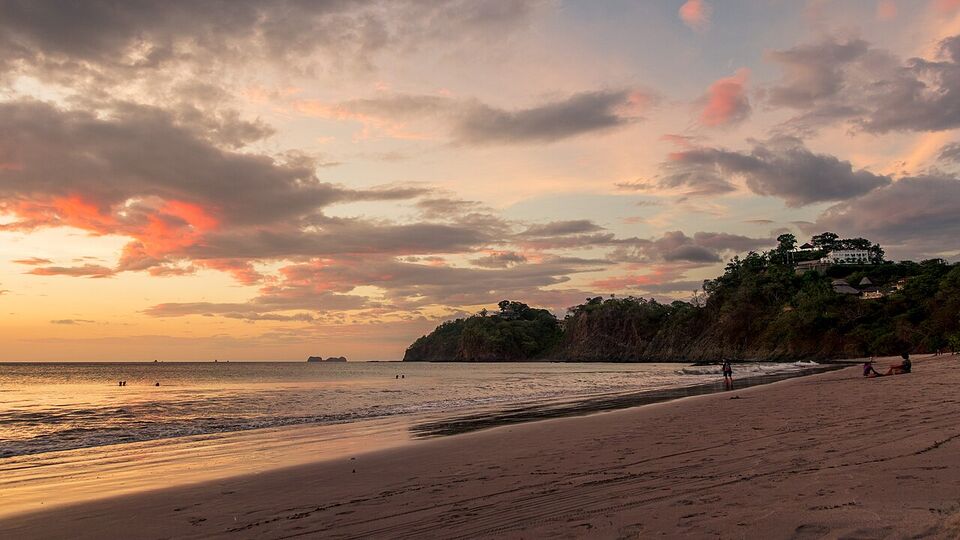
Legal weddings and symbolic ceremonies
Couples have two ways to marry in Costa Rica. A legal wedding creates a marriage recognized by Costa Rican authorities and registered there. A symbolic (or "commitment") ceremony is a celebration with an officiant, vows and a party, but it does not by itself create a legal marriage. Both can be held on a beach, at a resort, in a garden or at a mountain lodge, and the guests will see no difference.
We could not find a current official source for the requirements for foreigners, so we do not list them here. As a general picture only, not a checked list, couples are often asked for passports, birth certificates, proof that previous marriages ended, and official Spanish translations, and some documents may need an apostille from the issuing state. Which documents are needed, how recent they must be, who can officiate and how long the process takes can all change. Before you plan anything else, ask a licensed Costa Rican lawyer or notary, a reputable local planner or your resort's wedding coordinator for the current list, and cross-check it with official Costa Rican government pages or the nearest Costa Rican consulate.
The simplest route for many Americans is to marry legally at home (a courthouse ceremony takes little time in most states) and then hold the celebration in Costa Rica. If you do marry legally abroad, ask in advance how the marriage certificate will be issued, translated and later recognized at home, for example for name changes, immigration or insurance. Your state or county clerk and, if relevant, the agency that needs the document can tell you what they accept.
Watch out
A planner who says paperwork is "no problem" without giving a written list of required documents is not giving you enough information. Ask for the exact list, the source (a law, a government office or a notary), and who is responsible for filing. Keep copies of everything you sign.
Resort packages and venues
Resorts in Guanacaste and on the central Pacific offer wedding packages that typically bundle a ceremony space, basic decor, an officiant, a cake and a reception. Packages differ widely, and we do not quote prices because we could not confirm any for 2026. When you compare, check what is included, the minimum guest count, any fee for outside vendors, and whether the price includes the 13% sales tax and any service charge. Restaurant and catering bills in Costa Rica usually carry 13% tax plus a 10% service charge.
New and renovated properties come and go. The JW Marriott Costa Elena all-inclusive resort at Playa El Jobo opened on October 6, 2026 on the former Dreams Las Mareas site, and Nekajui, a Ritz-Carlton Reserve, opened in Papagayo in 2025. Confirm any property's all-inclusive status and wedding facilities on its own website before you rely on a listing. Our Guanacaste and where to stay pages explain the resort areas.
Outside resorts, couples choose private villas, boutique hotels, coffee farms and rainforest lodges. These give more freedom but more logistics: you may need to hire a planner, rent tables and chairs, arrange a generator or sound system, and provide a rain plan. Ask whether the venue has a backup indoor space.
Beach or rainforest
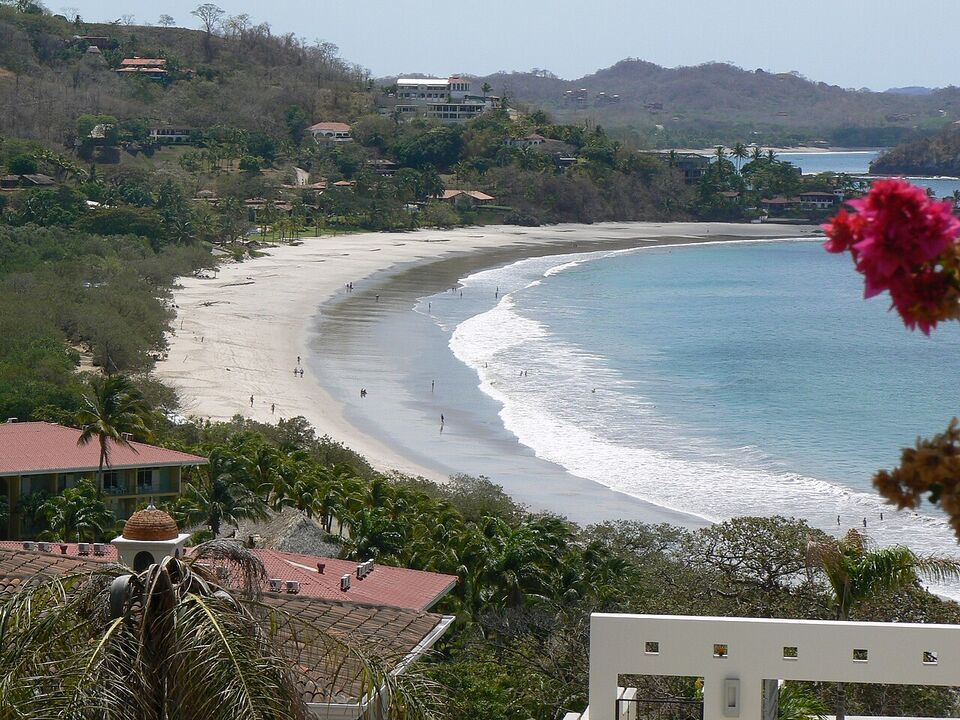
A beach wedding is the common choice, with sunsets and photos. The dry season (December to April on the Pacific) offers the best odds of clear skies. Beach weddings need a plan for sun, wind, heat and tides, and some beaches restrict setups. Ask your planner or resort about local rules for setups, amplified music, tents and permission to use a particular stretch of beach, since these can differ by site and change.
A rainforest or mountain wedding gives shade, cooler temperatures and a different look, with hot springs, waterfalls and views of Arenal or the Monteverde cloud forest. The trade-off is slower roads and fewer large hotels nearby, so guests need more transport. Read Arenal and Monteverde for those areas, and beaches if you are choosing a coast.
Best months
On the Pacific coast, the dry season runs December to March, with March the driest and hottest month, and April a transition. The rainy season runs May to October, with September and October the wettest. In the green season, rain mostly falls in the afternoon and early evening, so a morning ceremony has better odds. The Caribbean coast has no real dry season and is wetter from November through January.
As of mid-November 2026, forecasts called for an unusually strong El Niño, with a drier and hotter North Pacific and possible water rationing in Guanacaste. If your wedding is in Guanacaste during the 2026-27 dry season, ask your venue about water supply, wildfire risk and heat, and build shade into the plan. See when to go for more.
High season (mid-December to April, and especially Christmas, New Year and Holy Week) is the busiest and most expensive period for hotels and flights. Holy Week in 2027 falls from March 25 to 28 (Holy Thursday and Good Friday, March 25 and 26, are public holidays). Green season weddings often cost less, and some venues discount heavily; ask rather than assume.
Guest logistics
Most American guests enter visa-free for up to 180 days, with the immigration officer setting the number of days. Their passport must be valid for the whole stay, and they must show a return or onward ticket. The departure tax is US$29 per person, usually already included in the airline ticket. See entry requirements for details.
Choose the airport first. Liberia (LIR) serves Guanacaste, and it runs only from 6 a.m. to 9 p.m., so late flights may not be possible. San José (SJO) serves the Central Valley, Arenal, Monteverde and the central and south Pacific. Many US cities have flights to both, so check flights and your airline. From San José, drive times are about 2.5 hours to Arenal, 3 hours to Manuel Antonio, 3.5 hours to Monteverde and 4.5 hours to Tamarindo, and rain and traffic can add an hour.
Shared shuttles run roughly US$40-70 per person on popular routes, and private transfers roughly US$200-400 per vehicle, according to booking pages (check current quotes). If you have many guests, ask whether the venue or planner can arrange a group shuttle. Send guests a one-page guide covering arrival airport, transfer options, weather, sun protection and a note that many places take cards but that cash in small bills is useful for tips and small purchases. Tell guests about money and phones and data, and consider a group message thread. Costa Rica has no daylight saving time (UTC-6 all year), so the time difference with the US East Coast is one hour from November to March and two hours from March to November.
Insider tip
Ask guests to book flights and rooms as early as you can, particularly for dry-season dates, and tell them the wedding date even before the paperwork is complete. Hotels near wedding venues may sell out in December to April.
Planners and vendors
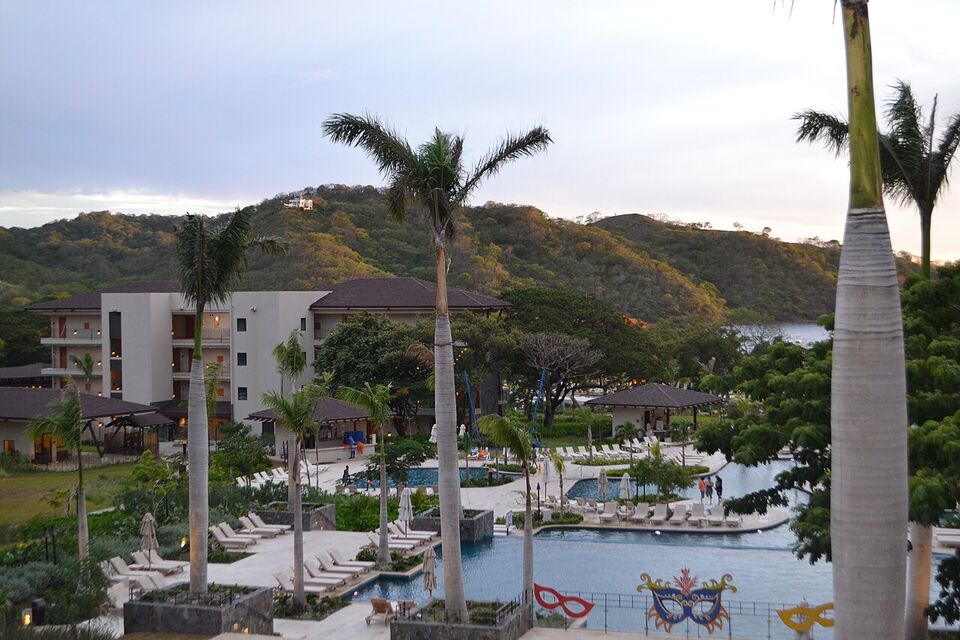
A local planner can handle the permits, vendor bookings and language. Choose one through references from couples, an established business address, a written scope of services and a contract. We do not recommend a specific company, because we cannot verify any. Ask how long they have worked in the area, which vendors they use, what they charge (flat fee or percentage), and who is on site on the day.
Vendors include photographers, florists, caterers, musicians, hair and makeup, transport and rentals. Prices are typically in US dollars for tourist services, but confirm the currency in writing. If an amount is quoted in colones, convert it at about ₡445 per US$1 and ask who bears the exchange-rate risk.
Contracts, deposits and payments
Treat a wedding abroad as a business contract. Before you pay any deposit, get a written agreement that states the date, location, services, total price, what taxes and fees are included, deposit amounts, due dates, cancellation and refund terms, and what happens if weather or a closure prevents the event. Ask what happens if the venue changes its policies or a park or trail is closed.
- Pay by credit card where possible, which gives you dispute rights at home, or by a traceable method to a business account in the business's name.
- Avoid wiring money to a personal account, and verify the business registration and address.
- Ask for a receipt for every payment, and keep copies.
- Check whether the quote includes the 13% sales tax and service charge, and whether it is per person or per event.
- Get travel insurance that covers trip cancellation and consider wedding insurance; read the exclusions, including weather and pandemics.
- Confirm in writing who is responsible for permits and licences, and keep the planner's contact details and an on-site phone number.
We could not confirm customary deposit amounts or refund policies, so we give none. Negotiate them as you would any large purchase. Use the same cautious approach that you would for tours and vendors on the adventure page: pick established companies and avoid street sellers.
Honeymoon areas
Many couples combine a wedding with a honeymoon in a different region. Common pairings are a Guanacaste resort followed by Arenal hot springs, or a Manuel Antonio wedding followed by a few nights in the Osa Peninsula or Uvita. Choose areas by what you want to do, and avoid a heavy driving schedule right after the wedding.
Guanacaste and Papagayo
Dry and sunny from December to April, with easy transfers from Liberia. Many resorts are all-inclusive. See Guanacaste.
Manuel Antonio
Hotels with ocean views, wildlife and restaurants. The national park is closed Tuesdays and sells tickets online. See Manuel Antonio.
Arenal
Hot springs, forest lodges and waterfall hikes. Tabácon recommends booking ahead and charges your card 15 days before arrival (45 days at peak times). See Arenal.
Osa Peninsula
Rainforest and wildlife in a remote setting, with flights or long drives to reach it. See Osa Peninsula.
For all-in-one luxury, the JW Marriott Costa Elena was advertised from about US$900 per person per night double at its October 2026 opening, and Nekajui is a Ritz-Carlton Reserve. Mid-range and budget honeymoons are possible in green season at smaller hotels. Read Costa Rica by interest to compare trip styles.
Before you leave and after you return
Allow time for a passport that is valid for the whole stay and for documents that need an apostille or translation. After the wedding, ask your planner or lawyer how to get certified copies of any marriage certificate, and keep the originals safe. If you changed your name, ask the agencies you plan to notify (Social Security, DMV, passport) what documentation they accept for a marriage registered abroad. Travel with copies of your documents and keep the originals in your carry-on.
If you are still deciding between a wedding and a honeymoon only, the honeymoon is easier to plan with the advice in plan your trip, and budget helps you set costs.
Add it to a route in the trip builder, or ask us to plan the hotels, transfers and guides for you.