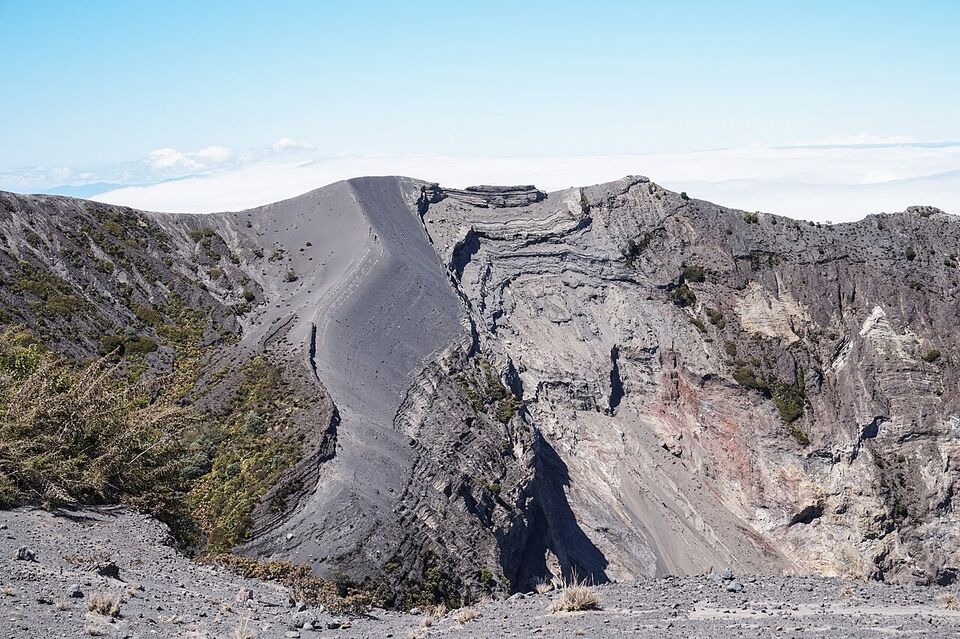
The volcano and coffee belt
The Central Valley is the high plateau around San José, ringed by volcanoes and covered in coffee farms and small towns. It is the easiest area in Costa Rica to explore on day trips: Poás, Irazú, the Orosi Valley and the oxcart town of Sarchí are each roughly an hour from the capital (average drive times; rain and traffic can add more). You can see a crater, tour a coffee farm and visit a colonial church in a day or two, without changing hotels.
It is also the region with the most time-sensitive rules. Poás Volcano is open as of November 12, 2026, but under tight limits after an eruption on August 27. Park tickets are sold online as timed slots, and a day trip without a ticket can fail at the gate. This page covers each stop, how to book on the official SINAC system, tour versus rental car, weather, where to stay, and sample day plans. If you are starting from the capital, our San José guide covers the city itself, and Costa Rica's destinations shows where the valley fits on a longer route.
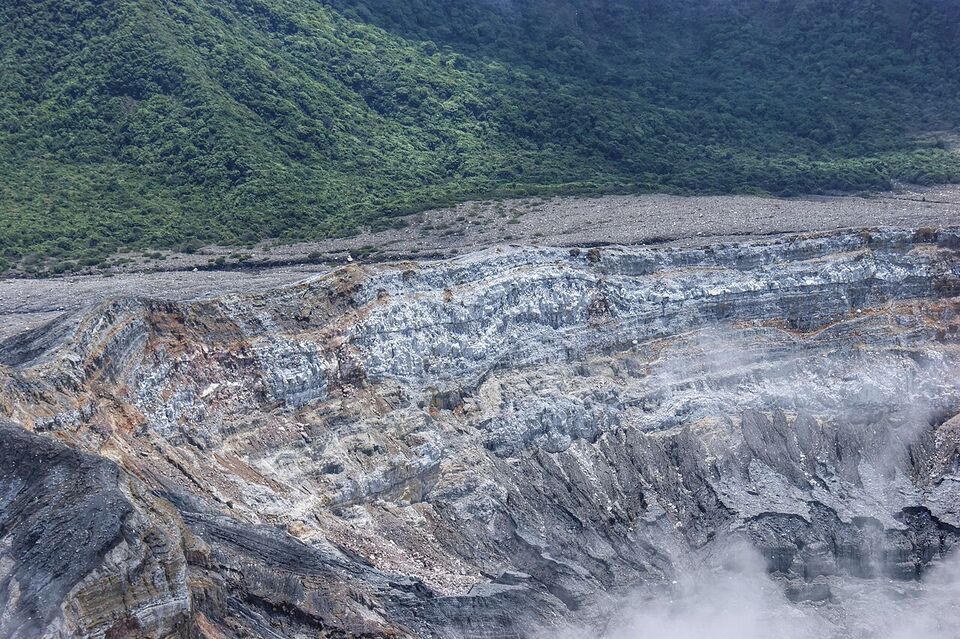
Poás Volcano National Park (check before you go)
Poás is an active volcano about an hour from San José and one of the most visited. Its main crater holds Laguna Caliente, a hot, extremely acidic lake that Wikipedia lists among the most acidic in the world, with steam and gas rising from the crater floor. The summit is at 8,848 feet (2,697 m). A second, cold and clear lake, Botos, fills an extinct crater inside the cloud forest.
Current status and rules (November 2026)
Poás has opened and closed several times in the past two years, so confirm everything on the day you book. Here is what we found as of November 12, 2026.
- Open, with limits. After an eruption at about 2:36 a.m. on August 27, 2026, which threw hot rock and material about 1,970 feet (600 m), the park stayed open under stricter rules that began on August 28.
- Daily cap: 1,064 visitors, down from 2,052.
- Helmets are required on the main trail to the crater lookout and on the Sombrilla de Pobre trail. Both are open, and they are the only trails open.
- Lookout limit: a maximum of 56 people at the crater viewpoint, for up to 20 minutes at a time.
- Hours: 8 a.m. to 4 p.m., with the last entry at 2 p.m.
- Alert level: green in the reports we found, though the volcano remains active and authorities said conditions could change quickly.
- No end date has been announced for the limits. Authorities said they will stay until activity drops.
Expect tickets to sell out sooner than before, especially on weekends and holidays, with the daily cap roughly cut in half. If activity picks up, officials could restrict access further or close the park. Earlier closures include a stretch of more than four months in 2025 for volcanic activity, and a roughly one-week closure from about January 21 to 29, 2026, when a bridge on the access road needed repair. After the bridge reopened, a weight limit of 9 tons applied to vehicles.
Tickets and price
Poás tickets are sold only online. The base fee for a foreign adult is about US$15, and the SINAC checkout adds 13 percent tax, which gives roughly US$17 in total. Children's prices are lower, about US$5 for ages 2 to 12 on most national park tables. Treat these as approximate, because we could not reach the official 2026 fee table. The checkout page shows the final price.
Watch out
Volcano rules change with activity. If Poás closes for an emergency after you buy, the SINAC rules say to email reservaciones.sinac@sinac.go.cr to change the date. Tickets are otherwise not refundable, including for bad weather or no-shows. Do not buy a Poás ticket if you cannot be flexible, and buy only on the official site.
How to book park tickets on SINAC
SINAC (the National System of Conservation Areas) runs a central booking site for the parks that need timed tickets. In this region it sells Poás, Irazú (the crater and Prusia sectors), the Barva sector of Braulio Carrillo and Tapantí. The steps are the same for each park.
- Go to the official portal at serviciosenlinea.sinac.go.cr and create an account. The system emails a password. If it does not arrive within a day, write to reservaciones.sinac@sinac.go.cr.
- Choose the park, the date and the time slot or sector. Slots are staggered to avoid crowds.
- Enter the number and type of visitors (non-resident adults, children, residents) and each person's full name, passport number and country.
- Pay by credit or debit card. Allow pop-ups in your browser so the bank's 3-D Secure check can open.
- Save the confirmation. Arrive during your time slot, and bring your passport. A late arrival should be reported to the park by email using the address in the purchase terms.
Different from home
Park gates in Costa Rica take cards only, and cash is generally not accepted at the entrance. Impostor sites exist: SINAC warned of a fake booking site in March 2026. Use only the portal address above and check the web address before entering payment details. See our national parks guide.
Third Wednesdays are free for Costa Ricans and residents only, not for foreign visitors. Parks stay open on public holidays unless closed for safety, and National Parks Day (August 24) is free for everyone, though you still reserve online.
Irazú Volcano
Irazú, at 11,260 feet (3,432 m), is the highest volcano in Costa Rica and the one you can nearly drive to the top of. A paved road climbs from Cartago, and on a clear day the summit trail gives views over the crater and its green lake, Diego de la Haya. It is also often in cloud, so the early start matters. The volcano is active; its best-known eruption in 1963 covered San José in ash, and the last short eruption mentioned in our sources was in 1994.
- Hours: 8 a.m. to 3:30 p.m. daily, including holidays.
- Price: US$15 for adults, US$5 for children 12 and under, free under 2. Parking costs ₡2,000 (about US$4.50). Payment is by card.
- Booking: the SINAC system lists Irazú's crater and Prusia sectors for online sale, so buy a ticket ahead. Some older guides say you can just show up, but we advise booking.
- Walking: the main paths are short and moderate. At this height, take it slowly: many people feel a little breathless or light-headed.
- Dress: it is cold even in sunshine. Bring layers, a hat and sunscreen.
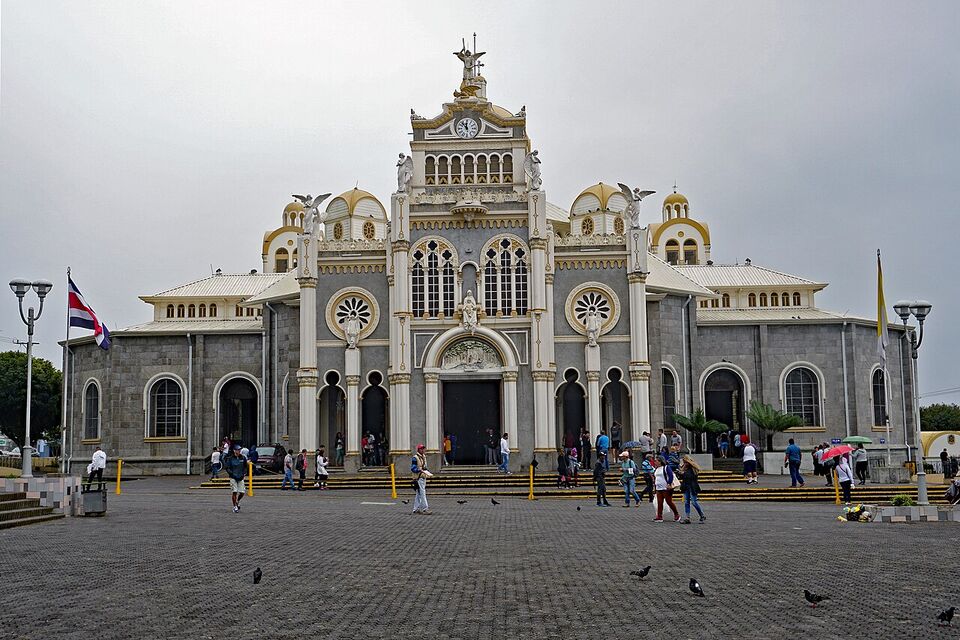
Cartago and the Basilica
Cartago, east of San José, was the colonial capital, and its main sight is the Basílica de Nuestra Señora de los Ángeles, a large church devoted to Costa Rica's patron, the Virgin of the Angels. Each year on and around August 2, which is a public holiday, large crowds walk to the basilica from San José. The rest of the year it is a calm stop, normally paired with Irazú and the Orosi Valley.
The town center is plain, but it has the ruins of the old Parroquia church and a busy market. Traffic in Cartago is heavy at rush hour, and road signs can be confusing, so many visitors let a guide drive. The Incofer commuter service lists a San José to Cartago route; check its page for current days and times.
The Orosi Valley
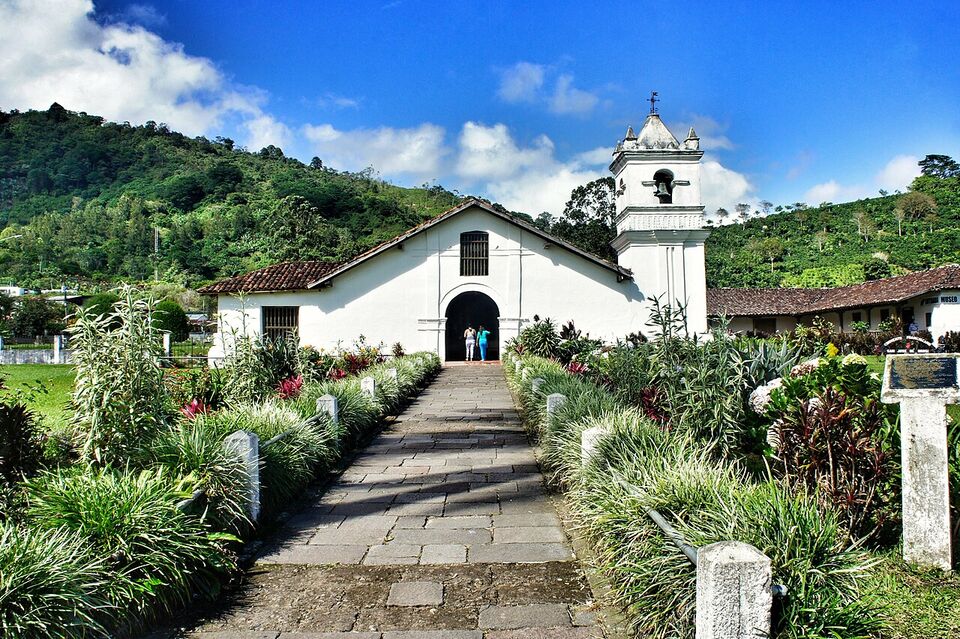
The Orosi Valley is a green, narrow valley south of Cartago, around the Reventazón River. It is a coffee-growing area, one of Costa Rica's eight recognized coffee regions, and it includes small villages, a lake at Cachí, and some of the country's oldest colonial buildings. The Orosi colonial church and the ruins at Ujarrás are the headline historic sites. Irazú is about 1 hour from San José by average drive times, and Orosi is a short drive beyond Cartago.
- Orosi church and village: a quiet colonial church, a small museum and cafés. Allow an hour.
- Ujarrás: ruined church walls in a park setting, near the Cachí reservoir.
- Lake Cachí and the loop road: a scenic loop drive around the valley, with short walks and viewpoints.
- Tapantí National Park: a cloud-forest park at the top of the valley. SINAC lists Tapantí among the parks with online tickets. Check the booking site for the price.
- Hot springs: several hotels in the valley have thermal pools, though they are smaller and less developed than Arenal's. We have not confirmed their hours or prices. See Arenal for the country's best-known springs.
Coffee tours in Heredia and Alajuela
Coffee made Costa Rica prosperous in the 1800s, and the farms around Heredia and Alajuela still sit within a half-hour drive of the airport. Costa Rica grows coffee in eight regions, including Tres Ríos, Orosi, Turrialba, the Central Valley and the Western Valley. A farm tour normally covers the plants, picking, drying, roasting and a tasting, and it usually takes two to three hours. The picking season runs from late in the year into early spring, but exact timing depends on altitude; ask the farm.
Several large operations run tours every day, among them Doka Estate near Poás and Britt in Heredia. Doka's tour menu on its website includes coffee-only tours and combinations with Poás and the La Paz Waterfall; Britt runs coffee tours too; check its website for the current schedule. Prices are not published on the pages we read, so check each operator's site. Smaller family farms and cooperatives offer more personal visits. Our coffee guide covers varieties, what to buy and how to read the labels.
Save money
Coffee is easy to buy at supermarkets and roadside shops, often cheaper than on a tour. US Customs and Border Protection says packaged coffee is generally admissible when you return to the United States; check cbp.gov for your allowance. Skip souvenirs made from wildlife parts, which are restricted or banned.
Sarchí and the oxcart workshops
Sarchí, about 1 hour northwest of San José, is the center of Costa Rica's painted oxcart craft. UNESCO added the oxherding and oxcart traditions to its Intangible Cultural Heritage list in 2008, and the bright geometric patterns began on carts in the early 20th century. A few workshops let you watch artisans at their lathes and paint brushes, and shops sell furniture, leather goods, wooden bowls and small decorated carts.
It is a short stop: plan one to two hours. Bargaining is not expected in shops. Bring cash or a card, and ask about shipping for large pieces. Sarchí fits naturally on the road to Poás or between the airport and La Fortuna.
Lankester Gardens and other gardens
Lankester Botanical Garden, near Cartago, is known for its orchid collection and is run by the University of Costa Rica. It sits close enough to Cartago and Irazú to pair with them in a day. We could not confirm its current hours or prices, so check the garden's own site. Other options in the valley include the INBioparque in Santo Domingo de Heredia, which we also have not verified.
Turrialba and Braulio Carrillo
Turrialba, about 2 hours east of San José, is a quieter area known for coffee, cheese, rafting on the Pacuare River and the Guayabo archaeological site. Turrialba Volcano National Park can be visited only with an authorized guide, and the park was closed from August 18, 2026 because trails were flooded. We could not confirm whether it has reopened. Check with a local guide or the park before planning around it.
The Barva sector of Braulio Carrillo National Park, north of Heredia, is sold online through SINAC and is a lesser-known cloud-forest option for hikers.
Tour or rental car?
You can reach every stop on this page without a car, but a car changes the way you plan. Here is how they compare.
| Question | Guided day tour | Rental car |
|---|---|---|
| Best for | First-timers, solo travelers, anyone nervous about mountain roads | Two to four people, early starts, flexible stops |
| Tickets | The operator handles the SINAC slot (confirm what is included) | You book the slot yourself in advance |
| Cost | Per-person price that often bundles lunch and a second stop; compare operator sites | From roughly US$60 a day with insurance in high season, plus fuel at about ₡805 to ₡807 per liter (about US$6.85 a US gallon) |
| Stress | Low: someone else drives and knows the road | Higher: city traffic, steep curves, fog, no hands-free phone use |
| Flexibility | Fixed route and return time | You choose the hour and stops |
A private taxi or ride-hailing is a middle path: an October 2026 comparison put a one-way trip from Alajuela to Poás at about ₡10,590 (about US$24) on UberX against ₡26,686 (about US$60) in a red taxi. Buses link Cartago, Heredia and Alajuela with San José, but getting from those towns up to the parks usually takes a taxi or a tour. Read car rental and driving in Costa Rica before renting. Costa Rican law requires third-party insurance on every rental, typically about US$13 to US$25 a day, and rental companies add it to the bill.
Weather: go early
Mountain weather is the biggest factor in whether a volcano day is worth it. At the summits, mornings are often clear and afternoons cloudy. In the rainy season, the rain usually arrives by about 2 p.m., so aim to be at the crater when the park opens at 8 a.m. If a ranger says the crater is in cloud, consider waiting an hour or coming back another day.
San José's rainfall tells the story for the valley. January to March get under 0.6 inches (15 mm) a month, with the heaviest rain in September and October, when each month brings about 13 to 14 inches (330 to 355 mm). The dry season runs roughly December to April. Temperatures drop sharply with height: expect a jacket-and-hat day at Irazú even when San José is warm. The national alert was raised to red on October 22, 2026 because of El Niño, and the dry season is starting in the Central Valley and Guanacaste, so ask your hotel about water supply. For month-by-month planning, see when to go.
Where to stay
Most visitors base themselves near the airport or in the capital and make day trips. Here are the options, grouped by type. Tiers show a double room per night: $ is under US$120, $$ is US$120 to US$300, $$$ is over US$300. We do not name individual properties because we have not confirmed every one is open in 2026.
- Alajuela and the airport area $ $$: convenient for early flights and for Poás and Sarchí. Plain hotels and B&Bs.
- Heredia hills $$: coffee-farm lodging, cooler air and close to the airport.
- San José $ to $$: best for museums and nightlife, and it is within an hour of both volcanoes. See San José.
- Cartago and the Orosi Valley $ to $$: farm hotels, cabins and small lodges with valley views, ideal if you want to avoid a morning drive to Irazú.
- Near Poás $$: mountain lodges with views and restaurants, though nights are cold and foggy.
Our where to stay guide covers how to pick between lodge types, and the trip planning page shows where a Central Valley stop fits in a full route.
Sample day plans
- Poás day
Volcano, coffee and Sarchí
Book a Poás time slot first. Leave San José or Alajuela by about 6:30 a.m. to reach the park at opening, wear a jacket, and ask your operator or the park how helmets are supplied. After the crater lookout (a short, time-limited visit), have an early lunch near the park and then visit a coffee farm near Poás or Heredia. If energy remains, stop at Sarchí for the workshops on the way back.
- Irazú day
Volcano, Cartago, Orosi and Lankester
Reserve an Irazú slot for the morning and drive up from Cartago, in cloud-free hours. Descend to the basilica in Cartago, have lunch in the Orosi Valley and see the colonial church and Ujarrás. If time allows, finish at Lankester Gardens (check hours).
- Transfer day
Airport to La Fortuna with stops
If you are heading from the airport to Arenal, a coffee farm and Sarchí fit on the way, adding a few hours to the 2.5-hour average drive. Check that you can reach your hotel in daylight.
Each of these runs about 8 to 10 hours with a guide, less with a car. When you leave the valley, continue to Arenal, Monteverde or Río Celeste, or head to the coast at Manuel Antonio.
Add it to a route in the trip builder, or ask us to plan the hotels, transfers and guides for you.