Overview: a different Costa Rica
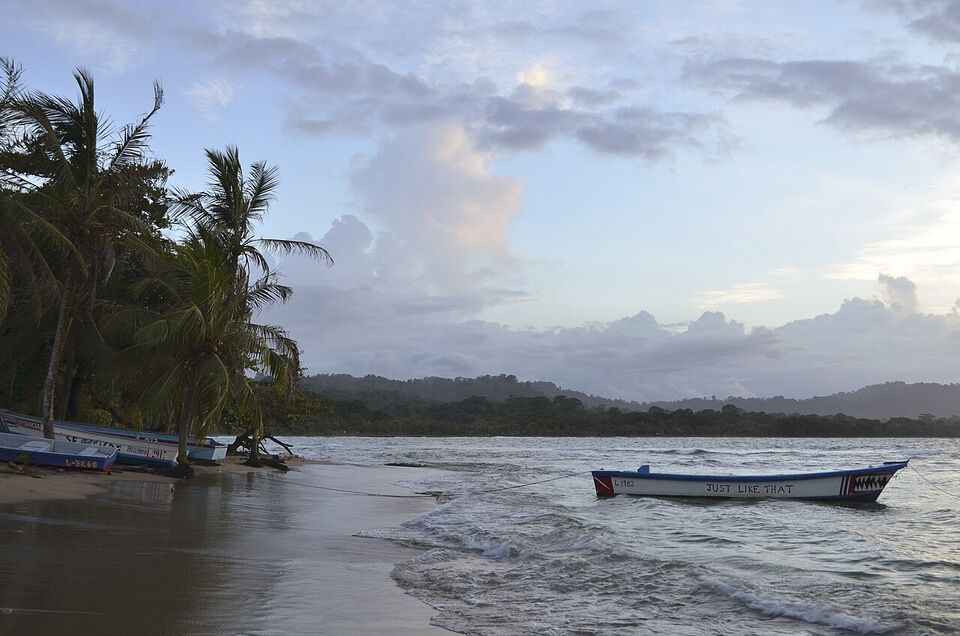
The Caribbean coast is the best answer to a question many first-time visitors never think to ask: what if you want Costa Rica without the Pacific resort scene? This is the province of Limón, a long strip of lowland rainforest, banana country and sandy bays running from the Nicaraguan border in the north to Panama in the south. Most travelers who come here for the beach head to the southern end, to the small towns of Cahuita and Puerto Viejo de Talamanca and the quiet shore beyond them as far as Manzanillo.
It looks, sounds and tastes different from the rest of the country. English-based Creole is still heard in some homes, Afro-Caribbean families have lived on this coast for well over a century, and the food leans on coconut milk, fish and spice rather than the gallo pinto and casado of the highlands. The beaches are palm-fringed, with dark or golden sand and a living coral reef off Cahuita. The pace is slow, with a lot of bicycles and not much nightlife outside Puerto Viejo.
It is also wetter, more humid and less developed. Roads are narrower, rooms are simpler, and there are fewer big resorts. We think it suits travelers who like a relaxed, low-key trip: couples, surfers, wildlife watchers, and families with kids who are happy to be outdoors. It suits less well anyone who needs guaranteed sun or a polished all-inclusive. For the canals and nesting turtles further north, see our Tortuguero guide, which makes a natural add-on.
Getting there from San José
The coast sits on the opposite side of the mountains from most of the places on a typical itinerary, so plan on a real travel day. Averages from the drive-time table of a Costa Rica tour company put San José to Cahuita at about 4 hours, to Puerto Viejo de Talamanca at about 4.5 hours, to Manzanillo at about 4.5 hours and to the port city of Limón at about 3 hours. Treat those as best cases. Heavy truck traffic to the port, roadworks and rain slow the main highway, so build in extra time and avoid arriving after dark.
By bus
Buses for the Caribbean leave from the Gran Terminal del Caribe in San José, not from the downtown terminals that serve the Pacific. Grupo Caribeños runs buses to most points along the coast, and the company MEPE is named on the San José to Puerto Viejo route (a 2026 bus guide describes it as cash-friendly, with colones or small US bills, nothing over US$20). Comfort varies by bus; some have air conditioning and some do not. Terminal assignments have shifted since Terminal 7-10 closed in April 2025, so confirm the departure point and times with the bus company before you go. We found no reliable current fare, but most intercity rides in Costa Rica cost under US$10.
By shuttle
Shared shuttles are the easiest option if you do not want to drive. Caribe Shuttle says on its site that it is not taking private transfer requests at this time and sells shared seats only (phone +506 2750-0626). Interbus also runs air-conditioned vans on its network of 180+ routes. As a rough guide, shared shuttles on popular routes run about US$40-70 per person and private transfers about US$200-400 per vehicle, with the Caribbean on the high end because of the distance. These are secondary-source ranges: confirm the price and the pickup point when you book.
By car
A rental car gives you the most freedom in the south, where a single coastal road links the beaches and a car saves waiting for buses or taxis. The trip from San José uses the highway north-east through the mountains toward Limón, then the coastal road south. Read our driving guide and car rental guide before booking, especially on mandatory liability insurance, which is required on every rental. Do not drive a rental through rivers: doing so voids all insurance, including the mandatory cover.
By air
Sansa flies to Limón (code LIO) and to Tortuguero, but the Limón flight still leaves you a few hours short of the beaches, so most visitors skip it unless they are combining the coast with a stop in Tortuguero. Reservations are on +506 2290-4100. Fares and baggage limits are not published as text we could confirm; check Sansa directly. For all options see our getting around guide.
Insider tip
Do the long drive on the way in, not on departure day. If you fly out of San José (SJO), give the drive back a generous buffer, because delays on the main highway can be long and airport check-in does not wait.
When to go: a different rainy season
The Pacific coast has a clear dry season from December to March and a rainy season that peaks in September and October. The Caribbean does not work that way. The Costa Rica Tourism Board says it has no real dry season, with 100 to 200 mm of rain even in its driest months. February and March, and September and October, are relatively drier. November to January are the wettest stretch, and May to August also see heavy rain, with a peak in July. Rain tends to fall at night and in the morning, so afternoons can be bright.
Monthly rainfall for the area comes from the Limón airport station, well north of Puerto Viejo, so treat it as a regional guide only. It shows September as the driest month at about 163 mm, with February, March and October also on the low side. December, July and November come out among the wettest. The coast is warm all year, with daytime highs around 80-83°F (27-28°C) and nighttime lows in the low-to-mid 70s°F (22-24°C).
That pattern is why people who want a beach in September or October, when the Pacific side is at its soggiest, often choose Cahuita and Puerto Viejo. It also means December, when northern-hemisphere visitors flood the Pacific, is a gamble here.
Watch out
The 2026-27 El Niño is expected to dry out the north Pacific, but forecasters (Tico Times, June 2026) said the Caribbean and the north could see more rain than usual in some areas, with a risk of heavy rain affecting roads and flooding. If you travel in the coming months, check forecasts from the national weather institute (IMN) before you commit to non-refundable rooms, and ask hotels about their cancellation rules. See our when to go guide for the national picture.
Cahuita and its national park
Cahuita is a small, easygoing town beside a long beach and one of the country's most-visited parks, which has a trail you can walk in flip-flops (though hiking shoes are better). Most people use the town as a base, because both ends of the park are a short bike ride or taxi hop away.
Cahuita National Park
The park protects a coastal rainforest trail, white and dark sand beaches and a coral reef just offshore. The flat coastal path is one of the easiest wildlife walks in the country, and howler and white-faced monkeys, sloths, raccoons and many birds are regularly seen. Plan on a few hours one way if you walk the whole trail from one gate to the other, and carry water, insect repellent and a rain layer.
Entry works differently from most parks. At the Kelly Creek entrance in Cahuita town, the park asks for a donation rather than a fixed ticket. A 2026 guide suggested a donation of about US$5 to US$10 per person, and the earlier Costa Rica guides put the suggested amount at US$5. Bring cash and pay it: it funds the park. At the Puerto Vargas entrance at the southern end, the fee is fixed (about US$5, or US$5.65 with sales tax, on older tables), and that gate takes cards. Since 2026 most national parks have gone cashless at the entrance, but Kelly Creek is the exception because it is run on donations, so carry some colones or small US bills.
We could not confirm current hours on SINAC, the national parks authority. One older source lists 8 a.m. to 4 p.m., with last entry around 3:30 p.m., and another says the Puerto Vargas sector closed on the first Monday of each month. Check sinac.go.cr or ask your hotel the day before. Pets are not allowed in national parks.
Snorkeling and the reef
Cahuita is known for coral reef snorkeling. Corals here are fragile and have suffered over the decades, so go with a local guide who knows the day's conditions, do not stand on or touch coral, and avoid sunscreens that wash off in the water if you can wear a rash guard instead. Visibility drops after heavy rain and river runoff, so ask a guide on the day. We have no reliable current price for guided trips, so compare a few and ask what is included.
Playa Negra and the town
North of town, Playa Negra is a dark-sand stretch with a mellow vibe, suited to walking and sunsets more than swimming. In the village you will find small restaurants, bike rentals and tour desks. It is one of the better places on the coast to eat Caribbean-style, which we cover below.
Puerto Viejo de Talamanca and the southern beaches
Puerto Viejo de Talamanca (usually just Puerto Viejo, not to be confused with Puerto Viejo de Sarapiquí in the north) is the coast's busiest town. It has the nightlife, a range of places to stay, and a reputation for surf and reggae. The roads out of town hug the shore, and almost everyone gets around by bicycle, scooter, taxi or rental car.
Salsa Brava
This is the coast's best-known wave, breaking over a shallow reef close to shore. It is for experienced surfers; beginners should use the gentler sand-bottom beaches and a local instructor. See our surfing guide for how to choose a lesson.
Playa Cocles
A long beach just south of town with surf breaks that many people use for lessons. Currents can be strong, and swimmers should watch the flags and ask locals where it is safe that day.
Playa Chiquita and Punta Uva
The coast road continues past Cocles to calmer bays with small lodges and restaurants. Punta Uva is a favorite for families because the water is often calmer, though conditions change daily.
Chocolate and cacao farms
The Costa Rica Tourism Board lists chocolate-farm tours as a green-season activity on this coast. Indigenous and family-run farms offer tours; ask how much of the money stays with the community.
One practical point: swimming here is not like swimming on a lifeguarded beach at home. Many Caribbean beaches have no lifeguards that we could confirm, waves can be powerful, and rip currents occur. Swim where others are swimming, never alone, and skip the water if you are unsure. We have no current statistics on drownings, so we give only that general advice.
Gandoca-Manzanillo and the end of the road
The paved road runs south of Puerto Viejo to the village of Manzanillo, about 4.5 hours from San José by the drive-time averages. Beyond it, the Gandoca-Manzanillo National Wildlife Refuge protects forest, mangrove and coast down toward the Panamanian border. The Tourism Board lists wildlife tours and hiking in the refuge among the coast's top activities, and sea turtles also nest on beaches along this coast, so ask a local guide what is happening during your dates.
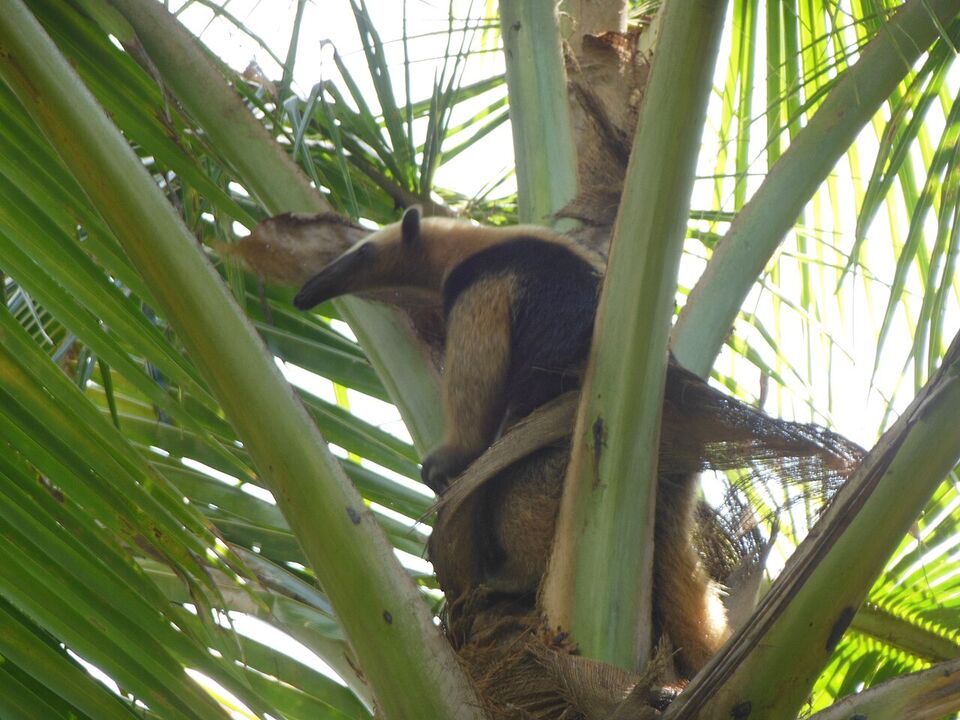
Walking trails run from Manzanillo along the shore, and a local guide will point out sloths, birds and sometimes dolphins offshore that you would miss alone. We could not confirm entrance fees, turtle-nesting rules or trail conditions for the refuge from official sources. Before you go, ask your lodge, and do not walk beaches at night in nesting season without a licensed guide. Disturbing nesting turtles is illegal.
Afro-Caribbean culture and food
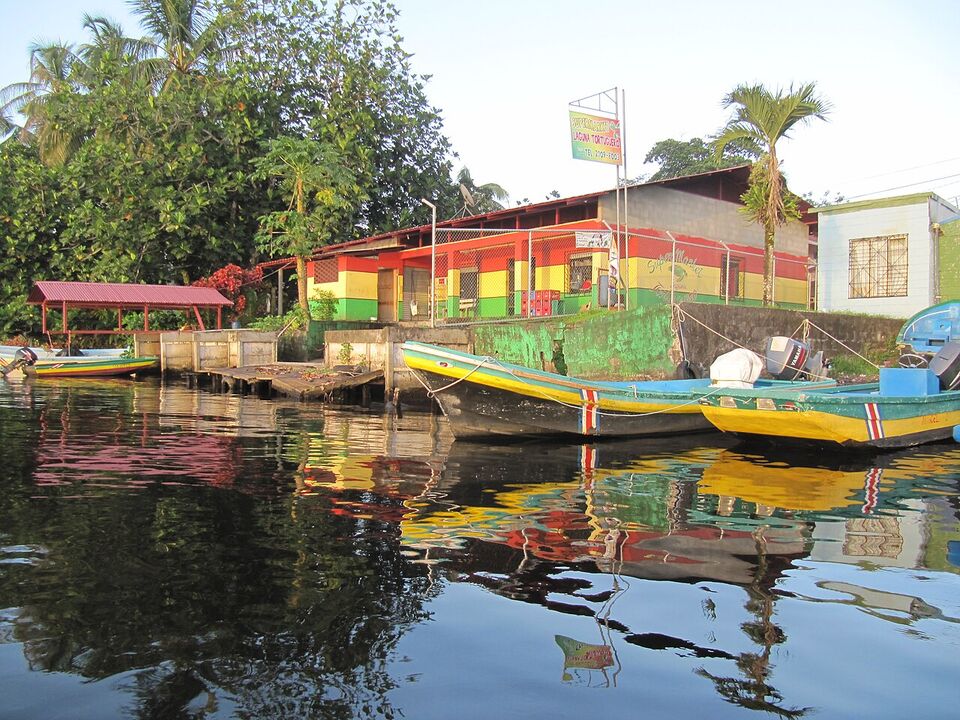
What sets this coast apart is its people. Afro-Caribbean families settled here from the early nineteenth century, arriving from places such as Bocas del Toro in Panama, San Andrés in Colombia and Nicaragua, and later from Jamaica and elsewhere to build the railway to the coast. Towns such as Cahuita, Puerto Viejo and Manzanillo grew from those settlements. Until 1948 Afro-Costa Ricans in Limón needed permission to leave the province and were not recognized as citizens, a history that still shapes how many people in Limón think about the central government. The Talamanca mountains behind the coast are also home to Indigenous Bribri and Cabécar communities.
The result is a culture visitors can enjoy and should treat with respect. Some practical ways to do that:
- Greet people first. A friendly buenas (or "good morning") goes a long way, and many people on this coast speak English as well as Spanish. Limón Creole, sometimes called Mekatelyu, is a living language, not a novelty to imitate.
- Ask before you photograph people, homes or ceremonies, and do not treat dreadlocks, music or religion as costume or background.
- Choose locally owned restaurants, guides and shops, and ask where a tour's money goes, especially for visits to Indigenous communities.
- Learn a little of the history before you go. Our etiquette guide has more on manners in Costa Rica.
What to eat
Caribbean cooking here differs from the rest of Costa Rica. The signature is rice and beans cooked in coconut milk and usually served with fish and fried plantain, which is not the same as the gallo pinto (rice and beans fried together) eaten across the country at breakfast. Another classic is rondón, a slow-cooked seafood and root-vegetable stew simmered in coconut milk. Coconut also flavors many desserts and sweet breads from Limón. You will also find patí (a spiced meat pastry), jerk-style chicken and fresh fish in simple restaurants. We cover the national table in our food guide. Prices are not published anywhere official; a plain soda meal is often cheaper than a tourist dinner, but ask or check the menu before ordering.
Limón also holds a large carnival each October. The 2026 edition ran October 9-18, with its main parade on Saturday, October 17, so it is over; check the 2027 dates when announced, and see our festivals guide.
Wildlife and nature outside the park
You do not have to enter a park to see animals here. Sloths and monkeys turn up in trees beside the road, and birds are everywhere. Guided walks at dawn or dusk usually show more than daytime wandering. A few rules help both you and the animals: keep your distance, never touch or feed wildlife (feeding is illegal under national law, even if rarely enforced), and keep your voice down. Our wildlife guide has species notes and ethics.
The coast is also a base for day trips. The Costa Rica Tourism Board lists turtle watching at Tortuguero National Park, whitewater rafting on the Pacuare River and chocolate-farm tours among the top green-season activities here. Rafting trips usually pick up from the Caribbean side, so read our adventure tours guide before you book a river day.
Safety, health and money
The State Department advises visitors to exercise increased caution in Costa Rica due to crime (Level 2), and names no regions. Petty theft is the main concern. On the Caribbean coast the habits that matter are the same as anywhere: do not leave bags on the sand while you swim, keep valuables out of sight in cars (or leave nothing in them), lock bikes and rooms, and avoid dark roads and empty beaches at night. Take licensed taxis after dark rather than walking between towns. Our Is Costa Rica safe? and safety guides go into more detail. The emergency number is 911.
On health, the CDC recommends malaria pills for travelers to Limón and Alajuela provinces (its page was last updated in April 2025), so talk to a travel clinic well before departure. Dengue occurs in Costa Rica and there is no vaccine on the US list, so use repellent and cover up at dawn and dusk. The CDC also warns to avoid floodwater and muddy water after heavy rain because of leptospirosis. Read our health guide for the full list.
For money, bring colones in small bills for the Kelly Creek donation, small shops and bus fares, plus a card for hotels and bigger restaurants. ATMs exist in the larger towns, but machines can run out of cash or go offline; do not count on a single card. Restaurants usually add 13% sales tax and a 10% service charge. See our money guide.
Where to stay
Accommodation here is mostly small: guesthouses, beachfront cabins, hostels, jungle lodges and rental houses, with a few larger hotels. Choose by the kind of trip you want rather than by brand:
- Cahuita town and Playa Negra: walking distance to restaurants and the park's Kelly Creek gate. A good base for car-free travelers.
- Puerto Viejo center: most choice, most nightlife and noise. Light sleepers should ask for a quiet room away from bars.
- Playa Cocles and Playa Chiquita: beach lodges a short bike ride from town. Quieter, but you will want a bicycle or car.
- Punta Uva and Manzanillo: remote, forested and quiet. Many places here have limited Wi-Fi and few restaurants nearby.
Expect humidity, a few insects, and in simple places a ceiling fan instead of air conditioning (ask if AC matters to you). Wildlife may be noisy at night. We list tiers as $ for under US$120 a night for a double, $$ for US$120 to US$300 and $$$ for over US$300. Most of the coast sits in the first two tiers, which is part of its appeal. Rates vary with the season, so check the final price, including 13% sales tax and any service charge. For choosing between types of lodging, see where to stay in Costa Rica.
Save money
September and October are relatively drier on this coast but are the Pacific's low season. Rates there drop, while this coast can still have good weather. Ask hotels for off-peak discounts and book the long Christmas and Easter weeks early.
A sample four-day plan
- Day 1
San José to Cahuita
Leave San José early by shuttle, bus or car and reach the coast by mid-afternoon. Settle in, walk the beach at Playa Negra and eat dinner in town.
- Day 2
Cahuita National Park
Walk the coastal trail in the morning when animals are most active, from Kelly Creek toward Puerto Vargas. Swim or snorkel with a guide in the afternoon if conditions allow, then take a taxi back.
- Day 3
Puerto Viejo and the beaches
Move south. Rent a bike for the coast road, swim at Playa Chiquita or Punta Uva, and try rice and beans in coconut milk or rondón for lunch.
- Day 4
Manzanillo or a farm tour
Spend the morning in Manzanillo and the refuge with a guide, or take a chocolate-farm tour. Leave after lunch for San José only if you have a late departure; otherwise stay one more night.
To add Tortuguero, go there first from San José and come south afterward, or reverse the order. The two places are in the same province but not on the same road, so allow a day of travel between them.
Practical checklist
- Pack a light rain jacket, quick-dry clothing, reef-safe sun protection and repellent. See our packing guide.
- Carry colones in small bills for the Kelly Creek donation and for buses.
- Confirm the Gran Terminal del Caribe departure time with the bus company the day before.
- Book rooms early for December to April and for holiday weeks.
- Talk to a travel clinic about malaria pills and dengue precautions.
- Check the park's current hours and fees on SINAC before you go.
Add it to a route in the trip builder, or ask us to plan the hotels, transfers and guides for you.