Overview: what Costa Rican food is like
Costa Rican food is mild, home-style and built around rice and beans. Seasoning leans on onion, sweet pepper, cilantro and a brown bottled sauce, Salsa Lizano, rather than chile heat. If you expect Mexican food, you will find less spice and more rice. If you like simple plates cooked from scratch, you will eat well, and cheaply, almost anywhere.
The easiest way to eat like a local is to follow the day. Breakfast is gallo pinto with eggs. Lunch is a casado at a soda, the small neighborhood restaurant that is the backbone of everyday eating. Afternoon is coffee and a pastry or a fresh fruit drink. Dinner is lighter, often a repeat of lunch, a rice dish or a snack plate with a beer. In beach towns and tourist hubs you will also find pizza, sushi, burgers and international menus at higher prices.
This page covers the dishes to know, how a soda works, where to eat, what meals cost, how tax and tipping work, food safety, and options for vegetarians and people with allergies. For drinks, coffee and what to carry home, see Coffee and Drinks. For daily budgets, see the budget page.
The dishes to know
Most menus use the same short list of dishes. Learn these and you can order anywhere. Menus in tourist areas are often in English, but local sodas may only show Spanish names on a board.
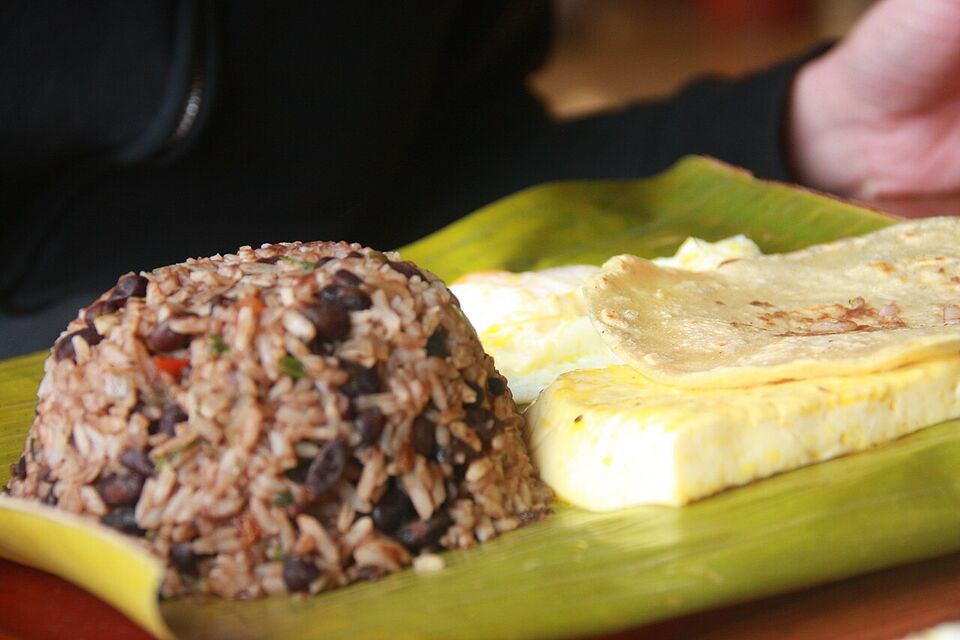
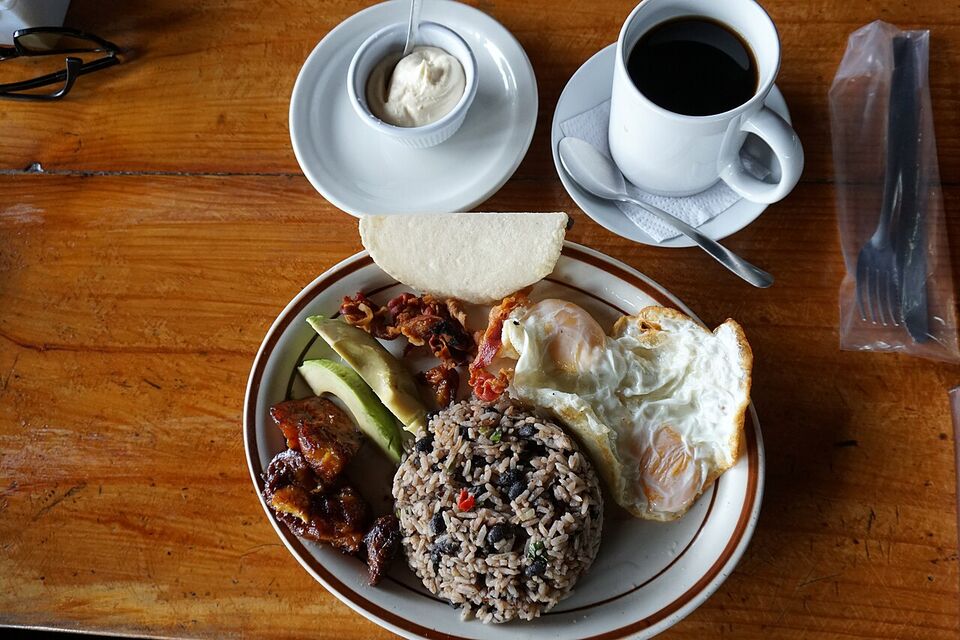
Gallo pinto
The national dish: rice and beans stir-fried together until speckled (the name means "spotted rooster"). It is seasoned with onion, sweet pepper, cilantro and Salsa Lizano. Cooks use red or black beans, depending on the region and the cook. It comes with eggs, fried plantain, tortillas, fried cheese or natilla (a sour cream).
Casado
Rice and beans served side by side, a protein (chicken, beef, pork chop or fish), a small cabbage-and-tomato salad, and often fried plantain or a slice of white cheese. The name means "married man," from the lunch wives once packed for field workers. It is filling enough to last until evening.
Olla de carne
A beef soup-stew with cassava (yuca), potato, corn, green plantain, squash and chayote. It is slow-cooked comfort food, often a weekend special at sodas and a good rainy-day choice in the Central Valley and mountains.
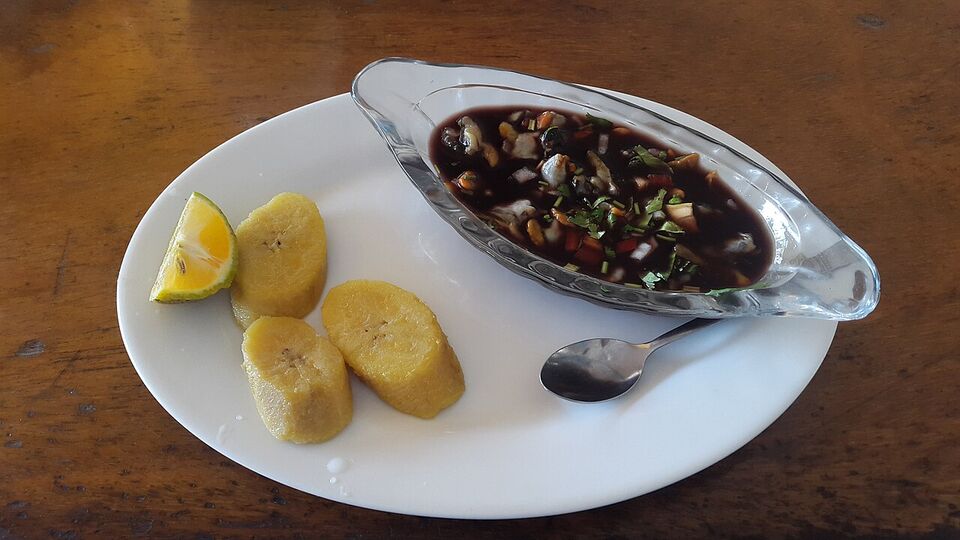
Ceviche
Raw fish or seafood "cooked" in lime juice with onion, cilantro and chile, often served in a cup with crackers. It is a fixture on both coasts. Order it where the fish is fresh and turns over fast, and see the food safety section below if you are cautious.
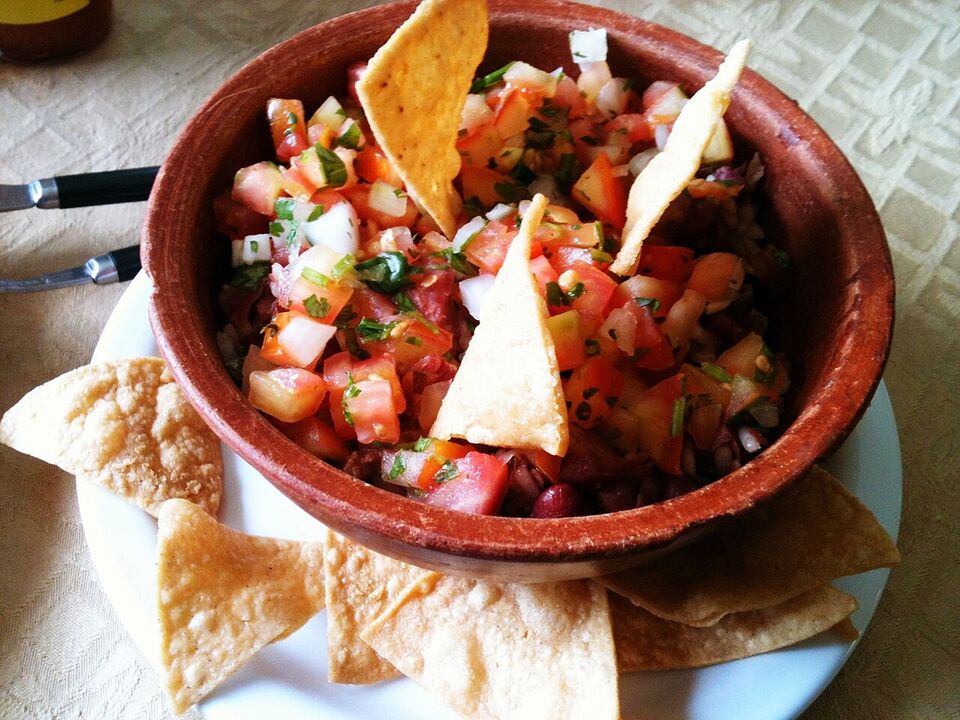
Chifrijo
The name joins chicharrón (fried pork) and frijoles (beans). It is served with rice, pico de gallo and tortilla chips, and is a classic with a cold beer. It dates from the 1990s, so it is a newer tradition than most dishes here.
Tamales
Cornmeal dough stuffed with pork, rice and vegetables, wrapped in a banana or plantain leaf and steamed. They are made for celebrations and especially at Christmas, so December is the best time to find them. You may see them in markets at other times.
Arroz con pollo
Rice cooked with chicken, vegetables and mild spices, with a splash of Salsa Lizano. It is the dish families make for gatherings and celebrations, and many sodas serve it as a daily special.
Patacones
Slices of green plantain are fried, smashed flat and fried again, then salted. They come with bean dip, guacamole or ceviche. Ripe plantains (plátanos maduros) are the sweet version, fried or baked.
Rondón
A slow-cooked coconut-milk stew of fish or seafood with root vegetables, plantain and chile. It belongs to the Caribbean side and is one of the best reasons to eat there. Names and recipes vary by cook.
Caribbean rice and beans
On the Caribbean coast, "rice and beans" is a different dish from gallo pinto. The rice and beans are cooked together in coconut milk and usually served with fish or chicken and fried plantain. Do not order it expecting gallo pinto. The region also has its own flavors, including ginger, chile, coconut breads and a holiday ginger beer. Read more in the Caribbean coast guide and the Tortuguero guide.
Sweets and fruit
Tres leches ("three milks"), a very wet sponge cake, is the most common dessert and is on many restaurant menus. Fruit salad is another everyday dessert. Desserts differ by region: coconut and fried plantain on the Caribbean side, corn in Guanacaste, and milk, coconut and fruit in Puntarenas. At Christmas you may see queque navideño, a dense fruitcake soaked in rum.
Fruit is the easiest healthy pleasure in the country. You will see pineapple, mango, papaya, watermelon, bananas, passion fruit and more depending on the season. Cut fruit in cups sold at roadside stands and markets is cheap and good. See the street food section for how to choose a stand.
How a soda works
A soda is a small, casual, locally owned restaurant, often family-run, with a counter or a few tables, a menu board and a short daily list of plates. The word has nothing to do with soft drinks. Sodas are where most Costa Ricans eat lunch, which makes them the best value for travelers too.
Here is how a typical visit goes:
- Look at the board or counter. Many sodas show the day's casado options (chicken, beef, fish, pork) and a few specials. Some have a printed menu. A pointed finger works fine.
- Order at the counter or sit and wait. Practice varies. If you are unsure, take a seat and see if someone brings a menu. Say un casado con pollo, por favor (a casado with chicken, please).
- Choose a drink. A fresco (fresh fruit drink, often blended with water or milk) is the usual choice. Coffee is also standard. See Coffee and Drinks.
- Ask for the bill. Say la cuenta, por favor. In many sodas you pay at the counter. Taxes and any service charge are normally included in the price on the board, but ask if you are unsure.
Different from home
Waiters rarely bring the check until you ask, because rushing a customer out is considered rude. A table that sits and talks for an hour is normal. If you are in a hurry, ask for the bill early.
Sodas close earlier than American diners. Many open at about 6 a.m. or 7 a.m. for breakfast, serve lunch as their busiest meal, and close in mid-afternoon or early evening. Some are closed on Sundays or after lunch. Hours are posted on the door or on a Facebook page rather than on a website, so check locally.
Where to eat
Sodas and family kitchens
Sodas are the first choice for lunch and breakfast. In small towns, a soda may be the only place open. In San José, central market areas and neighborhoods around the university have many. At the beach, look one or two streets back from the main tourist strip, where locals eat and prices drop. For more about eating in the capital, see the San José guide.
Markets
Every town has a municipal market (mercado central) with fruit and vegetable stalls, butchers and small counters serving casados. San José's central market, the Mercado Central, is a maze of food counters. Markets are busiest in the morning and quieter by mid-afternoon. A feria del agricultor (farmers' market) usually runs on weekends in town squares and car parks, sells produce, cheese, tamales and baked goods, and is a pleasant way to eat breakfast. Hours and days differ by town, so ask at your lodging.
Roadside stands
Along highways and rural roads, small stands sell fruit, coconut water (agua de pipa, from a green coconut chopped open with a machete), cheese, empanadas and fried yuca. These are usually cheap and quick, and a good way to break up a drive. Choose stands with a steady crowd, cut fruit kept cool, and food that is cooked to order. Our driving guide covers road trips.
Restaurants
Beach towns, Monteverde, La Fortuna and Manuel Antonio have restaurants that range from beachfront seafood to farm-to-table to international menus. Prices are higher, menus are often in English, and bills add tax and service (see below). We do not name specific restaurants here because we cannot confirm their 2026 opening status. Look for places where Costa Ricans also eat, check recent reviews, and use the region guides for ideas.
Save money
Make lunch your main meal. A casado at a soda is usually much cheaper than a tourist-area dinner, and the portion is large. Many sodas also sell an inexpensive set-price breakfast.
What meals cost
We could not confirm official menu prices, and prices change with the exchange rate, region and season. The ranges below come from travel-cost blogs and are a rough guide only. At the site rate of US$1 = ₡445, the colón is at its strongest in about 20 years, which means prices that feel stable in colones can look higher in dollars than they did a few years ago.
| Meal | Colones | US$ (rough) | Notes |
|---|---|---|---|
| Casado at a soda | about ₡2,200-4,500 | about US$5-10 | Cheaper in small towns, higher at beach towns |
| Breakfast of gallo pinto and eggs | about ₡2,200-4,500 | about US$5-10 | Often with coffee |
| Dinner in a tourist area | about ₡9,000-22,000 | about US$20-50 | Drinks and service extra |
| Fruit drink or coffee at a soda | varies | a few US$ | Check the menu board |
Beaches, national park gateways and resort areas cost more than San José or small towns, and menu items sold to tourists are priced in US dollars in many places. If a menu lists US$ prices, the shop is usually quoting US$ and converting the tax at its own rate. Always check whether the listed price includes tax and service.
Tax, service charge and tipping
Restaurant bills in Costa Rica usually include 13% sales tax (IVA) and a 10% service charge. The service charge is in effect a built-in tip, so an additional tip is optional. Look at the bottom of the bill for lines marked impuesto (tax) and servicio (service). If the menu says prices do not include tax, expect roughly 23% on top of the listed price.
Many travelers round up or leave a small amount for good service, especially in a small family restaurant where the service charge may not reach the staff. Tips are appreciated, not required. Tipping habits for tour guides, drivers and hotel staff are covered in Pura Vida and Etiquette. Our money guide covers cards, cash and ATMs.
Different from home
In the U.S., the tip is a separate decision on top of the bill. In Costa Rica it is usually already on the bill. If you see a 10% service charge, you do not need to add the 15-20% you would leave at home.
Cards are widely accepted in cities and tourist areas, but small sodas and roadside stands are often cash-only. Carry small colón notes and coins. US dollars are widely accepted in tourist areas, but change is usually given in colones at the vendor's rate, which may not be favorable.
Street food, fruit and food safety
Most visitors eat in Costa Rica without a problem. A few habits reduce the risk of stomach upset:
- Eat food that is cooked hot to order, and avoid anything that has sat out in the sun.
- Choose busy stalls with quick turnover.
- Peel fruit you cut yourself, and wash your hands or use sanitizer before eating.
- Be selective with raw seafood, such as ceviche, and eat it where the fish is clearly fresh and kept cold.
- Be cautious with ice in remote areas if you have a sensitive stomach, and avoid drinks from unlabeled bottles.
The CDC lists a Level 1 notice for a hepatitis A outbreak in Costa Rica, with most cases in San José province (September 18, 2026). The CDC recommends hepatitis A vaccination for travelers aged one and older. Good hand hygiene and eating hot food lower the risk, but talk to a doctor or travel clinic before you go. See our health guide for vaccines and medical care.
Tap water
Costa Rica's tourism board says tap water is generally drinkable, with bottled water advised only in a few rural areas. The CDC still advises choosing safe food and drinks. We could not find a region-by-region list, so verify locally: ask your lodge if the water is safe to drink, and use bottled or filtered water in remote areas, on the Caribbean coast, the Osa Peninsula and anywhere your host suggests it. Water supply is also a concern in the 2026-27 dry season. The national weather service says the strongest El Niño since 1888 is under way, and authorities have warned that more than 306,000 people could face problems getting drinking water, with about 48% of them in Guanacaste. Hotels there may ration water, so carry a refillable bottle.
Watch out
After heavy rain, avoid floodwater and muddy water. The CDC notes a leptospirosis risk, and a bacterial infection can enter through cuts. Wear closed shoes on muddy trails and in flooded streets.
Vegetarian, vegan and allergies
Vegetarian eating is easy in cities and tourist towns, where many restaurants have meatless dishes, and harder in small rural sodas. Rice, beans, plantains, eggs, cheese, avocado, yuca, salad and fruit are everywhere. Ask for a casado without meat (casado vegetariano), which is usually made with extra vegetables, eggs or cheese.
Check for hidden animal products. Beans may be cooked with pork or bacon, rice may be cooked in chicken stock or lard, soups often have meat stock, and natilla and cheese are dairy. Useful phrases are No como carne, ni pollo, ni pescado (I don't eat meat, chicken or fish) and ¿Tiene manteca o caldo de carne? (Does it have lard or meat stock?). Vegans will find it easier in Monteverde, La Fortuna, Santa Teresa, Nosara, Puerto Viejo and other tourist towns, where vegan and plant-based cafes are common. In small towns, expect to cobble together a meal from sides.
Allergies
We found no source on allergen labeling rules, so do not assume menus are labeled the way U.S. ones are, and staff in small sodas may not know every ingredient. If you have a serious allergy, carry your medication, write your allergy in Spanish on a card (for example, Soy alérgico/a a los maníes, "I am allergic to peanuts"), and speak with the cook where you can. Shellfish and fish are widespread on the coasts, and cross-contamination in fryers and shared pans is common. Our Spanish phrases page has more help.
Eating by region
- San José and the Central Valley: the widest range, from sodas and markets to international restaurants. Olla de carne and traditional baked goods are easy to find. See San José and the Central Valley.
- Guanacaste and Nicoya: corn is a major ingredient. Look for tortillas, corn drinks such as the cornmeal-and-cinnamon horchata, and beach-town seafood. See Guanacaste.
- Caribbean coast: coconut, chile, fish, rondón, rice and beans cooked in coconut milk. See the Caribbean coast guide.
- Pacific beaches: fresh fish, whole fried snapper and ceviche. Quality and price vary widely by town.
- Mountains such as Monteverde: cheese, dairy and hearty soups.
Before you go
- Learn the five dishes: gallo pinto, casado, ceviche, patacones and tres leches.
- Carry small colones for sodas, markets and roadside stands.
- Plan a hearty lunch at a soda as your main meal.
- Check the CDC's latest notices and ask your doctor about hepatitis A.
- Bring a refillable water bottle and ask your lodge about local tap water.
- Write down any food allergies in Spanish.
Add it to a route in the trip builder, or ask us to plan the hotels, transfers and guides for you.