Overview
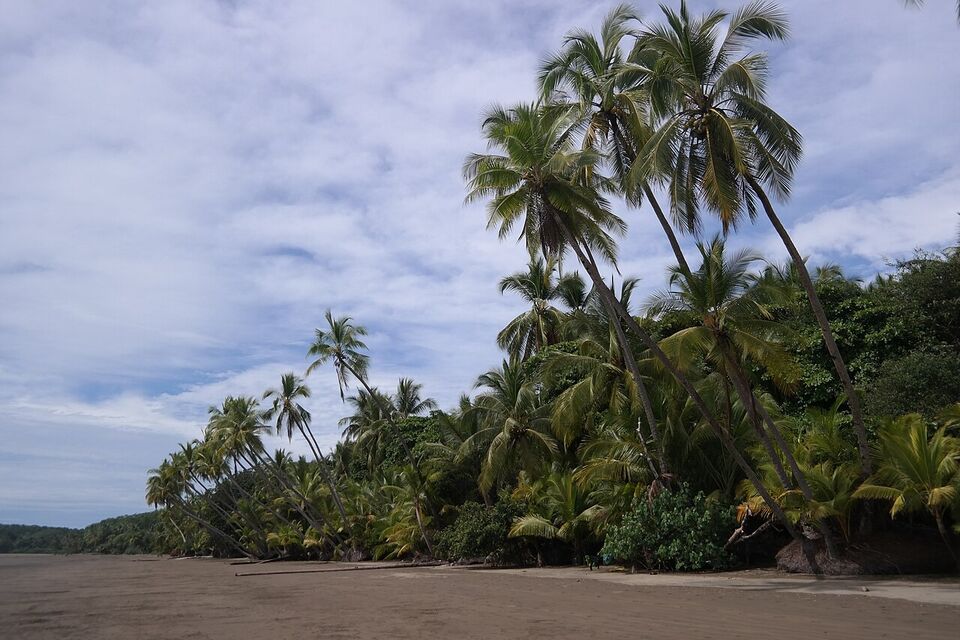
The Costa Ballena (the "Whale Coast") is the stretch of Pacific shoreline from Dominical south to Ojochal, centered on the village of Uvita. It is quieter and less built-up than Manuel Antonio, and it is the easiest place on the southern Pacific coast to combine a beach, a marine national park, a waterfall, surf lessons and a boat trip in one short stay. Its best-known sight is the "whale tail" (la cola de ballena), a sandbar in the shape of a whale's tail that reaches out into the ocean at low tide.
Plan on two to three nights. Uvita is the more practical base for the park and whale tours, while Dominical is the surf town with a more casual, backpacker feel. They are a short drive apart along the same highway (we did not confirm the exact time), so you do not need to choose one forever; many visitors stay in Uvita and drive to Dominical for a surf lesson or a meal.
This page covers the park and the whale tail, whale-watching seasons, the Nauyaca waterfalls, Dominical's surf, the Costanera highway, small hotels, how to book, and rip-current safety. It fits between our Manuel Antonio and Osa Peninsula and Corcovado guides, and many itineraries run all three in order.
Getting there: the Costanera highway
The coastal highway, Route 34, called the Costanera Sur, runs along the Pacific from the Jacó area through Quepos and on to Dominical and Uvita. It is the road most visitors take, and from San José it is about 4 hours to Dominical and about 5 hours to Uvita in average conditions, according to common drive-time tables. From Manuel Antonio, Dominical is about 1 hour. Rain, roadworks and slow trucks can easily add an hour.
Road conditions on the Costanera change, so check with your hotel or a local driver on the day. The highway is generally paved and well used. Slow-moving trucks, narrow bridges and sudden rain are the main nuisances. Do not rush to beat the sunset: it gets dark between about 5:30 and 6:30 p.m. all year, since Costa Rica is on UTC-6 with no daylight saving time.
| From | By car (average) | Other options |
|---|---|---|
| San José | About 4 hours to Dominical, about 5 to Uvita | Buses on the southern routes, shared shuttles and private transfers; confirm terminals and times with the company |
| Manuel Antonio / Quepos | About 1 hour to Dominical | Shuttles and local buses; ask your hotel |
| Liberia (LIR) | About 7 hours to Dominical | Better to fly to San José and break the trip |
| Puerto Jiménez (Osa) | A long day by road via Palmar | See the Osa Peninsula guide for boat and air options |
Rental cars are the most flexible choice here, because sights are spread along the coast and some roads are unpaved. A standard SUV is fine for the main sights, but a 4x4 is strongly recommended for remote beaches near Uvita, especially from May to November. See our car rental guide for insurance, deposits and what to ask before you sign. Private transfers and shared shuttles from the San José airport run to Uvita and Dominical; get a written quote, and expect roughly US$40 to US$70 per person on a shared shuttle and US$200 to US$400 per vehicle on a private transfer for long routes (estimates, not fixed fares).
One local note: on July 1, 2026, residents and tourism business owners blocked roads in Uvita to protest limits on visitor numbers at Corcovado. Protests like that are rare and short, but they are a reminder to check local news and your hotel before a travel day.
Marino Ballena National Park and the whale tail
Marino Ballena (Ballena Marine National Park) protects a stretch of coast, offshore reefs and a large area of sea. Its best-known feature is the tombolo, the sandbar at Punta Uvita that forms the whale tail. Seen from the air or from a hill, the two fluke tips point out to sea; seen from the beach, it is a long, curving strip of sand and rock that you can walk out on when the tide is low.
Which sectors are open
The park has several sectors, each with its own ranger entrance: Uvita (where the whale tail is), Colonia, Ballena and Piñuela. The Piñuela sector closed on November 9, 2026 for about six months because of deteriorated facilities, with no beach access and no boat drop-offs, according to Tico Times reporting on November 12. The Uvita, Colonia and Ballena sectors, and the whale tail, stay open. The six-month estimate means Piñuela should not reopen until about May 2027, and a reopening date could change. Ask at the ranger station.
Fees and hours
Sources disagree on the fee. A tourism board table lists about US$6 for foreign adults, while a different national park fee table lists US$12. Plan on roughly US$6 to US$12 and check the price at the ranger station. Hours are commonly listed as 7 a.m. to 4 p.m., but confirm on the day. Because national parks have moved toward card payments, bring a card and some colones, since the ranger station may not accept one or the other. Parking at the Uvita entrance has been reported at about US$6 for a car.
Unlike Manuel Antonio, Marino Ballena was not on SINAC's list of online-ticket parks when we last checked, so you normally pay at the park. Check SINAC's booking site in case that changes. Tour operators often handle the entry fee for you.
Tides: when to walk the whale tail
The sandbar is exposed only around low tide. At high tide it disappears under the water, and the water can rise quickly. The tide range on this coast is large, so the difference between a long walk and no walk at all is a few hours.
- Check a tide table for Uvita or Bahía Ballena before you plan the day. The park staff also post the tide times at the entrance, and local tour operators know them.
- Go out around low tide and come back well before it turns. Do not stay on the tail until the water is already rising.
- Wear shoes you can get wet, and carry water and sun protection. There is almost no shade on the sandbar.
- Do not swim from the tail. Currents are strong where the water on both sides meets.
The best viewing is in the morning, before the afternoon clouds and the largest crowds. Early starts also give you cooler temperatures for the walk.
Watch out
Rip currents are real along this coast, and there are few lifeguards. If the surf is big, or the park staff or locals say not to swim, believe them. If a current pulls you out, do not swim against it: float or swim parallel to the beach until you are free, then angle back to shore. Never turn your back on the water while on the whale tail's rocks.
Whale and dolphin watching
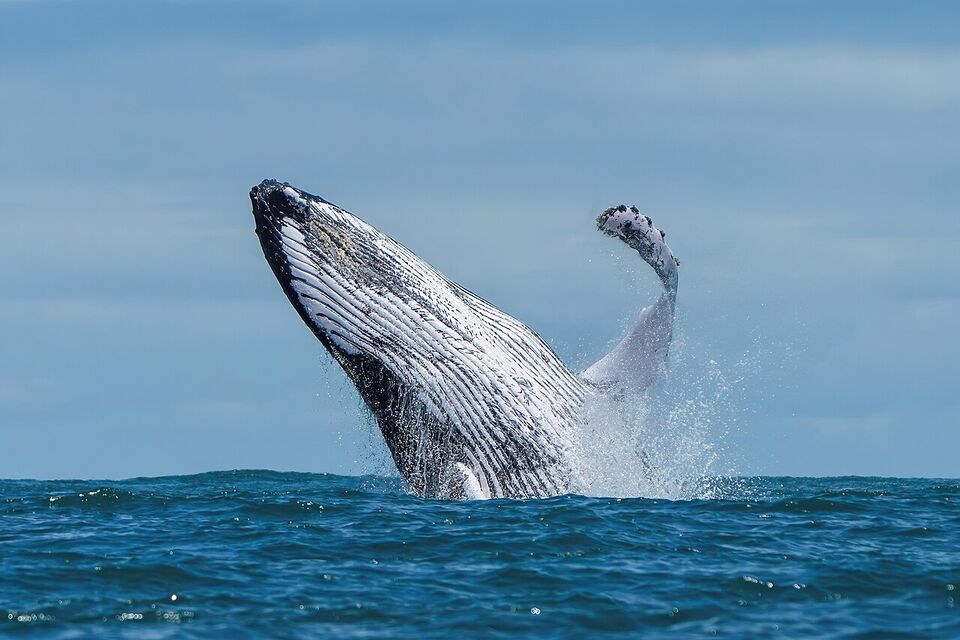
Humpback whales visit this coast to breed and give birth. The best-known window is July to October, with sightings strongest in the middle of it. A Costa Rican newspaper reported in September 2024 that the season ran "until October" and that boats leave from Quepos, Dominical, Uvita and Golfito. The national tourism board lists whale and dolphin watching at Marino Ballena as a green-season activity, from May to November.
Some operators also advertise whale trips from about December to April, and the park is known for dolphins at other times. We could not confirm that second window on an official source, and the exact months vary by year. Ask the operator what they have seen in the last two weeks, and treat any sighting as a bonus, not a promise.
What a tour is like
- Length: usually 3 to 4 hours, often with snorkeling and a snack or lunch.
- Price: a September 2024 news report listed foreign-adult prices from about US$65 and children from about US$45 for Uvita departures. Prices may have changed since; compare two or three operators and check what is included, including the park fee.
- Boats: small boats get closer to the water, and larger ones are steadier. If you get seasick, choose a morning trip when the sea is usually calmer, and take medication beforehand.
- Behavior: choose an operator that keeps its distance, keeps boat speeds low near whales and does not chase animals. If the captain pushes the boat toward a mother and calf, ask him to stop.
For other wildlife around the region, see our wildlife guide. The green-season list for the South Pacific also includes turtle watching and birdwatching on the Osa Peninsula to the south.
Nauyaca Waterfalls
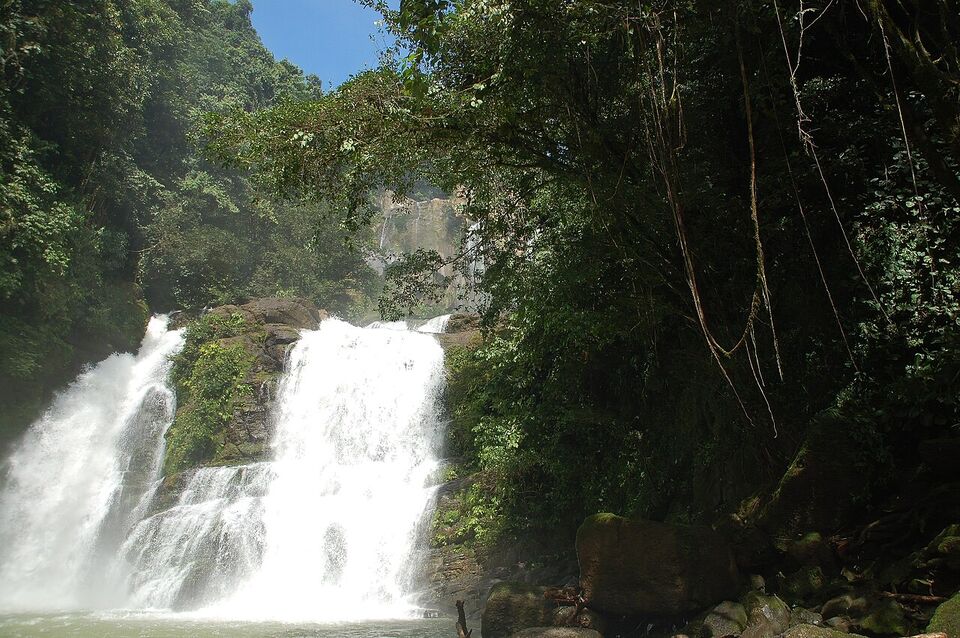
The Nauyaca waterfalls (Cataratas Nauyaca) are a well-known waterfall in the hills inland from Dominical. Visitors usually reach them by a rough road and then a walk or a horseback ride, and treat the trip as a half-day outing, but we could not check the details.
We could not confirm the 2026 entry fee, hours, horseback tour prices or access conditions, so check the operator's own website or ask your hotel before you go. Some practical points apply to any waterfall trip in Costa Rica:
- Go in the morning, and expect mud in the green season. After heavy rain, rivers rise, the water turns brown and swimming is unsafe.
- Avoid floodwater. The CDC lists leptospirosis as a risk from floodwater and muddy water after heavy rain. Do not swim in swollen rivers.
- Wear shoes with grip, and carry a dry bag and a change of clothes.
- Do not drive through rivers in a rental car. It voids all insurance, including the mandatory cover.
Dominical and surfing
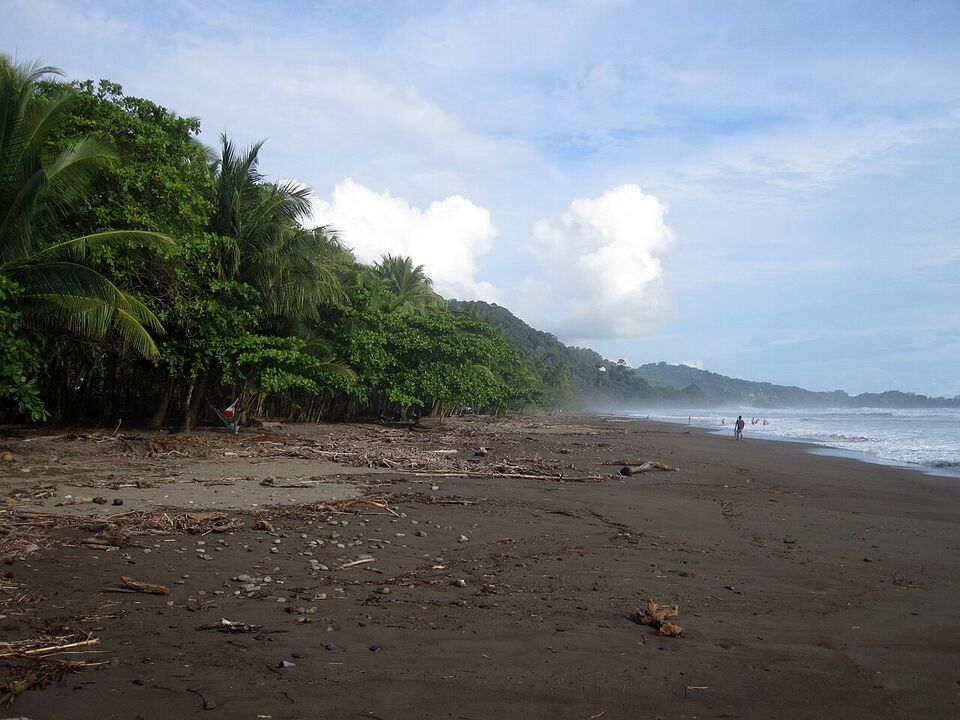
Dominical is a small, laid-back beach town at the mouth of a river, with a long beach, surf shops and restaurants. The beach break is known for steady waves, which makes it a good place to take a lesson, but it also has strong currents and a river mouth. It is a place where lifeguard flags matter.
- Take a lesson first. A school will pick the day's safest spot, supply a board and teach the basics of reading a rip current, which every surfer needs to know. Most schools supply boards and rash guards.
- Choose the right time of day. Mornings are often cleaner and less crowded. Surf conditions vary by swell, tide and wind, and we did not confirm seasonal swell patterns for this beach, so ask a local school.
- Know your insurance. Standard travel-medical policies often exclude surfing and other adventure activities; check your policy.
The national tourism board lists beach time, snorkeling, diving, surfing, fishing and ATV tours at Dominical and Uvita as dry-season activities (December to April), plus sport fishing for marlin and dorado. For other surf towns and a national picture, see our surfing guide and beaches guide.
Uvita as a base
Uvita is spread out along the Costanera, with a small center of supermarkets, banks, ATMs, restaurants and tour offices. It is the practical base because the park entrance, the whale tail and the boat departures are close, and because there are more hotels and restaurants than in Dominical. Ojochal, to the south, is a quieter, mostly residential area and a base for people who want fewer crowds.
Costs here are in US dollars for tourist services (hotels, tours, shuttles) and in colones for local prices (a grocery shop, a bus ticket). Dollars are widely accepted, but you will get a better rate for small purchases in colones. See our money guide for ATMs, cards and tipping, and note that restaurants usually add 13% tax and a 10% service charge to the bill.
Where to stay
We do not name hotels here because we cannot confirm their 2026 status. Choose by type and location:
Jungle lodges and small boutique hotels
Pools, ocean views and wildlife in the grounds, often a drive of 10 to 20 minutes from the beach. Ask about the road: some access roads are steep and unpaved, and a 4x4 may be needed in the rain.
Beach hotels in Uvita
Walk to the beach and to restaurants. Fewer views, more convenience, and a good fit for families or short stays.
Dominical surf stays
Simple rooms and hostels, surf lessons on the doorstep. Mosquitoes can be thick at the river mouth, so ask about screens and fans.
Ojochal and the hills
Quiet villas and rentals. You need a car for everything. Check security and locks at short-term rentals, because the State Department notes robberies at some.
Remember the tiers: $ is under US$120 a night for a double, $$ is US$120 to US$300 and $$$ is over US$300. Check whether the quote includes 13% tax and any service charge, and whether the hotel has air conditioning. For general advice see where to stay.
How to book park entry and tours
- Park entry. Pay at the ranger station for Marino Ballena unless SINAC adds it to its online system. Many tours include the fee; ask.
- Whale tours. Book a few days ahead in July to October, and the day before in low season. Ask about the boat size, group size, what happens if no whales appear, and the cancellation policy.
- Surf lessons. Book the day before, or ask your hotel. Check that the school provides a leash and board and that the instructor stays in the water with you.
- Waterfall visits. Book directly with the operator, since access and prices are not confirmed.
- Corcovado trips. These involve a guide and a boat from Drake Bay or Puerto Jiménez, not Uvita. See the Osa Peninsula guide.
Insider tip
Pair the whale tail with a tide-timed day: walk out at low tide in the morning, then book a boat for the afternoon, or the other way round. Hotels in Uvita often keep a printed tide chart, and if yours does not, a local tour desk will tell you the hour. Remember that rain usually arrives in the afternoon in the green season.
Weather and seasons
The Pacific coast has a dry season from December to March, April as a transition, a rainy season from May to October and November as another transition. The wettest months are September and October. Rain usually falls in the afternoon and early evening, so mornings are often clear. July and August can have a short dip in rainfall (the veranillo, or "little summer"). The dry season is better for beach days and hiking, while the green season is better for whales, quiet beaches and lower prices.
A strong El Niño is expected this season. The national weather institute calls it the most intense since 1888. Water shortages are more likely in Guanacaste than in the South Pacific, but ask your hotel about water and power before you book, and bring a reusable bottle. See our when to go guide.
Safety
- Rip currents. The main danger. Swim only where lifeguards or locals are present, and check the flags.
- Theft. Do not leave anything in a parked car, and do not leave bags on the sand. Car parks at popular beaches and sights are where most thefts happen.
- Heat and sun. The tail has no shade. Bring water and sun protection.
- Medical care. Trauma care is limited outside the cities. Buy travel insurance with medical evacuation cover.
- Mosquitoes. The CDC recommends avoiding bites (dengue and chikungunya are both a concern in Costa Rica), and malaria pills are recommended only for Alajuela and Limón provinces, not for this coast.
For the national picture, see Is Costa Rica safe?.
A sample three-night plan
- Day 1
Arrive in Uvita
Drive from Manuel Antonio (about 1 hour to Dominical, a little more to Uvita) or break the trip from San José. Check in, walk the beach and book a morning boat for the next day.
- Day 2
Whale tail and a boat trip
Walk the whale tail at low tide, then spend the afternoon at a pool, or take a boat in whale season. Return to the beach for sunset.
- Day 3
Waterfall and surf
Visit Nauyaca in the morning and take a Dominical surf lesson in the afternoon, if the waves are small.
- Departure
Onward
Head north to Manuel Antonio and the airport, or south toward Osa. Leave early to avoid slow trucks.
Before you go
- Look up the tide table for your whale-tail day.
- Check the Marino Ballena sectors and fee at the ranger station or on SINAC.
- Book whale tours a few days ahead in July to October.
- Bring a card and some colones for park and parking fees.
- Pack water shoes, a hat, sunscreen, bug spray and a dry bag.
- Do not leave anything visible in the car.
Add it to a route in the trip builder, or ask us to plan the hotels, transfers and guides for you.