Overview
Costa Rica has two coasts and hundreds of miles of beach, and they are very different. The Pacific coast has most of the country's beaches, the surf towns and a clear dry season. The Caribbean coast has darker sand in places, no true dry season and a slower, more rural feel. This guide helps you choose by what matters: swimming safety, services, crowds, sand and who the beach suits. It covers the five main areas (Guanacaste, the Nicoya Peninsula, the Central Pacific, the South Pacific and the Caribbean), plus the rules that apply on any beach.
One theme runs through the page. Most Costa Rican beaches are not swimming pools. Rip currents are common, lifeguards are few, and the shade you find is usually the shade you bring. A beach that looks calm at 8 a.m. can behave differently at noon on a falling tide. Treat every beach as unfamiliar, ask someone local, and make a plan for children before you step into the water.
Where we say something about sand, services or calm water, it is a general description from regional knowledge, not a guarantee, and conditions change with the swell, the tide and the season. We name beaches that travel sites and the national tourism board list, and we do not rank them.
Beaches by coast at a glance
| Coast | Sand (typical) | Swimming | Services | Crowds |
|---|---|---|---|---|
| Guanacaste (north Pacific) | Pale to golden; some darker | Mixed: some sheltered bays, some surf beaches with rips | Most developed: resorts, restaurants, tour offices | Busy in the dry season (December to April) |
| Nicoya Peninsula | Pale gold to gray | Mixed; surf beaches have strong currents | Surf towns with shops and cafes; some rough roads | Busy in town centers, quiet on the outer beaches |
| Central Pacific | Tan to dark gray | Mixed; rips are common, some lifeguards | Good: hotels, restaurants, park beaches | The busiest in the country around Manuel Antonio and Jacó |
| South Pacific (Uvita, Dominical, Osa) | Golden to brown | Strong currents on many beaches; few lifeguards | Basic to simple in Uvita and Dominical; very limited on the Osa | Light to moderate; remote on the Osa |
| Caribbean | Black or dark in places; pale at Punta Uva and Manzanillo | Varies with swell; some reef-sheltered spots | Simple: small towns, cafes and lodges | Quieter than the Pacific; peaks in school holidays |
The sand and swimming descriptions are general and vary beach by beach. They are a starting point, not a forecast. The sections below add the details that matter, and each regional guide goes deeper.
Rip currents and lifeguards
This is the part of the page to read twice. Rip currents (narrow, fast channels of water that pull away from shore) occur on many Costa Rican beaches, including popular ones. A lifeguard program exists at Manuel Antonio, but precautions are still needed, and on most beaches there is no lifeguard at all. The CDC's general advice for travelers applies here: swim only in designated areas, obey lifeguards and warning flags, and do not swim alone.
- Look first. A rip often shows as a gap in the breaking waves, a channel of darker or choppy water, or a line of foam heading out to sea. Watch the water for a few minutes before you go in.
- Ask a local (a surf instructor, a lifeguard, a hotel employee) where it is safe to swim that day.
- Stay shallow if you are not a strong swimmer, and keep children within arm's reach.
- If caught, do not fight the current. Float or swim parallel to the shore until you are out of the pull, then angle back in. Wave and call for help if you tire.
- Do not swim after drinking, or at dusk when no one is around.
- Avoid river mouths and estuaries, where currents are strong and water quality is poor. Authorities are investigating a die-off of fish, sharks, rays and birds in the San Francisco estuary at Playa Langosta near Tamarindo, as of November 12, 2026; avoid that estuary until the cause is known.
- Do not eat shellfish gathered around the Gulf of Nicoya. SENASA, the national animal-health service, has widened a red tide ban there, according to a Tico Times headline seen in mid-November 2026, and cooking does not make the shellfish safe. Check SENASA before you eat oysters, mussels or pianguas from the area.
Watch out
The flags and lifeguard huts you know from home may not exist. A beach with a restaurant and a crowd is not necessarily patrolled. If you cannot see a lifeguard, assume there is none, and swim where you can touch the bottom. Our safety guide and health guide cover insurance and emergencies; the national emergency number is 911.
Guanacaste
The northwest has the country's driest, sunniest climate and the biggest concentration of resort beaches. Travel sites and the tourism board list beaches here that include Tamarindo, Playa Flamingo, Playa Hermosa, Playas del Coco, Potrero, Playa Langosta, Playa Avellanas and the Papagayo area. The dry season is long and hot, with Liberia averaging daytime highs of nearly 97°F (36°C) in April, and it brings the largest crowds from December to April.
- Good for: reliable sun, resort amenities, sunset beaches, surfing near Tamarindo and Avellanas. See the Guanacaste guide and the Tamarindo guide.
- Watch for: water shortages. As of mid-November 2026 a strong El Niño is under way, and national authorities expected the North Pacific to be much drier than normal in the 2026-27 dry season, with the water utility warning that Guanacaste is the worst affected area. Ask your hotel about water supply before you book.
- Services: the best in the country, with hotels, beach clubs and tour desks. Prices are higher too.
- Shade: often scarce on the open stretches. Bring an umbrella, or rent one on the beach.
Nicoya Peninsula
South of Guanacaste, the peninsula's outer coast is a string of surf towns and quieter beaches: Nosara, Sámara, Santa Teresa, Mal País, Montezuma, Tambor and Cabuya, all listed by travel sites as destinations on this coast. The towns are small and mostly dirt-road, and the beaches have a more relaxed feel than the northwest resorts.
- Nosara (Playa Guiones): consistent waves and a sandy bottom, good for lessons, but surf injuries happen to experienced surfers too. The last 5 to 10 km (3 to 6 miles) into Guiones are unpaved, and a 4x4 is advised.
- Santa Teresa and Mal País: a surf-and-yoga scene on the far southern tip. The main road and its water pipeline works have caused long delays in past years.
- Sámara: often described as a more sheltered bay and a good choice for families, though we did not confirm conditions; check the day's swell.
- Getting there: the Puntarenas to Paquera ferry (60 to 80 minutes, adult fare ₡810, about US$1.80 in October 2026 per a travel blog) is a shortcut from the Central Valley. Check the operator for current times and fares.
See our Nicoya Peninsula guide and the surfing guide.
Central Pacific
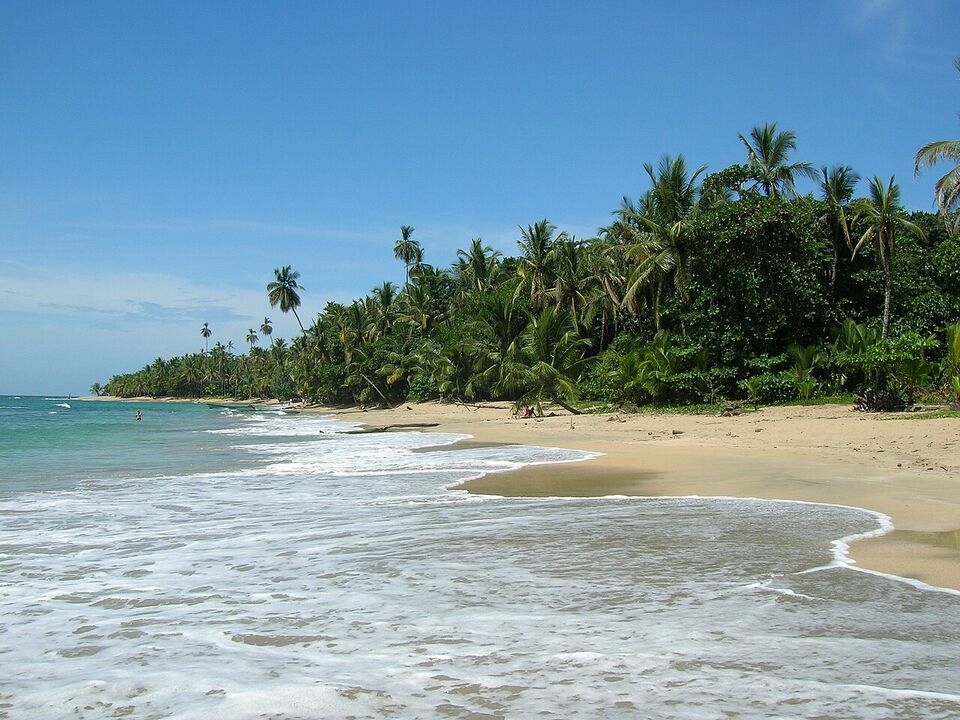
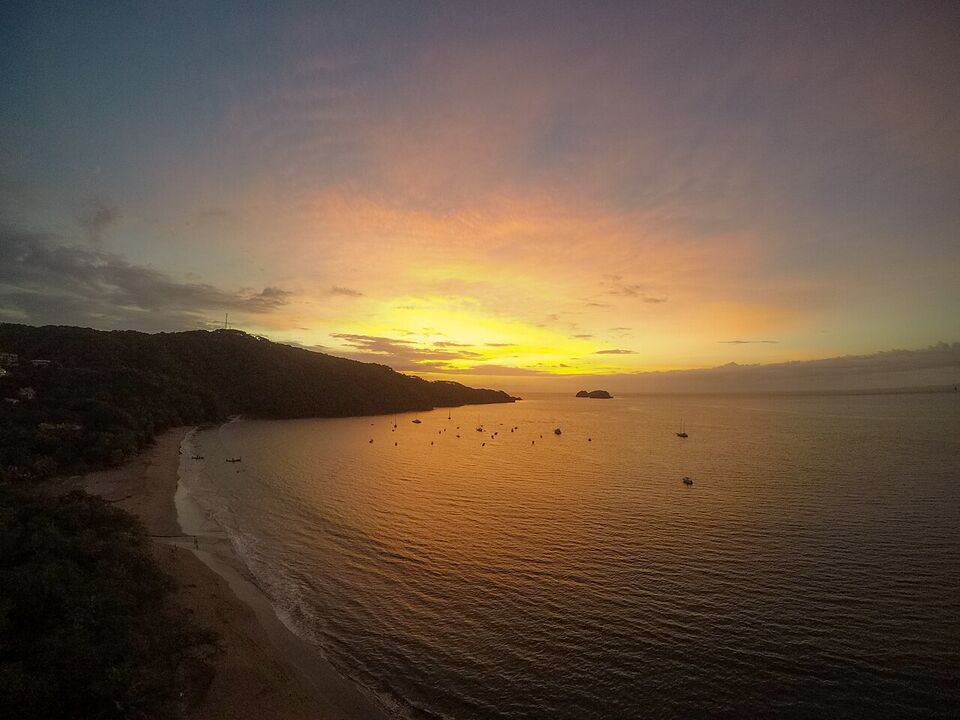
The Central Pacific is the closest coast to San José, and so the most visited. It runs from the Jacó area through Esterillos, Herradura and Manuel Antonio. The sand is often darker than in Guanacaste, and the beaches are wide and open, with strong surf. The dry season is December to March, and rain is heavy in September and October.
- Manuel Antonio: beaches inside and outside the national park, with a lifeguard program but also rip currents. See the Manuel Antonio guide.
- Jacó area: a busy beach town with surf lessons and nightlife, and a good base for a first trip to the Pacific.
- Esterillos and Herradura: longer, quieter beaches, but rips can be strong.
- Crowds: peak at weekends and holidays, especially from San José.
South Pacific
South of Manuel Antonio the coast gets quieter and wilder. Uvita and Dominical have long beaches and strong currents, and the Osa Peninsula beyond is remote. See the Uvita and Dominical and Osa Peninsula guides.
- Uvita and the whale tail: walk out at low tide, do not swim from the tail. Marino Ballena's Piñuela sector closed on November 9, 2026 for about six months, but the Uvita sector stays open.
- Dominical: a surf beach with a river mouth; lessons and flags matter.
- Osa and Carate: remote, very limited services. Some beaches are reached only by boat or a rough road.
- Pavones and the far south: a remote surf destination, farther than most trips go. We did not research it in detail.
Caribbean
The Caribbean coast has no real dry season: rainfall stays between 100 and 200 millimeters even in its driest months. It is relatively drier in February and March and in September and October, and wetter from November to January (December is the wettest) and from May to August. Rain falls mostly at night and in the morning. That means the "best" months differ from the Pacific, and you can have a good beach week in September or October when the Pacific is drenched.
- Cahuita National Park: beach and forest trail. The Kelly Creek entrance in town runs on donations (cash is best), and the Puerto Vargas entrance charges a set fee of about US$5 (base price, card accepted).
- Puerto Viejo de Talamanca area: Playa Cocles, Punta Uva and Manzanillo, listed by the tourism board for beach time, snorkeling, diving and surfing in the dry season (December to April on that list).
- Tortuguero: a nesting beach, not a swimming beach; ask your lodge before you enter the water.
- Getting there: about 4 to 4.5 hours by road from San José to Cahuita and Puerto Viejo. See the Caribbean coast guide and the Tortuguero guide.
Who each beach suits
Families with small children
Look for a sheltered bay with a gentle slope, a lifeguard, shade and a toilet nearby. Hotel pools are a good backup. Read our families guide.
Surfers
These towns have schools and board rentals, and beginners should take a lesson. See the surfing guide.
Remote and quiet
Few people, few services. Bring water, cash and a charged phone, and arrive with a plan to leave before dark.
Wildlife and walks
National park beaches with forest behind them. Entry fees and online tickets apply.
Resort stays
Hotel beaches with services. Check the water situation in the dry season.
Sunset and strolls
Long beaches facing west. Walk at low tide for firmer sand.
For families, the questions to ask are practical ones. Can you stand in the water where the children play? Is there a lifeguard or at least other families in the water? Is there shade for a nap and a toilet within walking distance? Is the car park busy enough to be watched, or empty and exposed? A hotel pool is often the better choice for toddlers, with the beach saved for short, supervised visits in the morning. Teenagers and adults who surf should still take a lesson, since the first rip current is not the moment to learn how to read one. Pack a first-aid kit with antiseptic and something for stings, and keep sandals on at the water's edge.
Shade, sun and sea temperature
The sun is strong in Costa Rica, even on cloudy days, because the country is near the equator. Wear a hat, use water-resistant sunscreen, and take a rash guard if you are fair-skinned. Many beaches have little natural shade, and national park beaches and forested coves are exceptions. Bring a beach umbrella, or ask where you can rent one.
The sea is warm on both coasts: in the low-to-mid 80s °F (high 20s °C) by most accounts, so you do not need a wetsuit to swim, though a thin top helps surfers and snorkelers. We did not confirm exact temperatures with the national weather institute, and they vary a few degrees between seasons. Bring water shoes for rocky beaches and tide pools. The tide matters more than you expect on the Pacific, where the tidal range is large; it can cover a beach, and cut off walkways.
Can you use any beach? The public-beach law
As we understand it, Costa Rica's Maritime Zone law (Ley de la Zona Marítimo Terrestre) treats the coast as a public asset. In plain terms: the beach itself is open to everyone, whether or not a hotel is next to it. A strip of land behind it is controlled by the local municipality, and much of that strip is leased out as concessions. The exact widths and exceptions are legal details, and we did not verify the current text.
- You can generally walk and swim on any beach, but you may cross private property to reach it only where there is a legal public path.
- Hotels may not close the beach, but they can ask you to stay off their furniture and pool.
- Camping, fires and drones are restricted in many places. Ask first.
- Beaches inside national parks are protected areas, with fees, hours and no pets.
This is a general description, not legal advice. If a gate or guard is blocking an access path, ask the local municipality or your hotel, and do not argue at the gate.
Theft, parking and common-sense safety
- Do not leave anything in the car, even for a short swim. Take what you need, and leave the rest at the hotel. A travel site notes that theft from parked cars is a problem at beach towns, and the State Department names petty crime as the main threat.
- Do not leave bags on the sand while swimming. Go in shifts, or leave valuables at the hotel safe.
- Look at informal parking attendants with caution. Agree on the price first, park where other people park and do not leave valuables inside, even if someone offers to "watch" the car.
- Check the car is locked. The US State Department notes that electronic jammers can block key fobs.
- Carry a copy of your passport, and keep the original in a safe place.
- Dress for the sun and the bugs. Sand flies and mosquitoes bite at dusk.
The State Department's advisory is Level 2, "exercise increased caution due to crime." See Is Costa Rica safe? for what that means in practice.
When to go, and the plan
For Pacific beaches, the dry season (December to March) is the safe choice for sun. The rainy season (May to October) has afternoon downpours, but mornings are often clear, prices are lower and crowds are thinner. For Caribbean beaches, February-March and September-October are relatively drier. See our when to go guide, and combine beaches with the rest of the country using plan your trip.
Insider tip
Pick the beach for the morning, not the afternoon. Wind and surf are lower, the sun is gentler and the rain, in the green season, usually comes after midday. Bring a printed or offline copy of tide times if you plan to walk to a beach that is reached at low tide.
Different from home
Do not expect lifeguards, flags, showers or snack bars on every beach. At most Costa Rican beaches, the only rule is the one you set for yourself. Pets are not allowed on beaches inside national parks, and the food and drone rules at parks are strict. See the pets guide if you are traveling with an animal.
Before you go
- Pick a beach for your swimming ability and group, not just the view.
- Ask a local about the day's rips and flags.
- Bring sunscreen, a hat, water, water shoes and a dry bag.
- Leave valuables at the hotel and nothing visible in the car.
- Check tide times for tidal walks and park beaches.
- Check park hours and online tickets for national park beaches.
- Buy travel insurance with medical evacuation cover.
Add it to a route in the trip builder, or ask us to plan the hotels, transfers and guides for you.