Overview: a national park you reach by water
Tortuguero is the one place on this side of Costa Rica where the journey is part of the destination. The village and the national park beside it have no road connection to the rest of the country. You arrive by boat along the river and canals, or by a short flight, and once you are there you move by boat and on foot. There are no cars on the village streets.
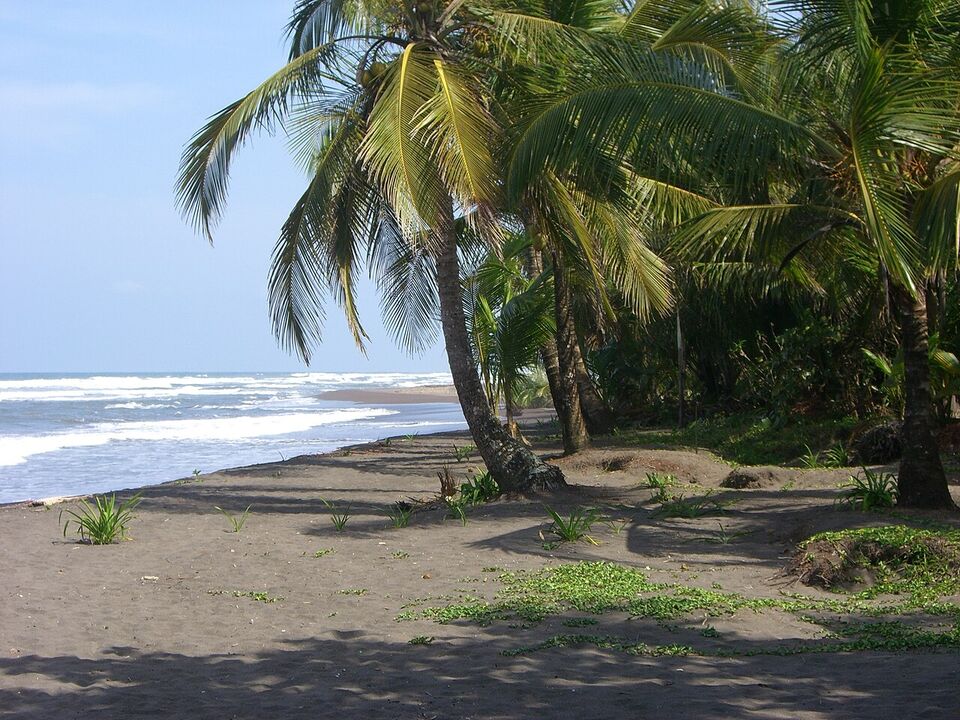
The park covers about 77,000 acres (31,000 hectares) of rainforest, swamp, lagoons and mangroves, with a beach of nearly 22 miles (35 km) on the Caribbean. It is known worldwide as a nesting site for green and leatherback turtles. Its canals are lined by forest, which makes it easy to see monkeys, birds, caimans and, with luck, sloths and river otters from a quiet boat. The park sits in the Tortuguero Conservation Area in the northeast of the country, not far from the Nicaraguan border.
It is also one of the wettest places in the country. We think Tortuguero suits nature-minded travelers, birders, families with older kids and anyone who likes a slow day on the water. It is a poorer fit for a beach vacation: the sea is rough and swimming is not recommended. For the beach towns of the southern coast, see our Caribbean coast guide.
How to get to Tortuguero
There are three ways in. Which one fits depends on your budget, how much luggage you carry and how much time you have.
Transfer packages (the easy way)
Most visitors book a package from a lodge or tour company. A typical one picks you up in San José, drives you east, stops for breakfast, and hands you to a boat for the last part of the trip. You are met at the dock in Tortuguero and taken to your lodge. The return leg reverses it. Packages usually bundle lodging, meals and guided tours with the transfers. The advantage is that nothing needs to be arranged yourself. Prices vary by lodge, season and group size, and we could not verify any current figure, so compare several and ask exactly what is included.
Public bus plus public boat
If you travel independently, the common route is a bus from San José toward Cariari and La Pavona, then a boat from the La Pavona dock to the village. The bus runs through the company that operates the Gran Terminal del Caribe routes. The bus ride from San José to La Pavona takes about 2.5 to 3 hours by one source's estimate, and the public boat adds about 1 to 1.5 hours; both figures are unconfirmed. A 2026 blog gave the boat fare as about US$8 each way, which we could not confirm either. Boats do not run after dark, so ask for the last departure and do not plan to arrive late. Confirm the bus terminal, times and fares with the bus company and your lodge a day before.
By air
Sansa flies from San José to Tortuguero (reservations +506 2290-4100). A secondary source puts the flight at about 25 minutes and the one-way fare at roughly US$100 to US$120 or more, with a baggage limit of about 30 lb (14 kg). We could not verify either the price or the bag limit from Sansa, so check before you buy. Small planes weigh bags and passengers, so pack light. Flying saves several hours, but it also takes you over the scenery you would have seen on the boat.
Insider tip
Pack a small overnight bag for Tortuguero and leave the rest of your luggage in San José or at your next hotel. Boats and planes both reward light packing, and your lodge will usually store a big suitcase if you ask when you book.
When to go: nesting, rain and crowds
Tortuguero gets heavy rain all year. Wikipedia reports as much as 250 inches (6,400 mm) a year, and the Costa Rica Tourism Board says the Caribbean has no real dry season. February and March and September and October are relatively drier, while November to January and May to August are wetter, with rain falling mostly at night and in the morning. The canals are navigable year-round, and a morning drizzle does not stop boat tours. Rain gear matters more than the calendar.
Turtle nesting season
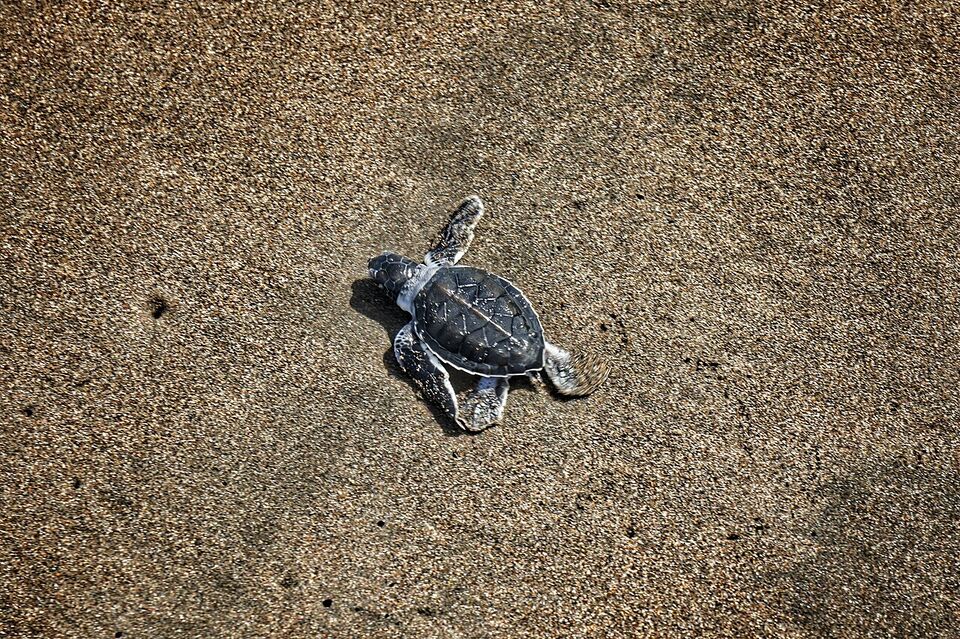
Turtle watching depends on the month, and sources do not agree on the dates. The Tourism Board lists Tortuguero turtle watching under green-season (May to November) activities. A tour company table links green turtles to roughly July to October, peaking in September, and leatherbacks to roughly March to May. Wikipedia, however, says the main species nest between February and July. Since we cannot reconcile these, take it as general guidance: turtle nesting runs for months. Ask your lodge for current dates when you book, and ask what the hatchling season looks like if that is what you want to see.
Seeing a turtle is never guaranteed. Whether one comes ashore on your night depends on the season, the tide and chance. Keep expectations realistic, and go for the whole experience: the forest, the canals, the village.
High and low season
The December-to-April stretch, and school holidays, are the busiest times for lodges and transfer packages; book early. The wetter months are quieter and often cheaper, and the canals are just as good. If you are weighing seasons across the country, see our when to go guide.
Watch out
The 2026-27 El Niño is expected to dry the north Pacific, but forecasters have said the Caribbean and the north could be wetter than usual in some areas. Heavy rain can affect roads and rivers. If you have a fixed-day flight home, avoid cutting the schedule close and ask your lodge about its weather policy.
Turtle-watching rules
Nesting turtles are protected, and visits to the beach at night are tightly controlled. The rules below are the ones we know from park and lodge guidance, but we could not confirm them on SINAC (sinac.go.cr), the national parks authority, in the sources available to us. Check with SINAC or your lodge for the current version.
- Go only with an authorized local guide. Do not wander the beach at night on your own. Entering a protected area outside official routes can bring heavy fines: since April 30, 2026, penalties are set in multiples of a ₡462,200 (about US$1,040) base salary, from ₡1,386,600 (about US$3,100) for entering restricted areas up to ₡4,622,000 (about US$10,400) for guides who take visitors into high-risk zones.
- No lights. No flashlights, camera flashes or phone screens on the beach, because light disorients turtles and hatchlings.
- Photos. Guides commonly ask visitors not to take photos on the nesting walk. Follow your guide's rule, put the phone away and watch.
- Keep your distance and stay quiet. Never touch a turtle or her eggs.
- Be ready for a late, wet walk. Groups are small and times are set by the guides and the tide.
Be wary of anyone offering an "unofficial" night beach tour. They can put you and the animals at risk and, since April 2026, can expose the operator to steep fines for unauthorized tours.
What you can see on the canals
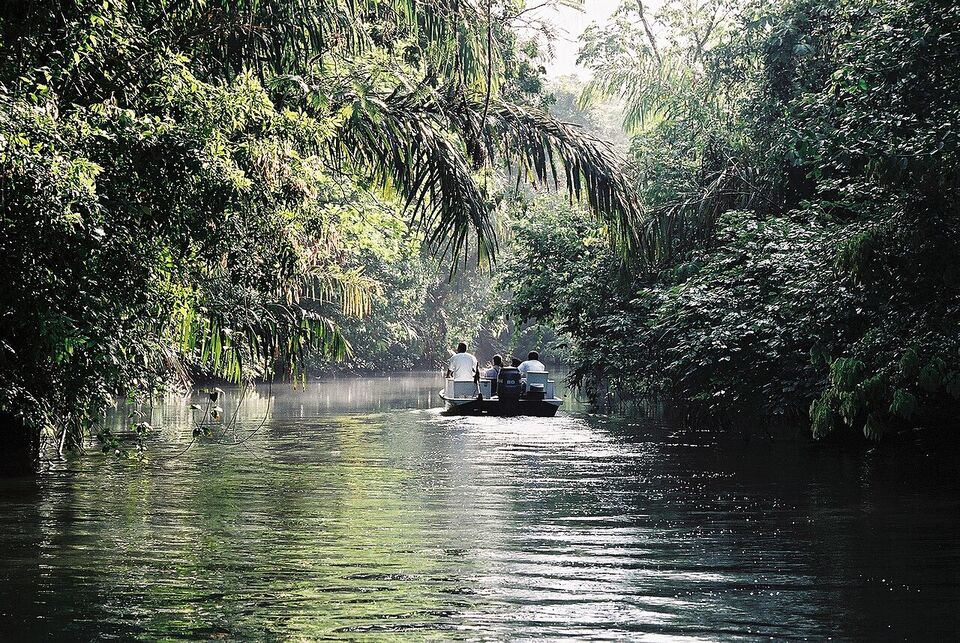
The main attraction is the water itself. Boats glide through narrow channels where trees meet overhead, and a good guide spots animals that are invisible to untrained eyes. Common sightings include howler, spider and white-faced monkeys, herons, kingfishers, green iguanas, basilisk lizards and caimans. Sloths and river otters appear less often. Early morning is best, because animals are active and the light is soft; by midday the heat and the boat traffic increase.
Ask whether your lodge uses paddled canoes, electric boats or motorboats. Quieter boats usually mean more wildlife, but any boat gets you close enough to see plenty. Binoculars help, and a guide's spotting scope is worth asking about. Our wildlife guide explains how to watch animals without disturbing them, and why you should never feed or touch them.
What the park costs and how to book it
Tortuguero National Park is one of the parks sold through SINAC's online reservation system (serviciosenlinea.sinac.go.cr). The booking menu lists two sectors: the canal sector and Cerro Tortuguero. For a foreign adult, secondary sources put the fee at about US$17, which is the US$15 base plus 13% sales tax; a 2026 guide gives US$5 for children aged 6 to 12 while another source uses 2 to 12, so confirm the age bands at checkout. Tickets are bought online, with a passport number for each visitor, and paid by card. SINAC says tickets are generally non-refundable. Use the official portal rather than a reseller, because look-alike sites exist.
A Costa Rica travel site notes that one park ticket covers both the early-morning canoe tour of the canals and the hiking trail, and that the canoe tour usually leaves around 6 a.m. Most visitors do the canoe trip first, eat breakfast and then walk the trail. Opening hours are not confirmed, with one source saying 6 a.m. to 6 p.m. and another 6 a.m. to 4 p.m., so ask your guide.
If you book a lodge package, ask whether the park fee is included. Some packages include it, and others add it as an extra. Also check whether your lodge arranges the SINAC booking or expects you to do it. For park rules across the country, see our national parks guide.
What a lodge package includes
Lodges around Tortuguero are generally set in forest along the canals and are reached only by boat. Packages vary, but they commonly include:
- Transfers between San José (or another pickup) and the lodge.
- Lodging, usually in rooms or cabins with private bathrooms, though simpler places exist.
- Three meals a day, often served buffet-style or family-style.
- Guided boat tours of the canals and a village walk.
- The turtle walk in season, sometimes with an added fee.
Park tickets, drinks, laundry, and the optional night activities may be extra, so read the listing. Ask about group size on boats: smaller boats with a naturalist guide see more and disturb less. Because lodging and meals are bundled, there is little to buy in the village, but a few small restaurants and shops are available.
We do not rank lodges. Instead, compare on these points: how far the lodge is from the village (closer means you can walk in; farther means more forest and quiet), whether boats are paddled or motorized on the canals, what the guides' credentials are, whether the rooms have fans or air conditioning, and the cancellation policy. Our where to stay guide explains how to compare lodges and what taxes to expect.
The village of Tortuguero
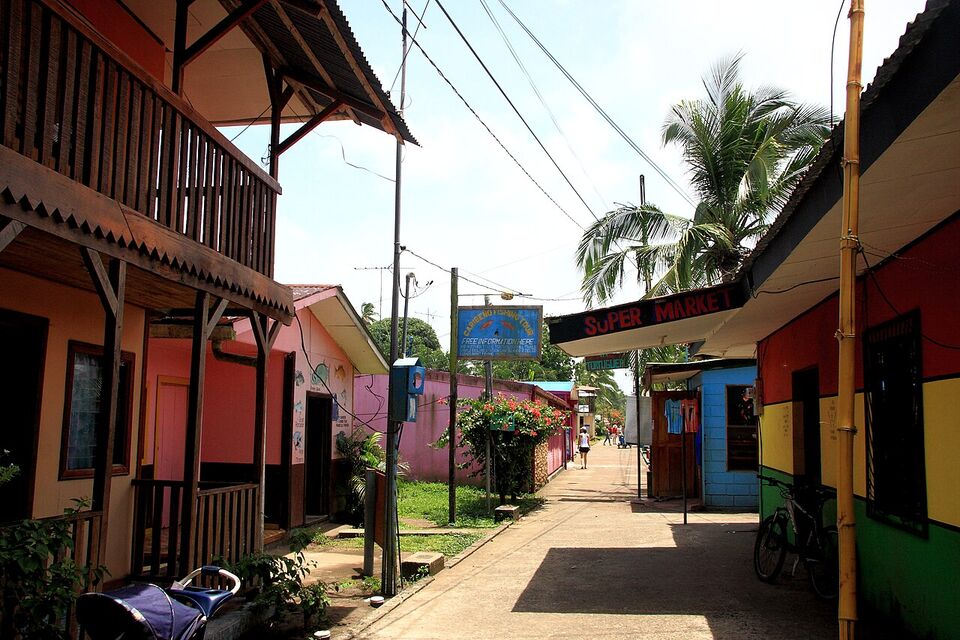
The village is a few narrow lanes between the canal and the sea, with small restaurants, souvenir shops, guesthouses and a church. The park entrance is in the north of the village, at the Cuatro Esquinas center. Day-to-day life centers on the water, and the beach is a short walk from the main street.
Visitors often take a walk through the village in the afternoon after the canal tour. Bring colones or small bills for small purchases, and support local guides, boat drivers and family businesses where you can. Tipping norms are not fixed, and tips are appreciated rather than required.
The sea here is rough, with strong currents. Do not swim at the beach in front of the village. Cell service is limited and Wi-Fi is slow or absent at many lodges, so tell family about your plans and download maps in advance.
What to bring
This is a wet, hot, humid place. Plan for rain at any time of year.
- A light, packable rain jacket or poncho and a dry bag or waterproof cover for your camera and phone. Lodges often lend ponchos or rubber boots; ask.
- Quick-dry, light-colored long sleeves and long pants for the boat and trails, to limit bites and sun.
- Insect repellent. Dengue exists in Costa Rica and there is no vaccine on the CDC's US list, so cover up at dawn and dusk.
- Sunscreen, a hat and sunglasses; the canals are open to the sky in places.
- Binoculars for birds and monkeys. They matter more than a long camera lens in the rain.
- Water shoes or sturdy sandals, plus closed shoes for the trail.
- A small flashlight for the lodge paths, but never on the nesting beach.
- Cash in small bills for the village and tips. Our packing guide has a full list.
On health, the CDC recommends malaria pills for travelers to Limón and Alajuela provinces, and Tortuguero is in Limón, so see a travel clinic well before you go. Avoid floodwater and muddy water after heavy rain because of leptospirosis. The tap water in much of Costa Rica is generally drinkable, but your lodge will tell you what to drink. See our health guide.
Who it suits and how many nights
We suggest two nights for most visitors. Day one is mostly travel, with a canal ride in the afternoon and perhaps a night walk. Day two gives you a full morning on the water and an afternoon in the village or on the trail. A third night is worth adding for dedicated birders and photographers, and for anyone who wants a slower pace or wants more than one chance at a turtle walk. One night is possible but tiring, because transfers eat most of the two days.
- Good for: wildlife watchers, couples, families with kids who can sit quietly for a few hours, travelers who want a break from beaches.
- Less good for: anyone with mobility issues (boat boarding and uneven docks), travelers who dislike rain, humidity or insects, and anyone who wants nightlife or a swimming beach.
Pair it with the Caribbean beaches by going from San José to Tortuguero first, then to Cahuita and Puerto Viejo. Our wildlife guide covers what you might see, and the by interest guide can help you match trips to travelers.
- Day 1
Travel and first canal ride
Leave San José in the morning for the boat dock. Arrive at your lodge by lunch, then take an afternoon boat ride on the canals.
- Day 2
Early canoe, trail and village
Take the park canoe tour around 6 a.m., breakfast, then walk the trail. Spend the afternoon in the village. If it is turtle season, join the guided night walk.
- Day 3 or onward
Return
Take the morning boat out and continue to San José or toward the southern Caribbean beaches.
Different from home
Most national parks in the US have roads and visitor centers. Tortuguero has neither: it is a roadless park accessed by water, and the guides, not you, set the pace. Treat it as a guided wildlife experience rather than a self-drive park.
Save money
Compare package prices with doing the bus and public boat yourself, but price your time and luggage too. Booking a lodge directly and asking about low-season rates can save more than shaving transport costs.
Practical details
Costa Rica is on UTC-6 all year with no daylight saving time, so Tortuguero is one hour behind New York in winter (roughly November to March) and two hours behind in summer, when the US is on daylight time. Mornings start early on the canals, and it is dark by about 5:30 to 6 p.m., so plan activities accordingly.
US dollars and cards are widely accepted in Costa Rica, but in a remote village do not rely on an ATM. Bring enough cash for tips, snacks and souvenirs. Restaurant bills usually carry 13% sales tax and a 10% service charge. The emergency number is 911, and medical care outside cities is limited, so the CDC recommends medical evacuation insurance. For the full national picture of money, see our money guide.
Add it to a route in the trip builder, or ask us to plan the hotels, transfers and guides for you.