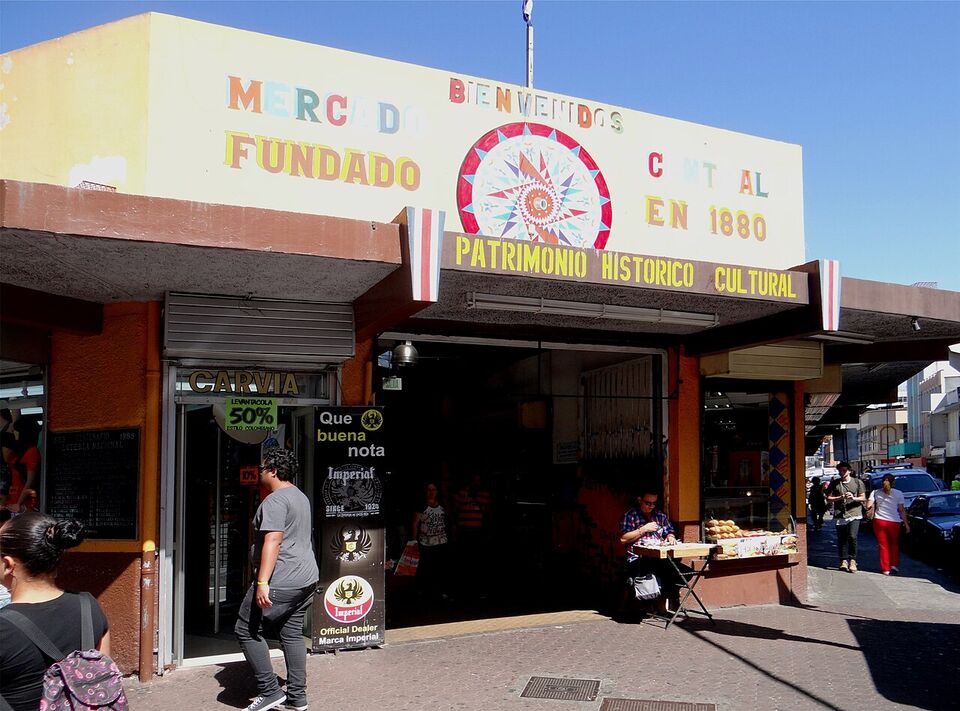
The short answer: dollars and colones
Costa Rica runs on two currencies in practice. The official one is the colón (plural colones, code CRC, written ₡), and the colón is what ticos use for bus fares, groceries and a plate of food at a neighborhood soda (a small, family-run restaurant). Tourist businesses, however, price in US dollars: hotels, tours, rental cars, private shuttles and park fees for foreigners. Both work almost everywhere visitors go, and you will usually pay in dollars for the big things and in colones for the small ones.
On this site, we convert at US$1 = ₡445. That sits between the central bank's reference buy and sell rates in November 2026: the Banco Central de Costa Rica (BCCR) reference rate on November 12 was ₡445.25 to buy and ₡450.09 to sell, and the Finance Ministry's feed, which mirrors it, showed ₡442.74 and ₡448.37 on November 13. Check the day's rate on the BCCR website before you budget closely. Your card will use its own rate on the day of each purchase.
For most trips the simplest plan is: bring a US debit card and a credit card with no foreign transaction fee, carry about US$100 to US$200 in small bills, and withdraw colones once or twice from a bank ATM on arrival. The details follow.
The colón has been strong, and it shows in prices
The dollar bought about ₡502 in the fall of 2025. In 2026 it fell steadily, and in September the Monex exchange market recorded a weighted average of ₡447.34, which Costa Rican press described as the colón's strongest level in about 20 years. In mid-November 2026 the reference rate was around ₡445 to ₡450, still near that low.
That matters for visitors because tourism businesses charge in dollars but pay wages, rent and suppliers in colones. When the colón gets stronger, their costs rise in dollar terms, and the Costa Rican Chamber of Hotels has said hotels and tour operators have raised dollar prices to cover the gap. In practice, a Costa Rica trip is often more expensive than first-time visitors expect, and prices in colones look cheap only if you remember the strong colón. Plan on prices closer to a US resort area than to the rest of Central America, then be pleasantly surprised at the soda.
A quick way to convert
At ₡445 to the dollar, each ₡1,000 is about US$2.25. A simple rule: take the thousands, double them and add a quarter.
- ₡5,000 is about US$11 (5 doubled is 10, plus a quarter is 11.25).
- ₡10,000 is about US$22.
- ₡20,000 is about US$45.
- ₡50,000 is about US$112.
- ₡100,000 is about US$225.
If you want exact numbers, our converters do the math, and the budget calculator shows both currencies side by side.
When to use dollars and when to use colones
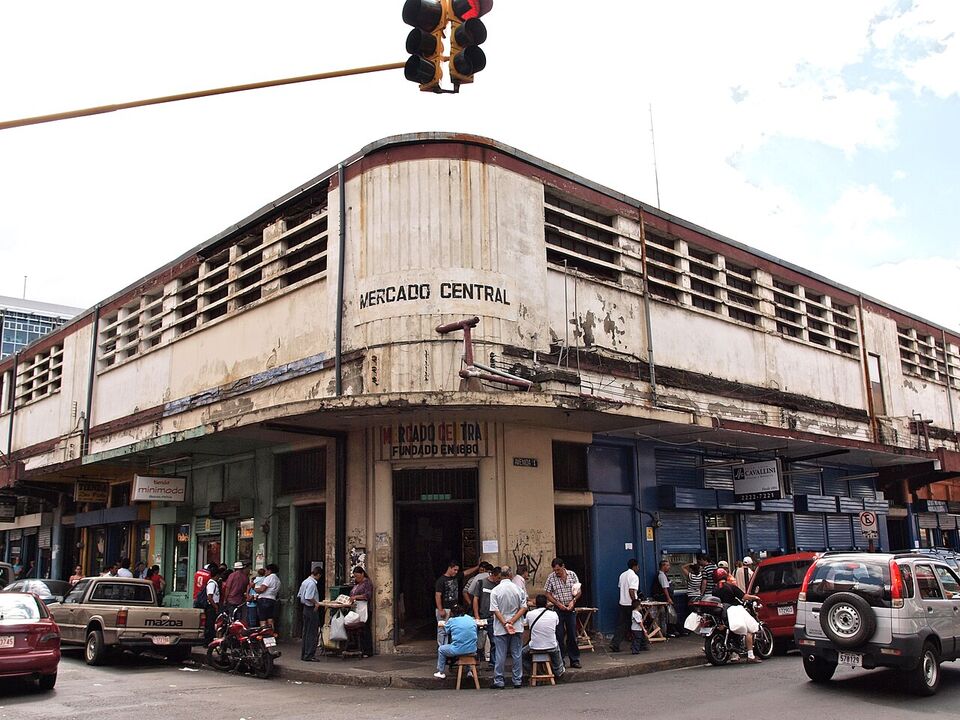
The rule that works almost everywhere: pay in the currency the price is written in. A hotel quote in dollars gets paid in dollars (or on a card). A bus fare posted in colones is paid in colones. When you hand over dollars for a colón price, the business converts at its own rate, and that rate is rarely as good as a bank's.
| Where | Usually priced in | Pay with |
|---|---|---|
| Hotels, lodges, vacation rentals | US dollars | Card, or dollars. Check whether the price includes taxes and service. |
| Tours, shuttles, domestic flights | US dollars | Card online, or dollars. Many operators bill in dollars. |
| Rental cars | US dollars | Credit card in the main driver's name |
| National park tickets for foreigners | US dollars | Card, online or at the entrance. Some parks and ranger stations still differ, so carry cash too. |
| Restaurants in tourist areas | Colones or dollars | Card, or either currency in cash |
| Sodas, bakeries, markets, fruit stands | Colones | Colones in cash |
| Public buses, local taxis | Colones | Colones in cash (some taxis accept dollars) |
| Groceries, pharmacies, gas stations | Colones | Card or colones |
The Costa Rica Tourism Board (ICT) says US dollars and major cards are widely accepted and ATMs are found throughout the country. You can usually get by on dollars alone in beach towns and at lodges, but you will pay a little more for the convenience, and you will rarely get a good deal when paying a local price in the wrong currency.
Cards: what works
Visa and Mastercard are the safest bet. American Express and Discover are accepted by fewer businesses, so carry a Visa or Mastercard as your main card and treat the others as a backup.
- Tell your bank you are traveling, if it asks you to. Some banks still decline foreign purchases without warning.
- Use a card with no foreign transaction fee. A fee of around 3 percent on every purchase adds up on a trip where lodging and tours are the biggest costs.
- If a terminal offers to charge your home currency, choose the local currency (colones, or US dollars if that is the posted price). Letting the machine convert can add a poor rate on top of your bank's.
- Carry two cards, stored separately, in case one is lost, blocked or swallowed by an ATM.
- Keep a card for the rental car. The deposit hold is usually US$1,000 to US$2,500 on a credit card in the driver's name, and debit cards are mostly not accepted. See our car rental guide.
National parks have been moving to card payments. Costa Rica Vibes, a travel site that updated its guide in October 2026, says parks that sell at the entrance now take cards only, and Irazú Volcano takes a card for the ticket and for ₡2,000 (about US$4.50) of parking. Many parks sell tickets only online through the national parks system (SINAC) and you show a QR code and your passport at the gate. The exception is Cahuita National Park: the Kelly Creek entrance in Cahuita town runs on donations, and cash works best. Our national parks guide explains the ticket system.
ATMs and changing money
ATMs are everywhere you would expect: in towns, banks, malls, supermarkets and gas stations. Some close at night; the ICT notes that certain machines go offline from 11 p.m. to 5 a.m. so do not plan to take out cash at midnight.
- Use ATMs inside banks and malls, in daylight when you can. A machine in a lobby or beside a guard is a safer choice than a machine on a dark street. Cover the keypad when you enter your PIN.
- Take out a larger amount less often. A fee is charged by your bank and may be charged by the Costa Rican bank. We could not confirm the local fees on an official page, so check your own bank's international ATM fees before you go, and consider an account that reimburses them.
- Some ATMs offer dollars as well as colones. The choice is on the screen at machines that have it, and availability varies by machine, so do not count on it. If your machine only offers colones, you can use them for the small things and for tipping.
- Change money only at banks and approved exchange offices. They ask for your original passport, not a copy. Skip anyone who approaches you on the street offering a rate.
At San José's Juan Santamaría airport (SJO), the airport website lists an exchange house with a 100 percent return guarantee, and you can reserve foreign currency online for pickup there. Changing a small amount on arrival to cover a taxi, a SIM card or a snack is convenient. Do not change your whole budget at the airport counter. Our entry guide covers the arrival steps and the US$29 departure tax, which is usually already in your ticket.
Insider tip
Count your change every time, including at banks and ATMs. When you pay a ₡1,500 (about US$3.40) bill with a ₡10,000 (about US$22) note, you should get ₡8,500 (about US$19) back. A short pause and a glance at the notes is normal and nobody will be offended.
Taxes and the service charge: reading a bill
Two additions catch Americans off guard. The first is the sales tax, IVA (impuesto al valor agregado), which is 13 percent. The second is a 10 percent service charge on restaurant bills. The ICT says restaurant and hotel bills carry the tax and a 10 percent tip, and that extra tips are optional.
On a restaurant bill you will usually see the food and drink total first, then separate lines for the tax and the service (servicio). For a meal that comes to ₡10,000 (about US$22) on the menu, a bill that adds both would look like this:
| Line | Amount | US$ |
|---|---|---|
| Food and drink (menu prices) | ₡10,000 | about US$22.50 |
| Sales tax (IVA), 13% | ₡1,300 | about US$2.90 |
| Service charge, 10% | ₡1,000 | about US$2.25 |
| Total to pay | ₡12,300 | about US$27.65 |
That example is an illustration of how the lines stack, not a quote from any restaurant. Menu prices in tourist areas are often shown before tax and service, and some menus say so in small print. If the menu does not say, ask whether prices include IVA and service ("¿Incluye impuestos y servicio?"). Budget about 23 percent on top of menu prices as a safe assumption.
For hotels, the tourism board lists the 13 percent sales tax. We found no separate hotel or tourist tax, but we also could not confirm whether quoted hotel rates include the 10 percent service charge, so check the line "taxes and service included" before you compare prices. Rental cars carry the 13 percent tax, and an airport pickup usually adds a surcharge of about 12 to 13 percent, according to one expat guide. National park and museum fees are quoted with or without tax depending on the park, which is why the final price at the ticket checkout can be about 13 percent above the number on a blog.
Different from home
In the US, the menu price is the price before tax and a tip is entirely your choice. In Costa Rica the 10 percent service charge is built into the bill, and the 13 percent tax is shown on the receipt. The result is a bill about 23 percent above the menu price, and the tip is mostly already paid.
Tipping
Because restaurants add a 10 percent service charge, tipping on top of that is optional. Leaving a few extra coins or a bill for exceptional service is appreciated but not expected. In a place that does not add the charge, such as a small soda or a café counter, it is normal to round up or leave a little change.
For guides, drivers and hotel staff we found no official guidance and no source for fixed amounts, so we give none. The general practice in Costa Rica's tourism industry is that tips are appreciated, not required, and many visitors give them in US dollars. Tip a guide or driver what you would for good service back home, and consider tipping in cash directly to the person rather than through a booking site. Keep a few small bills for this.
- Parking attendants. Informal attendants called guachimanes watch parked cars and expect ₡500 to ₡1,000 (about US$1 to US$2) when you return.
- Gas stations. Stations are full service: an attendant pumps the fuel. A small tip for a windshield wash is customary but not required.
- Taxis and ride-hailing. A tip is appreciated, not required. Rounding up the fare is plenty.
For more on manners and habits, see our etiquette guide.
What things cost
These are published or reported prices from official pages and news sources in 2026, converted at ₡445 to the dollar and rounded. Prices change, so use them to compare and plan, not to haggle. Where a business prices in US dollars, we show the dollar price.
| What | Local price | US$ | Notes |
|---|---|---|---|
| UberX, 3 km (2 miles) in central San José | ₡1,890 | about US$4 | Tico Times, October 2026 |
| Red licensed taxi, same trip | ₡3,655 | about US$8 | Same comparison |
| UberX, Alajuela to Poás Volcano | ₡10,590 | about US$24 | Red taxi on the same trip ₡26,686 (about US$60) |
| Commuter train, San José to Heredia | ₡550 | about US$1.25 | Monday to Friday; Incofer fare |
| Puntarenas to Paquera ferry, adult | ₡810 | about US$1.80 | Car ₡12,882 (about US$29); fares reported October 2026, may have changed |
| Route 27 tolls (four booths), car | ₡1,700 to ₡2,100 | about US$4 to US$5 | Card tap accepted |
| Regular gasoline, per liter | ₡807 | about US$1.81 | About US$6.85 per US gallon; RECOPE, from November 10, 2026 |
| Santa Elena Cloud Forest Reserve, self-guided adult | ₡10,000 | about US$22 | Official 2026 rate; 2027 rates not out yet |
| Gold Museum (Museos del Banco Central), foreign adult | ₡8,800 | about US$20 | Official site |
| National Museum, foreign adult | US$11 | US$11 | Costa Ricans pay ₡2,500 (about US$6) |
| Manuel Antonio National Park, foreign adult | US$18 | US$18 | Including tax; tickets online |
| Most volcano and rainforest parks, foreign adult | about US$15 to US$18 | US$15 to US$18 | The SINAC checkout shows the final price |
| Fiestas de Zapote, general admission (2025-26) | ₡17,000 | about US$38 | 2026-27 prices not out |
| Kölbi prepaid SIM | about ₡1,000 | about US$2 | Data bundles extra; see phones and data |
| Meal at a soda | about ₡2,200 to ₡4,500 | about US$5 to US$10 | Travel-cost blogs; a typical casado falls in this range |
| Dinner at a tourist restaurant | (dollars) | about US$20 to US$50 | Per person, before tax and service |
| Rental car with mandatory insurance | (dollars) | from roughly US$60 a day | High season; more for a 4x4. Liability cover alone is typically US$13 to US$25 a day |
Hotels are the largest line. In 2023 the tourism board's price monitoring showed average nightly rates of US$74 for one- and two-star hotels, US$125 for three-star, US$286 for four-star and US$370 for five-star. Those are averages from three years ago, and hotels have raised dollar prices since as the colón strengthened, so treat them as a floor. For daily trip budgets, travel-cost blogs suggest roughly US$45 to US$80 per person for backpackers, about US$90 to US$200 for mid-range travelers and US$275 to US$500 for a luxury trip. Those are estimates from commercial sources, not government figures, and your own mix of rental car, tours and hotels will move them either way. The where to stay guide and the trip planning guide show how to build a budget.
Save money
Sodas and the lunch special called a casado (rice, beans, a protein and a salad) are the best value in the country. If you eat your main meal at midday and keep dinner light, you can cut your food budget by a third without missing the local cooking. Our food guide explains what to order.
Small bills, change and cash habits
Large bills are hard to use. A US$100 bill is awkward at a bus window or a roadside fruit stand. Break big notes at a bank or hotel, and bring a stack of US$1, US$5 and US$10 bills for tips and small purchases.
- Know the rules at the window. The Puntarenas-Paquera ferry ticket office takes cash only, and a travel site reports it does not accept US$50 or US$100 bills. Tickets can be bought online ahead of time.
- Buses. One long-distance carrier is cash only, per a bus guide. Another takes colones or small US dollar bills, nothing over US$20. Carry colones for buses.
- Change usually comes back in colones. When you pay for a colón price in dollars, expect the change in colones. That is not a trick. It is how the transaction works, but do the math before you hand over the bill.
- Keep bills neat. Businesses may refuse torn, taped or heavily worn dollar bills, so check yours before you travel.
- Keep a small reserve of colones when you leave. You will not spend them at home, and exchanging them back costs a fee. Spend them at the airport or on the last day's snacks.
Scams and cautions
Most visitors never have a money problem. The State Department rates Costa Rica Level 2, "exercise increased caution", because of crime, and its advice applies to money too: keep valuables out of sight and out of parked cars, and do not resist an armed robber. We found no sourced list of common money scams, so we give only general advice:
- Keep cards and cash in separate places. Leave extra cash and the second card in the hotel safe.
- Watch the card. Keep your card in view when you pay and ask for the portable terminal at the table.
- Be wary of "helpers" at ATMs. Nobody should be standing close to you while you use a machine.
- Check bills and change. We found no reported counterfeit problem in our sources, but any country with a lot of cash has some fake notes. Look at your change in daylight.
- Be skeptical of too-good prices. A heavily discounted tour or "reservation fee" from a stranger is a warning sign. The national parks service warned in March 2026 about a fake website selling park tickets; use the official ticket portal at serviciosenlinea.sinac.go.cr.
- Use official taxis or a reputable app, and agree on the fare or use the meter before you set off. Uber is widely used but, as of mid-November 2026, no platform law has passed, so it sits in a legal gray area. Our safety guide and getting around guide explain your options.
Watch out
Never leave cash, cards, a passport or a phone visible in a parked car, even for a few minutes. The State Department names petty theft as the main crime risk, and one expat driving guide calls break-ins on parked cars a real concern in popular coastal and tourist areas.
A simple money plan
- Before you leave: tell your bank if needed, check ATM and foreign transaction fees, and pack a Visa or Mastercard plus a backup card.
- Bring about US$100 to US$200 in small bills for tips, snacks and emergencies.
- On arrival: withdraw ₡50,000 to ₡100,000 (about US$112 to US$225) from a bank or mall ATM, and keep it for buses, sodas, markets and taxis.
- Pay hotels, tours and shuttles in US dollars or by card.
- Pay locals in colones for local prices. Check the bill for 13 percent tax and 10 percent service.
- Count change. Keep cash in more than one place.
- Before you fly home: confirm that your US$29 departure tax is in your ticket, and spend your leftover colones.
With a card, a few small bills and a bank ATM, money in Costa Rica is simple. The rest is knowing that the price on a hotel quote in dollars and the price on a soda menu in colones live in two different worlds. Our FAQ answers more questions, and the phones and data guide covers the next thing most visitors sort out on arrival.
Add it to a route in the trip builder, or ask us to plan the hotels, transfers and guides for you.