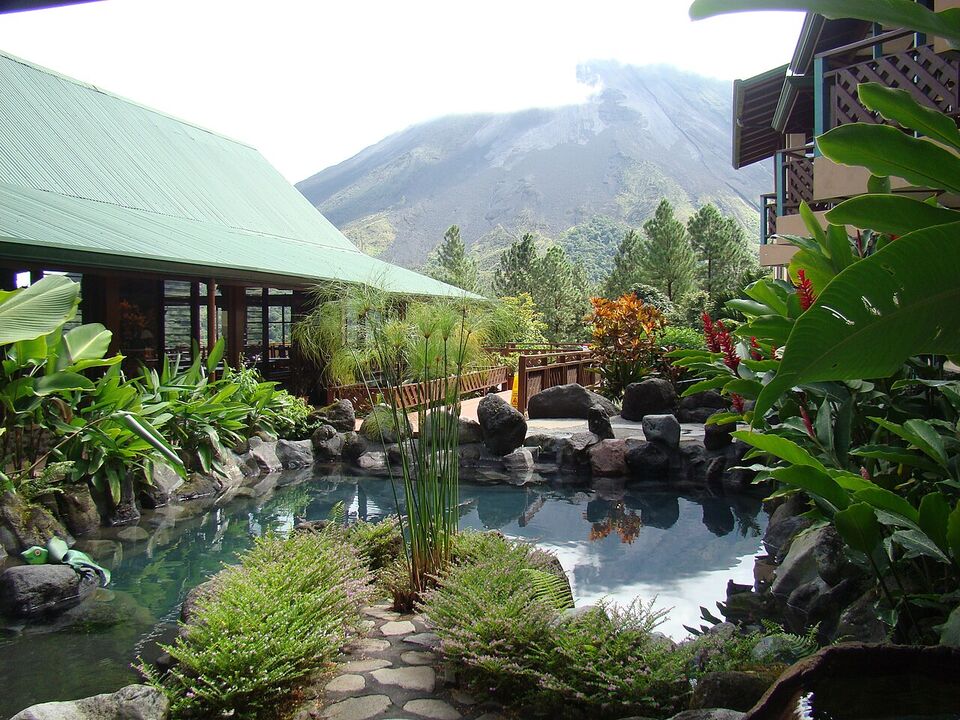
Overview: choose the region first, the room second
Costa Rica is a country where the place you sleep is often part of the experience. A cloud-forest lodge with no air conditioning, a rental house near a surf beach, a hot-springs resort at the foot of a volcano and a city hotel near the airport are all very different stays. The practical question is not "which hotel is best?" but "which kind of place suits this leg of the trip, and in which region?"
We do not rank hotels or name favorites. We do point out the type that tends to work for each situation, the trade-offs, and what to check before you book. Prices throughout are hedged: we could not confirm current rates from hotel websites, so the figures below are ranges from travel-cost blogs and recent news. Use them to set expectations, then compare live quotes.
Most visitors use two or three bases, because distances are longer than they look on a map and roads are slow. Our getting around guide and regions guide explain the layout, and the trip planning guide shows how to combine regions in a trip.
Types of places to stay
These are the main categories. The price tiers use the site's scale for a double room: $ under US$120 a night, $$ US$120 to US$300, $$$ over US$300. Treat the tiers as broad guides, since rates swing with season and location.
| Type | Good for | Typical tier | What to expect |
|---|---|---|---|
| City and business hotels | Arrival and departure nights, San José and the Central Valley | $ $$ | Air conditioning is common; breakfast is often included; traffic noise in the capital |
| Eco-lodges and rainforest lodges | Wildlife, quiet, guided walks, remote areas | $$ $$$ | Humidity, insects, wildlife noise; some have fans only; meals and tours are often bundled |
| Beach hotels and boutique hotels | Couples and small groups who want a beach base | $ to $$$ | Wide range of quality; check distance to the beach and noise from bars |
| Resorts and all-inclusives | Families and groups who want everything in one place | $$ $$$ | Concentrated in Guanacaste; meals, drinks and activities included but trips off-site cost extra |
| Vacation rentals | Families, longer stays, groups who want a kitchen | $ to $$$ | More space and privacy; you manage check-in, cleaning, security and sometimes water and Wi-Fi |
| Hostels | Solo travelers, budget travelers, surfers | $ | Dorm beds and private rooms; shared kitchens; good for meeting people |
| Small guesthouses and family-run cabinas | Budget stays, local flavor, small towns | $ | Simple rooms; owners are often a good source of advice; confirm air conditioning and hot water |
Hotels and boutique stays
Standard hotels range from basic to polished. In the capital and the Central Valley they are mostly practical places to sleep near the airport or a tour pickup. On the beaches, the line between a hotel and a lodge blurs: a place may sit in forest above a beach with a pool, a restaurant and a few dozen rooms. Look at the photos of the room, not just the lobby, and read how recent the reviews are.
Eco-lodges
"Eco-lodge" has no single definition in Costa Rica. At best, it means a property built to blend into its surroundings, with trails, naturalist guides and a low footprint. At worst, it is a label. Ask about specifics: does it have guided walks, what is the water and energy approach, are staff local, and what are the rooms actually like. Remote lodges often include meals because there is nowhere else to eat.
Resorts and all-inclusives
Large all-inclusive resorts are mostly in Guanacaste on the north Pacific. A new example is the JW Marriott Costa Elena Resort and Spa at Playa El Jobo in La Cruz, which the Tico Times reported opened in October 2026 with 415 rooms and advertised rates starting at about US$900 per person per night for double occupancy. That is at the very top of the market. Nekajui, a Ritz-Carlton Reserve, opened on the Papagayo Peninsula in 2025 and is luxury but not all-inclusive. Confirm each resort's current board plan on its own website, because all-inclusive status and policies change.
Vacation rentals
Rentals are a good choice for families and longer stays: more space, a kitchen, and often a pool. The trade-offs are service and security. The State Department advises checking locks at short-term rentals because of reported robberies. See the safety checklist below.
Hostels and guesthouses
Hostels are widely available in the beach and backpacker towns. A blog figure puts dorm beds at roughly US$12 to US$20 a night. Small family guesthouses can be excellent value and a good source of local advice. Confirm whether the bathroom is private and whether there is hot water, since cold showers are common in simple places and not always a problem in a warm climate.
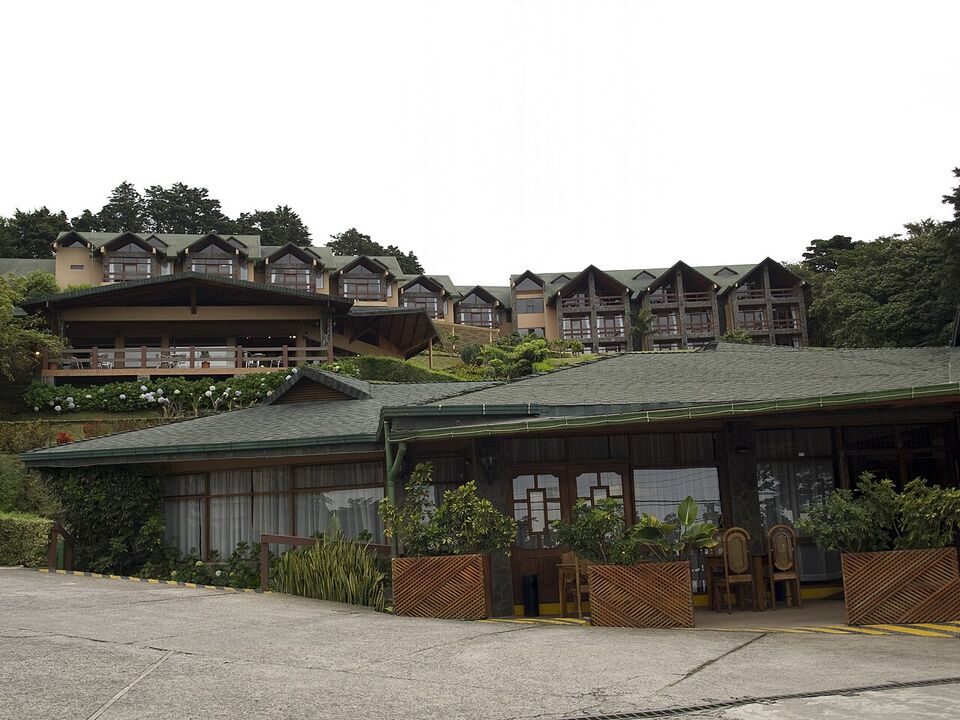
Where to stay by region
This table shows the usual bases. It is a guide to how each region works, not a list of properties. Follow the links for more on each area.
| Region | Common bases | Best lodging types | Planning notes |
|---|---|---|---|
| San José and Central Valley | San José, Alajuela (near SJO), Heredia, Cartago | City hotels, B&Bs, boutique stays | Good for arrival nights. Airport is about 12 miles (20 km) northwest of downtown, in Alajuela province. |
| Arenal and La Fortuna | La Fortuna town, near the volcano, hot-springs resorts | Hotels, resorts with springs, rentals | About 2.5 hours from San José by average drive times. Hot-springs resorts often require advance booking. |
| Monteverde | Santa Elena, Monteverde, cloud-forest edge | Lodges, small hotels, hostels | Cool and damp. The last part of the road is steep and winding; a 4x4 is advised by one source. |
| Guanacaste | Tamarindo, Papagayo, Playa Hermosa, Flamingo, Liberia | Resorts, all-inclusives, beach hotels, rentals | Closest to Liberia airport (LIR), which operates 6 a.m. to 9 p.m. Dry-season water may be tight (see below). |
| Nicoya Peninsula | Nosara, Sámara, Santa Teresa, Montezuma | Surf camps, rentals, boutique hotels | Long, partly unpaved access roads. Ferry and road options; check schedules. |
| Manuel Antonio | Quepos, the road to the park | Hotels on the hill, rentals, small lodges | The park is closed Tuesdays and sells timed tickets online; stay close if you want an early entry. |
| Uvita and Dominical | Uvita, Ojochal, Dominical | Eco-lodges, rentals, small hotels | Marino Ballena National Park is nearby; its Piñuela sector closed on November 9, 2026 for about six months, and the other sectors stay open (check SINAC). |
| Osa Peninsula | Drake Bay, Puerto Jiménez, Carate | Remote lodges, often with meals and tours | Corcovado requires a certified guide for every visitor; lodges often arrange it. |
| Caribbean coast | Cahuita, Puerto Viejo, Manzanillo | Cabins, small hotels, hostels, rentals | Mostly $ and $$; humid, wetter and quieter. See also Tortuguero for lodge packages. |
For hotel recommendations in a specific town, see the destination guide. The right base also depends on how you travel. If you drive, a lodge outside a town is easier. Without a car, stay in a walkable center or on a shuttle route.
What things cost, and how seasons change them
We could not confirm hotel rates from official or hotel sources, so what follows is indicative. Two travel-cost blogs give a rough picture. One puts mid-range hotels at about US$50-110 a night and dorm beds at US$12-20. Another puts mid-range lodging at roughly US$80-200 a night and luxury resorts at US$250-600 or more, and says that green-season rates can run 20 to 40 percent lower. These figures are for the traveler's budget, not a quote: the same room can double between low and peak season, and it will cost more near a popular park or beach.
- Peak season: December to April (the dry season on the Pacific), plus the weeks around Christmas, New Year and Easter. Rates are highest and rooms sell out first.
- Shoulder: May, June, November. Fewer crowds, some rain, and often better rates.
- Green season: roughly May to November, with September and October the wettest on the Pacific side. Rates are lowest, and many places discount. On the Caribbean coast the pattern differs; see our when to go guide.
Holiday dates are fixed in Costa Rica and do not move to Mondays. In the coming months those include Tuesday, December 1 and Friday, December 25, 2026, and Good Friday on March 26, 2027 (Easter is March 28, 2027). Our festivals guide lists events that fill rooms.
Save money
Green-season travel is the single biggest saving, and mornings are often clear. Another is to book a mix: a splurge night at a lodge for the experience, and simpler rooms elsewhere. Ask directly for a discount for longer stays.
Taxes, fees and what the quote includes
Costa Rica charges a 13% sales tax (IVA). Restaurant bills usually add that tax plus a 10% service charge. Whether a hotel's quoted rate already includes the tax, or a service charge, depends on the property and the booking site. We found no separate national tourist or hotel tax in our research, but that is not the same as confirming there is none. The reliable approach is to ask for the total price, in writing, before you pay.
- Does the price include 13% sales tax?
- Is there a service charge, resort fee or cleaning fee?
- Is breakfast included, and are meals bundled?
- Is the price per room or per person? (All-inclusive rates are often per person.)
- Which currency is it charged in? Tourist businesses price in US dollars.
- Are there extra charges for air conditioning, parking or tours?
Pay by credit card where you can, and check what currency your bank charges you in. Our money guide covers cards and cash.
When to book and how cancellation rules work
For the dry season and holiday weeks, book early. Popular small lodges and rentals can sell out months ahead, and the best-located rooms go first. For the green season you can book later, but remote lodges still fill with tour groups. If a particular park or tour is the reason for your trip, book that first. Timed park tickets, such as Manuel Antonio, sell out in high season, and the park is closed on Tuesdays. Sort out your tickets and your room together.
Cancellation rules vary widely, and some are stricter in peak season. As an example from the booking rules we saw, one hot-springs resort charges the card 15 days before arrival, and 45 days before for December 18 to January 8 and Easter week. Others require a deposit or full prepayment. Read the policy before you pay and ask:
- What is the deadline for a free change or cancellation?
- Is the deposit refundable, or only transferable?
- What happens if the road, park or tour is closed for weather or safety?
- Is travel insurance needed, and does it cover cancellation for your reason?
Park tickets themselves are generally non-refundable through SINAC, with exceptions when a park closes, so do not assume a refund. Leave a buffer around flights and consider flexible rates for the first nights.
Staying in the rainforest: humidity, insects and noise
Rainforest and cloud-forest lodges are a highlight, but they are not hotel rooms. Know what you are signing up for.
- Humidity: clothes and towels dry slowly. Pack quick-dry clothing and a few zip bags for electronics. Mold and damp smells are normal in wet places.
- No air conditioning, sometimes: higher-elevation lodges and simple rainforest cabins may have no AC. Ceiling fans, open-air design and mosquito nets replace it. If you need AC to sleep, check before booking.
- Insects: geckos, ants and mosquitoes are part of the setting. Keep food sealed, shake out shoes, and use repellent. Dengue occurs in Costa Rica and there is no vaccine on the CDC's US list, so cover up at dawn and dusk. The CDC also recommends malaria pills for travelers to Limón and Alajuela provinces.
- Noise and wildlife: howler monkeys at dawn, frogs, insects and rain on a tin roof are loud. Bring earplugs if you are a light sleeper. Do not feed wild animals, which is illegal.
- Water and power: remote lodges may have limited hot water, solar power or intermittent Wi-Fi. Outlets are 110 V with US plugs, so chargers work.
- Leptospirosis: avoid floodwater and muddy water after heavy rain, per the CDC.
Different from home
Do not expect the climate control and consistent hot water of a US hotel in remote places. A good lodge will tell you plainly what the room offers. If it does not, ask.
Water, power and El Niño in the dry season
Costa Rica's national emergency commission raised its alert to red on October 22, 2026, for an intense El Niño. The water utility said more than 306,000 people could have trouble getting drinking water, about 48 percent of them in Guanacaste, according to the Tico Times on November 12. A June 2026 Tico Times report said hotels and rentals may feel water schedules in the north Pacific, with tanker trucks used in some areas.
For visitors that means: if you plan a dry-season stay in Guanacaste or the central Pacific, ask hotels and rental owners about water supply, pool filling, laundry and any rationing, and be ready to use less. Wildfire risk is also higher in a dry year. We did not find a forecast of nationwide power rationing, though higher bills were possible. Read our Guanacaste guide for beach areas.
Safety checks for rentals and rooms
Whatever you book, run through a few checks. They matter more at rentals and remote places, where there is no front desk.
- Check that doors and windows lock, and that you have all the keys or codes. Report problems immediately.
- Ask about safes, gates and lighting. Keep valuables out of sight, and never leave belongings visible in a parked car.
- Be wary of listings with no reviews, prices that seem too good, requests to pay outside the booking platform, or owners who refuse to talk by phone before booking.
- Confirm an address and a contact number, and note the nearest clinic and the local emergency number, 911.
- Look for smoke detectors, a working stove and a clear route out. Ask about pool fencing if you have kids.
- Know who to call for hot water, Wi-Fi or water problems, and check that the owner is reachable.
The State Department advises increased caution in Costa Rica due to crime (Level 2), and mentions robberies at short-term rentals. Our safety guide and Is Costa Rica safe? cover the wider picture.
Location tips
- Sleep near your morning plan. Parks open early and timed tickets reward punctuality. If you have a 7 a.m. tour, staying close saves a stressful drive.
- Do not trust the map for time. Mountain and coastal roads are slow. Average drive times from San José are about 2.5 hours to Arenal, 3 hours to Manuel Antonio and 4.5 hours to Puerto Viejo, and these are best cases. See our driving guide.
- Near the airport for early flights. For a flight at dawn, sleep in Alajuela or San José the night before. San José's airport has a terminal expansion underway, so arrive early.
- Beachfront versus beach-adjacent. "Ocean view" can mean a distant sliver. Check the walking distance and whether you must cross a road with no sidewalk.
- Noise. Rooms above bars in beach towns can be loud. Ask for a quiet room and read recent reviews.
- Walkability at night. If you will eat in town, check whether you can safely walk back in the dark or need a taxi.
Add it to a route in the trip builder, or ask us to plan the hotels, transfers and guides for you.