Overview: familiar side of the road, unfamiliar roads
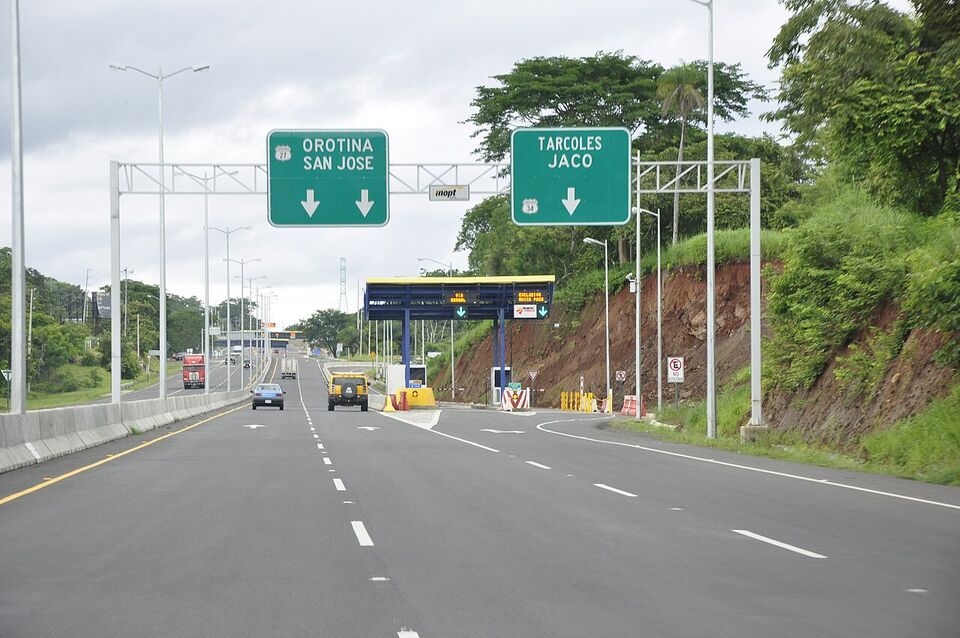
Americans can drive in Costa Rica on a US license, and cars drive on the right as at home. The surprises are the roads themselves: potholes, one-lane bridges, steep mountain curves, unmarked speed bumps, dirt roads that turn to mud in the rain, and signs that give distances and speeds in kilometers. Allow more time than the map suggests (drive times in our guides are averages, and rain, roadworks and slow trucks can add an hour), and drive in daylight.
This page covers the rules and the reality: licenses, speed limits and fines, the plate-number restriction in San José, bridges and river crossings, fuel, tolls, parking and theft, police stops, accidents, and 4x4 myths. If you have not yet decided whether to rent, start with getting around Costa Rica; for contracts, deposits and insurance, read our car rental guide.
Different from home
Speed limits are in kilometers per hour, distances on signs are in kilometers, and fuel is sold by the liter. A 100 km/h limit is about 62 mph. Phone, GPS and rental-car dashboards often show both units, so check which one you are reading.
Licenses and documents
Tourists can drive with a valid license from home. No International Driving Permit (IDP) is required. Carry the original license (not a photocopy) and your passport open to the page with the entry stamp, because officers check the stamp against your right to drive. Costa Rica also accepts a digital driver's license if your state issues one, according to a 2026 expat guide.
How long the license stays valid is the part where sources disagree. Most sources, including two guides updated in 2026, say a foreign license is valid for the number of days on your entry stamp, up to 180. A news summary that cites the tourism board says three months. Immigration officers decide how many days to stamp, and 180 days is a ceiling, not a promise (see entry requirements). If you plan a long stay, ask your rental company what it accepts. Your right to drive follows your stamp, so once the stamped days run out, so does the validity of your foreign license.
Rental companies add their own conditions: many require that you have held your license for at least one or two years, that the main driver is 21 or older (some set 23, a few accept 18 to 20 with a surcharge), and that the main driver has a credit card for the deposit hold. Details are in the rental guide.
What to carry in the car
- Original driver's license and passport open to the entry stamp (keep the passport safe when you park; a photocopy of the stamp page as a backup is sensible).
- Rental agreement and proof of insurance.
- The rental company's 24-hour number and the INS accident line, 800-800-8000, saved in your phone.
- Reflective triangles and a fire extinguisher, which vehicles must carry; check that your rental has them.
Speed limits, cameras and the main rules
Typical limits are 40 km/h (25 mph) in towns, 25 km/h (15 mph) in school zones, 60 to 80 km/h (37 to 50 mph) on secondary roads, and 90 to 100 km/h (56 to 62 mph) on main highways. Posted signs override these general figures. Radar checks by traffic police are common, and driving faster than 120 km/h (75 mph) is a criminal matter on top of the fine. We could not find a current official list of fixed speed-camera locations, so assume that speed is monitored by both police radar and cameras, and that tickets for rental cars reach you through the rental company.
Other rules that matter:
- Seat belts are required for the driver and all passengers.
- Phones may be used only hands-free.
- Children under 12 who are shorter than 1.45 m (about 4 ft 9 in) need a car seat or booster. A 2026 expat guide adds that children under 12 must ride in the back seat.
- Alcohol: the blood alcohol limit is 0.05% for private drivers and 0.00% for novice and professional drivers. Treat this as zero tolerance and do not drink and drive.
- Headlights: one guide says to use them from 6 p.m. to 6 a.m. Turning them on whenever visibility drops is a good habit.
- Overtaking on curves, solid lines or bridges is among the most heavily fined offenses.
Fines
Costa Rica fines drivers in five classes, adjusted each January. The 2026 amounts below come from a driving guide that lists them; the US$ column is recalculated at US$1 = ₡445 (the guide's own US$ figures use an older exchange rate).
| Class | Fine | US$ (approx.) | Examples |
|---|---|---|---|
| A | ₡362,839 | US$815 | Drunk driving, over 120 km/h, overtaking on curves or bridges |
| B | ₡245,195 | US$551 | No child seat, red light or stop sign, 40+ km/h over the limit |
| C | ₡122,598 | US$276 | Phone without hands-free, no seat belt, 30+ km/h over the limit |
| D | ₡60,680 | US$136 | Ignoring signs or an officer's instructions, wrong use of roundabouts |
| E | ₡26,006 | US$58 | Missing documents, skipping a toll |
Confirm current amounts on the official pages of the transport ministry (MOPT) and the road-safety council (COSEVI). The amounts above come from 2026 driving guides, so check these official pages before you travel.
San José plate restriction
San José restricts which cars may enter parts of the city on weekdays, based on the last digit of the license plate. The restriction is aimed at traffic, and rental cars may be covered. We could not confirm the current hours and the digit-by-day schedule, which have changed over the years, so do not rely on an old blog. Ask your rental company at pickup whether your plate is restricted on the days you will be in the capital, and check MOPT before you drive into the center. The easiest way to avoid the issue is to leave a rental car at the hotel and use a taxi or app for city sightseeing; see our San José guide.
Traffic is heavy in the Central Valley even without the restriction. A 2026 expat guide puts rush hours at about 5 to 8 a.m. and 3 to 6 p.m. Leave the capital outside those windows if you can.
One-lane bridges, river crossings and rural roads
One-lane bridges
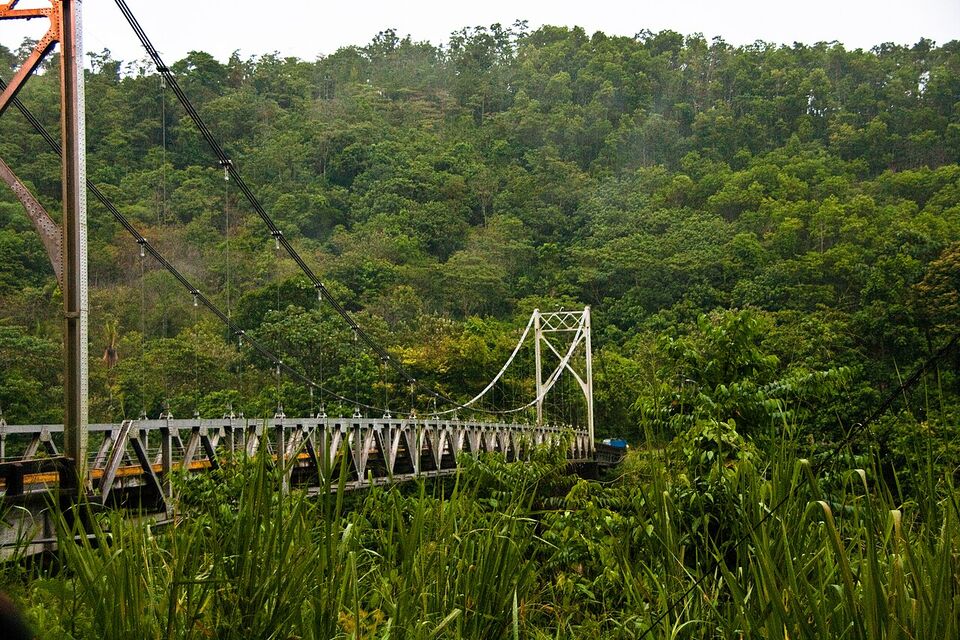
Outside the Central Valley, many bridges have a single lane shared by both directions. A ceda el paso (yield) sign on your side means oncoming traffic goes first, so stop and wait. If there is no sign on your side, you generally have the right of way, but proceed carefully and look for oncoming vehicles. Drivers sometimes flash their lights to wave you on, but do not rely on a signal alone: make sure the bridge is clear before you move.
River crossings
Some roads to beaches and lodges cross streams with no bridge. Driving a rental car through a river voids all insurance, including the mandatory liability cover, according to a 2026 guide, and rental companies prohibit it. In the rainy season (roughly May to November), a shallow ford can become dangerous within an hour. If your lodge says the access road crosses a river, ask whether they provide a transfer, and do not attempt a crossing you cannot see the bottom of.
Gravel and dirt roads
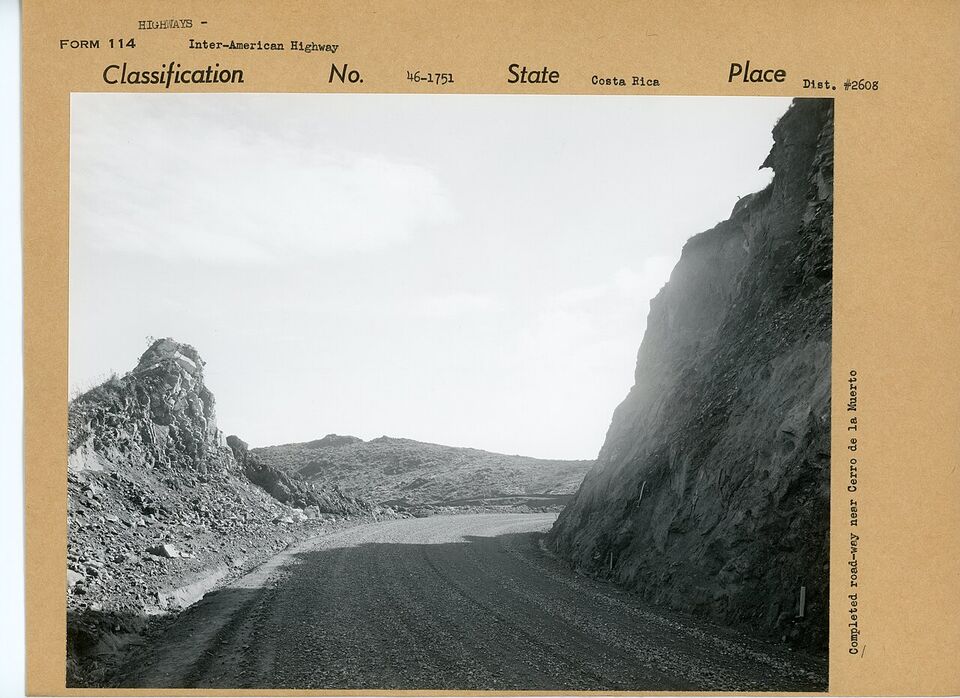
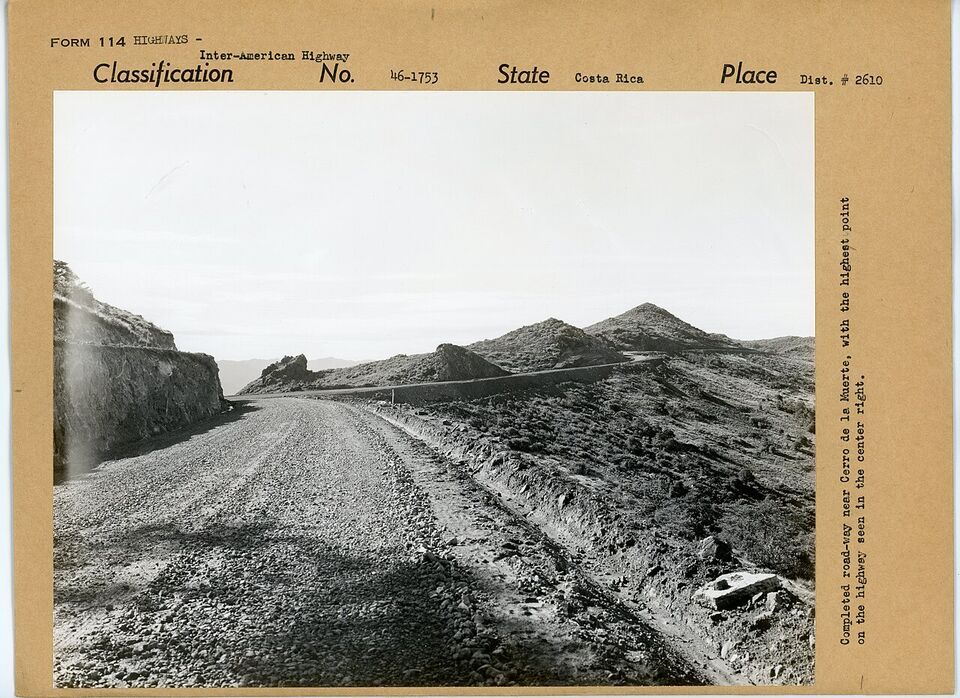
Roads to the Osa Peninsula, remote beaches and some mountain lodges can be gravel with potholes. Slow down, keep a safe distance from the car ahead (dust and flying stones), and expect washboard surfaces. Speed bumps, called reductores, are common in towns and some are unmarked, so slow down when you approach any settlement.
Watch out
Rural roads often have no shoulders, no lane markings and no lights. Pedestrians, cyclists, dogs, horses and cattle appear around blind curves, especially at dawn and dusk. Motorcycles weave between lanes and pass on both sides. Costa Rica recorded 46,949 accidents under its mandatory vehicle insurance in 2025, and motorcyclists made up 64% of the injured, so check mirrors before every move.
Night driving
Avoid it where you can. The sun sets between roughly 5 and 6:15 p.m. year-round, because Costa Rica sits near the equator and has no daylight saving time (UTC-6 all year). After dark, mountain roads lack guardrails and lights, potholes are hard to see, and the weather can change quickly, particularly around Monteverde. Plan long drives so you arrive before 4:30 or 5 p.m., and build in extra time for rain. If you land at night, consider a hotel near the airport or a private transfer rather than a first-night drive to a remote lodge.
Navigation
Waze is widely used in Costa Rica and handles closures and slowdowns well. Google Maps works too but can send you down rough back roads. Download offline maps as a backup, since cell coverage drops in the mountains. Some rental companies rent a Wi-Fi hotspot for the car, or you can use an eSIM or a local SIM; see our phones and data guide.
Check conditions before long drives. MOPT and local news report closures from landslides and bridge work, and the weather agency reports heavy rain. Forecasts issued in June 2026 for the 2026 El Niño called for a much drier north Pacific and a wetter-than-usual Caribbean and north, so ask your hotel about conditions on the roads you plan to take.
Fuel
All gas stations are full service: an attendant pumps the fuel. Say lleno, por favor (full, please), or ask for a set amount in colones. Check that the pump display shows zero before the attendant begins, and watch the total. A small tip for a windshield wash is customary but not required.
Fuel prices are set by regulation. From November 10, 2026, the state refiner RECOPE's price table lists Super at ₡805 per liter (about US$1.81), Regular (Plus 91) at ₡807 (about US$1.81) and diesel at ₡807 (about US$1.81), or about US$6.85 per US gallon. That is considerably higher than prices in most of the United States. Prices change, so check RECOPE's price table. Most rental cars take regular or Super; check the label inside the fuel door, and make sure whether the car runs on diesel.
Major stations accept credit cards, but small rural stations may take only cash in colones. In remote regions such as the Osa Peninsula and around Monteverde, fill up before you leave a big town, and keep the tank above half. Return the car with a full tank unless your contract says otherwise.
Tolls
Most roads are free. Route 27 (the road from San José to the Pacific coast) has four toll booths, at Escazú, San Rafael, Atenas and Pozón. The total for a car is roughly ₡1,700 to ₡2,100 (about US$4 to US$5), and the booths accept a card tap. Smaller tolls on Routes 1 and 32 cost ₡75 to ₡500 (under US$1.20) and take cash only, so keep some small colón coins and bills. A QuickPass transponder is available for frequent users. Skipping a toll is a class E fine.
On some weekend afternoons, authorities reverse lanes on Route 27 to speed the flow into San José. Weekend beach traffic on Route 27 can add an hour or more, so leave the coast early on Sunday. See Manuel Antonio for the road in context.
Parking and theft from cars
Break-ins are the most common car problem for visitors, especially at beaches, trailheads and in tourist towns. The U.S. State Department rates Costa Rica at Level 2, "exercise increased caution," because of crime, with petty theft the main threat. Its advice includes keeping valuables out of sight and checking that your car is locked, since electronic jammers can block key-fob locking (see our safety page).
- Leave nothing visible in the car. Load and unload luggage at your hotel, not in a roadside or trailhead lot where someone may be watching.
- Park in lit, attended lots at hotels, restaurants and parks when possible.
- Informal parking attendants, called guachimanes, watch cars on the street for a small tip when you return, usually ₡500 to ₡1,000 (about US$1 to US$2).
- Do not leave your passport in the car. Take it with you or lock it in the hotel safe, and carry a copy.
- Do not park where signs forbid it. Police issue fines and can remove license plates for parking violations.
If your car is broken into, call 911, report it to the rental company and get a written police report for the insurance claim.
Police stops and traffic tickets
Traffic police (Tránsito) run checkpoints on highways and near beach towns. When waved over, pull off safely, stay in the car and hand over your license, passport and rental papers. Drivers often flash their hazard lights to warn of a checkpoint ahead.
Officers do not collect fines on the spot. A legitimate stop ends with a written ticket (boleta), which you pay at a bank or online. If you are asked for cash, ask for the ticket, note the officer's name and badge number, and report the request; offering a bribe is a crime. If a ticket arrives after you leave, the rental company will usually pay it and charge your card, often with an administrative fee.
Accidents and the INS process
Insurance claims in Costa Rica depend on the scene being documented by the authorities, so the usual rule is the opposite of home: do not move the cars unless they create an immediate danger. Follow these steps in order:
- Check for injuries and call 911. Do not move anyone who is seriously hurt.
- Leave the vehicles where they are, switch on the hazard lights and set out your triangles.
- Call the INS accident line, 800-800-8000 (INS is the state insurer), and the rental company's 24-hour number. An insurance inspector usually comes to the scene.
- Wait for the traffic police and get a copy of the report or its reference number.
- Photograph the cars, plates, the road and the surroundings, and note the other driver's name, ID number, phone and insurance.
- Do not admit fault, sign something you do not understand or accept a cash settlement at the scene.
Save 911, the INS line and your rental company's number before you start driving. If you hit an animal or anything else, stop and follow the same steps. For medical care after a crash, see our health guide.
4x4 myths
- Myth: you need a 4x4 everywhere. The main routes between San José, La Fortuna, the Pacific beaches and Liberia are paved. A regular car handles most tourist itineraries, though some stretches, such as the approach to Monteverde, are rough.
- Myth: a 4x4 is safe for rivers. It is not. Rental insurance does not cover crossings, and a 4x4 can still stall or float.
- Reality: higher clearance helps. Remote beaches near Uvita, the Osa Peninsula and some Guanacaste roads can be rough, particularly from May to November. If your lodge's directions mention gravel, hills or a stream, a high-clearance vehicle or a transfer is the sensible choice.
- Reality: more car costs more. A 4x4 raises the daily rate and the insurance cost. Compare it with a lodge transfer for the one leg that needs it.
For help choosing a vehicle for your route, see the rental guide.
Insider tip
Plan fewer driving hours than you think. Three or four hours of actual driving is a full day once you add stops, rain and slow trucks. Put the longest drive on the morning of a travel day and arrive before dark.
Add it to a route in the trip builder, or ask us to plan the hotels, transfers and guides for you.