
Overview: the price you see is not the price you pay
Renting a car in Costa Rica can be a good value and gives you the freedom to reach places buses and shuttles miss. The catch is the pricing. A web quote that says US$10 a day may become US$50 a day at the counter, because Costa Rican law requires third-party liability insurance on every rental, and many websites leave it out. The sections below explain what the mandatory insurance is, what a credit card can and cannot replace, which fees to expect, and how to inspect the car before you drive away.
First decide whether you need a car at all. A rental suits a trip with three or more stops, a family, or places that shuttles skip. Shuttles or a private driver can be cheaper for a short trip or two people; see our getting around guide. The rules of the road, fines and what to do after an accident are in our driving guide.
Watch out
If a quote looks far cheaper than every other, it almost certainly leaves out the mandatory insurance. Costa Rica's rental association has complained that many online booking sites rarely include it. Ask any company for the total with all required insurance and taxes, in writing, before you book.
The insurance that surprises everyone
Mandatory third-party liability
Every rental needs third-party liability insurance. It pays for injuries and damage you cause to other people and their property, not damage to your rental car. It is required by Costa Rican law, and it cannot be replaced by your US auto policy, your travel insurance or your credit card. You may see it called third-party liability (TPL), liability protection (LP), supplemental liability insurance (SLI) or similar. A 2026 guide from a Costa Rica travel agency puts the price at typically US$13-25 per day, with larger vehicles costing more. Other guides give somewhat lower ranges (about US$10-20), so compare actual quotes.
One guide describes the mandatory liability cover as coming from the state insurer, Instituto Nacional de Seguros (INS). To check the current legal requirement, look at the insurer's own site, ins-cr.com, and the insurance regulator's site, SUGESE. The practical rule is simpler: no rental company will give you keys without this coverage on the contract.
Collision damage waiver (CDW or LDW)
The CDW, sometimes called a loss damage waiver or car protection, limits what you owe if the rental car is damaged or stolen. It is technically a waiver, not insurance, and it usually has a deductible and a list of exclusions that may include vandalism, towing and, depending on the contract, tires, glass or the undercarriage. Ask for the exclusions list.
- Without any CDW, expect a deductible or financial responsibility that commonly reaches US$1,000-1,500 and sometimes more, and a larger deposit hold.
- Through the rental company, the CDW typically costs about US$15-24 per day.
- Many companies sell an optional "full" or "super" protection, around US$20 per day in one guide, which reduces or removes deductibles. Whether it is worth it is a personal choice.
What your credit card does and does not cover
Many Visa and American Express cards, and some others, include rental collision coverage. Companies usually let you decline their CDW if you show proof, but several conditions apply:
- The proof is usually a letter from the card issuer, on letterhead, with your name, the last four digits of the card, the type and limits of coverage, the vehicle class, the rental period and a statement that Costa Rica is covered. Most companies want the letter to name the main driver. Call the number on the back of your card at least a week before you travel.
- Read the card's terms. Some exclude certain vehicles (such as larger SUVs or pickups), long rentals, "off-road" driving, or some Latin American countries.
- Some companies do not let you waive the CDW regardless of your card.
- If you decline the company's CDW and then damage the car, you pay the company first and claim from the card issuer later.
- The card never replaces the mandatory liability insurance.
Save money
If your card truly covers Costa Rica, declining the CDW can save US$15-24 a day, which is hundreds of dollars on a two-week trip. But a deductible, a large deposit hold and the claim paperwork are the trade. If you are not sure, buying the company's coverage is the simpler choice.
Travel insurance policies sometimes cover rental car damage as well. Check the policy wording, and see our health and travel insurance guide for medical coverage, which is a separate need.

How listed prices differ from the counter price
A rental quote for Costa Rica should show these items, and a quote that omits the first two will be corrected at the counter:
- Base price for the car itself.
- Mandatory liability insurance (see above).
- Optional CDW, which you may be able to decline with card proof.
On top of that, add 13% VAT on the rental. Other charges to look for:
- Airport surcharge. Some companies add an airport fee of up to 13% of the total for pickups at the airport. Many companies do not charge it. Ask.
- Environmental or license-plate fees, usually small daily charges (a 2026 guide mentions about US$1.50 a day for a plate fee at certain companies).
- One-way fees when you pick up and drop off at different offices: from about US$20 to US$100 or more, depending on the route.
- Additional driver, around US$10-13 a day at many companies.
- Child seats are required for children under 12 and shorter than 1.45 m. Rental companies charge about US$5-10 a day, or you can bring your own.
- Wi-Fi hotspot (about US$10-15 a day) or a surf rack, if you need them.
- Mileage limits. Most companies offer unlimited mileage, but check the contract, especially for short rentals.
- Young driver surcharge, roughly US$6-20 a day depending on the company, for drivers under 25.
What a realistic total looks like
A 2026 travel-agency guide gives these ranges for a week, including the mandatory insurance: a standard sedan US$400-650 in high season (December to April, and July) and US$200-450 in low season; a 4x4 SUV US$650-1,200 in high season and US$300-750 in low season. As a rough planning figure, expect from about US$60 a day with mandatory insurance in the high season, and more for a 4x4 or with full coverage. These are estimates from guides, not quotes, so treat them as a sanity check. Prices rise sharply around Christmas, New Year and Easter, and cars sell out, so book early for those weeks.
| Item | Typical cost | Required? |
|---|---|---|
| Base rental | Varies by car, season and company | Yes |
| Third-party liability | About US$13-25 per day | Yes, by law |
| CDW / LDW | About US$15-24 per day | Optional; can sometimes be declined with card proof |
| Extended / zero-deductible protection | About US$20 per day | Optional |
| VAT | 13% | Yes |
| Airport surcharge | Up to 13% at some companies | Depends on company |
| Deposit hold | Typically US$1,000-2,500 | Yes, refunded after return |
Deposits and holds
Almost every company puts a hold on a credit card in the main driver's name. Typical holds range from about US$1,000 to US$2,500 in one guide, and other guides give lower or higher ranges (from US$500 up to US$3,000), usually depending on the car and the coverage you choose. The hold reduces your available credit, so use a card with plenty of room, and not the card you plan to use for the rest of the trip. After you return the car, the release can take several days to a week.
Debit cards are mostly not accepted for the deposit, though a few companies take major debit cards. Ask before you book. If a company asks for a very large hold, such as several thousand dollars, find out why, and compare that with a competitor before you accept. Get the amount in writing at booking.
Age rules and documents
Minimum age differs by company. A 2026 guide lists examples: one local company at 23; several international brands at 21 with a young-driver fee for ages 21 to 24; and a few companies at 18 with a surcharge to age 20. Another guide says 21 is typical and that some require 23. Ask the company, not the booking site, and read the terms before you pay.
Bring:
- Your original US driver's license (many companies require it to be at least one or two years old).
- Your original passport with the entry stamp (a photocopy may not be accepted).
- The credit card in the main driver's name.
- Your credit card insurance letter, if you plan to decline the CDW.
- Your rental confirmation, printed or on your phone.
4x4 or sedan: choose by route
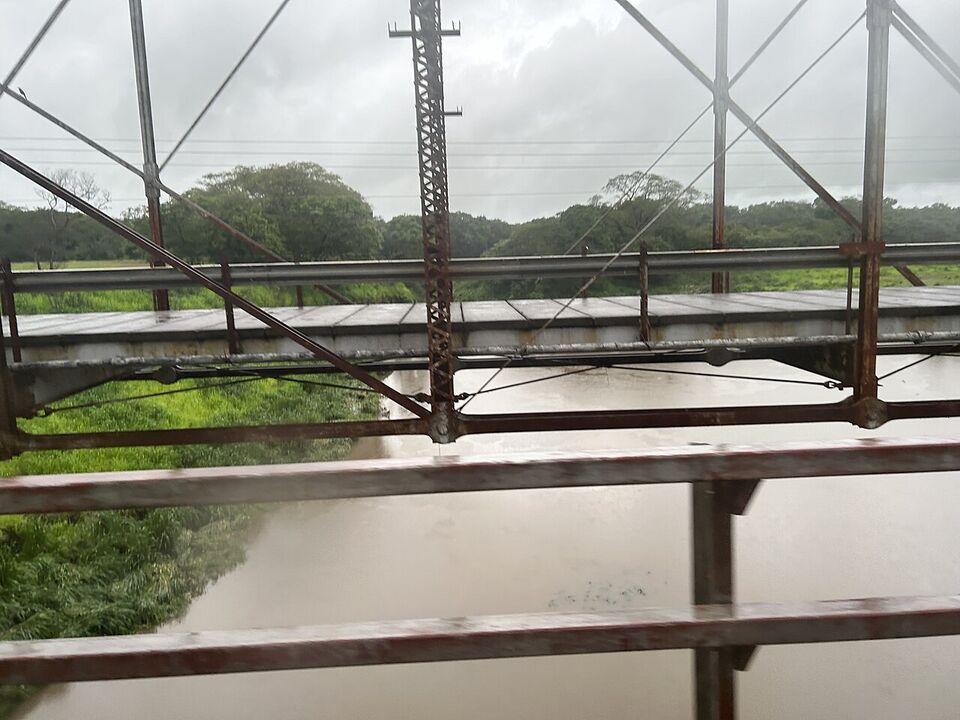
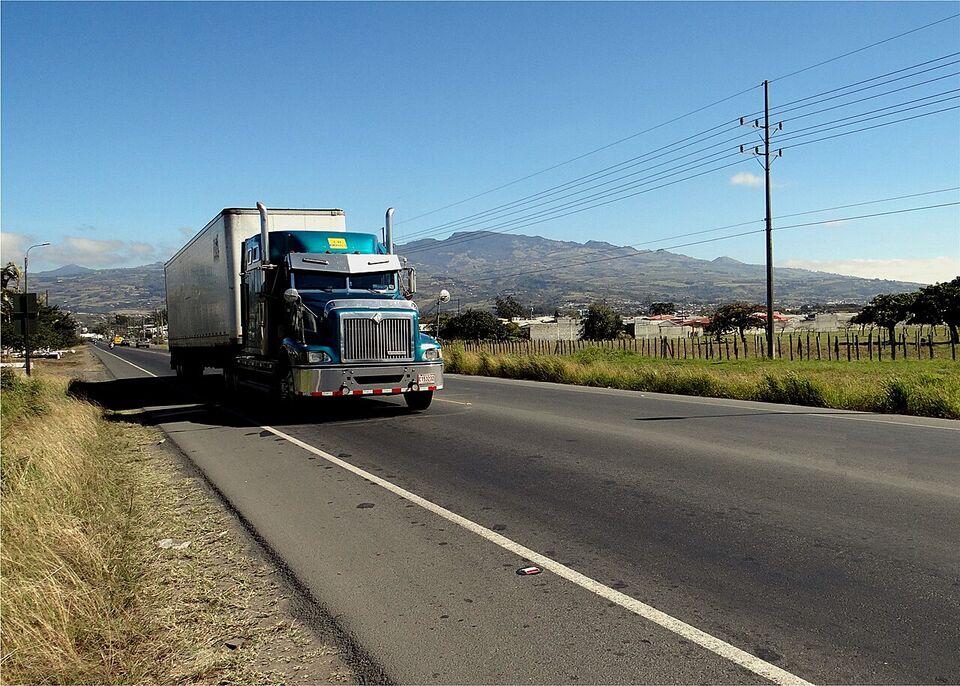
Most tourist itineraries do not need a 4x4. National highways and main roads are paved, though potholes and landslide damage are common. Choose by what is on your route.
| Your route | Vehicle |
|---|---|
| San José, La Fortuna, Jacó, Manuel Antonio, Liberia, Tamarindo (main roads) | Compact sedan is fine; a small SUV is more comfortable on potholes |
| Monteverde, rough or steep final stretches | A small SUV with higher clearance is more comfortable |
| Remote beaches in Guanacaste, Uvita area back roads, Osa Peninsula | High-clearance SUV or 4x4, especially from May to November |
| Any road that needs a river crossing | Do not cross in a rental car; insurance is void |
Automatic transmissions are widely available. If you drive a manual at home, you can save money, but steep winding roads are tiring in stop-and-go traffic.
Different from home
Rental cars cannot be taken across the border to Panama or Nicaragua. Some companies offer a service where you drive to the border, swap to a car from the same company on the other side, and pay an exchange fee (one guide says about US$50-150). Ask before you plan a border crossing.
Pickup: San José (SJO) or Liberia (LIR)?
Rental offices are almost always off-site from both airport terminals. At both airports a representative meets you after customs and directs you to a free shuttle, which takes 5 to 15 minutes to the company's office. Budget 30 to 60 minutes for the process, longer in high season. Plan this when you book a connecting transfer or a hotel check-in.
- San José (SJO) has the largest number of rental options and suits trips to the Central Valley, Arenal, Monteverde and the central and south Pacific. See San José.
- Liberia (LIR) is the better choice for Guanacaste and the north Pacific beaches. See Guanacaste. The airport operates only from 6 a.m. to 9 p.m., so check your flight time against your rental company's pickup hours.
A one-way rental, picking up at one airport and dropping at the other, avoids backtracking but adds a fee. Compare that with flying into one airport and out of the other. Our flights guide covers both airports.
If you land late and are tired, consider spending the first night near the airport and picking up the car in the morning. This also lets you drive in daylight.
Fuel and returning the car
Return the car with a full tank unless your contract says otherwise. Fuel is full service and costs about US$6.85 per US gallon as of November 2026 (see the driving page). If the company refuels for you, it charges a premium rate. Take a photo of the fuel gauge and odometer at drop-off.
Offices may be closed for early or late flights. If you have a late flight from SJO and the office is closed, ask the company in writing whether you can leave the car in the airport parking area with the keys in a stated place, and what happens if damage is found later. Allow extra time on departure day: the San José airport terminal has been under expansion work since July 2026, so arrive early.
The inspection checklist
Your photos are your defense in any damage dispute. Do this at pickup before you sign:
- Walk around the car with the agent and mark every scratch, dent and chip on the condition form, even small ones.
- Take a time-stamped video of every panel, bumpers, wheels, roof, windshield and the interior, plus close-ups of existing damage.
- Check the tires, including the spare, and the jack and tools. Ask about the tire and glass policy.
- Test the lights, wipers, air conditioning, horn, seat belts and the rear seat latches for child seats.
- Photograph the fuel gauge, odometer and any warning lights.
- Confirm that the car has a fire extinguisher and reflective triangles.
- Save the company's 24-hour number and the INS accident line, 800-800-8000.
- Ask for a paper or emailed copy of the contract that lists each insurance, the deductible and the total.
If anything happens during your trip, such as a flat tire, a scrape or a hard hit on a pothole, call the rental company the same day. At return, ask the agent to inspect the car with you and sign a document that shows no new damage.
Scams and traps to avoid
- The bait quote. A low price from a booking site or aggregator that omits mandatory insurance. Ask for the all-in total.
- Aggregator bookings that are not honored. During high season, guides report travelers whose cars were "confirmed" on a third-party site but not available at the counter. Confirm directly with the company a few days before arrival.
- Pressure at the counter. Staff may describe lower coverage options in alarming terms or insist you buy the highest tier. Know what you have arranged and bring your documents.
- Surprise deposit amounts. A hold much larger than you expected. Ask for the hold amount before booking.
- Pre-existing damage. Charges for scratches that were there at pickup. Your photos and video are the answer.
- Fees not in the quote. Airport fee, plate fee, drop-off fee, extra driver, fuel service. Make sure each is in the total you accept.
- Look-alike websites or phone calls. Book through the company's own site or a known booking platform, and do not pay by wire transfer to someone who contacts you.
- Fines forwarded later. The company can pay a traffic ticket and charge your card with an administrative fee. See the driving guide for fines.
Local or international agency?
Costa Rica has more than 30 rental companies, from global brands to small local firms. We do not rank them. Each type has trade-offs:
- Large companies usually have newer cars, more offices (useful for one-way rentals) and more support staff. But quotes on their global websites often omit Costa Rica's mandatory insurance, so use the Costa Rica website or ask for a Costa Rica quote.
- Local companies can be transparent and flexible, and some include all required insurance in the quote. Some smaller firms use older cars and have thinner support. Look for a company with a clear written quote, an office near your pickup point and a recent track record.
- Third-party booking sites can show low base rates, but you have less control if a problem arises.
Whoever you choose, a fair test is whether the company answers a direct question about the all-in total, deposit, and exclusions. Do not rely on a travel blog's recommendation alone, since many have commission links.
Booking step by step
- Decide if you need a car for the whole trip or only part of it. See the trip builder for route ideas.
- Check your credit card benefit before you search, so you know whether you can decline the CDW.
- Get two or three all-in quotes that show the mandatory insurance, VAT and any airport fee.
- Compare deposit amounts, deductibles and exclusions in addition to the daily rate.
- Choose the vehicle by route (see above), and book child seats at the same time.
- Book early for December to April, July, Christmas and Easter week.
- Save the confirmation and, a few days before arrival, reconfirm directly with the company.
- At pickup, read the contract, inspect and photograph the car, and confirm the total.
- At return, refuel, inspect with the agent and keep the paperwork until the card hold is released.
Insider tip
Save the all-in quote as a PDF or screenshot and bring it to the counter. If the agent tries to add charges that the quote said were included, you can point to it. For more planning steps, see Plan Your Trip.
Add it to a route in the trip builder, or ask us to plan the hotels, transfers and guides for you.