Overview
Costa Rica is a country most Americans can travel in comfortably, and most trips end without a single problem. The honest picture has two parts. The common problems are petty theft and ocean accidents, and both are largely preventable. The rarer problems, such as armed robbery, are real enough that the State Department asks you to take care. This page walks through both, so you can relax at the right moments and pay attention at the right ones. For a shorter version, see Is Costa Rica Safe?
The advice here is built from the State Department's advisory, the CDC's travel health page, the Costa Rica Tourism Board (ICT) and recent reporting in the Costa Rican press, checked in November 2026. Where we could not find an official figure (rip-current deaths, scam frequency, which neighborhoods are riskier), we say so rather than invent one.
Different from home
Many Americans arrive expecting a resort bubble. Costa Rica is a working country with ordinary city streets, public buses, narrow mountain roads and wild coastlines. The risks are the ordinary ones of a busy, popular destination: watch your bag, watch the road, watch the water.
The US advisory, explained
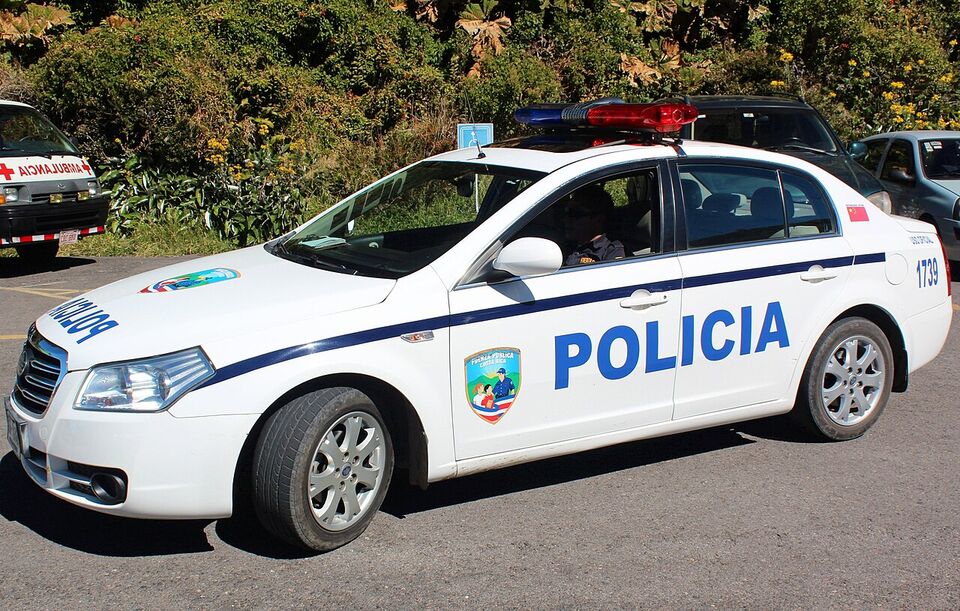
The State Department's text for Costa Rica reads "Exercise increased caution in Costa Rica due to crime." That is Level 2 on a four-level scale (Level 1 is normal precautions, Level 3 is reconsider travel, Level 4 is do not travel). The advisory says petty crime is the main threat, and that armed robbery, homicide and sexual assault also occur. It does not single out any region.
A news summary of the advisory gives its issue date as April 2, 2026, but the State Department page we fetched on November 13, 2026 showed no date, so check the advisory page before you travel: travel.state.gov, Costa Rica travel advisory. Advisories can be reissued with little warning.
The practical advice in the advisory, as reported in November 2026, is specific:
- Keep valuables out of sight, and avoid walking alone in isolated areas at night.
- Do not resist an armed robber. A phone or wallet is replaceable.
- Thieves may use electronic jammers to block key fobs, so check that a parked car is actually locked by pulling the handle.
- Robberies have been reported at short-term rentals, so confirm the locks on doors and windows when you check in.
Homicide figures give some national context, though not much about tourist risk. The OIJ (Organismo de Investigación Judicial, the judicial investigation police) counted 453 homicides in January to July 2026, compared with 521 in the same months of 2025, according to the Costa Rican outlet El Observador. A national count does not tell a visitor where or how crime happens, so treat it as background only.
Petty theft: cars, beaches and buses
Theft from vehicles is the crime visitors most often meet. Break-ins at beach parking areas and trailheads are common, and the rental car that holds your luggage between hotels is an obvious target. A few habits remove most of the risk.
Parked cars
- Leave nothing visible, including jackets, charging cables and empty bags. Thieves look for any sign that a car holds something.
- Do not leave your passport, cards or cash in the car at all, which is also the ICT's advice.
- Do not leave luggage in the trunk while you eat lunch or hike. Move bags to your hotel first, or use a secure lot.
- Park in attended or paid lots in towns. You will meet informal attendants (guachimanes) who watch cars for a small tip, about ₡500 (about US$1) to ₡1,000 (about US$2). They are a modest extra layer, not a guarantee.
- Pull the door handle after locking. Do not trust the beep or the lights alone.
For the full picture of renting and driving, see driving in Costa Rica and car rental.
Beaches
Bags left on the sand are easy to take while everyone is in the water. Travel with a partner and swim in shifts, or leave valuables locked in the hotel and carry only a room key and a little cash. A waterproof phone pouch around the neck works for photos. Do not leave a phone on a towel, even for a minute.
Buses and terminals
Petty theft is not unusual at bus terminals and on crowded buses. Keep bags on your lap or between your feet, carry a day bag in front of you, and keep phones in a front pocket. Many buses take cash only, so carry small bills rather than pulling out a thick wallet. If a night ride worries you, a pre-booked shuttle with a professional driver is a calmer option for long routes. See getting around Costa Rica.
City streets
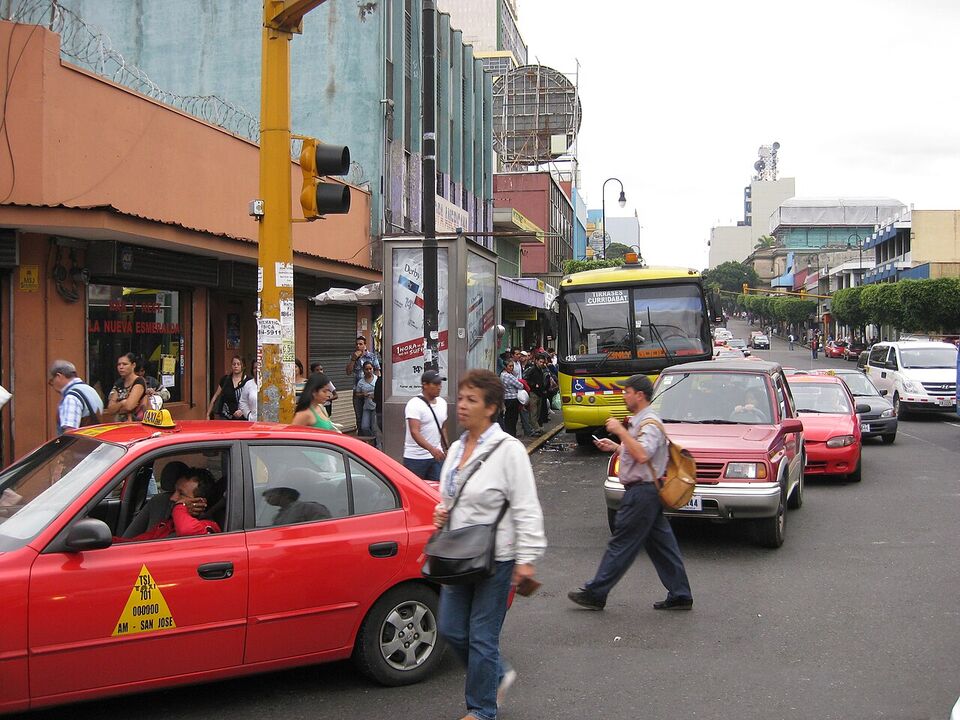
In central San José, phone snatching and bag grabs happen on busy streets. Keep your phone out of sight while you walk, avoid wearing expensive jewelry, and take a licensed taxi after dark rather than walking between neighborhoods. Our San José guide covers where to stay and how to get around.
Scams to know
We did not find an official list of tourist scams, so this section is general advice built on the State Department's guidance and widely reported patterns.
Fake officials and fines
Traffic fines in Costa Rica are paid at a bank or online, never in cash to an officer, according to a current driving guide we read. If someone in a uniform asks you for cash on the roadside, ask for the written ticket, write down the badge and patrol-car number, and tell your rental company. In an accident, do not move the cars; call 911 and the insurer, and wait for the traffic police.
Rental car damage and insurance
The most common complaints are about money at the counter. Quotes that leave out the mandatory third-party liability insurance can add as much as US$25 a day when you arrive. Before you drive away, walk around the car with the agent, photograph and video every scratch, check the spare tire and jack, and keep the check-in sheet. Do not drive a rental through a river: it can void all insurance, including the mandatory cover. More in car rental.
Parking, ATMs and money
- Use ATMs inside banks, malls or hotel lobbies in daylight. Cover the keypad. The ICT notes that some ATMs close between 11 p.m. and 5 a.m.
- Money changers want your original passport, not a copy. Use banks and the ATM network instead of street changers.
- Check your change when paying with US dollars. Prices at tourist businesses are often in dollars, and the colon rate is US$1 = ₡445. See money in Costa Rica.
- Never share your PIN or let anyone "help" at a machine.
Unlicensed tours and "shortcuts"
New fines for illegal entry to national parks took effect on April 30, 2026. A person who enters a protected area through an unauthorized access point can face a fine of three base salaries, ₡1,386,600 (about US$3,100), and operators who sell unauthorized routes face much larger penalties, according to the Tico Times. Book tours with licensed operators, and be wary of anyone offering a "secret" trail or a cheaper way into a park. Entry rules for individual parks are in national parks.
Watch out
Short-term rental robberies have been reported by the State Department. Check that doors and windows lock, use the safe if there is one, and do not post your travel dates and address on social media while you are away from home.
Drugs and nightlife
Drugs are illegal, and tourists are not exempt from the law. Do not buy from strangers in beach towns or bars: you cannot know what you are getting, and an arrest abroad is a serious problem the embassy can only help you manage, not fix. Do not carry anything across a border or on a flight for someone else.
For nights out, the same common sense applies as at home, with a few extras:
- Watch your drink being made, and do not leave it unattended. Spiked drinks are a risk in any nightlife area.
- Go out and return in a group, and take a licensed taxi back rather than walking, especially on unlit streets or beaches.
- Alcohol makes people careless near water. Do not swim at night, and do not take a rental car out after drinking.
- Keep your phone charged and your hotel's name and address saved in a screenshot.
The sea: rip currents and the lifeguard gap
For a typical visitor, the ocean is a bigger physical danger than crime. Costa Rica has long coastlines on both oceans, and strong surf and rip currents are part of many of them. We did not find a current official count of drownings, so we will not quote one, but rip currents are widely cited as a leading cause of death among visitors, and many popular beaches have no lifeguard on duty. Even beaches inside Manuel Antonio National Park, which have a lifeguard program, still get rip currents.
How to read the beach
- Look for the telltale signs: a channel of choppy, discolored or foamy water moving out to sea, a gap in the breaking waves, or debris drifting seaward.
- Ask your hotel or a local surf shop before you swim. Conditions change with tide and swell, and a calm morning can turn rough.
- Swim at a beach with a lifeguard when you can, and obey warning flags. If there is no lifeguard, stay in waist-deep water.
- Do not swim alone, at dusk, after drinking, or with small children out of arm's reach.
If you are caught in a rip current
Stay calm and do not swim straight back against it, because you will tire. Float or tread water, or swim parallel to the shore until you are out of the current, then angle back to the beach. Wave and shout for help. If you see someone else in trouble, call 911 and throw something that floats rather than going in yourself.
Insider tip
Surf lessons are a good way to learn a beach's patterns. Instructors know where the channels run, and many beaches with good beginner waves also have rips on the edges. If you are not a strong swimmer, wade and enjoy the tide pools instead. Standard travel-medical policies can exclude surfing, so read yours before you paddle out. More about the coast in Costa Rica's beaches and surfing.
Rivers, waterfalls and estuaries
Fresh water is not automatically safer. Currents at waterfall pools can be strong enough to pull strong swimmers under, and river mouths and estuaries can hold crocodiles (see below). Never cross a swollen river on foot or in a vehicle. The CDC also advises avoiding floodwater and muddy water after heavy rain because of leptospirosis and other infections; see health and medical care.
One local note: as of November 12, 2026, Costa Rican authorities were investigating a die-off of fish, sharks, rays and birds in the San Francisco estuary at Playa Langosta near Tamarindo, according to the Tico Times. Ask your hotel about conditions there before swimming or paddling in the estuary.
Natural hazards
Earthquakes
Costa Rica sits in an active seismic zone, and small earthquakes are routine. If one strikes, drop, cover and hold on; stay away from windows and heavy furniture. If you are on the coast and feel a long or strong quake, move inland and uphill without waiting for an official alert. Your hotel will usually have a plan posted on the back of the door.
Volcanoes and park access
Volcano access can change quickly, and following rangers' instructions matters. Poás Volcano erupted at about 2:36 a.m. on August 27, 2026, throwing material roughly 1,970 ft (600 m) from the crater. As of November 12, 2026, the park was open with limits: 1,064 visitors a day (down from 2,052), helmets required on the main crater trail and the Sombrilla de Pobre trail, and no more than 56 people at the lookout for 20 minutes. Tickets must be reserved on the SINAC portal, and the limits stay until activity drops. At Rincón de la Vieja, the active crater trail was closed and five districts of Upala and Liberia were under a yellow alert (as reported November 12, 2026). Arenal Volcano last erupted in 2010, and hiking to its crater is not allowed.
Check the SINAC booking portal (serviciosenlinea.sinac.go.cr) and the park's notice before you go. More in national parks and the Central Valley.
Flash floods, landslides, heat and El Niño
In the rainy season (roughly May to October on the Pacific side), afternoon storms can swell rivers within an hour, wash out dirt roads and cause landslides on mountain highways. Plan hikes and drives for the morning, and turn around when a ford looks high. On the Caribbean side the rain pattern is different, with no real dry season; see when to go.
This year adds a twist. Costa Rica's national emergency commission (CNE) raised the national alert to red on October 22, 2026 because of a strong El Niño. Forecasts in June called for up to 50% less rain than normal in the North Pacific and temperatures 1°C to 2°C above normal, and water authorities warned that more than 306,000 people could have trouble getting drinking water, about 48% of them in Guanacaste. For travelers in the dry season, that means higher wildfire risk, intense heat, and possible water rationing in parts of Guanacaste and the Central Pacific. Ask your hotel about water supply, and carry a refillable bottle.
Snakes, crocodiles and other wildlife
Most wildlife wants nothing to do with you, but a few simple rules prevent most trouble. The CDC advises you not to touch or feed any animal you do not know, and to be extra careful around dogs, bats, monkeys, jellyfish and snakes.
- Snakes: Venomous species exist, though bites are uncommon. Wear closed shoes and long pants on trails, look before you step over logs, and never put a hand where you cannot see. If someone is bitten, keep them calm and still, remove tight jewelry, and get to a hospital quickly by calling 911. Do not cut the wound, suck it or apply a tourniquet.
- Crocodiles: They live in some rivers and estuaries, including those along the Pacific coast. Do not swim in river mouths, and never feed one.
- Monkeys and coatis: They steal food, bite when cornered, and carry diseases. Keep snacks sealed and never hand-feed. A national campaign against wildlife selfies asks visitors not to touch, grab or hold wild animals.
- Insects and ticks: Use repellent and check your body after hiking. See health.
- Bats: If you wake in a room with a bat, seek medical care right away, because bat bites are hard to see and the CDC notes that rabies is present in bats in Costa Rica.
For viewing wildlife safely, see wildlife in Costa Rica.
Roads, taxis and rideshares
Traffic is likely the biggest risk in your whole trip, though it is easy to overlook. Costa Rica recorded 46,949 accidents under its mandatory vehicle insurance in 2025, and motorcyclists made up 64% of the injured, according to the Tico Times. Drive in daylight when you can, expect slow trucks on mountain roads, and watch for motorbikes weaving between lanes. Fines run in five categories, from about ₡26,000 (about US$58) to ₡363,000 (about US$816) in 2026, and a driving guide we read warns that radar enforcement is common.
If you do not want to drive, here is how the other options compare.
| Option | Typical cost for a short trip | Notes |
|---|---|---|
| Red taxi | ₡3,655 (about US$8) for 3 km in central San José | Official and regulated. Ask for the meter, or agree on the fare first |
| Uber (UberX) | ₡1,890 (about US$4) for the same trip | Widely used, but in a legal gray area; no platform law passed as of mid-November 2026 |
| Orange airport taxi (SJO) | About US$25-35 to central San José | Use the official desk or agree on the fare first; an estimate, so confirm |
| Private shuttle | Varies by route | Book ahead through your hotel or a known operator |
Fares are from a Tico Times comparison reported in October 2026 and can change. Uber Mujeres lets women request a female driver. A June 2026 pilot let about 100 airport taxis be booked in the Uber app at the San José airport. Whichever you choose, check the plate and driver in the app, sit in the back, and share your trip with someone. Never get into an unmarked car offering a ride at the airport. For fares and routes, see getting around.
Save money
Insurance is a safety tool and a money-saver at once. A good travel policy with medical evacuation costs a small fraction of what one serious accident can cost, and it keeps you out of cash-only disputes in a hospital. Compare the evacuation limit and what is excluded, especially for surfing, zip-lining and rental motorcycles.
If something goes wrong
Emergency numbers
| Need | Number or place |
|---|---|
| Police, ambulance, fire | 911 |
| US Embassy San José | (506) 2519-2000; Calle 98, Vía 104, Pavas. Same number for emergencies |
| State Department 24/7 line, from abroad | +1-202-501-4444 |
| Car accident insurance line (INS) | 800-800-8000 |
| OIJ confidential tip line | 800-8000-645 (for tips, not emergencies) |
If you are robbed, go somewhere safe and call 911 if anyone is hurt. Then file a police report (denuncia) with the OIJ. Your insurer and credit card company will usually want a copy, and so will the embassy if your passport was taken. Ask your hotel to help with Spanish.
Lost passport
The ICT advises carrying a photocopy of your passport with the entry stamp. Keep a second copy and a photo on your phone, and leave the original somewhere secure, such as a hotel safe, unless you need it that day. Immigration officers and some businesses may still ask to see the original. If the passport is lost or stolen, contact the US Embassy in Pavas. You will need a police report. See entry requirements for stay limits and what to carry.
Enroll in STEP
The State Department's Smart Traveler Enrollment Program (STEP) is free at step.state.gov. It sends you embassy alerts and helps the embassy find you in a crisis. Add a family member as an emergency contact at home.
Insurance and care
Medical care in San José is good, but the CDC warns trauma care is uncommon outside urban areas. Buy travel insurance that covers medical evacuation, and read the exclusions. For hospitals, pharmacies and bringing medicines, see health and medical care.
A short checklist before you go
- Read the current travel advisory and enroll in STEP.
- Buy travel insurance with medical evacuation, and save the claim number and policy phone number in your phone.
- Make two copies of your passport and entry stamp.
- Write down 911 and the embassy number, and save your hotel's address in Spanish.
- Pack light and leave expensive jewelry at home.
- Set a card limit or use a card with no foreign fees, and carry a backup card in a separate place.
- Agree on a "no swimming alone" rule for your group, and ask each day about the surf.
- Download an offline map and check road conditions before long drives.
Other questions come up often; our FAQ covers many of them, and families and retirement have extra tips for those groups.
Add it to a route in the trip builder, or ask us to plan the hotels, transfers and guides for you.