Overview: what La Fortuna is and why people go
La Fortuna is a small town in the northern lowlands of Alajuela province, at the foot of Arenal Volcano. Most visitors come for four things: the cone-shaped volcano, hot springs heated by the volcano's plumbing, the La Fortuna Waterfall and a long menu of adventure tours. It works well as a two- or three-night stop between San José or Liberia and the rest of a Costa Rica trip.
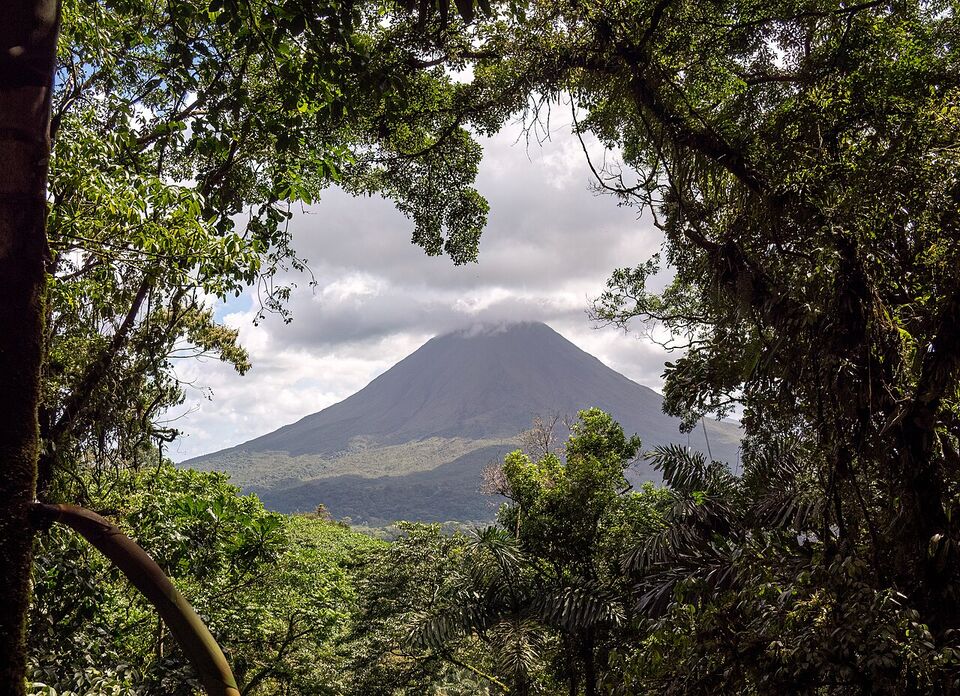
The volcano itself is the part Americans most often misunderstand. Arenal erupted without a break from 1968 to 2010, which made it one of the most active volcanoes in the world, and many older guidebooks and photos show glowing lava at night. That ended in 2010. As of mid-November 2026, Arenal is dormant: the cone is still there, it is still impressive on a clear morning, but there is no lava show. Plan for views, hot water and forest, not fire.
The town is compact and easy to use without a car. Tours pick up at hotels, the center has sodas (small local restaurants serving a set plate, the casado) alongside tourist restaurants, and taxis cover the short hops to the waterfall and hot springs. If you plan a wider trip, read our guide to Costa Rica's regions to see how La Fortuna fits with Monteverde, the Guanacaste coast and the Central Valley.
The volcano: what you can and cannot do
Arenal Volcano stands 5,358 ft (1,633 m) high and sits inside Arenal Volcano National Park, about 9 miles (15 km) southwest of La Fortuna. It is a young volcano, less than 7,500 years old, and it woke violently on July 29, 1968, destroying the village of Tabacón and killing 87 people. Its next chapter is unknown: geologists note that magma supply persists, so the volcano is called dormant, not extinct.
Dormant, not safe to climb
Hiking to the crater is not allowed, and Costa Rica enforces it. Since April 30, 2026, a law raised fines for entering restricted areas of protected parks to ₡1,386,600 (about US$3,100) for a visitor, with larger fines and equipment seizure for guides who take people into high-risk zones. A tour that promises a "secret" summit or an off-trail route is an operator to avoid. Drones are also unwelcome: one drone-law summary lists Arenal Volcano among the no-fly zones, and the rules are strict enough that we suggest you leave the drone at home.
What the national park offers
Arenal Volcano National Park sells tickets at the entrance by card only (parks went cashless in 2026). It is not on the SINAC online-booking list, so no advance ticket is needed. Foreign adults pay about US$15, and hours are listed as 8 a.m. to 4 p.m. daily; check the SINAC site or the park before you go because both change. The park has forest trails and old lava fields, and some lookouts give a clear view of the cone when the clouds allow.
The volcano is often in cloud. Mornings are the better bet, and the weather can flip in under an hour, so treat the first clear view as the one to photograph. If your hotel has a view, spend a few minutes at sunrise on the terrace before tours begin.
Different from home
Costa Rican national parks no longer take cash at the entrance: in 2026 the ticket offices take cards only, and several big parks sell tickets only online. Arenal is one that sells at the gate, but bring a Visa or Mastercard and your passport, and do not count on mobile signal at the entrance.
Insider tip
Do not buy a hotel only for a "volcano view" unless the room is confirmed to face the cone. Clouds hide Arenal on many days, and La Fortuna lies northeast of the cone. Ask the hotel which direction the room faces, and plan to see the volcano from a lookout, a lake shore or the national park on your clearest morning.
Cerro Chato: check before you plan on it
Cerro Chato is the smaller, older cone next to Arenal, a dormant volcano whose last eruption was about 3,500 years ago. Its crater holds a lake, and for years it was one of the area's popular hikes. A guidebook site reports the trail was closed in 2017, but we found no 2026 official statement from SINAC or the national park either way.
Our advice: treat Cerro Chato as closed to the public unless the national park office, SINAC or a licensed operator confirms in writing that a specific route is open and legal. Some private properties on the flanks run their own trails, and those fall under their own rules, so ask who owns the land and whether the operator is licensed. With fines for illegal entry steep since April 2026, guides who offer a "secret" Cerro Chato route put you at risk of a fine, not just a bad hike.
La Fortuna Waterfall
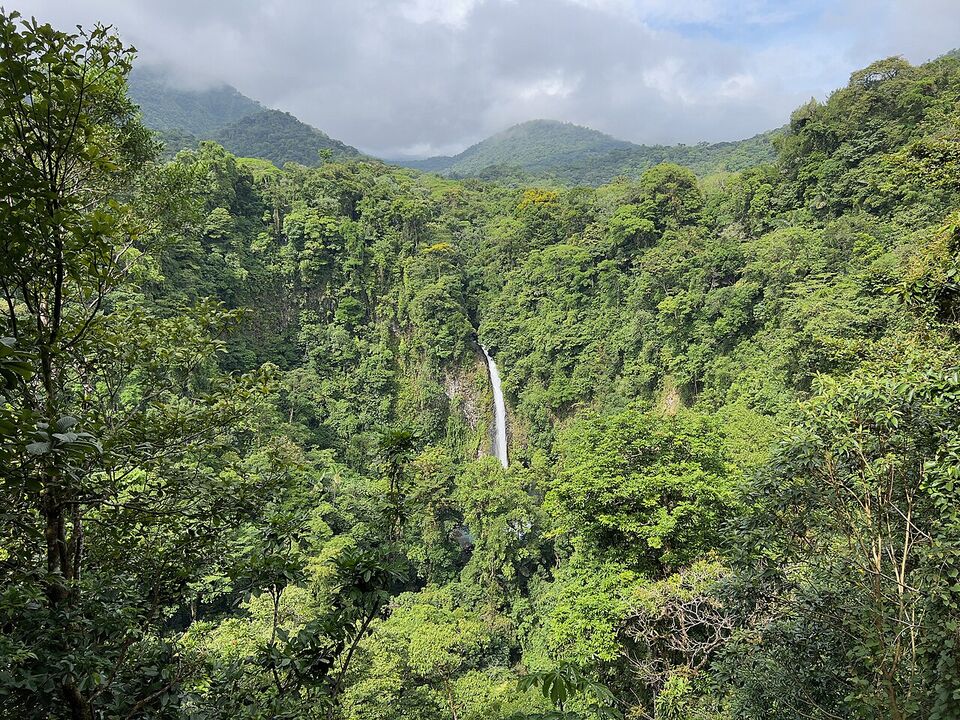
The waterfall drops about 230 ft (70 m) into a round pool, about 4 miles (6.4 km) from the town center. A paved road leads to a large parking lot and ticket office. There is no public bus to the entrance; a taxi from town costs roughly US$10-15 according to one 2026 independent guide, so agree the price first.
Tickets, hours and the climb
Foreign adults aged 9 and up pay US$20, and children 8 and under enter free, according to a November 2026 independent guide; tickets can be bought online on the waterfall's own site or at the gate. Hours are given as 7 a.m. to 5 p.m. with last entry at 4 p.m., but treat both as approximate and check the official page before you drive out. Going down means about 500 steps, and you climb them again on the way out in heat and humidity near 86°F (30°C). Wear shoes with grip, carry water and leave the flip-flops in the car.
Swimming
You can swim in the pool, but lifeguards on site warn that the current at the base is strong and that many visitors overestimate their swimming. A calmer swimming area exists to one side. Stay in the roped-off zone, never swim under the falling water and skip swimming altogether after heavy rain, when the river runs high and fast.
Save money
A guided waterfall tour usually costs more than the gate fee plus a taxi, because the operator adds transport, a guide and often a meal or a second stop. If you are comfortable with 500 steps and a taxi, independent entry is the cheaper route. If you want a guide for birds and frogs, or you are staying without a car and want the pickup handled, a guided half-day is reasonable.
Hot springs: free, paid, and what a day pass includes
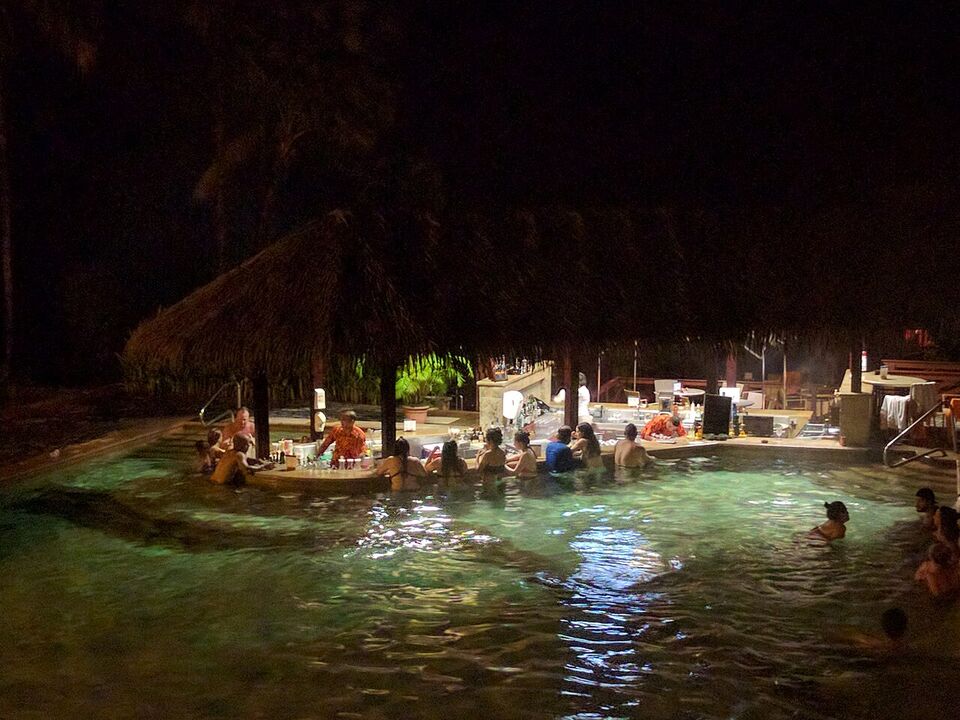
The volcano's heat feeds warm rivers that several resorts channel into pools. This is the best-known thing to do in the evening after a day of tours, and the price range is wide. The choice is mostly between a big resort day pass, a smaller or hotel-based spring, and a guest-only spring that comes with a room.
Day passes versus staying at the hotel
Day passes admit non-guests to the pools, usually in set time windows, with dinner sold separately or as a package. Hotels with their own springs often include access for guests at no extra charge or at a discount, which can be the best value if you were going to book a hot springs evening anyway. Both options are sold as limited-capacity experiences, and the busiest resorts tell visitors to reserve in advance.
Tabacón Thermal Resort and Spa, whose official site we read in November 2026, shows the policies many large springs follow: prices are quoted per person in US dollars and include taxes; day passes are limited and advance booking is recommended; children under 16 must be with an adult; guests under 6 enter free; the maximum group size is 15; water shoes are recommended; and smoking is banned in all public areas. A card is charged 15 days before arrival (45 days for December 18 to January 8 and Easter week), and cancellations made less than 15 days before arrival forfeit the payment (44 days or fewer for the Christmas-New Year period). Its day-pass price was not published on the pages we could read, so check the site for the current price.
What about free hot springs?
You will hear that some river spots near the road to the volcano have warm water and no entrance fee. We could not confirm any current, official free site, and we do not recommend planning around one. Rivers carry currents and rising water after rain, there are no lifeguards or changing rooms, and access can cross private land. Warm spots also change as the river shifts. If you want to spend little, a paid day pass at a smaller property is a safer way to save money than a roadside river.
Watch out
Hot springs water is hot enough to cause problems for young children, pregnant visitors and people with heart conditions. Limit your time in the hottest pools, drink water, and never go in alone after drinking alcohol. Leave valuables in the room, since pool areas may not have secure lockers.
Hanging bridges, ziplines and other tours
Private reserves near La Fortuna build suspension bridges and canopy platforms that let you walk above the forest, and several sell tickets on their own websites rather than through SINAC. We could not confirm 2026 prices, so check each operator's site before you decide, and compare what is included (guide, transfer, meal, insurance).
The tours below are the common ones. Prices, durations and pickups vary by operator and season, which is why we give none here. Choose licensed operators, since Costa Rica's 2026 crackdown on unauthorized tours includes fines of ₡3,235,400 (about US$7,300) for selling tours to unauthorized sites.
| Tour | What it is | Good for | Booking notes |
|---|---|---|---|
| Hanging bridges | Walkway tours on suspended bridges through private forest, with a guide on some options | Birds, canopy views, families with older children | Morning is the best time for wildlife; price on the operator's site |
| Zipline or canopy | A line of cables through the treetops | Adrenaline seekers | Check weight and age limits; rainy afternoons can cancel |
| Waterfall visit | The La Fortuna Waterfall alone or with a swim or lunch | First-timers | Gate entry US$20 per foreign adult (age 9 and up) |
| Hot springs evening | Pools plus dinner at a resort | Everyone, especially after a tour day | Reserve ahead; time-limited passes |
| River tours | Rafting or a gentle float on nearby rivers, depending on water level | Active travelers, families (check age limits) | Rainy-season water can be too high; ask for the current river grade |
| Wildlife boat trips | Boat safaris on nearby rivers and wetlands | Birds, caimans, monkeys | Often a full day with transfers from La Fortuna |
| Chocolate or farm tour | A cacao or farm visit with tastings | Rainy afternoons | Short, often with a meal |
For more on how to compare adventure tours and operators, see our adventure guide. For wildlife on the water, our wildlife guide explains what you can realistically see on a guided trip and how to choose a guide.
Lake Arenal and the road around it
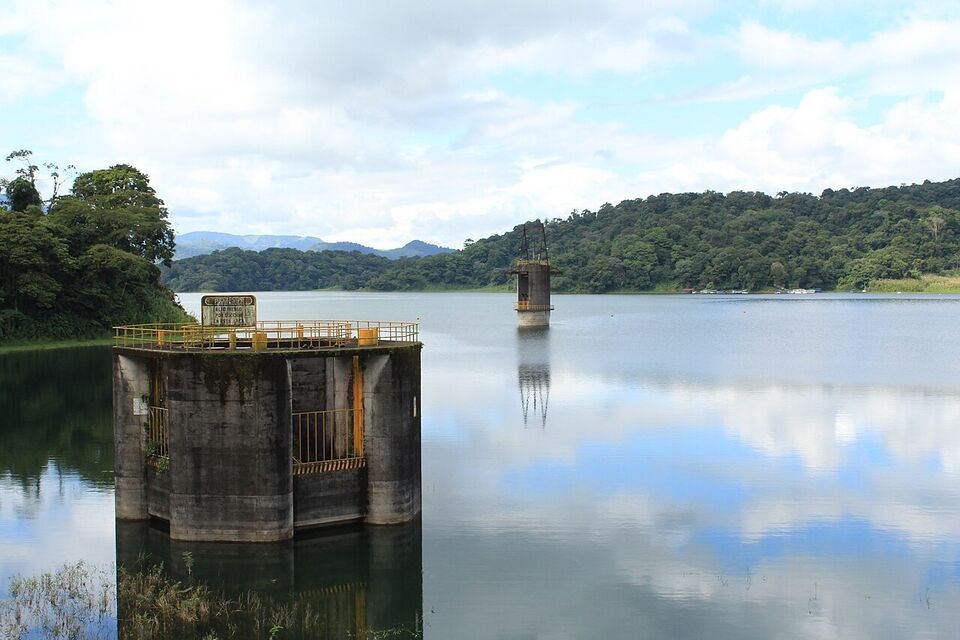
Lake Arenal is a man-made reservoir west of the volcano that supplies hydroelectric power to the national grid. It is the country's largest lake. The northern shore has small towns such as Nuevo Arenal, and the western end is a short drive from Tilarán. Most visitors see the lake on the way to or from Monteverde, from a lookout, or on a boat trip.
The road around the lake
A two-lane highway follows the lake's north shore between La Fortuna and Tilarán, with curves, hills and sections of patched pavement. Expect slow trucks and mist at times, and rain can add an hour. We could not verify road conditions for this guide, so look at a recent traffic map the morning you drive and avoid it after dark. Budget about 3-4 hours for the road trip to Monteverde, which includes the stretch from Tilarán up the mountain to Santa Elena (read the notes in our Monteverde guide before you commit to driving it).
The boat-and-shuttle alternative
Instead of driving, most visitors go from La Fortuna to Monteverde by shuttle to the lake, boat across it and a second shuttle up the mountain. Total travel time is about 3 hours. One reseller lists about US$45 per person, but we could not confirm 2026 fares with the operator, so check before booking. The crossing is short and scenic, and it removes the hardest driving, which makes it a good choice for nervous drivers.
Getting to La Fortuna
La Fortuna is about 2.5 hours from San José by averages, and about 3 hours 15 minutes from Liberia airport (LIR). Treat those as best-case figures: rain, roadworks and slow trucks on the hills can add an hour.
Choosing your airport
Juan Santamaría International Airport (SJO) is the usual choice because it is closer. Daniel Oduber Quirós International Airport (LIR) in Liberia works if you are also visiting Guanacaste beaches or flying from a city with a direct flight there, and it keeps you on the same side of the country as Monteverde. See our flights guide for current routes.
Rental car, shuttle, bus or flight
- Rental car: good for flexibility; read our car rental guide for insurance rules and our driving guide for road habits.
- Private transfer: roughly US$200 and up per vehicle from SJO before tax; prices can rise after mid-December, so confirm the rate for your date.
- Shared shuttle: roughly US$40-70 per person on popular routes, with set pickup points and times; Interbus says booking two to three months ahead unlocks discounts.
- Public bus: the La Fortuna service leaves from La Radial in Alajuela, near the airport, according to a May 2026 bus guide. Terminals in San José changed in 2025, so confirm the terminal with the bus company.
- Flight: Sansa lists La Fortuna among its destinations. We could not confirm fares or baggage limits, so check flysansa.com.
More options are in our getting around guide.
Where to stay
Choose the area by how you plan to spend your days. Hotels range from simple cabinas to resorts with their own hot springs, and hotel prices below use our tier scale ($ under US$120 a night for a double, $$ US$120-300, $$$ over US$300).
La Fortuna town
Restaurants, groceries, tour offices and taxis are within walking distance. Good for short stays and travelers without a car. Mountain views vary by street.
The road to the volcano
Resorts with hot springs and volcano views cluster here, about 10-20 minutes from town. Best if the springs are the main event. Dinner is usually at the resort.
Near the lake
Small lodges around Nuevo Arenal and the shore trade nightlife for quiet and birds. A good second stop if you already know La Fortuna.
Hot springs resorts
Large resorts bundle springs, dining and spa. Ask whether day-pass visitors share the pools with hotel guests at night.
For picking a type of lodging and what the price tiers mean, see our where to stay guide. Prices quoted online may or may not include 13% sales tax and a service charge, so check the total at checkout.
When to go: dry months, rainy months and El Niño
La Fortuna sits on the Caribbean side of the mountains, so it does not follow the Pacific coast's dry-season calendar. A commercial climate table lists rain in every month, with March the driest (about 80 mm) and July through October the wettest (more than 400 mm a month). Treat the numbers as rough, but the pattern is reliable: a wetter, greener time from about May to November, with February to April the best odds for clear views.
Rain here often comes as heavy showers in the afternoon, and it can last all day when a system sits over the region. Mornings are usually the clearest. In the wetter months, book flexible tours and keep a rain jacket in your daypack. Wet roads, high rivers and landslides can disrupt access, and in August 2026 flooding and landslides hit parts of the north and Caribbean, so check road conditions if you travel in the rainiest weeks.
Costa Rica is in a strong El Niño phase for the 2026-27 dry season. June 2026 forecasts expected less rain than normal on the North Pacific and more than usual in the Caribbean and the north, which includes the Arenal area. That means your odds of a dry week in the usual dry months are less certain than normal. See our when to go guide and the December page if you are traveling over the holidays; Tabacón, for one, applies stricter booking terms from December 18 to January 8, so reserve early.
Health and safety notes
The CDC's malaria advice lists Alajuela and Limón provinces as areas where prescription malaria medicine is recommended, and La Fortuna is in Alajuela province. That guidance was updated April 23, 2025, and it is a province-level recommendation, not a statement about the town itself. Talk to a travel clinic well before your trip, and use repellent and long sleeves at dusk, which also helps against dengue. Our health guide covers current CDC notices.
Petty theft from parked cars is the usual crime concern at waterfall and trailhead lots. Take valuables with you and read our safety guide. Wear closed shoes on wet trails and keep a safe distance from snakes and wasps; see our wildlife guide for how to behave around animals.
A sample two-night plan
- Day 1
Arrive and soak
Reach La Fortuna by early afternoon, settle in, and book an early-evening hot springs slot. Eat dinner at the springs or in town.
- Day 2
Waterfall, tour and lake
Visit the waterfall at 7 a.m. when it opens, then take a hanging-bridges or zipline tour in the late morning. Use the afternoon for the national park lookouts if the volcano is clear.
- Day 3
Onward travel
Leave by 8 a.m. for Monteverde by boat and shuttle, or for San José or the Guanacaste coast by road. Allow extra time on mountain roads.
Add it to a route in the trip builder, or ask us to plan the hotels, transfers and guides for you.