Overview
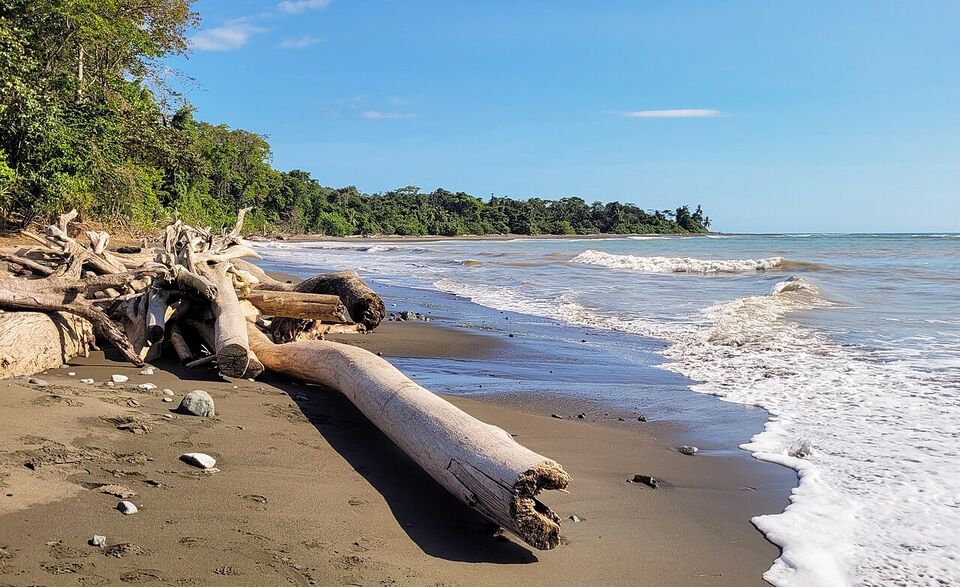
The Osa Peninsula, in the far southwest, is the part of Costa Rica where a trip stops being easy. It is remote, the roads are long, and the best-known sight, Corcovado National Park, can be visited only with a certified guide and a limited number of other people. In return you get some of the country's largest tracts of lowland rainforest, a good chance of seeing tapirs, four species of monkey and scarlet macaws, and a few days that feel unlike the rest of a Costa Rica trip.
This guide is for first-time visitors deciding whether the Osa is worth the effort and how to reach it. The key choices are which gateway to use (Drake Bay on the Pacific side or Puerto Jiménez on the Golfo Dulce side), how to enter the park (a day trip, a multi-day trek or a stay at a lodge), what a trip really costs, and how to cope with the wet season. We also flag what we could not confirm, because Corcovado's rules and station openings changed several times in 2026.
Watch out
Corcovado rules, capacity limits and station closures changed several times in 2026, and the Constitutional Chamber is still reviewing the visitor quotas. Treat every number on this page as correct as of mid-November 2026 and confirm with your lodge or operator, and on the SINAC site, before you pay for flights or non-refundable lodging.
How to reach the Osa Peninsula
There are three ways in: air, road and boat. Which is best depends on your gateway and your budget.
Flying
Sansa, the domestic airline, lists Drake Bay (DRK), Puerto Jiménez (PJM), Golfito (GLF) and Quepos (XQP) among its destinations, with reservations at +506 2290-4100. A flight turns a long day on the road into a short hop in the air. We could not confirm 2026 fares or baggage limits, so check Sansa before you book. Small planes have weight limits, and soft bags are easier to load than hard suitcases. Charter flights to Drake Bay, Golfito and Puerto Jiménez are also listed on Sansa's site.
By road
From Manuel Antonio, Puerto Jiménez is about 5.5 hours by car and Sierpe (the river town where the Drake Bay boats leave) is about 2 hours, according to common drive-time tables. From San José it is a very long day to reach either gateway. We could not confirm a precise drive time for the Osa, so allow most of a day, plus an hour or more for rain, roadworks or slow trucks. Bus companies run San José to Puerto Jiménez (Grupo Blanco) and San José to Drake Bay via Sierpe (Tracopa). Confirm the San José terminal and times directly with the company, because several terminals changed in 2025, and Tracopa takes cash only.
A rental car is useful in Puerto Jiménez if you want to explore on your own, but the roads past the town become rough. Rental agreements do not cover river crossings: driving through a river voids all insurance, including the mandatory cover. A 4x4 is strongly recommended for the Osa from May to November.
By boat
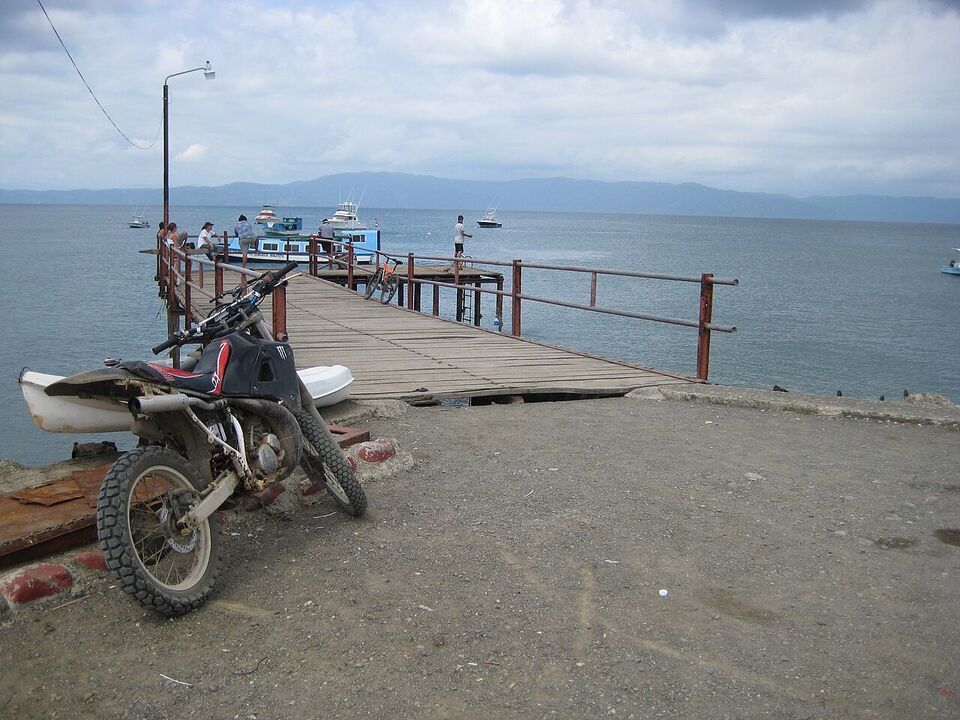
The boat from Sierpe to Drake Bay goes down the river and out to sea before turning along the coast. Boats are small, landings at Drake Bay are usually "wet" (you step off into shallow water), and the open-sea stretch can be rough in the rainy season. Bring a dry bag, protect your camera and phone, and wear shoes that can get wet. Ask your lodge about timing, because the river depends on the tide. We did not confirm exact boat times or prices.
| Gateway | Best for | How you arrive | Trade-offs |
|---|---|---|---|
| Drake Bay | Lodges with tours, San Pedrillo and Sirena day trips, snorkeling at Isla del Caño | Bus or car to Sierpe, then a boat; or a Sansa flight | No roads in from the north; boats and weather decide your schedule |
| Puerto Jiménez | Independent travelers, La Leona and Los Patos treks, Carate and the Golfo Dulce | Bus, rental car or a Sansa flight | Longer drive; more of a town, with shops and a bank |
| Carate | Remote lodges at the southern edge of the park | Rough road from Puerto Jiménez; ask your lodge for transport | River crossings in rain; far from everything |
Corcovado National Park: the rules
Corcovado covers about 424 square kilometers (164 square miles) of the Osa Peninsula and was established in 1975. It is run by SINAC through the Osa Conservation Area. The rules that matter for a visit:
- A certified guide is required. Every visitor must be accompanied by a certified guide, and that has been the rule since 2014. You cannot hike alone, and you cannot just turn up at a gate.
- Tickets go through a guide or agency. A Costa Rica travel site says the guide arranges the park tickets, and SINAC's own booking page says Corcovado (and Isla del Cano) are paid by bank voucher after an email to reservaciones.pnc@sinac.go.cr. In practice, most visitors book through a lodge or tour operator, who handle this.
- Each sector has a daily cap. Numbers were reset in 2026 (see below).
- Entering restricted areas is penalized. A law in force since April 30, 2026 sets fines of ₡1,386,600 (about US$3,100) for entering restricted areas, ₡3,235,400 (about US$7,300) for selling unauthorized tours, and ₡4,622,000 (about US$10,400) plus seized equipment for guides who take visitors into high-risk zones. Repeat offences add 50%, then a one-year ban. A rescue after an infraction costs ₡2,311,000 (about US$5,200) per person.
- Do not feed or touch animals. Feeding wildlife is illegal under Law 7317.
- Pets are not allowed in protected areas.
- Park fee. About US$15 to US$17 for a foreign adult, depending on the source and whether tax is included. Check the final price with your operator.
A bill before Congress would also require companies that lead guided hikes to hold a tourism institute license and insurance; it was only proposed as of November 12, 2026. Ask any guide for proof of certification.
The sectors and the 2026 limits
Corcovado is entered through ranger stations, and the park's rivers, trails and tides decide the route.
| Sector | Access | Daily limit (September 2026) | Notes |
|---|---|---|---|
| Sirena | From Drake Bay by boat and hike, or by multi-day trek from Los Patos or La Leona | 366 (230 day, 105 overnight, 16 for the Carate-Corcovado association, 15 for staff) | Most wildlife; the best-known station |
| San Pedrillo | From Drake Bay by boat | 120 | Shortest route; day trips |
| La Leona | From Carate or Puerto Jiménez side | 80 | Coastal trail; rivers cross at high tide |
| Los Patos | Inland, from Puerto Jiménez side | 80 | Longer treks; closed in October 2026 |
| El Tigre | Inland | 80 | Quieter; closed in October 2026 |
Here is what happened in 2026, in order. In June, Sirena's wastewater treatment plant was found to be discharging sewage into a creek, and the limit was cut to 150 a day. On July 8 it was raised to 225. A resolution that took effect on September 17 raised it to 366 a day, which SINAC describes as restoring the station's capacity. The Environment Ministry says that the treatment plant was rehabilitated and that the change followed Health Ministry orders, though the Tico Times reported that the September resolution did not make clear whether the plant was operating.
Sirena, El Tigre and Los Patos were closed to tourists during October for regular maintenance and the heaviest rains; San Pedrillo and La Leona stayed open. The ministry's target for Sirena to run normally with a working treatment plant is December 1. We could not confirm whether the three stations reopened on November 1, so do not assume. Ask your lodge or operator, in writing, which stations are open for your dates.
The numbers themselves may change. In August 2025 the Constitutional Chamber struck down a 2023 increase in Corcovado visitor quotas because it had no scientific basis, and SINAC has asked the court for more time to comply. Critics on the peninsula say tickets can be bought in blocks by cruise operators, which leaves fewer places for independent travelers who stay in lodges. SINAC has not said that cruise traffic played a role. The practical point for you: book early for December to April, and expect daily limits to be enforced.
Lodges, camping and how to choose
There are three ways to stay: at a lodge outside the park, at a station inside the park, or camping.
Lodges outside the park
Most visitors base themselves at a lodge in Drake Bay, Carate or near Puerto Jiménez and take guided day trips. Many Drake Bay lodges sell packages that bundle meals, boat transfers and tours. Prices vary widely, from simple cabins in the $ and $$ tiers to remote eco-lodges in the $$$ tier, and we could not confirm 2026 rates for any lodge, so we do not name them. Ask exactly what is included (meals, laundry, transfers, tours, park fees) and whether the price is per person or per room.
Choose a lodge by what you want: close to the Sirena trail for overnight treks, near San Pedrillo for easy day trips, or on the Golfo Dulce side for calm water and a more relaxed pace. Ask how the lodge handles rain, what the boat landing is like and what the backup plan is if the park closes a sector. A good lodge will tell you when it cannot guarantee a station.
Inside the park
Sirena takes overnight guests (105 places a day), arranged through an agency or guide; ask what bedding, meals and water are provided, because we could not confirm station facilities. Camping and overnight stays are limited by the same daily cap (105 overnight places at Sirena). Overnight trips need more planning than day trips: you carry water, bug spray, a headlamp, a dry bag and a change of clothes, and you cross rivers.
The coastal trail between Sirena and La Leona crosses rivers that can only be forded safely at the right tide; the Sirena river is regarded as the most dangerous. Bull sharks and crocodiles live in the park's rivers and lagoons. This is a reason to hire a guide who reads the tide tables, and not a reason to improvise. Never cross a river alone or when the guide says no.
Day trip or overnight?
- Day trip from Drake Bay: a boat to San Pedrillo or Sirena with a guide and a hike. The simplest way to see the park, and enough for most first visits.
- Day trip from Puerto Jiménez: a full-day hike from the La Leona side.
- Multi-day trek: a night or two inside the park (a three-day trek from Puerto Jiménez with a night in the park is a common format). Best for fit hikers who want the animals at dawn.
What a trip really costs
The Osa is more expensive than the rest of Costa Rica, because everything has to be moved by boat or air, and because tours need a guide. Treat the figures below as a guide to which costs matter, not a quote. Many are from a single 2026 news report, and others are estimates.
| Item | Rough cost | Notes |
|---|---|---|
| Park fee (foreign adult) | About US$15 to US$17 | Plus 13% tax in some listings; confirm with your operator |
| Guide, per day | About US$80 to US$120 | Usually shared by the group, so the per-person cost falls as the group grows |
| Sirena day trip from Drake Bay | About US$110 with the boat | One 2026 report; check what is included |
| Isla del Caño snorkel trip | Park fee about US$15, plus the boat | Paid by bank voucher after an email to SINAC, or through the operator |
| Flight San José to Drake Bay or Puerto Jiménez | Check Sansa | Fares and bag limits vary by season; ask Sansa |
| Lodge, per night | Wide range | Check whether meals and tours are included |
| Meals in town | About US$5 to US$10 at a soda | Travel-cost blogs; tourist dinners about US$20 to US$50 |
Save money
Share the guide. The guide's daily rate is normally for the group, so four people on one guide cost much less per person than two couples on two. Ask whether park fees and the boat are included in a package, and compare package prices with the sum of the parts. Travel-cost blogs suggest daily budgets from roughly US$45 to US$80 for backpackers to US$275 to US$500 for luxury, but the Osa, with boats and guides, usually falls at the upper end of any tier.
Pay in US dollars for tours and lodging, and carry some colones for small purchases. Cards are widely accepted in towns but less so in remote lodges, and some ATMs close overnight. See our money guide and budget guide.
Weather and wet-season logistics
The Pacific coast has a dry season from December to March, a rainy season from May to October, and transition months in April and November. September and October are the wettest. Rain mostly falls in the afternoon and evening. The national tourism board lists hiking in Corcovado, kayaking, turtle watching and birdwatching at Carate and Puerto Jiménez among the green-season activities, so the park is open for much of the wet season. Wikipedia notes that certain parts of the park are closed during the wet months (July to November), and Sirena, El Tigre and Los Patos were closed all of October in 2026.
What the wet season changes in practice:
- Rivers rise. Fording becomes unsafe, and stations can close at short notice.
- Trails are muddy, and every hike takes longer.
- Boats are rougher. Drake Bay landings and the coastal stretch can be bumpy, and boats can be delayed.
- Flights and roads can be cancelled or delayed. Keep a spare day before your international flight.
- Leptospirosis. The CDC says to avoid floodwater and muddy water after heavy rain.
The dry season (December to March, with March driest and hottest) is easier for logistics and brings the largest crowds. Book flights, lodges and park places well ahead for Christmas, New Year and Easter. Forecasters expect a strong El Niño this dry season, with the North Pacific drier than normal; the effect on the Osa is less certain, so check the forecast before you travel. See our when to go guide.
Wildlife
Corcovado is known for its range of animals, and the lowland rainforest holds many of Costa Rica's rarest. Most sightings are along the coast.
Baird's tapir
The largest land mammal in Central America, usually seen at dawn or dusk. The park is considered one of the better places to look for one.
Monkeys
Squirrel monkeys, white-faced capuchins, mantled howlers and Geoffroy's spider monkeys all live here. The Central American squirrel monkey is listed as endangered.
Scarlet macaws
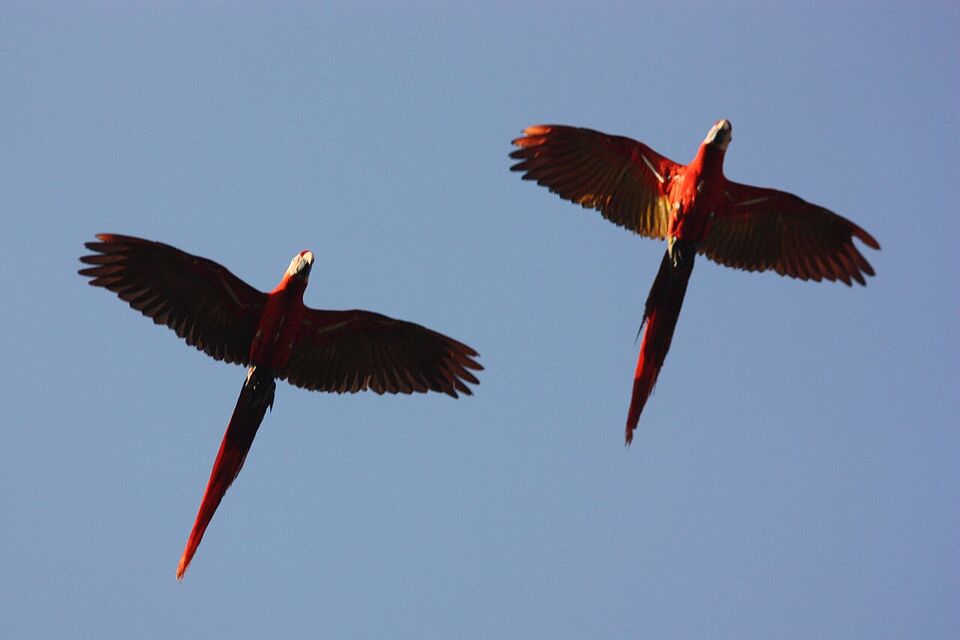
The park has the largest macaw population in the country, and they are easy to spot and hear along the coast.
Wild cats
Present, but rarely seen. A sighting is luck, not something a tour can promise.
Reptiles and amphibians
American crocodiles, spectacled caimans, poison dart frogs, red-eyed tree frogs and snakes, including venomous fer-de-lance and bushmaster. Watch where you step and keep to the trail.
Sea life
Dolphins, rays and, in season, whales. Sea turtles nest on Osa beaches, and a local group, COPROT, works to protect them. Ask your lodge about timing.
For a national overview of species and ethics, see our wildlife guide. The key habit is to be quiet, stay on the trail, and never feed or approach an animal. Guides are trained to spot animals and keep the distance; follow their lead.
Safety and health
- Medical help is far away. The CDC notes that trauma care is uncommon outside urban areas and recommends medical evacuation insurance. Buy a policy that covers evacuation from remote areas, and tell your lodge about allergies and medication.
- Rivers and the sea. Rip currents, tides and river crossings are the main physical risks. Obey your guide.
- Snakes and insects. Wear closed shoes and long pants on trails. Use repellent: dengue and chikungunya are risks in Costa Rica. Malaria pills are recommended only for Alajuela and Limón provinces, not for the Osa.
- Heat. The forest is hot and humid. Bring more water than you think you need, and take electrolytes.
- Crime. The State Department advisory for Costa Rica is Level 2 (exercise increased caution due to crime). Petty theft is the main threat. Keep valuables out of sight, lock your car and check the locks at any short-term rental. See Is Costa Rica safe? and our health guide.
- Phones. Signal can be patchy in remote areas. Download maps and confirmations before you leave.
Emergency number: 911.
How many nights, and a sample plan
Allow at least three nights, and four if you can. A shorter stay turns into a travel day in, a park day and a travel day out, with no slack for weather or a closed station. If you can only manage three nights, fly in and out rather than take the bus and boat.
- Day 1
Travel in
Fly to Drake Bay or Puerto Jiménez, or travel by road and boat. Settle in, confirm tomorrow's boat, guide and station, and pack a dry bag.
- Day 2
Corcovado day trip
Leave early with your guide for San Pedrillo or Sirena (if open). Expect a few hours on the trail, a long picnic lunch and a boat back in the afternoon.
- Day 3
Sea or river day
A snorkel trip to Isla del Caño, a dolphin or whale trip, a night walk at the lodge or a rest day. This is also your weather buffer.
- Day 4
Travel out
Return to San José or continue to Uvita and Dominical or Manuel Antonio. Leave a day before your international flight.
Combine the Osa with the coast to the north: the Uvita and Dominical guide and the Manuel Antonio guide cover the road from the Osa back toward San José. For the full list of parks, see national parks, and for general planning, see plan your trip.
Before you go
- Confirm in writing which Corcovado stations are open for your dates.
- Book lodging, guide and flights early for December to April.
- Ask what the price includes: meals, boats, park fee, guide.
- Pack a dry bag, closed shoes, long pants, repellent, rain jacket and a headlamp.
- Carry your passport and a copy, plus colones and a card.
- Buy insurance with medical evacuation cover.
- Keep a spare day before your flight home.
Add it to a route in the trip builder, or ask us to plan the hotels, transfers and guides for you.