Overview: why Monteverde and who it suits
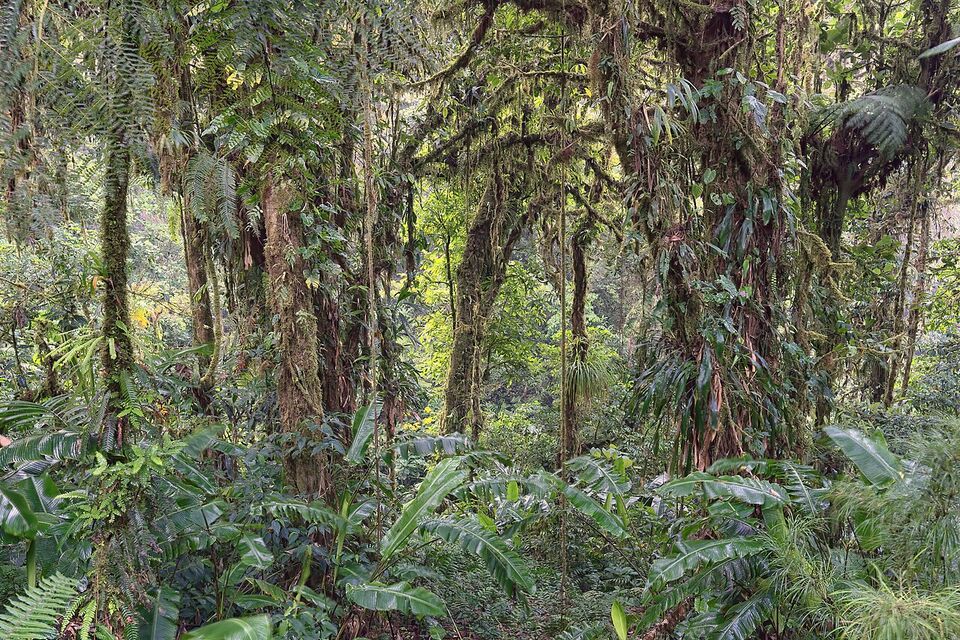
Monteverde is a mountain community in the Tilarán range, about 4,360 ft (1,330 m) above sea level, where moisture drifting over the continental divide wraps the forest in cloud. That mist is the reason for the cloud forest: trees draped in moss, ferns and orchids, and a different set of animals than you see on the coast. Most visitors stay in or near the town of Santa Elena, which is the commercial hub, and drive or take a shuttle up the road to the reserves.
The area was settled in the 1950s by Quakers from the United States who left Alabama to avoid the draft, and they chose the cool climate for dairy farming. Cheese, then coffee, then tourism followed. The tourism side includes cloud forest reserves, hanging bridges, ziplines, night walks, coffee and chocolate tours, and some of the best birdwatching in the country.
Monteverde works for travelers who like walking, birds and cooler weather, and less well for anyone whose idea of Costa Rica is a beach. The roads are slow and the weather is moody. If that sounds right, plan two or three nights, and read the section on the road in before you decide between a shuttle and a rental car. For the bigger picture, our regions guide shows where Monteverde sits among the other stops.
The cloud forest reserves: which one to choose
Two main reserves share the mountain, and they differ in size, rules and cost. The simplest advice for a first visit is one big morning at either the Monteverde Cloud Forest Preserve or the Santa Elena Cloud Forest Reserve, plus a night walk. Doing both in a short stay mostly means paying two fees to see similar forest. Smaller private reserves exist too; check each one's own site.
| Reserve | Best for | How you enter | Price |
|---|---|---|---|
| Monteverde Cloud Forest Preserve | The classic cloud forest; hanging bridge and Continental Divide views; science-led guided walks | Timed online tickets; arrive at the Visitor Center 15 minutes before your slot | Shown at booking; check the official site |
| Santa Elena Cloud Forest Reserve | Easier booking, a lookout tower and orchid garden; solid birding with a guide | Self-guided: no reservation; guided tours by WhatsApp | ₡10,000 (about US$22) self-guided |
We could not confirm the Monteverde Preserve's foreign adult fee from the pages we could read, so we leave it out. The Preserve's official site shows the current price at booking.
Monteverde Cloud Forest Preserve
The Preserve, run by the Tropical Science Center, protects about 10,193 acres (4,100 ha) and receives around 120,000 visitors a year. Since March 2026 it uses an online timed-entry system: you book a slot and one of its circuits, arrive at the Visitor Center about 1 mile (1.5 km) below the entrance, and a free shuttle takes you to the trailhead. The shuttle leaves exactly on time, and late arrivals may not be admitted, so arrive 15 minutes early. Parking at the Visitor Center is free, and the cancellation policy is a full refund if you cancel at least 48 hours before your visit.
The self-guided Cloud Forest Walk runs from 7:30 a.m. to 4 p.m., and has three circuits:
- Essence Trail: 0.9 miles (1.4 km), about 1 hour, easy, to the Cuecha Cascade and a large fig tree. It suits families and short visits.
- Heart of the Forest Trail: 1.7 miles (2.8 km), about 1.5 hours, easy to moderate, with the Preserve's hanging bridge and wild avocado trees that feed quetzals.
- Continental Divide Trail: 2.5 miles (4.1 km), about 2.5 hours, moderate, which climbs to a wind-shaped dwarf forest and the La Ventana viewpoint, with Pacific and Caribbean views on a clear day.
The guided Natural History Walk starts between 7:30 a.m. and 1 p.m., runs about 2.5 hours, is limited to 10 people and is given in English. The Night Walk starts around 6 to 6:30 p.m.; the Preserve notes that some services, such as the standard shuttle, work differently for it, so ask when you book. The Preserve tells visitors to expect rapidly changing conditions and calls the mist part of the experience, so bring a rain jacket and comfortable shoes.
Watch out
At the Monteverde Preserve, your time slot is also your shuttle departure. If you arrive late, even by a few minutes, the shuttle may leave without you and your entry is not guaranteed. Leave your hotel with a margin for the mountain road, and buy tickets only on the Preserve's own site.
Santa Elena Cloud Forest Reserve
Santa Elena is a community-linked reserve in the same mountain range, with more than 90% humidity much of the year according to its own site, and more than 200 bird species. Its 2026 rates, valid from January 1 to December 31, 2026, are the clearest we found:
| Ticket | Colones | US$ (about) |
|---|---|---|
| Self-guided adult | ₡10,000 | US$22 |
| Self-guided senior | ₡8,500 | US$19 |
| Self-guided student (ID) | ₡7,000 | US$16 |
| Self-guided child 8-12 | ₡5,500 | US$12 |
| Guided natural history walk (2.5 hours, groups of 10), adult | ₡20,000 | US$45 |
| Guided, senior / student / child | ₡19,000 / 17,500 / 15,000 | US$43 / 39 / 34 |
| Private guided walk, 1-3 people | ₡80,000 | US$180 |
| Private walk, each additional person | ₡20,000 | US$45 |
Self-guided entry runs 7 a.m. to 4 p.m., with last entry at 3 p.m., and includes the observation tower and orchid garden. No reservation is needed for self-guided visits, while guided tours are booked by WhatsApp at +506 8532 9090. The reserve says 2027 rates are not published yet, so check before you go.
Birding and smaller reserves
Other private reserves and gardens around Santa Elena run their own walks, and we could not check their prices, hours or visitor limits for this guide, so check each one's own site. If birds are your main reason for coming, a guided walk at either main reserve is more productive than an unguided walk.
Insider tip
Choose the reserve by your date and preferences, not by reputation. If you booked late and the Monteverde Preserve's slots are full, Santa Elena is an easy fallback because self-guided entry needs no reservation. The wild avocado trees (the tree family known as Lauraceae) that feed quetzals and bellbirds grow in both reserves, so the birding odds are similar.
Hanging bridges and ziplines
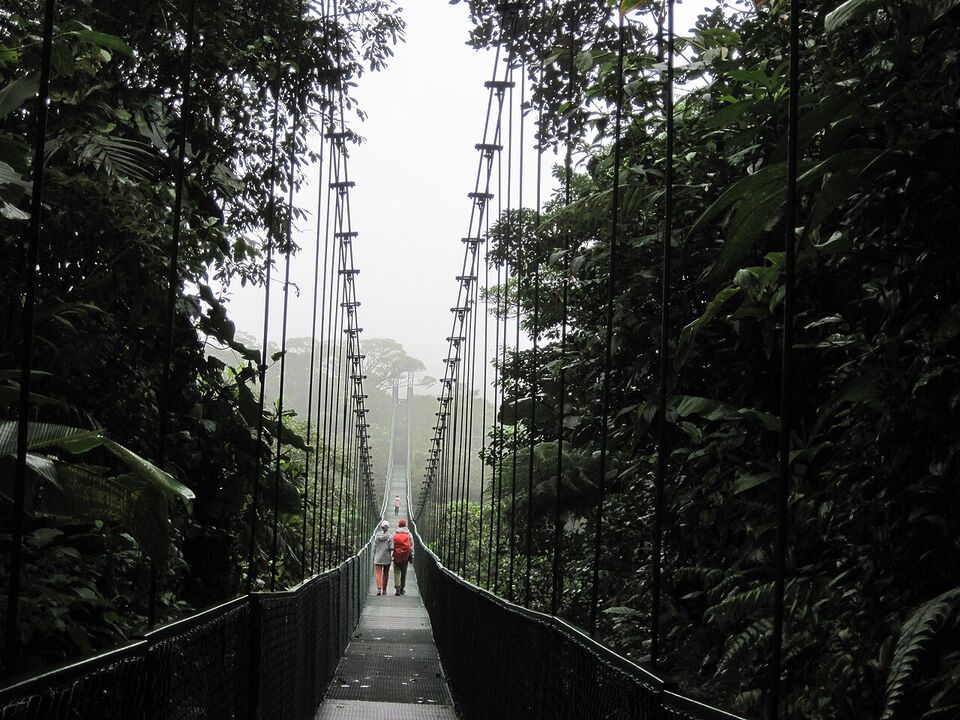
Monteverde has the Preserve's own hanging bridge, plus private parks that string several bridges through the canopy and add ziplines. The Preserve's bridge sits on the Heart of the Forest and Continental Divide trails and is included in those circuits. Private bridge parks charge their own fees and sell tickets on their own sites, outside SINAC. We could not confirm 2026 prices or hours for any of them, so we name none.
How to choose: a bridge park is a good rainy-day plan or a family outing, since you walk on an easy path with a guide on some options. Ziplines are more of a thrill ride than a wildlife tour, and the Costa Rica Tourism Board lists zip lining at Monteverde under dry-season activities (December to April). Ask about weight and age limits, whether wind or rain closes the lines, and whether the price includes transport. See our adventure guide for how to compare operators.
Night walks
A night walk is a guided walk after dark with flashlights, led by a naturalist. At the Monteverde Preserve the walk starts around 6 to 6:30 p.m., and the Preserve describes what you might see: tree frogs and salamanders, birds asleep on perches, nocturnal mammals in the understory, and faintly glowing fungi and insects. Several private gardens and farms around Santa Elena also run night walks.
These walks are the best way to see frogs, large insects and sleeping birds, and they are also the part of Monteverde most likely to be oversold. Animals are not guaranteed, and the best guides are the ones who say so. Wear closed shoes, bring a light jacket, keep your voice low and follow the guide's rule on flash photography. Do not touch frogs or insects; some skin secretions can irritate, and handling can harm the animal. For more on what to expect, read our wildlife guide.
The quetzal and other birds
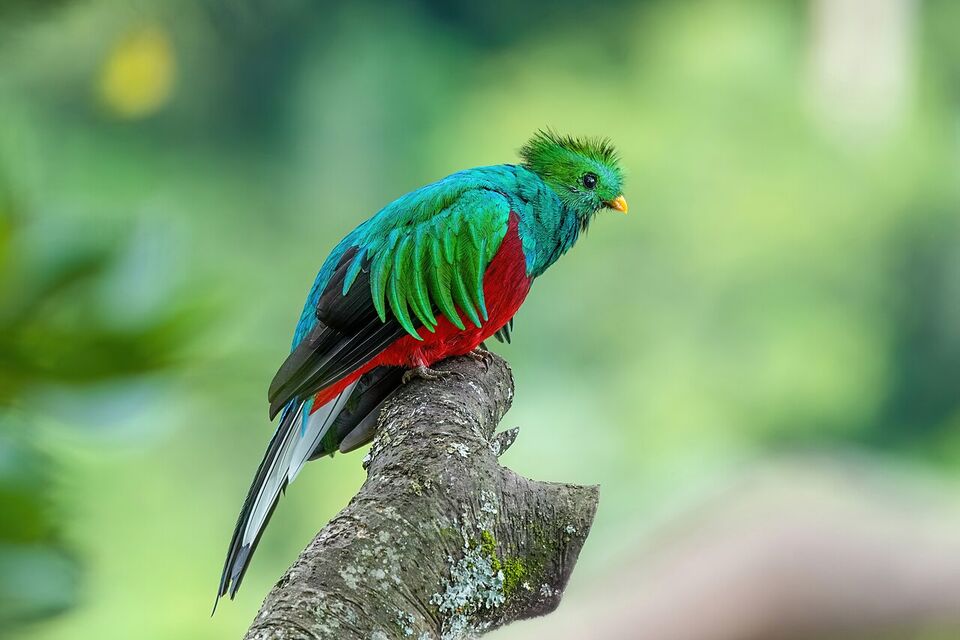
The resplendent quetzal, a green-and-red bird with a long tail, is the prize for many visitors. The Preserve says Monteverde remains one of the last strongholds for the species. Quetzals eat wild avocados, so guides look for fruiting trees and listen for calls. One commercial site calls March a peak month, but we could not confirm a quetzal season with an official source, so treat any "best month" claim as a rough guide.
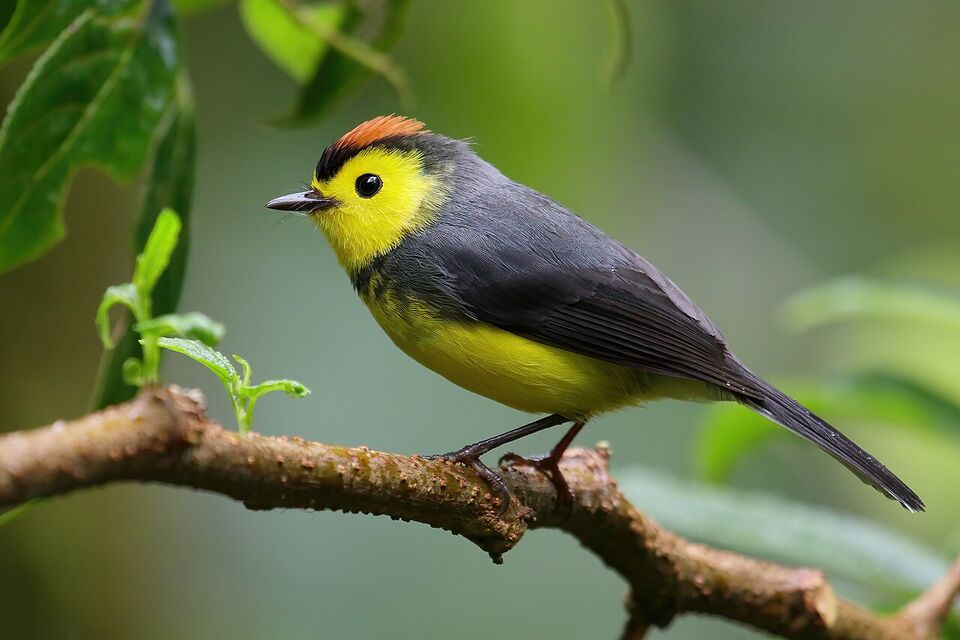
The honest advice: quetzals are not guaranteed anywhere. A guide with a spotting scope greatly improves the odds, a morning start helps, and a second morning helps more. Santa Elena's own site cites more than 200 bird species. If you only have one morning, take a guided walk rather than going alone.
Monteverde is also known for the golden toad, which disappeared in the late 1980s and has become a symbol of how fragile cloud forests are. It is a reminder to keep to the trails and follow the rules about touching and feeding wildlife.
The road up from Tilarán and the bad-road reality
Monteverde is about 3.5 hours from San José and about 2.5 hours from Liberia by averages. The last part, under 12 miles (20 km) from the main road to Santa Elena, takes roughly 40 minutes because it is steep and winding, and a rental company that has driven it advises a 4x4. A visitor to Santa Elena reserve described some stretches as in poor condition, and the town's history notes that paving in the area has been partial.
Practical points for drivers:
- Do the climb in daylight; mist and rain make the curves harder to read.
- Choose a vehicle with some clearance, and check with your rental company whether the car's insurance covers unpaved roads.
- Do not drive through rivers: a rental car driven through water voids all insurance, including the mandatory third-party cover.
- Check a recent traffic or road-conditions source the morning of your drive, since slides and roadworks change what's open.
Our driving guide and car rental guide cover insurance, fuel and road habits in more detail.
Shuttle versus rental car
This is the main decision for Monteverde. Both work, and the right choice depends on how much driving you want to do.
| Option | Typical cost | Good for | Trade-offs |
|---|---|---|---|
| Shared shuttle from San José | Roughly US$40-70 per person | Solo travelers and couples; no mountain driving | Fixed times; about 4 hours with stops |
| Private transfer from SJO | Roughly US$200-300 per vehicle before tax | Families and groups of 3-6 | Rates can rise after mid-December |
| Boat-and-shuttle from La Fortuna | About US$45 per person in one reseller listing | Arenal to Monteverde without the lake road | About 3 hours; check current fares and schedules |
| Rental car | From roughly US$60 a day with insurance in high season, more for 4x4 | Flexibility and combining stops | The final climb is the hardest driving on many routes |
| Public bus | Usually under US$10 | Budget travelers | Confirm the terminal; San José terminals changed in 2025 |
The table gives rough ranges from reseller pages and travel blogs, not fixed fares. Confirm the price for your date before you book. Public buses from San José to Monteverde use the Atlántico Norte terminal (Transmonteverde), according to a May 2026 guide, but confirm the terminal with the company.
Different from home
In the US, a "3.5 hour drive" usually means highway miles. In Costa Rica, drive times are averages without stops, and rain, trucks and mountain curves regularly add an hour. Do not plan a tight connection on the day you arrive, and do not drive the final climb after dark.
To weigh the two options in more detail, see our getting around guide.
Weather: cool, windy, and damp
Monteverde is cooler than almost everywhere else you will visit. Wikipedia gives a mean annual temperature near 64°F (18°C) for the area, and a commercial climate table lists daytime highs of about 79-84°F (26-29°C), so expect sun to feel warm and shade, wind and evenings to feel cool. Humidity runs 74-97%, and rainfall averages about 3,000 mm (118 inches) a year. A commercial climate table puts the driest months at February to April and the wettest at September to October (more than 400 mm in October), though conditions vary from year to year.
Wind is part of the experience on the ridges. The Preserve describes a dwarf forest shaped by constant wind near the Continental Divide, and mist can arrive in minutes. The dry months, December to April, are usually clearer but windier, and they are the busiest. The wetter months are quieter, and many visitors find the forest greener, though some trails get muddy.
Pack layers: a rain jacket, a fleece or light sweater, long pants, closed shoes with tread, a warm hat for night walks, and a dry bag or plastic liner for your camera. The Preserve discourages umbrellas on the trail, so a jacket is the better plan. Our packing guide has a full list, and when to go explains seasons.
Where to stay
Hotels are spread along a long ridge road, so location matters more than in most towns. Prices below use our tier scale: $ is under US$120 a night for a double, $$ is US$120-300 and $$$ is over US$300.
Santa Elena town
Restaurants, groceries, tour offices and the shuttle stops are here. Good for short stays and travelers without a car. Expect some noise and steep streets.
Cerro Plano
A short taxi ride from both Santa Elena and the Preserve road. A balance of quiet and convenience.
The Preserve road
Lodges here are near the Preserve and the Visitor Center, with garden birds and quiet evenings, but fewer restaurants and a longer taxi to town.
Outlying lodges
Mountainside lodges give views and privacy, but check the last stretch of road before booking.
Ask the hotel whether it offers a shuttle to the Visitor Center, since road conditions and parking make it easier than driving yourself. See our where to stay guide for tips on choosing lodging and what tiers mean. Quotes may or may not include 13% sales tax and a service charge, so check the total.
Coffee, chocolate and food
Coffee became a mainstay of the area from the 1970s, when dairy declined, and several run tours that cover growing, picking, roasting and tasting. Chocolate tours do the same for cacao. Both are good for a rainy afternoon, and most include a tasting. We have no confirmed 2026 prices for these tours, so check each operator's site. For background on how to tell a good tour from a tourist stop, see our coffee guide.
Santa Elena has sodas, bakeries and sit-down restaurants. A casado (plate with rice, beans, salad and a protein) is the budget meal; one travel blog gives US$5-10 for a soda meal, and tourist restaurants run higher. Restaurant bills usually add 13% tax and a 10% service charge.
How many nights, and a sample plan
Two nights works if you arrive by early afternoon on day one, spend all of day two on the cloud forest and an evening night walk, and leave on day three. Three nights is better if you also want a bridge park, a coffee or chocolate tour, or a slower pace. One night is rarely worth the trip.
- Day 1
Arrive and settle in
Reach Santa Elena by mid-afternoon, check in, and book a night walk. Eat early and layer up.
- Day 2
Cloud forest morning
Take a guided or timed morning walk at the Preserve or Santa Elena. Afternoon: a coffee or chocolate tour, or a bridge park. Evening: the night walk.
- Day 3
Onward
Leave in the morning, ideally before the afternoon rain. Allow extra time on the mountain road, and book boat or shuttle tickets in advance if you are going to Arenal.
If you want to combine Monteverde with Arenal, see our Arenal and La Fortuna guide. For the coast side, the Guanacaste guide covers beaches within a few hours of Liberia, and the national parks guide explains how tickets work at SINAC parks, which are separate from private reserves like these.
Add it to a route in the trip builder, or ask us to plan the hotels, transfers and guides for you.