Is San José worth your time?
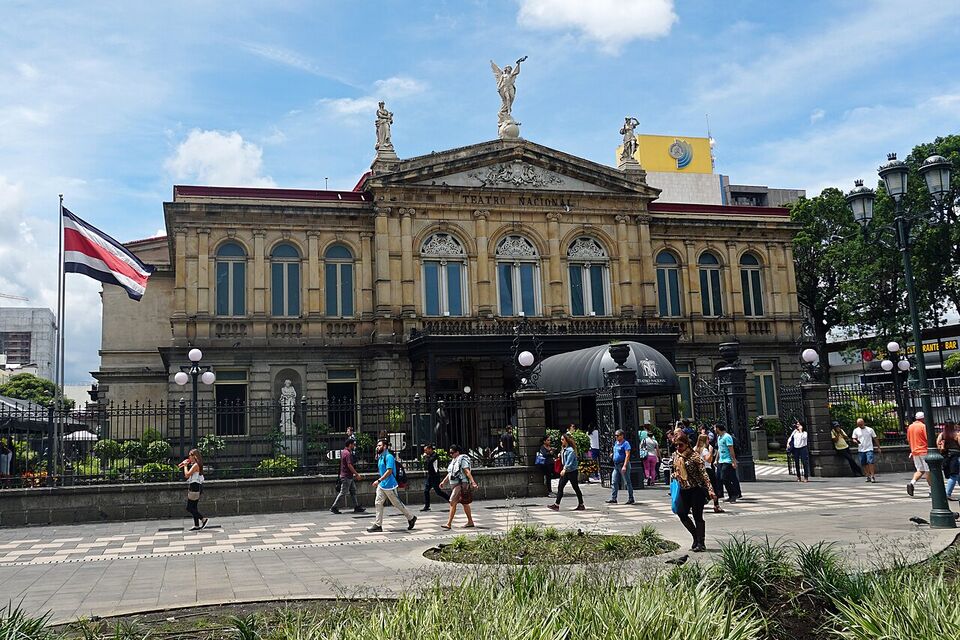
San José is the capital, a busy city of about 350,000 people inside a metropolitan area of more than 2 million, and most visitors pass through it. The short answer: give it one day, or one night plus a morning. The city has a pair of excellent museums, a grand 19th-century theatre, a big central market and a good restaurant scene. What it does not have is a beach, a rainforest or an easy-going pace.
The city sits at about 3,380 feet (1,030 m) in the Central Valley, so the weather is milder than on the coast: afternoon highs of about 81 to 86°F (27 to 30°C) and cool nights. It is also the hub for the surrounding volcanoes and coffee farms, covered in our Central Valley guide, and for buses and shuttles to almost everywhere else in the country.
This page covers whether to stay or pass through, the neighborhoods, the museums and theatre, food, safety after dark, where to sleep, how to get in from the airport, day trips, and one-day and two-day plans. For the bigger picture of where San José fits among the other regions, see Costa Rica's destinations.
Stay or pass through?
Here is how to decide.
- Spend a night or more if you arrive in the afternoon or evening, you have a morning flight out, you like museums, architecture and food, or you want to do a volcano or coffee day trip without driving.
- Pass through if you arrive in the morning and your first stop is La Fortuna, Monteverde or Manuel Antonio. In that case, you lose little by leaving the capital behind and starting your trip on the day you land.
- Sleep near the airport instead if your flight leaves before about 8 a.m. or lands very late. Alajuela, around the airport, has simple hotels and is only a short drive from the terminal.
San José is not as dangerous as its reputation suggests, but it is not a place for wandering at night. If you decide to stay, choose a neighborhood from the next section and plan evenings around a taxi or a short walk to dinner.
Insider tip
If you land on a Sunday or a holiday, expect some museums and shops to be closed or on short hours. The National Museum is closed on Mondays, so a Monday is the day to see the market, the theatre exterior and a neighborhood walk instead.
The neighborhoods
San José is a grid of avenues (running east to west) and streets (running north to south), but addresses are usually given as directions from a landmark, not as numbers, so use a map app and the name of the building. These are the areas travelers use most.
The center
The historic core around the Plaza de la Cultura, Avenida Central and the Plaza de la Democracia holds the National Theatre, the Gold Museum (under the plaza) and the National Museum. It is crowded and lively in the daytime and much quieter after businesses close. Good for a day visit, less good for sleeping.
Barrio Amón and Barrio Otoya
One of the city's oldest neighborhoods, laid out in the late 19th century and named for a French coffee merchant, Monsieur Amon. Many old houses are now hotels, galleries and restaurants. It is a short ride or walk from the theatre and works well for a first or last night.
Barrio Escalante
East of the center, a tree-lined residential area that has become the city's best-known dining and café district. Plan dinner here, but check opening hours and reservation policies, as restaurants change often.
Los Yoses and San Pedro
A residential and student area east of the center, home to the Inter-American Court of Human Rights and the main university campus in San Pedro. It is more relaxed than the center, with cafés, bars and lower prices. The Incofer commuter train stops at San Pedro on weekdays.
Sabana and Paseo Colón
West of the center, La Sabana Metropolitan Park is the city's largest green space, sometimes called its "lungs," and the National Stadium sits at its edge. The avenue leading to it, Paseo Colón, has business hotels, restaurants and the route of the 2026 Festival de la Luz parade.
Escazú and Santa Ana
West of the city, these suburbs have large hotels, shopping centers and many restaurants. They suit travelers who want a calmer base with a car. They are not walkable to the main sights.
Museums and the National Theatre
Three places are worth the time. They sit within about a ten-minute walk of one another. Hours and prices below come from each institution's own website in November 2026, and they can change, so check before you go.
| Place | Hours | Foreign visitor price | Notes |
|---|---|---|---|
| National Museum (Museo Nacional, Bellavista) | Tuesday to Saturday 8:30 a.m. to 4:30 p.m.; Sunday 9 a.m. to 4:30 p.m.; closed Monday | US$11; students US$6 | Former Bellavista fortress beside the Plaza de la Democracia. Entry is from the plaza. Ticket line: +506 2211 5700 |
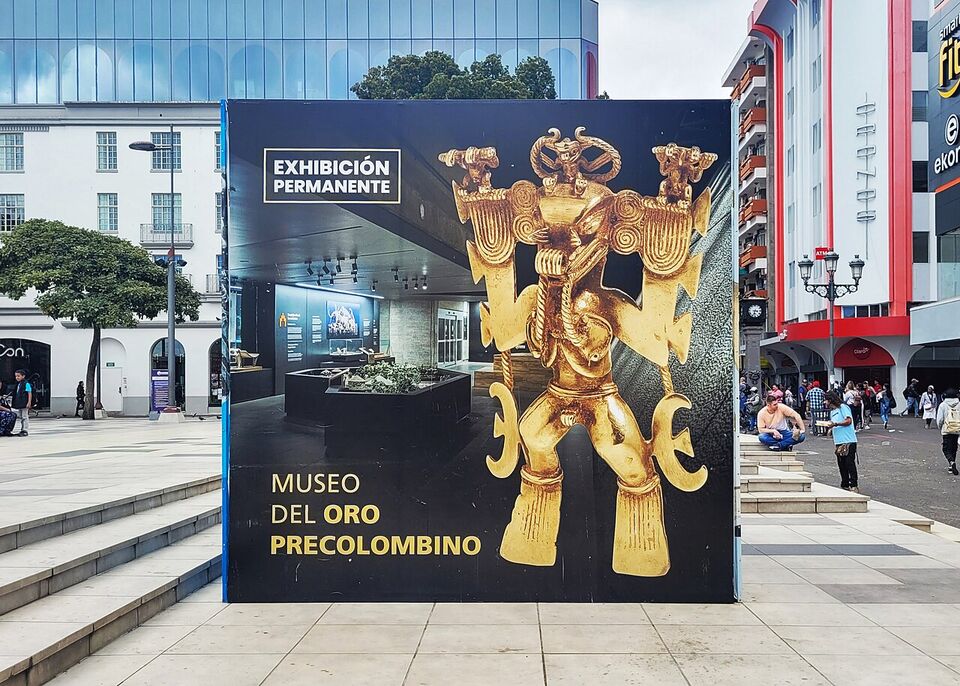
| Museos del Banco Central (Gold Museum) | Daily 9 a.m. to 4:30 p.m. | ₡8,800 (about US$20); students ₡6,950 (about US$16) | Underground, below the Plaza de la Cultura. Free under 12 and on International Museum Day (May 18) |
| National Theatre (Teatro Nacional) | Visiting hours 9 a.m. to 4 p.m.; box office phone 2010-1100 | Check the theatre's website | Guided tour prices vary, so check with the theatre. Evening shows have separate tickets |
National Museum
The museum fills the former Bellavista military fort, a building with thick walls and a garden courtyard. Its exhibits cover pre-Columbian archaeology, colonial and modern history, natural history and temporary shows. Look for the stone spheres of the Diquís culture in the courtyard, which are part of the country's cultural identity. A butterfly garden is on the grounds. The museum lists an agenda of events, including a festival on the abolition of the army on Sunday, November 29, 2026, from 9 a.m. to 4 p.m.
Gold Museum and the other bank museums
The Banco Central runs the Pre-Columbian Gold Museum, a numismatic (coin and banknote) museum and rotating art and archaeology shows in one underground building. Allow about 90 minutes to two hours. Check the closing dates before you plan a December visit: the museum is closed on December 1, 24, 25 and 31, 2026, and on January 1, 2027, and it plans two more closure days between November and December for electrical maintenance, to be announced.
National Theatre
Opened in the 1890s, the theatre is widely regarded as the finest historic building in the capital, with lavish Italian furnishings, painted ceilings and a gilded foyer. You can visit between 9 a.m. and 4 p.m., but the visit may be restricted on rehearsal and performance days. A concert or ballet is the best way to see it. Late November 2026 programming includes a Portuguese Fado concert on November 25 and a National Symphony concert on November 27. The theatre's café is a pleasant break.
Other museums and parks
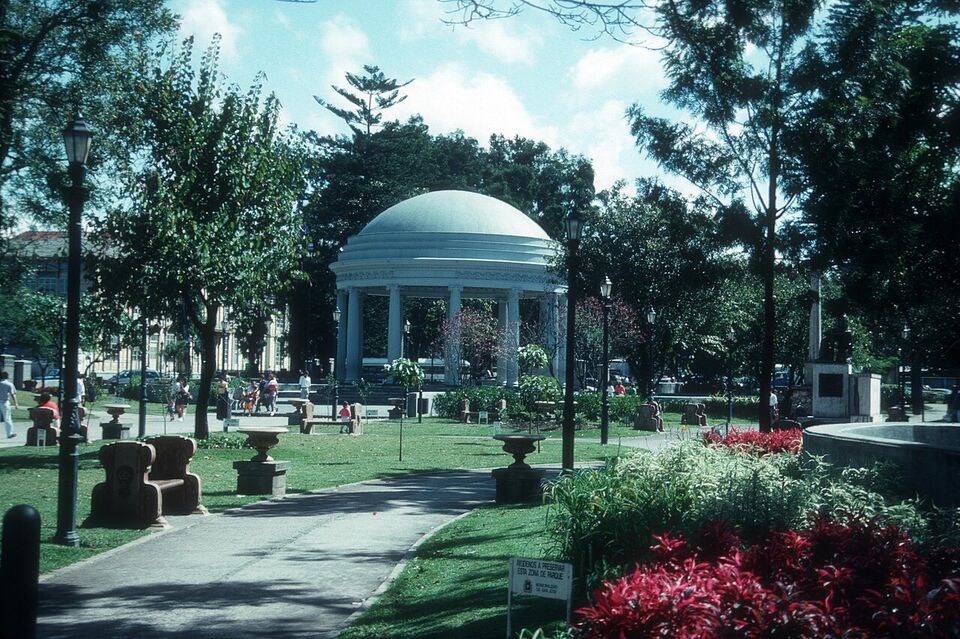
The city also has a children's museum, a jade collection, a zoo, the Japanese-style Okayama Park and Parque Morazán with its neoclassical Temple of Music. Hours and prices change, so check each official site before you go.
Mercado Central and where to eat
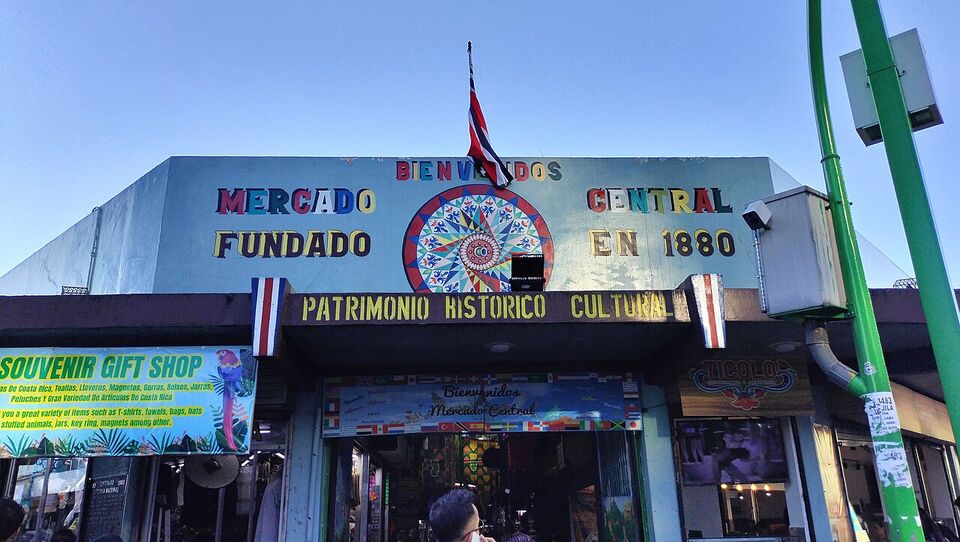
The Mercado Central is an old covered market in the center. It has food stalls, coffee sellers, souvenirs, leather goods and small lunch counters called sodas. Come in the morning or at lunch and watch your pockets in the aisles. Hours vary by stall, and many close in the late afternoon, so confirm on the spot. It is an easy place to try gallo pinto (rice and beans), a casado (the plate-of-the-day with rice, beans, salad, plantain and a protein) or fresh fruit juices.
Eating well in San José does not take much money. A set lunch at a soda costs roughly US$5 to US$10, and a tourist-style dinner in a nicer restaurant often runs US$20 to US$50 per person, according to travel-cost blogs. Treat these as rough guides. Restaurant bills normally add 13 percent sales tax and a 10 percent service charge, so an extra tip is optional.
- For a quick local meal: look for a soda with a daily special. Pay at the counter or table.
- For an evening out: Barrio Escalante has the densest cluster of restaurants and cafés, and Barrio Amón has a smaller set in restored houses.
- For coffee: specialty cafés in Escalante and Los Yoses pour local beans. Our coffee guide explains what to look for, and the food guide covers dishes and etiquette.
Different from home
Tap water in San José is generally drinkable. As of September 18, 2026, the CDC lists a Level 1 notice for a hepatitis A outbreak, with most cases in San José province, and it recommends the hepatitis A vaccine for travelers age 1 and older. Wash your hands often, choose busy food stalls and ask your doctor about vaccines. See health.
Safety in the center after dark
The State Department's advice for Costa Rica as a whole is Level 2, "exercise increased caution," because of crime. Petty theft such as bag snatching and pickpocketing is the main threat; armed robbery also occurs. San José has its share of that, especially in the center, near bus terminals and in crowded markets. Check the current advisory and its date on travel.state.gov, which does not name specific regions.
These habits cover most of the risk.
- By day: the main streets around the museums and theatre are busy and fine. Keep your phone away at crossings, wear bags in front and carry only what you need. Leave passports in the hotel safe and carry a photocopy, as the tourism board advises.
- After dark: the center empties once offices and shops close. Do not walk between neighborhoods. Take a licensed red taxi or a ride-hailing app door to door, even for a short distance.
- Cars: never leave anything visible in a parked vehicle, and use a hotel or paid garage. Robberies at short-term rentals also happen, so check locks.
- If you are robbed: the State Department advises not resisting an armed robber. Call 911 for police and ambulance.
Watch out
Marches and strikes sometimes close streets in the center. The Tico Times reported a one-day strike with teachers' groups marching through downtown in mid-November 2026. Check local news on the day and leave extra time for the airport. For the wider picture, read Is Costa Rica safe? and our safety guide.
Taxis and ride-hailing
Uber and similar apps are widely used in San José, but they sit in a legal gray area: as of mid-November 2026 no platform law has passed. The official red taxis are the regulated option. A published comparison from October 2026 gave about ₡1,890 (about US$4) for a 3 km UberX ride in central San José versus about ₡3,655 (about US$8) for a red taxi. Ask a red taxi driver to use the meter (la maría), or agree the fare before you start.
Getting in from the airport (SJO)
Juan Santamaría International Airport is about 12 miles (20 km) northwest of downtown, in Alajuela province, and the trip takes roughly 30 to 45 minutes outside rush hour and an hour or more in heavy traffic (our estimate; traffic varies). The airport has free Wi-Fi, a currency exchange, and several lounges.
- Official orange airport taxi: roughly US$25 to US$35 to central San José, per a travel blog; agree the fare or use the taxi desk.
- Ride-hailing: usually cheaper, but the pickup point can be away from the arrivals door. A June 2026 pilot lets about 100 airport taxis be booked in the Uber app at SJO.
- Hotel shuttle or private transfer: many San José hotels arrange pickup. Private transfers run roughly US$200 to US$400 per vehicle for longer routes, and shared shuttles roughly US$40 to US$70 per person.
- Bus: a local bus to the center costs a few dollars. Check the stop and schedule at the airport.
The airport has been under expansion since about July 2026, with new space at departures, security and immigration due in the second half of 2027, and some parking areas are closed. Arrive early for departures, and expect long lines at peak times. Our flights and airports page has more on SJO.
Getting out of the city
Bus terminals moved in 2025. The old Terminal 7-10 closed on April 30, 2025, and its routes shifted to the Terminal Atlántico Norte (Avenida 9, Calle 12: Transportes Jacó, MEPE and Transmonteverde), the Comtrasuli terminal near the Coca-Cola market and others. The Gran Terminal del Caribe serves Puerto Viejo and Limón, and buses to La Fortuna leave from La Radial in Alajuela, near the airport. Confirm the terminal with the bus company before you go. Most intercity rides cost under US$10. The getting around page covers buses, shuttles and flights.
The Incofer commuter train runs Monday to Friday from the Atlántico station to Heredia and Alajuela: San José to Heredia costs ₡550 (about US$1.25) and Heredia to Alajuela ₡800 (about US$1.80), as of October 2026. Call +506 2542-5800 or check Incofer for the schedule.
Save money
If you plan only a day or two in the capital, you do not need a rental car. Pick it up on the day you leave San José, because the city limits driving by license plate on weekdays (ask the rental company) and parking is scarce. See car rental.
Where to stay
Choose the neighborhood first, then the hotel. We do not name properties here because prices, ownership and quality change, and we cannot confirm every one is open. Price tiers are for a double room per night: $ is under US$120, $$ is US$120 to US$300 and $$$ is over US$300.
| Area | Good for | Typical tiers |
|---|---|---|
| Barrio Amón and Otoya | First or last night, atmosphere, walking to the theatre | $ $$ |
| Barrio Escalante and Los Yoses | Restaurants, cafés, a local feel | $ $$ |
| Sabana and Paseo Colón | Business hotels, the big park, easy taxis | $$ |
| Escazú and Santa Ana | Quieter, with a car, resort-style stays | $$ $$$ |
| Alajuela, near the airport | Late arrivals and early flights | $ $$ |
Look for secure parking if you have a car, a front desk open around the clock and a hotel that will call a taxi for you. Ask whether the quoted price includes the 13 percent tax and any service charge. For choosing between types of lodging across the country, see where to stay.
Day trips from San José
San José is the best base in the country for short outings, because several of the top attractions lie within one or two hours. Distances are average drive times.
- Poás Volcano: about 1 hour. The park is open with strict limits as of November 12, 2026, and tickets must be reserved online. Details are in the Central Valley guide.
- Irazú Volcano and Cartago: about 1 hour. Irazú is the highest volcano in the country, with a green crater lake, and Cartago has the basilica of the Virgin of the Angels.
- Coffee farms: Alajuela and Heredia are close to the airport and the city, and a tour usually takes half a day.
- Sarchí: about 1 hour, known for painted oxcarts and woodwork.
- Turrialba and Guayabo: about 2 hours; check whether the volcano and archaeological site are open.
You can go by guided tour or by car. A tour is easier in the city: the guide handles tickets and the drive. A driven day is cheaper for two or more, but the first miles through San José traffic are slow. See the Central Valley page for how to choose.
One-day and two-day plans
These plans assume you arrive in the morning or already have a hotel in the city.
- Day 1
Museums, theatre and dinner in Escalante
Start at the National Museum when it opens at 8:30 a.m. (Tuesday to Saturday) and spend about 90 minutes. Walk to the Plaza de la Cultura for the National Theatre and the Gold Museum. Eat lunch at a soda or the Mercado Central, then wander Barrio Amón in the afternoon. Take a taxi to Barrio Escalante for dinner. If it is a Monday, swap the National Museum for the market and the Gold Museum, which is open daily.
- Day 2
A volcano or coffee morning
Book Poás or Irazú online ahead of time (the SINAC system sells timed tickets), leave by about 7 a.m., and be back by early afternoon. Poás is clearest in the morning, before clouds roll in. Spend the afternoon at a coffee farm, a café or the airport transfer. Our Central Valley guide explains tickets, limits and how to combine stops.
- If you have an evening
Theatre, a show or a festival
Check the National Theatre calendar for concerts. In December, the Festival de la Luz parade is on Saturday, December 12, 2026, running from the Plaza de la Democracia to the Torre Mercedes on Paseo Colón (start time not published at the time we checked). The Fiestas de Zapote usually start on December 25 and are followed by the Tope and Carnaval parades, so check the dates. Public holidays in the coming weeks are December 1 and December 25, 2026. See festivals.
When your days in the capital are done, onward routes lead to Arenal, Monteverde and Manuel Antonio. If you still need a plan for the whole trip, start with plan your trip.
Add it to a route in the trip builder, or ask us to plan the hotels, transfers and guides for you.