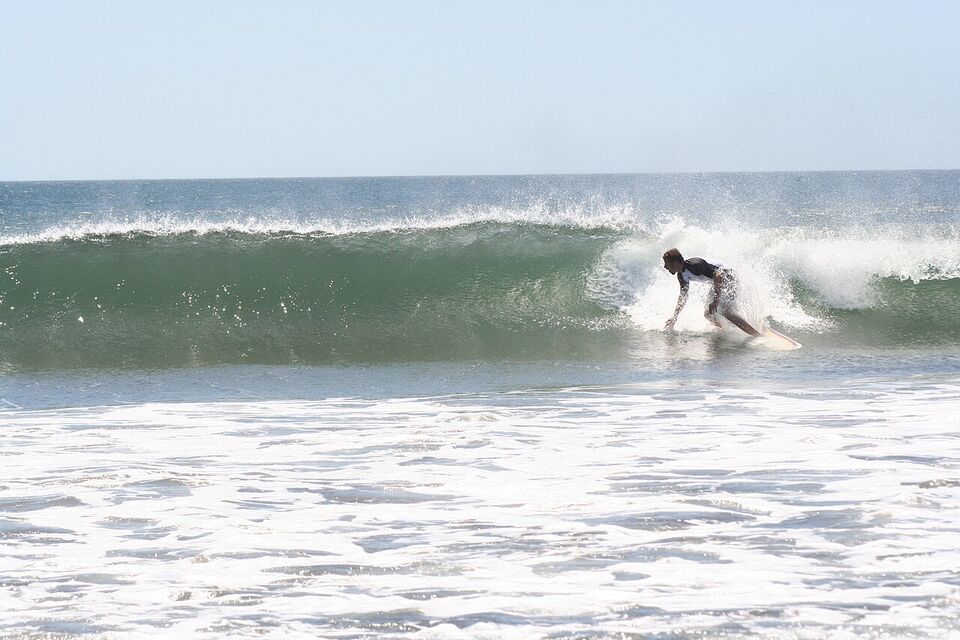
Overview: why Costa Rica works for surfers
Costa Rica has warm water, a long Pacific coastline, a Caribbean coast with a famous reef wave, and surf towns that cater to every level. You can learn in the whitewater on a sandy beach in the morning and watch advanced surfers on a hollow break in the afternoon. Many Americans combine lessons with a beach week; see our guide to beaches for non-surf options.
There is no single best surf town, only a best match. Pick the break by your level, the season by your tolerance for rain and crowds, and the town by whether you want nightlife, yoga or quiet. This guide covers the main regions, waves by skill level, seasons, lessons and rentals, safety, etiquette, what to pack and what non-surfers can do. We have hedged all price and season statements, since we could not confirm them against official sources.
Watch out
"Beginner-friendly" describes a wave on a normal day, not the ocean. Conditions change with tide, swell and wind, and lifeguards are limited at many Costa Rican beaches. Ask the school or a local about the day's conditions, and do not paddle out alone if you are new.
Surf regions at a glance
Break descriptions below are general and widely repeated; local conditions vary with swell and sandbars. Drive times are averages from the nearest main airport, and rain or roadworks can add an hour. Our regions overview shows where each place sits.
| Region | Typical break | Suits | Notes |
|---|---|---|---|
| Tamarindo, Playa Grande, Avellanas, Negra (Guanacaste) | Beach breaks, some reef and rock | Beginners at Tamarindo; intermediate and up at the others | About 1 hour from Liberia (LIR); many schools. See Tamarindo |
| Nosara (Playa Guiones) | Long, sandy beach break | Beginners to intermediates | About 1.5 hours from LIR by one blog's estimate (about 5 hours from SJO); unpaved last stretch |
| Sámara | Gentle beach break behind a reef | Beginners, families | About 2.75 hours from LIR |
| Santa Teresa and Mal País | Powerful beach and reef breaks | Intermediates and up; beginners on small days | Ferry or a long drive; ask your lodge for current times. See Nicoya Peninsula |
| Jacó and Esterillos (Central Pacific) | Consistent beach breaks | Beginners to intermediates; crowded | About 2 hours from San José (SJO) |
| Playa Hermosa (near Jacó) | Fast, hollow beach break | Experienced surfers | Shallow, powerful; not the Hermosa in Guanacaste |
| Dominical (South Pacific) | Beach break, strong currents | Intermediates and up | About 4 hours from SJO. See Uvita and Dominical |
| Pavones (Golfo Dulce) | Long left-hand point break | Experienced surfers | Remote, near the Panama border; a long day from San José |
| Salsa Brava (Puerto Viejo, Caribbean) | Shallow reef wave, heavy | Expert surfers only | See Caribbean coast |
Some famous northwest breaks, such as the rock formations off Santa Rosa National Park that surfers call Witch's Rock and Ollie's Point, are reached by boat. They are for experienced surfers, they lie in or beside protected areas, and access rules change. Use licensed operators; Costa Rica has fined unauthorized tours and illegal park entry since April 30, 2026.
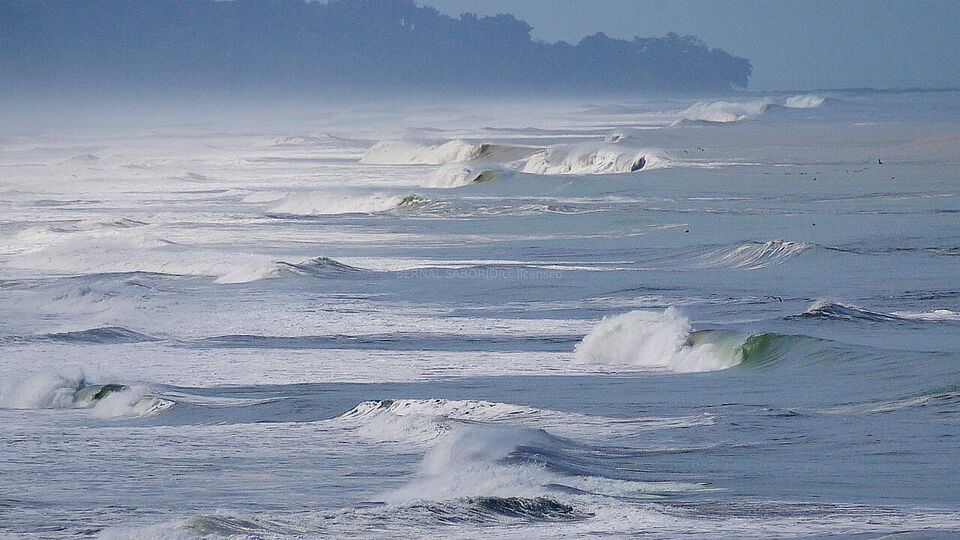
Choosing a surf town by style
Waves matter, but so does everything else about the trip. This is how the main towns differ, in plain terms.
Tamarindo
Many schools, rentals and restaurants, and the shortest transfer from Liberia airport. It is busy and sometimes crowded in the water. Good for first-timers and mixed groups.
Nosara
A long, sandy beach, a calm lineup and yoga everywhere. Quiet at night and farther from airports. Good for beginners who want a wellness week.
Santa Teresa and Mal País
Consistent waves, a social scene and a long, rough drive. Better for confident beginners and intermediates; swimmers should be careful.
Jacó and Esterillos
The easiest surf trip from SJO, with a big town, nightlife and steady beach breaks. Less scenic and more built-up than the northwest.
Dominical and Uvita
A laid-back backpacker feel with strong waves and rips. Suits intermediates, and whale season draws other visitors.
Puerto Viejo de Talamanca
Salsa Brava is the draw for experts; other beach breaks suit less experienced surfers on small days. Different food, music and climate from the Pacific.
Waves by skill level
Beginners
Look for sandy-bottom beach breaks with long, rolling whitewater and a patch of beach where you can walk back out. Tamarindo's main beach, Playa Guiones in Nosara, Sámara, Jacó and Manuel Antonio's Espadilla beach are the usual starting points. The best beginner days are small, with a tide that is not too low, and a morning start. Take lessons for the first few days, even if you have surfed in the US; Costa Rican beach breaks can have strong currents.
Intermediates
Once you can catch green waves and turn, try Playa Grande or Avellanas on smaller days, Santa Teresa and Mal País early, Jacó's less crowded sections, or Dominical on mellow mornings. Learn the beach's rip current and its sandbars first. Reef breaks, such as parts of Playa Negra, call for reef booties and careful entry and exit.
Advanced and experts
Salsa Brava over a shallow reef, Playa Hermosa's heavy beach break near Jacó and the long, powerful left at Pavones are for experienced surfers, and sizes vary. Ask a local, check the forecast and bring a board that suits the size. If you are not sure you belong at a heavy break, you do not.
Reef breaks versus sand breaks
Sand breaks have shifting sandbars, so the waves change with tides and storms. They are more forgiving when you fall, though shorebreak can still injure you. Reef breaks are more consistent in shape but have a hard, sometimes sharp bottom. Falling on reef causes cuts that can become infected in warm water; clean and treat wounds quickly. Wear booties for reef, watch the tide, and learn the entry channel before you go.
River mouths and estuaries produce good waves but also murky water, debris and sometimes animals you would rather not meet. In November 2026, the Tico Times reported dead bull sharks, rays and fish in a sand-blocked estuary near Playa Langosta, and authorities were investigating the cause (see Tamarindo). After heavy rain the CDC also advises avoiding floodwater and muddy water, partly because of leptospirosis, a bacterial infection. Skip surfing at river mouths during or right after storms.
Seasons, swell and wind
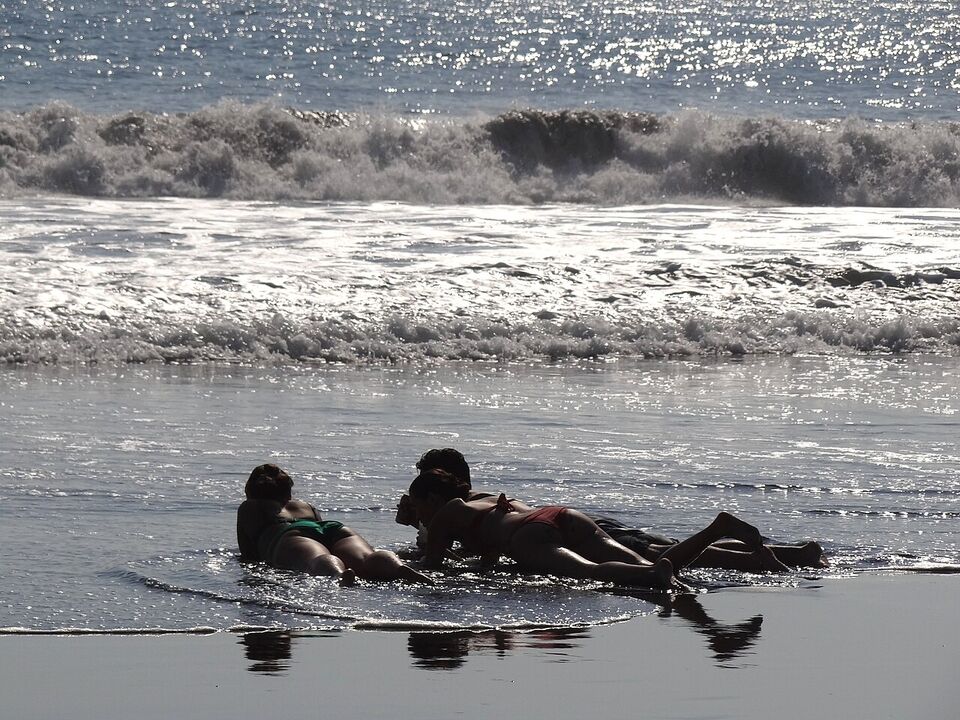
We could not confirm an official surf-season calendar, so treat the following as general patterns and check a surf forecast and local schools before you book.
- Pacific dry season (about December to March, with April a transition): sunny, with smaller and less frequent swell at many beaches. In Guanacaste, mornings often have offshore winds that smooth the waves, though the strong trade winds can make the water choppy in the afternoon (see Guanacaste).
- Pacific green season (about May to October/November): swell from the southern hemisphere tends to be bigger and more regular, and many surfers favor this time. The trade-off is afternoon rain, onshore wind later in the day and, in September and October, the heaviest rain. Mornings are the surf window.
- Caribbean: there is no dry season, and rain falls year-round. Salsa Brava is often described as best with winter swells, roughly December to March, and it can work at other times too. The Caribbean's wetter and drier months follow a different pattern from the Pacific; see when to go.
The Costa Rica Tourism Board describes the Pacific's dry season as December to March, with April a transition, and the rainy season as May to October. Remember that 2026-27 is an El Niño year; forecasters expect the North Pacific to be drier and hotter than normal. We do not know how that will change swell, so ask schools about conditions on your dates. High season (December to April) brings the most crowds and highest prices at surf camps and hotels.
Reading a forecast
Surf forecasts list wave height, swell period and wind. Period, the seconds between waves, tells you how much power a wave carries: short periods mean weak, choppy surf, and longer periods mean more push. Beginners do better on small, short-period days at a sand break. Wind matters as much: light offshore wind in the morning grooms the face, and onshore wind in the afternoon makes it messy. Tide changes how each break works, and the local school will know which tide suits the beach. When in doubt, ask the lifeguard, the school or the person renting you the board, and do not rely on one app.
Lessons, boards and rentals
Most surf towns have multiple schools; ask for a certified instructor who teaches safety and rip-current skills. A typical beginner lesson lasts 1.5 to 2 hours and includes a board and rash guard (a close-fitting shirt that prevents chafing). A Nosara blog quotes about US$50-80 for a 90-minute lesson and US$200-300 for a multi-day beginner package; treat these as rough. Group lessons usually cost less per person, and private lessons are faster for adults. Ask how many students share an instructor and book morning slots in high season.
Board rentals by the day or week are available in most surf towns; we found no reliable current rates, so ask. A foam soft-top board is best for beginners. Check the deposit, who pays for damage and whether the leash and wax are included. Avoid renting a board that does not fit you. A longer, wider board is easier to paddle and catch waves on. If you bring your own board, note that airlines charge oversize fees that vary, and car-rental companies may limit roof racks. Ask both before you pack. See our car rental guide.
Save money
Surf towns are cheaper in the green season, and some schools offer weekly deals. A multi-day package is usually cheaper per lesson than one-offs. If you plan to surf several days, rent a board by the week instead of the day.
Getting there with a board
Choose your airport by where you plan to surf. Liberia (LIR) is closest to Tamarindo, Nosara, Sámara and Santa Teresa (by road or ferry). San José (SJO) is better for Jacó, Dominical, Pavones and the Caribbean. Drive times from SJO, from the same drive-time table, run about 2 hours to Jacó, 4 hours to Dominical and 4.5 hours to Puerto Viejo, and from LIR about an hour to Tamarindo (all averages without stops).
If you travel with a board, ask your airline about size and weight limits and fees before you buy the ticket, since policies vary and we did not check them. At the other end, a board bag will not fit in a small rental car with luggage, so book a larger vehicle or arrange a shuttle in advance. Check the rental company's policy on roof racks and the mandatory liability insurance, which typically adds about US$13-25 a day to rental costs. Never leave boards in a parked car.
Many surfers skip the hassle and rent boards locally, which also avoids damage on bumpy flights. Surf camps bundle lodging, meals, lessons and transfers; compare what is included, how many students per instructor and the cancellation terms. Book ahead for December to April.
Rip currents and ocean safety
Rip currents are channels of water that pull away from shore, and they are the main danger to swimmers and surfers on open Costa Rican beaches. They often look like a gap in the breaking waves, with darker, choppier or foamy water heading out. Surfers use them as a free ride out to the lineup, but they can carry a tired swimmer far out.
- If a rip pulls you, stay calm and do not swim against it. Swim parallel to the shore until you are out of it, then angle back in.
- If you are too tired, float, signal for help and wait. Keep your board; it floats.
- Ask about the day's rips before you paddle out, and look at the beach from the shore for a few minutes first.
- Do not surf alone, at dusk or in the dark, or after drinking.
- Use a leash, but know how to release it in white water.
- Check the tide. Low tide can expose reef or rocks; high tide can bring waves to the sand.
- Wear sunscreen and a rash guard; the tropical sun burns quickly even on cloudy days.
Stingrays rest in shallow sand, so shuffle your feet when you walk in. Jellyfish and sea lice occasionally show up. For medical care, the CDC warns that trauma care is uncommon outside urban areas and recommends medical evacuation insurance; check that your travel insurance covers surfing. Emergencies: 911. See safety and health.
Etiquette in the lineup
Surfing has unwritten rules, and Costa Rica's popular breaks are crowded and fiercely local. Breaking them risks injuries and arguments. The basics:
- Right of way: the surfer closest to the peak, where the wave first breaks, has priority. Do not "drop in" by taking off in front of someone already riding.
- Paddle around, not through: go wide of the breaking waves when you paddle out. Never bail your board toward other surfers.
- Know your level: beginners stay in the whitewater zone, away from the main peak.
- Be friendly and ready to share: say hello, wait your turn and thank the locals. Don't treat a break as yours because you paid for a lesson.
- Respect the beach: pick up trash, stay off dunes and nesting areas, and do not use lights near turtle beaches.
Our etiquette guide covers broader manners in Costa Rica.
What to pack
- Rash guards (two, so one dries) and board shorts or a bikini designed for surfing.
- Mineral or reef-safe sunscreen, a hat, sunglasses with a strap and after-sun lotion.
- Reef booties if you plan to surf rocky or reef breaks.
- A leash, wax and a repair kit if you bring a board; a board bag with padding.
- Insect repellent (dengue and chikungunya have been reported in the northwest) and a basic first-aid kit with antiseptic.
- A dry bag, a sturdy water bottle and closed shoes for muddy tracks.
- Photocopy of your passport, travel insurance with surf coverage and some colones in small bills.
Non-surfers and mixed groups
Surf towns are not only for surfers. Most have yoga, paddle boarding, snorkeling, kayaking, horseback riding, beach walks and good restaurants. Sámara and Tamarindo suit mixed groups, Nosara suits wellness-focused travelers, and Jacó is easy to reach from San José. Families with children can combine a group lesson for the older kids with swimming in a calmer bay. See families and adventure.
The same rule applies to everyone: swim near others, learn the local rip risk and do not leave valuables in parked cars. Theft from parked rental cars at beach access points is a common problem in surf areas.
A sample surf week
- First-timer
Five nights in Tamarindo or Nosara
Two days of morning lessons, a rest day for the beach and a day trip. Fly into Liberia and keep the afternoons free for sun and rest.
- Improver
Seven nights, Santa Teresa
Take a lesson on day one for local advice, then surf early each morning. Use the ferry to cut driving; see the Nicoya Peninsula page.
- Coast to coast
Ten nights
Start in Jacó or Dominical, then fly or drive to the Caribbean for Puerto Viejo in winter. Allow a day for the long drive between coasts.
Add it to a route in the trip builder, or ask us to plan the hotels, transfers and guides for you.