Overview: four ways to cover a small country with slow roads
Costa Rica is small on a map and slow on the ground. Mountain roads, single-lane bridges, trucks and afternoon rain turn a 60-mile (100 km) drive into a three-hour trip. The best way to get around depends on how many places you plan to visit, how many people are in your group, and how much you enjoy driving in unfamiliar conditions.
Most first-time visitors choose one of four patterns. They book shared shuttle vans between the main tourist towns, they rent a car for the whole trip, they use public buses to save money, or they mix these with a domestic flight for the longest hops. A private driver is a fifth option that suits groups and anyone traveling with a lot of luggage or a pet.
This page compares each option, gives realistic drive times and explains how to choose. For the details of driving yourself, see driving in Costa Rica and renting a car. For flights into the country, see flights to Costa Rica.
Different from home
There is no Amtrak or Greyhound equivalent that links the tourist towns. Costa Rica has no passenger rail to the tourist towns (only a small weekday commuter line in the Central Valley), and every bus company runs its own routes, schedules and terminals. That is why shared shuttle vans fill the gap for visitors.
Shared shuttles
A shared shuttle is an air-conditioned van that picks you up at your hotel (or a nearby meeting point), collects other passengers, and drops you at your next hotel. It is the simplest option for a first trip because you do not need to know which terminal to use or which bus to take. Departure is usually in the morning, and routes run daily on the main tourist corridors.
Interbus, one of the largest operators, says on its own site that it has more than 180 routes and runs air-conditioned vans, with both shared and private service. It also says that booking two to three months ahead unlocks lower prices on some routes. Caribe Shuttle runs shared service on the Caribbean side and into Panama, and says on its site that it is not taking private transfer requests at this time (shared shuttles only; phone +506 2750-0626). Other operators exist, so compare current schedules on each company's own website before you book.
What shared shuttles cost
We could not confirm current published fares for every route. As a planning figure, shared shuttles on popular routes run roughly US$40-70 per person, and the price depends on distance, season and how early you book. Always check the operator's own booking page for the final price, which should show whether taxes are included. Children's fares and luggage rules vary by company.
When a shuttle makes sense
- You are visiting three to five places and do not want to drive.
- You are traveling solo or as a couple, where a rental car costs more per person.
- Your route follows the standard tourist circuit: San José, La Fortuna (Arenal), Monteverde, the Pacific beaches.
The drawback is flexibility. Departure times are fixed, pickups can add 30 to 60 minutes while the van collects other passengers, and some small towns are not on any shuttle route. Book at least a few days ahead in the dry season (December to April) and well ahead for the Christmas and Easter weeks.

Public buses
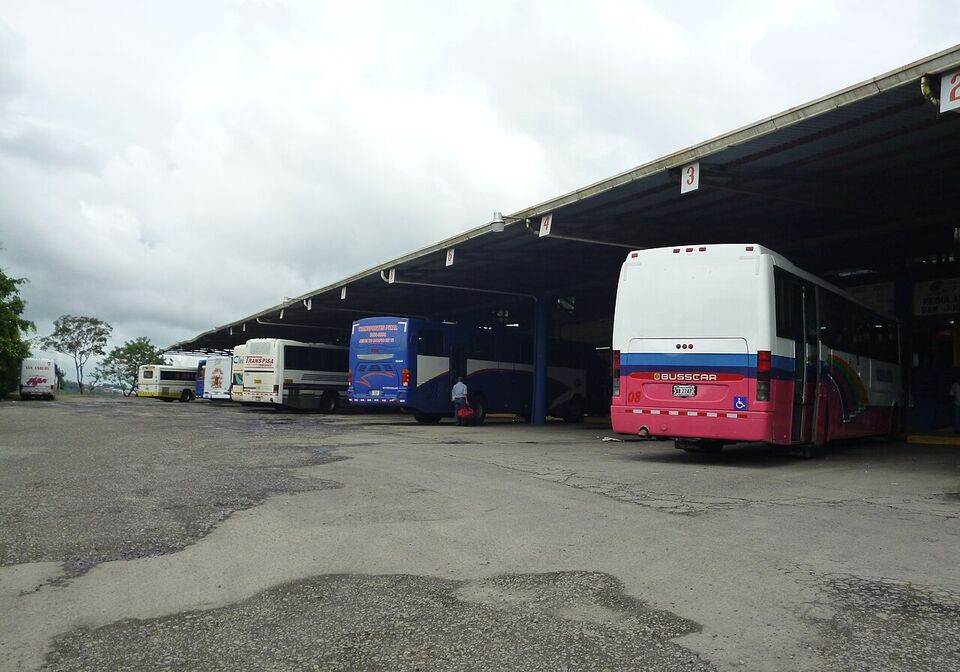
Public buses are the cheapest way to travel. Most intercity rides cost under US$10, and local routes cost far less. Buses are basic, some have air conditioning and some do not, and they make frequent stops, so a trip takes longer than a shuttle. Costa Rica has no single national bus system: private companies run their own routes, and each has its own ticket office or terminal.
San José bus terminals
San José has no central bus station, and the terminals have moved. The widely used Terminal 7-10 closed on April 30, 2025. A guide updated in May 2026 lists these replacements, and you should confirm the right one with the bus company before you head out:
- Terminal Atlántico Norte (Avenida 9, Calle 12): used by several companies, including Transportes Jacó, MEPE and Transmonteverde.
- Comtrasuli terminal, near the Coca-Cola market: serves several of the routes that once left from Terminal 7-10.
- Gran Terminal del Caribe: the departure point for Puerto Viejo de Talamanca and Limón.
- La Radial, in Alajuela near the airport: handy if you are flying in and heading north, for example toward La Fortuna, but real-time schedule information is hard to find.
- Liberia municipal terminal: buses to Tamarindo, Playas del Coco and the Rincón de la Vieja area.
Some bus companies sell tickets online or through their own apps, but many sell only at the terminal or on board, often for cash in colones. Keep small bills handy. Bus terminals in big cities attract petty theft, so keep your bag in front of you and make sure your large bags are loaded in the luggage compartment before you board. Take a taxi or app ride to a terminal after dark rather than walking.
Insider tip
Ask the driver or ticket seller which stop to get off at, and tell someone at the front. The sign on the windshield shows only the final destination, not every stop on the way.
The Incofer commuter train
Incofer runs a commuter train in the Central Valley, Monday to Friday only. Fares on the operator's page (updated October 15, 2026) include ₡550 (about US$1.25) from San José to Heredia, and ₡800 (about US$1.80) from Heredia to Alajuela. It is a way to see the valley, not a way to reach beaches or parks. Check the timetable at incofer.go.cr or call +506 2542-5800.
Taxis and rideshare apps
Licensed taxis in Costa Rica are red and are meant to use a meter, which ticos call the maría. The airports have their own official taxi desks and a separate fleet of airport taxis (around 100 at San José, according to Teletica). If the driver says the meter is broken, agree the fare before you get in, and ask your hotel or a restaurant to call a taxi after dark.
Uber and similar apps work in the San José area and in many tourist towns. The legal situation is a gray area: no platform law had passed as of mid-November 2026. In June 2026 the transport ministry reminded the public that digital transport platforms have no specific law, and as of July 2, 2026 a bill to regulate them was still in a legislative committee. Taxi drivers have objected to the apps. A pilot at San José airport since June 2026 lets about 100 airport taxis be booked through the Uber app. The Tico Times also reported on November 12, 2026 that Uber has launched an option for women to request a female driver.
Price differences are real. In October 2026 the Tico Times compared fares in the Uber app. A 3 km (2 mile) city ride cost ₡1,890 (about US$4) in an UberX and ₡3,655 (about US$8) in a red taxi. A trip from Alajuela to Poás Volcano cost ₡10,590 (about US$24) by UberX and ₡26,686 (about US$60) by red taxi. Fares move with demand, so treat these as examples.
Watch out
Apps work well in and around San José, Escazú, Heredia and Alajuela, and in busy beach towns, but coverage is thin in rural areas. In small towns you may need to call a local taxi or arrange a ride through your hotel. Do not count on a ride-hailing car to pick you up at a remote trailhead.
For airport arrival rides, a taxi to central San José runs about US$25-35 according to the figures we could find; use the official taxi desk or agree the fare first. A public bus from the airport costs a few dollars; check the stop signs. For more on the capital, see our San José guide.
Domestic flights
Domestic flights save hours on the longest routes and are worth considering for the Osa Peninsula, where the drive from San José is long. Sansa, the domestic airline, lists on its site the following airports: Drake Bay, Golfito, La Fortuna, Liberia, Limón, Nosara, Puerto Jiménez, Quepos (for Manuel Antonio), San José, Santa Teresa, Tamarindo and Tortuguero, as well as Bocas del Toro in Panama and Managua. Reservations by phone: +506 2290-4100.
Small planes have strict baggage rules, and the weight limit is lower than on a US airline. Check the baggage page of the airline before you pack, and use soft bags. Fares vary by season and route; as a rough guide, a blog quotes about US$90-155 for San José to Tamarindo, but check the airline for the current fare. Flights are sold out first at Christmas and Easter, so book early for the dry season.
Domestic flights make most sense when your trip includes the Osa Peninsula (see our Osa Peninsula guide) or when you want to skip a long mountain drive. They do not make sense for short hops that a shuttle covers in two or three hours.
Ferries
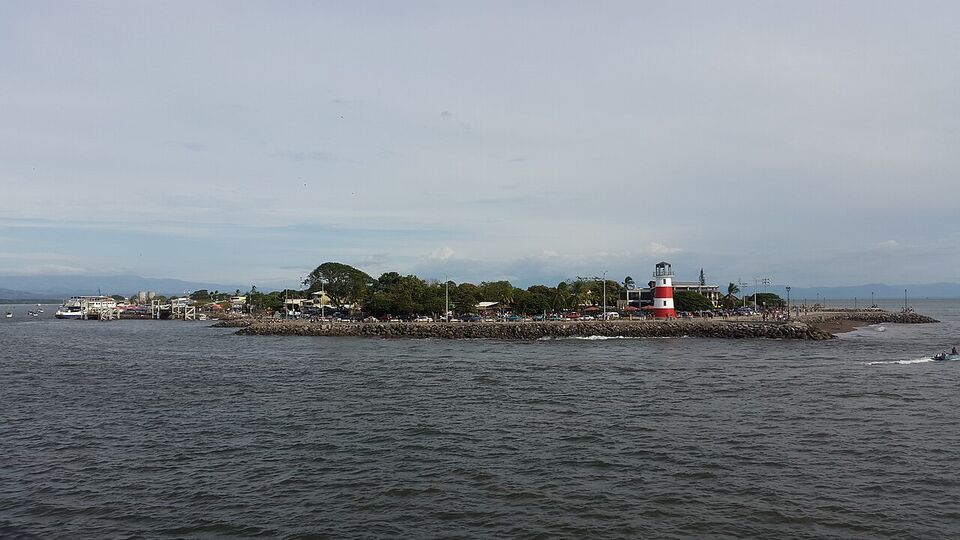
Two car ferries link Puntarenas with the Nicoya Peninsula. They save a long drive around the Gulf of Nicoya for anyone going to the southern Nicoya beaches. See our Nicoya Peninsula guide.
Puntarenas to Paquera
This is the main crossing for Tambor, Cóbano, Montezuma, Santa Teresa and Mal País. The operator is Naviera Tambor, which has run ferries since 1992. A travel blog (October 28, 2026) lists eight departures each way (4:00 a.m., 6:30 a.m., 9:00 a.m., noon, 2:30 p.m., 6:00 p.m., 8:00 p.m. and 10:00 p.m.), with a crossing of 60 to 80 minutes. The same source lists these fares: adult ₡810 (about US$1.80), child under 12 ₡485 (about US$1.10), car ₡12,882 (about US$29), motorcycle ₡3,842 (about US$9). Online sales close two hours before departure. The operator's own site did not show fares when we looked, so treat these as a guide and check navieratambor.com.
Puntarenas to Playa Naranjo
This crossing, run by the Coonatramar cooperative, is the direct route toward Nicoya, Sámara and Nosara. Sand has built up around the Puntarenas ramp, and the Tico Times reported in July 2026 that the operation was reduced to one vessel from July 30 to August 23, with two sailings dropped. Normal service was due to return on August 23, but we could not confirm the current timetable, and dredging was still pending. Check with the operator before you plan around this ferry. The land route over the Río Tempisque bridge is the fallback, but it is much slower.
Insider tip
On either ferry, buy the vehicle ticket before you join the queue, arrive well before departure on weekends and holidays, and keep a margin if you have a flight to catch. Do not plan a same-day ferry crossing and international flight with less than a day of buffer.
Private transfers and drivers
A private transfer is a van or car with a driver for your group alone. It is the easiest option for a family with luggage, for anyone who arrives late, and for travelers with a pet (buses and shuttle companies generally do not take pets; see traveling with a pet). The price is per vehicle, not per person. As a rough guide, private transfers from the San José airport to popular destinations run about US$200-400 per vehicle, plus 13% tax, and prices rise in the high season. We could not confirm current fares for every route, so get a written quote that states the tax.
A private transfer usually beats a rental car on a short trip with few stops, since you skip the insurance, the deposit and the stress of driving after a long flight. For groups of four, the cost per person of a private van can match a shared shuttle.
Save money
Compare the total, not the headline. A shared shuttle costs per person, a private transfer per vehicle, and a rental car costs per day plus insurance and gas. For two people on a three-stop trip, shuttles often cost less than a rental; for four people, a rental or private van usually wins.
Renting a car
A rental car gives you the most freedom: you can stop at a waterfall, a roadside fruit stand or a trailhead on your own schedule. It also brings costs and risks that surprise Americans, mainly the mandatory local insurance that online quotes often leave out. Read our car rental guide before you book, and our driving guide to see what the roads are really like.
A rental fits best when you plan to visit several regions, travel with children, or stay somewhere that shuttles do not reach. It fits poorly if you plan to spend most of your time in one town, if you do not like driving on narrow mountain roads, or if you will be doing mostly guided tours that include transportation. Many travelers rent for only part of the trip, for example in Guanacaste or around Arenal, and use shuttles elsewhere.
Typical travel times between main places
The times below are about averages from a travel company's drive-time table, without stops. Rain, roadworks and slow trucks can add an hour. Shuttles take about the same or slightly longer because of pickups, and public buses are usually slower. Costa Rica is on UTC-6 all year with no daylight saving, and it gets dark between about 5 and 6:15 p.m., so plan long drives for the morning.
| From | To | Drive time | Notes |
|---|---|---|---|
| San José | La Fortuna (Arenal) | 2.5 hours | Common first stop; see Arenal and La Fortuna |
| San José | Monteverde | 3.5 hours | Last stretch is a steep, rough road; see Monteverde |
| San José | Manuel Antonio / Quepos | 3 hours | Route 27 has tolls; see Manuel Antonio |
| San José | Jacó | 2 hours | Busy on weekends |
| San José | Liberia | 3 hours | Gateway to Guanacaste |
| San José | Tamarindo | 4.5 hours | Or fly to Liberia and drive 1 hour |
| San José | Puerto Viejo de Talamanca | 4.5 hours | Caribbean side; see the Caribbean coast |
| San José | Uvita | 5 hours | Dominical is about 4 hours; see Uvita and Dominical |
| Liberia | Tamarindo | 1 hour | See Tamarindo |
| Liberia | Monteverde | 2.5 hours | |
| Liberia | La Fortuna (Arenal) | 3.25 hours | |
| La Fortuna | Monteverde | 3 to 4 hours | Only about 15 km (9 miles) apart, but the road goes around Lake Arenal |
| Manuel Antonio | Dominical | About 1 hour | |
| Manuel Antonio | Puerto Jiménez | 5.5 hours | A long day; the Osa is better by air |
La Fortuna to Monteverde is the classic example of a short distance that takes forever by road. The same guide says the drive takes about 4 hours, while a boat across Lake Arenal plus a shuttle saves about an hour. Boat-and-shuttle transfers across the lake are commonly offered; ask your hotel or a shuttle operator for current schedules and prices.
Traffic around San José is heavy on weekday mornings and late afternoons. Route 27 toward the Pacific has reversible lanes on some weekend afternoons to handle the return traffic into San José. If you can, leave San José before 7 a.m. or after 9 a.m., and avoid Friday and Sunday afternoons on the way to and from the beach.
How to choose for your trip
By trip type
First trip, 7 to 10 days, two stops
San José to La Fortuna and then to the Pacific coast works well by shared shuttle. You avoid driving in the dark and keep your energy for the sights.
Family with young children
Car seats are required for children under 12 shorter than 1.45 m, and a private van or a rental removes long waits. A shared van with a baby on mountain roads can be tiring.
Budget backpacker
Buses cost the least and connect to most towns, but expect transfers, long days and cash payments. Keep your valuables with you.
Beach-focused stay in Guanacaste
Liberia airport is close to the Pacific beaches. Tamarindo is about an hour away. A taxi works if you stay in one town; a rental helps if you move between beaches.
Osa Peninsula and Corcovado
The drive is long, and lodge transfers by boat or 4x4 are part of the trip. A flight to Drake Bay or Puerto Jiménez saves a day.
Road trip with several stops
A car is the cheapest and most flexible way to string together three or more regions. Budget time and money for insurance and read the rental guide first.
A simple way to decide
- List the places you want to see and mark the pairs that are more than four hours apart by road.
- Price the options for the whole trip, with insurance and tax for the rental, and per-person fares for the shuttles.
- Ask honestly whether you will be comfortable driving on narrow, winding roads with unmarked speed bumps.
- Mix modes. A common plan is shuttle from the airport to your first base, a short rental in the region where you need flexibility, and a flight or shuttle to your last stop.
The Trip Builder can help sequence a route, and Plan Your Trip has the full planning checklist.
Safety and practical tips
- Carry your passport (or a copy with the entry stamp) and keep valuables out of sight on buses and in parked cars.
- Tell your shuttle company the exact hotel name and a local phone number, and confirm pickup the day before.
- Save 911, your hotel's number and your transport operator's number before you set out.
- Carry some colones for buses, tolls and small purchases. See Money in Costa Rica.
- Download offline maps and install Waze, which is widely used here.
- Plan to arrive at your destination before dark. See Safety in Costa Rica for road and petty-crime advice.
If you rely on your phone for rides and maps, read Phones, Data and Power for options on data and eSIMs.
Add it to a route in the trip builder, or ask us to plan the hotels, transfers and guides for you.