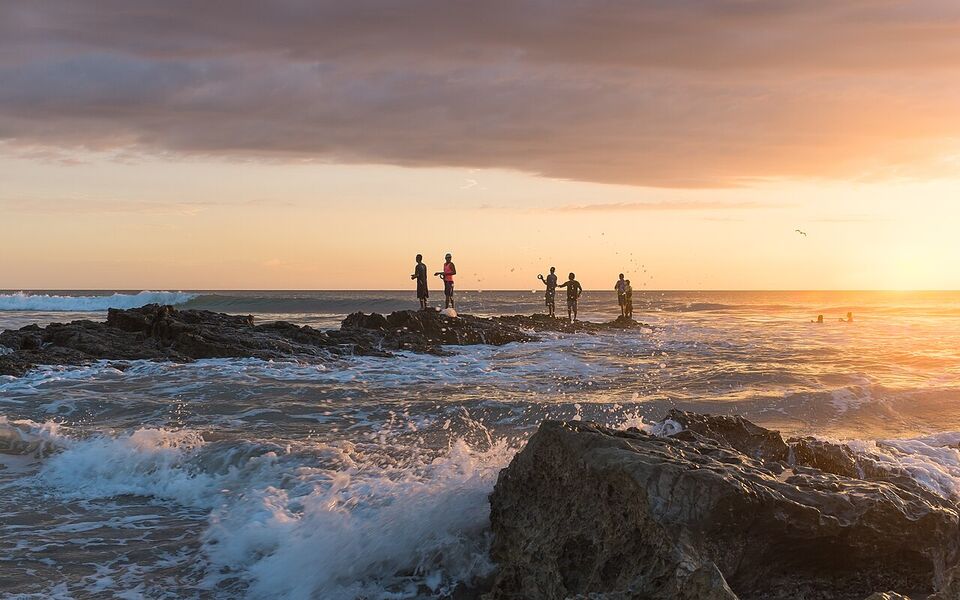
Overview: how the towns differ
The Nicoya Peninsula is the big, hook-shaped peninsula on Costa Rica's northwest Pacific coast, sitting between the Gulf of Nicoya and the open ocean. This page covers its southern and central beach towns: Nosara, Sámara, Santa Teresa, Mal País and Montezuma. They share warm water, surf, yoga studios and long drives on rough roads, but each has a different personality. Tamarindo and the beaches to the north are in our Guanacaste and Tamarindo guides.
The general rule: the farther south or west you go, the quieter and rougher it gets. Plan fewer places and more nights in each. This part of Costa Rica rewards slowing down, and punishes itineraries that cram a town a night.
| Town | Best for | Character | Access |
|---|---|---|---|
| Nosara | Surf, yoga, quiet beach weeks | Walkable, wellness-minded, spread out among trees, higher prices | About 1.5 to 2.5 hours from LIR; last 5-10 km unpaved |
| Sámara | Families, calm swimming, first-timers | Small town with a gentle bay and many services | About 2.5 hours from LIR |
| Santa Teresa and Mal País | Surfers, yoga, nightlife, couples | Strung-out beach strip, dusty, lively and informal | Ferry then about 1.5 hours; long drive otherwise |
| Montezuma | Backpackers, waterfalls, Cabo Blanco | Compact, relaxed, bohemian | Ferry then about 1 hour |
For surf details in each place see Surfing in Costa Rica, and for beach comparisons see beaches.
Nosara
Nosara is a surf-and-yoga town spread among trees behind a long, flat beach, Playa Guiones. It is quieter and more wellness-minded than Tamarindo, with a strong expat community, a Tuesday farmers market and a lot of yoga classes. A sandy bottom and consistent small waves make it one of the friendlier places to learn to surf. Playa Pelada, just north, has tide pools and sunset views, and Garza, farther north, is a quiet fishing village.
Prices run high by Costa Rican standards. One travel blog (updated October 2026) puts meals at the better-known Guiones restaurants around US$15-35 a person and high-season hotels starting near US$150 a night, climbing past US$400 at the top yoga resorts. Treat those as rough. It also gives US$50-80 for a 90-minute surf lesson, and about US$15-25 for a drop-in yoga class. Book 2 to 3 months ahead for January to March.
Getting there: it is about 93 miles (150 km) from Liberia. The route runs through Nicoya and Hojancha, and the last 5-10 km into Guiones is unpaved and rough in the rainy season. A blog says 90 minutes in dry conditions, and another source says to allow 2.5 hours; plan on the longer figure. A 4x4 is strongly recommended in the green season. Sansa flies to Nosara, and a shared shuttle reportedly runs about US$50-80 per person (a blog figure; get a quote). The Tico Times reported on October 29, 2026 that the Nosara Civic Association keeps a free network of about 11 miles (18 km) of walking trails in nine routes. Ask your hotel where they start.
Sámara
Sámara is the easy one: a small town on a sheltered bay with a gentle beach, restaurants within walking distance and an offshore reef that cuts the waves. It suits families with young children and travelers who want swimming rather than surf. Lessons run on small waves, and kayaking and paddle boarding are popular. It is about 2.5 hours from Liberia by road. A small adults-only resort sits on the beach, and the remoteness is the selling point.
The town has more restaurants than Nosara and is less hip than Santa Teresa. If your group splits between swimmers and surfers, Sámara is a reasonable compromise.
Santa Teresa and Mal País
Santa Teresa and neighboring Mal País sit on the southern tip, along one long dirt road behind the beach. The area is known for powerful surf, yoga studios, beach bars and a young, international crowd. The beach is long and beautiful, but strong currents and shorebreak make swimming riskier than in Sámara. Mal País is at the quieter southern end, and the Cabo Blanco reserve is nearby.
Roads are the weakness. About 218 km of the surrounding road network was roughly 90 percent gravel or dirt as of a 2024 report, and a settlement that year promised paving between Playa Carmen and Quebrada del Carmen, with no confirmed start date. A May 2025 report described long daytime closures at the Playa Carmen entrance for water-pipe work. We could not confirm the current state of paving, so expect dust in the dry season and mud in the rainy season, and ask your hotel about road conditions on your dates. Water supply has been a local worry as well (the 2025 roadwork involved water pipes), and El Niño may strain supplies this dry season, so ask your hotel.
Different from home
Few beach roads here have sidewalks, signs or street lighting. People walk, ride quads and bicycles and share narrow dirt roads with trucks and motorbikes, kicking up dust. Travel insurance that covers motorbike and ATV accidents, a helmet, and sunglasses against the dust are worth having. In Costa Rica motorcyclists were 64 percent of the people injured in accidents counted under mandatory insurance in 2025.
Montezuma and Cabo Blanco
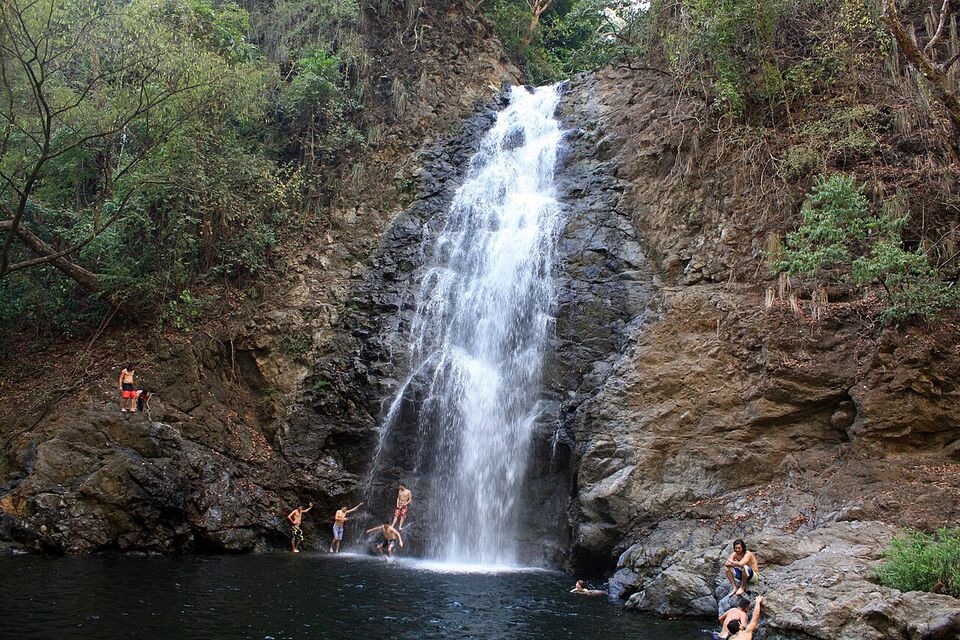
Montezuma is a compact bohemian town with a rocky beach, craft vendors, cafés and waterfalls in the hills behind it. It is quieter and cheaper than Santa Teresa, and good for travelers without a car who want to walk. The waterfalls are a main draw, but the pools can be slippery and the rocks high, and people have been seriously hurt jumping. Follow the guide's advice, wear shoes with grip and never jump unless a local confirms the depth, and skip the falls after heavy rain.
Cabo Blanco, a nature reserve near the southern tip, is one of the oldest protected areas in the country. It has its own ticketing (not on the SINAC booking portal), and one fee list shows about US$12 for foreign adults; confirm the fee, the opening days and the trail status before you go. Wear good shoes, bring water, and go early in the day. The reserve is good for birds and monkeys and has a trail down to a beach. See also the national parks guide.
Getting there: ferry, road or plane
Puntarenas to Paquera ferry (Naviera Tambor)
The ferry saves hours when you are heading for Montezuma, Santa Teresa or Mal País. Naviera Tambor has run the route since 1992. The crossing takes about 60 to 80 minutes, and the ferry holds up to 170 cars and 700 passengers per a travel blog. Per that blog (the operator posts its own current timetable, so check it), departures from Puntarenas and from Paquera are at 4:00, 6:30, 9:00 and 12:00, then 2:30 p.m., 6:00, 8:00 and 10:00 p.m. (about 8 a day each way).
| Ticket | Colones | US$ (at ₡445) |
|---|---|---|
| Adult | ₡810 | about US$1.80 |
| Child under 12 | ₡485 | about US$1.10 |
| Car | ₡12,882 | about US$29 |
| Motorcycle | ₡3,842 | about US$9 |
| Bicycle | ₡2,486 | about US$6 |
These fares come from a travel blog dated October 28, 2026 and may have changed; the operator's site (navieratambor.com) lists the company but no fares when we checked. Buy tickets online through the operator's payment link; online sales close 2 hours before departure. The ticket office reportedly takes cash only and not large US bills. Arrive early (an hour with a ticket, more than that without one, and up to about 3 hours at peak times), and expect long lines at busy times. Ferries can sell out in high season.
From Paquera, a blog estimates about 1 hour to Montezuma and about 1.5 hours to Santa Teresa. A taxi from Paquera is reported at about ₡30,000 (about US$67). Buses from Paquera take about 1 hour 20 minutes to Montezuma and 1.5 hours to Santa Teresa and run infrequently.
Puntarenas to Playa Naranjo ferry
A second ferry, run by Coonatramar, lands at Playa Naranjo and suits Nicoya, Sámara and Nosara. In late July 2026 it ran on one boat only between July 30 and August 23, and the 8:30 p.m. and 5:15 a.m. crossings were suspended. Normal service was due to return on August 23, but we could not confirm the current schedule or fares. Sediment at the Puntarenas ramp is a continuing problem, so check Coonatramar before relying on it and keep a backup plan.
By road, shuttle or plane
- Road via Tempisque bridge: the land route over the Río Tempisque bridge is the natural route from Liberia and Guanacaste. From San José it adds hours compared with the ferry for Santa Teresa and Montezuma.
- Liberia airport: the closest airport for Nosara and Sámara (see drive times above); rental cars are common.
- San José: about 5 hours to Nosara by road, per a drive-time table.
- Small planes: Sansa lists Nosara and Santa Teresa among its destinations. Fares and bag limits were not confirmed; one blog gives about US$100-200 one way from San José to Nosara.
- Shuttles: shared shuttles roughly US$40-80 per person, private vehicles US$200-300 on some routes (blog estimates; get quotes).
Our getting around guide and driving guide cover rental and fuel. Fuel in mid-November 2026 was about ₡807 per liter (about US$1.81, or about US$6.85 a gallon).
Watch out
Do not drive a rental car through rivers or flooded fords. It voids all insurance, including the mandatory third-party coverage. In the rainy season, check the road before you leave and ask locals, because creeks that are dry in March can be impassable in October.
Dry season, green season and water
December to April is the dry season: reliable sun, dusty roads, firm trails and the busiest, priciest weeks. March and April are the hottest. May to November is the green season: lush scenery, rain in the afternoon, lower rates, and, in September and October, heavy rain that can wash out unpaved roads. Many small restaurants and tour operators close for a few weeks in the wettest months. Surf is generally larger in the green season but more variable; see surfing.
The 2026-27 El Niño matters here. The national emergency agency raised the national alert to red on October 22, 2026, and the water utility warned of shortages, with the northwest hardest hit. For the dry season, ask your hotel whether it has a well or tank, and expect to be asked to save water. See when to go.
One more health note: in November 2026, Costa Rica's animal health agency SENASA widened a red tide shellfish ban in the Gulf of Nicoya. Cooking does not make affected oysters, mussels or piangua clams safe, so skip locally harvested shellfish unless you have confirmed it is permitted. See the health guide for mosquito-borne illness, which has been reported in the northwest.
Waterfalls, turtles and day trips
- Waterfalls: Montezuma's falls are the best known; Nosara and Sámara have inland falls that often require a 4x4 or a guide. A blog lists entry as free to about US$20 for some falls.
- Ostional turtle refuge: north of Nosara, famous for mass olive ridley nestings called arribadas. The timing varies; ask a local guide, and follow all refuge rules. A blog lists about US$15-30 plus a guide.
- Barra Honda caves: a national park with a caving tour that needs a phone reservation to the park.
- Isla Tortuga and Curú: boat trips and a wildlife refuge from the Gulf side; Curú has its own ticketing.
- Snorkeling and kayaking: at San Juanillo and on the Río Nosara; guided tours run about US$40-70 per person on one blog.
We found no current prices for most of these, so confirm them with the operator and book only licensed guides. Illegal tours in protected areas face new fines. More ideas are in adventure activities.
Insider tip
Carry some colones in small bills. Dollars are widely accepted in tourist businesses, but small shops, buses and ferry offices may prefer colones, and ATMs are fewer than on the mainland.
Safety, health and medical care
Costa Rica is at Level 2 on the State Department's scale ("exercise increased caution due to crime"), and petty theft is the main concern. On the peninsula the usual problems are theft from parked cars at beach access points and from bags left on the sand. Empty the car of valuables, park where people can see it, and do not leave a phone or wallet on the beach. Violent crime against visitors is less common, but avoid isolated beach stretches alone after dark. See safety.
The bigger practical risks are the ocean and the distance from hospitals. Rip currents and shorebreak catch swimmers on Santa Teresa and Guiones beaches, and lifeguards are limited, so swim where other people are and ask locals about the day's conditions. The CDC notes that trauma care is uncommon outside urban areas and recommends medical evacuation insurance. Clinics in the larger towns can treat minor injuries, but serious cases may need a long ambulance ride or a flight, so buy travel insurance before you go. Emergencies: 911.
Mosquitoes can carry dengue and chikungunya, which the CDC and Costa Rican press have linked to the northwest this year. Bring repellent, and wear long sleeves in the evening. In the dry season the sun and dust are harder on most visitors than any wildlife. Bring sunscreen, a hat, sunglasses, closed shoes for trails and a refillable bottle. Tap water is generally drinkable in towns, but ask at rentals with tanks or wells.
The "Blue Zone" idea
Nicoya is often called one of five Blue Zones, regions named by researcher Dan Buettner and National Geographic for unusually long lives. Hotels and tour operators use the label heavily. Treat it as context: locals have a reputation for a simple diet of beans, corn and tropical fruit, family ties and an active daily life. Do not expect it to show on a trip, and be wary of anyone selling a wellness promise.
Where to stay
Pick the town first, then the type of place. Nosara offers beachfront hotels, hillside eco-lodges and yoga resorts. Sámara has small hotels near the bay. Santa Teresa and Mal País offer boutique lodges, apartments and villas along the dirt road, and Montezuma mixes budget hostels with small hotels. Tiers: $ for under US$120 a night, $$ for US$120-300 and $$$ for over US$300. Nosara skews toward $$ and $$$; Montezuma has more $.
We do not name hotels here because we could not confirm that individual properties are open in 2026; use the town's type of lodging and read recent reviews. Ask about road access (a hotel at the end of a dirt road can add an hour), water supply, air conditioning, noise and how far it is to town. For more help, see where to stay.
Sample plans
- Five nights
Nosara
Fly into Liberia, drive to Nosara, spend days on surf lessons, yoga and the beach, and one day at Ostional or the trails. Keep the car for the drive back.
- Seven nights
Ferry loop
Drive from San José to Puntarenas, take the ferry to Paquera, stay four nights in Santa Teresa and two in Montezuma (with Cabo Blanco), then drive north via Sámara to Liberia. Book the ferry ahead and leave extra time.
- Four nights
Family beach stay
Base in Sámara for calm swimming, lessons and short outings. It is the simplest option with children; see families.
Add it to a route in the trip builder, or ask us to plan the hotels, transfers and guides for you.