Overview: planning a trip around the blossoms
The answer to "when should I go?" is later March to early April if you want Tokyo, Kyoto and Osaka in bloom, but nobody can promise the exact week. Cherry blossoms (sakura) open when the weather lets them, and Japan's long-term average full-bloom dates can move by a week or more in either direction. A warm winter or a cold snap can shift the whole season, and each tree is at its best for only about a week.
That makes sakura planning different from planning for most sights. You are choosing a window, not a date. This page explains the typical dates by city, how the forecasts work and when to expect the first ones for 2027, where to go, what to book and when, how hanami picnics work, and what to do if the trees are late (or early). For the full-year context, see when to go to Japan, and for how to build the trip, planning your trip.
Different from home
In the US, a blossom season is a long, vague stretch. In Japan it is a national event with a name (hanami, flower viewing), nightly TV coverage and a forecast "front" that moves north through the country. Office workers claim a spot in the park for a picnic before dawn. Expect a festive, crowded atmosphere, not a quiet walk.
Typical bloom dates by city
Two terms matter. Kaika (first bloom) is when the first few flowers open on an official sample tree. Mankai (full bloom) is when about 80 percent of the buds are open, which is when most people want to go. Full bloom is usually about five to ten days after first bloom, and petals begin to fall (sakura fubuki, the "petal blizzard") a few days to a week after that.
The table gives typical first-bloom dates from Japan's long-term averages (as shown by the Japan National Tourism Organization) and rough full-bloom windows. The full-bloom windows are our estimates from the first-bloom averages and recent seasons, so they are guides, not promises. For 2026, Tokyo's first bloom was about March 19 and full bloom about March 26, and Kyoto's about March 24 and March 31.
| City | Typical first bloom | Typical full bloom | Notes |
|---|---|---|---|
| Okinawa (Naha and north) | Mid-January | Late January to early February | Dark pink cherry type, not the mainland kind; a festival in Nago is usually in late January or early February |
| Fukuoka | About March 22 | About March 29 to April 3 | Usually among the first big mainland cities to bloom |
| Hiroshima | About March 25 | About March 30 to April 4 | Close to Tokyo's timing |
| Tokyo | About March 24 | About March 26 to April 1 | Recent years have run earlier than the old average |
| Kyoto | About March 25 to 27 | About March 31 to April 5 | Same week as Osaka |
| Osaka | About March 27 | About March 31 to April 5 | Same week as Kyoto |
| Kanazawa | About April 3 | About April 6 to 12 | In 2026, full bloom was around April 6 |
| Hirosaki (Aomori) | About April 20 to 22 | About April 23 to 28 | The city's festival ran April 23 to May 5 in 2026 |
| Sapporo | About May 1 | About May 4 to 8 | Roughly five weeks after Tokyo |
The practical rule: if you can only choose one window for the Tokyo, Kyoto and Osaka triangle, aim for March 28 to April 5. If your trip spans Tokyo then Kyoto (see Tokyo vs Kyoto), you get two chances, because the front reaches Kyoto about the same time as Tokyo or a few days after. An early season may peak in Tokyo before March 28; a late one may peak after April 5.
Reading the forecasts
Japan's weather agency stopped forecasting blossoms in 2010, so the forecasts come from private companies. Three are worth watching:
- Japan Meteorological Corporation (JMC). Its first forecast for each year usually comes out around December, with updates through the winter. Its site is mostly in Japanese, but the dates are easy to read.
- Japan Weather Association (tenki.jp). This is the source behind the table on the Japan National Tourism Organization's forecast page. Its first forecast usually comes in the new year, with frequent updates in spring.
- Weathernews. It runs a popular sakura app and website, and combines forecasts with reports from users. Check its own site for when the 2027 forecast opens.
Japan-Guide, a respected English-language site, has said it expects to publish its first 2027 forecast around February, and then updates as the season arrives. As of early November 2026, no 2027 forecast has been published by any of them, so do not trust anyone who gives you "official 2027 dates" now.
Early forecasts are rough guides. First estimates in late January and early February can shift by a week or more, and the forecasts become useful in the weeks around early March, when the buds are visible. A cold March delays the season, and a warm one speeds it up. The best strategy is a flexible schedule: book refundable hotels, and build a Tokyo and Kyoto itinerary whose order you can swap.
Insider tip
Check the forecast for each city, not just Tokyo. If Tokyo is peaking early, spend your first days there and move toward Kyoto and Osaka. If the season is running late, flip the order, or add a day trip to Mount Fuji's lakes or a trip north. A rail pass or flexible tickets make this easier (see getting around).
Where to see the blossoms
Tokyo
Chidorigafuchi
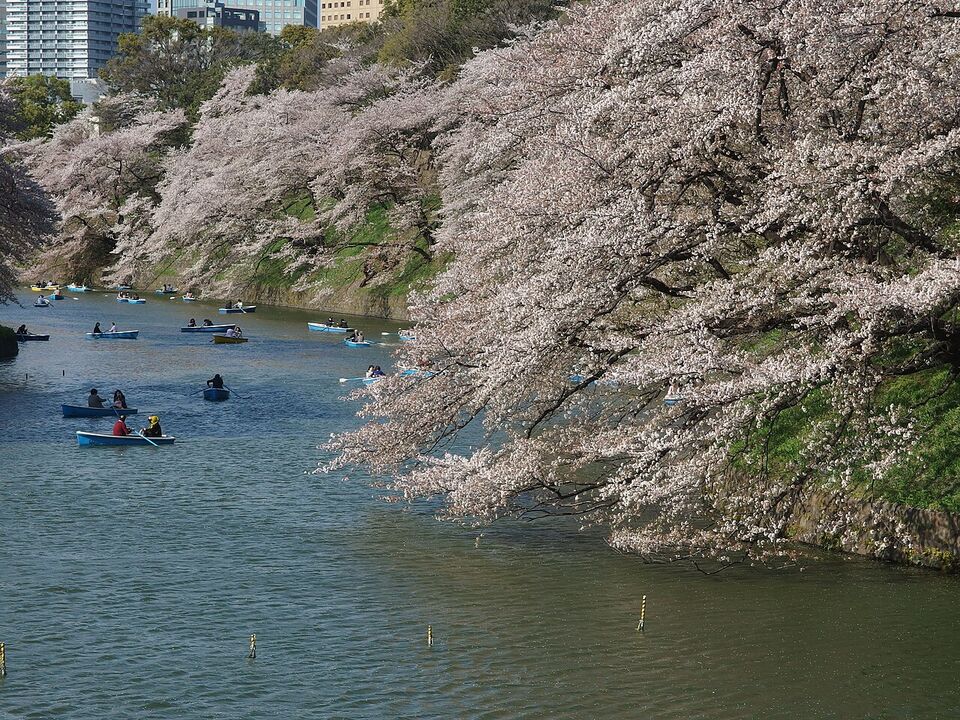
A long path under a tunnel of trees along the palace moat. Rowboats are for hire on the water, but queues are long at peak. Walking is free. Evening illuminations are held on some nights; check dates.
Shinjuku Gyoen
A large garden with many varieties, so the season lasts longer. The garden is open every day from March 25 to April 24, closes at 5:30 p.m. with last entry at 6 p.m. in spring, and bans alcohol. Hours change, so check the official page.
Meguro River
Trees lean over a narrow canal lined with cafés and shops. Best on weekday mornings. Expect gridlock at sunset and on weekends.
Ueno Park
Classic hanami party scene, with tarps, food stalls and evening lanterns. It is lively, loud and a good place to see the Japanese tradition.
Other Tokyo options include Sumida Park by the river, Inokashira Park in Kichijoji and Yoyogi Park. Our Tokyo and day trip guides cover the rest of the area, including the Fuji Five Lakes region, which blooms a week or two later than central Tokyo.
Kyoto and Osaka
- Philosopher's Path and Maruyama Park, Kyoto. A canal-side walk and a weeping cherry tree park near Gion, with lit trees at night. Both are free, and both are packed in peak week. See Kyoto sights for the temples nearby.
- Arashiyama and Heian Jingu, Kyoto. The riverbank and the shrine garden are both classic spots. Go in the early morning to avoid tour groups.
- Osaka Castle Park. The moat and lawns fill with picnickers. The Osaka Mint Bureau holds a short, popular cherry-tree walk, usually about a week in early-to-mid April. Entry details change each year, so check its site. See Osaka.
- Nara and Mount Yoshino. Nara Park combines blossoms and deer (see Nara). Yoshino, in the mountains south of Nara, has roughly 30,000 trees that bloom in stages from low to high slopes over about two weeks, which makes it a good late option.
Beyond the big cities
- Himeji Castle. The white castle with blossoms is a classic photo. Note that non-residents now pay ¥2,500 (about $16) as of March 2026 (see Himeji and Kobe).
- Hiroshima. Peace Memorial Park, the riverbanks and the castle all bloom around the end of March; Miyajima is nearby (see Hiroshima and Miyajima).
- Kanazawa. Kenroku-en and the castle park are lit in the evening during peak (see Kanazawa).
- Fukuoka. Maizuru Park (the castle ruins) is the main spot, and Fukuoka is the earliest big mainland city to bloom (see Kyushu).
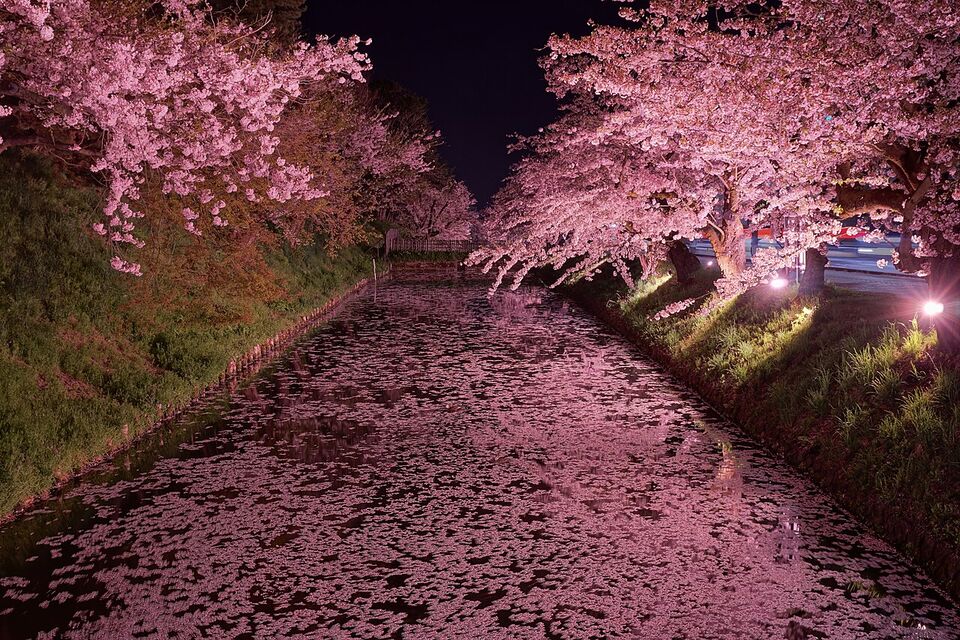
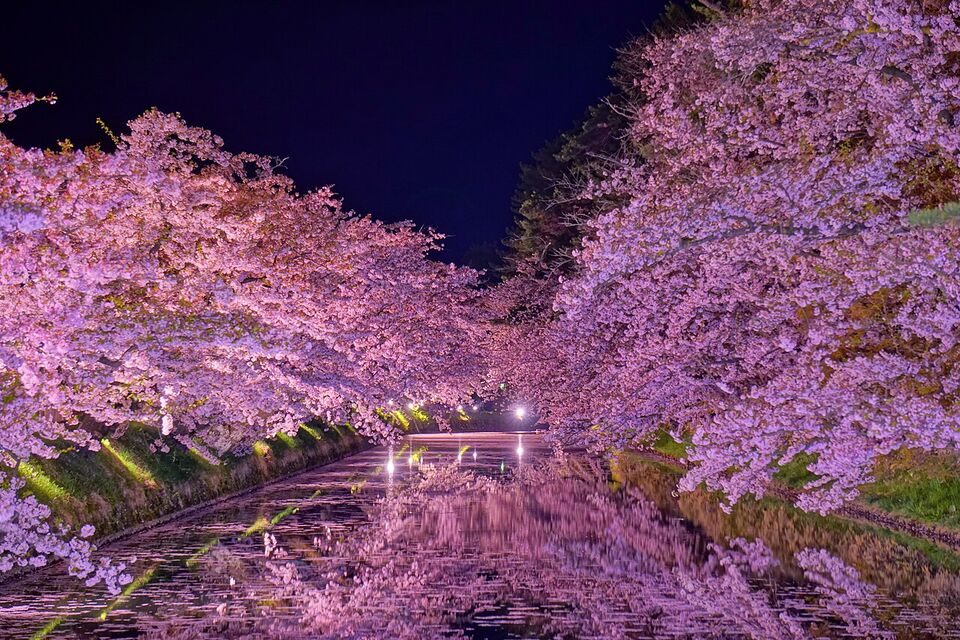
- Hirosaki Castle Park, Aomori. More than 2,500 trees around moats, with a festival that ran April 23 to May 5 in 2026 and a famous "petal raft" on the moat when the blossoms fall. A strong choice if you are late (see Tohoku).
- Sapporo and Hokkaido. Maruyama Park and Hokkaido Shrine bloom in early May; Matsumae and Hakodate's Goryokaku are later in April or May (see Hokkaido).
- Okinawa. Cherry blossoms in January and February, using a different, deeper-pink variety. See Okinawa.
Hanami etiquette and reservations
Hanami (flower viewing) usually means a picnic under the trees, and the rules are mostly about sharing space. These habits will keep you out of trouble:
- Do not touch or climb the trees, and do not shake branches for petals or photos. Trees are old and fragile, and the rule is enforced.
- Take all your trash with you. Many parks have no trash cans, or have separate bins for burnable and recyclable waste. Leave the spot cleaner than you found it.
- Know the alcohol rules. Drinking is part of hanami in parks such as Ueno, but some gardens, like Shinjuku Gyoen, ban it, and some riverside and street spots do not allow picnics at all. Watch the signs.
- Keep paths clear. At busy spots staff will keep the line moving. Do not stop in the middle of a walkway to take photos, and do not use tripods in crowds.
- Stay quiet near houses and temples. Parties end by evening in many parks.
- Do not pick blossoms or take branches home, even fallen ones from private gardens or temple grounds.
Claiming a spot
Japanese groups often send a junior colleague to lay a blue tarp early in the morning. If you want a spot at a popular park such as Ueno or Yoyogi, arrive early, bring your own tarp (sold cheaply at ¥100 shops), and keep your group within the sheet's edges. Do not step on someone else's tarp, even if it looks empty, and do not move another group's belongings.
What to reserve
- Hotels. This is the one reservation that matters most. Hotels in Tokyo, Kyoto and Osaka fill and raise their prices for the last week of March and first week of April. We suggest booking 6 to 12 months ahead for the peak window, with a free-cancellation rate, then adjusting once the forecast is clear (see where to stay). Kyoto's lodging tax rose in March 2026 and now reaches ¥10,000 (about $64) per person per night for rooms of ¥100,000 or more.
- Boats at Chidorigafuchi. The rowboat rental has an hours-based fee and long lines; check the operator's site for any online booking for 2027.
- Restaurants and cruises. Evening hanami cruises and tables with views fill up, often a month or two ahead.
- Timed gardens and special openings. Some temple gardens and night illuminations sell timed tickets. Check each site in February and March.
Save money
Prices are highest for the two weeks around peak bloom. If you can shift to the week before or after, or stay outside city centers (in Osaka for Kyoto, or Yokohama for Tokyo), hotel rates can drop meaningfully. Free spots such as river paths and city parks are as pretty as paid gardens.
If the trees are late (or early)
The weather can leave you a week off, and in that case it helps to have a fallback. The usual escape is to move north or up in altitude, because the blossoms arrive later the colder it is.
- Too early (Tokyo is already past peak). Move toward Kyoto and Osaka, where the front arrives a few days later, or go to Hirosaki and Hokkaido. In Tokyo itself, late-blooming varieties in Shinjuku Gyoen can keep going into mid-April.
- Too late (buds are still closed). Stay flexible and extend the Kyoto leg. Visit temple gardens, night illuminations of plum and early-flowering trees, and indoor sights (see Kyoto).
- Late-blooming spots. Ninna-ji in Kyoto has a low, late-flowering cherry grove (Omuro) that usually blooms in mid-April, well after the main season. Takato in Nagano, the upper slopes of Yoshino and Kakunodate in Akita are typically mid-to-late April. Hirosaki is late April and Matsumae is late April to May.
- Early alternatives. If you arrive in February or early March, look for Kawazu-zakura in Izu, an early pink variety, or plum blossoms (ume), which bloom in February and March.
- Mountain add-ons. The Japanese Alps and the Fuji Five Lakes region bloom later than the cities; see the Japanese Alps and Mount Fuji.
Watch out
Do not buy non-refundable tickets or tour packages tied to one exact bloom date. If a tour promises "guaranteed peak blossoms," read the terms. Nobody can guarantee a date, and cancellation terms usually favor the operator.
Crowds, costs and practical tips
Cherry blossom week overlaps with the start of the new school and business year in Japan and with spring break for many US schools, and it comes just before Golden Week (April 29 to May 5, 2027). Expect crowds at the best-known spots at every time of day. Weekday mornings are the best chance for calm. Evening light-ups (yozakura, night blossoms) are beautiful but busy.
- Book hotels with free cancellation, and recheck forecasts in early March.
- Carry a small tarp, wet wipes and a trash bag for picnics.
- Bring warm layers: late March mornings and evenings can be near 40°F (4°C).
- Carry cash for stalls and park fees, and check the park's alcohol rules.
- Check train routes: crowded stations near famous spots sometimes run one-way flow.
- Pollen season (cedar, from February to April) can affect allergy sufferers, so bring medicine, but check the rules for carrying medication into Japan (see entry requirements).
Food stalls at hanami events sell seasonal treats, including sakura-flavored sweets, pink mochi and drinks in limited-edition cans. Spring is also when many convenience stores and cafés release sakura menus.
For a trip that ties in with festivals, many spring events are listed in festivals, and money in Japan covers cash, cards and tax-free shopping if you plan to shop along the way.
Add it to a route in the trip builder, or ask us to plan the hotels, trains and guides for you.