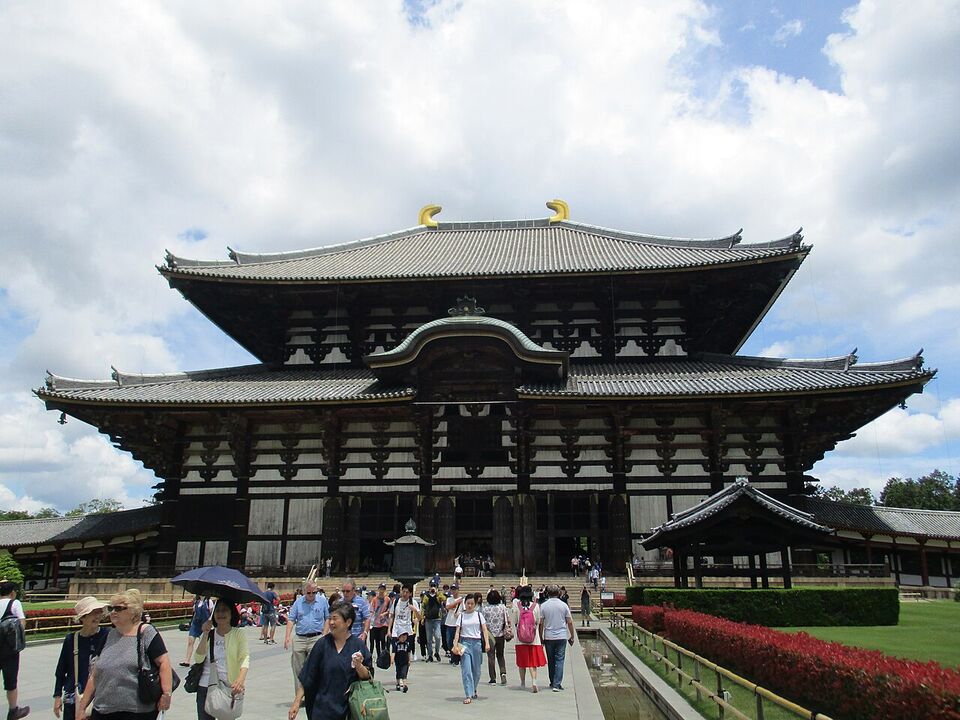
Overview: Nara in one day
Nara works as an easy, flat day trip from Kyoto or Osaka. In the eighth century it was Japan's capital, and it kept the huge wooden halls, a giant bronze Buddha and a park of free-roaming sika deer that make it unlike anywhere else on the Kansai circuit. Most of what visitors want is inside Nara Park, a walk of about 1.5 miles (2.5 km) from Kintetsu Nara Station to Kasuga Taisha.
The standard route is Kofuku-ji, the deer park, Todai-ji and the Great Buddha, then the forest path to Kasuga Taisha, ending with a stroll through the old merchant lanes of Naramachi. That fills a day. A second day (or a longer first one) adds Isuien Garden and Horyu-ji, the world's oldest wooden temple complex. If you are building a Kyoto trip, Nara fits as the fourth day: see Kyoto and Kyoto Sights, and use Osaka if you are staying there instead.
Prices below are the latest we could find in 2026. Several sources disagree on the smaller ones, so we flag those and suggest you confirm at the gate or on the temple site.
Getting to Nara: Kintetsu vs JR
Two railways run to Nara, and the choice affects your walking. Kintetsu Nara Station sits near the park's west side, about a 10 to 20 minute walk from Kofuku-ji and the deer. JR Nara Station is roughly 1 km farther west, so add 10 to 15 minutes on foot. Both are covered by IC cards.
| Route | Time | Fare | Notes |
|---|---|---|---|
| Kintetsu from Kyoto (limited express) | About 35 min | ¥1,280 (about $8) | Fare is ¥760 plus a ¥520 limited-express charge; some trains go direct |
| Kintetsu from Kyoto (express) | About 45 min | About ¥760 (about $5) | Cheaper; no seat charge |
| JR Miyakoji Rapid from Kyoto | About 45 min | Around ¥720 (about $5) | Fare unconfirmed for 2026; covered by the Japan Rail Pass |
| Kintetsu from Osaka-Namba | About 35-40 min | ¥680 (about $4) | Frequent; the best option from Osaka's center |
| JR from Osaka / Tennoji | About 45-50 min | Check at station | Yamatoji Line; useful if you hold a rail pass |
If you have a Japan Rail Pass, JR is free, and the pass is worth using, but check whether the pass pays for the trip at all: see Is the JR Pass Worth It? and Getting Around Japan. A one-day Kintetsu Rail Pass costs ¥1,900 (about $12) on the railway's site, which pays off only if you add other Kintetsu journeys, for example Nara and Osaka in one day.
Fares and times vary slightly by source and train. We saw conflicting Kyoto-Nara figures, so treat the numbers above as a guide and check the current fare on the station display.
Insider tip
Leave Kyoto by 8:30 a.m. and the deer park is still quiet when you arrive. Tour groups from Osaka and Kyoto reach Todai-ji from about 10 a.m., and the Great Buddha Hall is calmer in the first hour or after 3 p.m.
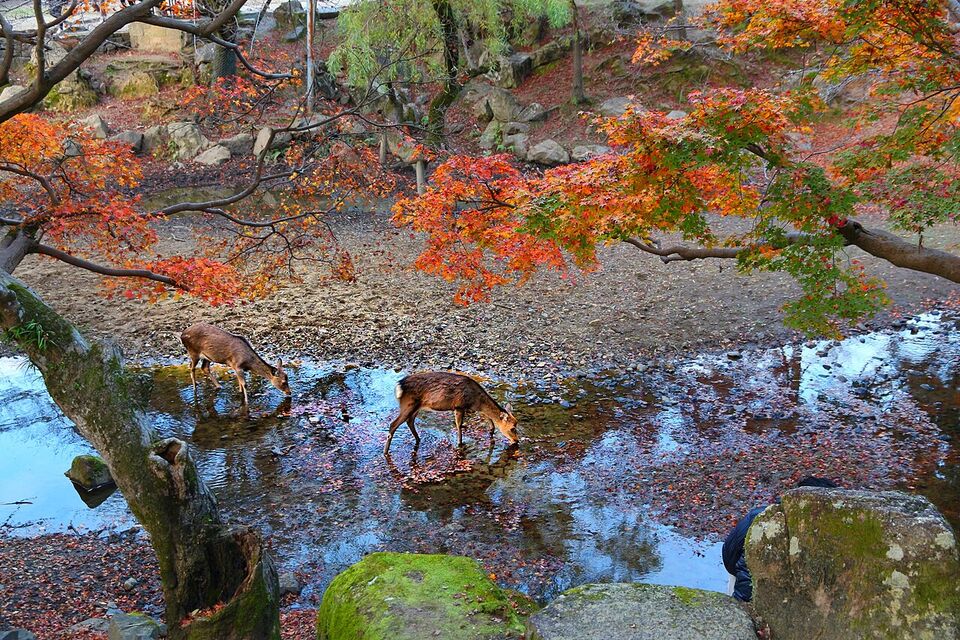
The deer: how to treat them
About 1,700 deer live in and around Nara Park (one 2026 count gave 1,687), and the Great Buddha is only part of the draw. The deer are wild animals. They are a protected national natural monument, and Nara regards them as messengers of the gods. They are used to people and bow their heads at visitors, a gesture that usually means they want a cracker.
Visitors can buy shika senbei (deer crackers) at stalls for about ¥200 (about $1.30). These are the only food you should give them. Never feed deer chips, bread or other snacks, and do not carry plastic bags that smell of food.
- Hold crackers out of sight until you want to feed a deer. A deer that sees a bundle will nibble at your clothes, bag and hands.
- Bow and show empty hands when the crackers are gone, and then walk away calmly. The deer will lose interest.
- Do not tease, chase, pull on or hit a deer. Kicking or hitting is banned under a park ordinance changed in April 2025, and harming a protected animal can bring a fine of up to ¥1,000,000 (about $6,400) or imprisonment.
- Do not eat snacks while walking. Eat at the shop, away from the deer.
- Keep young children close and let them feed from the side, not from the front.
Watch out
Bites, butts and kicks happen every year, and they are more likely in autumn, when bucks are in rut (roughly September to November) and become unpredictable, and from May to early July, when does protect their fawns. If a stag lowers its head and paws the ground, back away and put a tree or fence between you. Keep a distance from fawns.
For more on the animal-welfare etiquette Japan expects, see Etiquette.
Todai-ji and the Great Buddha
Todai-ji is the reason most people come. Its Daibutsuden (Great Buddha Hall) is among the largest wooden buildings in the world, rebuilt in the 1700s at about two-thirds of the original width, and the seated bronze Buddha inside is about 49 ft (15 m) high. The temple dates to the 700s and is a UNESCO World Heritage Site.
Tickets and hours
The Great Buddha Hall costs ¥800 (about $5) for adults and ¥400 (about $2.50) for elementary schoolchildren. The temple museum is ¥800 (about $5) on its own, and a joint ticket for hall and museum is ¥1,200 (about $8). Hokke-do and Kaidan-do are ticketed separately at ¥800 each, so doing everything totals about ¥2,800 (about $18). Most visitors do the main hall alone, which takes 30 to 45 minutes. These rates come from the temple's English page, which was last updated in 2024, so confirm at the gate.
The hall is open 7:30 a.m. to 5:30 p.m. from April to October and 8 a.m. to 5 p.m. from November to March. Hokke-do and Kaidan-do close earlier, at 4 p.m. on the summer schedule and possibly earlier in winter, so visit them first. The Nigatsu-do terrace, on a hill above, is free and gives a good dusk view over the city. The Nandaimon (Great South Gate) and its guardian statues cost nothing to see.
Crowds peak at midday. A trick is to enter the park through the south, see Kasuga Taisha first and come back to the hall after 3 p.m., when tour buses have left and the light turns warm.
Different from home
Many Japanese temples let you write a request on a wooden plaque or buy a charm, and some issue goshuin (red-ink temple stamps) for about ¥300 (about $2) on a paper or book. They are a record of your visit, not a souvenir. See Temples, Shrines and Castles for how to ask politely.
Kasuga Taisha and the forest path
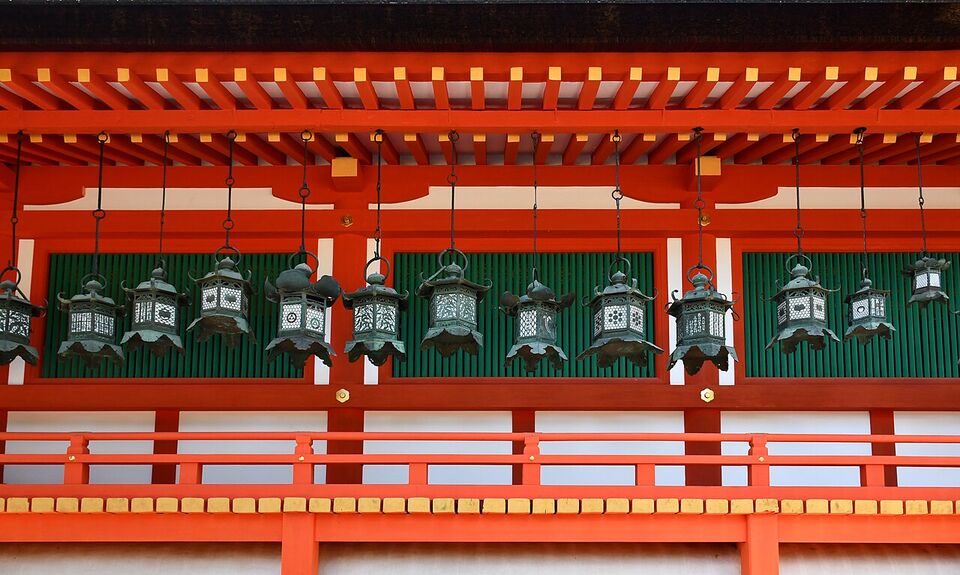
Kasuga Taisha, the shrine of the Fujiwara clan, lies at the park's eastern edge. A lantern-lined path of stone and bronze leads through cedar forest and past the deer. The outer grounds are free and open from 6:30 a.m. to 5:30 p.m. from March to October (7 a.m. to 5 p.m. from November to February). The inner area near the main sanctuary is ¥700 (about $4.50) and open 9 a.m. to 4 p.m., although one older listing gave ¥500 (about $3), so confirm at the booth.
Allow about 90 minutes for the inner area, and an hour more for the Man'yo Botanical Garden (around ¥700, about $4.50) or the shrine's museum. The shrine holds two big lantern festivals: Setsubun Mantoro on February 3 and Chugen Mantoro on August 14 and 15. Wakamiya On-Matsuri on December 15 to 18 is a large festival with a procession; book rooms several weeks ahead if you plan to stay. For other seasonal events, see Festivals and Holidays.
Kofuku-ji, Naramachi and the center
Kofuku-ji, close to Kintetsu Nara Station, is an ancient temple whose five-story pagoda is one of the city's landmarks. The pagoda is covered for a long restoration, with completion estimated for around 2031 according to one source, so it will look wrapped in scaffolding. The grounds are free. The Central Golden Hall (rebuilt and reopened in 2018) and the Eastern Golden Hall each charge about ¥500 (about $3), and the National Treasure Museum charges between ¥700 and ¥900 (about $4.50 to $6), depending on the source. The paid halls close around 5 p.m. The museum's famous Ashura statue is the reason to go in.
Naramachi, the former merchant quarter south of the park, is free to wander and lies about 10 minutes' walk from the east exit of Kintetsu Nara Station. The narrow lanes of latticed wooden townhouses are lined with cafes, craft shops and small museums. Shops have their own hours and closing days, and many close earlier than in a city center. It makes a good late-afternoon walk, and you can eat dinner here before taking the train back.
Across the main street from Kofuku-ji, the Nara Prefectural Office has a free rooftop deck with a view over the temple grounds and the park, according to one source. Check it is open when you pass.
Isuien and the quieter side of Nara Park
Isuien Garden sits between Todai-ji and Kofuku-ji. It is a landscape garden with a view that borrows the Todai-ji roofline and the mountain behind it, and it has a small museum of Chinese bronzes and ceramics. The listed adult price is about ¥1,200 (about $7.60), but we could not confirm the current rate, hours or closing days on the garden's site. Check before you go.
Nara National Museum, near the park's west side, charges around ¥700 (about $4.50) for its permanent collection. Its autumn Shosoin treasures exhibition, which is held for a couple of weeks each autumn, runs from October 24 to November 9, 2026. Admission for that show is higher (about ¥1,800, or about $11, per one listing). The show ends November 9, so if you are in Nara right now, check the museum site for tickets.
Horyu-ji and the temples to the south
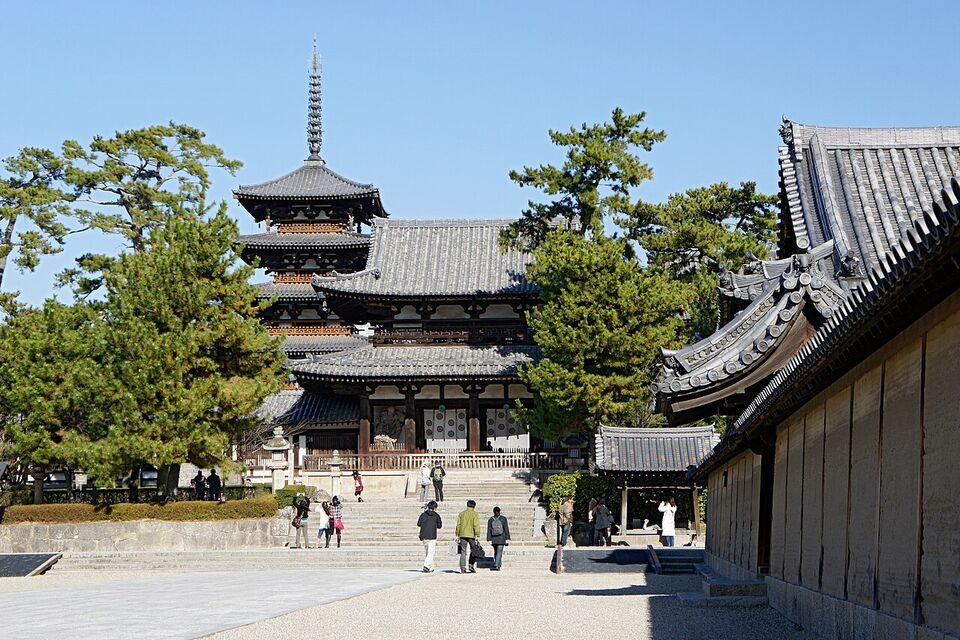
Horyu-ji, about 7 miles (11 km) southwest of Nara Park, has buildings that date to around 700, among the oldest wooden structures in the world. It takes roughly 15 to 25 minutes from JR Nara Station on the Yamatoji Line to Horyuji Station, then a short bus or a 20-minute walk. Its listed price is ¥1,500 to ¥2,000 (about $10 to $13): one source reports an increase to ¥2,000 from March 2025, but the older figure still shows on several sites, so check the temple. In winter (from early November) it closes at 4:30 p.m. instead of 5 p.m.
For architecture fans, Yakushi-ji and Toshodai-ji are two stops on the Kintetsu Kashihara Line from Kintetsu Nara (about 10 minutes, ¥210, or about $1.30) and are far quieter than Todai-ji. Entry is listed at about ¥1,000 to ¥1,100 each (about $6 to $7), though special openings cost more.
For deeper background on Japanese temples, castles and the architecture of Horyu-ji, read Temples, Shrines and Castles.
Day trip or overnight?
Most travelers should do Nara as a day trip. Here is how the options compare.
- One day
Park, Todai-ji and Naramachi
Arrive by 9 a.m. See Kofuku-ji and the deer, spend an hour at Todai-ji, walk the forest path to Kasuga Taisha for lunch and return by Naramachi. Take the train out around 5 p.m., before commuters. Allow six to seven hours on the ground.
- One night
Add dawn and dusk
Staying overnight lets you enter the park at 6 a.m., see Kasuga Taisha empty and eat dinner in Naramachi. It also allows Horyu-ji the next morning. The trade-off is a smaller choice of hotels and restaurants than Kyoto or Osaka, and an early dinner time in the old town.
- Two nights
Slow Nara
Worth it only if temples are the focus: add Yakushi-ji, Toshodai-ji, Horyu-ji and the Shosoin exhibition when it runs.
If you are weighing other day trips from the Kansai area, Himeji and Kobe covers Himeji and Kobe, which take more time than Nara. Add Nara to a Kyoto stay when you have at least four days; with three, skip it and use that time for a deeper Kyoto.
Practical tips and what to eat
Walking, weather and gear
Nara Park is mostly flat, but the route from Kintetsu Nara Station to Kasuga Taisha and back is 3 to 4 miles (5 to 6 km) with detours, and gravel paths cover much of it. Wear shoes you can take off easily for temple halls, and bring a hat and water in summer, when the park offers little shade between sights. In winter the hills are cold and damp. Rain is fine for the cedar forest path but makes the stone lanterns slippery.
Leave large bags at a coin locker or the station's luggage storage before you walk, because deer will nose at open bags and you will not want to carry them for hours. Lockers fill up on busy autumn days, so go early. Strollers manage the main paths, though the Kasuga approach has stone steps and uneven stretches.
Food in town
Nara has its own traditions. Kakinoha-zushi is pressed sushi wrapped in persimmon leaves, chagayu is rice porridge cooked in tea, and kuzu sweets are made from arrowroot. Cafes and small restaurants cluster in Naramachi and the shopping arcades near Kintetsu Nara Station. Many are small, take cash, close in mid-afternoon or on one weekday, and fill up at lunch, so choose a spot before you are hungry. For more on how to order and what to expect, see Japanese Food.
Seasons
Spring brings cherry blossoms to the park, usually in early April, and autumn leaves color the forest paths from late November. These weeks bring the biggest crowds, and Nara on a weekend in November can feel as busy as central Kyoto. Midweek in January or February, by contrast, is quiet, and the deer in a light frost make for a calm visit. Summer is hot and humid: aim for early morning and a long lunch indoors. See When to Go to Japan for how the seasons compare across Japan.
If something goes wrong
For a bite or a scratch, wash the wound with clean water and see a doctor, since animal bites can need treatment. Call the Japan Visitor Hotline at 050-3816-2787 (24 hours, English) for help finding a clinic, or 119 for an ambulance. See Safety in Japan and Health in Japan.
2026 prices at a glance
| Sight | Adult price | US$ | Notes |
|---|---|---|---|
| Nara Park, Great South Gate, Nigatsu-do terrace | Free | $0 | Park open at all hours |
| Todai-ji Great Buddha Hall | ¥800 | about $5 | Joint ticket with museum ¥1,200 (about $8) |
| Kasuga Taisha inner area | ¥700 | about $4.50 | One older listing: ¥500 |
| Kofuku-ji Golden Halls | About ¥500 each | about $3 | Pagoda under restoration |
| Kofuku-ji National Treasure Museum | ¥700-¥900 | about $4.50-$6 | Sources disagree |
| Isuien Garden | About ¥1,200 | about $7.60 | Unconfirmed |
| Nara National Museum | About ¥700 | about $4.50 | Special shows cost more |
| Horyu-ji | ¥1,500-¥2,000 | about $10-$13 | Check for the March 2025 increase |
| Shika senbei (deer crackers) | About ¥200 | about $1.30 | Stalls around the park |
Save money
Nara is cheap. If you skip museums, a full day of Nara Park, Todai-ji's main hall and Kasuga Taisha's inner area costs about ¥1,500 (about $10). Use Kintetsu from Osaka-Namba at ¥680 (about $4) each way. For other costs see Budget Calculator.
Add it to a route in the trip builder, or ask us to plan the hotels, trains and guides for you.