Overview: how Japan is laid out
Japan is a long, thin country. From the snowfields of Hokkaido in the north to the beaches of Okinawa in the south is roughly 1,800 miles (2,900 km), about the distance from Boston to Denver. Most visitors never need to cover all of it. About four-fifths of the population lives on the main island of Honshu, and the Shinkansen (bullet train) links nearly everything of interest on it.
The simplest way to think about the country is as a spine. The Tokaido-Sanyo Shinkansen runs southwest from Tokyo through Nagoya, Kyoto, Osaka, Himeji and Hiroshima to Fukuoka on Kyushu. The Tohoku and Hokkaido lines run north. The Hokuriku line runs northwest to Kanazawa. Off that spine are the side trips: Hakone and Mount Fuji from Tokyo, Nara from Kyoto, Miyajima from Hiroshima, the Alps by limited express.
This page groups the destinations by region, shows travel times from Tokyo and Kyoto, and explains how to chain them into routes. The interactive map at the top of this page marks each destination, so you can see how far apart they are before you start comparing trains. Each destination has its own page, linked below.
Travel times by Shinkansen from Tokyo and Kyoto
The table gives typical fastest times with the services that most foreign visitors use. Times are approximate, since they vary by train type and timetable, and several places have no bullet train at all (shown as limited express, bus, or flight). Timetables change each March, so check the day before you travel, using the station signs or an app. Our getting around guide explains how to buy tickets.
| Destination | From Tokyo | From Kyoto | How |
|---|---|---|---|
| Kyoto | 2 h 15 min | n/a | Tokaido Shinkansen (Nozomi) |
| Osaka (Shin-Osaka) | 2 h 25 min | 15 min | Tokaido Shinkansen |
| Nara | About 3 h | 45 min | Shinkansen to Kyoto, then JR Nara Line or Kintetsu |
| Himeji and Kobe | About 3 h 15 min to Himeji | About 45-60 min | Shinkansen to Himeji; Kobe is a short stop on the way |
| Hiroshima | 3 h 50 min to 4 h | About 1 h 40 min | Tokaido-Sanyo Shinkansen |
| Hakone | About 35 min to Odawara, plus 15 min | About 2 h 15 min to Odawara | Shinkansen to Odawara, then Hakone Tozan line |
| Mount Fuji (Kawaguchiko) | About 2 h | About 4 h | Express bus or train from Shinjuku; no Shinkansen |
| Matsumoto (Alps) | About 2 h 30 min | About 3 h 30 min to 4 h | Limited express from Shinjuku; from Kyoto via Nagoya |
| Takayama (Alps) | About 4 h 30 min | About 3 h 30 min | Via Nagoya, then Hida limited express |
| Kanazawa | About 2 h 30 min | About 2 h 30 min to 3 h | Hokuriku Shinkansen; from Kyoto change at Tsuruga |
| Sendai (Tohoku) | About 1 h 30 min | About 4 h | Tohoku Shinkansen, via Tokyo from Kyoto |
| Shin-Aomori (Tohoku) | About 3 h | About 5 h 30 min | Tohoku Shinkansen |
| Hakodate (Hokkaido) | About 4 h 20 min | About 7 h via Tokyo, or fly | Hokkaido Shinkansen to Shin-Hakodate-Hokuto, then 20 min |
| Sapporo (Hokkaido) | 1 h 35 min by air | About 2 h by air from Osaka airports | Flight to New Chitose; no bullet train yet |
| Fukuoka (Kyushu) | About 5 h | About 3 h | Sanyo-Kyushu Shinkansen to Hakata |
| Takamatsu (Shikoku) | About 4 h 15 min | About 2 h | Shinkansen to Okayama, then Marine Liner train |
| Naha (Okinawa) | 2 h 50 min by air | About 2 h 20 min by air | Flight; no rail link |
Two prices help with context. A reserved seat from Tokyo to Kyoto on the Nozomi costs ¥14,170 (about $90), and Tokyo to Shin-Osaka costs about ¥14,500 (about $92). Prices vary by season, so treat them as a guide.
Different from home
Japan's trains run on the minute, you pay by distance and train type, and you often need a separate seat reservation on top of the fare. There is no baggage check: your suitcase rides with you. For long luggage, bags over 160 cm (63 in) in total length plus width plus height (up to 250 cm) need a seat reservation with an oversized-baggage area on the Tokaido, Sanyo and Kyushu Shinkansen lines, at the same price as a regular reserved seat. Without one, JR Central charges ¥1,000 (about $6.40) and may ask you to take a later train.
Kanto: Tokyo and its day trips
Kanto, the plain around Tokyo, is where almost every trip begins. Tokyo is the capital, with about 14 million people in the city proper, and the first-time base for most visitors. See Tokyo sights for temples, towers and museums, and Tokyo food for ramen, sushi and alleys.
Plenty can be done in a day or overnight from Tokyo. Day trips from Tokyo covers Nikko, Kamakura, Yokohama, Kawagoe and the Fuji Five Lakes. Hakone is the classic hot spring getaway, with a loop of train, cable car, ropeway and lake boat, about 90 minutes from Tokyo. Hakone is in Kanagawa Prefecture, so it belongs to Kanto, though it is also on the way to Kyoto.
Kansai: Kyoto, Osaka, Nara, Himeji and Kobe
Kansai is the old heart of Japan and, with Tokyo, the center of most first trips. Kyoto has the temples, gardens and geisha districts, and Kyoto sights covers the main ones. Osaka, covered in our Osaka guide, is the food and nightlife city, 15 minutes from Kyoto by Shinkansen. Nara has the great Buddha and the deer, 45 minutes from Kyoto. Himeji and Kobe offer Japan's best-preserved castle and a port city with beef and hot springs.
Kyoto is the natural base, because trains reach Osaka, Nara and Himeji in under an hour. If you are torn between Tokyo and Kyoto for your limited time, see Tokyo vs Kyoto. Kansai has its own airport, Kansai International (KIX), with direct links to both Osaka and Kyoto.
Chubu: Mount Fuji, the Alps and Kanazawa
Chubu is the mountainous center of Honshu. Mount Fuji, 12,388 ft (3,776 m), is in Chubu, though most people see it from Tokyo, Hakone or the Five Lakes. In 2026 the climbing season ran from July 1 to September 10 (the Fujinomiya and Gotemba trails opened July 10), with a ¥4,000 (about $25) fee per climber. Dates and fees for 2027 are announced in spring, so check before you go.
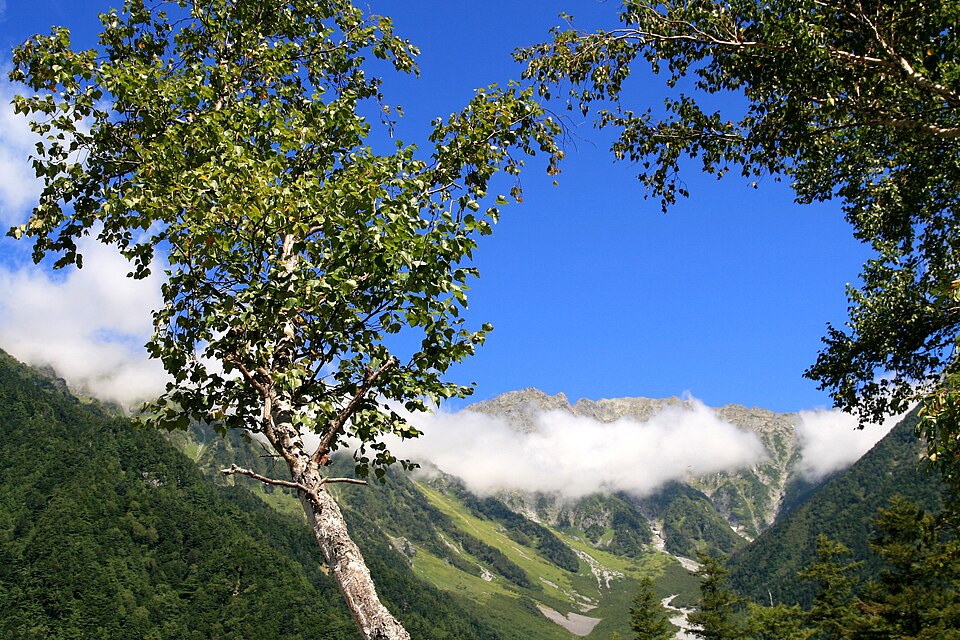
The Japanese Alps include Matsumoto, Takayama, Kamikochi, the Kiso Valley and Shirakawa-go. They are reached by limited express trains and buses rather than by bullet train, which makes them slower but more scenic. Kanazawa, on the Sea of Japan coast, has a samurai district, teahouse streets and one of Japan's great gardens, and has been two and a half hours from Tokyo by Shinkansen since 2015. The 2024 extension to Tsuruga has opened a rail route from Kanazawa to Kyoto and Osaka.
The three combine into a loop: Tokyo to the Alps, Takayama, Kanazawa, then Kyoto. The Hokuriku Arch Pass, at ¥35,000 (about $223) for 7 days, covers a Tokyo-Kanazawa-Kyoto or Osaka trip for foreign visitors.
Chugoku and the Inland Sea: Hiroshima and Miyajima
Chugoku is the western tip of Honshu. Hiroshima and Miyajima is the one stop that most visitors make: the Peace Memorial Park and Museum, and the shrine gate that stands in the sea off Miyajima island, a 45-minute trip away by train and ferry. Hiroshima is about 1 hour 40 minutes from Kyoto and about 4 hours from Tokyo.
Okayama and its garden, the art island of Naoshima and the Shimanami Kaido bike route are other options in this area but are not given their own pages in this guide. The Inland Sea ports are also the gateway to Shikoku.
Shikoku
Shikoku, the smallest of Japan's four main islands, is reached from Okayama by train or by the Seto Ohashi bridge. Shikoku has onsen towns such as Dogo in Matsuyama, the Iya Valley's vine bridges, Takamatsu's Ritsurin garden and the 88-temple pilgrimage. It is slow to get around without a car and rewards visitors with time, so we suggest it for a second or third trip rather than a first.
Kyushu
Kyushu, in the southwest, is a warm volcanic island of hot springs, ceramics, ramen and old ports. Kyushu covers Fukuoka, Nagasaki, Kumamoto, Beppu and Kagoshima's Sakurajima. Fukuoka is about 5 hours from Tokyo by Shinkansen, or 2 hours by air, and about 3 hours from Kyoto. The Shinkansen continues to Kumamoto and Kagoshima.
Fukuoka City charges an accommodation tax of ¥200 per person per night for room rates under ¥20,000 and ¥500 for ¥20,000 or more. Kyushu pairs well with Hiroshima in a west-bound route, or with Seoul and Busan by ferry; see Japan and its neighbors.
Okinawa
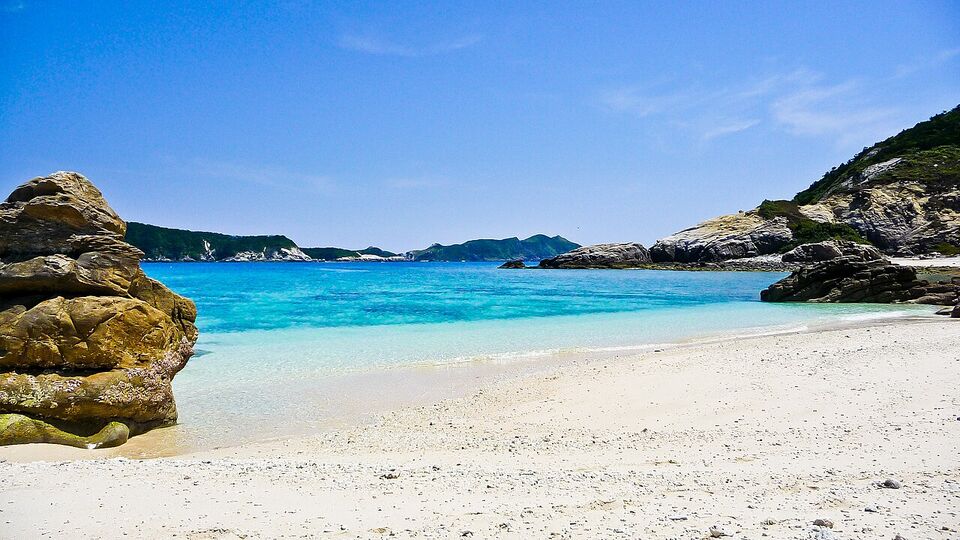
Okinawa is a subtropical chain of islands about 960 miles (1,550 km) southwest of Tokyo, with its own history as the Ryukyu Kingdom, its own food and its own beaches. There is no rail link. Flights from Tokyo take about 2 hours 50 minutes and from Osaka about 2 hours 20 minutes. Okinawa is a good beach break at the end of a long trip, particularly in spring and fall, while typhoons can disrupt travel between about June and October.
Tohoku
Tohoku, the northern third of Honshu, is Japan's quiet side: Sendai and the bay of Matsushima, the Golden Hall at Hiraizumi, the stone steps of Yamadera, the samurai town of Kakunodate, the Aomori festivals in August, and the 2011 tsunami coast. See our Tohoku guide. The Shinkansen from Tokyo reaches Sendai in about 1 hour 30 minutes. Since March 14, 2026, one JR EAST PASS has replaced the old Tohoku-area pass: ¥35,000 (about $223) for 5 days and ¥50,000 (about $318) for 10.
Hokkaido
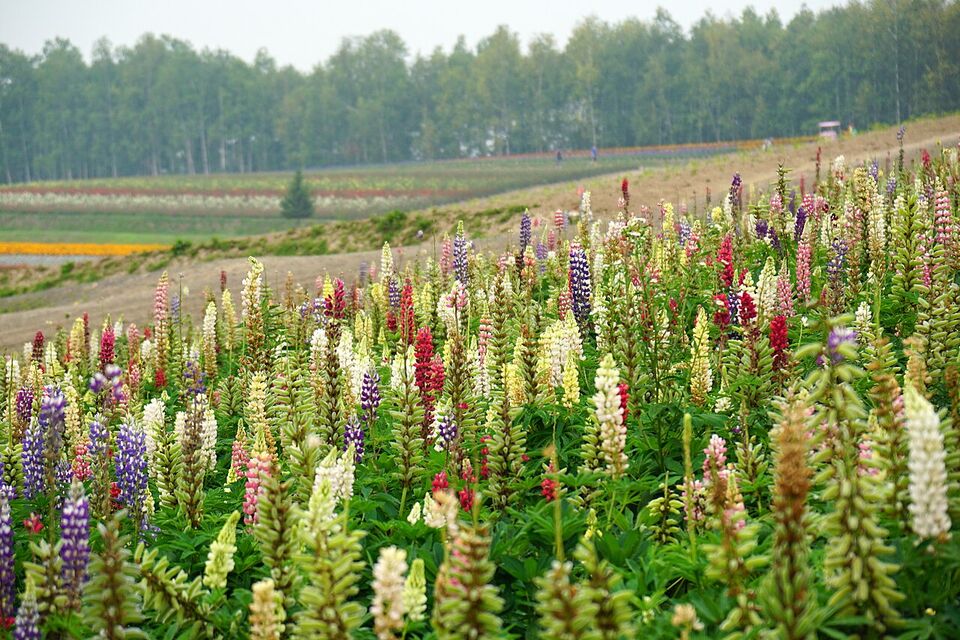
Hokkaido is Japan's cool northern island, with Sapporo and its February Snow Festival, Otaru, the powder snow of Niseko, lavender around Furano, the wilderness of Shiretoko and Daisetsuzan, seafood and hot springs. The Shinkansen reaches Hakodate in the south in about 4 hours from Tokyo, but the line to Sapporo is not planned to open until the end of fiscal 2038 (March 2039). Most people fly to New Chitose.
United has announced a seasonal San Francisco to Sapporo nonstop three times a week from December 11, 2026, and Air Canada flies Vancouver to Sapporo three times a week from December 17, 2026 to March 25, 2027. Check the airlines' sites for the current schedule. Hokkaido is the place in this guide where a rental car is most useful, and also where bears and winter roads need respect.
Choosing regions by interest and season
Start with what you want to do, then check the season. Temples, gardens and old streets point to Kyoto, Nara, Kanazawa and Hiraizumi. Food-focused trips lean toward Osaka, Tokyo, Fukuoka and Hokkaido. Mountains and hiking mean the Alps, Daisetsuzan or Shiretoko. Hot springs are everywhere, but Hakone, Ginzan Onsen, Beppu and Dogo are the classic stops. For snow, Hokkaido and Nagano come first; see skiing in Japan. For more ideas by theme, see by interest and outdoors.
Season matters more in the north and in the mountains. Hokkaido and Tohoku are at their best from June to October and for winter sports; the Alps are best from May to November, with snow roads closed in winter; Okinawa is warm nearly all year but wet in the early summer rainy season and exposed to typhoons from about June to October. Kyoto, Tokyo and Hiroshima work in all seasons, with spring blossoms and autumn leaves as peaks. Early April and mid-November are the busiest and most expensive times; see cherry blossom season for the dates.
How much time does each region need?
As a rule of thumb, give Tokyo at least 3 nights, Kyoto 3 nights, Osaka 1 or 2, Hiroshima and Miyajima 1, Kanazawa 1 or 2, the Alps 3, Tohoku 4 to 6, Hokkaido 4 to 8, Kyushu 4 to 6, Shikoku 3 to 5 and Okinawa 3 to 5. These add up fast. Most first-timers do better by cutting regions than by cramming them, because every move between hotels costs half a day once you include packing, check-out and the train.
Save money
Flights inside Japan can cost less than a long train ride, especially to Hokkaido, Kyushu and Okinawa when booked ahead on low-cost carriers. Compare the fare against the Shinkansen before you buy a rail pass, and remember that you also need to get to and from the airports. The savings are real only if you travel light.
Luggage and moving between regions
Most visitors send large suitcases ahead by courier (takkyubin), which typically costs a few thousand yen per bag, and carry a small bag on the train. Hotels will arrange it, and it arrives the next day. Coin lockers in stations cost about ¥300 to ¥700 (about $2 to $4.50) for a day. The overhead racks on the Shinkansen take a small suitcase, but not a very large one, which is why the oversized-baggage rule above matters.
Plan a bit of slack on the day you change regions. Typhoons and heavy snow can stop trains and flights, and on days with strong winds or earthquakes the Shinkansen slows or halts. Keep your last night before an international flight in or near the departure airport city. See the safety guide for disruptions and emergency numbers.
How to link regions into routes
Pick a base for each leg, sleep two or three nights, and move on. These routes are built from the table above and use the Shinkansen where it exists.
- First trip, 10 to 12 days: Tokyo (4 nights), Hakone or Fuji (1), Kyoto (3), Osaka or Nara (1), and out of Osaka. See plan your trip for a day-by-day version.
- West loop, 14 days: Tokyo, Kyoto, Osaka, Himeji, Hiroshima and Miyajima, then Fukuoka and a flight home.
- Alps and Hokuriku, 12 days: Tokyo, Matsumoto, Takayama, Shirakawa-go, Kanazawa, Kyoto, Osaka.
- North, 10 to 14 days: Tokyo, Sendai, Hiraizumi, Aomori, Hakodate, Sapporo, with a flight home from New Chitose.
- Beach add-on: a flight from Osaka or Tokyo to Okinawa for 3 to 4 nights at the end.
Open-jaw tickets (into one airport, out of another) save backtracking, and you can send luggage ahead by courier to your next hotel. Flights to Japan explains Haneda, Narita and Kansai.
Insider tip
Put the long, slow regions at the start or end of your trip, and the short hops in the middle. Nozomi tickets are not valid on the basic Japan Rail Pass: pass holders need a supplement of ¥4,960 (about $32) from Tokyo to Kyoto or Osaka, or ¥6,500 (about $41) to Hiroshima, or can ride the slower Hikari and Sakura instead.
Do you need a rail pass?
For most itineraries, no. A Tokyo-Kyoto-Osaka round trip costs far less than the 7-day Japan Rail Pass, which is ¥53,000 (about $338) from overseas agents and ¥50,000 (about $318) on the official online store as of early November 2026. The official store has been showing that lower price, so check both before you buy. The pass makes sense only when you ride two or three long routes in a week. Regional passes, like the JR EAST PASS for Tohoku, the Hokuriku Arch Pass for Kanazawa and the JR Hokkaido passes, are usually better value for a single region. Our JR Pass guide has the full math.
Check also when to travel: Golden Week (April 29 to May 5, 2027), Obon (about August 13-16) and New Year (about December 28 to January 4) fill trains and hotels. See when to go and the trip builder for planning tools.
Add it to a route in the trip builder, or ask us to plan the hotels, trains and guides for you.