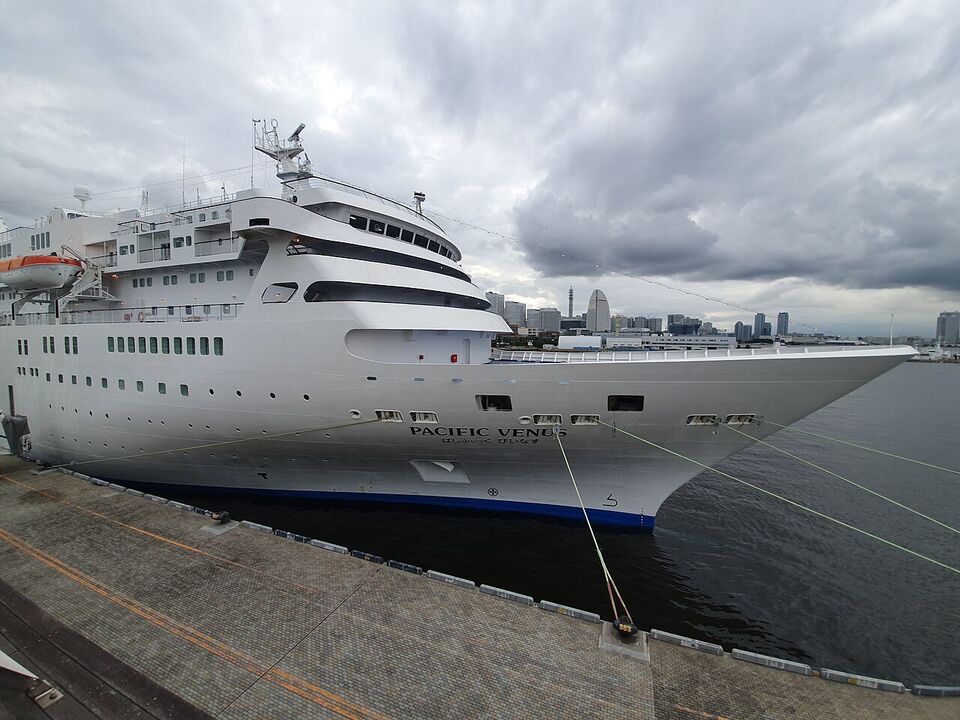
Cruising in Japan: what to expect
A cruise is an easy way to see several Japanese regions without repacking, and a bad way to see any one of them in depth. A typical port call gives you 8 to 10 hours, with hours lost to immigration at the first stop and to getting from the pier to the city. Our advice is to pick one or two things per port, leave a margin of an hour, and treat the ship's excursions as optional: Japan's public transport is good enough that most calls can be done on your own.
This page covers the main ports where Americans board or call, how to get from ship to town, the paperwork, the departure tax and the practical rules of shore days. If you are extending your trip before or after the cruise, start with Plan Your Trip to Japan, and for Tokyo hotels and sights see Tokyo.
Different from home
In the US, you can usually walk off a cruise ship with a ship card. In Japan, the first port involves a formal immigration inspection, and you are expected to carry your passport (or the ship-issued pass) when ashore. Police can ask foreign visitors to show a passport.
Arrival paperwork for cruise passengers
Americans do not need a visa for a stay of up to 90 days (see Entry Requirements). On a cruise that starts or has its first call in Japan, your ship will be cleared by Japanese immigration at the first port, and passengers are inspected in person on board or in the terminal. You should expect the standard checks: a passport inspection, electronic fingerprints from both index fingers and a face photo for adults. Once admitted, you are given landing permission as a temporary visitor, normally recorded by a sticker or stamp in the passport or a ship-issued document that you must carry when ashore.
The details differ by cruise line, itinerary and port, so follow your line's instructions. Reports from cruise passengers suggest that the Visit Japan Web service, which airline arrivals use, is usually not needed for ship arrivals, and that cruise lines hand out paper forms. We could not find an official statement on this for 2026, so check with your line. You will also receive a customs declaration form. Duty-free allowances are the same as for other visitors: three bottles of alcohol, 200 cigarettes and other goods worth less than ¥200,000 (about $1,274). Prescription drugs are allowed in limited quantities, and amphetamine-type medicines such as Adderall and cannabis products are prohibited, so see Health in Japan before you pack.
If you fly in or out
If you fly into Japan before the cruise or out afterward, you enter and leave as an ordinary visa-free visitor. You do not need to arrange anything special, but keep the same passport for the whole trip, and make sure your booking reference matches the ship's passenger list. If your cruise leaves Japan for Korea, Taiwan or another foreign port and returns, you will usually go through immigration again each time you re-enter, and the ship may handle the process on board, which can take several hours at the busiest ports.
Rules to remember
- Carry your passport (or the pass your ship gives you) whenever you leave the ship.
- Your landing permission is tied to the cruise, so do not wander off to stay behind in Japan.
- Know your ship's all-aboard time and the number to call if you are delayed.
- Declare cash and securities of more than ¥1,000,000 (about $6,369).
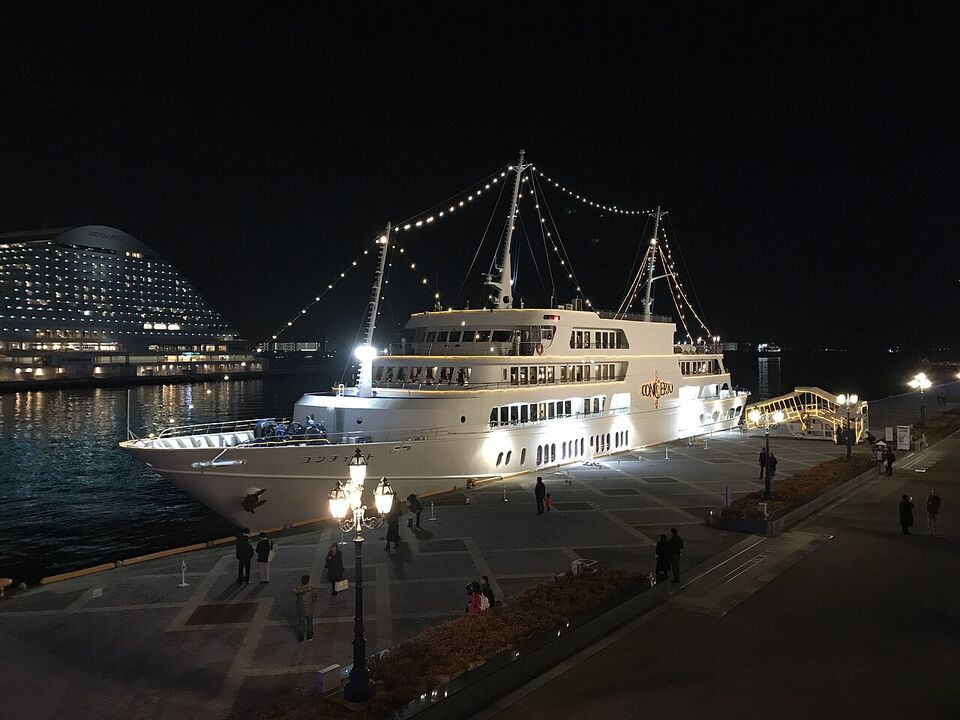
Yokohama and Tokyo
Yokohama (Osanbashi)
Many large ships use the Osanbashi Pier, a wooden-decked terminal that sticks out into Yokohama Bay. It is a walk of about 10 to 15 minutes to Yamashita Park, the Red Brick Warehouse and the Minato Mirai district, and Chinatown is close. Larger vessels sometimes berth at Daikoku Pier, which is farther out and served by ship shuttle buses, so check which pier your ship uses.
From Osanbashi, you can reach central Tokyo in about 40 to 50 minutes by train. The closest stations are Nihon-odori and Bashamichi on the Minatomirai Line, and Kannai on the JR Negishi Line. A reasonable shore day is a morning in Yokohama and the afternoon at the Cup Noodles Museum, or a quick train to Kamakura, which is about 30 minutes by JR from Yokohama Station.
Tokyo International Cruise Terminal (Ariake)
The Tokyo International Cruise Terminal is on the waterfront at Ariake. The nearest station is Tokyo International Cruise Terminal on the Yurikamome line, about a 5 to 8 minute walk. Yurikamome reaches Shimbashi in about 20 minutes, where the JR Yamanote Line and Tokyo Metro connect to the rest of the city. On cruise days a free shuttle also links the terminal with Tokyo Teleport Station on the Rinkai Line. Odaiba and the teamLab Planets museum are in the same area (teamLab Planets costs ¥3,800, about $24, with timed online tickets). See Tokyo Sights.
Insider tip
A common mistake is to plan a big Tokyo day from a port call. The terminal is far from the main sights, so choose one neighborhood, such as Asakusa or Ginza, and return early. If Tokyo is the main goal, add nights in the city before or after the voyage.
Kobe and Osaka
Ships to the Kansai region call at Kobe, Osaka, or both, depending on the line. Kobe's terminal is on the waterfront near Meriken Park, within about a 20 to 30 minute walk (or a short taxi ride) of the Sannomiya shopping district, and you can be in Osaka in about 30 minutes by JR Special Rapid train. Himeji Castle is about 40 to 60 minutes by train; foreign visitors pay ¥2,500 (about $16) for adult entry since March 2026 (see Himeji and Kobe).
Osaka ships dock on Osaka Bay, and the terminal in use depends on the ship, so confirm yours: the common ones are in the Tenpozan area, a few minutes from Osakako Station on the Chuo Line, and the Nanko area. Plan a taxi or ship shuttle to the nearest subway. From Osaka, Kyoto is about 30 minutes by JR Special Rapid, but a Kyoto day trip from a 9 to 10 hour call is a stretch. Look at Osaka, Kyoto and Nara, and choose one of them rather than two.
Nagasaki, Hiroshima and Kagoshima
Nagasaki
Nagasaki's cruise terminal is on the harbor close to the city center, and the main sights (Dejima, the Oura district with Glover Garden, the Peace Park and the Atomic Bomb Museum) are linked by tram. A one-day or 24-hour tram pass can be bought at the tourist office or by app, but not on the tram. For a short call, do the Peace Park and Museum plus Dejima. Gunkanjima landing tours leave from the harbor, take 2.5 to 3 hours and depend on the weather, so they are risky on a fixed port call. See Kyushu for prices and notes.
Hiroshima (Ujina)
Ships dock at the Ujina passenger terminal, about 3 miles (5 km) south of the city center. A taxi takes roughly 20 minutes, Hiroshima Bus line 21 runs to the Chuden-mae stop in 15 to 20 minutes, and trams from Ujina reach the Peace Memorial Park area in 25 to 35 minutes. The Peace Memorial Museum charges ¥200 (about $1) and the Atomic Bomb Dome is free to view. A ship excursion to the park runs about 3.5 hours; on your own, allow 4 to 5 hours and add Miyajima only on a full-day call (see Hiroshima and Miyajima).
Kagoshima
Kagoshima's port is a short ride from the city and the ferry to Sakurajima, which runs every 15 to 20 minutes in the day. The fare is about ¥200 to ¥250 (about $1.30 to $1.60; check the ferry's current fare) and the crossing takes about 15 minutes. Sakurajima's ash varies with the wind, and eruptions can interrupt the sightseeing, so bring a mask and sunglasses. The city's trams and a one-day pass (reported at about ¥1,200, or $8; check the price) are enough for a short call.
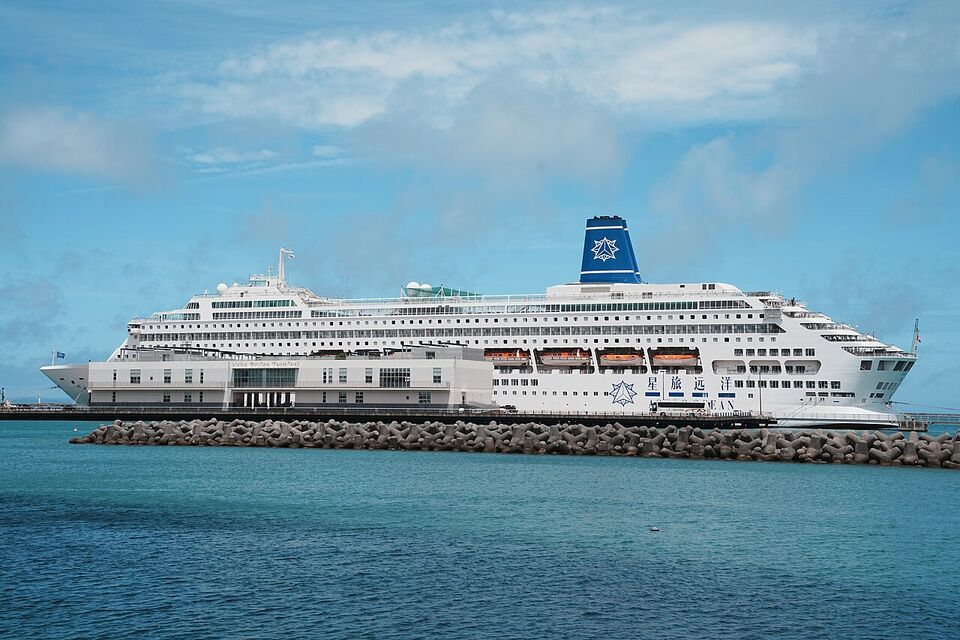
Naha, Ishigaki, Hakodate and Otaru
Naha and Ishigaki
Naha's cruise berth is a short taxi ride from Kokusai-dori and the Yui Rail monorail; ask your ship which berth is in use. Shuri Castle is about 20 to 30 minutes away, and its rebuilt main hall opens to the public on November 23, 2026, and the interior requires a timed reservation; confirm availability at oki-park.jp (see Okinawa). Ishigaki's cruise facility is a short taxi ride from the town. Large ships may anchor and send passengers ashore by tender boat, which makes timing uncertain. Okinawa calls can be dropped from the itinerary during typhoon season, so read your cruise line's policy.
Hakodate and Otaru
Hakodate's waterfront is a short walk or taxi ride from the morning market and the red brick warehouses; the Mount Hakodate ropeway runs to the night view. Otaru is a canal town about 30 to 40 minutes by JR from Sapporo; ships dock some distance from the center, so plan on a ship shuttle or taxi. Both are in Hokkaido (see Hokkaido). Weather and fog can delay arrivals in the north. If you hike near either town, read the bear guidance on The Outdoors in Japan.
Shore days on your own
You can nearly always do better on your own than on a ship excursion, if you keep it simple. These habits help:
- Check the all-aboard time and add a 60-minute buffer. Ships leave on time, and a late train is not an excuse.
- Carry the ship's address in Japanese (many lines print a card), the pier name and the ship's emergency number.
- Bring cash. Small shops, temples and stalls often take only cash, so carry ¥10,000 to ¥20,000 (about $64 to $127) and use an ATM at a convenience store (see Money in Japan).
- Use an IC card such as Suica in Apple Wallet or a tourist card for trains and buses.
- Take a taxi from the pier when time is tight, and ask the driver to use the meter. Japan has no tipping.
- Know where the toilets are. Public toilets are common at stations and convenience stores.
For help planning an itinerary, Trip Builder collects other ideas. For safety, including typhoon and earthquake guidance, see Safety in Japan.
Money: departure tax and shopping
Japan's departure tax rose from ¥1,000 to ¥3,000 (about $19) per person on July 1, 2026. It is charged to everyone leaving Japan by air or sea, and is normally included in the ticket price. We could not find a source that says how cruise lines handle it, but cruise fares almost always include port charges and taxes, so check your invoice or ask the line. Children under 2 are exempt.
The tax-free shopping rules changed on November 1, 2026. You now pay the full price (10 percent consumption tax, 8 percent on food) at the shop and claim the refund when you leave Japan, after showing your passport at a departure terminal or through Visit Japan Web, with a minimum of ¥5,000 (about $32) before tax per store per day. The old ¥500,000 limit on consumables has been abolished. The procedure is set up at airports; we could not confirm how it works at seaports, so ask your cruise line before you buy expensive items. If you cannot claim a refund, you will have paid the tax. Goods must leave Japan with you.
Save money
Ship excursions often cost several times what the same trip does on public transport. A Hiroshima tram ride is a few hundred yen, against $100 or more for a bus tour. Use the excursion only when the schedule is tight or the site is far from the port.
Add it to a route in the trip builder, or ask us to plan the hotels, trains and guides for you.