Overview: how safe Japan is
Japan is among the easiest countries in the world for an American to visit safely. The State Department rates it Level 1, "Exercise Normal Precautions," the lowest level, and describes crime against US citizens as generally low, mostly personal disputes, theft or vandalism. People return lost wallets, the trains are punctual and walking at night in most cities is normal.
The real risks are different from the ones at home. They are natural hazards (earthquakes, typhoons, heat, mountain weather and bears), a small number of scams in nightlife districts and legal traps for travelers who do not know the rules, such as the medicines Japan bans. This guide covers each, then police, detention, emergency numbers and US consular help. For health topics, see our health guide, and for entry rules see entry requirements.
Different from home
Japan has very strict drug and weapons laws, tough drunk-driving rules and a legal system in which even minor arrests can lead to long detention. Behavior that would earn a warning in the US can lead to arrest. Learn the rules below before you travel.
Earthquakes
Japan sits on several tectonic plates, and small tremors are common. Most are harmless, and buildings are built to strict codes. A strong earthquake is rare for a short trip, but you should know what to do.
Before you go
- Install the JNTO Safety tips app or the NHK World app. Both are widely used for English J-Alert-style push notifications, sometimes seconds before the shaking begins. Check the app store listings for current features and languages.
- Your phone may also sound a loud alarm for an earthquake early warning even if the app is closed. Do not panic if it goes off.
- At your hotel, note the nearest exits and the evacuation map on the back of the door.
If shaking starts
- Drop, cover and hold on. Get under a sturdy table or desk, or cover your head and neck near an interior wall. Stay away from windows, shelves and anything that could fall.
- Do not run outside. Falling glass and signs cause most injuries. Wait until the shaking stops.
- Open a door if you can. Doors can jam after a quake, so a gap helps you leave later.
- On a train or in a station, follow staff instructions. Shinkansen and local trains stop automatically in a strong quake.
- In an elevator, press all floor buttons, get out at the first stop and use the stairs.
After a large earthquake, expect aftershocks, train suspensions and crowded hotels. Check with your hotel and your embassy for instructions, and send a message home early, since phone lines often jam.
For context, a magnitude 7.5 earthquake (Japan Meteorological Agency measure) struck off Sanriku, in Iwate, on April 20, 2026. Tsunami waves reached up to about 80 cm (2.6 ft) at Kuji, lower than the forecast of up to 3 m, and about 10 people were hurt with no deaths. The agency issued a "subsequent earthquake advisory" for the area from April 20 to 27, which was lifted afterward. As far as we found, no Nankai Trough advisory is in effect in November 2026; the only one ever issued ran from August 8 to 15, 2024. Check the Japan Meteorological Agency before you go.
Tsunami
A tsunami can follow a quake near the coast. If you feel a strong or long shake while near the sea, a river mouth or low ground, do not wait for a siren or official order. Go to high ground or an upper floor of a sturdy building right away, and stay there until the all-clear. Japan uses three levels of warning: a tsunami advisory, a tsunami warning and a major tsunami warning. At beaches, a red-and-white checkered flag is used to signal a tsunami warning.
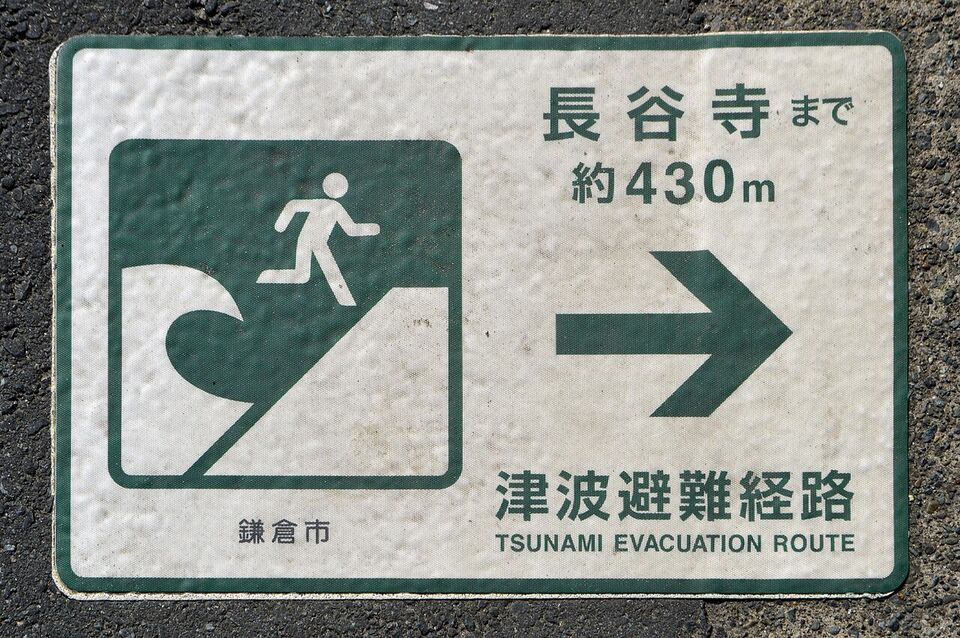
Look for tsunami evacuation signs and route arrows along the coast. If you plan beach time, ask your hotel where the nearest high ground is on arrival. Never go to the shore to watch the waves.
Typhoons and heavy rain
Typhoon season runs roughly from June to October, with a peak in August and September. Typhoons bring heavy rain, wind and disruptions: flights and Shinkansen trains are often canceled, ferries stop and mountain and river areas can flood or slide.
- Typhoon paths are forecast days ahead, and railways often announce planned suspensions the day before. Keep your plans flexible in late summer and fall.
- Book refundable or flexible tickets when you can, and buy travel insurance that covers weather disruption. See our health guide for insurance basics.
- If a typhoon is coming, stock up on water and snacks, charge your phone, stay indoors and stay away from rivers, coasts and steep slopes.
- The rainy season (tsuyu) runs roughly from early June to mid-July in most areas and brings steady rain and landslide risks in hilly regions.
Our when to go guide lays out the seasons month by month.
Summer heat
July and August are hot and very humid, and heatstroke is a serious risk even for fit travelers. Japan issues heatstroke alerts (netsuchusho keikai alert) when conditions are dangerous, and they are common in a hot summer.
- Plan outdoor sightseeing for early morning and evening, and use air-conditioned museums, malls and cafes at midday.
- Drink water and take salt tablets or sports drinks, which vending machines sell everywhere.
- Carry a small towel, a hat and a folding umbrella (parasols are normal for men and women).
- Warning signs include dizziness, headache, nausea and muscle cramps. Rest in the shade, cool your neck and armpits and drink; call 119 if someone is confused or faints.
Our health guide explains heatstroke and what to do in more detail, and the packing guide covers what to bring.
Mountains and hiking
Japan's mountains are well marked, but weather can change quickly. Even a modest peak can bring cold, wind or snow outside summer, and the Alps keep snow on trails into early summer. Mount Fuji, for example, has a short official climbing season (July 1 to September 10 in 2026), a ¥4,000 (about $25) fee, daily limits on the Yoshida Trail and gate closures from 2 p.m. to 3 a.m. See our Mount Fuji guide for details.
- File a climbing plan (tozan todoke) at the trailhead or online when asked. It is required in some areas.
- Carry layers, a headlamp, extra food and a charged phone, and tell your hotel where you are going.
- Do not hike off-season in closed areas. Entering a closed trail on Fuji is reported to carry a fine of up to ¥300,000 (about $1,900), though the official climbing site does not state a fine.
- Check trail closures, which are posted on local park and tourism websites. Closures for weather, landslides and bears are common.
- Buy travel insurance that covers mountain rescue, since a helicopter rescue can be expensive.
See our Japanese Alps guide and outdoors guide for specific routes.
Bears
Bears are the most striking safety story in Japan right now. Fiscal 2025 (April 2025 to March 2026) set records: more than 50,000 sightings, the most since national records began in 2009, and the highest numbers of injuries and deaths, according to preliminary Environment Ministry figures. Spring 2026 was worse than the same period of 2025, with about 12,600 sightings from April to June. Fatal attacks in 2026 included one in the Hakkoda Mountains in Aomori in June, and two people were injured near Shomyo Falls at Tateyama in May. Aomori reopened some trails on August 1 after a month-long closure.
Most incidents are in Tohoku, followed by Hokkaido and Nagano. Autumn is the highest-risk period because bears feed heavily before hibernation, and attacks often involve people gathering mushrooms or wild vegetables. City sightseeing in Tokyo, Kyoto and Osaka carries almost no bear risk, but hikes and rural onsen towns in the north do. We found no bear warning in the State Department advisory.
What to do
- Avoid hiking alone, and avoid dawn, dusk and dense forest when you can. Start after about 8 a.m. and be off the trail before dark.
- Make noise as you walk with a bell, radio or your voice. A bell is a baseline, not full protection.
- Check trail closures before you go. Park and prefecture sites post them, often in Japanese, so ask a hotel to help.
- Do not leave food scraps or trash. Do not approach bear cubs.
- If you see a bear, stay calm. Do not run, shout or approach. Back away slowly and let it leave. If it attacks, protect your neck and head and lie face down as a last resort.
- Bear spray cannot be taken on a plane. If you plan serious hiking in bear country, rent or buy it in Japan or join a guided hike.
Watch out
Bear conditions change fast and trail closures are posted locally. If you plan hikes in Tohoku, Hokkaido or the northern Alps, check the park's notices the week you go, and consider a guide in October and November.
Nightlife scams and drink spiking
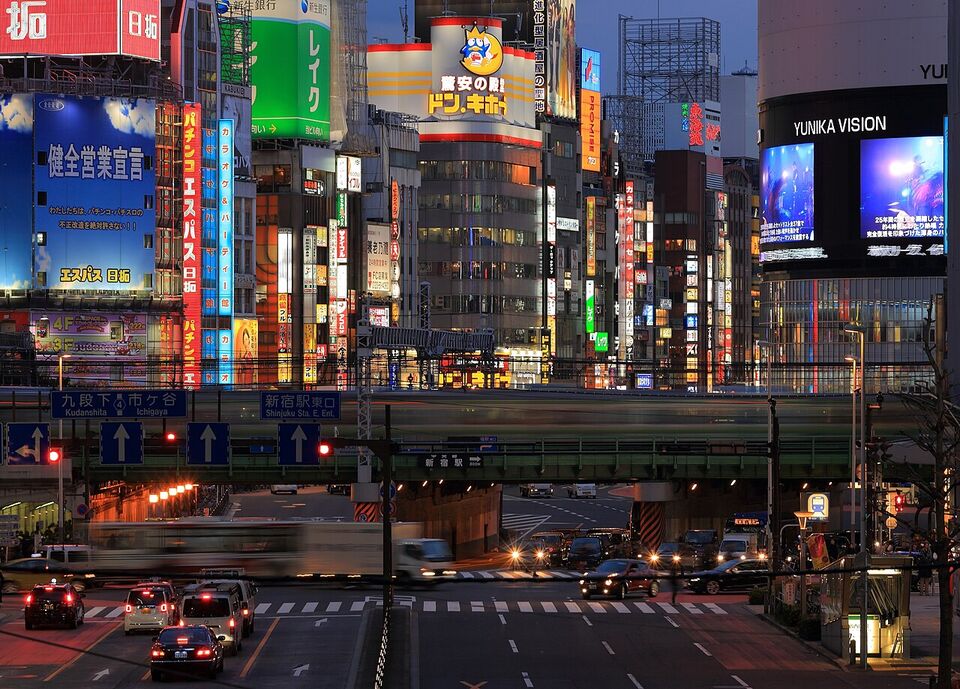
Crime against visitors is low, but nightlife districts such as Kabukicho in Shinjuku, Roppongi, parts of Shibuya and Ikebukuro are the exception. The usual pattern is a street tout (kyakuhiki) who approaches you, often in fluent English, and leads you to a bar or club. The bill later shows inflated charges, or a spiked drink leaves you unconscious or with no memory, and your card is charged heavily.
Press reports in 2026 cite a UK government warning about drink spiking and card fraud in these districts, and the State Department advisory points travelers to its scam guidance. We found no official US figure for how often it happens, so treat it as a known risk, not a common one.
- Do not follow touts, and do not enter a bar that a stranger recommended on the street.
- Choose bars you picked ahead of time, check the menu board for prices and ask about cover or table charges before you sit.
- Keep your drink in sight, do not accept drinks from strangers and leave if you feel unusually drunk.
- Carry one card and limited cash, and leave your passport copy and spare cards at your hotel. Check your card statement the next day.
- If you are overcharged, do not argue alone. Call the police on 110 or go to a koban.
Other minor issues include pickpocketing in crowded tourist spots, unlicensed taxis near some airports and online ticket scams. Our Tokyo guide has neighborhood context for choosing where to go out.
Crime, police and everyday safety
Violent crime is rare by US standards and public places are generally calm late at night. Common-sense rules still apply: keep your bag zipped, do not leave belongings on a table to save a seat (it is common but not risk-free in tourist spots) and keep your passport with you.
Koban and police
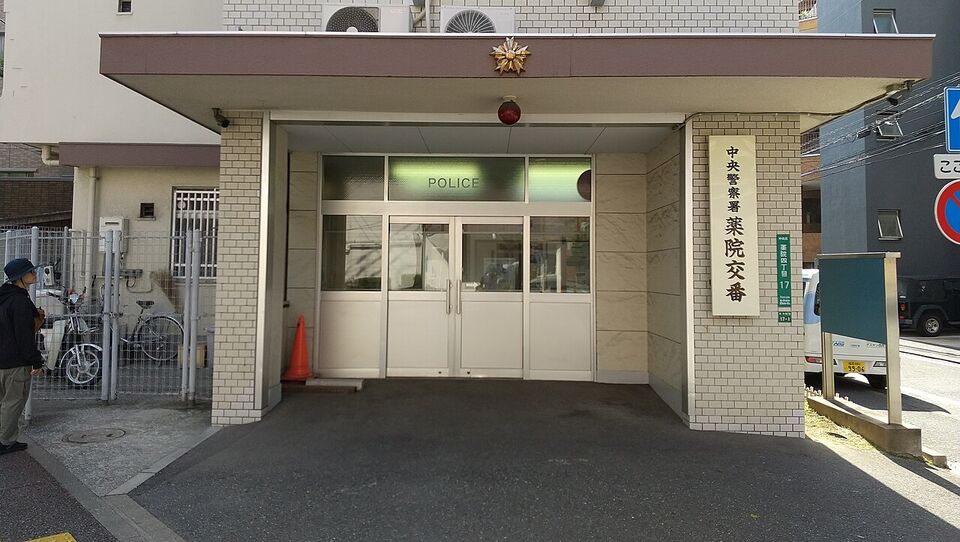
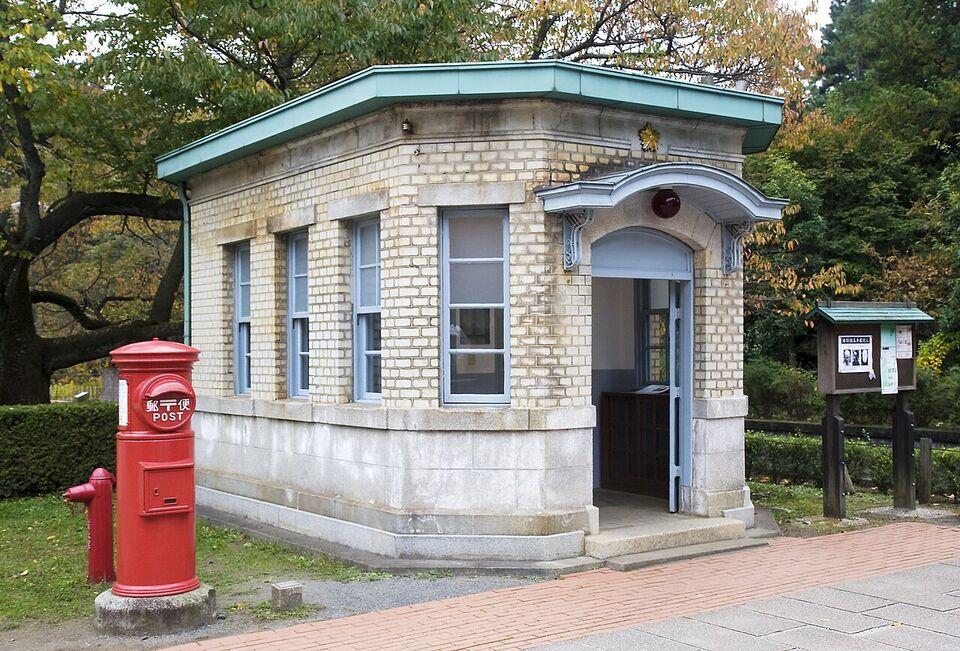
Small neighborhood police boxes (koban) are everywhere and are a good first stop if you are lost, robbed or need directions. Few officers speak English, but they will use a phone interpreter or a translation app. Police may stop foreigners to check ID. You must carry your US passport at all times. Show it politely.
If you have something stolen, file a report at a local police station before leaving Japan, because the State Department notes that police cannot accept reports filed from overseas. You will need the report for an insurance claim.
Lost items
Lost wallets and phones are often returned. Ask at the nearest koban or the station office, and check with the transit operator or hotel. Items found at stations are usually kept for a few days, then sent to a central office.
If you are arrested: Japan's detention rules
The State Department warns that you are subject to Japanese law, and that violations, even unknowing ones, can lead to arrest, imprisonment or deportation. Even a minor arrest can mean months of detention without bail during investigation and trial.
- Drugs. Most arrests of US citizens are drug-related, with aggressive enforcement. Marijuana (including medical), synthetic drugs and some prescriptions such as Adderall are illegal. Mailed drugs can lead to arrest. See entry requirements for the medicine rules.
- Knives and weapons. Guns are illegal, and folding or locking knives with blades longer than about 2.2 inches (5.5 cm) can be treated as weapons. Some US citizens have been detained over a pocket knife.
- Work. Working on a tourist or visa-waiver status is illegal.
- Drunk driving. The blood-alcohol limit is 0.03%, and penalties can include heavy fines, jail and loss of license. Passengers and people who provide alcohol can also be penalized.
- Cycling. Since April 1, 2026, police can issue on-the-spot "blue ticket" fines to cyclists, for example ¥12,000 (about $76) for using a phone while riding.
If police detain you, stay calm and polite, do not sign anything you cannot read and ask them to notify the US Embassy at once. Suspects can be held for an extended period before charges are filed, and interviews may happen without a lawyer present at first. Ask for a lawyer, and ask for an interpreter. The Embassy cannot get you out of jail or pay your bills, but it can visit you, contact family and provide a list of English-speaking lawyers.
Women, solo and LGBTQ+ travelers
Women and solo travelers. Japan is generally safe for solo women, including at night. One real concern is groping (chikan) on crowded trains. Many railways offer women-only cars at certain hours, marked with pink signs, and you can call out or ask station staff for help. The State Department notes that resources for victims of sexual assault are hard for foreigners to reach outside major cities, and that police may not always have female officers available. If something happens, call the Embassy in addition to 110.
LGBTQ+ travelers. Same-sex relations and LGBTQ+ events are not legally restricted, and Tokyo has a large nightlife scene in Shinjuku Ni-chome. Japan does not recognize same-sex marriage nationwide, and public displays of affection of any kind are uncommon. The State Department notes that rape and sexual commerce laws do not apply to same-sex activity, which results in lower penalties for same-sex sexual assault.
Travelers with disabilities. Major stations, airports and hotels are generally accessible, but many smaller stations and older buildings are not. Plan routes ahead.
Emergency numbers and US consular help
| Service | Number | Notes |
|---|---|---|
| Police | 110 | Few operators speak English; say your location |
| Fire and ambulance | 119 | Say "kyukyusha" (ambulance); you cannot choose the hospital |
| Japan Visitor Hotline (JNTO) | 050-3816-2787 | 24 hours, English, Chinese and Korean; general help and emergencies, no interpretation or bookings |
| US Embassy Tokyo | 81-3-3224-5000 | Also answers after hours |
| US Consulate Osaka-Kobe | 81-6-6315-5900 | Also handles emergencies for Nagoya |
| US Consulate Naha (Okinawa) | 81-98-876-4211 | |
| US Consulate Sapporo | 81-11-641-1115 | Assistance by appointment only |
| US Consulate Fukuoka | 81-92-751-9331 | Routine services by appointment only |
| US Consulate Nagoya | 81-52-581-4501 | Emergencies handled by Osaka-Kobe |
Save these numbers in your phone and write them on paper. Enroll in the State Department's STEP program before you leave to get alerts and to let the embassy find you in a crisis. The Embassy page lists doctors, lawyers and translators. If your passport is lost or stolen, report it to the police and the Embassy, and note that a passport reported lost cannot be used even if later found.
Insider tip
Take a photo of your passport page and keep it in cloud storage. Save your hotel's address in Japanese on your phone, so a taxi driver or police officer can read it. Our staying connected guide explains how to keep a working phone for alerts and maps.
Practical checklist
- Install the JNTO Safety tips app or NHK World for English alerts.
- Save 110, 119 and the Embassy number; carry your passport.
- Buy travel insurance with medical evacuation and mountain rescue.
- Check typhoon and heat forecasts before you travel in summer and early fall.
- Check bear and trail notices before any hike in northern or mountainous Japan.
- Avoid touts, and confirm prices before sitting down at a bar.
- Do not bring banned medicines or knives; see entry requirements.
Add it to a route in the trip builder, or ask us to plan the hotels, trains and guides for you.