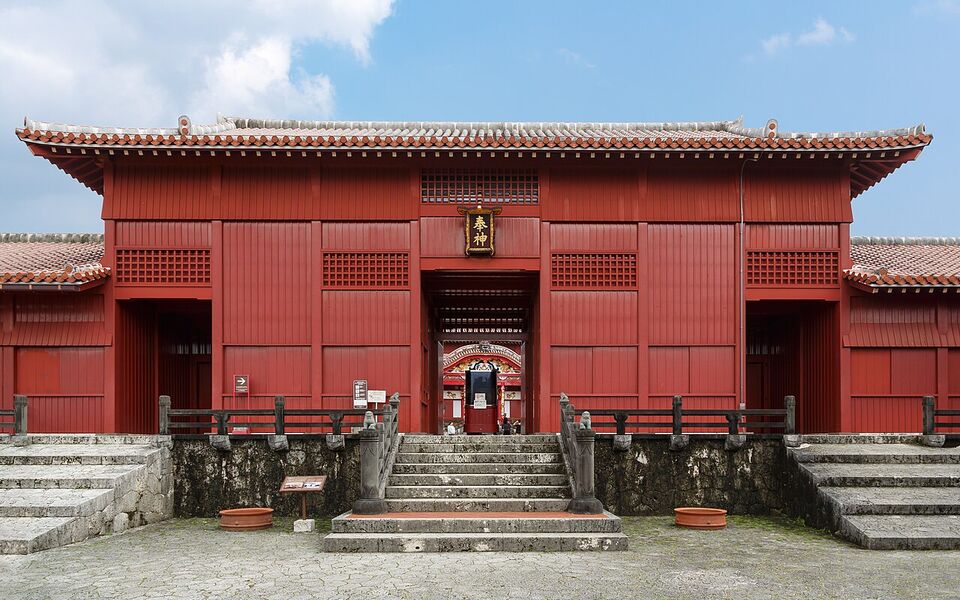
Overview: the subtropical end of Japan
Okinawa is a chain of about 160 islands stretching roughly 1,000 km (620 miles) southwest of Kyushu, closer to Taiwan than to Tokyo. For most Americans, the practical question is which part to choose. Our suggestion: pick Naha and the main island (Okinawa Honto) for 3 to 4 days, then add Ishigaki or Miyako for beaches and reefs if you have a week or more.
The Ryukyu Kingdom was an independent, trading state until Japan annexed it in 1879, and the culture shows it: a different cuisine, music, language, and the stone-and-red-tile architecture of Shuri Castle. Winters are mild, with highs around 68°F (20°C), and summers are hot and humid, with highs near 90°F (32°C). The sea is warm enough for swimming from about April to October. See When to Go to Japan for how this compares with the rest of Japan.
Different from home
Okinawa is Japan, but it is not like the Honshu itinerary of temples and bullet trains. Public transport outside Naha is thin, English is less common than in Tokyo, and the best sights are outdoors. Plan around weather, not around a rail timetable.
Getting there and getting around
By air
Naha Airport (OKA) is the gateway. From Tokyo Haneda the flight takes about 2 hours 45 minutes to 3 hours, from Osaka about 2 hours 15 minutes, and from Fukuoka about 1 hour 30 minutes to 1 hour 40 minutes. Low-cost carriers fly some of these routes. We could not confirm any nonstop flights from the US mainland to Okinawa, so expect to connect in Tokyo or Osaka. Ishigaki and Miyako have their own airports, with flights from Naha taking about 50 minutes to 1 hour and from Tokyo about 3 hours 15 minutes.
There is no JR rail pass use on the islands, so the national JR Pass does not help here (see Is the JR Pass Worth It?). Ferries run from Kagoshima to Naha, but they take around a day and are rarely practical for a short trip.
In Naha
The Yui Rail monorail runs about 17 km (11 miles) from Naha Airport through the center to Shuri and Tedako-Uranishi. Fares depend on distance, and 1-day and 2-day passes are available (check the current price at the airport station). Contactless credit cards are not accepted on the monorail as far as we know; use a Suica or other IC card (see Getting Around Japan). Buses go to most other places but are slow.
Renting a car
Outside the capital, a car is the practical choice. Americans need an International Driving Permit issued under the 1949 Geneva Convention, plus their US license, and Japan drives on the left (see Driving in Japan). The limit is effectively zero for alcohol. Reserve ahead in spring, summer and holidays, because rental cars sell out. Rental cars in Okinawa are easy to spot, and local drivers are used to visitors, but drive carefully on unfamiliar roads. Expressway use from Naha to the north costs a toll, so ask about an ETC card when you book.
Insider tip
Book an English-language car navigation unit and ask for a car with a rear-view camera. Roads in the north are narrow, signs outside Naha may be only in Japanese, and Google Maps works well if you turn on offline maps first.
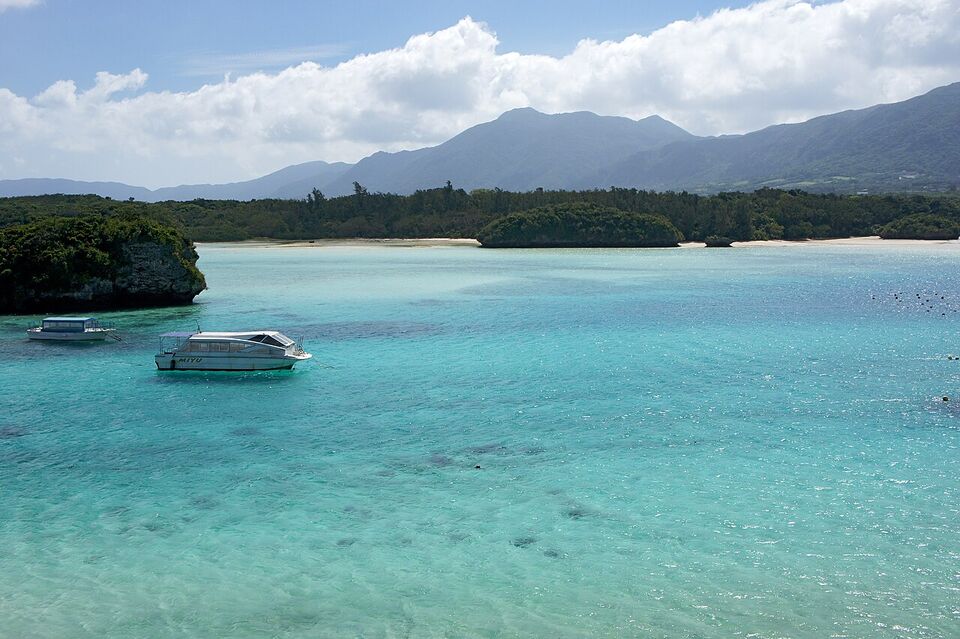
Naha, Kokusai-dori and Shuri Castle
Kokusai-dori and the markets
Kokusai-dori ("International Street") is a 1.6 km (1 mile) road of souvenir shops, restaurants and izakaya (pubs) in central Naha, and the easiest place to try Okinawan food on your first evening. Side lanes lead to Makishi Public Market, where you buy fish downstairs and have it cooked upstairs, and to the pottery lanes of Tsuboya. Allow half a day for the street and the market. The street is busy and sometimes loud at night.
Shuri Castle: the rebuild
Shuri Castle was the Ryukyu royal palace. A fire destroyed the main hall (the Seiden) and many surrounding buildings in October 2019, and reconstruction has gone on since. According to the latest reports we found in November 2026, the rebuilt Seiden opens to the public on November 23, 2026, according to Japan Guide and the Ryukyu Shimpo newspaper. Check oki-park.jp for the latest. The courtyard in front of the hall and other areas were still restricted while work continued, and the flanking halls lost in the fire have no announced completion dates.
The Ryukyu Shimpo newspaper reports Seiden admission from November 23 at ¥1,000 (about $6.50) for adults, ¥760 for high school students and ¥370 for elementary and junior high students; the earlier paid-area price was ¥400. Check the Shurijo Castle Park site (oki-park.jp) for current fees. Entering the interior requires a reservation for a timed slot, including for visitors with free entry, so look at the park's official site before you go. The paid area has been open 8:30 a.m. to 7 p.m. from April to November (last entry 6:30 p.m.), with shorter hours in winter. The free grounds and sacred utaki groves, as well as the Kyo-no-uchi viewpoints, stayed open throughout the rebuild.
Watch out
The opening date is less than three weeks away at the time of writing, and a delay or a reservation requirement could change your plans. If seeing the interior matters, book the earliest slot that is offered, and do not hold a non-refundable booking built around a single day.
Okinawa's main island: the north and the aquarium
The Okinawa Churaumi Aquarium sits in Ocean Expo Park near Motobu, about two hours north of Naha by car or highway bus. Its big tank holds whale sharks and manta rays. Adult tickets are ¥2,180 (about $14), high school students ¥1,440 (about $9) and younger students ¥710 (about $5), and the park itself is free. Hours vary by season, with a normal opening time of 8:30 a.m. and a closing time of about 5:30 p.m. in the off season (last entry is earlier), and later closing in summer; check the aquarium's hours notice. The aquarium lists no separate price for foreign visitors on its fee page.
Combine the aquarium with the Bise fukugi tree lanes, a village of old stone houses, the Kouri Island bridge and a beach. Nago, the nearby city, has Junglia Okinawa, a nature theme park that was reported to charge ¥6,930 (about $44) for Okinawa residents and ¥8,800 (about $56) for other visitors; check current prices. In the south, the Okinawa Peace Memorial Park and the Himeyuri Peace Museum cover the Battle of Okinawa in 1945, the largest land battle of the Pacific war to take place on Japanese soil. We suggest two hours at one of them, with time for reflection.
Beaches
Beaches near Naha, such as Naha's Naminoue and the artificial Tropical Beach in Ginowan, are convenient but not the best. For clearer water, drive to the west coast around Onna and Nago, or take a ferry to the Kerama Islands. See The Outdoors in Japan for diving and snorkeling advice and jellyfish safety.
The Kerama Islands
The Kerama Islands lie about 40 km (25 miles) west of Naha and are known for clear water and sea turtles. Ferries depart from Tomari Port in Naha. Fares we found (adult, one way) were as follows, and fares vary by season, so confirm on the operators' sites:
| Route | Boat | One way | US$ | Time |
|---|---|---|---|---|
| Naha to Zamami and Aka | Ferry Zamami | ¥2,900 | about $18 | 90-120 min |
| Naha to Zamami and Aka | Queen Zamami (high speed) | ¥3,950 | about $25 | 50-70 min |
| Naha to Tokashiki | Ferry Tokashiki | ¥1,690 | about $11 | about 70 min |
| Naha to Tokashiki | Marine Liner Tokashiki | ¥2,530 | about $16 | about 40 min |
The slower ferries run once a day each way, so a day trip uses the high-speed boats. Book one to two months ahead in summer and on holidays. Zamami has a town, snorkeling beaches and whale watching from roughly January to March. Tokashiki has Aharen Beach and is the closest island. Rough seas cancel sailings, so do not book a same-day flight home.
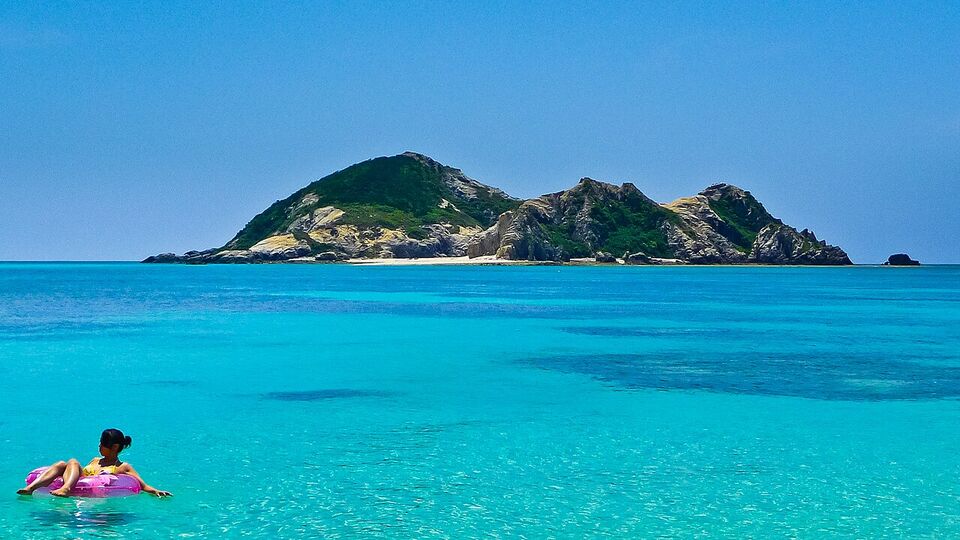
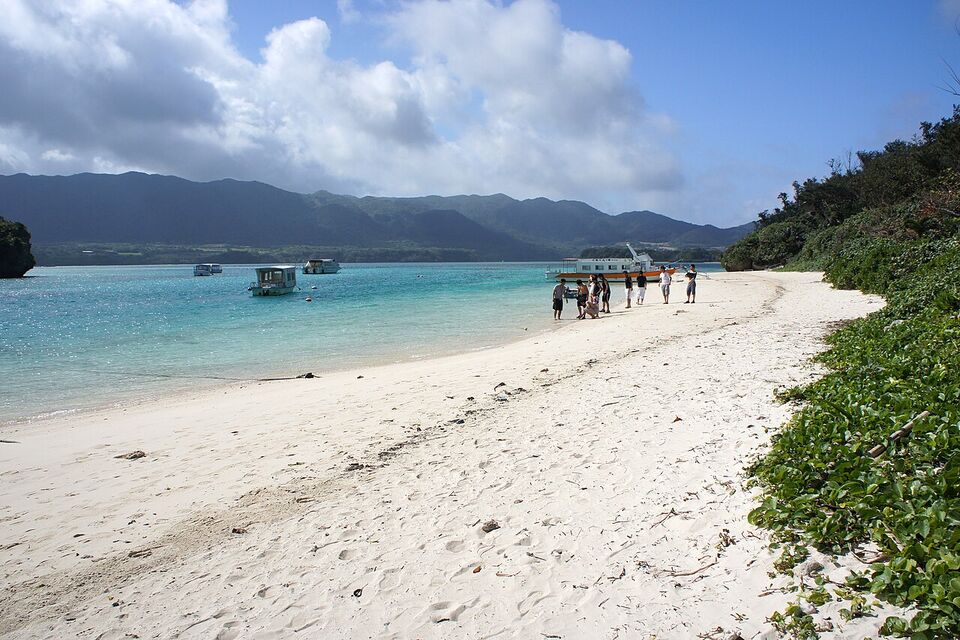
Ishigaki, Iriomote and the Yaeyama Islands
Ishigaki is the hub of the Yaeyama Islands, 400 km (250 miles) southwest of Naha. The town has restaurants and the ferry terminal; the best-known sights are Kabira Bay and the beaches on the north coast. From the terminal, high-speed boats reach Taketomi (a village of stone walls and red roofs, about 10 minutes), Iriomote (35 to 45 minutes) and other islands. Ask your ferry or tour operator whether any island visitor fee applies.
Iriomote: visitor limits
Iriomote is mostly jungle, mangrove and river, and part of a UNESCO World Heritage listing. Since March 2025, entry to five sensitive sites has reportedly been restricted: the Hinai River (Pinaisara Falls), the Nishida River (Sangara Falls), Mount Komi, the headwaters of the Urauchi River, and Mount Tedo. Visitors must apply in advance and be accompanied by an authorized guide, and daily numbers are capped. The tour operator we read described a cap of 200 people a day; the island's tourism management plan, drawn up in 2023, also sets an island-wide limit of 1,200 visitors a day, and says a visitor tax would fund upkeep. We could not find a tax amount or start date, so expect it may be added to tours or ferry fares and check before you go.
The practical advice is simple: book a guided kayak or hiking tour at least several weeks ahead, especially in the dry months of spring and autumn. Driving on Iriomote is limited to 40 km/h to protect wildlife (the Iriomote cat is rarely seen). See The Outdoors in Japan for the dive and kayak sections.
Ishigaki and Iriomote by flight or ferry
There are flights to Ishigaki from Naha (about 1 hour), Tokyo and Osaka. Iriomote has no airport, so everyone arrives by boat from Ishigaki. Weather cancellations are common in typhoon season.
Miyako
Miyako Island has flat farmland, sugar cane and some of the most photographed beaches in Japan, such as Yonaha Maehama. Several islands are linked by long bridges, including the Irabu Bridge, one of Japan's longest bridges open without a toll. You need a car or scooter here, and snorkeling and diving are the main draw. Flights from Naha take about 50 minutes, and from Tokyo about 3 hours. Miyako is smaller than Ishigaki and quieter in the evenings, so choose it for a beach week and Ishigaki if you also want boat trips to other islands.
Okinawan food
Okinawan cooking draws on Chinese, Southeast Asian and Japanese influences. Dishes worth trying:
- Goya champuru: stir-fried bitter melon with tofu, egg and pork. The bitter taste is an acquired one, so order it to share.
- Okinawa soba: thick wheat noodles in a pork and bonito broth, topped with stewed pork ribs (soki) or belly.
- Rafute: pork belly simmered with awamori and soy until tender.
- Umibudo: sea grapes, a green seaweed that pops in the mouth.
- Taco rice: seasoned ground meat and cheese on rice, a local invention that reflects the American influence.
- Awamori: a distilled rice spirit, served with water and ice. Check Sake, Whisky and Drinks for how to order.
Pork is central, and many menus are in Japanese only. Picture menus and plastic food displays help. Look for lunch sets (teishoku) of about ¥1,000 to ¥1,500 (about $6 to $10). For more on dining in Japan, see Japanese Food.
The US military in Okinawa
American visitors often ask about the US bases. Okinawa hosts a large share of US forces in Japan: it makes up under 1 percent of Japan's land area, but about 70 percent of the land used exclusively by US forces in Japan is here, including Kadena Air Base and several Marine Corps installations. The presence has long been debated locally, and in the past, incidents involving service members and noise from aircraft have caused public protest. Planned relocations, including the Futenma replacement facility at Henoko, remain contested.
For travelers, the bases are mostly closed to casual entry and you will pass the fences on the way north. There are viewing points for Kadena aircraft, and base-area districts, such as Chatan's American Village, cater to both locals and visitors. We suggest treating the topic as you would any local political issue: listen, ask respectful questions, and avoid assuming that locals share one opinion. The Peace Memorial Park and the Himeyuri museum explain the island's wartime history from an Okinawan perspective.
If you are a US citizen and have a problem, the US Consulate General in Naha can be reached at 81-98-876-4211; for emergencies in Japan, dial 110 for police and 119 for fire and ambulance. See Safety in Japan.
Heat, sun and wildlife
The sun is stronger than most Americans expect, even in March and November. Use reef-safe sunscreen, a hat and a rash guard, and drink water often; heatstroke is a real risk from June through September. Many beaches require swimmers to stay inside the nets from roughly April to October, because box jellyfish and other stinging species drift in during the warm months. Vinegar is stocked at most patrolled beaches for stings. If you are stung and feel unwell, go to the lifeguard post and call 119.
On land, the habu is a venomous pit viper found in grass and stone walls, mostly at night and in the countryside. Bites are rare, but stay on paths, wear closed shoes after dark and call 119 at once if bitten. On the water, do not touch cone shells, sea snakes or the spiny sea urchins that sit on reef flats. Reef walking in sandals is a common way to get a cut, so bring water shoes. Mobile coverage is good on the main island but patchy on small islands, so tell someone your plan (see Staying Connected in Japan for phone options).
Typhoons and weather
Typhoon season runs roughly from May to November and peaks from August to October. A typhoon near Okinawa can cancel flights and ferries for one to three days, close beaches and shut shops. The Japan Meteorological Agency posts warnings; a "storm warning" in Japanese translates to staying indoors until the warning is lifted. Practical steps:
- Book flexible fares for flights to and from Okinawa from August through October.
- Leave a spare night before an international flight, especially if you are on an island trip.
- Buy travel insurance with trip-delay coverage (see Health in Japan).
- Stock up on water and food when a typhoon is forecast; convenience stores can empty quickly.
- Stay out of the sea during any advisory, even on a bright day, because swells arrive ahead of the storm.
The rainy season in Okinawa begins earlier than on the mainland, in about mid-May, and ends in mid to late June.
Sample plans
- 4 days
Naha and the main island
Day 1: Kokusai-dori and Makishi Market. Day 2: Shuri Castle and Tsuboya. Day 3: drive north to Churaumi and a west-coast beach. Day 4: Kerama day trip or the Peace Memorial Park.
- 7 days
Add the islands
Days 1 to 3 as above, then fly to Ishigaki. Days 5 to 6: a guided Iriomote tour and Taketomi. Day 7: return to Naha with a buffer for weather.
Budget around ¥10,000 to ¥18,000 (about $64 to $115) a night for a business hotel in Naha, and more at beach resorts, where rates can reach the $$$ tier in summer. Okinawa Prefecture has been working on a lodging tax, so confirm what applies when you book. For other regions, see Kyushu or Japan's Destinations.
Add it to a route in the trip builder, or ask us to plan the hotels, trains and guides for you.