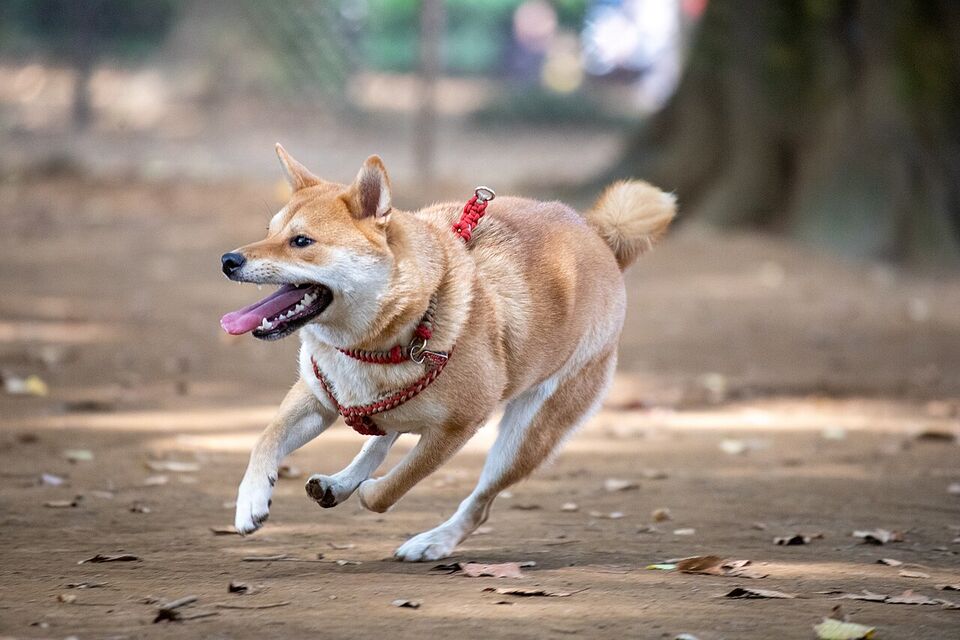
Overview: it is possible, but it is a project
Yes, you can bring a dog or cat from the US to Japan. The process is strict, it is the same for a two-week vacation as for a move, and the clock starts months before your flight. If your pet is not yet microchipped and vaccinated against rabies, plan on 7 to 8 months from the first vet visit to landing. If you have only a short trip in mind, most people find it easier to arrange a pet sitter at home.
Japan is free of rabies and works hard to stay that way. The Japan Animal Quarantine Service (AQS), part of the Ministry of Agriculture, Forestry and Fisheries, inspects every dog and cat that arrives. An animal with perfect paperwork should clear inspection at the airport quickly (AQS guidance has cited about 12 hours, so allow that long). An animal with a mistake in the paperwork can be held for up to 180 days, at the owner's expense, or sent back.
This page walks through the process from the US side step by step, the flight, the airport inspection, how to get around Japan with a pet, and the US rules for the trip home. Rules change, so treat this page as a map and confirm each requirement with the sources listed at the bottom. For the rest of your trip planning, see the trip planning guide and the entry requirements page.
Watch out
The most common failure is timing. The 180-day wait starts on the day of the blood draw for the rabies antibody test, not on the day of the second shot. The 40-day notice cannot be fixed after the fact. Build your calendar backward from your arrival date and ask your vet to check it against the AQS rules before you pay for anything.
Who this applies to, and what it does not cover
This page covers dogs and cats traveling from the contiguous US. Hawaii and Guam are treated differently under Japan's rules (the USDA lists separate forms for them), so if you live there, read the AQS pages directly. Other animals, such as birds, ferrets and rabbits, follow separate rules, and the USDA and AQS websites describe them.
Service and assistance dogs must meet the same requirements and should contact AQS early. They are not exempt from the 40-day notice or the antibody test. Emotional support animals have no special status in Japan; treat them like any other pet.
Dogs may enter Japan only through designated ports. The airports on AQS's list for dogs are New Chitose, Narita, Haneda, Chubu (Nagoya), Kansai, Osaka Itami, Kobe, Kitakyushu, Fukuoka, Kagoshima and Naha. In practice, almost all travelers from the US use Narita, Haneda or Kansai, where caretaker companies are available if a pet needs to be held. Cats are not limited to those ports, but contact AQS first if you plan to land elsewhere. Our flights guide covers which cities have nonstop service.
The process from the US, step by step
The order matters. Doing a step out of sequence can invalidate it and force you to start again. Here is the sequence as AQS and the US Department of Agriculture (USDA) describe it.
- Microchip first. The chip must be an ISO 11784/11785 type with a 15-digit number. It must go in before the first rabies shot, and a vet must confirm it scans. The USDA allows a narrow exception for a pet vaccinated before chipping, but only if the antibody test later comes back at 0.5 IU/ml or higher. Do not count on that. If your pet already has a non-ISO chip, ask AQS about bringing your own reader or adding an ISO chip. AQS has also warned that some chip numbers beginning with 900 have turned up on more than one animal, which can force a new chip and a restart, so check yours early.
- First rabies vaccination. Your pet must be at least 91 days old (birth date is day 0). A shot given earlier, or before microchipping, is not valid. Killed (inactivated) and recombinant vaccines are accepted; RNA and live-virus vaccines are not.
- Second rabies vaccination. It must come more than 30 days after the first and still within the first vaccine's labeled period of effectiveness (usually one year for a standard US rabies shot, but a three-year label depends on the product).
- Rabies antibody test (the FAVN test). After the second shot, your vet draws blood and sends it to a lab approved by Japan's agriculture ministry. The USDA names the Kansas State University Rabies Laboratory and the Department of Defense lab as examples. The result must be at least 0.5 IU/ml and is valid for two years from the draw. Your vet can often draw blood on the day of the second shot. Check the AQS rules for the exact timing.
- Wait 180 days. Arrival must be at least 180 days after the blood draw, counting the draw as day 0. Your pet's vaccine must also still be in its effective period on arrival date. If the days do not add up, your pet is held at an AQS facility for the shortfall, so complete the wait before you fly.
- Notify AQS at least 40 days before arrival. Use the online system (NACCS) or the official dog or cat notification form sent by email to the AQS office at your arrival airport. AQS reviews it and sends an approval for import inspection. Keep a copy and bring it with you. You cannot move the arrival date earlier, add animals or swap animals after submitting.
- Vet exam within 10 days before boarding. An accredited veterinarian examines your pet, who must show no signs of rabies and, for dogs, no signs of leptospirosis. The vet completes the health certificate (Form AC is the single-form option) in the USDA's electronic system.
- USDA APHIS endorsement. The USDA's Animal and Plant Health Inspection Service (APHIS) endorses the certificate. For dogs and cats, endorsement is digital through the vet's export system, and you travel with a printed, endorsed copy. Allow several business days, and check the current fee with your vet or APHIS.
- Fly and clear inspection. Bring originals of the certificate, the antibody test report, the vaccination records and the AQS approval.
Two practical points. First, AQS requires original documents and will not accept pencil, erasable ink or correction fluid on the certificate, and an error can mean detention. Ask your vet to send a copy to AQS ahead of time. Second, AQS recommends other vaccines (for dogs, distemper, hepatitis and parvovirus; for cats, the standard three-way vaccine) about 30 days before arrival, and a parasite treatment close to departure. Check the USDA page for the details.
A sample timeline
| When | What happens |
|---|---|
| Day 0 | Microchip implanted and scanned |
| Day 0 to 30 or later | First rabies shot (pet at least 91 days old) |
| At least 30 days after the first shot | Second rabies shot; blood drawn for the antibody test |
| Next 2 to 4 weeks | Lab result arrives; you need 0.5 IU/ml or higher |
| Blood draw plus 180 days | Earliest legal arrival date |
| Arrival minus 40 days (or earlier) | Notification submitted to AQS and approval received |
| Arrival minus 10 days or less | Final vet exam and health certificate |
| Arrival minus a few days | APHIS endorsement |
For a pet starting from scratch, that adds up to roughly 7 to 8 months, which matches the US State Department's advice for travelers. A pet that already has an ISO microchip and current rabies shots can save a few months, but only if the earlier shots meet the Japanese rules and the vaccine period will not lapse before arrival. If a vaccine's effective period would end before you arrive, you need another dose within that period; a late dose does not count.
Insider tip
Pick your arrival airport early, because the notification goes to the AQS office there. Narita, Haneda and Kansai have caretaker companies on site, which matters if something goes wrong. Also plan to land on a weekday morning or midday: inspection runs on AQS office hours, and an evening arrival can add hours or a night of waiting.
What it costs
We could not find a published total from an official source, and prices vary by vet, lab and city. The line items are an ISO microchip, two rabies vaccinations, the exam visits, the antibody test, the health certificate, any APHIS fee, the airline's pet fee and, in Japan, any inspection and handling charges. Industry guides give very broad ranges, from several hundred dollars to over a thousand dollars for the paperwork alone, and more if you use a relocation company. Ask your vet for a written estimate for the whole sequence and ask AQS about fees at your arrival airport.
Airline fees are the part you can check. ANA, for example, lists a fee of ¥40,000 (about $255) per cage between regions such as Haneda and Los Angeles, and ¥25,000 (about $159) within one region, on ANA-operated flights. The other expensive risk is a detention. If your pet is held, you pay for transport to the facility and all care, and daily rates are not posted in the sources we found, so confirm them with AQS if you are close to the line on timing.
Airlines and the flight
As of November 2026, ANA's published policy says pets cannot travel in the cabin. Dogs and cats fly as checked cargo, in the hold, on the same flight as the owner. The carrier's length plus width plus height may not exceed 115 inches (292 cm), and the pet and carrier together may not exceed 99 lb (45 kg). The pet must be at least 4 months old. ANA takes pet reservations by phone only, and cage space per flight is limited, so call as soon as your dates are firm.
JAL also routes pets through its cargo service and does not accept French Bulldogs or Bulldogs on any flight. Pets must be at least 8 weeks old, and JAL tells owners with snub-nosed breeds to talk to a vet first. We could not confirm cabin or cargo rules for individual US airlines for Japan routes this month. Policies on pets in the cargo hold have changed repeatedly in the past few years, and some airlines have stopped or limited them, so ask your carrier directly and get the answer in writing.
- Short-nosed breeds. ANA does not accept brachycephalic dogs (Bulldogs, French Bulldogs, Boxers, Pugs, Shih Tzu, Boston Terriers and others on its list) from May 1 to October 31 because of heat risk. Check each airline's list and season.
- Nonstop flights. A direct flight is much safer than a connection for a pet. Typical nonstop times run from about 10 to 14 hours depending on your city; see the flights page.
- Documents at check-in. Bring the AQS import approval, the endorsed health certificate and the antibody test report. ANA asks to see the approval at check-in.
- Connections through Japan. If you change planes at a Japanese airport, a health certificate is required.
Heat matters in summer. Airlines can refuse to carry pets when temperatures at either end or at a stop are too high, and typhoon disruptions can strand a pet in a hold. Choosing spring or fall for travel lowers the risk.
Arrival and inspection in Japan
After landing, collect your pet from the airline's baggage delivery (JAL, for example, says its agent brings the pet to the arrivals lobby), then go straight to the AQS counter before you leave the secured area. Do not go through customs first. Bring the original health certificate, the antibody test report, the vaccination records, the AQS approval and your inspection application. AQS checks the documents, scans the microchip and examines the animal.
If everything matches, clearance is usually quick (allow up to about 12 hours), and you receive an import quarantine certificate. Keep it. You need it for the trip home and for registration if you stay. If anything is missing or wrong, your pet can be held for up to 180 days, with limited visiting, or returned. Larger airports have staff who speak English, but plan for forms in Japanese.
After release, anyone who is staying in Japan must register a dog with the local government and give it a yearly rabies shot. This does not apply to a short visit. Because our long stays page covers moving to Japan, we leave municipal registration there.
Getting around Japan with a pet
Japan is more flexible with small pets than with large ones. On most JR and private railways, small animals can ride in a fully enclosed carrier, for a small fee of about ¥290 (about $2). Typical limits are 120 cm (47 in) for the carrier's length plus width plus height, and 10 kg (22 lb) for pet and carrier together, but each railway sets its own rules, so check with the operator. Buy the small-animal ticket at a staffed counter or gate. The pet must stay inside the carrier throughout the trip.
Large dogs do not get the same access. Most Shinkansen and limited express trains will not take a dog that does not fit in a carrier, and subways and buses vary by operator. Avoid rush hours, roughly 7 to 9:30 a.m. and 5:30 to 8 p.m. in big cities. See the getting around page for how the system works, and the JR Pass page if you hold a pass: a pass does not cover the pet's ticket.
Taxis are the practical option for a medium or large dog. Many drivers refuse animals outside a carrier, so ask when you book. Pet taxis exist in the big cities and cost considerably more than regular taxis. Renting a car is the easiest way to travel with a large dog; see driving in Japan for the license and permit rules.
Where dogs can and cannot go
Japan has far fewer dog-welcome places than the US. As a rule, the following are off-limits or restricted to dogs unless a sign says otherwise:
- Restaurants, cafes and food halls (except pet cafes and some patios).
- Shrines, temples and gardens: many ban pets entirely, and some admit them only in a carrier. See temples and shrines for the etiquette.
- Department stores, supermarkets and museums, though a carrier or a pet stroller is often tolerated in shopping malls with a pet policy.
- Onsen and public baths, which never admit dogs. A few ryokan have pet-friendly rooms but separate bathing rules; see the onsen guide.
- Many national and city parks and beaches, or places with leash and cleanup rules posted at the entrance.
Dog runs ("dog parks") exist in most large cities, and a growing number of cafes have terraces for dogs. Local rules apply to waste (carry bags and a bottle of water) and to leashes. Keep dogs leashed, quiet and under control; bring them out only when you know a place allows them. The rules around etiquette are in our etiquette guide.
Pet-friendly hotels
Most hotels in Japan do not take pets. Pet-friendly rooms exist but are limited in number, usually small to medium dogs, and often come with a per-pet fee of a few thousand yen per night. Book early, and expect to give the breed, weight and vaccination details. Rooms with a pet often must be on a specific floor, and the dog may not be left alone in the room or allowed on the furniture.
Look for these types of place:
- Business and city hotels with a few pet rooms, useful for a night near the airport.
- Resort hotels and cottages in places like Karuizawa, Hakone and Izu, which cater to dog owners with runs and pet-friendly dining.
- Vacation rental houses and apartments, which can be simpler for a longer stay. Confirm in writing that pets are allowed.
Hotel prices vary with the season. Our where to stay guide explains tiers and neighborhoods. Do not assume a hotel that accepts pets in other countries accepts them here; confirm the specific room, any size limit and the pet fee in writing.
Different from home
In the US, many hotels, patios and even stores welcome dogs, and a vest can make an emotional support dog seem acceptable. In Japan, the default is no animals, and staff are not trained to make exceptions. Cats are even less common as travelers. Plan around the places that do say yes.
Coming home: the CDC rules for dogs
Since August 1, 2024, the Centers for Disease Control and Prevention (CDC) requires paperwork for every dog entering the US, including US-owned dogs coming home. The rules depend on where the dog has been in the last 6 months. Japan is not on CDC's list of countries with a high risk of dog rabies, and Japan itself counts as free of dog rabies, so a dog that has been only in Japan and the US (or other low-risk countries) in that time falls into the simplest category. Confirm the status on the CDC page before you book, since CDC can update the list.
For a dog in that category, CDC requires:
- A CDC Dog Import Form receipt, filled in online for each dog before you travel. It is free, and the receipt is valid for 6 months.
- A microchip that a universal scanner can read. If the number does not start with 9, have your vet confirm it reads.
- A dog that is at least 6 months old and looks healthy on arrival.
- No other documents, and entry at any airport, seaport or land crossing.
The picture changes if your dog has been in a high-risk country in the last 6 months, for example during a long layover outside Japan or a side trip. In that case CDC applies stricter rules, including a US-issued rabies vaccination certificate and arrival at a designated airport. Check the list before adding stops. CDC publishes a Dog Importation Navigator and a phone line for questions.
Cats have no CDC rabies paperwork requirement, but they must appear healthy, and airlines and states may set their own conditions. Hawaii has its own rabies quarantine rules, and states can have their own import rules for pets.
On the Japan side, to take a pet out you contact AQS at your departure airport (the agency suggests at least 7 days ahead) and carry the original import quarantine certificate from your arrival, because it cannot be reissued. Your airline will want the CDC receipt at check-in. Pack the pet's records in your carry-on.
Save money
Skip the relocation company if you have the time. The steps are well documented, and most of the cost is vet visits, the antibody test and the airfare. Do pay for a vet who has done the Japan paperwork before; a single error can cost far more than a consultant.
Checklist before you commit
- Count backward from your arrival date: 180 days from the blood draw, 40 days for notice.
- Confirm the microchip is an ISO 15-digit chip and that it reads.
- Ask an airline for written confirmation that your pet's breed and carrier are accepted.
- Book pet-friendly lodging for every night, not only the first.
- Review health and safety basics for the trip in our health guide and safety guide, including earthquake plans for a pet.
- Save the AQS office phone and email for your arrival airport.
Add it to a route in the trip builder, or ask us to plan the hotels, trains and guides for you.