Overview: how festivals and holidays shape a trip
Japan's festivals (matsuri) are among the best reasons to time a trip: giant lantern floats in Aomori, portable shrines tossed through Tokyo's streets, a month of Kyoto parades and ice sculptures in Sapporo. They are also the main reason a hotel costs three times what it did the week before. This page lists the big festivals with their 2026 to 2027 dates, explains what to book, and gives the national holiday calendar from November 2026 to December 2027 so you can avoid, or deliberately plan for, the busiest travel days.
Two things set Japan apart. First, festival dates are tied to the calendar, not the weekday, and many are fixed on the same dates every year (July 17 for Gion, August 2-7 for Nebuta). Second, holidays cluster. Golden Week, Obon and New Year each close offices and send millions onto trains and highways at the same time. If you can plan around these, a trip is far cheaper and calmer. If you want to join them, book early. Our when to go to Japan guide shows how they fit the year.
Different from home
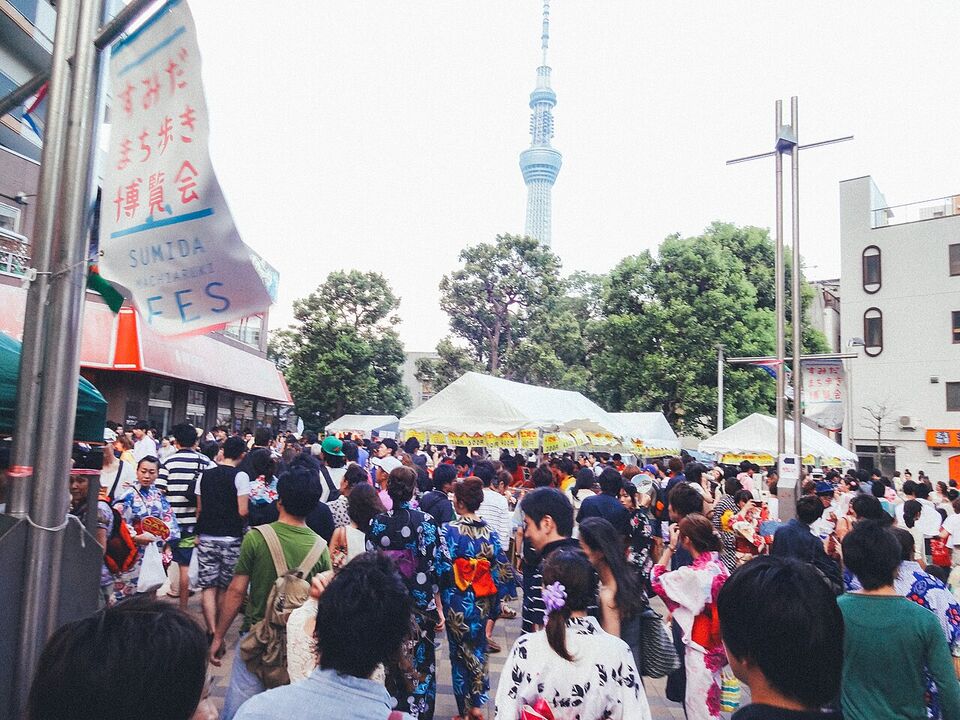
Japanese festivals are not ticketed shows. Most are neighborhood or shrine events that happen in the streets, free to watch, with food stalls (yatai) selling grilled squid, fried noodles, shaved ice and beer. Think block party and religious procession at once. Paid seats exist for some parades, but many events have no seating at all.
The big festivals, with 2026 and 2027 dates
Dates below come from the festivals' own sites where we could read them; for the rest we give the usual fixed dates and say so. Always confirm on the organizer's site closer to travel, because schedules can change for weather, safety or special events.
| Festival | Where | Dates | Notes |
|---|---|---|---|
| Shichi-Go-San | Shrines nationwide | Around November 15, 2026 | Children aged 3, 5 and 7 in kimono visit shrines; photogenic, not a spectacle |
| Chichibu Night Festival | Chichibu, Saitama | Usually December 2-3 each year | Lit floats and fireworks in winter; about 90 minutes from Tokyo by train |
| Hatsumode (New Year shrine visits) | Everywhere | January 1-3, 2027 | See Japan in January |
| Sapporo Snow Festival | Sapporo | February 4-11, 2027 | Snow and ice sculptures at Odori, Susukino and Tsudome; dates from the official site |
| Todai-ji Omizutori | Nara | March 1-14 each year | Fire ceremony at night; main days are the last days |
| Takayama Spring Festival | Takayama, Gifu | Usually April 14-15 | Decorated floats and puppet performances; confirm dates |
| Sanja Matsuri | Asakusa, Tokyo | May 14-16, 2027 | About 100 neighborhood portable shrines on Saturday, the three main ones on Sunday morning |
| Kanda Matsuri | Tokyo | Mid-May 2027 (full festival; dates not confirmed) | Held in full every two years; the 2026 version was the scaled-down year with no procession |
| Aoi Matsuri | Kyoto | Usually May 15 | Heian-era costume procession |
| Hakata Gion Yamakasa | Fukuoka | July 1-15 each year | Teams race giant floats at dawn on July 15; see Kyushu |
| Gion Matsuri | Kyoto | All of July; parades July 17 and July 24, 2027 | Both parade days fall on Saturdays in 2027 |
| Tenjin Matsuri | Osaka | July 24-25 each year | Boat procession on the river and fireworks on the evening of the 25th |
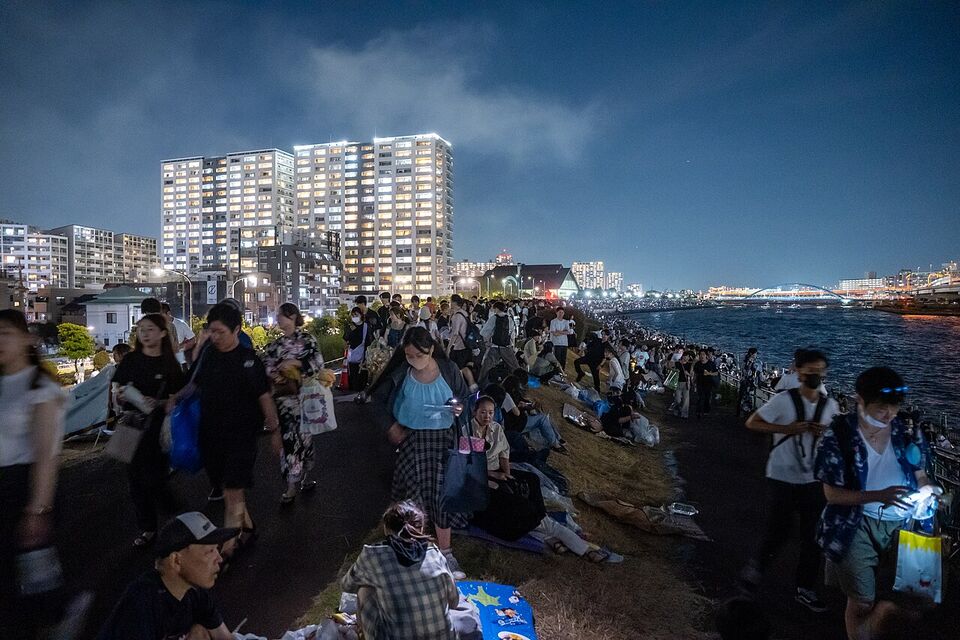
| Sumidagawa Fireworks | Tokyo | Late July (July 25 in 2026; 2027 date not announced) | Usually the last Saturday of July; no general-admission seats |
| Nebuta Festival | Aomori | August 2-7 each year | Illuminated float parades each night; sea parade and fireworks on the last night |
| Sendai Tanabata | Sendai | August 6-8 (2026 confirmed; 2027 expected the same) | Giant paper streamers over the shopping arcades |
| Awa Odori | Tokushima | August 12-15 each year | Dance parade in the evening; see Shikoku |
| Daimonji Gozan Okuribi | Kyoto | August 16 each year | Bonfires on five mountains at the end of Obon; watch from the Kamo River |
| Takayama Autumn Festival | Takayama | Usually October 9-10 | Float parades with lanterns at night |
| Jidai Matsuri | Kyoto | Usually October 22 | Costume parade through the centuries |
The table does not include every date for every year, because some organizers announce only a few months ahead. The dates marked "each year" are long-standing fixed dates, and the rest we checked on official or near-official pages. If your trip depends on a specific day, confirm it with the festival's website or the local tourist information office, and see getting around for tickets and local trains.
Summer: the busiest matsuri season
July and August are Japan's festival months. Most of the country's most famous events happen then, in heat that can reach 95°F (35°C) or more with high humidity. Wear light clothes, carry water and a small towel, and plan to leave the sun at midday. Our safety guide explains heat illness warnings.
Gion Matsuri, Kyoto
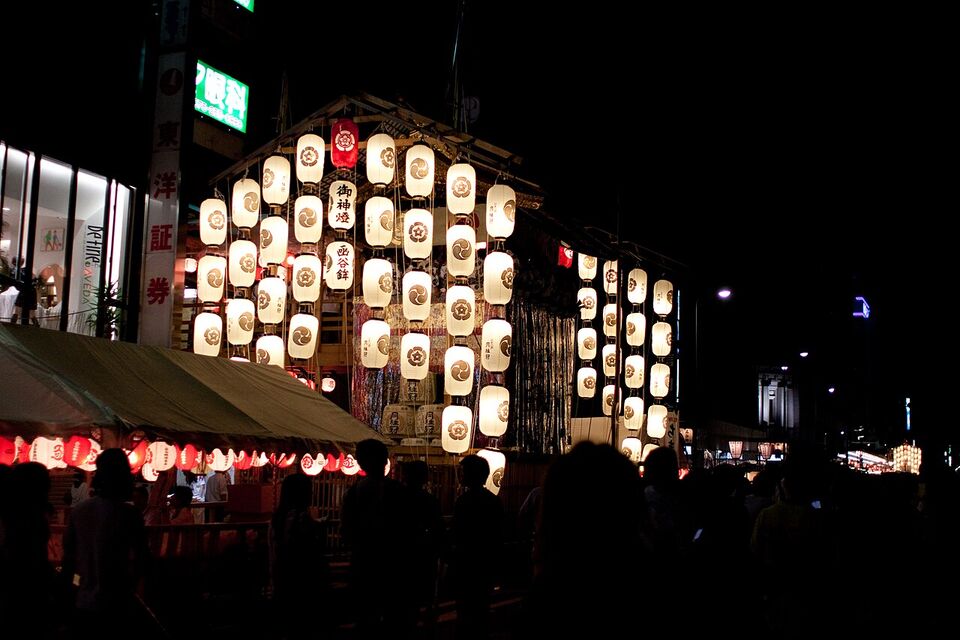
Gion Matsuri runs for the whole month of July and is one of Japan's oldest festivals. The main events are the two yamaboko float parades: the Saki-matsuri on July 17 (23 floats, held in rain or shine) and the Ato-matsuri on July 24 (10 floats). In 2027, both days are Saturdays, so expect a weekend crowd. On the three evenings before the main parade, the streets in central Kyoto close to traffic and the floats are lit and open for viewing. Kyoto City Tourism Association sets up paid seats along Oike-dori for the parade; check the official site for prices and sale dates. For the city itself, see Kyoto.
Tenjin Matsuri, Osaka
Held on July 24-25 each year, Osaka's Tenjin Matsuri ranks among Japan's biggest festivals. The highlight is the evening boat procession on the river, followed by fireworks, and it is a good match for a stay in Osaka (Osaka). The shrine sells special viewing seats through a travel agency, and the hotels near the river are expensive that week.
Nebuta Festival, Aomori
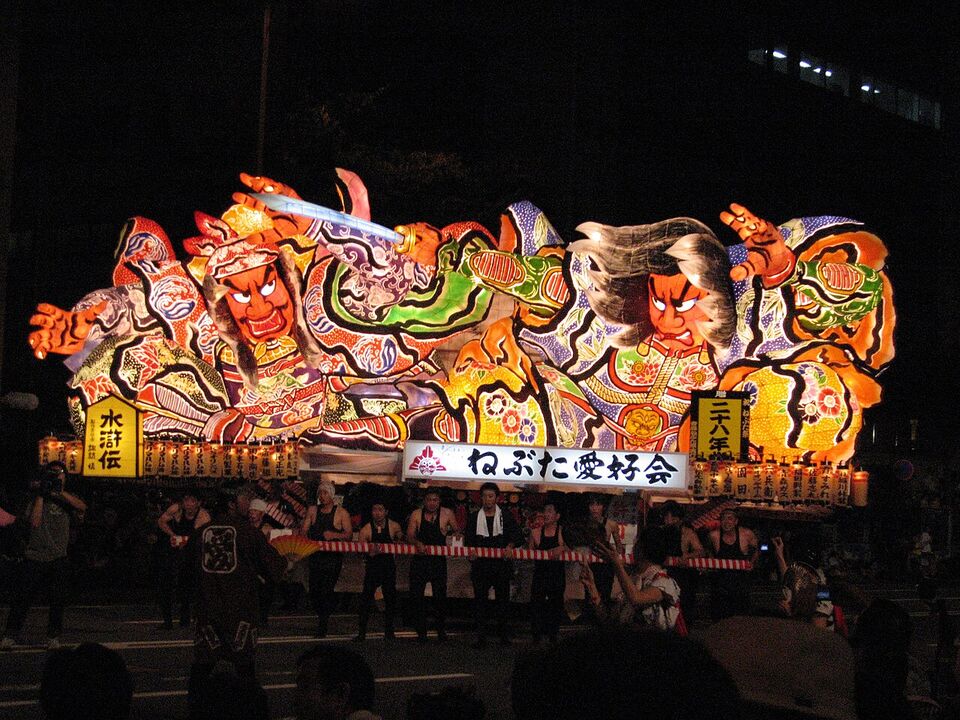
Each year from August 2 to 7, Aomori City sends enormous lantern floats of warriors and gods through the streets at night, accompanied by drums, flutes and jumping dancers (haneto). On August 2-3 there are children's floats and large floats at night, on August 4-6 the large floats parade at night, and on August 7 a daytime parade is followed by a night of fireworks and a sea parade. Visitors can join the haneto dance in a rented costume at the designated times. The festival site has paid-seat information that was updated in late May 2026; check it in the spring for 2027 sales. Aomori is in the north (see Tohoku), about three hours from Tokyo by Shinkansen to Shin-Aomori; book your train and hotel as soon as the schedule is firm.
Other August festivals
- Sendai Tanabata (August 6-8). Colorful paper streamers decorate Sendai's shopping streets. It is free and walkable.
- Awa Odori (August 12-15). Tokushima's dance festival fills the city with thousands of dancers. Some seats are paid and others are free; you can also join a visitor dance session.
- Daimonji (August 16). Kyoto's farewell fires for the spirits of ancestors, lit on five mountains at 8 p.m.
- Nagaoka and other fireworks (early August). Fireworks festivals take place nearly every weekend in summer. The biggest sell paid seats; others are free to watch from the riverbank.
Insider tip
For fireworks, arrive several hours early to claim a space on the grass, take a small tarp, and walk to a farther station on the way home. Trains near the site are one-way and packed for an hour or more afterward. Rental yukata (summer cotton kimono) are a popular option at tourist spots in Kyoto and Tokyo; reserve ahead in peak weeks.
Spring festivals
Spring is cherry blossom season (see cherry blossom season) and the start of the festival calendar. In Tokyo, Sanja Matsuri in Asakusa runs May 14-16, 2027, according to the shrine's schedule. On Friday there is a procession with dances. On Saturday about 100 neighborhood portable shrines (mikoshi) start from Senso-ji, and on Sunday morning the three main shrines leave the grounds and parade through the districts. It is loud, energetic and crowded, and the area is closed to cars. The schedule can change, so confirm it on the shrine's page.
Kanda Matsuri alternates each year between a full festival and a smaller one. The shrine said the 2026 festival is the smaller kind without a procession, which implies 2027 should be a full festival in mid-May, though we could not confirm dates. In Takayama, the spring float festival is usually around April 14-15 and the autumn one around October 9-10; the town is in the mountains of central Japan (see the Japanese Alps).
Autumn and winter festivals
Autumn is festival season for harvest and local shrines. Kyoto's Jidai Matsuri (usually October 22) is a long costume procession, and the Kurama Fire Festival on the same night draws a crowd to the mountain village north of the city. Takayama's autumn festival, with lantern-lit floats at night, is held in early October. Many other towns hold their own harvest festivals on weekends in October and November.
Winter has fewer large festivals but some striking ones. The Sapporo Snow Festival is February 4-11, 2027 at Odori Park, Susukino and Tsudome, according to the festival's official site. Teams build large snow statues in Odori Park, there is an ice sculpture show in Susukino and a snow playground at Tsudome. Hotels in Sapporo fill for the dates, so book as soon as flights are set (see Hokkaido). Setsubun on February 3 is the bean-throwing festival that marks the start of spring, and shrines and temples across the country hold events. In early March, Omizutori at Todai-ji in Nara lights giant torches in the evenings.
Save money
Festival-week hotel rates can double or triple, and rooms sell out. Stay in a neighboring city and take a train in: Osaka for Kyoto, or Hirosaki for Aomori. You can also stay a night before or after the festival day, when rates fall.
The national holiday calendar, November 2026 to December 2027
Japan has 16 national holidays. When a holiday falls on a Sunday, the next weekday becomes a holiday. Because holidays move trains, hotels and crowds, check them against your dates. Culture Day on November 3, 2026 has already passed.
| Date | Day | Holiday | What it means for visitors |
|---|---|---|---|
| Nov 23, 2026 | Monday | Labor Thanksgiving Day | 3-day weekend; busy autumn leaf spots |
| Dec 2026 | - | No national holidays | New Year closures begin around Dec 29 |
| Jan 1, 2027 | Friday | New Year's Day | Many shops closed Dec 31-Jan 3 |
| Jan 11, 2027 | Monday | Coming of Age Day | 3-day weekend Jan 9-11 |
| Feb 11, 2027 | Thursday | National Foundation Day | Many take Friday off; ski areas busy |
| Feb 23, 2027 | Tuesday | Emperor's Birthday | The Imperial Palace usually holds a public greeting |
| Mar 21, 2027 | Sunday | Vernal Equinox Day | Falls on a Sunday |
| Mar 22, 2027 | Monday | Substitute holiday | 3-day weekend Mar 20-22, cherry blossom season begins |
| Apr 29, 2027 | Thursday | Showa Day | Start of Golden Week |
| May 3, 2027 | Monday | Constitution Memorial Day | Golden Week |
| May 4, 2027 | Tuesday | Greenery Day | Golden Week |
| May 5, 2027 | Wednesday | Children's Day | Golden Week; carp streamers |
| Jul 19, 2027 | Monday | Marine Day | 3-day weekend; start of summer holidays |
| Aug 11, 2027 | Wednesday | Mountain Day | Close to Obon, which is about Aug 13-16 |
| Sep 20, 2027 | Monday | Respect for the Aged Day | 3-day weekend |
| Sep 23, 2027 | Thursday | Autumnal Equinox Day | Not joined to the Monday holiday, so no Silver Week in 2027 |
| Oct 11, 2027 | Monday | Sports Day | 3-day weekend |
| Nov 3, 2027 | Wednesday | Culture Day | Many museums have free or special days |
| Nov 23, 2027 | Tuesday | Labor Thanksgiving Day | Autumn leaf season |
Dates above were compared against two public holiday lists for 2026 and 2027. Japan's government confirms the next year's list well in advance, but changes are rare. The 2027 summer and autumn lists follow the usual "Happy Monday" pattern, in which several holidays always fall on a Monday.
Golden Week, Obon and New Year
Golden Week 2027
Golden Week combines four national holidays in a row. In 2027, Showa Day is Thursday, April 29, and Constitution Memorial Day, Greenery Day and Children's Day fall on Monday to Wednesday, May 3-5. Many people also take Friday, April 30 off, which links the holidays to the weekend of May 1-2 and gives a typical seven-day break from April 29 to May 5. Shinkansen reservations sell out, highways jam, and hotels in famous spots charge peak prices. Our advice: avoid Kyoto, Tokyo's major attractions and any resort area, or book months ahead and plan for crowds. Reserved seats are important; see JR Pass for how reservations work on the bullet train.
Obon
Obon is a Buddhist observance for the spirits of ancestors, in mid-August in most of Japan (about August 13-16, 2027). It is not a legal holiday, but many companies close for a few days and people return to their hometowns. Expect heavy traffic on August 12-13 and August 15-16. Many places hold Bon Odori community dances and lantern events, which visitors are often welcome to join. Kyoto's Daimonji fires on August 16 mark the end of the period.
New Year
New Year is Japan's biggest holiday. Government offices close from about December 29 to January 3, and many shops and restaurants close from December 31 to January 3. Temples hold bell-ringing on New Year's Eve, and hatsumode visits fill shrines on January 1-3. Bullet trains are crowded on Dec 28-30 and Jan 2-4. For the details of closures, shrine etiquette and what to do, see Japan in January and Japan in December.
Watch out
A national holiday on a Monday makes a three-day weekend, and then Saturday and Sunday of that weekend are fully booked in scenic towns. If you plan an overnight stay at a hot spring or in a mountain town, check the calendar first. Public transit on holidays can run on weekend timetables, and some museums close on the Tuesday after a Monday holiday.
Festival etiquette and practical tips
- Do not touch or lean on a mikoshi (portable shrine) or a float unless you are invited. Stay behind the lines or barriers staff set up.
- Take your trash with you or use the bins by the stalls. Some festivals have designated recycling points.
- Bring cash in small bills: the food stalls usually do not take cards, and ATMs near the site may run dry. See money in Japan.
- Be careful with photography. Ask before photographing participants up close, and do not block the route. Drones are banned at nearly all events.
- Wear shoes that can handle crowds, and carry a small bag you can hold in front of you.
- Know the meeting point if your group gets separated, because phone signal can fail in a crowd.
- Stay hydrated in summer, and rest in the shade or in air-conditioned shops every hour or so.
- Follow local etiquette for shrines and temples (see etiquette and temples and shrines).
Festival food is part of the fun. Look for takoyaki (octopus balls), yakisoba (fried noodles), grilled corn, candied fruit and kakigori (shaved ice). Prices at stalls are typically a few hundred yen to ¥1,000 (about $6) per item, so a snack crawl is cheap, and our food guide explains what to order.
How to plan around the calendar
Start with what you want. If you are chasing a particular festival, build the rest of the trip around it, and book transport and rooms as soon as the dates are confirmed (usually a few months ahead for big events). If you just want a quiet trip, avoid Golden Week, Obon and New Year, as well as the festival days of the city you are visiting. If you can't avoid them, book earlier than you think, use reserved seats on trains, and hold flexible lodging.
Mix big and small. A large festival like Gion or Nebuta draws tens or hundreds of thousands of people. A smaller local matsuri held on a weekend in a place you already plan to visit can give a more relaxed look at local life. The local tourist information office or your hotel front desk can tell you what is on during your stay, and many posters are in English at major stations. For wider planning, see planning your trip.
Add it to a route in the trip builder, or ask us to plan the hotels, trains and guides for you.