Planning the Japanese Alps
The Japanese Alps run down the middle of Honshu, between Tokyo and Kanazawa and Kyoto, and they are best understood as a handful of separate trips rather than one region. There is a castle town (Matsumoto), a mountain old town (Takayama), a thatched village (Shirakawa-go), a post road (the Kiso Valley), a high valley (Kamikochi), a mountain traverse (the Tateyama Kurobe Alpine Route) and the famous hot-spring monkeys (Jigokudani). Each can be done in a day or two, but they are connected by buses and slow limited expresses rather than by Shinkansen.
For most travelers we suggest picking a line: Tokyo to Matsumoto to Takayama to Shirakawa-go to Kanazawa, with the Hokuriku Shinkansen carrying you back to Tokyo. That is a loop of four or five days, and it ends in a city with its own gardens and food (see Kanazawa). If you are starting from Kyoto or Osaka, a shorter version goes through Nagoya to Takayama (see Kyoto).
It is November 2026 as we write. Kamikochi is in its last days of the 2026 season, and the Tateyama Kurobe Alpine Route and its pass have closed for the winter. We say below which items are 2027 plans and which are happening now.
Routes from Tokyo and Kyoto
| From | To | How | Time |
|---|---|---|---|
| Tokyo (Shinjuku) | Matsumoto | JR Azusa limited express | About 2 hr 30 min |
| Tokyo | Nagano (snow monkeys, Zenko-ji) | Hokuriku Shinkansen | About 1 hr 20 min to 1 hr 40 min |
| Tokyo | Takayama | Shinkansen to Nagoya, then JR Hida limited express; or Azusa to Matsumoto and a bus | About 4 to 5 hr |
| Kyoto or Osaka | Takayama | Shinkansen to Nagoya, then Hida limited express (Nagoya-Takayama about 2 hr 15 min-2 hr 45 min) | About 4 hr |
| Nagoya | Matsumoto | JR Shinano limited express, hourly | About 2 hr |
| Takayama | Shirakawa-go | Nohi Bus | About 50 min |
| Shirakawa-go | Kanazawa | Highway bus | About 75 min |
The Hida limited express between Nagoya and Toyama runs about 4 hours and stops at Gifu, Gero Onsen, Takayama and Hida-Furukawa, so you can enter the Alps from Nagoya and leave at Toyama or Kanazawa. This is the classic Kyoto-Takayama-Kanazawa line and it works well in either direction (see the JR Pass guide for which of these a pass covers). The Hida and Shinano limited express trains are covered by the Japan Rail Pass. The Nohi Bus to Shirakawa-go is not, so reserve it separately.
Always check current timetables and fares with JR Central or JR East. We have not listed fares for every train, because they are changing, and because the cheapest way to travel here is often a regional pass (see below). For a broader look at trains and passes, read getting around Japan.
Different from home
There is no equivalent of an interstate here. Limited express trains and buses on mountain roads set the pace, and a landslide or snowfall can cancel them. Build a spare half-day into any plan that has a fixed flight or Shinkansen at the end.
Takayama
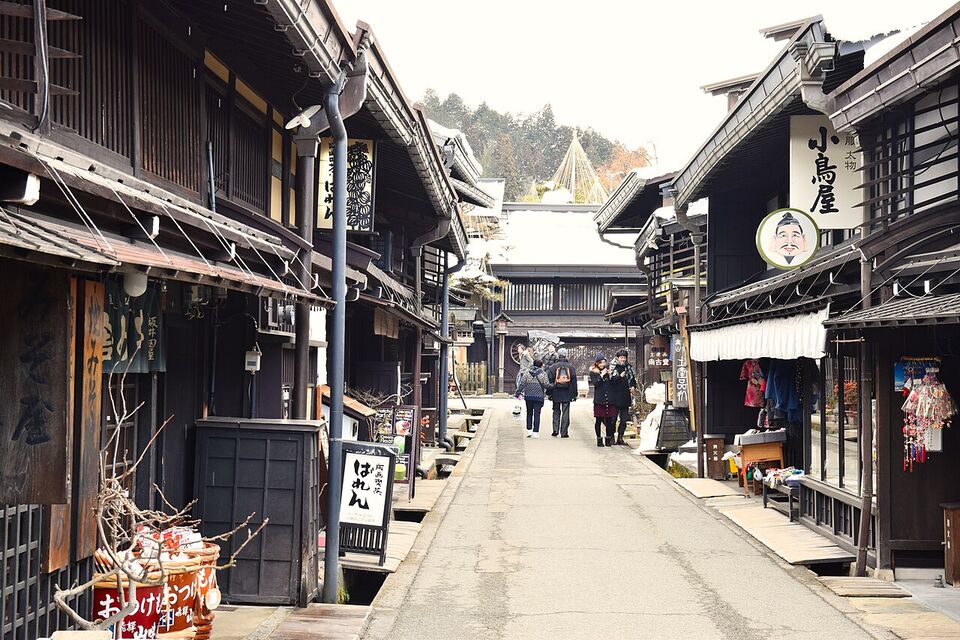
Takayama is a small city in the Hida mountains, known for a well-preserved merchant quarter of dark wood houses, sake breweries and craft shops. The old streets (Sanmachi Suji) are free to walk, and the best time is early morning, before tour groups arrive. Two morning markets, one along the river (Miyagawa) and one in front of the old government house (Takayama Jinya), run roughly from 7 a.m. to noon every day.
The Takayama Jinya, a former regional government office, costs ¥430 (about $3) for adults. The Hida Folk Village (Hida no Sato), an open-air museum of farmhouses, is about 10 minutes from the station by bus; check the entry fee on its website. Takayama's festivals take place on April 14-15 (spring) and October 9-10 (autumn), when floats parade through the streets. A year-round float exhibition hall costs ¥1,000 (about $6) for adults.
The local specialty is Hida beef, available as nigiri, skewers, or as steak and sukiyaki in sit-down restaurants. A skewer or a beef nigiri is the cheapest way to try it. Many restaurants close one day a week, often Wednesday, so check before you walk across town. For other regional dishes, see our food guide.
Plan one night, or two if you want a slow evening in a ryokan. Nagano Prefecture, which includes Matsumoto and Kamikochi, introduced a lodging tax in June 2026 (a flat ¥200 per person per night, with tiered rates in some resort areas such as Karuizawa and Hakuba). Takayama is in Gifu Prefecture, so check the current tax for your town. See where to stay.
Shirakawa-go
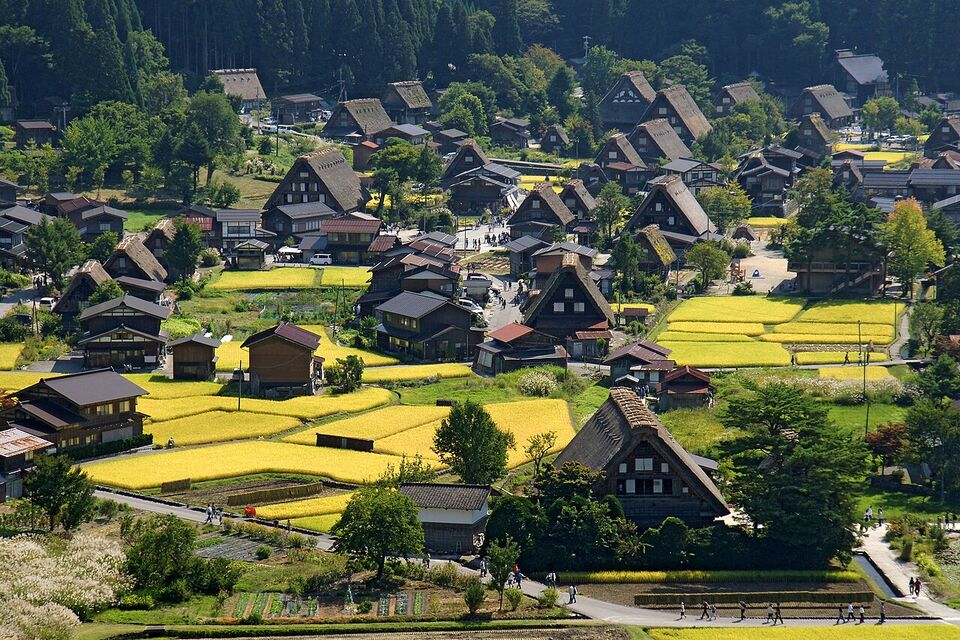
Shirakawa-go is a UNESCO World Heritage village of steep-roofed gassho-zukuri farmhouses, named for hands pressed together in prayer. It is a living village where people still work and farm, not a museum. The roofs are thickest and prettiest under snow, and also in the green of early summer and the leaves of November.
Getting there and the 2026 rules
The Nohi Bus and other highway buses run between Takayama, Kanazawa, Toyama and Shirakawa-go. The one-way fare is ¥2,800 (about $18) from Takayama (about 50 minutes) or Kanazawa (about 75 minutes). Reservations are required on the Kanazawa route and on some Takayama departures, so book both directions online or by phone when you plan your trip. Not having a reservation can leave you stuck. If you travel by bus, the village is free to enter.
The village publishes basic rules for visitors, which are stricter than they look. The main ones for 2026 are:
- Visit between 8 a.m. and 5 p.m. After dark, only overnight guests may be in the village (and light-up ticket holders in winter).
- Smoke only in the designated spots. Fireworks are prohibited.
- No drones.
- Take your trash home. There are no bins.
- Stay out of private yards and fields, and do not photograph into windows. Ask before you photograph a resident. Remove your shoes when you enter a farmhouse.
Private cars park in a designated lot (about ¥2,000, about $13, per car at the main lot in 2026). Private vehicles cannot drive to the viewpoints. From December 1, 2026, large and medium sightseeing buses must reserve parking in advance, and the village says this is to manage crowding.
Winter light-up
On a few evenings in January and February, selected houses are lit up. For 2027, the dates are January 11, 17, 24 and 31, from 5:30 to 7:30 p.m. Entry is by reservation only, and no tickets are sold on the day. The options are an overnight stay (the lottery for 2027 rooms ran October 1-31, 2026), a parking reservation for a private car (¥6,000 for 1 to 5 people in the first round, which sold out on its first day, and ¥7,000 in the round opening December 1, with no refunds), or a guided bus tour from Takayama, Kanazawa, Toyama or Takaoka. Bus tour fares for 2027 were listed at ¥13,000 to ¥16,000 (about $83 to $102) from Takayama and ¥18,000 to ¥18,500 (about $115 to $118) from Kanazawa, Toyama and Takaoka, and only the plans with a viewpoint ticket include the best viewpoint; the viewpoint ticket is not sold on its own. Check the Shirakawa-go Tourism Association website for any leftover tickets or rooms, as these usually sell out. A regular daytime bus does not let you stay for the light-up.
What to see
The Wada House is the largest and the most visited, and costs ¥400 (about $3) for adults to enter. A viewpoint above the village takes 15 to 20 minutes on foot up a steep path, or a shuttle bus runs from near the Wada House (reported at ¥200 to ¥300 each way, about $1 to $2, cash only). Allow three to four hours for a first visit. Nearby Gokayama, to the north, has smaller and quieter villages.
Matsumoto and its castle
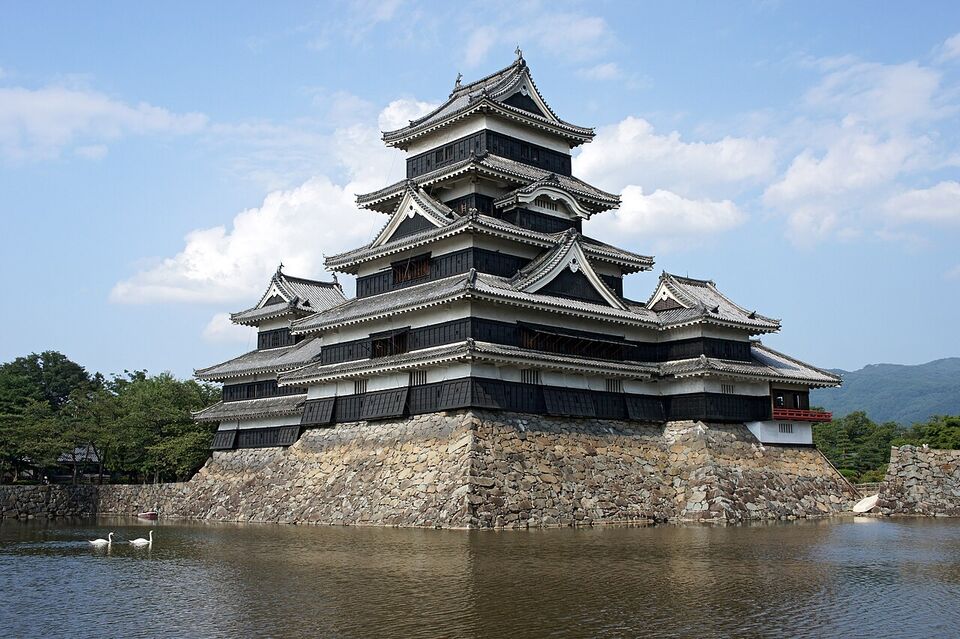
Matsumoto Castle is one of Japan's few original wooden castles, with a black-and-white keep dating to the 1590s that is a National Treasure. It is about 20 minutes on foot from the station (or about 10 minutes on the north-loop Town Sneaker bus). The tower entry is ¥1,200 (about $8) with an online timed e-ticket, or ¥1,300 (about $8) for a paper ticket on the day. Children 6 to 15 pay ¥400 (about $3). Regular hours are 8:30 a.m. to 5 p.m., last entry 4:30 p.m., and the castle is closed only on December 29-31. Foreign visitors pay the same price as everyone else.
The keep has steep, narrow stairs, and you carry your shoes in a bag. Lines are longest in the morning during cherry blossom season and in autumn. Matsumoto also has a pleasant old shopping street called Nakamachi and a good food scene. It is the gateway to Kamikochi and to the Kiso Valley, and it makes a better base for those two than Takayama does. See temples and shrines for how Japan's castles and religious sites differ in etiquette.
The Kiso Valley and the Magome-Tsumago walk
The Nakasendo was the inland road between Edo (Tokyo) and Kyoto in the Edo period, and in the Kiso Valley several post towns kept their wooden streets. The best-known walk connects Magome and Tsumago, two post towns separated by a forested trail of roughly 5 miles (8 km). Most people take 2.5 to 3.5 hours, with a short climb over a pass and then a gentle descent. The path is partly paved, partly stone and partly dirt.
Magome is reached by bus from Nakatsugawa Station, and Tsumago by a short bus from Nagiso Station. Both stations are on the JR Chuo Line, which links Nagoya and Matsumoto. Walk from Magome to Tsumago if you want the easier direction, but either way works. Narai-juku, a longer wooden street farther north, is another good stop for slower travelers.
Insider tip
Luggage forwarding makes this walk simple. In season, the tourist information offices at Magome and Tsumago offer a service that moves your bag between the two villages while you hike. Hand it in the morning (the cut-off is usually late morning) and pick it up at the other end or at your inn. We could not confirm the 2026 price, which has been around ¥1,000 per bag in the past, so ask when you book. Do not rely on it outside the main season.
Carry a bear bell, because bears live in these forests. Sightings in Japan have been high in 2025 and 2026 (see our safety guide). Avoid walking at dawn and dusk and stay on the path.
Kamikochi
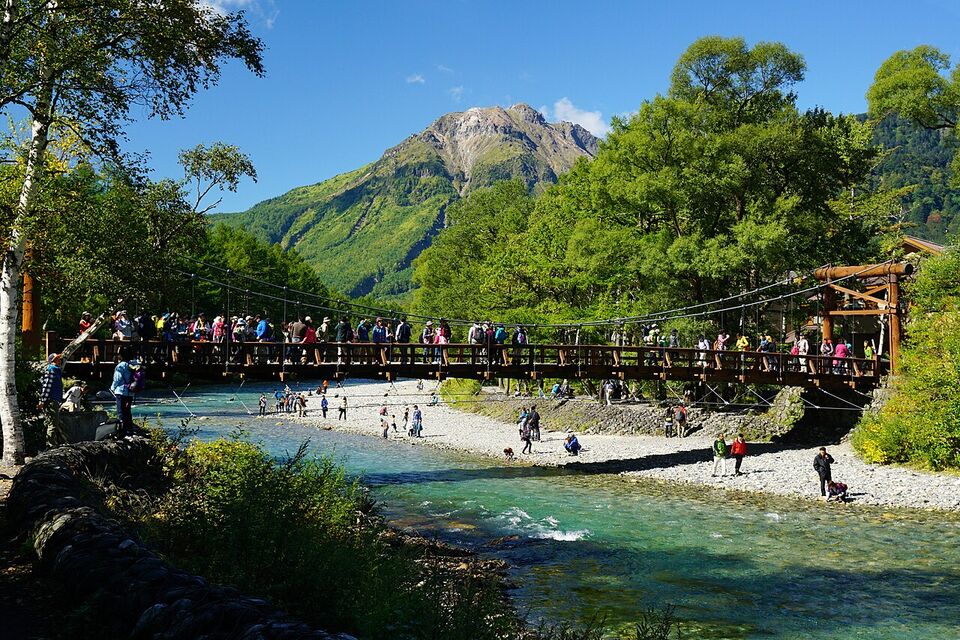
Kamikochi is a high valley in the Northern Alps, a flat riverside plain at about 4,900 ft (1,500 m) with a view of the Hotaka peaks. It is a protected national park with no entrance fee and almost no development, which is why it feels so calm. The road is open only in the season. In 2026 it opened on April 17 and closes after the ceremony on November 15. The 2027 dates have not been announced, and the usual pattern is mid-April to mid-November. After closing, the valley is for winter mountaineers only, with no transport.
Access rules
Private cars and motorcycles, including rental cars, are banned year-round. You get in by route bus, taxi or tour coach, from one of two gateways:
- From Matsumoto (Sawando side): take the Matsumoto Electric Railway to Shin-Shimashima (about ¥710, about $5) and a bus to Kamikochi (about ¥3,100, about $20), or a direct bus from Matsumoto Bus Terminal at about ¥4,600 (about $29). Cars park at Sawando (about ¥800 a day) and take the shuttle for ¥1,600 (about $10) one way or ¥3,000 (about $19) return.
- From Takayama (Hirayu side): a bus to Hirayu Onsen, then a shuttle. The Takayama round-trip set ticket was ¥5,800 (about $37), valid for 7 days.
- From Tokyo: a direct bus from Shinjuku in about 4 hours 45 minutes, reserved, from about ¥10,000 (about $64). Book one month ahead.
The last buses out leave around 5:30 to 5:55 p.m. Check the timetable before you set off, and work back from it.
On the trail
The classic walk is from Taisho Pond (a volcanic lake with standing dead trees) along the Azusa River to Kappabashi (about 2.5 miles, or 4 km, and 80 minutes), and then on to Myojin (another 2 miles, or 3 km, about 60 minutes). It is flat, and a full round trip from Kappabashi to Myojin is a half-day. Admission to the Myojin Pond sacred grounds was ¥500 (about $3) in 2026. Toilets ask for a customary ¥100 (about 65 cents). Autumn leaves peak here in October, so by mid-November most color has gone. Plan accordingly.
The Tateyama Kurobe Alpine Route
The Alpine Route is a 23-mile (37 km) crossing of the Northern Alps between Tateyama (Toyama side) and Ogizawa (Nagano side), using six kinds of vehicle: a cable car, a highland bus, a tunnel trolleybus, a ropeway, a second cable car (underground) and an electric bus. Highlights are Murodo at about 8,000 ft (2,450 m), the Kurobe Dam, which is Japan's tallest, and a corridor of snow walls in spring.
Season and price
The 2026 season ran from April 15 to November 3. That is over for the 2026 season. Seasons usually start in mid-April, with 2027 dates announced during the winter on alpen-route.com. The fare from Tateyama to Ogizawa (either direction) was ¥10,940 (about $70) one way. Child fares are lower for ages 6 to 11. Only two legs need a reserved time: the Tateyama Cable Car, if you start from the Toyama side, or the Kanden Tunnel Electric Bus, if you start from Ogizawa. You can change or cancel free until 2:59 p.m. the day before. Same-day tickets are available if online ones are sold out, but peak days (the snow walls, autumn color) can be full.
Allow most of a day, and start early. Many people cross from Toyama to Nagano and finish at Shinano-Omachi or Matsumoto, but you can also go from Omachi side to Toyama. The Alpine-Takayama-Matsumoto Area Tourist Pass includes the route in its price (see next section). Spring brings a snow corridor on the road, summer has alpine flowers and the Kurobe Dam discharge, and autumn brings color at Murodo from late September to early October.
Watch out
Weather can close the route with little notice, and bears are active in this area. Two people were injured by a bear at Shomyo Falls near Tateyama in May 2026. Stay on marked paths, carry a bell and read the notices at each station.
Jigokudani and the snow monkeys
Jigokudani Monkey Park is in the Yamanouchi valley near Nagano, where Japanese macaques bathe in an outdoor hot spring. The park is reached by a 1.2-mile (2 km) forest path from the road, about 30 to 40 minutes each way. Admission is ¥800 (about $5) for adults until November 30, 2026. A new fee starts December 1, 2026 and is reported at ¥1,000 (about $6) at the counter and ¥880 online, but we could not confirm it, so check the park's website. The monkeys live there year-round, but the famous snow-and-steam photos need the cold months, from about December to March.
From Tokyo, take the Hokuriku Shinkansen to Nagano (about 80 to 100 minutes, depending on the train). From Nagano Station you can take the Nagano Electric Railway to Yudanaka and then a bus, or the direct snow monkey bus. One 2026 guide lists a direct bus at about ¥3,000 (about $19), but we could not confirm whether that is one way or return. Check before you go. Dress warmly, wear boots with grip, and keep your distance. Do not feed or touch the monkeys.
The Yudanaka and Shibu onsen towns have traditional baths and inns, and Nagano is a base for the ski areas around Hakuba and Nozawa Onsen (see our skiing guide).
Passes that work in the Alps
The Alpine-Takayama-Matsumoto Area Tourist Pass (JR West) costs ¥24,500 (about $156) for adults and ¥12,250 for children aged 6 to 11 for five consecutive days. It covers non-reserved seats on JR trains between Nagoya and Toyama via Takayama, and between Nagoya and Matsumoto, plus the Oito Line to Shinano-Omachi, the Toyama Chihou Railway to Tateyama, the Alpine Route from Tateyama to Ogizawa and the bus to Shinano-Omachi. It includes up to four limited express reserved-seat journeys. It does not cover the Nohi Bus to Shirakawa-go or Kamikochi buses.
The 2026 pass was sold from February 1 to November 6, 2026 (overseas) and was valid from April 15 to November 10, 2026, so it is no longer on sale. A 2027 version is likely, but we cannot confirm one. Check the JR West website in early 2027.
A separate Takayama-Hokuriku pass has been sold for the Takayama, Shirakawa-go and Kanazawa line, with a reported price of ¥19,800 (about $126) for five days. We could not confirm the 2026-27 price, and you still need seat reservations on the buses. Do the math before buying: the pass pays off only if you use the Alpine Route (¥10,940, about $70, one way), or several long limited express trips.
Save money
If your trip is just Matsumoto, Takayama and Shirakawa-go, point-to-point tickets plus the ¥2,800 bus often cost less than a pass. A pass makes sense if you cross the Alpine Route, because that single trip is close to half the price of the pass.
Sample plans
- 4 days
Tokyo to Kanazawa through the Alps
Day 1: Azusa to Matsumoto, castle, Nakamachi. Day 2: bus or train to Takayama, old town and markets. Day 3: bus to Shirakawa-go, then Kanazawa. Day 4: Kanazawa and the Shinkansen to Tokyo.
- 5 days
Nature version, April to November
Add a night in Matsumoto for Kamikochi, and a long day on the Alpine Route between Toyama and Matsumoto. Finish with a night in Takayama.
- Winter
Snow monkeys and snow villages
Hokuriku Shinkansen to Nagano for the monkeys in January or February, then Takayama and a pre-booked Shirakawa-go light-up evening. Check the roads and expect delays.
For more outdoors trips, see the outdoors guide, and for the other big mountain close to Tokyo, see Mount Fuji. The regions overview shows how these fit the rest of the country.
Add it to a route in the trip builder, or ask us to plan the hotels, trains and guides for you.