Overview: Tohoku, the quiet north of Honshu
Tohoku is the northeastern third of Honshu, six prefectures of mountains, rice fields, orchards, hot springs and a long Pacific coast. It has Japan's biggest summer festivals, some of its best castle-town and temple scenery, and far fewer foreign visitors than Kyoto or Tokyo. The Shinkansen makes it easy: Sendai is about 1 hour 30 minutes from Tokyo, Morioka about 2 hours 10 minutes, and Shin-Aomori, at the top of Honshu, about 3 hours.
We suggest Tohoku for second-time visitors and for first-timers who want to get away from the crowds. The trade-offs are distance and seasons: winter is snowy, buses to some mountain spots run only from spring to autumn, and in a few months bears have to be part of your planning. For the other regions in the guide, see Japan's destinations.
The region divides into three areas. Southern Tohoku (Miyagi, Yamagata, Fukushima) has Sendai, Matsushima, Yamadera, Zao and Ginzan Onsen. Northern Tohoku (Iwate, Akita, Aomori) has Hiraizumi, Kakunodate, the Oirase stream and the festivals. The Pacific coast, hit by the tsunami of 2011, is a separate story, covered below.
The JR East Pass (Tohoku area) price and the 2026 change
Many older guides mention a "JR East Pass (Tohoku area)" at ¥30,000. That pass no longer exists. JR East stopped selling the separate Tohoku-area and Nagano-Niigata passes on March 13, 2026, and from March 14, 2026 replaced them with one combined JR EAST PASS. The prices, for non-Japanese passport holders, are ¥35,000 (about $223) for 5 consecutive days and ¥50,000 (about $318) for 10 consecutive days, with children aged 6 to 11 paying half.
The pass covers reserved seats in ordinary cars on all JR East lines, including the Tohoku, Yamagata, Akita, Joetsu and Hokuriku Shinkansen (as far as the JR East section), limited express and local trains. It also covers some partner lines: the Sanriku Railway, the Iwate Galaxy Railway, the Aoimori Railway, Sendai Airport Transit, the Tokyo Monorail, Hokuetsu Express and some JR bus routes. It does not cover the Tokaido Shinkansen, highway buses or private lines. Buses to places like Ginzan Onsen and Oirase are separate.
Is it worth it? A Tokyo to Shin-Aomori return by Shinkansen is roughly ¥34,000 to ¥36,000 (about $217 to $229) at regular reserved fares (our estimate; check the current fare), so the pass pays for itself once you add Sendai, Hiraizumi or Yamagata on a loop. A 5-day loop of Tokyo, Sendai, Hiraizumi, Morioka, Kakunodate and back by Akita Shinkansen is a good fit. For a short trip to just Sendai, individual tickets or a local one-day pass (around ¥1,400, about $9, but check the current price) are cheaper. For a Tohoku and Hokkaido trip, look at the JR Tohoku-South Hokkaido Rail Pass at ¥32,000 (about $204) for 6 days. Our JR Pass guide covers the nationwide pass: ¥53,000 (about $338) for 7 days from overseas agents as of November 2026, while the official online store was showing ¥50,000 (about $318).
Insider tip
Check JR East's pass page for how and where to buy the JR EAST PASS (online or at a JR East Travel Service Center with your passport), and reserve seats early for weekends and festival days. Trains on the Akita and Yamagata lines are often full at holiday times. Green Car seats cost extra.
Sendai and Matsushima
Sendai is the big city of the north, with about 1.1 million people, a grid of tree-lined streets and the easiest base for Tohoku. Its food specialty is gyutan, grilled beef tongue, served as a set with rice and soup for about ¥2,000 to ¥3,500 (about $13 to $22) in the restaurants clustered near the station. The Aoba Castle ruins offer a view of the city, and the Loople tourist bus loops past the main sights from 9 a.m. to 4 p.m. The Sendai Tanabata festival is held in early August, around August 6-8.
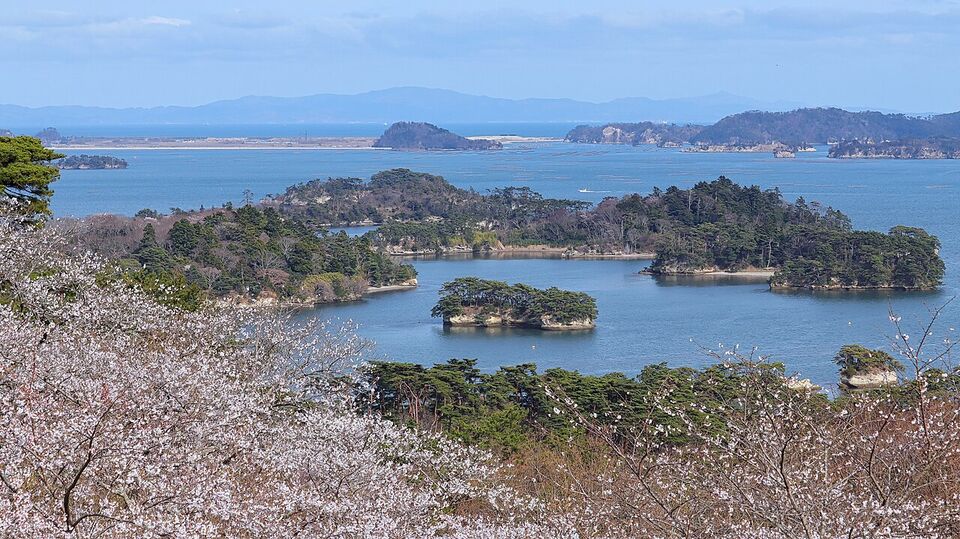
Matsushima Bay, about 25 to 40 minutes from Sendai by local train, is one of Japan's three classic scenic views, a bay of about 260 pine-covered islands. Walk along the waterfront to Godaido, a small hall on a tiny island reached by a bridge, then visit the Zuigan-ji temple, whose admission is about ¥700 (about $4.50). Sightseeing boats cruise the bay for roughly ¥1,500 to ¥2,500 (about $10 to $16), depending on route. Oysters are a winter highlight, and the grilled oyster stalls open in the cold months. Check prices on the day.
Sendai and Miyagi were reported to start an accommodation tax in January 2026: ¥300 per person per night for rooms priced at ¥6,000 or more, collected at check-in. Morioka City was reported to start one in October 2026 and Hirosaki in December 2025; check the amounts with your hotel. For the national picture see our money guide.
Hiraizumi: the Golden Hall and the Buddhist Pure Land
Hiraizumi was the capital of the Northern Fujiwara clan in the 11th and 12th centuries, when it rivaled Kyoto. UNESCO listed its temples, gardens and archaeological sites in 2011. The two sites to see are Chuson-ji, a hilltop temple complex whose Konjikido (Golden Hall) is lacquered and covered in gold leaf inside, and Motsu-ji, where the remains of a large Pure Land garden surround a pond.
From Tokyo it takes about 2 hours by Shinkansen to Ichinoseki, then a local train of about 8 minutes to Hiraizumi Station. The Runrun loop bus covers the main sites, and a day pass costs ¥450 (about $3). Admission to Chuson-ji is about ¥1,000 (about $6.40) and to Motsu-ji a bit under that, but confirm the prices on the Hiraizumi tourism site. Allow half a day on foot or by bus. Nearby, the Geibikei Gorge is seen from a flat-bottomed boat, with the boatman singing on the way back; it is a pleasant extra on a second day.
Hiraizumi fits neatly between Sendai and Morioka, and most visitors pair it with one of them on the way north. Spring and autumn festivals include noh performances on the outdoor stage at Chuson-ji. See our temples and shrines guide for etiquette.
Yamadera, Zao and Ginzan Onsen (Yamagata)
Yamagata is the most rewarding prefecture for a short trip. It has three attractions that suit different seasons and a famously good fruit and soba culture.
Yamadera
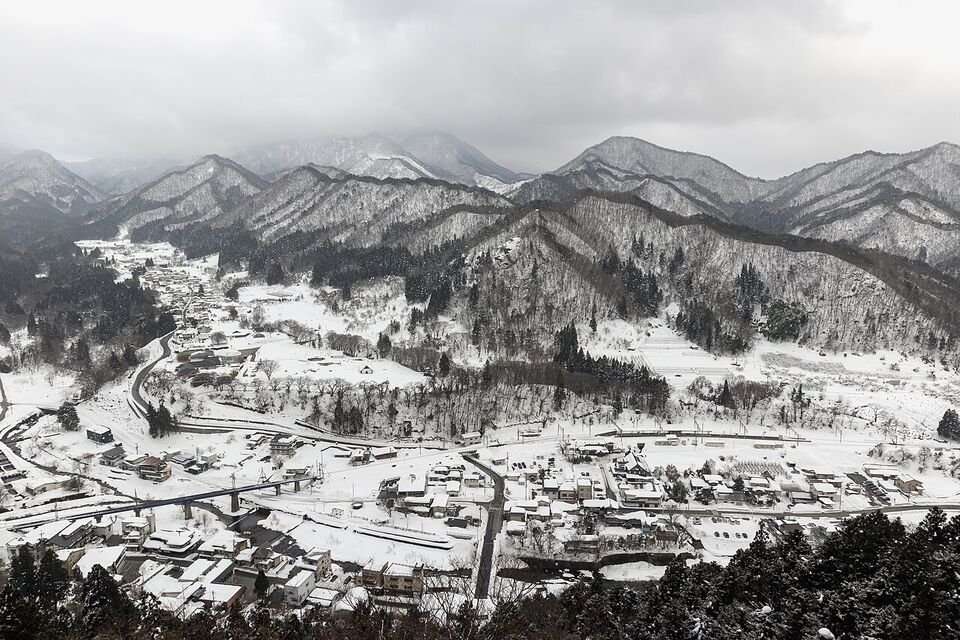
Yamadera ("mountain temple") is Risshaku-ji, a temple complex reached by about 1,000 stone steps through a cedar forest. The climb takes 30 to 45 minutes each way and the view from the top over the valley is the reward. It is on the Senzan Line, about an hour from Sendai and about 20 minutes from Yamagata Station. A few hundred yen is charged at the upper temple, so bring coins. Wear shoes with grip: the steps are slippery in rain and icy in winter.
Zao Onsen and the snow monsters
Mount Zao, on the border of Yamagata and Miyagi, is a volcano with a crater lake called Okama and a hot spring village at its base, Zao Onsen. It is a winter place: from about late December to early March, fir trees collect frost and snow into thick shapes called juhyo, nicknamed snow monsters. A ropeway from Zao Onsen takes you up to see them, and skiers use the same lifts. The ropeway fare is a few thousand yen round trip. Fog and wind often hide the trees, so allow two days, and consider a night viewing when the trees are lit. The village's sulfur-rich water makes the baths a draw even in summer. Buses run from Yamagata Station in about 40 minutes. See our skiing guide and onsen guide.
Ginzan Onsen
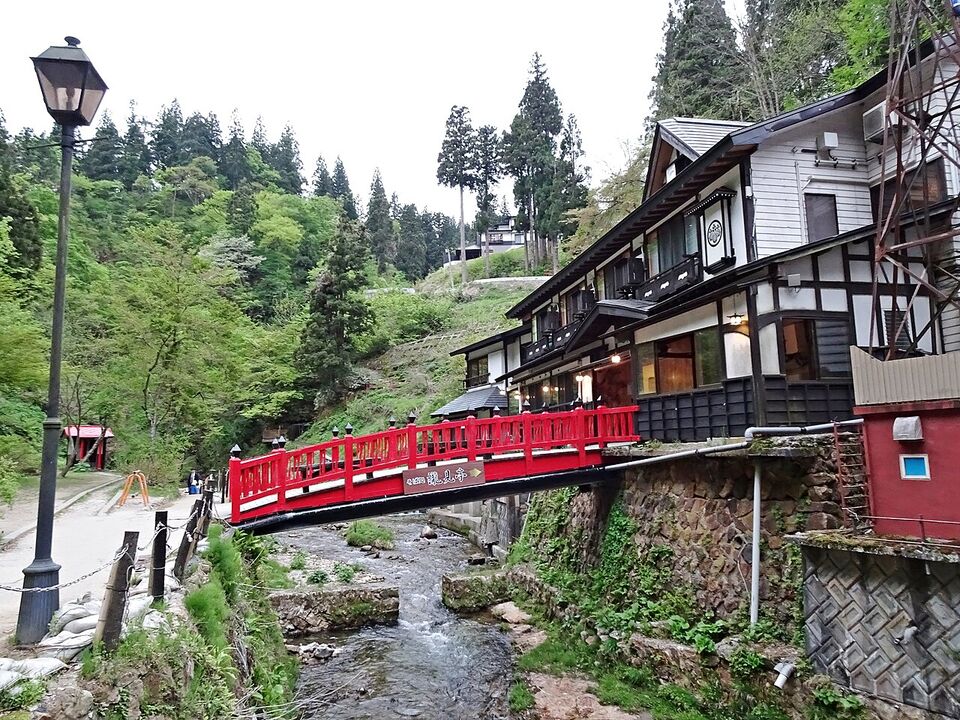
Ginzan Onsen is a small hot spring town in a river valley, with wooden three-story inns from the early 20th century on both sides of the water and gas lamps on the bridges. It looks best in snow. From Tokyo, take the Yamagata Shinkansen to Oishida (about 3 hours 20 minutes), then a bus of about 35 minutes. Buses run roughly every 60 to 90 minutes, and the bus fare is not covered by rail passes. By car you park in a lot outside the town and take a shuttle.
The town is tiny and the number of day visitors has grown, so there are rules. Inns fill up fast, especially in winter, and many require advance booking by phone or email. Day visitors can see the town, use a public bath and a footbath, but check the town's current rules on parking and evening visits. A stay in a ryokan with dinner usually starts at $$ and goes above $$$ in the best inns.
Kakunodate and Akita
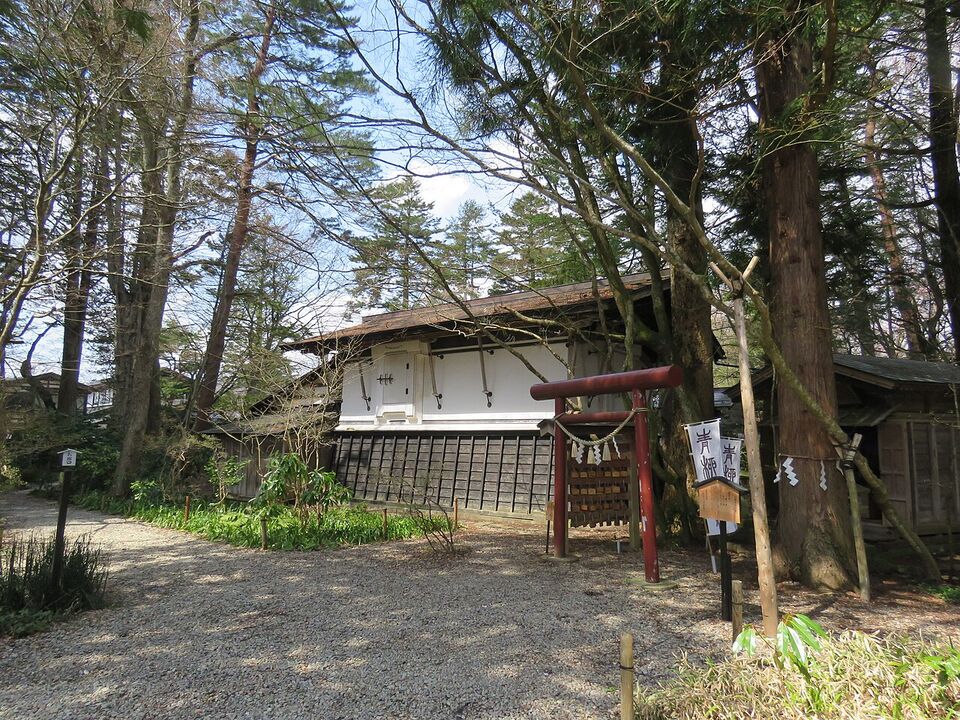
Kakunodate is a well-preserved samurai town in Akita Prefecture, with a street of black-board-fenced samurai houses (buke yashiki) and old trees. A few houses are open for a small fee, usually a few hundred yen. In spring, hundreds of weeping cherry trees line the samurai street, and more than a mile of cherry trees stretch along the Hinokinai River embankment. Peak bloom is usually around late April to early May, later than Tokyo by about a month. Visit on a weekday early in the day, because tour buses arrive by midday.
It takes about 3 hours 15 minutes from Tokyo on the Akita Shinkansen (Komachi), or about 40 minutes from Morioka. Akita Station, the end of the line, is about 4 hours from Tokyo. The Akita Kanto Festival, in which performers balance tall poles hung with lanterns, takes place August 3-6. Nyuto Onsen, a group of rustic hot spring inns in the mountains, and Lake Tazawa, Japan's deepest lake, can be added if you have a car. See our festivals guide for a calendar of summer matsuri.
Aomori and the Nebuta Festival (August 2-7)
The Aomori Nebuta Festival is held every year from August 2 to 7. Giant lit paper floats, painted with warriors and gods and weighing several tons, are pulled through the streets at night, accompanied by drums and flutes and by costumed dancers called haneto who leap and shout "rasse-ra". On the last day the parade happens in the afternoon, and a fireworks show follows that evening. It is one of the biggest festivals in Japan.
You can watch from the street for free, or buy a paid seat in a stand for a better view; those tickets sell out, so check the festival's site in the spring for sales dates and prices. If you want to dance, you can rent a haneto costume in the city for about ¥4,000 (about $25) and join a float. Floats are stored at the Nebuta museum complex near Aomori Station when the festival is not on, which makes a good rainy-season visit.
Hotels in Aomori sell out for August 2-7 many months ahead, so many visitors stay in Hirosaki, Hachinohe or even Akita and take the train. Hirosaki has its own Neputa festival in early August, and other big festivals fall in the same week, including Akita's Kanto and Sendai's Tanabata. Aomori city is about 3 hours from Tokyo at Shin-Aomori, then a 5-minute train ride to Aomori Station. Take sun protection and water, as August is hot and humid. See when to go for the summer calendar.
Oirase Stream, Lake Towada and Hakkoda
The Oirase Stream is a mountain river that flows out of Lake Towada through a mossy gorge of waterfalls. The walk along the stream is about 14 km (9 miles) and can be done in parts, with a bus along the road to cut it short. It is best in late October, when the leaves turn, and in early summer, when the moss is greenest. Lake Towada itself is a large crater lake with boat tours, a nice art center and a summer lakeside atmosphere.
Getting there takes planning. The nearest Shinkansen station is Shichinohe-Towada, about 3 hours 20 minutes from Tokyo, followed by a bus that takes well over an hour to reach the lake (check timetables). There is no direct train, and buses from Aomori and Hachinohe run on a seasonal schedule that mostly ends in November. We cannot confirm this year's last date, so check the bus operator before planning a trip after early November. By car, the Tohoku Expressway Pass offers 4 to 8 days of unlimited tolls from ¥8,500 to ¥17,000 (about $54 to $108), not including the rental car.
The Hakkoda mountains, near Aomori, are known for snow and hot springs, but they are also the site of a fatal bear attack in June 2026, and the Aomori authorities closed trails for about a month before reopening on August 1. Keep to marked trails and see the bear section below.
The 2011 tsunami coast and memorial sites
On March 11, 2011, a magnitude 9.0 earthquake and a huge tsunami struck the Pacific coast of Tohoku, leaving about 18,000 people dead or missing and causing the nuclear accident at Fukushima Daiichi. The coast has since been rebuilt with seawalls, raised land and new roads. Much of the damage is no longer visible, but memorial sites help visitors understand what happened.
The main ones are the Iwate Tsunami Memorial Museum and the Takata-Matsubara memorial park in Rikuzentakata, where a single pine tree survived; the Kesennuma Earthquake Memorial Museum; memorial parks in Ishinomaki; and the former Arahama Elementary School in Sendai, left as it was after the tsunami. Opening hours and entry fees vary, from free to a few hundred yen, so check each site. The Sanriku Railway, covered by the JR EAST PASS, runs along the northern part of the coast and gives a chance to see the coastline and small ports.
Different from home
These sites are places of mourning for local people, many of whom lost relatives. Dress modestly, keep your voice low, do not take photos of people, and do not climb on memorials or ruins. Some guides run by survivors are available and are worth the fee.
The coast remains earthquake-prone: a magnitude 7.5 earthquake struck offshore of Sanriku (Iwate) on April 20, 2026, producing a tsunami of up to about 80 cm and no deaths. If you feel strong shaking on the coast, move to high ground at once rather than waiting for a siren. Our safety guide explains the alerts and emergency numbers (police 110, fire and ambulance 119). Parts of Fukushima Prefecture near the nuclear plant remain restricted; tourist destinations such as Aizuwakamatsu are far from it. Check Fukushima Prefecture's current information if your route goes near the coast.
Bears in Tohoku: what to know in 2026
Japan recorded 50,801 bear sightings in fiscal 2025, the most since 2009, along with a record number of fatal attacks, and a large share were in the northern prefectures such as Akita, Iwate and Aomori. From April to June 2026 there were 12,628 sightings, at least 5,000 more than the same months in 2025. A fatal attack occurred in the Hakkoda Mountains in Aomori in June 2026, and trails there were closed for a month.
The risk to tourists in cities and on main sightseeing routes is low. It is higher on forest trails, at dawn and dusk, near berry or nut trees in autumn, and around hot-spring villages and mountain roads. Before hiking in Oirase, Hakkoda, Nyuto Onsen, Zao or Dewa Sanzan, check the local visitor center and prefectural notices for closures. Carry a bell and bear spray on remote trails, hike in groups and in daylight, and leave no food scraps. If you see a bear, do not run: back away slowly while facing it.
Watch out
Bear spray is not allowed on airplanes, in either carry-on or checked luggage. Rent or buy it in Japan from outdoor shops or guide services. Many guided hikes provide bells and spray.
Getting around Tohoku and a sample route
The Shinkansen is the spine: the Tohoku line runs Tokyo, Sendai, Morioka and Shin-Aomori; the Yamagata line branches at Fukushima to Yamagata and Oishida; the Akita line branches at Morioka to Kakunodate and Akita. Local trains and buses fill in the gaps, and a rental car is useful for Oirase, Nyuto Onsen and the coast. Driving in winter needs snow experience, and Tohoku has heavy snow on the Sea of Japan side. See our driving guide and getting around for the basics.
- Day 1
Sendai and Matsushima
Shinkansen from Tokyo, a half day at Matsushima Bay, gyutan dinner in Sendai.
- Day 2
Hiraizumi and Morioka
Morning train to Ichinoseki and Hiraizumi, then on to Morioka for the night.
- Day 3
Kakunodate
Akita Shinkansen to Kakunodate, samurai street and, in spring, the cherry blossoms. Night in Kakunodate or Akita.
- Day 4
Yamagata
Cross to Yamagata by local line, Yamadera in the afternoon, a night in Yamagata or Zao Onsen.
- Day 5
Ginzan Onsen and home
Bus from Oishida to Ginzan Onsen for a morning, then the Yamagata Shinkansen back to Tokyo.
To add the far north, extend to Aomori and then on to Hakodate; see our Hokkaido guide for the Shinkansen link. For the Kanto side of the trip, see Tokyo.
Add it to a route in the trip builder, or ask us to plan the hotels, trains and guides for you.