Overview: is March a good month for Japan?
March is a good month for Japan if you pick your weeks. The first half is cold, quiet and often cheaper, with plum blossoms and winter light. The second half is when Japan changes: the first cherry blossoms open, Japanese schools and companies enter their spring break and year-end, and hotel prices climb toward their yearly peak in the last week of March. If you want blossoms, aim for the end of the month and book early. If you want calm, aim for the first two weeks.
This page covers March 2027: the weather in eight cities, what the cherry blossom forecast means, Hina Matsuri on March 3, the Omizutori fire festival in Nara, the Osaka sumo tournament, the Tokyo Marathon, the Yokohama flower expo that opens March 19, hay fever, holidays and prices. For the full-year picture, see when to go to Japan. The month before is on the Japan in February page, and Japan in January covers the coldest weeks.
Different from home
March is not just spring, it is the end of the fiscal and school year. Companies close their books on March 31, people move house and change jobs, and students graduate. That means moving trucks in late March, crowded trains with luggage and the busiest weeks for domestic travel before Golden Week. Think of it as US spring break and tax season arriving at once.
Weather in March
March is the month when winter loosens its grip, but it is not warm. Days can swing from 45°F (7°C) and rainy to 65°F (18°C) and sunny. Snow is still common in the mountains and in Hokkaido, and the Sea of Japan coast stays gray. The figures below are approximate long-term averages and we did not pull them from a live weather source, so check the forecast a week before you go.
| City | Daytime high | Night low | What to expect |
|---|---|---|---|
| Tokyo | About 58°F (14°C) | About 41°F (5°C) | Mixed sun and rain; warm days late in the month |
| Kyoto | About 56°F (13°C) | About 38°F (3°C) | Cool mornings; plums, then early blossoms |
| Osaka | About 57°F (14°C) | About 41°F (5°C) | Mild with showers |
| Hiroshima | About 56°F (13°C) | About 39°F (4°C) | Mild, some rain |
| Fukuoka | About 57°F (14°C) | About 42°F (6°C) | Milder; often among the first to bloom |
| Nagano (Alps) | About 48°F (9°C) | About 30°F (-1°C) | Thawing; snow remains higher up |
| Sapporo | About 39°F (4°C) | About 26°F (-3°C) | Snow melting; slush and ice |
| Naha (Okinawa) | About 69°F (21°C) | About 62°F (17°C) | Warm, humid, some rain |
Pack layers: a light waterproof jacket over a sweater, a scarf for chilly mornings, and a warmer coat if you will be in Hokkaido or the mountains. Late March mornings can be near 40°F (4°C) even on blossom days, and evenings under the trees are cold. Comfortable walking shoes that handle rain are worth more than anything fashionable. See packing for Japan.
Days lengthen from about 11.5 hours on March 1 to about 12.5 hours on March 31. In mid-March the sun rises in Tokyo around 5:55 a.m. and sets around 5:50 p.m. Japan does not use daylight saving time, so the clocks do not jump.
Cherry blossoms in March: what to expect
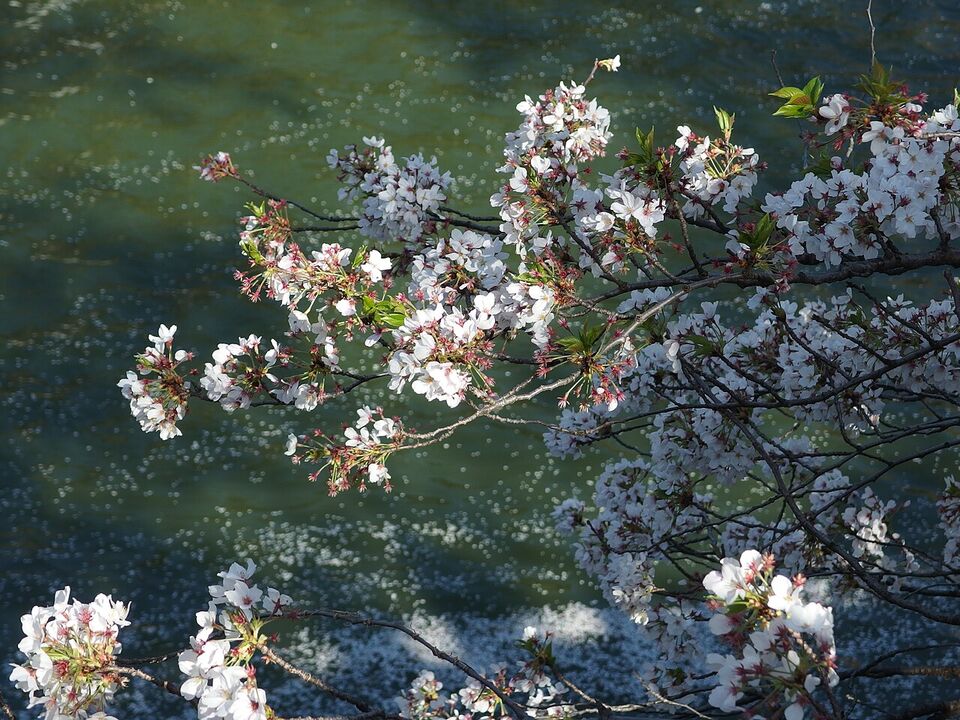
March is the start of cherry blossom season, but it is rarely the peak in the places most visitors go. Official blossom forecasts for 2027 will not be reliable until the new year: private forecasters usually start in December and the main English-language trackers follow around February. Early forecasts can shift by a week or more, and they become useful in early March when the buds are visible.
These are typical ranges, not predictions. The cherry blossoms page has the details.
| Place | Typical timing | Notes |
|---|---|---|
| Tokyo | First bloom about March 19-24; full bloom about March 26-April 1 | In 2026, first bloom was about March 19 and full bloom about March 26 |
| Kyoto and Osaka | Full bloom usually March 31-April 5 | In 2026, Kyoto's first bloom was about March 24 and full bloom about March 31 |
| Kyushu and Shikoku | Usually a few days ahead of Tokyo | Typical, not a forecast; check local reports |
| Izu (Kawazu-zakura) | Mid-February into March | Early deep-pink variety; festival dates vary |
| Sapporo | Late April to May | Not in March |
The practical rule from the cherry blossom page applies here: the safest planning window for Tokyo, Kyoto and Osaka is March 28 to April 5. A trip that ends March 31 may miss the peak, and a trip that starts March 15 will probably see plums and bare branches. If you are in Japan before March 25, expect the blossoms to be just starting. Book hotels with free cancellation and recheck forecasts in early March.
Insider tip
If you want blossoms and fewer crowds, go to Kyushu or Shikoku in the last days of March, then fly or take the Shinkansen to Tokyo as the trees open there. Or go in the first week of April and let Tokyo's early bloom come to you. In either case, rely on the official forecast released after mid-March, not a guide's "typical" dates.
Hina Matsuri, March 3
Hina Matsuri (the Doll Festival, or Girls' Day) falls on March 3, a Wednesday in 2027. Families with daughters display tiered sets of hina dolls dressed as an imperial court, with offerings of pink and white hishimochi (diamond-shaped rice cakes) and chirashizushi (scattered sushi). The dolls are usually put out from mid-February and put away right after March 3, because folklore says leaving them out delays a daughter's marriage.
Visitors can see the displays in department stores, hotel lobbies, museums and some old merchant houses and towns across the country, often free or for a small fee. Many towns hold doll exhibitions in the weeks before March 3 and the dates differ, so check the local tourism site. March 3 is not a public holiday, and sights and shops keep normal hours. Shops sell hina sweets and sake for the occasion, and they make a good souvenir.
Omizutori at Todai-ji, March 1-14
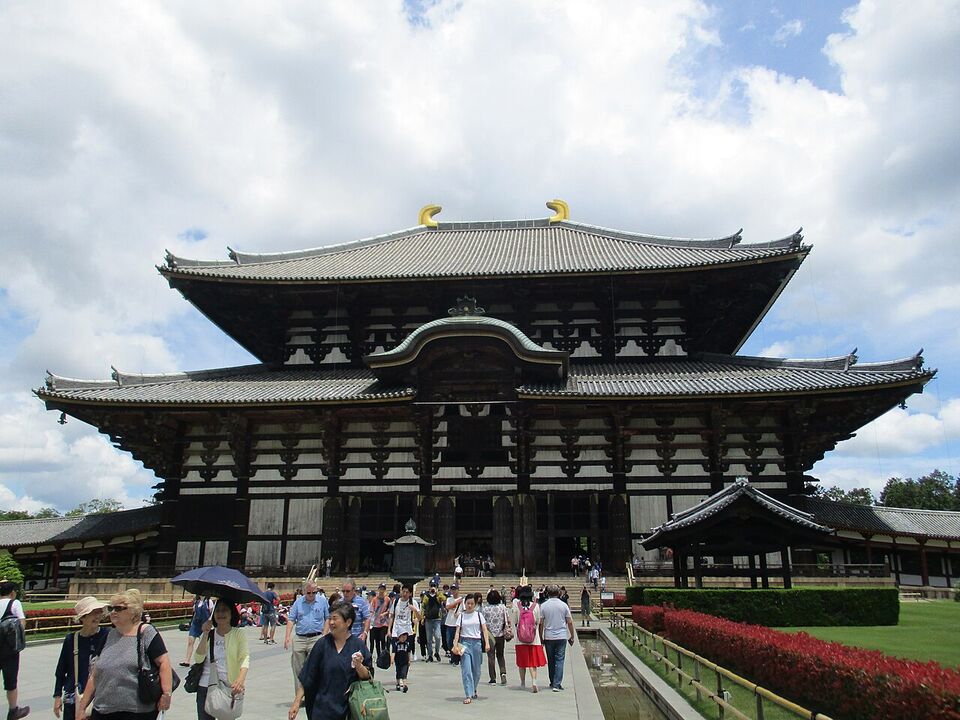
Omizutori (Shuni-e) is one of the oldest ceremonies in Japan, held at the Nigatsu-do hall of Todai-ji in Nara for two weeks, March 1-14. The Nara tourism association says it has continued for more than 1,270 years. Priests carry huge burning torches (otaimatsu) along the wooden balcony of the hall, showering sparks over the crowd below. The torch carrying is the part visitors come to see, and on the night of March 12 into early March 13, the water-drawing (omizutori) rite gives the festival its name.
- When. Nara's tourism association lists the torches nightly at 7 p.m., with a 7:30 p.m. start on March 12 and 6:30 p.m. on March 14 (the listing is not labeled 2027). Check the temple or the tourism association before you go, because times and crowd rules can change.
- Cost. Free for individual visitors, according to the tourism association.
- Getting there. Take a bus or train to Nara and walk. From the "Daibutsu-den Kasuga Taisha-mae" bus stop it is about a 10-minute walk to Nigatsu-do. See Nara for the route from Kyoto and Osaka.
- Crowds. Weekends and March 12 are usually the heaviest. Arrive an hour or more early for a view, and expect staff to control the flow.
Watch out
Burning embers fall from the torches, so do not wear synthetic jackets or fluffy scarves near the front, and keep children close. Nara nights in early March are cold, so bring gloves. The rite goes on in rain, which makes the ground slick and crowded.
Sumo, marathon and the Yokohama flower expo
- Osaka sumo tournament (Haru Basho). One of six grand tournaments a year. It normally starts on the second Sunday of March and lasts 15 days, which points to March 14-28, 2027, in Osaka. The Japan Sumo Association publishes the schedule and ticket dates, so confirm the dates and tickets on its site. Weekend seats sell out first. See pop culture and Osaka.
- Tokyo Marathon. The organizers list Sunday, March 7, 2027, with a 9:10 a.m. start at the Tokyo Metropolitan Government Building and a finish near Tokyo Station. Entry is for registered runners, but spectators line the streets. Expect road closures and crowded subways that morning.
- Yokohama GREEN×EXPO 2027. An international horticultural exposition at Kamiseya, Yokohama, March 19 to September 26, 2027. A one-day adult ticket is ¥4,900 (about $31) in advance or ¥5,500 (about $35) at the gate. Expect opening week to be busy, so check the official site for times and entry rules.
- Himeji Castle. Since March 1, 2026, foreign visitors pay ¥2,500 (about $16). See Himeji and Kobe.
Holidays, White Day and school breaks
One national holiday falls in March: Vernal Equinox Day (Shunbun no Hi) on Sunday, March 21, 2027. Because it falls on a Sunday, Monday, March 22 is a substitute holiday, making March 20-22 a three-day weekend. Banks and government offices close. Shops, restaurants and attractions stay open, but trains, highways and popular sights are busier, and many families visit graves in the week around the equinox.
Other dates to know:
- March 14, Sunday: White Day. Men give gifts to the women who gave them chocolate on Valentine's Day (see February). Department stores run white-chocolate and candy displays.
- Mid to late March: graduation season. You may see students in formal dress or hakama (a divided skirt for women's graduation kimono) at universities and shrines.
- Late March to early April: spring vacation. Japanese schools break roughly from the end of March to early April, which adds families at Tokyo Disney Resort, Universal Studios Japan and sights in Kyoto.
- March 31: fiscal year-end. Companies finish the year, and moving season fills trains and hotels.
Most US colleges and many schools have spring break in March, so more Americans fly over, and flights and hotels follow demand. Clocks matter if you stay in touch: the US moves its clocks forward on March 14, 2027, but Japan does not change, so Tokyo is 14 hours ahead of New York until March 14 and 13 hours after. The EU and UK move on March 28.
Hay fever season
Spring pollen is a real issue for some visitors. Japanese cedar and cypress release heavy pollen from about February to April, and March is often the worst month. Even people without allergies at home can get itchy eyes, a runny nose or a scratchy throat. Locals wear masks and sunglasses, and some drugstores stock sprays and eye drops. See health and medicine in Japan for rules on which medicines you can bring and how pharmacies work.
Bring the antihistamine you know works for you in its original packaging, and read the medicine rules first. Rain clears the air, so a drizzly day can be your best day for a long walk. On days with dust and haze from the continent, which are more common in western Japan in spring, limit time outdoors if you are sensitive.
Prices and booking
March prices rise week by week. Early March is still low season for most cities. By the last week of March, hotels in Tokyo, Kyoto and Osaka are at or near their yearly peak, and rooms in good neighborhoods should be booked six to twelve months ahead for blossom week. Restaurants, tea ceremonies and popular day tours often need booking one to two months ahead for that week.
Save money
The first two weeks of March are the cheapest part of the month, and still have plum blossoms. If you must travel in late March, consider staying in Osaka or Nagoya and visiting Kyoto by train, or choose the weekdays: the March 20-22 weekend and March 27-28 are the worst for prices. Kyoto's lodging tax rose on March 1, 2026 and now reaches ¥10,000 (about $64) per person per night for the most expensive rooms, so check the total.
Shopping notes: since November 1, 2026, tourists pay the full price in the store and claim the tax refund when leaving Japan, with a ¥5,000 (about $32) minimum before tax per store per day. Spring sales and new-season fashion appear in March. See money in Japan.
Flight news: Delta plans daily Seattle to Tokyo Narita flights from March 27, 2027. United's seasonal San Francisco to Sapporo nonstop is scheduled through March 2027, subject to government approval, and Air Canada's Vancouver to Sapporo route runs until March 25, 2027. See flights to Japan.
Where to go in March
Tokyo
Plums and camellias early, first cherry blossoms in the last third of the month. Marathon on March 7. See Tokyo.
Kyoto and Nara
Plum gardens and Omizutori first, blossoms around the end of the month. Reserve ahead for peak dates. See Kyoto.
Osaka
A good base for Kyoto, Nara and Himeji when Kyoto prices climb. See Osaka.
Kyushu
Often among the first places to see blossoms, and cheaper than Kyoto. See Kyushu.
Hokkaido and Nagano
Early March is a good compromise on cost and weather for skiing. Niseko Village is scheduled to close April 4, 2027, and Nozawa Onsen's regular rate period runs to March 28. See skiing.
Okinawa
Beach weather is not reliable, but it is mild and cheap. The sun is stronger than most Americans expect. See Okinawa.
A sample March trip
- Early March
Tokyo, Nara and Kyoto, quiet and cheap
Four nights in Tokyo, then Kyoto with a day in Nara for Omizutori (any night March 1-14). Expect plum blossoms, short lines at the big temples and rooms that are easy to book.
- Mid-March
Osaka sumo and Kansai
Base in Osaka for the first days of the sumo tournament from March 14, with day trips to Himeji, Kobe and Kyoto. Good before spring break pricing starts.
- Late March
Blossom hunt with a flexible plan
Book refundable rooms in Tokyo and Kyoto, watch the forecast, and move your Tokyo and Kyoto order if the trees open early or late. See the trip builder.
If you would rather skip the crowds, February and early March give you most of the benefits of winter, and late April brings blossoms in the north. For snow instead, see Japan in February. For getting between cities, see getting around Japan.
Add it to a route in the trip builder, or ask us to plan the hotels, trains and guides for you.