Overview: how to plan Kyushu
Kyushu is Japan's third-largest main island and the easiest place outside Tokyo and Kansai to build a trip around food, hot springs and volcanoes. For most Americans the answer to "how should I do it" is a north-to-south line on the Shinkansen: fly into Fukuoka, take a day trip or overnight to Nagasaki, ride south to Kumamoto and Kagoshima, and add a detour east to Beppu and Yufuin or a boat to Yakushima if you have the time.
Distances are shorter than they look on a map. Hakata (Fukuoka's main station) to Kagoshima-Chuo is about 1 hour 20 minutes on the fastest Shinkansen, and Hakata to Kumamoto is roughly 35 to 40 minutes. The slow parts are the cross-island runs to Beppu, Aso and Takachiho, which rely on limited express trains and buses.
Kyushu pairs well with Hiroshima and Miyajima to the north, since the Sanyo Shinkansen runs straight through to Hakata. If you are building a longer route, see Japan's Destinations for how Kyushu fits with Shikoku and Honshu, and Getting Around Japan for the basics of Japanese trains.
Different from home
There is no need to rent a car for the main cities. Fukuoka, Nagasaki, Kumamoto and Kagoshima all have trams, subways or buses and are linked by frequent trains. A car makes sense only for Aso, Takachiho and the countryside, and it needs an International Driving Permit (see Driving in Japan).
Getting there and getting around
Arriving
Fukuoka Airport is unusually close to town: the subway reaches Hakata Station in about 5 to 6 minutes (a fare of roughly ¥260, about $2, but check the current fare). Flights from Tokyo Haneda take about 1 hour 55 minutes, and from Osaka about 1 hour 15 minutes. From the US there are no regular nonstops to Fukuoka that we could confirm for late 2026, so most readers connect through Tokyo or Osaka.
By train, the Sanyo and Kyushu Shinkansen run through from Shin-Osaka to Hakata in about 2 hours 30 minutes and on to Kagoshima-Chuo without a change on some trains. From Tokyo you normally transfer at Shin-Osaka or Okayama, or fly.
The Shinkansen lines
Two Shinkansen lines cover the island. The Kyushu Shinkansen runs Hakata, Kumamoto, Kagoshima-Chuo. The Nishi-Kyushu Shinkansen (also called the Nagasaki Shinkansen) is short: it covers only the 66 km (41 miles) between Takeo-Onsen and Nagasaki, and opened on September 23, 2022. The Kamome trains on this line meet a Relay Kamome limited express at Takeo-Onsen, which carries you to Hakata with a cross-platform transfer of about 3 minutes. The whole trip takes about 90 minutes.
The gap between Takeo-Onsen and Hakata is not built. In July 2026 the national government and Saga Prefecture reportedly agreed to carry out an environmental assessment for the missing section, so a through service is years away. Plan on the transfer for now.
Passes
The JR Kyushu Rail Pass is sold to foreign passport holders only, and is separate from the national JR Pass. The prices below were listed on JR Kyushu's English page in November 2026; online prices can differ slightly, and JR Kyushu may change them, so confirm before you buy.
| Pass | Adult | US$ (adult) | Child (6-11) |
|---|---|---|---|
| All Kyushu, 3 days | ¥22,000 | about $140 | ¥11,000 |
| All Kyushu, 5 days | ¥24,000 | about $153 | ¥12,000 |
| All Kyushu, 7 days | ¥26,000 | about $166 | ¥13,000 |
| Northern Kyushu, 3 days | ¥15,000 | about $96 | ¥7,500 |
| Northern Kyushu, 5 days | ¥17,000 | about $108 | ¥8,500 |
| Southern Kyushu, 3 days | ¥12,000 | about $76 | ¥6,000 |
The passes cover local trains, limited expresses and the Shinkansen in the covered area, with free choice of unreserved seats. You book through JR Kyushu's online pass service and exchange the booking for a ticket at a JR Kyushu counter. Show your passport with the temporary-visitor stamp when you board. JR Kyushu also sells a smartphone Mobile Pass for Fukuoka and Saga, at roughly ¥3,500 (about $22) for 2 days with unreserved seats only; check the current price.
Does it pay? A Hakata to Kagoshima-Chuo Shinkansen ticket is a few thousand yen by itself, so a pass pays for itself only when you ride several long legs in a short window, for example Hakata to Beppu by Sonic, Beppu to Aso or Kumamoto, Kumamoto to Kagoshima, and a return to Hakata. For a straight Fukuoka, Nagasaki and Kumamoto trip, point-to-point tickets are usually cheaper. If you already hold the national JR Pass, it covers these trains too (see Is the JR Pass Worth It?).
Fukuoka: food stalls and Hakata ramen
Fukuoka is the natural base. It is a compact city of about 1.6 million, and the airport, the Shinkansen station, the shopping streets of Tenjin and the riverside area of Nakasu are all within a few subway stops of each other.
The reason many people come is food. Fukuoka's open-air yatai (food stalls) set up in the early evening along the Naka River in Nakasu, around Tenjin, and in the Nagahama area near the fish market. Each stall seats about six to ten people on a counter, with a short menu of ramen, grilled skewers, oden (simmered dishes) and gyoza. Expect most to open from about 6 p.m. and run until late. Stalls often take cash only, and a snack and two drinks can run about ¥2,000 to ¥3,500 (about $13 to $22) per person, though prices vary by stall.
Hakata ramen means a milky pork-bone (tonkotsu) broth with thin, straight noodles. You can order extra noodles by asking for a kaedama (a refill). Ramen shops near Hakata Station and in Nagahama tend to be quicker and cheaper than the tourist stalls. For a lunch alternative, try a mentaiko (spicy cod roe) set or a motsunabe (offal hot pot) restaurant; ask a hotel desk which ones take reservations.
What else to do
- Dazaifu: a shrine town about 30 minutes from central Fukuoka by Nishitetsu train, with a plum garden that is best from late January to early March.
- Fukuoka Castle ruins and Ohori Park: a pleasant walk close to Tenjin; the stone walls are what remains of the castle.
- Canal City and the Hakata riverside: large shopping and dining complexes for rainy days.
Fukuoka's lodging tax is ¥200 per person per night, or ¥500 for rooms costing ¥20,000 or more per person, usually paid at check-in. Hotels near Hakata Station are the most convenient for a rail-based trip. Fukuoka subways and Nishitetsu trains accept contactless Visa, Mastercard and other credit-card taps (see Staying Connected in Japan for what works with a US phone).
Nagasaki: history, harbor and a battleship island
Nagasaki is a hillside port with a layered history: a trading outpost for the Dutch and Chinese during Japan's isolation, a center of Christianity, and the second city hit by an atomic bomb on August 9, 1945. Allow two nights, or one night plus an early start from Fukuoka if you are short on time. The city's tram network (flat fares of roughly ¥140 to ¥170 per ride; confirm locally) connects the sights, and a one-day or 24-hour tram pass is available in paper form at the tourist information center or by mobile app. The pass cannot be bought on the tram.
Peace Park and the Atomic Bomb Museum
The Peace Park and the hypocenter marker stand in the Urakami district, with the Atomic Bomb Museum nearby. The museum charges a small fee, about ¥200 (about $1), but check the current price on the museum's site (nabmuseum.jp). Plan 90 minutes to two hours, and treat it as a somber stop rather than a quick photo op. For the wider story of how Japan remembers the war, see Hiroshima and Miyajima.
Dejima, Glover Garden and the old port
Dejima was the fan-shaped island where Dutch traders were confined for over two centuries, and its buildings have been reconstructed. Admission is about ¥520 (about $3) as far as we could determine, but we could not confirm it for 2026. Glover Garden shows the hillside homes of 19th-century foreign merchants, with harbor views. The Chinatown district nearby is known for champon (a noodle soup with seafood and vegetables) and sara udon (crispy noodles with a gravy topping). Both dishes were created in Nagasaki.
Gunkanjima (Battleship Island)
Hashima, called Gunkanjima, is an abandoned coal-mining island about 15 km (9 miles) off Nagasaki, part of a UNESCO listing for Meiji-era industrial sites. Five licensed operators run landing tours from Nagasaki: Yamasa Shipping (about 2 hours 30 minutes, sailing at 9:00 a.m. and 1:00 p.m.), Gunkanjima Cruise (about 3 hours 10 minutes), Seaman, Gunkanjima Concierge, and 7th Ebisumaru (about 90 minutes, mostly a cruise around the island). Times and prices vary by season, so check each operator's own site. Reservations are required in advance and the ticket is separate from the boarding-time reception, which comes earlier.
Landing is allowed only when waves and wind are within the city's safety limits, and you can be turned away even on a calm-looking day. There are no toilets or vending machines on the island, umbrellas are not allowed, and heels or sandals are discouraged. If you are only in Nagasaki for a short stay, pick the earliest tour on day one so that you have a backup day. Operators can often rebook or refund after a weather cancellation, but the policy differs between them.
Watch out
A Gunkanjima tour can cost the better part of a half day and does not guarantee a landing. If you only have one day in Nagasaki, put the Peace Park and the museum first and treat the island as a bonus.
Getting there
The Kamome service from Hakata takes about 90 minutes including the transfer at Takeo-Onsen. Note that Nagasaki city has considered raising its lodging tax from 2027, so confirm what hotels charge when you book.
Beppu and Yufuin: hot spring towns
Beppu, on the east coast in Oita Prefecture, has more hot spring sources than any other Japanese city, and steam rises from drains and rooftops all over town. Yufuin is a smaller, quieter resort in a valley under Mount Yufu, popular for its boutique ryokan and day-trip stroll along the main street. If you want both, do Beppu first and take the scenic limited express to Yufuin, or the reverse from Hakata.
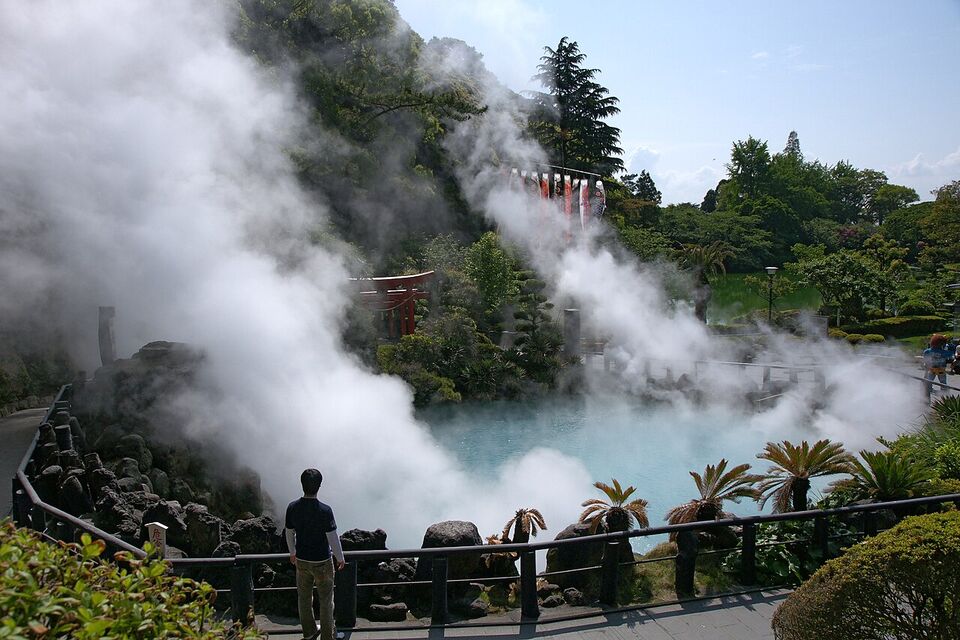
Beppu's "hells"
The jigoku (hells) are hot springs for looking at, not for bathing: a bright red pond, a milky blue one, a bubbling mud pit and a geyser. Visiting all of them takes roughly 3 to 3.5 hours. Each hell costs about ¥450 to ¥500 (about $3), and a combined ticket usually works out cheaper if you plan to see most of them. Prices have risen in recent years, so confirm the current rate with the Beppu tourist office or each hell's website.
To bathe, use a public bathhouse (sento or onsen), most of which charge a few hundred yen. Beppu also has sand baths where an attendant buries you in warm sand. For the rules of onsen etiquette, including tattoos, see Onsen and Hot Springs.
Getting to Beppu and Yufuin
The JR Sonic limited express runs from Hakata to Beppu in roughly 2 hours 10 minutes to 2 hours 30 minutes. The Yufuin no Mori is a scenic limited express from Hakata to Yufuin and on to Beppu, with reserved seats only; book early in spring and autumn. A highway bus is a slower and cheaper alternative from Fukuoka (about 2 hours 40 minutes).
Mount Aso and Kumamoto
Aso: check the volcano before you go
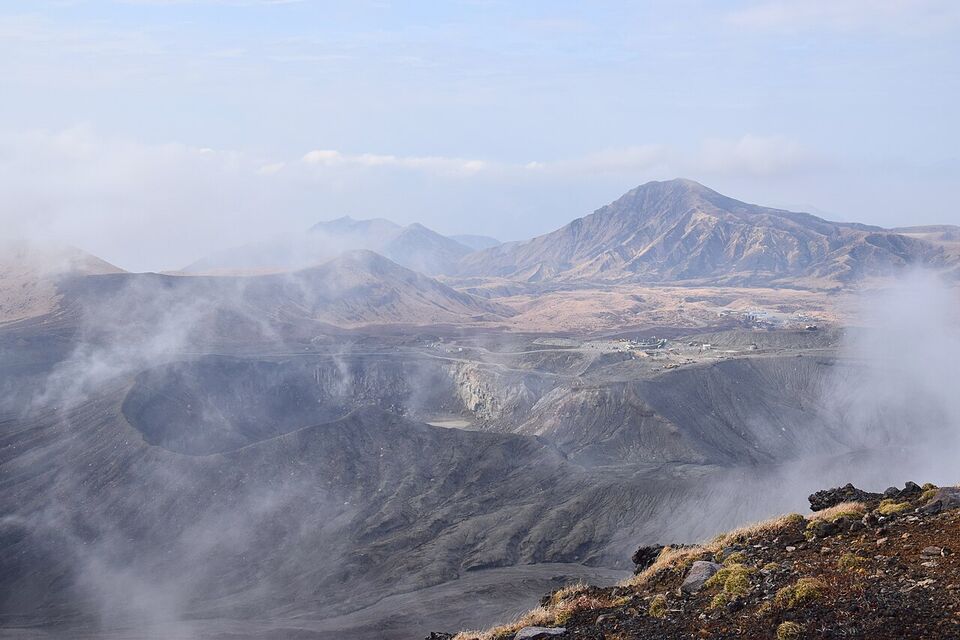
Aso is one of the world's largest calderas, about 25 km (15 miles) across, with five peaks inside and a farming plain in the middle. The active peak is Nakadake. Access to the crater rim depends on volcanic gas and the Japan Meteorological Agency's alert level, and it is closed more often than most visitors expect.
As of early November 2026, reports we read put Aso at alert level 2, with entry within about 1 km (0.6 miles) of the Nakadake first crater prohibited. We could not confirm a date for reopening. The grassland of Kusasenri, the Aso Volcano Museum (with live crater cameras; small admission fee) and the Daikanbo caldera viewpoint remain open outside the restricted zone. People with asthma, bronchial or heart conditions, or pacemakers are always advised to stay away from the crater because of the gas.
Check the Aso Volcano Disaster Prevention Council (aso-volcano.jp) and the Japan Meteorological Agency the morning you go. If the crater is closed, Aso is still worth a half day for the views, but it is not worth building your whole trip around.
Insider tip
Alert levels can change in a day. Choose accommodation in Kumamoto or Aso with a flexible cancellation policy, and keep Aso as a day trip that you can drop if the crater or the road is closed.
Kumamoto Castle
Kumamoto Castle was badly damaged in the 2016 earthquakes. The main keep (tenshu) reopened in 2021 and is open now, with seismic reinforcement and an elevator. Adults pay ¥800 (about $5), and combined tickets with nearby attractions are sold. The castle opens at about 9 a.m. and closes at about 5 p.m. (last entry is earlier), but check the official site for changes.
Restoration is long-term. The Uto Yagura turret is being rebuilt and is expected to be finished in 2032, and the repair of the stone walls is planned to continue until about 2052. A viewing route built for visitors lets you walk past the work; the scaffolding is part of the visit. Kumamoto City was reported to add a ¥200 lodging tax in July 2026.
The Shinkansen from Hakata reaches Kumamoto in roughly 35 to 40 minutes, so a day trip from Fukuoka works, though an overnight lets you combine the castle with Aso.
Kagoshima and Sakurajima
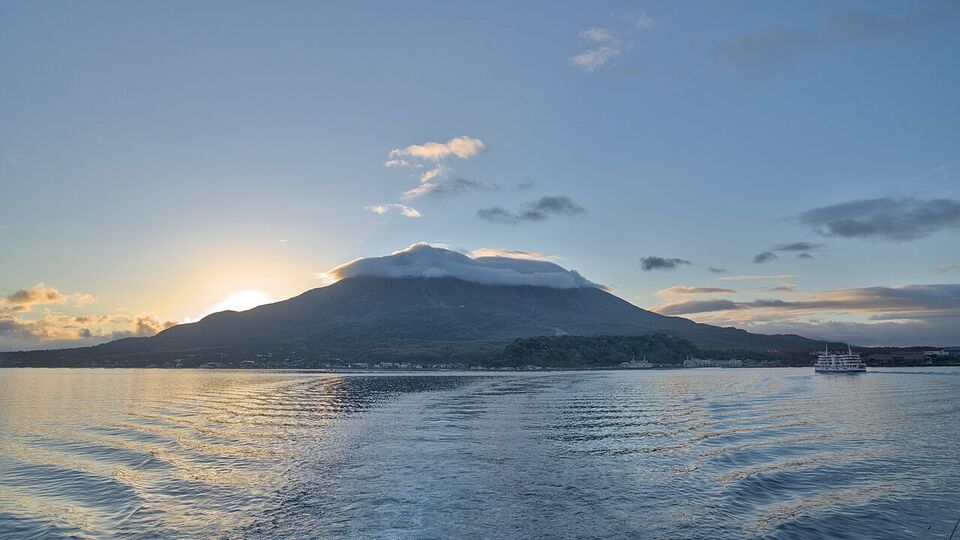
Kagoshima sits in a bay beside Sakurajima, an active volcano that releases ash almost daily. The city is a pleasant, warm place with a tram line, a long food tradition (kurobuta black pork, satsuma-age fish cakes and sweet potato spirit) and the Sengan-en garden, which uses the volcano as borrowed scenery.
Ferries run to Sakurajima around the clock, with sailings every 15 to 20 minutes in the day and a crossing of about 15 minutes. The adult fare is about ¥250 (about $2; check the current fare), paid on arrival at the island with cash or a local IC card. On the island, the Yunohira Observatory (373 m, or 1,224 ft) is the best vantage point and is reached by the Island View Bus. The CUTE one-day pass (about ¥1,200, or about $8; check the price) covers the ferry, trams and sightseeing buses. One 2026 guide listed Sakurajima at alert level 3 (confirm the current level on the JMA site), a level that bans entry within 2 km (1.2 miles) of the craters. The observatories and viewpoints outside that zone have stayed open.
On ash days, wear sunglasses or goggles rather than contact lenses, carry a mask, and keep cameras sealed. Check the wind direction on the JMA site before heading out. Ash can disrupt flights, ferries and trains for a day or two.
Different from home
Volcano warnings in Japan use five levels. Level 2 bans entry near the crater; level 3 means do not approach the volcano; level 4 means prepare to evacuate and level 5 means evacuate. The levels change quickly, and hotels, tourist offices and train staff all treat them as binding. Do not enter a closed zone because you can see other people there.
Yakushima: cedars and rain
Yakushima is a round, mountainous island about 60 km (37 miles) south of Kyushu, a UNESCO World Heritage site known for ancient yakusugi cedars and for rain: the mountains receive several thousand millimeters a year. It rains on the coast too, so pack a full rain jacket whatever the season. The Shiratani Unsuikyo forest of moss and streams is often linked with the look of the film Princess Mononoke and has gentle short loops. The Jomon Sugi, a cedar thought to be thousands of years old, is a long day hike.
The Jomon Sugi hike
The hike from the Arakawa trailhead is about 22 km (14 miles) round trip with about 700 m (2,300 ft) of climbing, and takes 9 to 12 hours. Between March and November private cars cannot use the access road, so you take a shuttle bus (about ¥2,000, or about $13, round trip, paid in cash) from Miyanoura or Anbo. First buses leave before dawn, around 4:00 to 5:00 a.m. A conservation contribution of ¥1,000 (about $6) for a day trip, or ¥2,000 (about $13) for overnight huts, is requested.
Guides are not legally required, but one 2026 travel guide reported that a guide was recommended in autumn because of storm damage after a September typhoon, with some toilets out of service and the Shiratani Unsuikyo walk closed. We could not confirm this with the island authorities. Treat this as a likely-changing situation and ask your lodging for the current state. Carry a portable toilet, a headlamp, food and at least 1.5 liters of water.
Getting there
From Kagoshima, a high-speed hydrofoil takes about 2 to 3 hours (roughly ¥10,000, or about $64, each way, but confirm) and a short flight about 40 minutes. Ferries are cancelled in rough seas, so build in a buffer day before any international flight. Book lodging and trail buses early in spring and autumn.
Takachiho and central Kyushu
Takachiho is a mountain town in Miyazaki Prefecture, tied to Japanese creation myths and known for its basalt gorge. The main sight is the Takachiho Gorge, where cliffs of columnar rock rise on both sides of a river and a waterfall drops beside the boats. You can rent a small rowboat by the half hour; the price is roughly ¥4,000 to ¥5,000 (about $25 to $32) per boat for up to three people, but we could not confirm the current fee and boats close in high water. The walking path above the gorge is free. In the evening, a short kagura (sacred dance) performance is staged at Takachiho Shrine for a small fee (typically around ¥1,000, about $6).
Takachiho is hard to reach without a car. Buses from Kumamoto and Aso are infrequent and take roughly two to three hours, so check the timetable at the Kumamoto Bus Center. A rental car from Aso takes about 1 hour 30 minutes on mountain roads. If you drive, the Kyushu Expressway Pass (2 to 10 days, ¥6,200 to ¥23,800) is one of the few regional passes still sold to foreign visitors; see Driving in Japan.
A sample route and costs
- Day 1
Fukuoka
Arrive, ride the subway to Hakata or Tenjin, and eat at a stall in the evening.
- Day 2
Nagasaki
Take the Kamome in the morning. Visit the Peace Park and museum, then walk Dejima and the harbor.
- Day 3
Gunkanjima and Kumamoto
Take an early boat tour if the weather allows, then ride to Kumamoto for the evening.
- Day 4
Kumamoto and Aso
Castle in the morning. Take the Hohi Line toward Aso if the volcano and rail service are normal.
- Day 5
Kagoshima
Shinkansen south, ferry to Sakurajima in the afternoon.
- Days 6-8
Yakushima
Boat from Kagoshima. Keep a spare day.
On cost, plan roughly ¥12,000 to ¥20,000 (about $76 to $127) a night for a standard business hotel in a main city and more at a ryokan with meals. A ryokan with dinner and breakfast in Yufuin often costs $$ to $$$ per person. See Where to Stay in Japan for how to choose, and When to Go to Japan for climate: Kyushu has a long rainy season from roughly early June to mid-July and a typhoon season peaking in August and September.
Safety and practical notes
- Typhoons: they can stop Shinkansen, ferries and flights for a day. Check the Japan Meteorological Agency forecasts and see Safety in Japan.
- Earthquakes: Kyushu has felt large quakes, including the 2016 Kumamoto series. Learn the evacuation drill in your hotel, and follow Safety in Japan.
- Volcano ash: Bring a mask and avoid closed zones.
- Cash: Stalls, small ferries and mountain buses often take cash only.
- Consulate: The US Consulate General in Fukuoka can be reached at 81-92-751-9331.
Prices on this page were checked in November 2026. Fees at attractions, ferries and tours change often, so confirm them on the operator's own site before you buy.
Add it to a route in the trip builder, or ask us to plan the hotels, trains and guides for you.