The short version
You do not need to learn a rulebook to be welcome in Japan. Visitors who are polite, quiet, tidy and patient will be fine. Japanese people are generally forgiving of foreigners who are obviously trying, and there is no expectation that you will get everything right. This page covers the points that matter most and the places where well-meaning visitors most often go wrong.
The main idea behind most Japanese manners is not to cause trouble for other people (meiwaku). Do not be loud, do not block the way, do not leave a mess, and do not make staff do extra work. If you follow those four principles, you will do well even when you do not know a specific rule.
The quick lists below give you the do and don't summary. After that, we explain the situations in more detail. For eating manners in particular, see our food guide, and for drinking customs see drinks.
Do and don't lists
Do
- Take off your shoes when you see a raised floor, a shoe rack, or a row of slippers.
- Say sumimasen (excuse me, sorry, thank you) for almost anything.
- Wait in line, and stand on the marked spots on station platforms.
- Keep your voice low on trains and buses, and set your phone to silent.
- Use both hands when giving or receiving a business card, a gift or change.
- Carry a small bag for trash, and take it with you.
- Place money in the small tray at the register, not in the cashier's hand.
- Say itadakimasu before a meal and gochisosama deshita after it.
- Rinse and wash before getting into a bath.
Don't
- Do not tip.
- Do not stick chopsticks upright in rice or pass food chopstick to chopstick.
- Do not eat or drink while walking in most places.
- Do not talk on the phone on a train or bus.
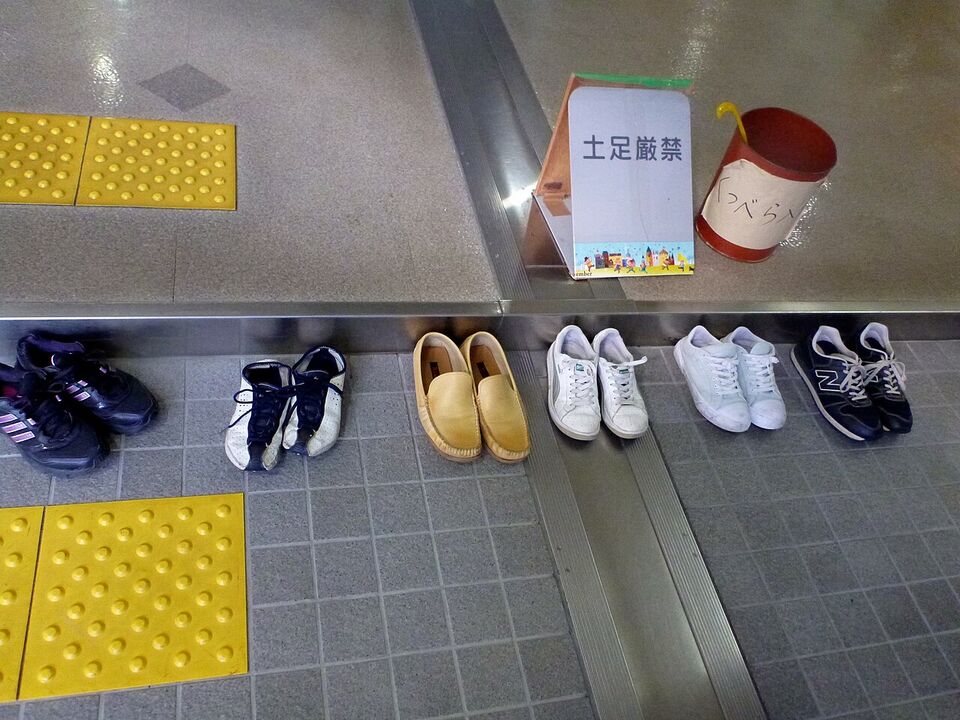
- Do not wear shoes on tatami mats or in a changing room.
- Do not photograph people without permission, especially geiko and maiko in Gion.
- Do not blow your nose loudly at the table.
- Do not pour soy sauce on plain rice or rub chopsticks together.
- Do not touch or climb on shrine and temple objects.
- Do not smoke outside designated areas.
Greetings and bowing
Bowing is the standard greeting, apology and thank you. A deep bow is a mark of respect, and a slight nod is a casual greeting. As a visitor you are not expected to bow in a formal way. A small head nod with a smile is enough when you meet someone or say thank you. If someone bows to you, return a slight bow.
Handshakes are uncommon but not unwelcome. In a business setting, wait to see if the other person offers a hand. Names are usually used with a title, -san, so address people by their family name and add -san. Avoid hugging or touching strangers, and keep a polite distance. For basic phrases, see our Japanese phrases page.
Business cards (meishi) are exchanged with both hands and a small bow. Read the card and place it on the table in front of you, and do not write on it or put it in your back pocket. Gifts are also given and received with both hands, and the recipient may not open them in front of you.
Shoes off: homes, ryokan, temples and restaurants
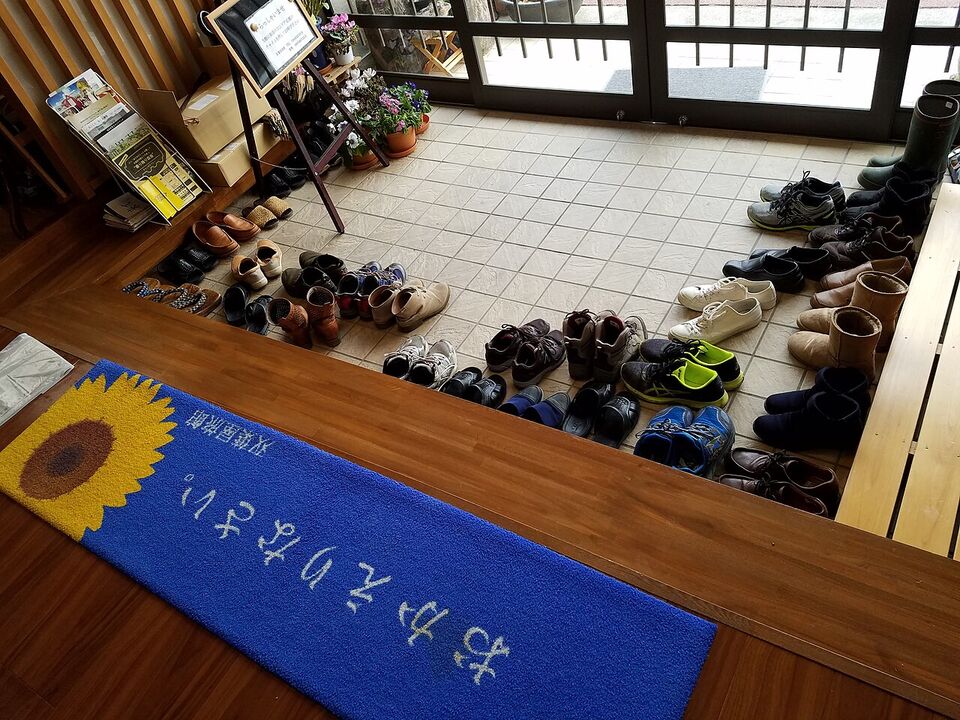
Japan separates indoors from outdoors with a small entry area called a genkan, where you take off your shoes. If you see a step up from the entry, a shoe rack, or slippers lined up, take your shoes off. This applies to private homes, ryokan (traditional inns), many temples, some restaurants with raised seating, fitting rooms, and some clinics and schools.
- Step out of your shoes and onto the raised floor without letting your socks touch the genkan floor. Turn your shoes to face the door or leave them on the rack.
- Wear the slippers provided, but take them off before stepping on tatami (woven straw mats). Walk on tatami in socks or bare feet.
- Many bathrooms have separate toilet slippers. Change into them, and change back when you leave. Forgetting to take them off is a classic mistake.
- Wear socks without holes. Slip-on shoes make life easier on a trip with many shoe stops.
At a ryokan, you will usually sleep on futons laid out on tatami by staff. Wear the yukata (cotton robe) provided, left side over right, which is the way the living wear it. Right over left is for the dead. See where to stay for how ryokan work.
Trains, buses and public places
Public transport in Japan is quiet. On trains, buses and subways, people read, sleep or look at their phones, and conversation is subdued. These are the habits that matter most:
- Phones: set your phone to silent (manner mode), and do not make calls. Short texts and quiet video are fine with headphones. Announcements on the train often ask passengers not to talk on the phone.
- Voices: keep your voice low. A group chatting loudly in English will stand out.
- Priority seats: seats marked for elderly, disabled, pregnant, or with young children are meant for those who need them. Sit there only if the car is empty, and give up your seat if someone needs it.
- Bags: take your backpack off and hold it in front of you or put it on the rack in crowded cars. Do not leave bags on seats.
- Queueing: line up at the marked spots on the platform, and let people exit before you board. Do not push.
- Eating: eating on local trains is frowned on, but on the Shinkansen and on limited express trains, eating a bento is normal. Take your trash with you.
- Women-only cars: some lines have women-only cars at certain times, marked on the platform and on the car. Men should avoid them, and the signs will say when they apply.
Large luggage is a problem on busy trains. On the Tokaido, Sanyo and Kyushu Shinkansen, bags with a total of more than 160 cm and up to 250 cm (length plus width plus height) need a seat with oversized baggage space; see our getting around guide. Send big bags ahead by luggage forwarding if you can.
Escalators
People stand on one side of the escalator and leave the other free for people in a hurry. In Tokyo and eastern Japan, stand on the left. In Osaka and most of Kansai, stand on the right. Nobody will be upset if you get it wrong in a pinch, but watch what locals around you do. Several cities, including Nagoya and Saitama Prefecture, ask people to stand on both sides and not to walk at all, since walking on escalators causes accidents. If you see signs asking people to stand still, follow them.
Eating, drinking and smoking in public
Eating while walking is considered impolite in most of Japan, and many shopping streets and markets ask you to finish food at or near the stall. Exceptions include festival stalls and some tourist food streets, where eating on the go is normal. If you are unsure, follow what other people do or ask the vendor. There are also few places to sit, so a park bench or a picnic spot is a good plan.
There is no nationwide ban on drinking in public, and a can of beer at a park or a hanami picnic is accepted. Walking around with an open can is frowned on, and some districts ban street drinking at night. See our drinks guide.
Smoking is regulated. Many wards ban smoking while walking on streets, with fines of about ¥2,000-20,000 (about $13-127), and some outdoor areas have designated smoking spots. Indoors, restaurants are generally smoke-free, though small existing bars and cafes may allow it. Look for signs, and ask if you are not sure. Vaping rules are similar.
Trash and cleanliness
There are very few public trash cans in Japan, so planning ahead helps. Carry a small bag for your own garbage and take it back to your hotel. Convenience stores have bins outside, but they are meant for items bought there, and station bins are often sorted into burnables, plastic bottles, cans and paper. Do not leave trash on the street, and do not put household garbage in a public bin.
Sorting is a normal part of life. Plastic bottles usually need the cap and label taken off and put into separate bins. At hotels, ask staff where to put your garbage. Littering can result in fines of about ¥2,000-30,000 (about $13-191), depending on the ward. Cities such as Kyoto and Nara ask visitors to help protect the sights.
Shrines and temples
Shrines (Shinto) and temples (Buddhist) are active places of worship, not just sights. Behave quietly, and follow the signs. Our temples and shrines guide goes deeper into each site. The basics:
At a shrine
- Bow slightly at the torii gate before entering. Walk along the side of the path, since the center is for the gods.
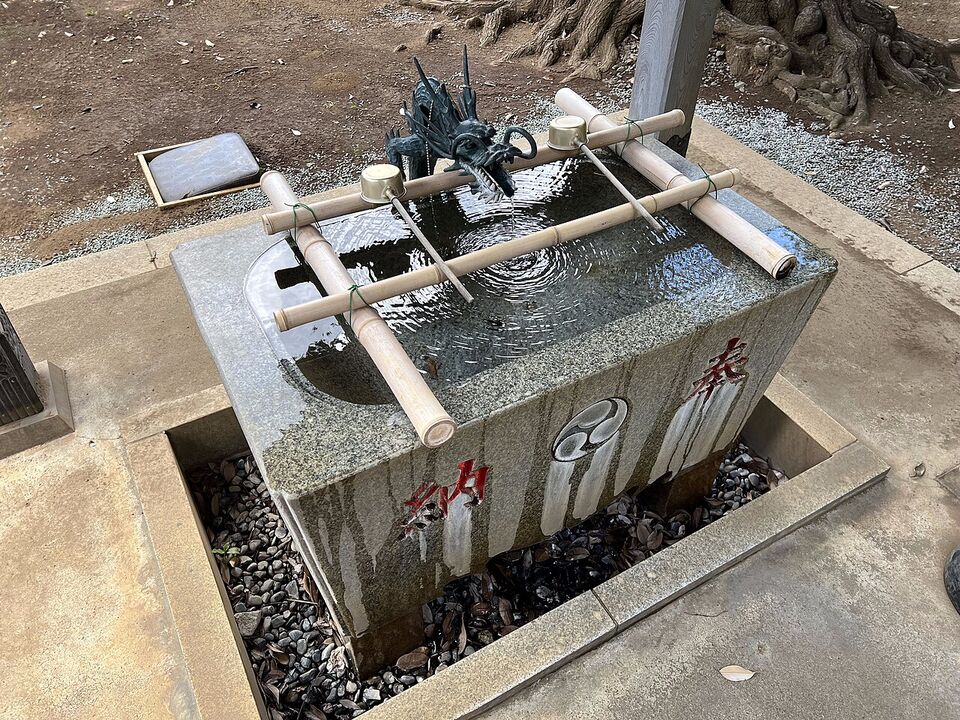
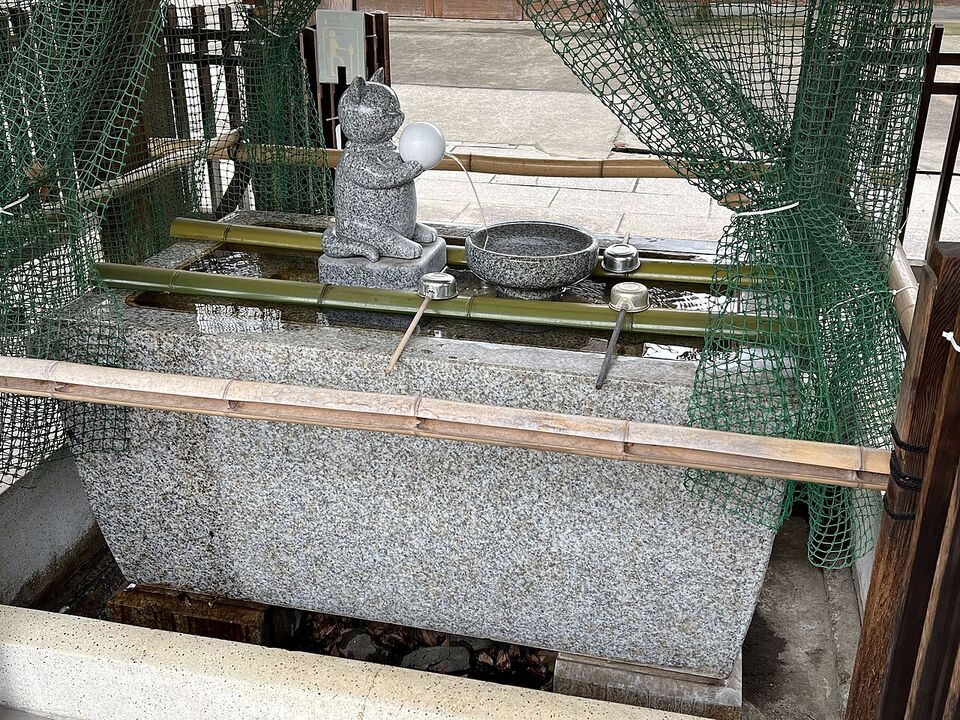
- At the water basin (temizuya), use the ladle to rinse your left hand, then your right, and your mouth if you like. Do not drink from the ladle.
- At the main hall, drop a coin in the offering box, bow twice, clap twice, say a silent prayer, and bow once more.
At a temple
At a Buddhist temple, you do not clap. Instead, put your hands together quietly. Light incense only where it is allowed. Many temples ask visitors not to take photos of the main image or interior, so look for signs. Remove your shoes where indicated, and do not touch statues or sacred objects. Dress modestly and avoid loud talking. Do not step on the threshold of a temple door.
Stay off the path during ceremonies and do not walk in front of people praying. Drones are banned at most temples, shrines and parks.
Photography and Gion
Photography rules depend on the place. Some temples allow photos outside but not inside, museums often ban flash, and some restaurants do not allow photos of staff or other diners. If you do not see a sign, ask. Do not photograph strangers, and be careful with children.
The strongest rules apply in Gion, the geisha district of Kyoto. The local community, not national law, has put up signs in several private alleys warning of a ¥10,000 (about $64) fine for photographing geiko (Kyoto geisha) or maiko (apprentices) or for entering private side streets without permission. Public streets, such as Hanamikoji, are not covered by the signs, but residents are also tired of crowds. A few ground rules:
- Do not chase, block or grab a geiko or maiko, and do not take photos at close range.
- Stay out of private alleys that have signs, even if they are not marked clearly.
- Be quiet in the evening, when the area is residential.
- Do not trespass onto private property or gardens, and do not use drones.
Our Kyoto sights guide suggests other places to see traditional Kyoto without bothering residents. For rules on specific animals, note that Nara asks visitors not to kick or hit the deer in the park.
Watch out
Rules and signs in Gion change as local residents and the city respond to crowds. Check the latest Kyoto city and tourism notices before you go, and follow any sign over this guide.
Onsen, baths and tattoos
Public baths (onsen and sento) have their own etiquette. Wash your body at the stool and shower station, rinse off all soap, and then get in the bath without clothes or a swimsuit. Keep your small towel out of the water, tie long hair up, and do not swim or splash. Our onsen guide explains the full routine.
Tattoos are the biggest question for visitors. Because tattoos have been associated with organized crime, many baths refuse entry to people with visible tattoos, even for decorative ones. This is changing in tourist areas, and some baths allow small tattoos with a cover sticker or a patch, while others admit everyone. Check each bath's policy online before you go, or call. A reliable alternative is a private bath (kashikiri or kazoku-buro) that you rent by the hour, or a hotel room with its own bath. The same goes for gyms, pools and some beaches.
Money, shopping and service
Tipping is not part of Japanese culture. Do not leave coins on the table at a restaurant, in a taxi, or at a hotel. Staff may run after you with the money you "forgot." Some hotels and restaurants add a service charge of about 10-15% to the bill, and that is all that is expected. A kind word, a thank you, or a small gift is more appropriate than cash. See our money guide for more on cash and cards.
At shops, put your money in the tray at the register, and take your change and receipt with both hands. Do not eat in a shop unless it has a seating area. Taxis open and close the rear left door automatically, so do not touch it. Bargaining is not common except at flea markets. Politeness and patience are the best way to get good service.
Different from home
Service in Japan is formal and attentive, but it is also reserved. Staff will not chat or check on you as often, and silence is not rudeness. You may be asked to remove your shoes in more places than you expect, and a restaurant may refuse to seat a party without a reservation without fuss. Treat these as local rules, not personal slights.
Toilets, health and everyday courtesy
Public toilets in Japan are clean and widely available in stations, convenience stores and department stores, and they are free. Many have heated seats and bidet controls with labeled buttons; press the stop button if the spray surprises you. Buttons with a music-note symbol play a masking sound. In older buildings you may find squat toilets, so carry tissues, because some public restrooms do not stock paper or hand towels. Many people carry a small hand towel (hankachi) for this reason.
If you are sick, many Japanese people wear a face mask to protect others, and you can do the same. Cover your mouth when you cough, and avoid crowded places when you can. Do not blow your nose loudly in public. For medical care and insurance, see our health guide.
A few more habits are worth copying. Do not stop in the middle of a doorway or at the top of a staircase to look at your phone. Hold doors for the person behind you only if it is easy, because most doors are automatic. When you are shown something, take it with both hands. Finally, be flexible about small differences: a no-photo rule, a closed door, or a seat that is reserved are all signals to politely move on, not to argue.
Common first-trip mistakes
- Wearing shoes on tatami or into a ryokan room.
- Talking loudly on the train, or on a call.
- Walking and eating at a crowded market.
- Tipping, and leaving cash on the table.
- Entering a bath without washing first.
- Blocking narrow lanes in Gion to photograph.
- Leaving trash in a bin that does not belong to you.
If something goes wrong
If you break a rule by accident, apologize with a small bow and sumimasen, and fix the problem if you can. Most staff will accept it with a smile. If you are truly lost, a police box (koban) in any neighborhood is a good place to ask for help, and our safety guide lists emergency numbers. Everything else will fall into place with a little patience.
Add it to a route in the trip builder, or ask us to plan the hotels, trains and guides for you.