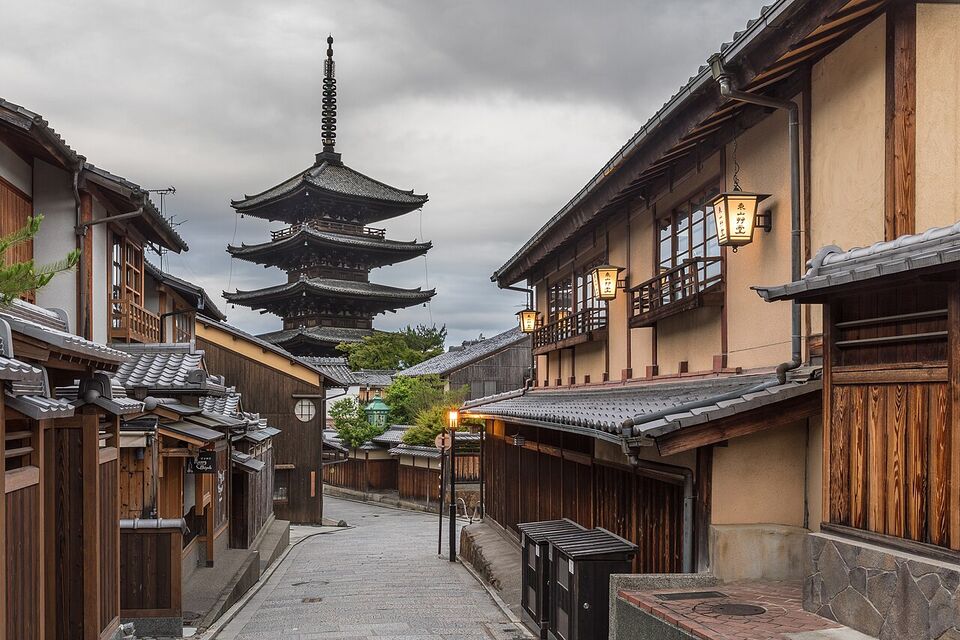
Overview: how Kyoto works
Kyoto is a compact city of about 1.5 million people with more than a thousand temples and shrines spread across a flat basin ringed by hills. Most visitors need three full days, a base near a subway or train line, and a plan that keeps them out of the busiest places at the busiest hours. The sights are not in one cluster. They sit in the east (Higashiyama), north (Kinkaku-ji), west (Arashiyama) and south (Fushimi Inari), so what you do each day depends on where you sleep and how you get around.
This page covers the practical side: the neighborhoods and where to stay, getting in from Kansai Airport and from Tokyo, buses versus the subway, crowds and the city's new rules, and how many days to plan. For the sights themselves, with 2026 prices and a crowd-beating schedule, see Kyoto Sights. If you are still deciding between this city and the capital, Tokyo vs Kyoto lays out the trade-offs.
A few things are different from home. There are only two subway lines, taxis are the main on-demand option (not US-style ride-hailing), and height limits keep the skyline low. Many visitors are surprised by how much walking they do, often 6 to 9 miles (10 to 15 km) on a temple day, so comfortable shoes you can slip off at temple halls matter more than any other packing choice. See Etiquette for the manners that apply in temples and old districts.
Neighborhoods and where to stay
Kyoto's hotels cluster in five areas. None is wrong, but each makes some days easier and others harder. Hotel tiers below use $ (under $120 a night for a double), $$ ($120 to $300) and $$$ (over $300). Prices jump during cherry blossom season, the second half of November and Golden Week, so book as soon as your dates are firm. For general advice on types of lodging, see Where to Stay in Japan.
Kyoto Station
The bullet train, the airport express, JR local lines and the Karasuma subway line all meet here. It is the easiest base if you arrive late, leave early or plan day trips to Nara, Uji or Osaka. The area is functional rather than atmospheric, but Fushimi Inari is two stops away and the bus terminal in front serves Kiyomizu-dera and the northern temples.
Downtown / Kawaramachi
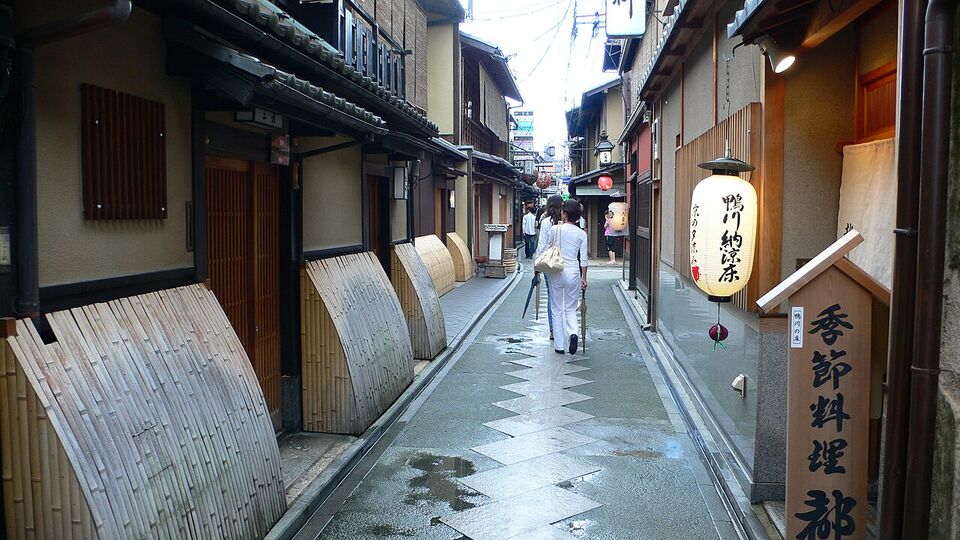
The grid around Kawaramachi, Shijo and Karasuma has department stores, Nishiki Market, Pontocho alley and hundreds of restaurants. Subway, Hankyu and Keihan trains and many buses stop nearby. We suggest it for first-timers who want to walk to dinner and not plan around the last bus.
Gion / Higashiyama
Wooden lanes, tea houses and the walk up to Kiyomizu-dera are all on foot from here. The trade-off is price, narrow streets, heavy daytime crowds and limited train access: the nearest stations are Keihan Gion-Shijo and the Tozai line, not JR. Pack light, since you cannot count on a taxi dropping you at the door of a lane.
Arashiyama
The area is jammed with day-trippers from about 9 a.m. to 4 p.m., then empties. Staying here lets you see the bamboo grove before the crowds, and it has some of the city's best ryokan. The downside is distance: it takes 20 to 30 minutes to reach central Kyoto by train, and restaurants close early.
Near Nijo Castle
Quiet residential streets, converted machiya (wooden townhouses) and the Tozai subway line, which links to the Karasuma line (for Kyoto Station) with one transfer and runs east to Higashiyama. Prices are often lower than in Gion at similar quality. It is a calmer base for travelers who do not need nightlife at the door.
If you are visiting for three nights, we suggest staying in one place. Moving hotels in Kyoto costs half a day and gains little, because the whole city is reachable from either Kyoto Station or Kawaramachi in under 30 minutes.
The 2026 accommodation tax
On March 1, 2026, Kyoto City raised its lodging tax sharply. It is charged per person per night, and the rate depends on the room price per person per night, excluding meals and consumption tax. The top rate is the highest in Japan. Hotels and ryokan usually collect it at check-in, in cash or by card, although some booking sites include it in the prepayment.
| Room rate per person per night | Tax per person per night | US$ (at ¥157) |
|---|---|---|
| Under ¥6,000 | ¥200 | about $1.30 |
| ¥6,000 to ¥19,999 | ¥400 | about $2.50 |
| ¥20,000 to ¥49,999 | ¥1,000 | about $6.40 |
| ¥50,000 to ¥99,999 | ¥4,000 | about $25 |
| ¥100,000 and above | ¥10,000 | about $64 |
For most travelers in a mid-range hotel, the bill is modest. A couple paying ¥30,000 (about $191) a night for a double is at ¥15,000 each, which is the ¥400 band, so the tax is ¥800 (about $5) a night for the room. Luxury ryokan are where it adds up: two guests in a ¥100,000-per-person room pay ¥20,000 (about $127) a night in tax alone.
Different from home
US hotel taxes are a percentage of the bill and appear on your folio. Kyoto's is a flat sum per guest per night, tied to price bands, so a larger party staying in a cheap room pays more in total than a couple in the same room. Japan also adds a separate 10% consumption tax. Ask at booking whether the lodging tax is included in the total.
Tokyo, Osaka and other cities also charge lodging taxes but at lower rates. For how they compare, see Where to Stay in Japan and Money in Japan.
Getting to Kyoto
From Kansai Airport (KIX)
Most American visitors who fly into Osaka arrive at Kansai International Airport, about 50 miles (80 km) from central Kyoto. The JR Haruka limited express runs direct from the airport to Kyoto in about 80 minutes. The standard fare is ¥3,390 (about $22) for a non-reserved seat, with a reserved seat costing about ¥530 (about $3.40) more. It is covered by the Japan Rail Pass.
Two discounts are worth checking before you land. JR West sells foreign-visitor discount Haruka tickets (one source puts the one-way price to Kyoto at ¥2,700, or about $17, since JR West's November 2026 price change) that must be bought with a foreign passport, and an ICOCA & Haruka bundle that pairs a discounted Haruka ticket with an ICOCA transit card. We could not confirm the exact current price of the bundle, so check the JR West website for November 2026 fares. If you only hold a transit card, note that it does not pay for the Haruka itself: the express ticket is separate. For card basics, see Getting Around Japan.
Cheaper but slower: the Nankai line to Osaka's Namba, then a transfer to Kyoto, or an airport limousine bus straight to Kyoto Station, which takes roughly 90 minutes depending on traffic. Neither beats the Haruka for convenience, and with luggage a direct train is worth the extra cost. If you arrive at another airport, see Flights to Japan.
From Tokyo
The Tokaido Shinkansen is the standard route. The Nozomi covers Tokyo to Kyoto in about 2 hours 13 to 15 minutes, with a reserved seat costing about ¥14,170 (about $90) one way; check the fare when you book. The Hikari takes about 2 hours 40 minutes and costs ¥13,850 (about $88) reserved. Japan Rail Pass holders can ride the Hikari at no extra cost, and the Nozomi only with a ¥4,960 (about $32) supplementary ticket per ride, so the pass rarely pays for a simple Tokyo-Kyoto round trip. Our guide to Is the JR Pass Worth It? has the arithmetic.
For Mount Fuji views on a clear day, ask for an E seat (the right-hand side heading west from Tokyo). Large suitcases (total dimensions 161 to 250 cm) need an oversized-baggage seat reservation on the Tokaido line, or you pay ¥1,000 (about $6.40).
Buses, subway, trains and taxis
Kyoto is harder to navigate than Tokyo because its subway has only two lines (Karasuma, north-south, and Tozai, east-west) and many sights are not near a station. Most visitors combine four tools, and the right mix depends on the day.
- Subway: clean, fast and air-conditioned, with fares starting around ¥220 (about $1.40). It is the best way to cross town but reaches few temples directly. Check the current fare table at the station.
- JR and private trains: JR to Fushimi Inari (5 minutes, about ¥150, or about $1) and Arashiyama (about 15 minutes on the Sagano line), Keihan to Gion and Fushimi, Hankyu from Kawaramachi to Arashiyama, and the Randen tram to the northwest. See Getting Around Japan for IC card tips.
- City buses: a flat ¥230 (about $1.50) within the central zone, payable by IC card or exact change. Buses reach nearly everything, but they are slow and can be packed from 10 a.m. to 4 p.m. on popular routes, especially #206 to Kiyomizu-dera.
- Taxis: plentiful, safe and metered, with drivers who rarely speak English, so show the destination on your phone. Two or three people often pay about the same as buses on short hops. Fares are higher at night.
- Walking and cycling: the flat center rewards both. Use bike rental only where cycling is allowed, and note that Japan introduced on-the-spot "blue ticket" fines for cyclists on April 1, 2026 (for example ¥12,000, or about $76, for phone use while riding).
Passes change, and we could not confirm every current option. One source lists a Subway and Bus 1-Day Pass at ¥1,100 (about $7), which can pay for itself in three rides if you mix subway and bus. A bus-only day pass was discontinued in 2023, according to our research brief, which we could not independently verify, so check the Kyoto City Transportation Bureau website. A two-tier bus fare for non-residents (¥350 to ¥400, or about $2 to $2.50) is under discussion for fiscal 2027 but is not in effect as of November 2026.
Insider tip
Pair the east-side temples on foot rather than by bus. Kiyomizu-dera, the lanes of Higashiyama, Yasaka Shrine and Gion link up in an easy 40-minute stroll, and you skip the worst bus lines. Take a taxi or the subway to the starting point, then walk downhill.
Luggage on buses
Kyoto asks visitors to avoid large luggage on city buses, and the bus and subway site states that drivers or station staff may refuse passengers whose bags are too large or too many. Hold backpacks in front of you and keep suitcases close. The simplest fixes are coin lockers at Kyoto Station, hotel storage, or the city's Hands-Free Kyoto service, which moves luggage between Kyoto Station and your hotel. Fees vary by operator, so check before you book. If you arrive by Haruka, send your bag ahead with the hotel's delivery service if you are going sightseeing before check-in.
Crowds and the city's response
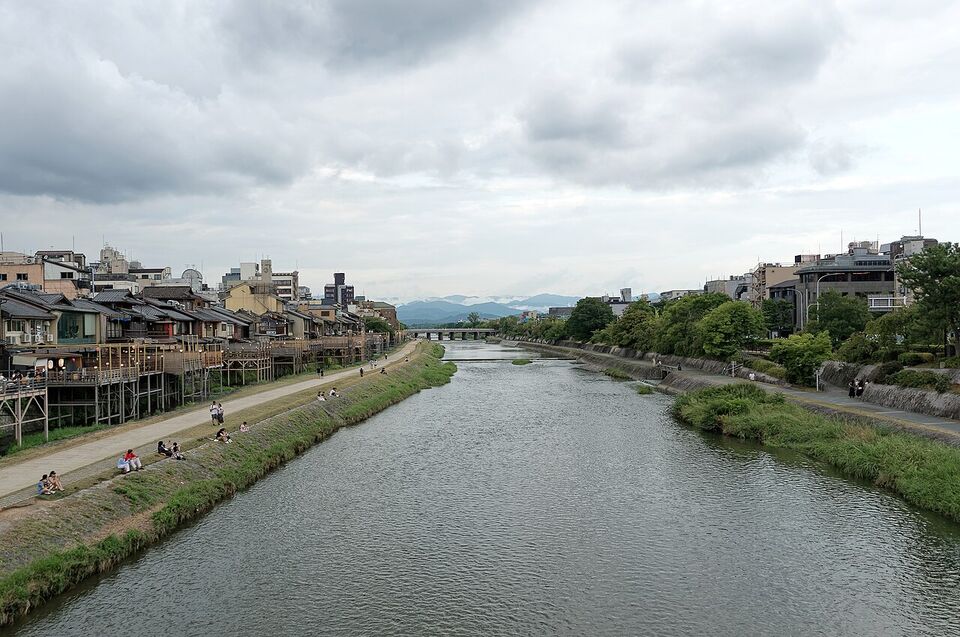
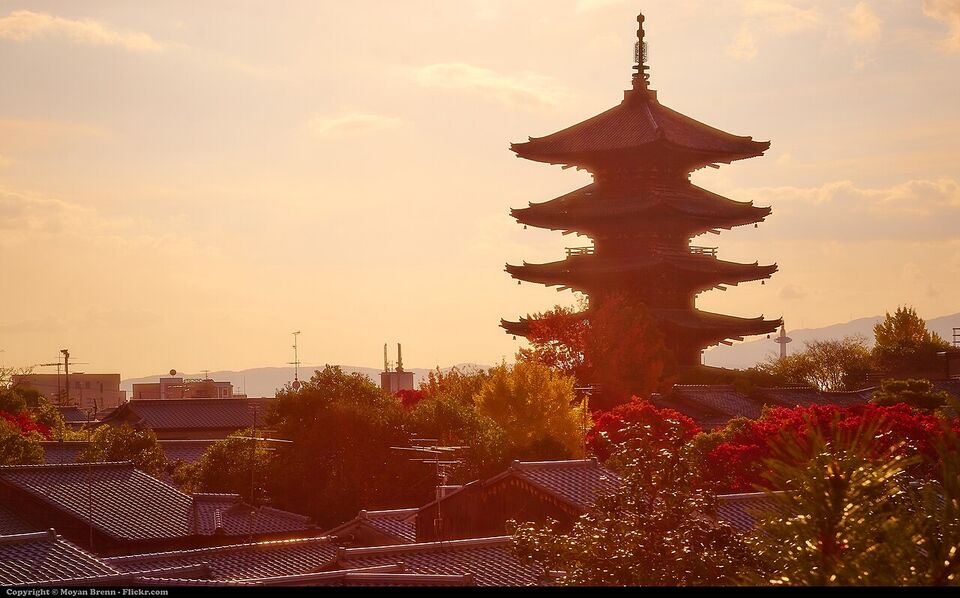
Kyoto receives more visitors than its narrow lanes and buses were built for. Crowding peaks in cherry blossom season (late March to early April), Golden Week (April 29 to May 5), mid-August and the second half of November, when the autumn leaves turn. The 2026 forecast puts the peak red color in Kyoto around mid-December, with ginkgo around November 30, but timing shifts by a week or more, so check forecasts before you book. For a month-by-month picture, see Japan in November and When to Go to Japan.
The city and local groups have tried several measures. Besides the new lodging tax, they include:
- Gion photo rules: residents' groups posted signs on designated private lanes banning photography of geiko and maiko and unauthorized entry, and the signs warn of a ¥10,000 (about $64) fine. These are private-property warnings from residents, not a city law, and public roads such as Hanamikoji are not covered.
- Luggage guidance: the bus guidance above, plus hands-free delivery points at Kyoto Station.
- Bus plans: proposals for resident-priority bus fares and sightseeing express routes, aimed for fiscal 2027 and not yet in effect.
- Imperial Palace: the main hall (Shishinden) is under a protective roof from mid-October 2026 for roughly nine years of repairs, according to one source, so photos of it will look different.
Our practical advice follows from the pattern: see the famous places at opening time (Fushimi Inari and the Arashiyama bamboo grove before 8 a.m., Kiyomizu-dera at 6 a.m. when it opens), save the afternoon for gardens and quieter districts, and move to another part of the city for dinner. The schedule on Kyoto Sights builds on this.
Watch out
Do not trust hotel-lobby or app estimates for how long a bus will take between 10 a.m. and 4 p.m. in peak season. A route that takes 15 minutes at 8 a.m. can take 45 minutes at noon. Build in a buffer for timed entries and dinner reservations.
Gion, maiko and etiquette
Gion is a working district. The women you may see in white makeup and elaborate kimono at dusk are either geiko (the Kyoto word for geisha) or maiko (apprentices), walking to appointments at tea houses. They are professionals on their way to work, not performers. Tourists who dressed in rented kimono and posed beside them added to the problem that led residents to act.
These rules keep you out of trouble and show respect:
- Stay on public streets such as Hanamikoji and Shirakawa. Do not walk into the narrow private alleys marked with no-photography signs.
- Never block, chase, grab or touch a maiko, her kimono or her sleeves, and do not use a flash.
- Do not photograph anyone at close range without asking, and be ready to be told no.
- Keep voices low in residential lanes, and do not eat while walking.
- Rent a kimono if you like, but the same photo and private-lane rules apply to you.
If you want a proper encounter, book a seated dinner or tea-house show through a hotel, an official tourism center or a reputable agency. Prices vary widely, from a modest show to a costly banquet with geiko, so ask for the total in yen before you confirm. For wider manners, see Etiquette and Temples, Shrines and Castles.
How many days to spend
Unlike Tokyo, Kyoto rewards slowness. A few nights is often better than a fast tour. Here are our suggested time frames.
- Two days
The essential Kyoto
Day one: Fushimi Inari at dawn, then the east-side walk from Kiyomizu-dera through Higashiyama to Gion. Day two: Arashiyama early, then Kinkaku-ji and Nijo Castle by bus or taxi. You will see the icons but have little time for gardens, food or Nara.
- Three days
A comfortable first visit
Use the two days above, then add a day for the Philosopher's Path and Ginkaku-ji, Nishiki Market, the Imperial Palace and a quieter temple such as Ryoan-ji or Sanjusangen-do. This is the pace we suggest for most first-timers.
- Four days
Add Nara or Uji
The extra day goes to a trip out of town. Nara is 45 minutes away and deserves its own page: see Nara. Uji (matcha and Byodo-in) takes about 20 minutes by train and fits a half day.
- Five or more
Go deeper
Add the reservation-only imperial villas and the moss temple Saiho-ji (see Kyoto Sights for how to apply), a tea ceremony, a cooking class, or a night in a ryokan. Osaka, covered at Osaka, is 15 to 30 minutes away by train and works for a food-focused night out.
If your trip is under a week in total, many travelers split it between Tokyo and Kyoto. We suggest at least three nights in each. Our comparison at Tokyo vs Kyoto helps you decide how to divide days.
Practical details
When to book
Book hotels three to six months ahead for blossom season, and as early as you can for mid-November to early December. Book ryokan dinners and stays earlier still. Reservation-only sights (the imperial villas and Saiho-ji) need weeks of notice, and tea-house experiences need at least a few days.
Cash and cards
Hotels, department stores and chains take cards, but many temples, small restaurants, markets and some taxis are cash-only. Carry ¥10,000 to ¥20,000 (about $64 to $127) per day. See Money in Japan.
Safety and weather
Kyoto is very safe, and the usual cautions are heat (July and August are humid, regularly above 95°F, or 35°C), rain in June and typhoons from late summer. See Safety in Japan. In winter, temples are cold and unheated, so bring layers and warm socks, since you remove your shoes inside.
Food
Kyoto is known for kaiseki (multicourse seasonal meals), yudofu (tofu simmered in broth), matcha sweets and pickles. Many top restaurants require reservations through a hotel concierge. For ideas and how to order, see Japanese Food.
Add it to a route in the trip builder, or ask us to plan the hotels, trains and guides for you.