Is Hakone worth it?
Hakone is the easiest mountain escape from Tokyo: hot springs, a volcanic valley, a lake with mock pirate ships and, on a clear day, Mount Fuji across the water. It sits about 50 miles (80 km) southwest of Tokyo and fits either one long day or, better, a night in a traditional inn. For most first-time visitors we suggest the night, because the sights are spread out and the best part of Hakone is the soak and the quiet evening, not the transfers.
The classic route is a loop of trains, a cable car, a ropeway, a boat and a bus, all covered by one pass. It is fun but slow, and it is not designed to be done quickly. If you have only one day in the region and the weather is poor, consider the other day trips from Tokyo instead. If you want Fuji itself rather than a view of it, read the Mount Fuji guide.
Hakone suits couples, families with children old enough to enjoy a long day of transport, and anyone who wants their first onsen (hot spring bath) without leaving the Tokyo area. It suits less well people who dislike crowds on weekends, travelers with limited mobility (the loop involves many steps and transfers) and anyone with only a few hours.
Getting to Hakone from Tokyo
There are two practical routes, and which one you pick decides which Free Pass you buy.
Odakyu from Shinjuku (the standard route)
The private Odakyu Line runs from Shinjuku Station to Odawara and on to Hakone-Yumoto, the gateway town. The Romancecar limited express takes about 80 minutes direct to Hakone-Yumoto. The one-way cost is the ordinary fare plus a ¥1,200 (about $8) seat charge (Odakyu lists ¥2,400 for the round-trip seats); check the total on Odakyu's site. Seats are reserved, and the front-row panoramic cars are the ones people ask for, so book early for weekends and autumn.
A cheaper option is an ordinary Odakyu express or rapid train. These usually run to Odawara or Hakone-Yumoto with one change and take about 90 minutes to 2 hours, with no seat charge. The Odakyu Line accepts contactless Visa, Mastercard and other cards at the gates (see our connectivity and tech guide and the getting around guide), but you cannot use that on the pass, which is a separate ticket.
Shinkansen to Odawara
From Tokyo or Shinagawa, a Kodama or Hikari Shinkansen reaches Odawara in roughly 35 minutes. This is the route for people with a Japan Rail Pass, because the Shinkansen to Odawara is covered (see the JR Pass guide for current pass prices). From Odawara, the Hakone Tozan Railway runs to Hakone-Yumoto in about 15 minutes for about ¥320 (about $2), and that part is not covered by a JR Pass. Total door to door from central Tokyo is about 50 to 60 minutes.
Different from home
The Odakyu Line, Hakone Tozan Railway, buses, ropeway and boats are separate private companies. They are not part of JR, and a JR Pass does not cover them. That is why a combined pass exists. It works like a theme-park wristband for a whole mountain.
The Hakone Free Pass: 2026 prices
The Hakone Freepass (Odakyu calls it one word, and you will see both spellings) covers eight modes of transport in the Hakone area. We checked Odakyu's own page in November 2026. Prices below are adult, with child (ages 6 to 11) in the last column. Children under 6 ride free.
| Pass | Adult | US$ | Child |
|---|---|---|---|
| 2-day, from Shinjuku | ¥7,100 | about $45 | ¥1,600 |
| 3-day, from Shinjuku | ¥7,500 | about $48 | ¥1,850 |
| 2-day, from Odawara | ¥6,000 | about $38 | ¥1,500 |
| 3-day, from Odawara | ¥6,400 | about $41 | ¥1,750 |
The Shinjuku version includes a round-trip Odakyu ticket between Shinjuku and Odawara, plus the local transport. The Odawara version covers only transport inside the Hakone area. The pass covers the Odakyu Line, the Hakone Tozan Railway and Cable Car, the Hakone Ropeway, the Lake Ashi sightseeing cruise, and designated Hakone Tozan, Odakyu Highway and Tokai buses. It also gives discounts at about 70 attractions, hot springs, museums and restaurants.
The "2-day" pass is valid on the day you start and the following day, until the last service. It is not a 48-hour pass. Start on a day when the forecast is good.
Several travel sites still print ¥6,100 and ¥6,500 for the Shinjuku passes, which were the earlier prices. Treat any figure below ¥7,000 for the Shinjuku pass as out of date, and check Odakyu's pass page before you buy.
Is the pass worth it?
For a one-day loop, it saves a modest amount. Paid separately, the main fares on a standard day (Shinjuku to Hakone-Yumoto and back about ¥2,380, the Tozan train about ¥460, the ropeway about ¥1,800, the cruise about ¥1,700, the bus about ¥1,210, plus the cable car) come to roughly ¥8,000 (about $51). That means the saving on a simple loop is on the order of ¥500 to ¥900 (about $3 to $6). The real benefit is that you do not buy a ticket at every stop.
It is less useful if you will sit in one ryokan for two nights, if you plan to skip the lake and ropeway, or if you join a tour with transport included. In that case, buy point-to-point tickets or use the Odakyu tap-in gates.
Save money
Coming from Shinjuku and staying only one night, buy the 2-day pass. Coming by Shinkansen on a Japan Rail Pass, buy the Odawara version for ¥6,000 (about $38). Skip the Romancecar upgrade if you travel on a weekday morning, since ordinary Odakyu trains cost nothing extra and take only a little longer.
The Hakone loop, step by step
The full loop takes 6 to 8 hours with stops. It is a circle, so you can go either direction, but the usual order from Tokyo is counterclockwise as described here. Check Hakone Navi on the morning you go, because wind, volcanic gas or snow can stop the ropeway or the boats.
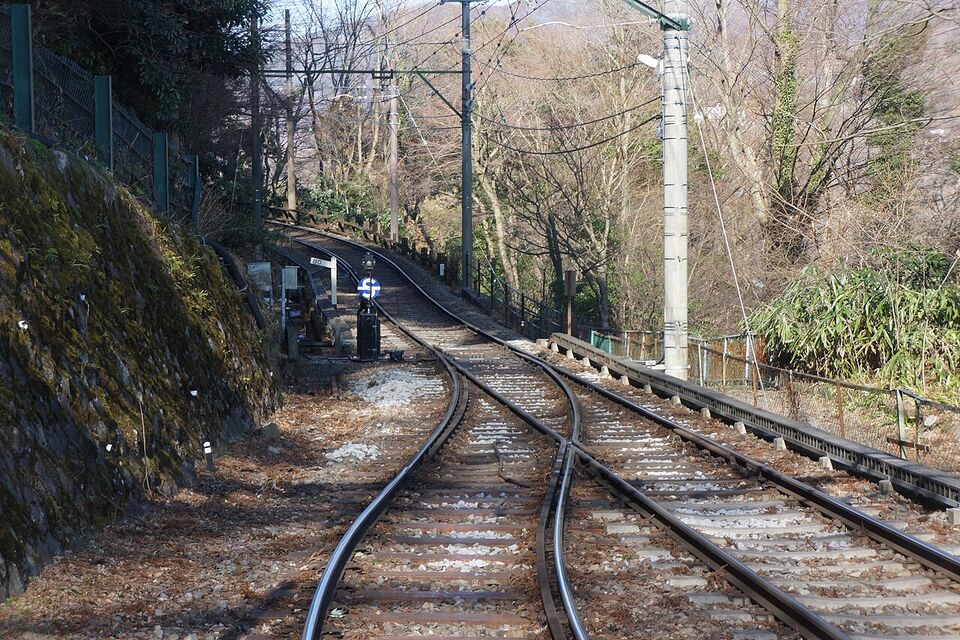
- Hakone-Yumoto to Gora by Tozan train. About 40 minutes. This small mountain railway climbs through switchbacks and short tunnels. The hydrangeas along the line bloom in June and early July.
- Gora to Sounzan by cable car. About 10 minutes, steep and short. Gora has a park and several museums, including the Hakone Open-Air Museum (adults ¥2,000, about $13, with a small discount for pass holders).
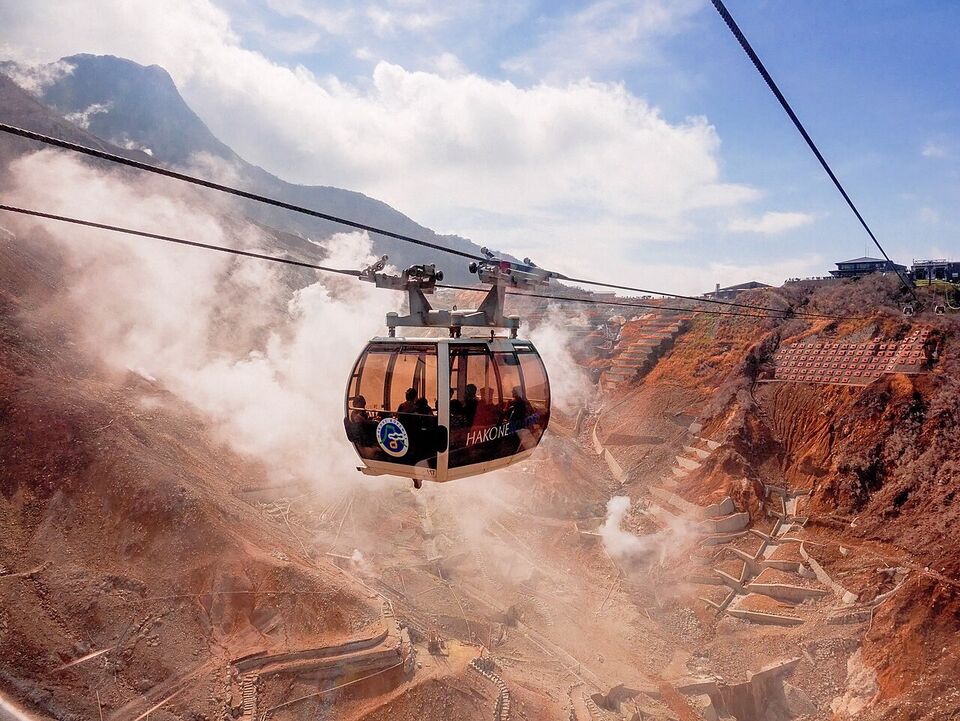
- Sounzan to Togendai by ropeway. About 25 minutes in total, with a stop at Owakudani. Gondolas run over a steaming valley with views of Fuji on clear days.
- Togendai to Moto-Hakone or Hakone-machi by cruise. About 30 to 40 minutes on a replica sailing ship across Lake Ashi.
- Bus back to Hakone-Yumoto or Odawara. About 35 to 40 minutes from Moto-Hakone, ending at the station where you began.
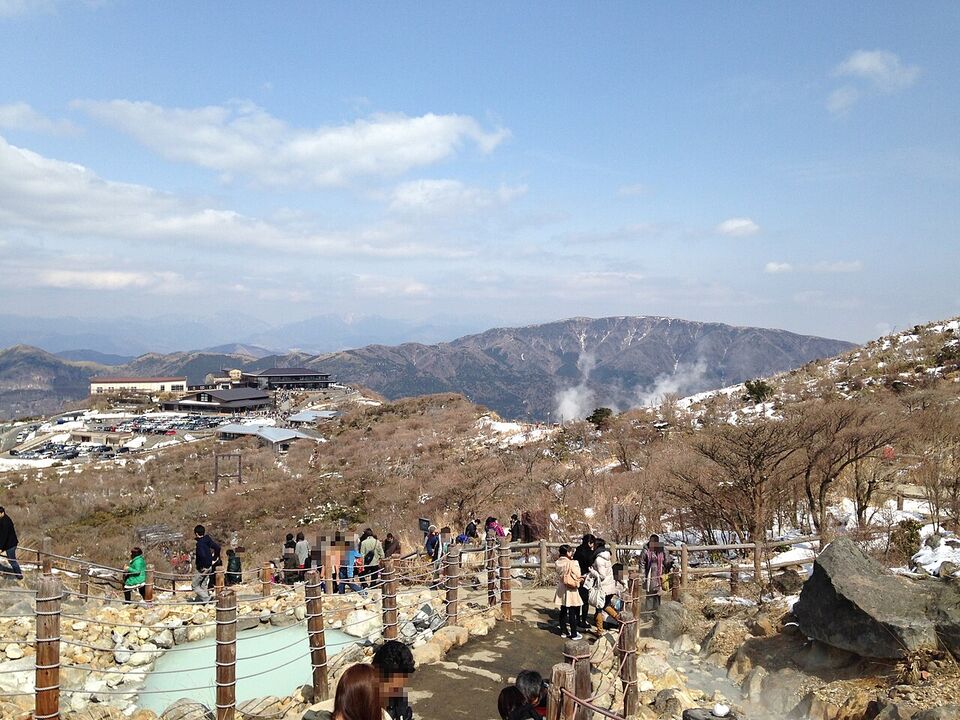
Owakudani
Owakudani ("Great Boiling Valley") is a volcanic crater where sulfur steams from the ground. It is famous for kuro-tamago (black eggs), eggs boiled in the hot pools until the shells turn black. The legend is that each egg adds years to your life. They taste like normal hard-boiled eggs.
Owakudani has generally been at Level 1, the lowest volcanic alert level, which means normal activity, but check the Japan Meteorological Agency or Hakone Navi for the level on your dates. On days of high gas, the ropeway can stop and be replaced by buses, and visitors with asthma or heart conditions are advised to be careful. A new food outlet, Owakudani Kitchen, opened at the Earth Valley viewing area in 2026, so the area may look different from older photos.
Watch out
Winter maintenance closes parts of the ropeway and replaces them with buses. As of November 2026, one guide lists Owakudani to Sounzan from December 7 to 24, and Togendai to Owakudani from January 12 to February 26, 2027. Hakone Navi posted a ropeway maintenance notice on October 30. Confirm the exact dates before you plan a December or January trip.
Lake Ashi and the floating torii
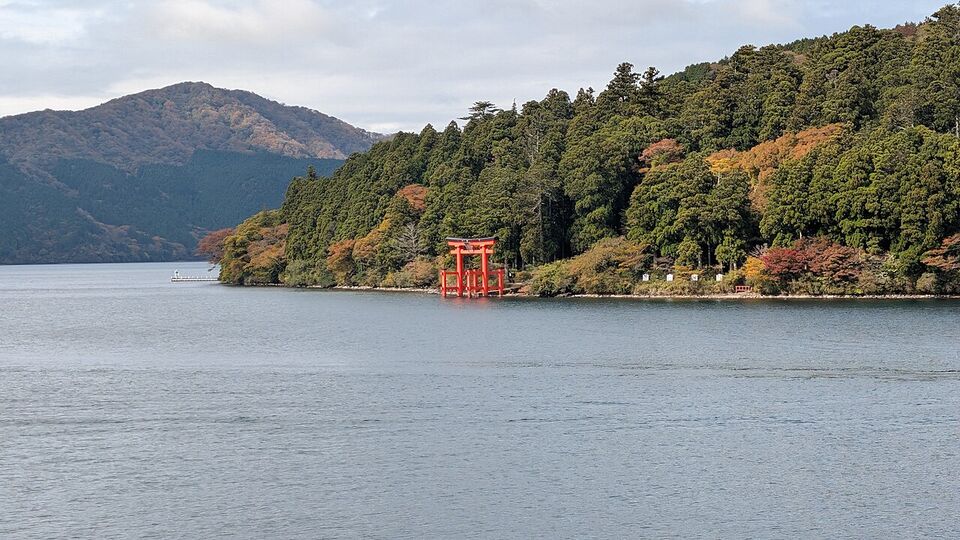
The ships dock at Togendai, Moto-Hakone and Hakone-machi. The Hakone Shrine, a short walk from the Moto-Hakone and Hakone-machi docks, has a red torii gate standing in the lake. The photo from the shore is popular and the line can be long on weekends. The shrine itself is quiet in the early morning.
Hakone Navi reports the Royal II ship was renovated (notice of August 2026). Cruises can be canceled in strong wind, so build a fallback into the plan: the buses along the lake follow the same route.
Seeing Mount Fuji from Hakone
Fuji is roughly 20 miles (35 km) northwest of Lake Ashi. You can see it from the lake, the shrine, the Owakudani ropeway and many ryokan, but only when the air is clear. From late autumn through winter, mornings are the best bet. In summer, you may see nothing at all, which is normal and not a sign that the day was wasted.
If Fuji is the main goal, spend one night so you can look in the morning. Otherwise consider the north side of the mountain; our Mount Fuji guide explains the Fuji Five Lakes towns, which have more reliable views in winter.
Where to stay: ryokan and private baths
A ryokan (traditional inn) is the main reason to stay overnight. Rates are quoted per person, not per room, and usually include a multi-course dinner (kaiseki) and breakfast. Check-in is typically around 3 p.m., dinner is served at a set time (often 6 to 7 p.m.), and you sleep on a futon laid on tatami mats. See our where to stay guide for how to choose between a ryokan and a hotel, and our onsen guide for bathing etiquette.
If you do not want to bathe in a shared bath, look for a ryokan with a private bath. There are two kinds:
- A room with its own open-air bath (rotemburo-tsuki), usually filled with hot spring water. These are the most expensive rooms, often $$$ per night for two.
- A reservable family bath (kashikiri-buro), a private bath you book for 45 to 60 minutes, sometimes free for guests and sometimes for a fee. This is the cheaper solution, and it is also the usual answer for people with tattoos or children who cannot use a shared bath.
Most ryokan are priced at $$ to $$$. Budget guesthouses and business hotels near Hakone-Yumoto and Odawara can be $. Weekends in October to December sell out weeks ahead, and prices jump. A midweek stay is usually cheaper and much quieter.
Choosing a base
Hakone-Yumoto
Easy for the train and for late arrivals. Less scenic than the upper valleys, but the cheapest place to find a bed and to eat a quick meal.
Gora
Good for the Open-Air Museum and for the loop, because you are already halfway around it. Quiet in the evening.
Lake Ashi (Moto-Hakone, Hakone-machi)
The best place to wake up to a view of the lake. Fewer onsen than the hills, and transfers can take longer after the last bus.
Sengokuhara
Quiet, with large ryokan and a field of pampas grass that turns gold in autumn. Best by bus or rental car.
Luggage forwarding: Hakone Carry
If you are staying in Hakone on a longer trip, do not carry suitcases on the mountain railway. The Hakone area has a luggage forwarding service often called Hakone Carry, which collects bags from a station or hotel and delivers them to your inn or back to the station. Hotel-to-hotel delivery usually needs the bag handed in by the morning (often about 9 or 10 a.m.) for delivery the same afternoon. We could not confirm the current Hakone Carry price for 2026; expect roughly ¥2,000 to ¥3,000 (about $13 to $19) per bag and ask your ryokan when you book.
The standard Japan-wide alternative is takkyubin (courier) forwarding from a hotel or convenience store, which usually arrives the next day. For one night in Hakone, many people send the big suitcase to their next hotel and carry only a small overnight bag. Coin lockers at Odawara, Hakone-Yumoto and Gora are another option.
Insider tip
Ask your ryokan whether it will pick you up at Hakone-Yumoto, Gora or the bus stop. Many do, for free, and that means you can leave the heavy bag on the hotel shuttle.
Museums, castles and other stops
Hakone is also an art destination. The Hakone Open-Air Museum in Gora has sculptures in a park setting, and adults pay ¥2,000 (about $13). Other museums include the glass-and-forest Pola Museum, a large art museum in Sengokuhara, and several museums around Lake Ashi. Prices and hours change, so check each museum before you go, and ask whether the Free Pass gives a discount.
Odawara Castle at the foot of the mountains is a useful stop for people arriving by Shinkansen. The castle keep is reported to charge non-residents ¥1,000 (about $6) and local residents ¥500 (about $3) from 2026, one of several Japanese sights using two-tier pricing; check the Odawara city site before you go.
The Gotemba Premium Outlets are about 40 to 45 minutes by direct bus from Gora. Tax-free shopping rules changed on November 1, 2026: you now pay tax at the till and claim a refund at departure. See our shopping guide for how that works.
When to go and what to avoid
- Autumn (late November to early December): leaves, and clear air on many days. It is also crowded, and weekend trains and buses are packed.
- Winter (December to February): the best months for Fuji views, and the best months for a hot bath. Some ropeway sections have maintenance closures (see above).
- Spring: cherry blossoms in early April, usually a little later than Tokyo because of the altitude. Check our cherry blossoms guide.
- Rainy season and summer: June has hydrangeas along the Tozan train. July and August are hot, humid and hazy, with less chance of seeing Fuji.
- January 2 and 3: the Hakone Ekiden relay race closes roads. In a recent year, buses toward Hakone-Yumoto and Odawara stopped for several hours on race day. Avoid planning transport that morning.
Weekdays are calmer than weekends, and the first and last parts of the day are calmer than midday. National holidays (see when to go) fill the Romancecar.
Sample plans
- One day
The classic loop
Take a Romancecar or express from Shinjuku by 8:30 a.m. Ride the Tozan train to Gora, then the cable car and ropeway to Owakudani. Have lunch at the valley or in Togendai, then take the cruise and finish at Moto-Hakone. Take the bus to Hakone-Yumoto and an Odakyu train back to Shinjuku before dark.
- One night
Ryokan and sunrise Fuji
Arrive by lunchtime, do the loop in the afternoon, and be at your ryokan by about 4 p.m. for a bath before dinner. Have a second bath in the morning and look for Fuji from the lake or your window. Send the big bag ahead and go home on the mid-day express.
- Two nights
Slow Hakone
Use the 3-day pass. Spend the first day on the loop and the second on the Open-Air Museum, the old Tokaido cedar avenue, or the shrine, with a long bath in between. Use the third morning to head to Odawara and onward to Kyoto or back to Tokyo.
For the next stops, see the regions overview and our Tokyo guide.
Add it to a route in the trip builder, or ask us to plan the hotels, trains and guides for you.