Is it worth it? The short answer
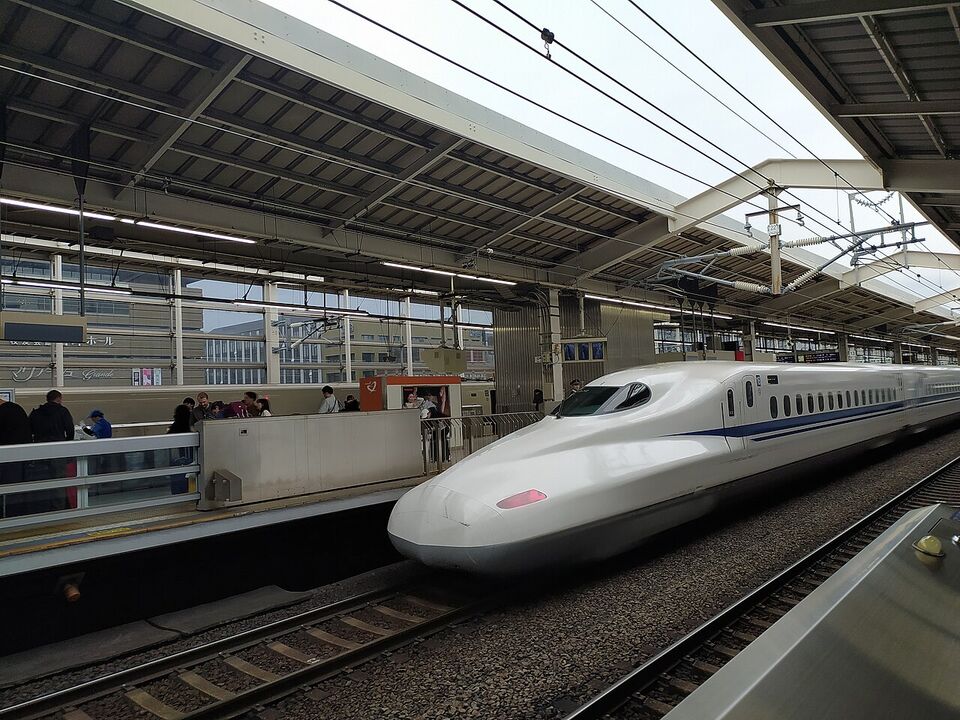
For most first-time visitors, no. The Japan Rail Pass (JR Pass) was a bargain before 2023, but after two big price rises the 7-day Ordinary pass costs ¥50,000 to ¥53,000 (about $318-338), and a typical Tokyo, Kyoto, Osaka and back trip costs about ¥29,000 (about $185) in single tickets. The pass pays off only when you ride several long routes in one seven-day window, such as Tokyo to Kanazawa to Kyoto to Hiroshima and back.
The rule of thumb we suggest: add up your long train rides for the days you would use the pass. If the single-ticket total is under about ¥45,000 (about $287), skip the pass and use tickets or a regional pass. If it is over about ¥55,000 (about $350), buy it. In between, the deciding factors are flexibility and how much you dislike buying tickets. For how the trains themselves work, see Getting Around Japan.
Watch out
Do not buy the pass before you have the route. It cannot be refunded once collected in Japan, and the common mistake is buying the pass for a Tokyo-Kyoto-Osaka trip, where it loses by ¥14,000 or more (about $90).
2026 prices: two sets to know
JR raised the nationwide pass prices again, with agent prices reported effective October 1, 2026 (the last increase was in October 2023). Passes bought from overseas JR-designated agencies now cost the higher amounts. The official online store, japanrailpass.net, was still showing the previous prices as a limited-time promotion when we checked in early November 2026, and no end date had been announced. Check the page on the day you buy.
| Pass | Agents (from Oct 1, 2026) | US$ | Official site (promotion) | US$ |
|---|---|---|---|---|
| Ordinary, 7 days | ¥53,000 | about $338 | ¥50,000 | about $318 |
| Ordinary, 14 days | ¥84,000 | about $535 | ¥80,000 | about $510 |
| Ordinary, 21 days | ¥105,000 | about $669 | ¥100,000 | about $637 |
| Green Car, 7 days | ¥74,000 | about $471 | ¥70,000 | about $446 |
| Green Car, 14 days | ¥116,000 | about $739 | ¥110,000 | about $701 |
| Green Car, 21 days | ¥147,000 | about $936 | ¥140,000 | about $892 |
Children aged 6 to 11 pay about half price (for example ¥27,000 for a 7-day Ordinary pass from an agent). Age 12 and up pays the adult price, and younger children travel free if they do not need a seat. Rates move with the yen, so convert at the rate you see; we use US$1 = ¥157 here.
The days are consecutive, not "any seven days". A 7-day pass starts at midnight on the day you first use it and ends at 24:00 on the seventh day. So it works best in a tight stretch of hopping, not across a trip that includes long stays in one city.
What the pass covers, and what it does not
The pass covers most JR trains nationwide, including all Shinkansen except the Nozomi and Mizuho (see the next section), JR limited express trains, local JR trains, the Narita Express to Tokyo, the Haruka limited express to Kyoto from Kansai Airport, and the JR ferry to Miyajima. It also covers the JR lines inside cities, such as the Yamanote Line loop in Tokyo and the JR Kyoto Line to Osaka.
- Not covered: private railways (the Keisei Skyliner from Narita, Kintetsu, Hankyu, Odakyu to Hakone), subways in Tokyo, Kyoto and Osaka, most local buses, and highway buses (the ones to Shirakawa-go and Takayama, for instance).
- Not covered without a fee: Green Car seats (unless you buy the Green pass), sleeper rooms on the Sunrise Express, and the Hokuriku Shinkansen's Gran Class cars.
- No guaranteed seat: reserved seats are free for pass holders, but a full train is a full train. At New Year, Golden Week and Obon, reserve as soon as the one-month window opens.
The long list of what is not covered is why the math rarely favors the pass. Tokyo has a dense subway and private rail network, and the pass covers little of it. Most Tokyo trips are better served by a Suica or PASMO card, which we explain in the getting-around guide.
The Nozomi and Mizuho supplement
This is the most important restriction for the Tokyo to Osaka corridor. The Nozomi is the fastest train on the Tokaido and Sanyo lines, and the Mizuho is its Kyushu equivalent. Pass holders may ride them only by buying a separate "pass-holder-only supplementary ticket" for each ride. The tickets are sold in Japan at JR reserved-seat machines, ticket offices and some travel agencies (not online before you arrive), and sales open one month before. You must hold a valid pass on the day you ride, and the supply is limited, so a ticket can sell out even when the train has seats.
| Route (one way, adult) | Supplement | US$ |
|---|---|---|
| Tokyo/Shinagawa to Kyoto | ¥4,960 | about $32 |
| Tokyo/Shinagawa to Shin-Osaka | ¥4,960 | about $32 |
| Tokyo/Shinagawa to Hiroshima | ¥6,500 | about $41 |
| Shin-Osaka to Hakata | ¥4,960 | about $32 |
Without the supplement, you ride the Hikari, Kodama or Sakura. On Tokyo to Kyoto the Hikari takes about 2 h 40 min against about 2 h 15 min on the Nozomi, and the Hikari is reserved ¥13,850 (about $88) against ¥14,170 (about $90) for the Nozomi. Most travelers decide the Hikari is fine.
The time penalty is bigger on the way back from Hiroshima to Tokyo, where you may change trains in Shin-Osaka or Okayama. Allow an extra hour.
How to buy and activate the pass
You have three ways to get the pass, and the price differs by channel. Both the official site and the overseas agents issue an exchange voucher, which you swap for the real pass in Japan.
- The official site (japanrailpass.net). Book up to one month before your start date. Refund is possible for an uncollected online pass until 23:30 Japan time the day before your start date. After you collect the pass, it is not refundable.
- A JR-designated agency outside Japan. You get an exchange order, which you turn in at a JR office within three months of the date it was issued. Prices are the higher amounts above, but orders placed before October 1 locked the old rate.
- A JR office in Japan (Narita, Haneda and other airports, major stations). Usually the highest price, and queues can be long at peak times.
Activation
Take your passport to a JR exchange office, such as the JR East Travel Service Center at Narita or Haneda or at a main station. You must carry a temporary visitor stamp or sticker in your passport. You choose the first day of use at the counter. The clerk prints the pass and a seat reservation if you want one. Keep the pass with your passport, since gate staff check both at the manual gate (you show the pass instead of tapping an IC card).
Because the pass starts at midnight on day one, do not activate it on your arrival day if you will spend the first night in Tokyo with the Narita Express as the only ride. Start it on the day of your first long train.
Insider tip
If you use the pass for part of a longer trip, start it on a Shinkansen day, not on arrival. Cover the days before and after with single tickets and an IC card. The usual saving is a full 7-day window used on three or four big rides.
Reserving seats online
Pass holders reserve seats at no charge. You can do it at any JR ticket office or at a reserved-seat machine, showing the pass, or online. For the Tokaido and Sanyo lines, JR Central runs a "JAPAN RAIL PASS Reservation" service (online since June 1, 2020). Reservations open one month before the ride. We suggest reserving the long legs once your dates are fixed, especially on Fridays and holidays.
Non-reserved cars exist on most Shinkansen, so for short rides you can simply board. The pass also lets you board JR limited express trains with a reserved seat or in unreserved cars. For oversized suitcases, you must reserve an oversized-baggage seat, and the ¥1,000 (about $6) charge for not doing so is not covered by the pass; see the getting-around page.
The math: two sample trips
We used 2026 single-ticket fares from fare tables where we could find them; the side-trip line below is an estimate. Fares are for an adult, ordinary reserved seat, in the regular season, on the fastest train. They shift a few hundred yen with peak and off-peak seasons.
Trip A: 7 days, Tokyo, Kyoto, Osaka, Tokyo
| Ride | Single ticket | US$ |
|---|---|---|
| Narita Express, airport to Tokyo Station | ¥3,140 | about $20 |
| Tokyo to Kyoto, Nozomi reserved | ¥14,170 | about $90 |
| Kyoto to Osaka, JR Special Rapid | ¥580 | about $4 |
| Shin-Osaka to Tokyo, Nozomi reserved (approximate) | ¥14,520 | about $92 |
| Narita Express, Tokyo Station to airport | ¥3,140 | about $20 |
| Total, single tickets | ¥35,550 | about $226 |
| 7-day pass | ¥50,000-¥53,000 | about $318-338 |
The pass loses by about ¥14,000 to ¥17,000 (about $90-110), even if you add day trips to Nara or Himeji and local JR rides. If you also paid the Nozomi supplements (¥4,960 each way, so ¥9,920, or about $63), the gap would be larger. Buy single tickets and an IC card.
Trip B: 14 days, Hiroshima and the Alps
This trip spends days 1 to 3 in Tokyo on an IC card, then uses the pass for seven days (days 4 to 10): Tokyo to Kanazawa, a day trip to Shirakawa-go by bus, Kanazawa to Kyoto, Nara, Kyoto to Hiroshima with a Miyajima day, and Hiroshima back to Tokyo.
| Ride | Single ticket (approx.) | US$ |
|---|---|---|
| Tokyo to Kanazawa, Kagayaki reserved | ¥14,700 | about $94 |
| Kanazawa to Kyoto, Thunderbird reserved | ¥7,440 | about $47 |
| Kyoto to Hiroshima, Shinkansen reserved | ¥11,100 | about $71 |
| Hiroshima to Tokyo, Shinkansen reserved | ¥18,540 | about $118 |
| Kyoto to Nara and back, Miyajimaguchi and ferry (estimates) | ¥2,600 | about $17 |
| Total, single tickets | about ¥54,400 | about $346 |
| 7-day pass | ¥50,000-¥53,000 | about $318-338 |
Here the pass wins only narrowly: by about ¥1,400 to ¥4,400 (about $9-28), depending on which price you pay for the pass. That is before the cost of the time on the Hikari and Sakura (instead of the Nozomi) on the way back to Tokyo, and before the Shirakawa-go bus, which the pass does not cover. Because fares move by a few hundred yen with the season and the side-trip line is an estimate, treat the result as break-even.
For this type of trip we think the pass buys convenience, not savings. A cheaper alternative is to buy the Takayama-Hokuriku Area Tourist Pass (¥19,800, about $126, for the Nagoya, Takayama, Kanazawa and Kyoto area, including buses to Shirakawa-go) and add single tickets for the Shinkansen parts. See the Japanese Alps and Kanazawa for the routes, and Hiroshima and Miyajima for the westbound leg.
Save money
Check both prices before you buy. If the official site still lists the ¥50,000 (about $318) 7-day price and an agent lists ¥53,000 (about $338), the official site saves about $20. On a 14-day pass the gap is about ¥4,000 (about $25).
Regional passes that often beat it
If your trip stays within a region, a regional pass is usually cheaper. These are the main ones for visitors in 2026, with adult ordinary prices from the operators' pages (the Hokkaido figures come from a secondary source dated April 2025, and the Kansai-Hiroshima page was last dated 2024). Prices and rules change, so confirm before you buy.
| Pass | Covers | Days | Price |
|---|---|---|---|
| JR EAST PASS | JR East lines from Tokyo to Aomori, Sendai, Nagano, Niigata and Nikko; no Tokaido Shinkansen. Reported to have replaced the older Tohoku-area and Nagano-Niigata passes in March 2026 | 5 or 10 | ¥35,000 or ¥50,000 (about $223 or $318) |
| Kansai-Hiroshima Area Pass | Kansai, Okayama and Hiroshima, including the Sanyo Shinkansen between Shin-Osaka and Hiroshima (check JR West for which trains) | 5 | ¥17,000 (about $108) |
| Hokuriku Arch Pass | Tokyo to Kanazawa to Kansai on the Hokuriku Shinkansen and Thunderbird; not the Tokaido | 7 | ¥35,000 (about $223) |
| Takayama-Hokuriku Area Tourist Pass | Nagoya to Takayama to Toyama and Kanazawa, plus Shirakawa-go buses and Kyoto/Osaka. All Hida limited express seats are reserved-only December 25, 2026-January 5, 2027 | 5 | ¥19,800 (about $126) |
| JR Kyushu Rail Pass | All Kyushu (a cheaper Northern Kyushu version has 3 or 5 days) | 3, 5 or 7 | All Kyushu ¥22,000-¥26,000 (about $140-166) |
| JR Hokkaido Rail Pass | Hokkaido JR lines; not the Hokkaido Shinkansen | 5, 7 or 10 | About ¥22,000-¥37,000 (about $140-236) if bought outside Japan |
| All Shikoku Rail Pass | JR Shikoku and some private lines | 3 to 7 | ¥12,000-¥20,000 (about $76-127) through November 30, 2026; ¥15,000-¥23,000 (about $96-146) from December 1, 2026 |
The Kansai-Hiroshima pass is the one we mention most: Shin-Osaka to Hiroshima alone costs around ¥11,000 (about $70) each way, so a single round trip (about ¥22,000, or $140) already costs more than the pass. Hokkaido and Shikoku passes are worth a close look if you will ride long distances there; if you plan to drive instead, see Driving in Japan. We cover the regions in Hokkaido, Kyushu, Shikoku and Tohoku.
Different from home
A rail pass does not cover every train in Japan. The network is run by dozens of companies, and the JR Pass covers only the JR group. In Tokyo, Kyoto and Osaka, a large share of your daily rides will be on lines the pass does not cover.
Our verdict by traveler
- First week in Tokyo, Kyoto and Osaka: skip the pass. Buy single tickets and an IC card.
- Two weeks with Tokyo, the Alps or Kanazawa, Kyoto and Hiroshima: it is close. A 7-day pass for the long loop breaks even; a regional pass is cheaper.
- Tokyo to Hokkaido or Tohoku by Shinkansen: the JR East Pass or Hokkaido pass is usually better than the national pass.
- Kyushu and Shikoku: the regional passes win; the national pass rarely does.
- A long trip with a fixed, packed itinerary and a lot of one-night stays: the 14- or 21-day pass could pay off, but run the numbers first.
Whatever you choose, plan the trip first, then count the rides. Our trip planning guide has sample routes, and the budget guide shows where transport fits in a total.
Add it to a route in the trip builder, or ask us to plan the hotels, trains and guides for you.