Cash and cards in 2026: use both
Japan is far more card-friendly than it was five years ago, but it is still a country where cash matters. Visa and Mastercard are widely accepted at hotels, department stores, chain restaurants, convenience stores, most train stations and major attractions. Contactless tap-to-pay works in most of those places, and Apple Pay and Google Pay are widely supported.
Cash is still the only option in plenty of everyday places: small family restaurants and ramen counters with ticket machines, izakaya (casual pubs), temples and shrines, market stalls, small museums, some taxis, rural ryokan (traditional inns) and many vending machines. Carry ¥10,000-20,000 (about $64-127) in cash per day as a working rule, and expect to refill every few days.
We use US$1 = ¥157 throughout this guide, which makes ¥1,000 about $6.40 and ¥10,000 about $64. Rates move, so check before you travel. A quick mental shortcut: move the decimal point two places to the left and take off about a third, so ¥3,000 becomes 30, minus a third, which is roughly $20.
Before you go, tell your bank you are traveling (many US issuers decline overseas purchases they do not expect), put a card on your phone wallet, and pack two cards on different networks in case one fails. Use a card with no foreign transaction fee, because the 3% that many cards add on every purchase adds up on a trip. Do not rely on a single debit card.
The currency conversion trap
Terminals in shops and at ATMs sometimes ask whether you want to pay in US dollars or yen. This is called dynamic currency conversion. Always choose yen. The conversion in dollars is done by the terminal operator at its own rate, which is usually worse than your card network's rate, and your card issuer will not undo it. If the clerk converts for you without asking, ask them to run it again in yen, or check the slip.
ATMs: 7-Eleven and Japan Post
Many Japanese bank ATMs refuse foreign cards. The two reliable networks for visitors are:
- 7-Eleven (Seven Bank). Found in nearly every 7-Eleven store, 24 hours a day, with an English menu. They accept Visa, Mastercard, Cirrus, Plus and several other networks. The withdrawal limit is ¥100,000 (about $637) per transaction, or ¥30,000 if your card is read by magnetic stripe. The operator's fee is shown on the screen before you confirm, and it differs by card brand, so read the amount before you press yes.
- Japan Post Bank. ATMs inside post offices and some other sites. Foreign cards may be charged ¥220 per use, and the per-withdrawal limit is ¥50,000 (about $318). Post office ATMs close at night (typically 11 p.m. Monday to Saturday, 9 p.m. on Sundays and holidays; hours vary by ATM), so use a 7-Eleven after hours.
Lawson convenience-store ATMs take some foreign cards too, with a ¥50,000 limit, but only part of their network does, so the screen will tell you. Fees from your own bank come on top and are usually the bigger charge, so a US card that refunds ATM fees is worth bringing. Fewer, larger withdrawals are cheaper than many small ones, as long as you carry the cash safely.
Insider tip
Take cash out as soon as you arrive at the airport, where 7-Eleven and post office ATMs are easy to find, rather than relying on airport currency exchange counters. Exchange desks in Japan generally give worse rates than ATMs.
IC cards and paying for transit
An IC card (Suica, PASMO, ICOCA and similar) is a prepaid tap card for trains, subways and buses that also pays at vending machines, convenience stores and many shops and lockers. Cards from every region work nationwide, so a Suica from Tokyo works in Osaka and Kyoto.
Your options for 2026:
- Apple Wallet. Suica and PASMO can be added to an iPhone or Apple Watch, including foreign phones and cards, with an Apple Account that has two-factor authentication. You top up with an eligible card. This is the easiest option for many Americans.
- Welcome Suica. A tourist card with no deposit, valid for 28 days, topped up with cash only. It cannot be refunded, so spend what is left. A mobile version for iPhone lasts 180 days. PASMO Passport is a similar 28-day card.
- Regular Suica or PASMO. Sales of regular cards resumed on March 1, 2025 after a chip shortage. They carry a ¥500 deposit, refundable at a JR East office minus a fee of up to ¥220. Stock can vary by machine.
- ICOCA (JR West). ¥2,000 to start (¥500 deposit and ¥1,500 value) in the Kansai area.
New in 2026: since March 25, 2026, Tokyo's subways and most private railways let you tap a Visa, Mastercard, JCB, American Express, Diners Club, Discover or UnionPay contactless card, or a phone wallet, straight at the gate. This covers Tokyo Metro, Toei and operators such as Tokyu, Odakyu, Keio, Tobu, Seibu and Keikyu. It does not include JR East (including the Yamanote Line), Keisei (Skyliner), or the Tokyo Monorail. You must tap in and out with the same card, and there are no child fares. In Kansai it works on Osaka Metro, Hankyu, Hanshin, Nankai and Kintetsu, but not on JR West, Keihan or the Kyoto city subway and buses. Because the coverage is patchy, an IC card is still the simplest approach. For routes and passes, see Getting Around Japan and, for JR options, Is the JR Pass Worth It?.
The Tokyo Subway Ticket (Tokyo Metro plus Toei, unlimited rides) costs ¥1,000 (about $6.40) for 24 hours, ¥1,500 (about $9.60) for 48 hours or ¥2,000 (about $12.70) for 72 hours. Older guides list lower prices, so ignore those. It pays off if you take four or five rides a day.
Different from home
Unlike the US, where a debit card is accepted nearly everywhere, a US debit card in Japan often works only at ATMs and big chains. Credit cards on the Visa or Mastercard networks have the best acceptance. American Express and Discover are accepted less widely than in the US, so do not make either your only card.
No tipping, and what you pay instead
Do not tip in Japan, in restaurants, taxis, hotels or tours. Staff are paid a full wage, and extra money can cause confusion: servers may even run after you to return it. If you want to say thanks, say gochisosama deshita (thanks for the meal) when you leave a restaurant.
What you will see instead: a 10% consumption tax (8% on food to take away and most grocery items), included in the posted price at most places, and a service charge of 10-15% at some hotels, ryokan and upscale restaurants. A table charge, often ¥300-500 (about $2-3), is common at izakaya and shows up as otoshi (a small starter you did not order). This is normal, not a scam. See Etiquette for related customs.
Coin lockers, luggage and small change
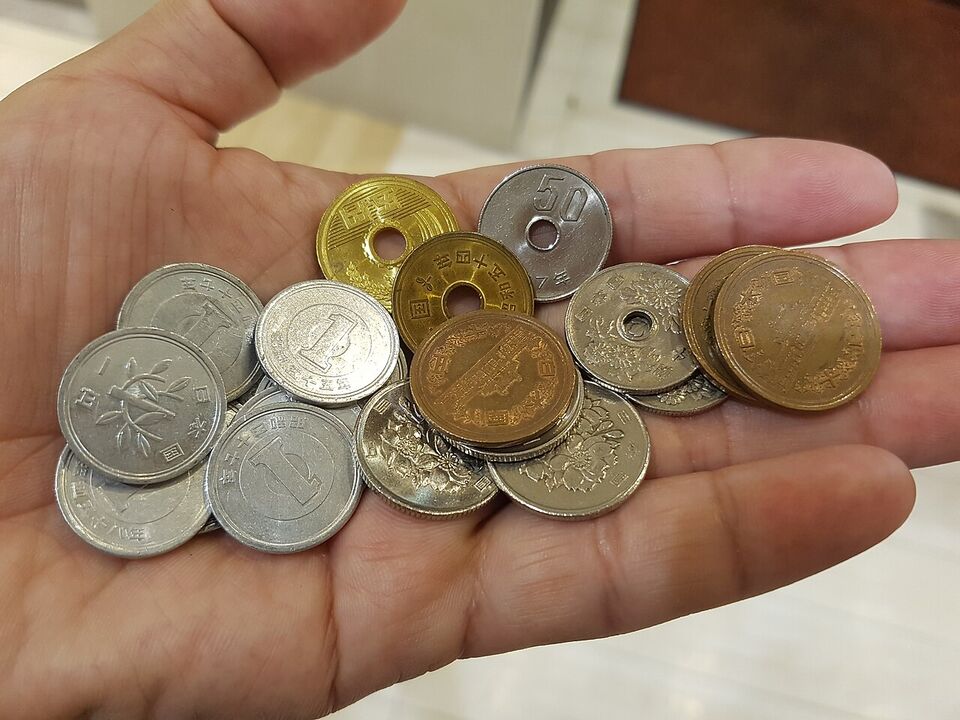
Japan's coins are heavy and come in many denominations (¥1, 5, 10, 50, 100, 500). Expect to collect them. The ¥500 coin is worth about $3.20 and the ¥100 about $0.64. Use a small coin purse and spend coins in vending machines and at convenience stores.
Coin lockers at stations cost about ¥300-700 (about $2-4.50) for a small locker, and ¥700-1,000 for a large one, per day. Many now take IC cards, but some are cash only. The biggest stations run out of lockers by late morning in busy seasons, so look for an app-based locker or a luggage storage counter. Hotels will usually hold bags before check-in or after check-out, and a takkyubin luggage-forwarding service can send suitcases between hotels or to the airport for roughly ¥2,000-3,500 per bag (prices vary by company and distance; confirm at the counter).
The new tax refund system (from November 1, 2026)
This is the biggest change for shoppers in years. Until October 31, 2026, tourists spending over a set amount had the consumption tax taken off at the register. Since November 1, 2026, you pay the full tax-inclusive price at the shop and claim the tax back as you leave Japan.
The key points:
- Minimum spend: ¥5,000 (about $32) before tax, per store per day. The rule did not change.
- No upper cap: the old ¥500,000 per trip limit on consumables is gone, and the old separate rules for consumables and general goods have been merged. Sealed bags are no longer required.
- Timing: do the departure procedure within 90 days of the purchase date, and the goods must leave Japan with you, in carry-on or checked bags. Consumables such as food and cosmetics cannot be used in Japan.
- Passport: per JNTO and Japan Customs, you pay the full tax-inclusive price at the shop and your passport is scanned at the departure terminal; the official pages do not say shops scan it at purchase. Some shops may still ask to see it, so keep it handy.
- At departure: use the tax-free procedure terminal in the international departure hall, before you check your bags, or start the process on Visit Japan Web. A green result means go on; red means take the goods to customs for inspection. Then get the refund by the method the shop sets; the official pages say to ask the shop.
Practical risks: each receipt is checked on its own, so if one item from a receipt is missing the whole receipt fails. Do not put tax-free goods in checked luggage before you have been through the terminal. Some shops charge a handling fee or commission on the refund, and we could not confirm the amounts. Allow extra time, especially at Narita, Haneda and Kansai. Our full walk-through, with what is worth buying, is in Shopping and Bringing It Home.
Watch out
Many guides online still describe the old system, where tax disappeared at the till. Check the date on anything you read. If a shop still offers tax removed at the till after November 1, 2026, ask how they handle it, and keep the receipt and your passport details for the departure procedure.
Hotel and accommodation taxes
Many cities add a per-person, per-night lodging tax, usually collected at check-in, on top of your room rate. Some are small; Kyoto's jumped in March 2026. These are amounts per person per night, before consumption tax.
| Place | Rate per person per night | Notes |
|---|---|---|
| Kyoto City (since March 1, 2026) | ¥200 under ¥6,000 room rate; ¥400 for ¥6,000-19,999; ¥1,000 for ¥20,000-49,999; ¥4,000 for ¥50,000-99,999; ¥10,000 (about $64) for ¥100,000+ | Highest in Japan; formerly ¥200-1,000 |
| Tokyo | Free under ¥10,000; ¥100 for ¥10,000-14,999; ¥200 for ¥15,000+ | A flat 3% from 2028 has been proposed, not law |
| Osaka Prefecture | Free under ¥5,000; ¥200 for ¥5,000-14,999; ¥400 for ¥15,000-19,999; ¥500 for ¥20,000+ | Check current rates; changes were being discussed |
| Fukuoka City | ¥200 under ¥20,000; ¥500 for ¥20,000+ | Includes ¥50 prefectural tax |
| Hokkaido | Varies: Niseko Town moves to a flat-rate tax from November 1, 2026 (reported 3%); Kutchan reported 3% from April 2026 | Prefectural tax started April 2026; Sapporo plans one, date unconfirmed |
| Other newer taxes | Sendai (¥300 at ¥6,000+), Hiroshima Prefecture (¥200 at ¥6,000+, from April 2026), Nagano Prefecture (¥200, June 2026), Kumamoto and Miyazaki cities (¥200, July 2026) | Several more towns started in 2025-2026 |
The cost adds up in Kyoto: a couple staying four nights in a room that costs ¥40,000 a night (¥20,000 per person) pays ¥1,000 each per night, or ¥8,000 (about $51) in tax in total. In a ¥12,000 business hotel (per person ¥6,000) it is ¥400 each. Ask your hotel whether the tax is included in the quoted price. More about places to stay is in Where to Stay in Japan, and Kyoto covers the city's tax in context.
Daily budget in yen and dollars
These are planning figures per person per day, assuming two people sharing a room, not including flights or long-distance trains. They are our estimates for late 2026, not quotes, and hotel prices swing the most, especially in Tokyo and Kyoto during cherry blossom season and autumn leaves.
| Style | Per day (¥) | US$ (at ¥157) | What it buys |
|---|---|---|---|
| Lean | ¥12,000-16,000 | About $76-102 | Business hotel or hostel share, convenience-store breakfasts, ramen or set lunches, local trains, one paid sight |
| Mid-range | ¥24,000-32,000 | About $153-204 | Comfortable business hotel, restaurant lunches and dinners, a few paid attractions, a subway pass |
| Comfortable | ¥45,000-70,000 | About $287-446 | Upscale hotel, a good dinner, taxis now and then, a ryokan night adds more |
A few reference prices. A convenience-store sandwich or rice ball is ¥150-300 (about $1-2). A bowl of ramen or a set lunch costs ¥1,000-1,500 (about $6-10). A casual dinner with a drink is ¥3,000-5,000 (about $19-32). A subway ride in Tokyo is roughly ¥180-330 (about $1.15-2.10). Admission to a major temple or garden is usually ¥500-1,000 (about $3-6), though some now charge visitors more than residents (see Himeji and Kobe for Himeji Castle's ¥2,500 price).
To work out your own total, use the Budget Calculator. For more on food costs, see Japanese Food.
Save money
The yen has been weak against the dollar, so your dollars go further than a few years ago. The biggest savings are hotels in non-peak weeks, eating lunch set menus (usually ¥1,000-1,500 and often the same food as dinner), and buying a Tokyo subway ticket only if you will use it. Skip taxis, which are costly and unnecessary in cities.
How paying works in shops and restaurants
A few habits are different from home. At most counters you put cash or your card in a small tray beside the register instead of handing it over, and the clerk returns change in the tray. At restaurants with ticket machines (common for ramen and curry), you pay first, in cash or sometimes by card, and hand the ticket to staff. In many sit-down restaurants you pay at the register by the door on the way out rather than at the table, so do not wait for a bill to be brought over.
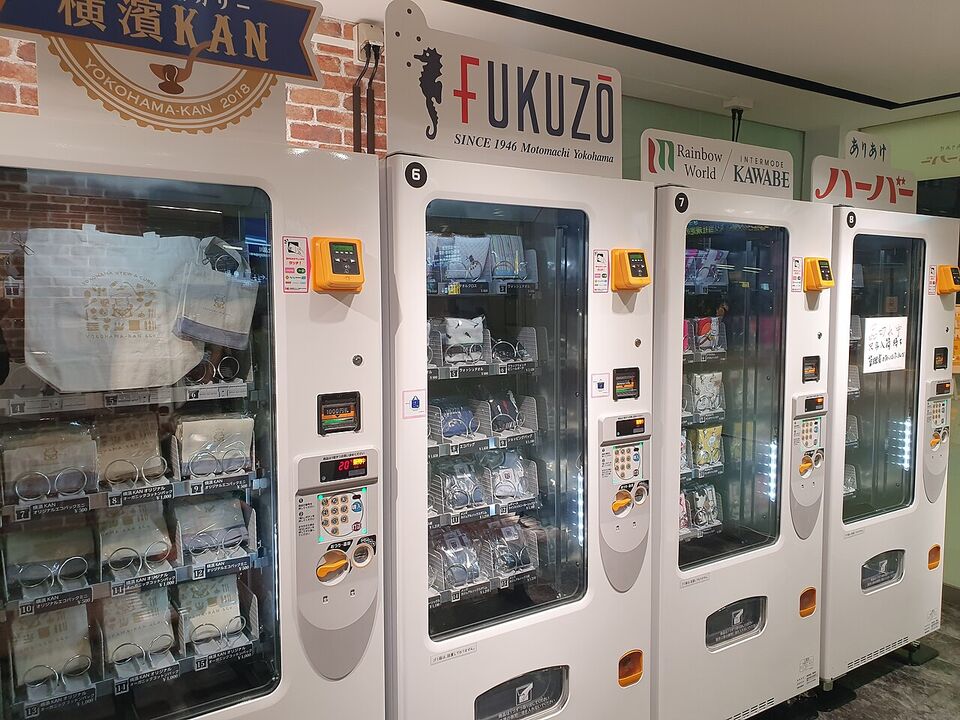
Prices on menus and shelves usually include tax, but some upscale places list prices before tax, which is why the total can be 8-10% higher than expected. Bills are rarely split item by item, and in smaller restaurants a group may be asked to pay one total. If you want to split, say so at the register. Vending machines (they are everywhere, and sell drinks for about ¥150-200, or $1-1.30) take coins, bills and IC cards.
Carrying small bills helps: a ¥1,000 note is useful at shrines, for offerings (a ¥5 or ¥100 coin is customary), and at stalls. Large ¥10,000 notes are fine at hotels and department stores but may stump a small stall. Keep a coin purse handy, and spend coins as you go.
Money mistakes Americans make
- Arriving with no yen and a card the first ATM rejects. Bring a backup card.
- Choosing dollars when a terminal offers to convert. Always pay in yen.
- Assuming every restaurant takes cards. Ask "Card OK?" or look for the Visa/Mastercard sticker on the door.
- Leaving the tax refund to the last minute or packing the goods before the terminal.
- Carrying a large amount of cash around. Japan is safe, but the ¥1,000,000 declaration limit still applies, and there is little reason to approach it. See Entry Requirements.
- Forgetting that the departure tax of ¥3,000 (about $19) per person is already in your ticket.
Add it to a route in the trip builder, or ask us to plan the hotels, trains and guides for you.