Should you drive in Japan?
For most trips, no. Tokyo, Kyoto, Osaka and the corridor between them are far easier by train, and driving in the big cities means narrow streets, expensive parking and signs you may not be able to read. But a car is the right tool in a few places: Hokkaido, Okinawa, much of Kyushu, Shikoku, rural Tohoku and the hot-spring country of the Japanese Alps. If your route is mostly in those areas, read on.
What you need before you can rent: a valid US driver's license, a 1949 Geneva Convention International Driving Permit (IDP), your passport, and a credit card. Japan-guide gives the minimum rental age as 18, and some companies set a higher age or add conditions for young drivers, so check the company's terms. Driving is on the left. The rules are strict and the penalties for drinking and driving are severe, so we cover them in detail below.
For the rest of the transport picture, start with Getting Around Japan. The guide to Japan's regions shows which parts are rail-friendly and which really need wheels.
The International Driving Permit
Japan accepts only IDPs issued under the 1949 Geneva Convention on Road Traffic. US travelers can get this version from AAA or its authorized partner, the American Automobile Touring Alliance (AATA). The U.S. State Department warns that IDPs bought online or from other organizations are not valid, and US embassies and consulates do not issue them. You do not have to be a AAA member to buy one.
- Get it before you leave. An IDP cannot be issued in Japan. Apply at a AAA branch or by mail with your license copy and passport-style photos, and allow a few weeks for mail applications. AAA lists the fee at US$20 per permit, plus two passport-style photos (2 x 2 inches); check AAA for the current amount. The permit must take effect within six months of your application date.
- Carry both documents. The IDP is a translation, not a license. You must show your US license together with the IDP every time.
- Validity. An IDP is valid for one year, and only while your US license stays valid; Japan counts it for up to one year from your date of entry. Check that your US license will not expire during the trip.
- Not accepted. A 1968 Vienna Convention permit, an international "license" sold online, and a US license alone do not work. Drivers from Germany, France, Switzerland, Belgium, Monaco and Taiwan use a different system (an official Japanese translation of their license), which does not apply to Americans.
Watch out
Rental counters in Japan check the IDP strictly. If you arrive without it, or with the wrong type, you should expect not to get the car, so check the cancellation terms of your booking. Look for the words "1949 Convention" on the booklet before you fly.
Renting a car
Reserve online before you go. Large rental companies run English websites with airport and station offices, and prices are lower when you book ahead. A typical 24-hour rate in 2025 was about ¥7,500 (about $48) for a compact, ¥10,000 (about $64) for a mid-size, ¥15,000 (about $96) for a full-size car and up to about ¥20,000 (about $127) for a van, and 2026 rates may be higher. Peak weeks, especially in Hokkaido in summer, cost more. Quotes usually include taxes and the mandatory basic insurance; ask about mileage terms.
Insurance and the non-operation charge
The mandatory basic insurance, roughly ¥1,000 a day, covers damage, injury and liability but usually not the "non-operation charge" (NOC), a fee you pay the rental company for the days the damaged car cannot be rented. NOC is commonly a flat amount, often reported in the range of ¥20,000 to ¥50,000 (about $127-318); the exact figure is in your rental company's terms. Ask for the extra waiver that covers it; it usually costs a few hundred to about ¥1,000 a day, so ask for the price. Confirm the details in writing.
What to ask for
- An ETC card (see below), usually rented for a small fee at the counter.
- A GPS with English. Not all rental units have English menus. The easiest way to set a destination is to enter the phone number of the place, and many units also accept a Mapcode. Your phone with offline maps is a good backup.
- Snow tires in winter in snowy regions, usually free, plus chains if you plan to go into the mountains.
- A child seat. Children under six must be in a child seat. Reserve one in advance.
- A kei car (a small yellow-plated car with a tiny engine) for narrow roads and cheaper tolls. They are fine for two people and light luggage.
One-way drop-offs to another city can cost tens of thousands of yen, so plan loops. Hokkaido is an island, so cars rented there generally stay in Hokkaido, and cars rented on Honshu cannot be left there; ask about one-way fees before booking.
Driving on the left: rules that trip Americans up
The U.S. State Department notes that roads are much narrower than American ones, that traffic in Tokyo is heavy, and that mountain roads often close in winter.
- Left side, right-hand drive. Slow down for the first hour. The turn-signal and wiper stalks are usually on the opposite sides from a US car, so expect to hit the wipers when you mean to signal.
- No turn on red. Not even the near-side (left) turn. Green arrows allow turns even when the main light is red.
- Stop fully at railroad crossings and at stop signs, which are red triangles pointing down, with the word tomare (stop) in Japanese.
- Seat belts for everyone, front and back.
- Phones. Holding a phone or watching a navigation screen while driving is prohibited.
- Pedestrians and bicycles. Yield to pedestrians at crossings and expect bicycles on narrow roads and sidewalks.
- Roundabouts are rare. Go clockwise when you meet one.
The traffic rules page of the Japan Automobile Federation (JAF) has an English guide with signs, rules and tips. Read it before you go, and see Safety in Japan for what to do in emergencies. The numbers to know are 110 for police and 119 for fire and ambulance.
Speed limits and zero tolerance for drinking
Where no limit is posted, the default is 60 km/h (37 mph) on ordinary roads and 100 km/h (62 mph) on expressways for a regular car. Posted limits are often lower in towns, commonly 30 to 40 km/h (19-25 mph) on residential streets, and a few expressway stretches are posted at 120 km/h (75 mph); always follow the signs. Speed cameras are common, and rental companies pass fines on to you. Foreign drivers are ticketed like anyone else.
On alcohol, the State Department gives a limit of 0.03% blood alcohol, which is well below the 0.08% limit in most US states. Police breath tests use a roughly equivalent 0.15 mg per liter. One beer can be enough to put some people over, so treat it as zero. The State Department says penalties can include license confiscation, fines of up to US$10,000 and up to five years in prison, and Japan also punishes people who lend a car to a drunk driver, serve alcohol to someone they know will drive, or ride along knowing the driver has been drinking.
Different from home
In the US, "one drink" is a judgment call. In Japan the driver does not drink at all, and groups often name a designated non-drinker, or take a taxi or a "daiko" (a driver-for-hire service that drives you home in your own car). If your plan includes a hot-spring inn with sake at dinner, plan how you will not drive that night.
Expressways, tolls and ETC cards
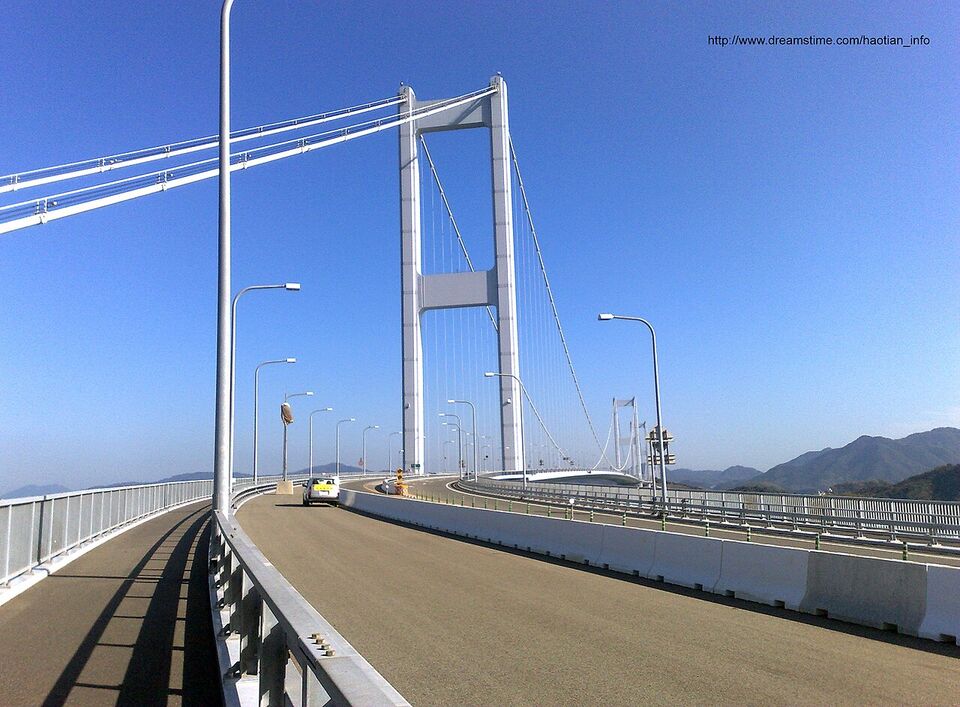
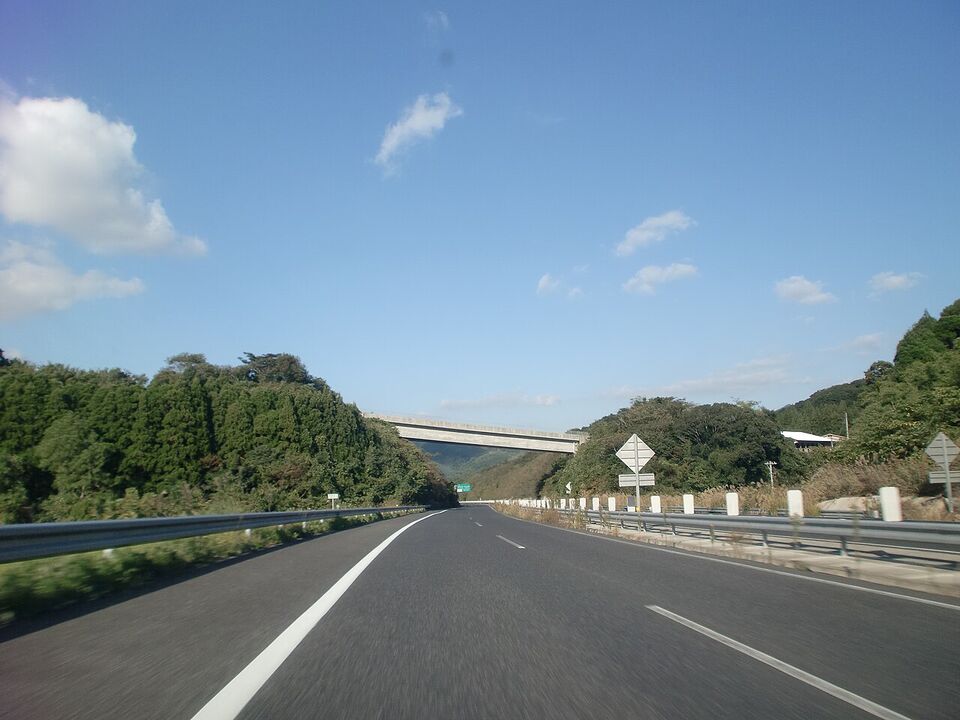
Japan's expressways are excellent but costly. Tolls are charged by distance and vehicle size, and on long trips they can exceed the cost of the Shinkansen. A rough guide for a standard car is Tokyo to Kyoto at around ¥10,000 or more (about $64+) one way; use the NEXCO route-search tool or your rental company to get an exact figure for your trip.
Almost every rental car has an ETC reader, and we suggest renting an ETC card with the car so you can drive through the purple ETC lanes without stopping. The card rental fee is small, and in most cases the tolls are charged to you when you return the car; ask your rental company how it bills them. Without ETC you must stop at manned or cash lanes, where staff speak little English.
The expressway passes still sold in 2026
The nationwide Japan Expressway Pass (JEP) and the Central Nippon Expressway Pass (CEP) are no longer available, according to the Japan National Tourism Organization (updated January 22, 2026). Four regional flat-rate passes remain. They work with the ETC card, require your passport, US license and IDP at purchase, and exclude the rental car and ETC card costs.
| Pass | Area | Days | Standard car | US$ |
|---|---|---|---|---|
| Hokkaido Expressway Pass | Hokkaido | 4 to 8 | ¥7,700-¥15,400 | about $49-98 |
| Tohoku Expressway Pass | Akita, Aomori, Fukushima, Iwate, Miyagi, Yamagata | 4 to 8 | ¥8,500-¥17,000 | about $54-108 |
| San'in-Setouchi-Shikoku Pass | Hiroshima, Okayama, Shikoku, Tottori, Shimane and more | 3 to 10 | ¥10,700-¥17,700 | about $68-113 |
| Kyushu Expressway Pass | All of Kyushu | 2 to 10 | ¥6,200-¥23,800 | about $39-152 |
Kei cars qualify for a lower price on the Hokkaido and Tohoku passes. Prices and areas can change without notice, so confirm them on the JNTO page and the pass operator's site before you book.
Save money
A pass is a flat fee, so it only helps if you will drive long distances on expressways every day. For sightseeing on ordinary roads, you may spend less paying tolls as you go. Count your expressway kilometers first. In Hokkaido, many sightseers find the pass pays off quickly because the distances are long.
Parking, fuel and navigation
Curbside parking is virtually nonexistent, and it is illegal to park on most streets. In cities, you use coin-operated lots, which charge by the hour and can cost several hundred yen (a few dollars) per hour in the center. Urban hotels typically charge about ¥1,000 (about $6) per night for parking, and hotels outside big cities often provide it free. Tourist sites often charge a flat ¥200 to ¥500 (about $1-3). In small towns and rural areas, parking is often free.
Gas stations come in full-service and self-service forms; self-service machines are often in Japanese only, so full-service is easier. Regular unleaded averaged about ¥170 per liter (about $4.10 a gallon) in autumn 2026, after swinging widely earlier in the year (a record near ¥191 in March 2026), so check the price when you travel. You must return rental cars full, and some companies ask for the gas receipt. Fill up before long, empty stretches such as northern Hokkaido or mountain roads, where stations can be far apart.
Navigation tips: set the GPS by phone number, keep a charged phone with offline maps, and pay attention to one-way streets and narrow lanes in old towns. For example, around Kyoto and in the historic parts of Kanazawa, the streets are tight and parking is expensive, and we suggest leaving the car at the edge of town.
Winter driving and snow tires
Snow falls heavily in Hokkaido, the Tohoku mountains, the Japan Sea coast and the Alps from December to March. Rental companies fit snow tires in snowy regions in winter, usually at no extra cost. The JAF advises carrying snow chains and a jack even with snow tires, and putting chains on as soon as there is snow on the road. Accelerate gently, avoid sudden moves, and know that bridges and overpasses ice first.
If you have no experience with snow and ice, we suggest not driving in winter. Mountain passes close, and some roads, including the high routes near Mount Fuji and in the Alps, are shut from late autumn to spring. Check road closures with the rental company or the local tourist office. Keep a full tank, a blanket and a phone charger in the car.
If snow blocks the exhaust pipe while you wait for help, clear it so carbon monoxide does not build up in the car.
Where a car is the best choice
Hokkaido
Distances are long and trains are sparse outside Sapporo, so a car is the standard way to see Furano, Biei, Shiretoko and Daisetsuzan. Wildlife on the road and ice in winter call for care. See Hokkaido.
Okinawa
Beyond Naha, public transport is limited. Most visitors rent a car for the Churaumi Aquarium and the northern beaches, and traffic in Naha is slow at rush hour. See Okinawa.
Kyushu
The Shinkansen covers the main cities, but hot-spring towns and mountain areas such as Aso, Kurokawa and Yufuin are easier by car. See Kyushu.
Shikoku and the Seto Inland Sea
Trains are slow and infrequent, and a car helps to reach the Iya Valley and coastal roads. Traffic is light. See Shikoku.
Tohoku
Rural areas and national parks are easiest by car in warm months. Winter driving is for experienced drivers only. See Tohoku.
What a day by car costs
Here is a rough sketch for two people driving a compact car through rural Hokkaido or Kyushu for a day. These are planning figures built from the ranges above, not quotes.
- Rental: about ¥7,500 (about $48) a day in 2025 terms, possibly more in 2026 and in peak weeks, plus about ¥1,000 (about $6) a day for the NOC waiver and a few hundred yen for the ETC card.
- Fuel: at about ¥170 per liter (about $4.10 a gallon), a 100-mile (160 km) day in a compact car costs only a few thousand yen.
- Tolls: zero on ordinary roads, or roughly ¥1,800 to ¥3,500 (about $11-22) a day with a regional pass averaged over its full length.
- Parking: often free in the countryside, ¥200 to ¥500 (about $1-3) at sights, and about ¥1,000 (about $6) a night at an urban hotel.
Split between two or more people, a car in the right region can cost less per person than a regional rail pass plus taxis. Alone, or in a city, it almost never does. Before you commit, compare against a daily budget for the same days on trains.
If something goes wrong
If you have an accident, stop, turn on hazard lights, and move to safety. Call the police at 110, even for a minor collision, because you will need a police report for insurance. Call 119 for injuries. Then call your rental company, using the number on the key tag. Do not agree to pay anything on the spot; the rental firm handles insurance.
If you get a parking ticket, do not ignore it. Tell the rental company when you return the car, since they will pay and then charge you. If your car breaks down on an expressway, move to the shoulder, put out the warning triangle, stand behind the guardrail and call the rental company or the Japan Automobile Federation. Expressways have emergency phones along the road.
For lodging along your route, including ryokan with parking and the car-friendly minshuku in the countryside, see Where to Stay in Japan. And when you think about the costs of a car trip compared with a rail trip, the JR Pass math shows what the trains actually cost.
Add it to a route in the trip builder, or ask us to plan the hotels, trains and guides for you.